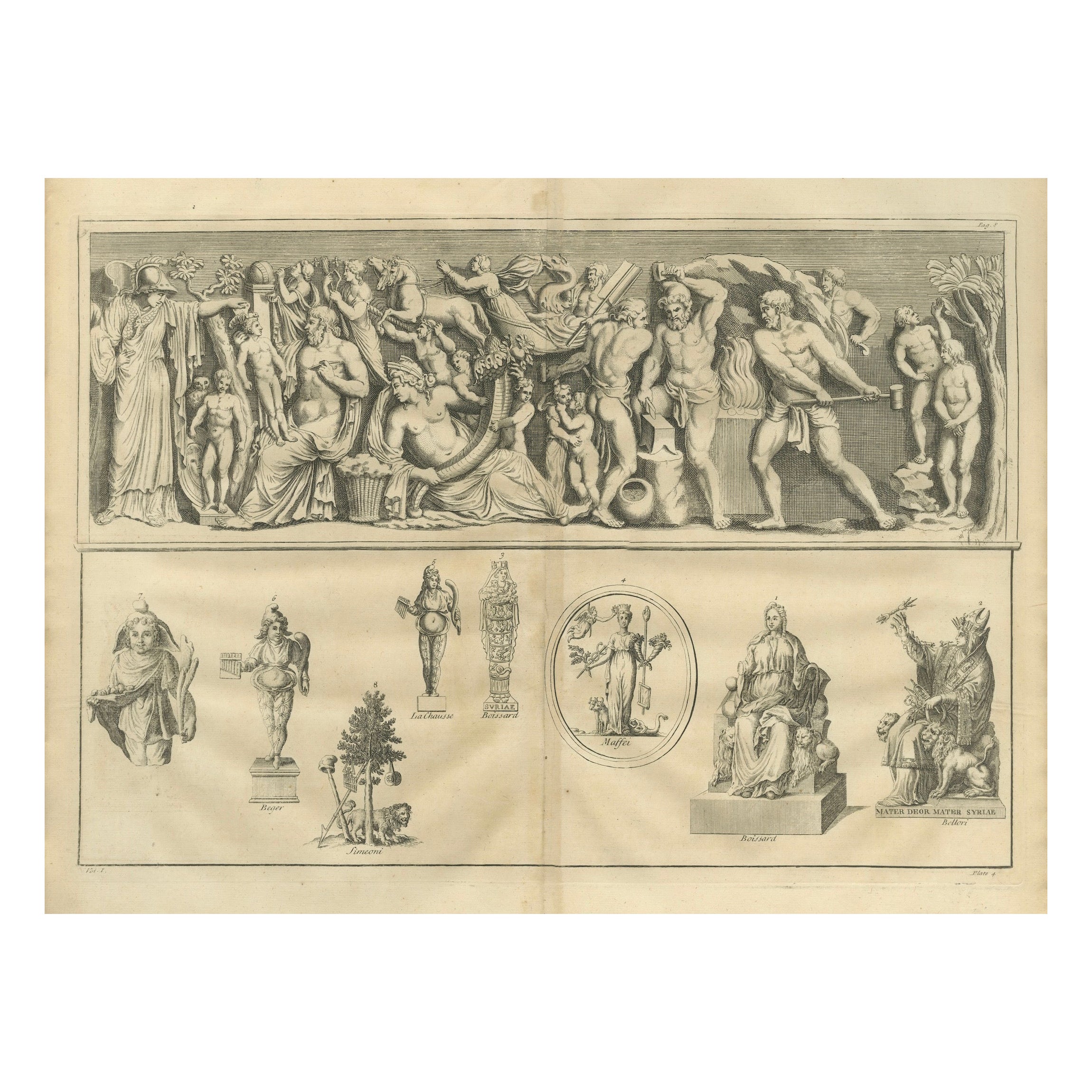
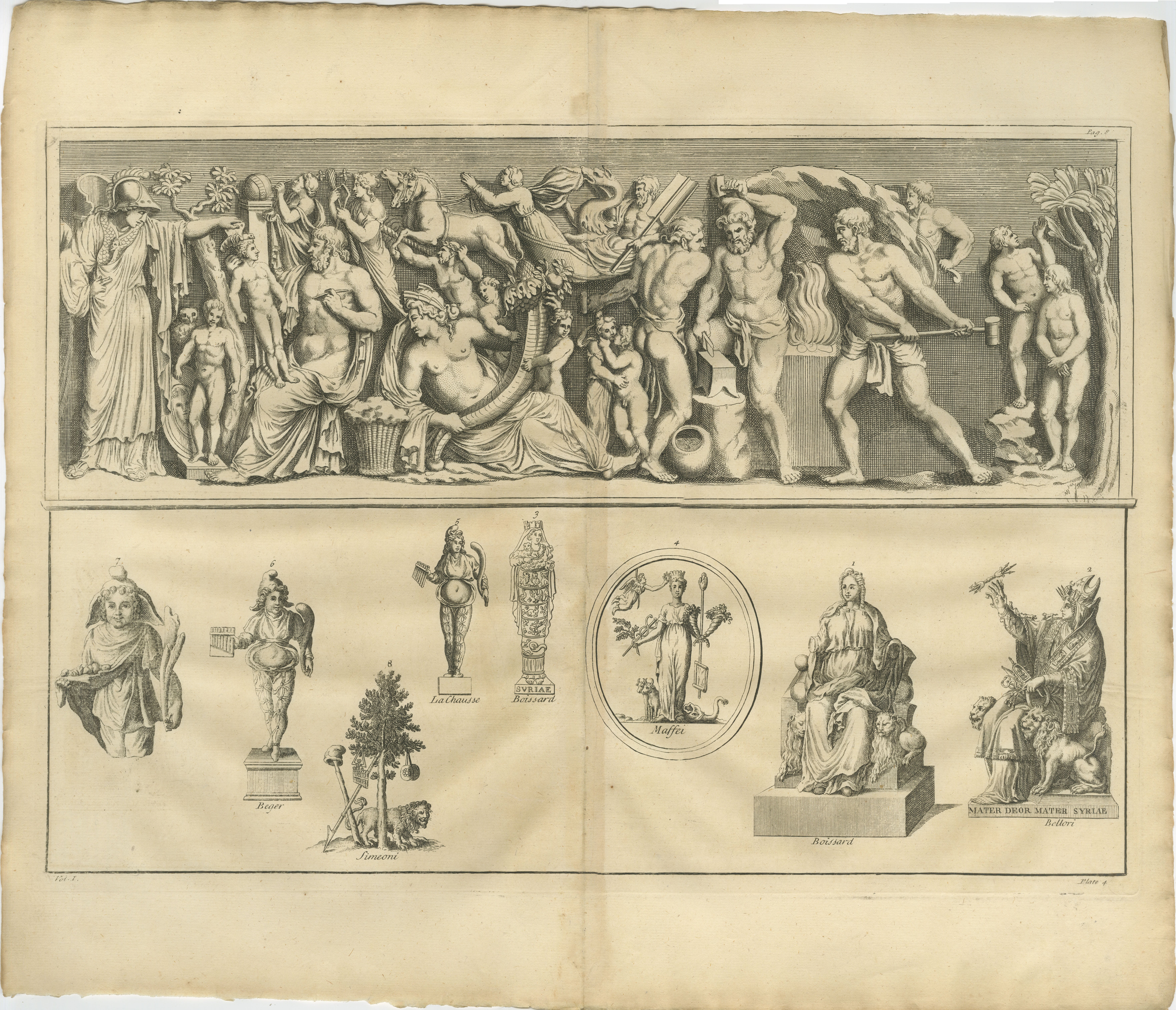
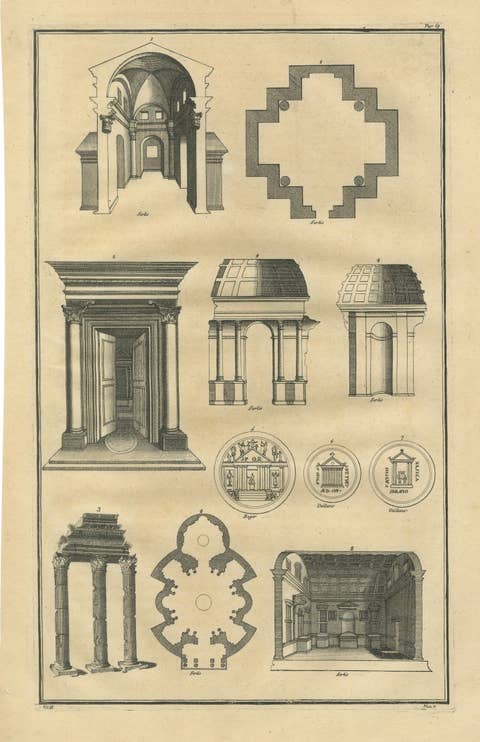
One of a kind: this is the sheet in the photographs. Ships from Langweer, the Netherlands.
Date
1721
Sheet size
42 × 50 cm (16.5 × 19.7 in)
Condition
Good
Reference
BG-14184-1-4
Condition
Good, strong impression with clearly visible plate mark. Light age toning to the paper and minor edge wear consistent with age. Fold line as issued. No losses to the engraved image.
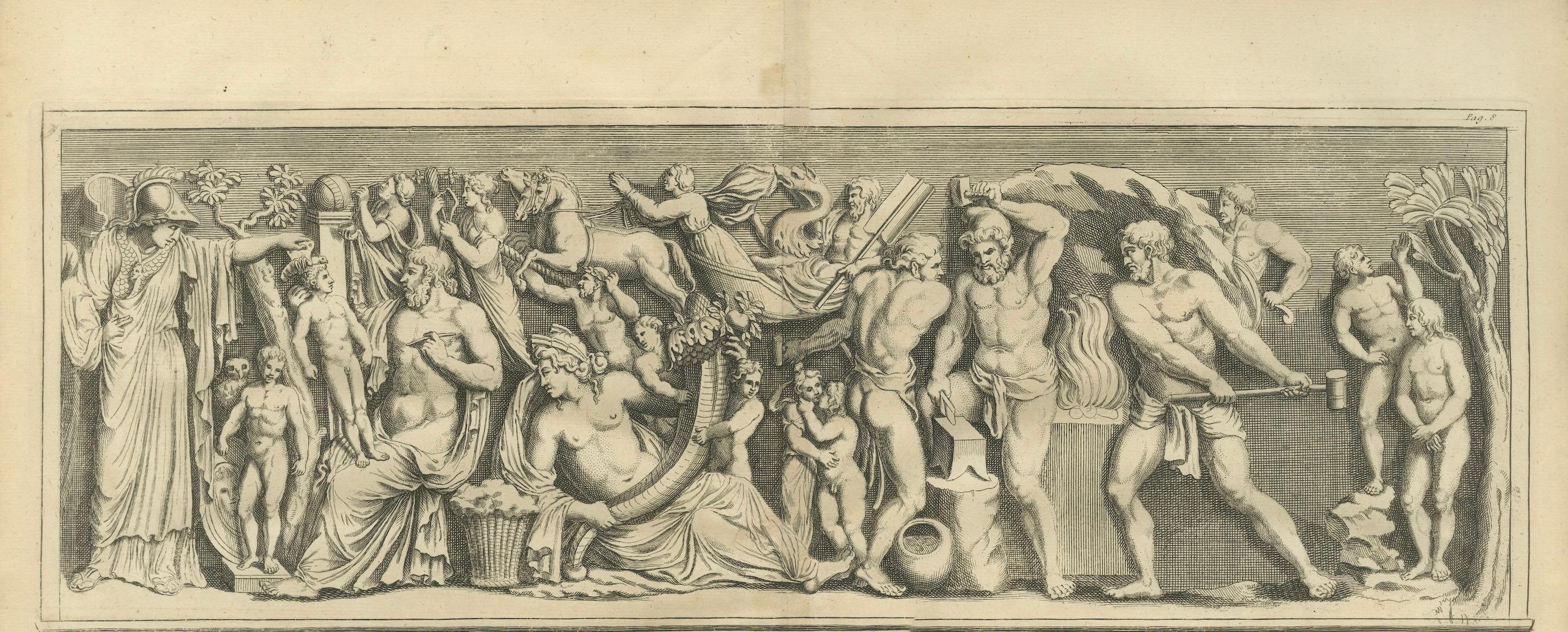
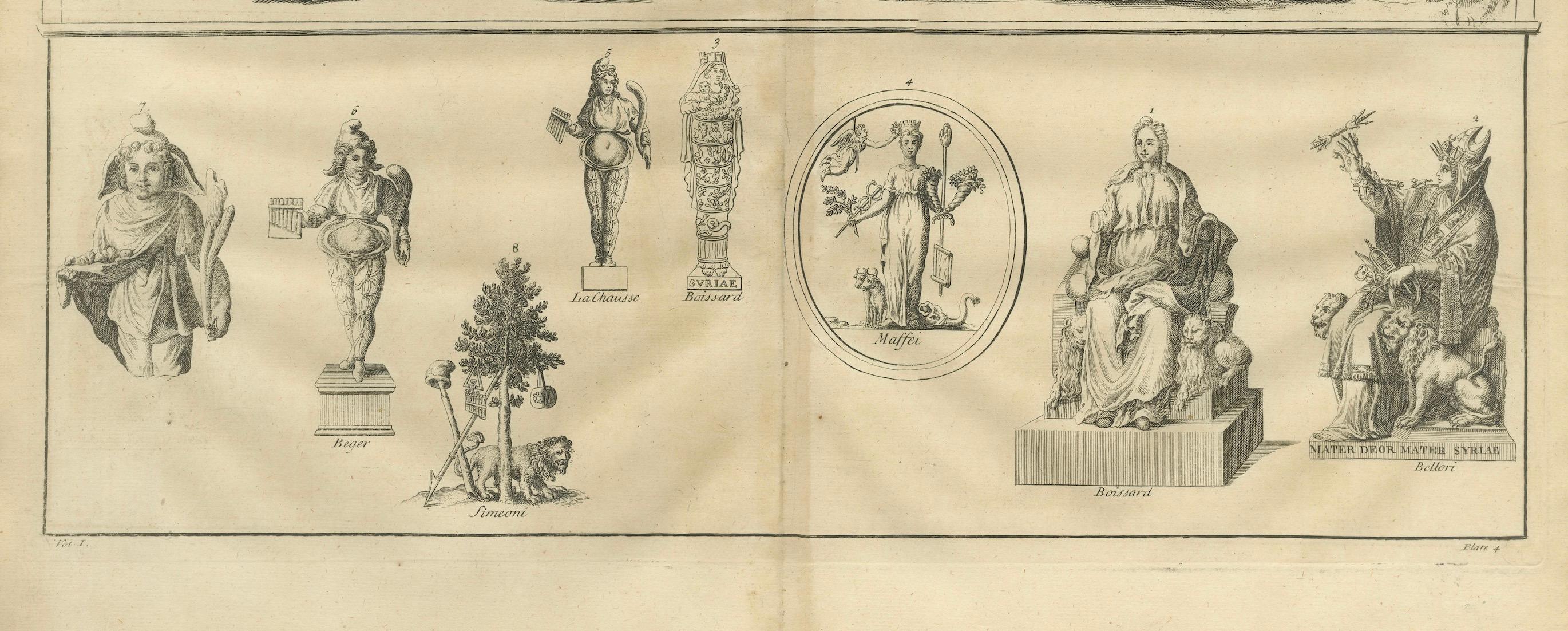
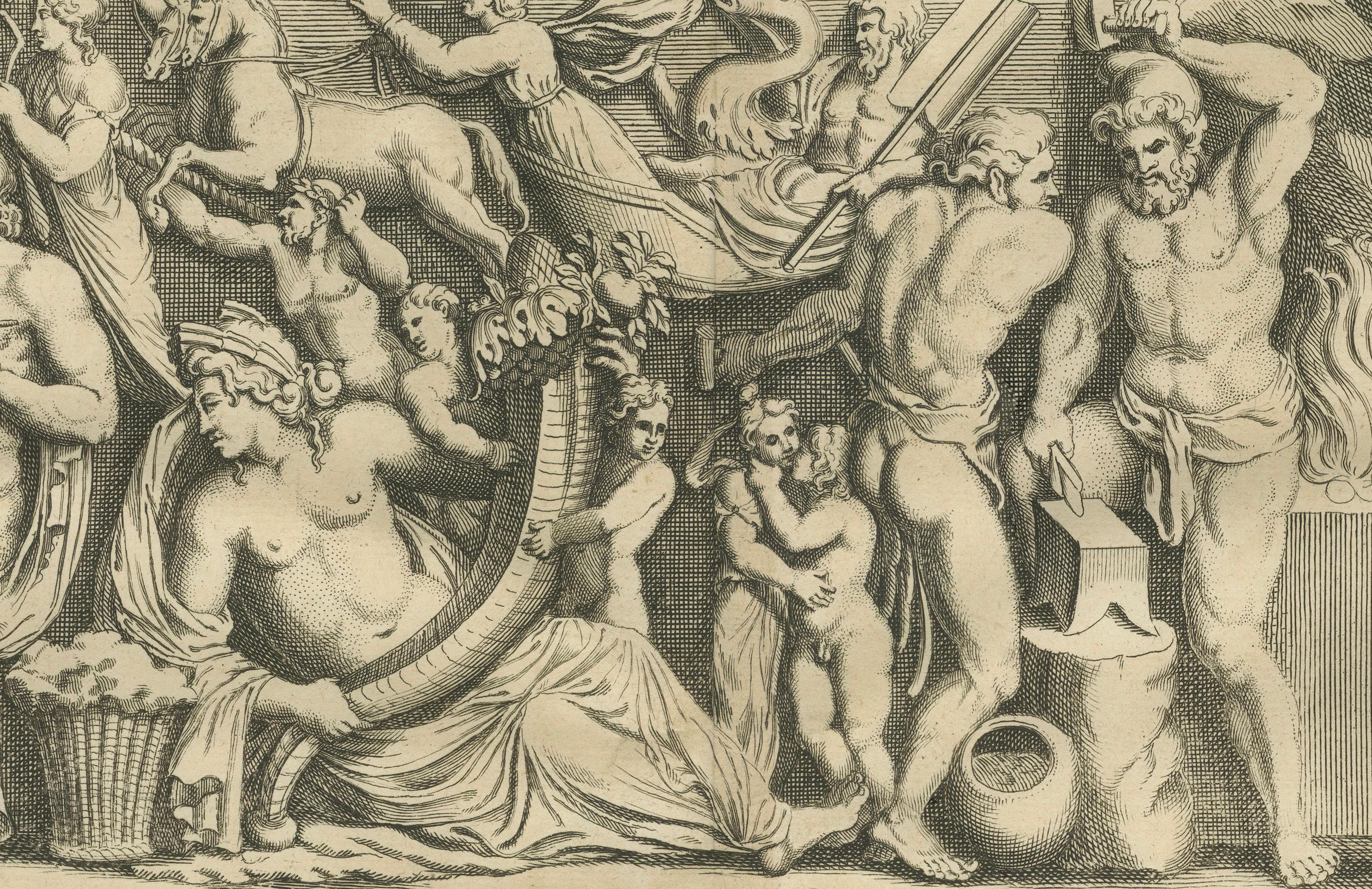
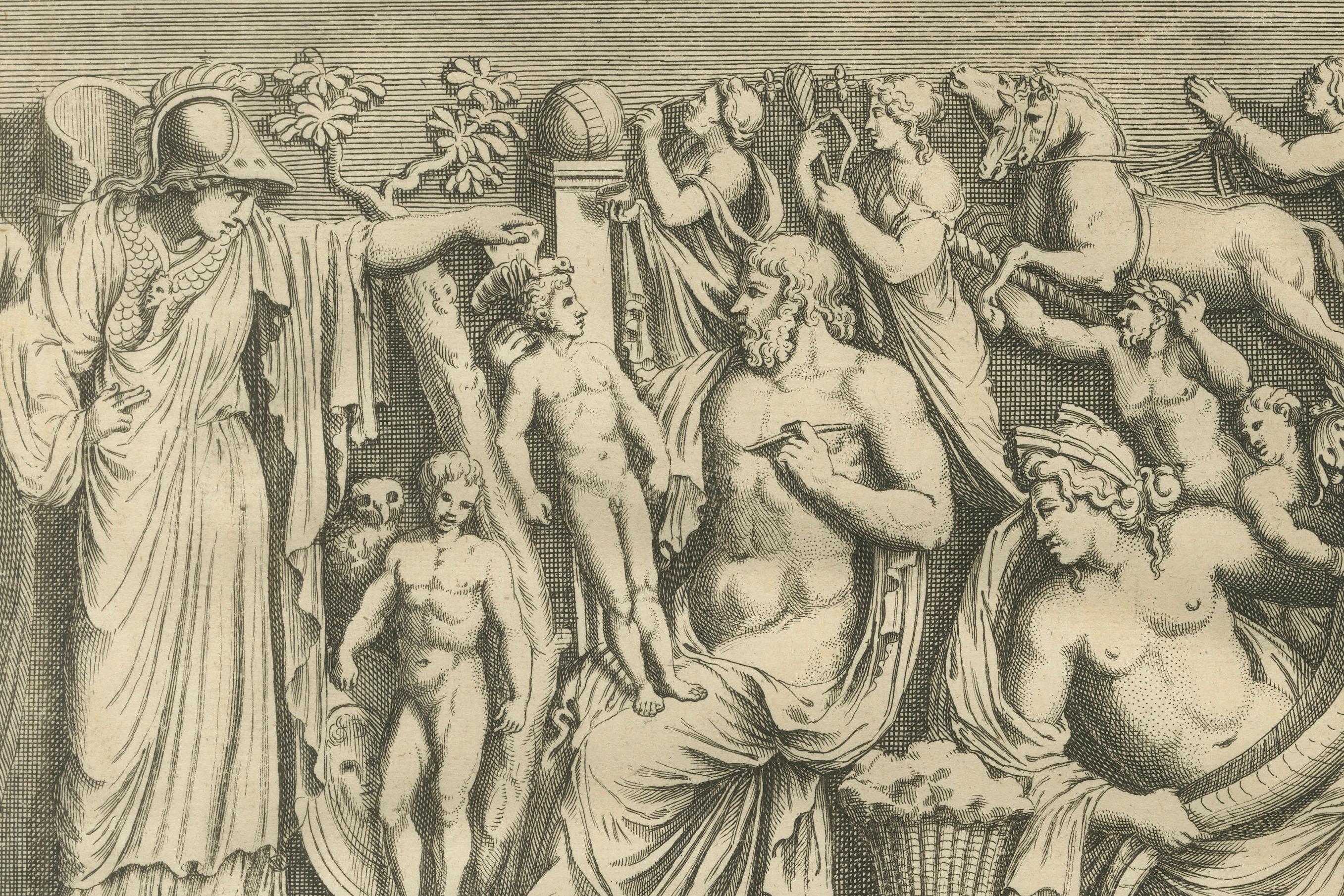
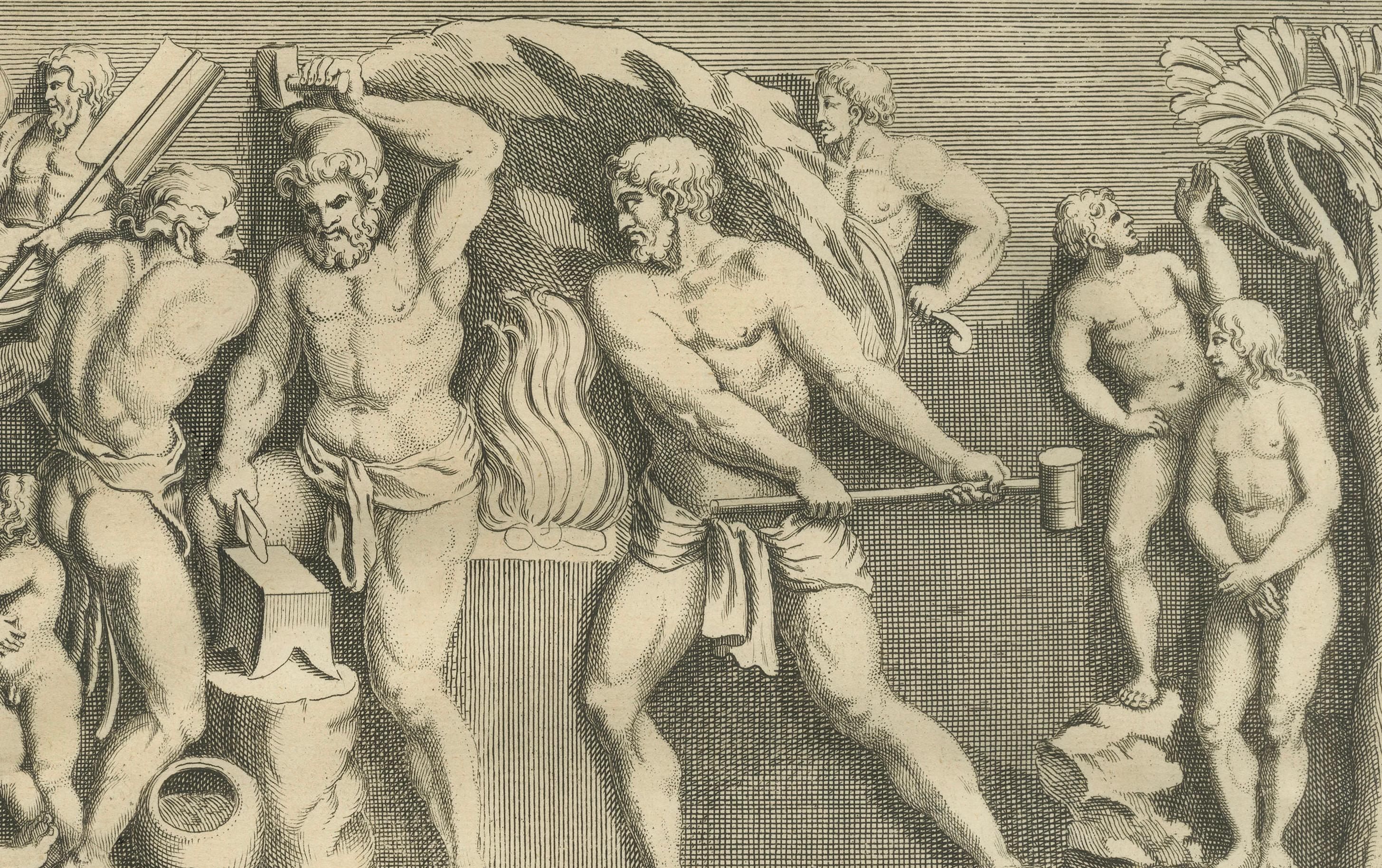
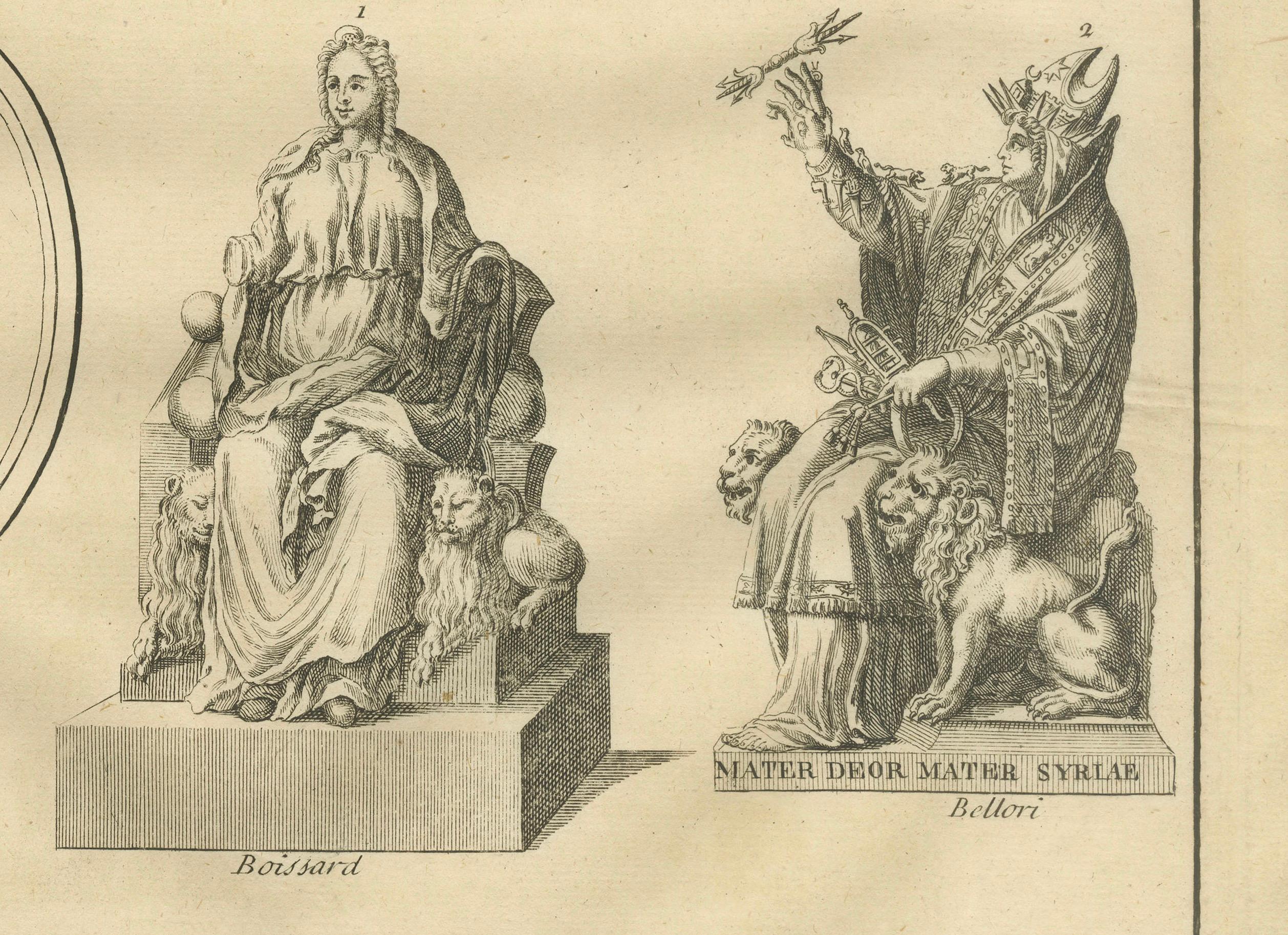
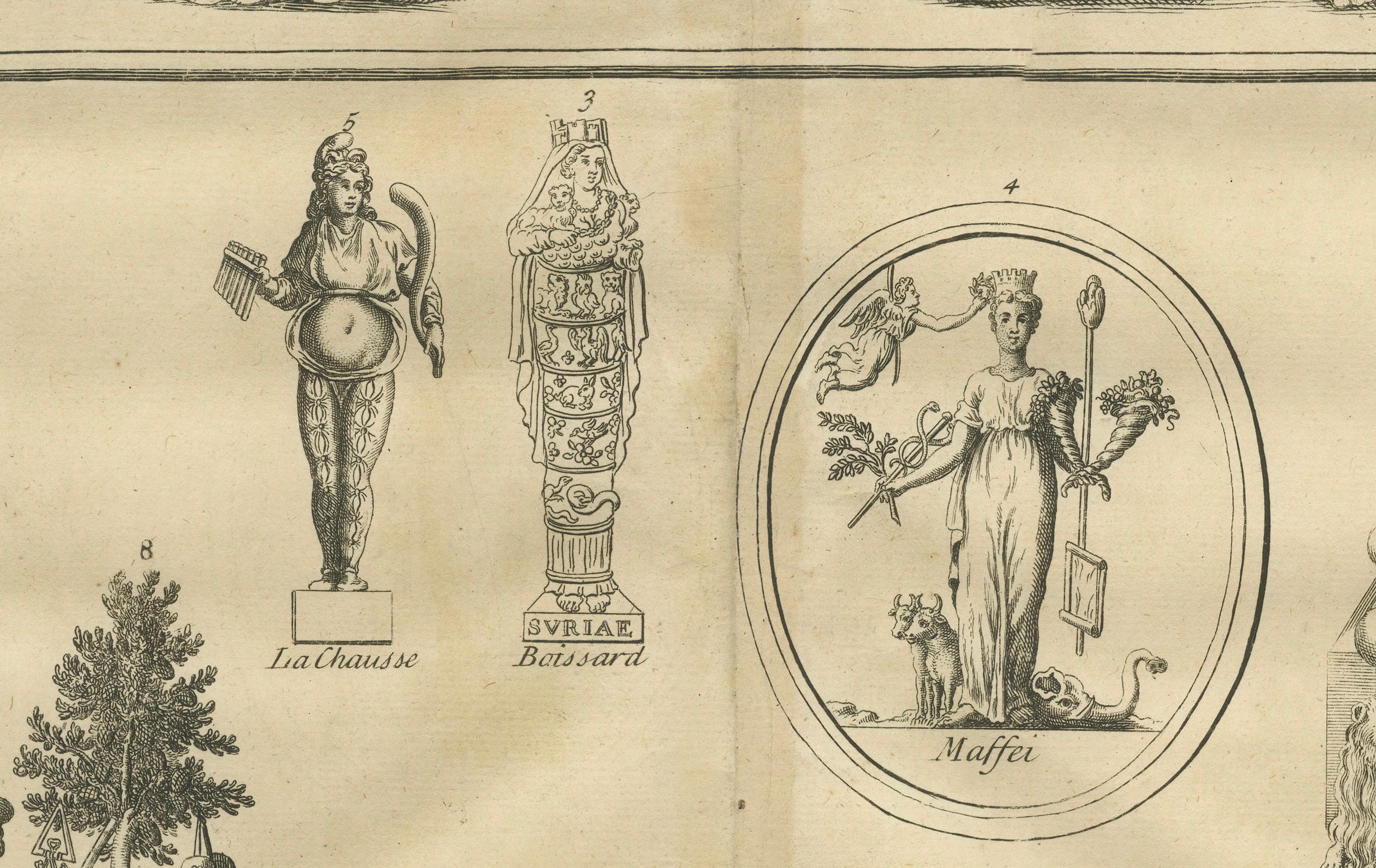
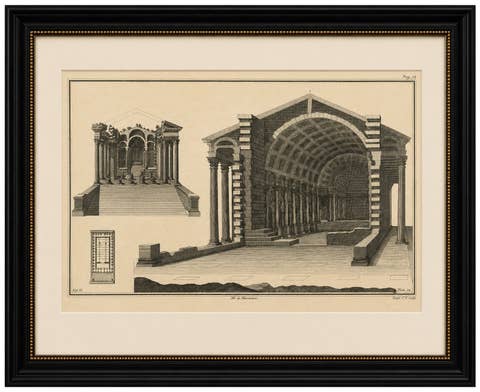
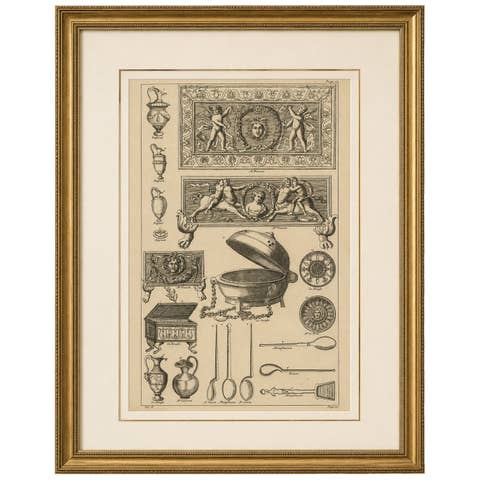
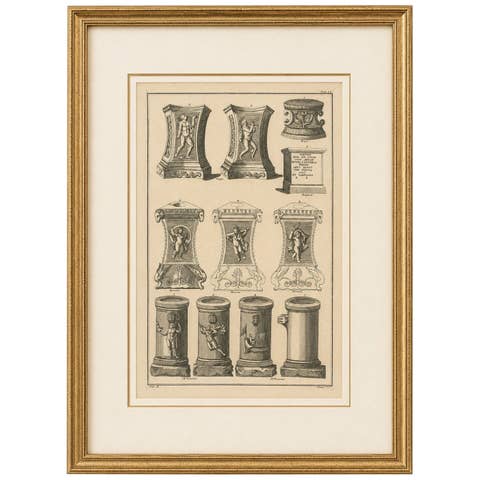
DESCRIPTION Large and highly decorative engraving depicting a double horizontal mythological frieze after ancient Roman relief sculpture. The upper register shows a continuous Bacchic procession populated by nude and semi-draped figures, putti, and ritual scenes associated with Dionysian celebration and abundance. The figures are arranged in a calm yet rhythmic sequence, creating a strong sense of architectural balance and movement. The lower register presents a complementary arrangement of sculptural figures, statues, and symbolic elements, reinforcing the plate’s character as a scholarly reconstruction of antique relief sculpture rather than a narrative illustration.
This engraving was published in Bernard de Montfaucon’s influential work *Antiquity Explained and Represented in Sculptures*, first issued in the early 18th century. Montfaucon’s plates are regarded as foundational documents in the development of archaeology and classical art history, recording ancient monuments as authoritative visual evidence. The horizontal format, sculptural clarity, and measured classical rhythm give this plate exceptional wall presence, making it particularly sought after by interior designers, architects, and collectors of classical antiquities.
The composition reads as a fragment of a museum frieze, lending it a timeless architectural quality well suited to refined interiors, libraries, studies, or hotel settings.
CONDITION REPORT Good, strong impression with clearly visible plate mark. Light age toning to the paper and minor edge wear consistent with age. No losses to the engraved image.
FRAMING TIPS Best presented with a wide horizontal mat in warm off-white or stone tone to emphasize the frieze format. Frame in dark walnut, ebonized wood, or matte black for a museum-style, architectural effect.
Technique: Engraving Maker: Bernard de Montfaucon, Paris / London, 1721