Column of Trajan, Rome – Original Hand-Colored Engraving, 1798
€ 485
Original antique · The actual sheet photographed · Certificate of authenticity on request · Sold unframed · Worldwide shipping from € 15 (rates)
Date
1798
Mapmaker / artist
L. Merigot & R. Edwards, London, 1798
Technique
Hand-colored engraving on paper
Sheet size
42.4 × 30.3 cm (16.7 × 11.9 in)
Condition
Excellent
Reference
BG-13595-19
What the condition grades mean
Excellent
Bright and clean, with no faults worth mentioning.
Very good
Only light signs of age, such as faint toning.
Good
Normal signs of age for a sheet of this period: toning, some foxing, small marks or neat old repairs.
Fair
Clear faults such as staining, tears or repairs, priced to match.
Every fault we see is written in the condition note, and the whole sheet is shown uncropped in the photos.
Condition
Impression with fresh coloring. Light toning and minor spotting in margins consistent with age. Visible plate mark around the image, as issued.
About this sheet
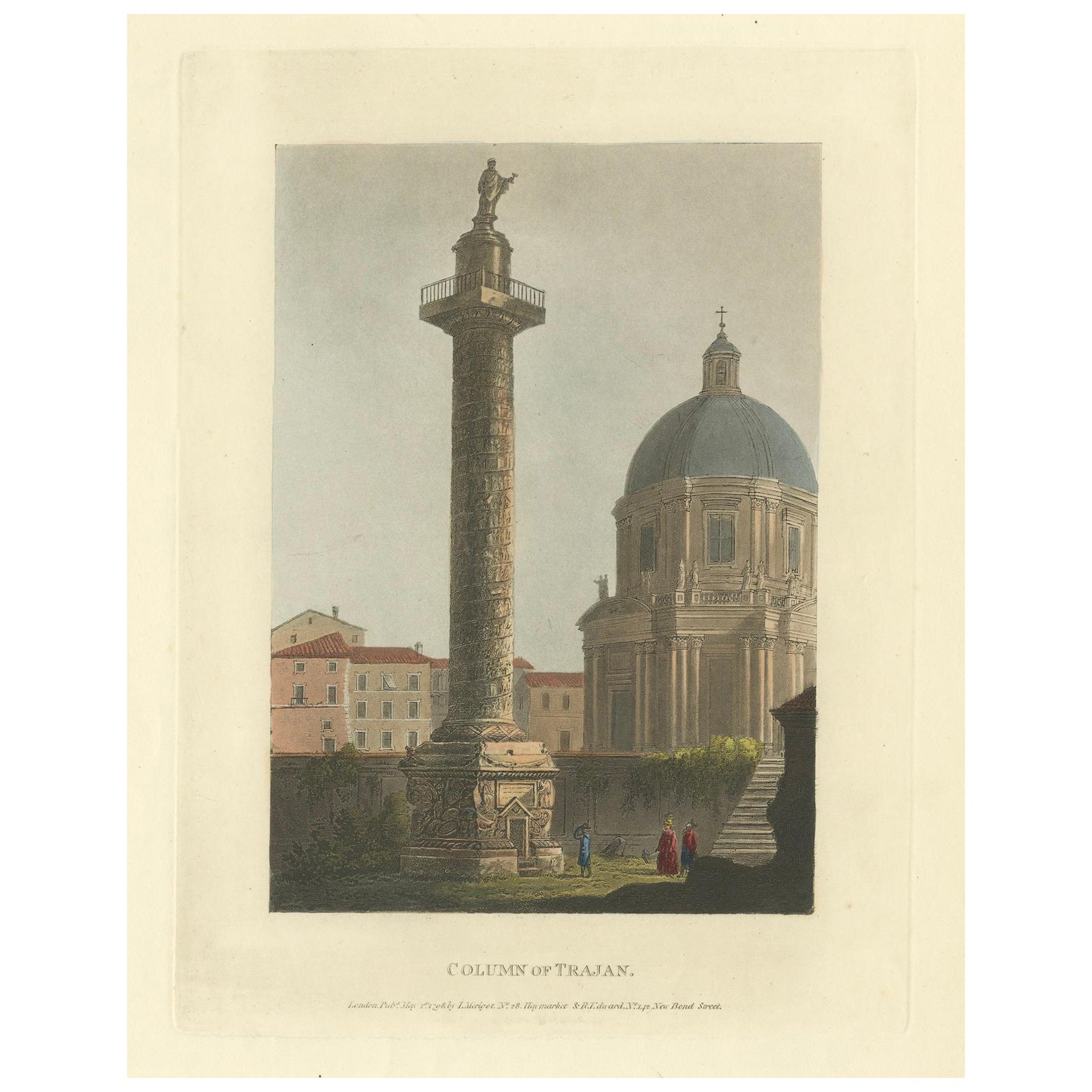
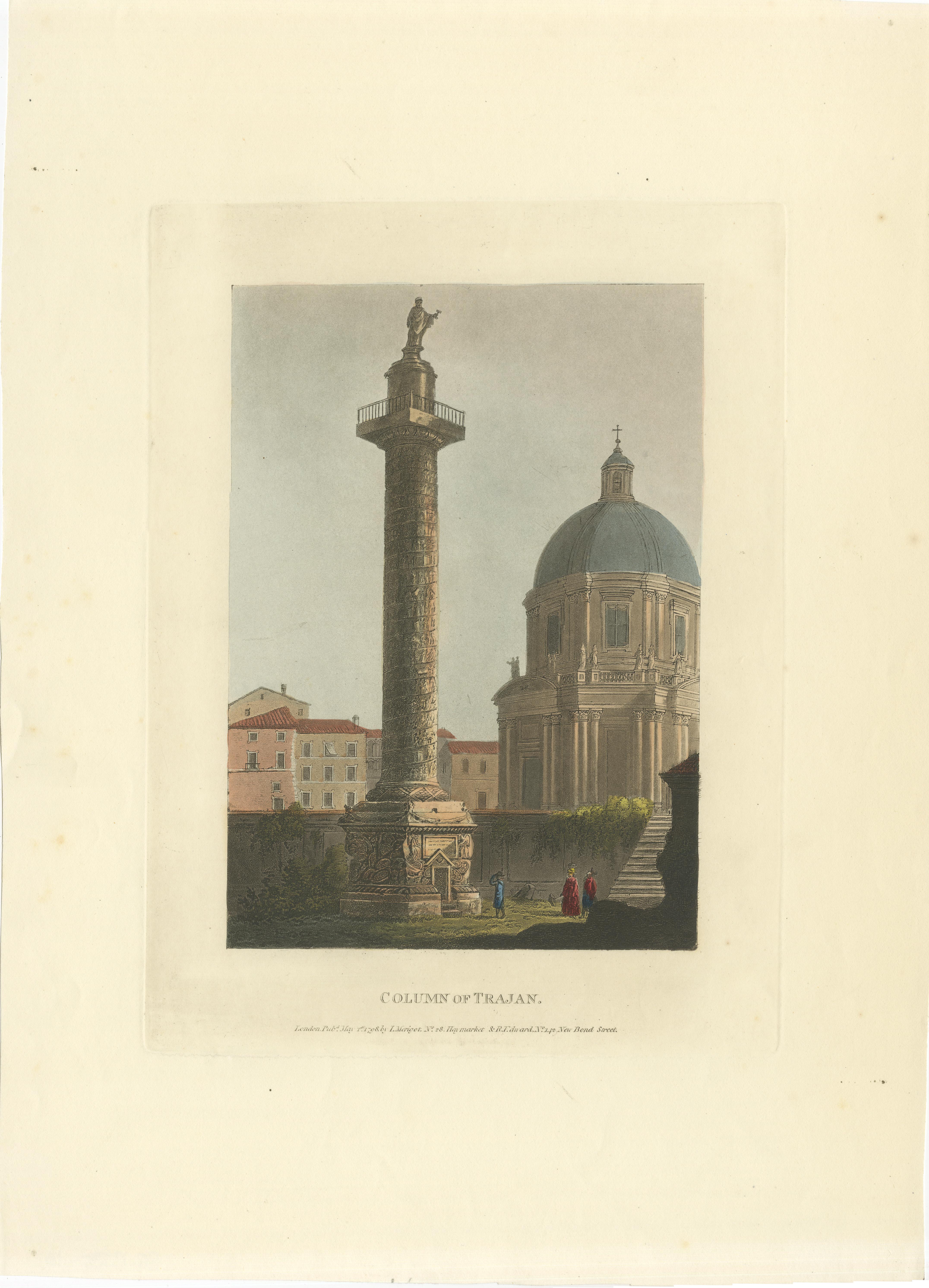
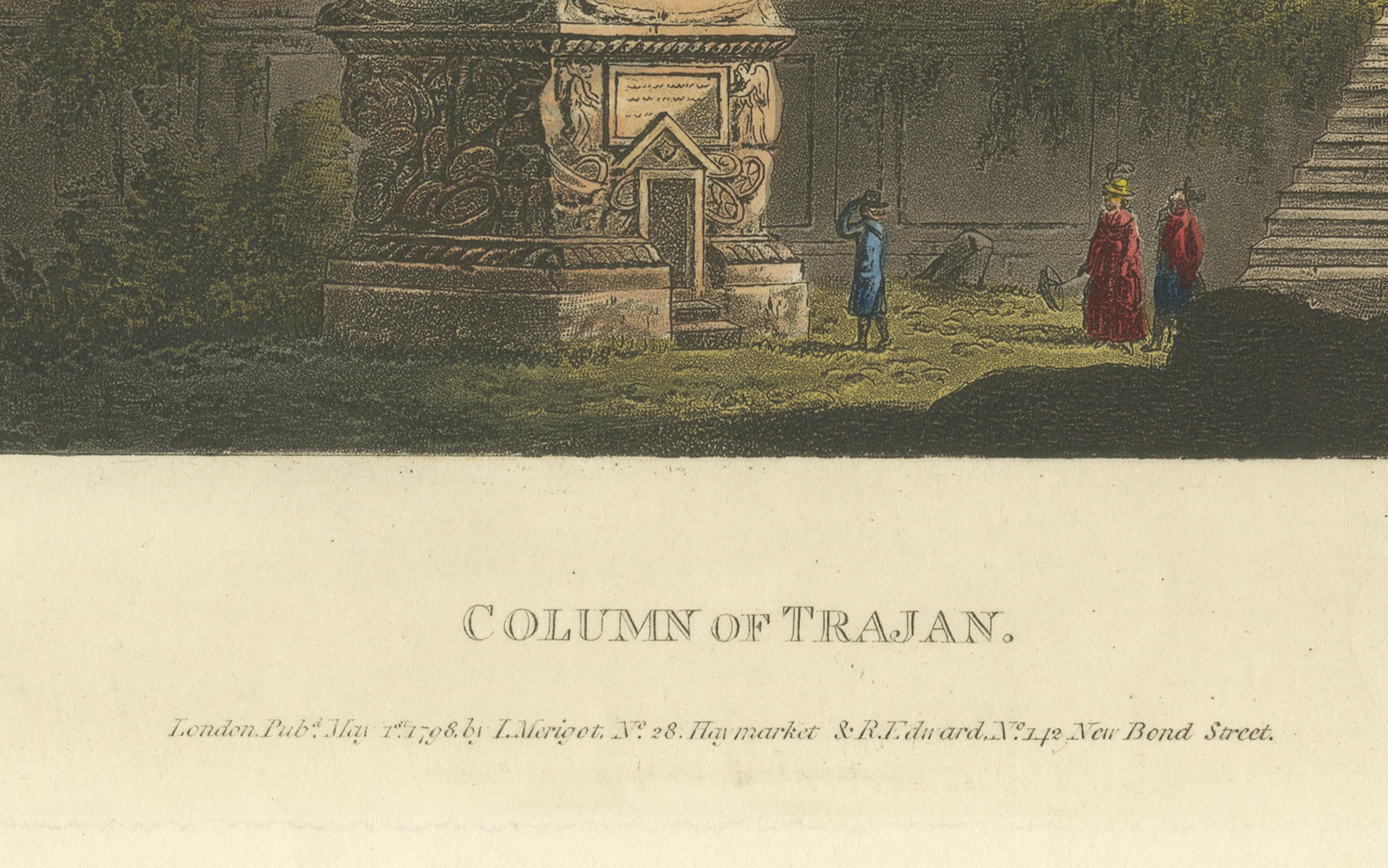
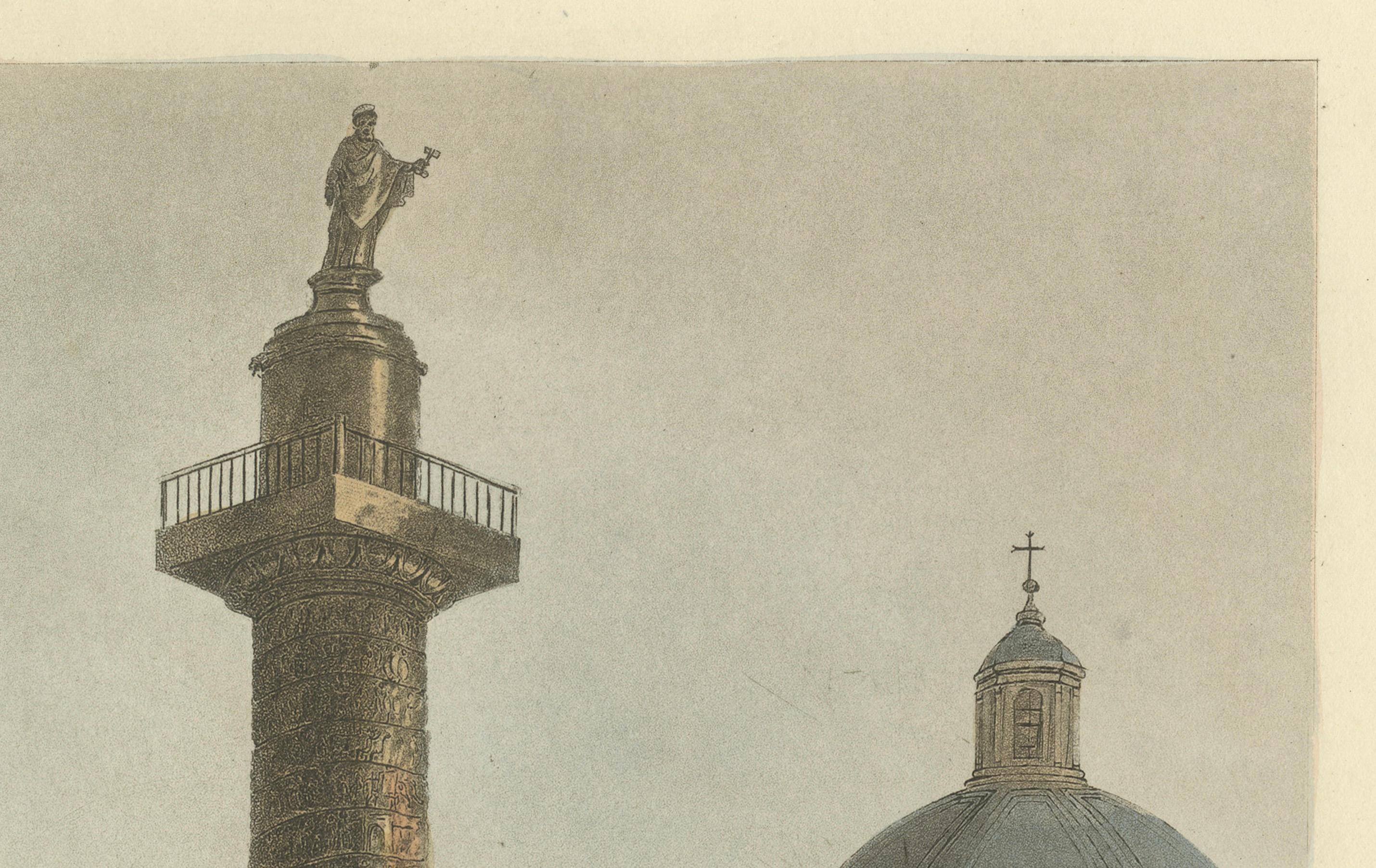
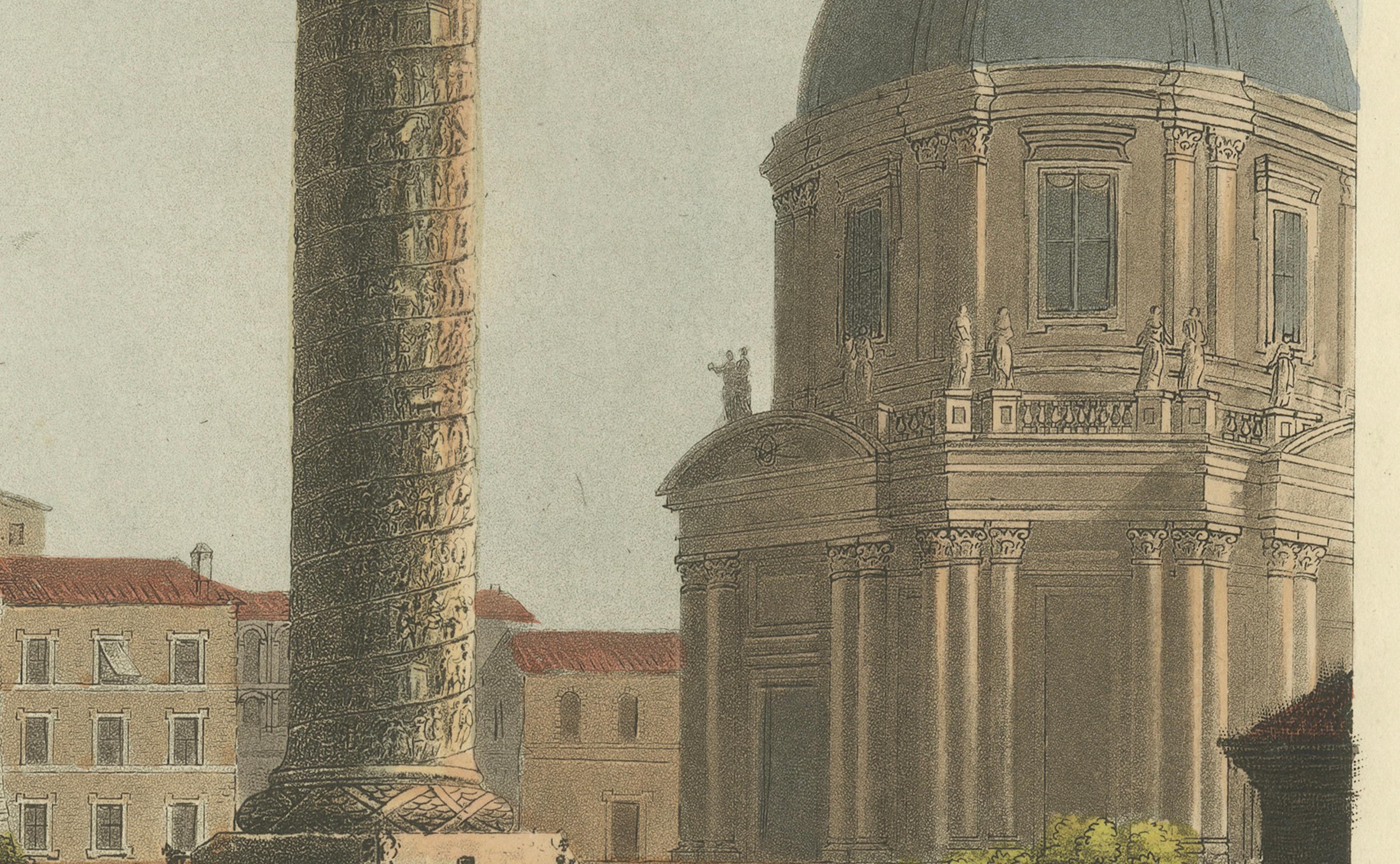
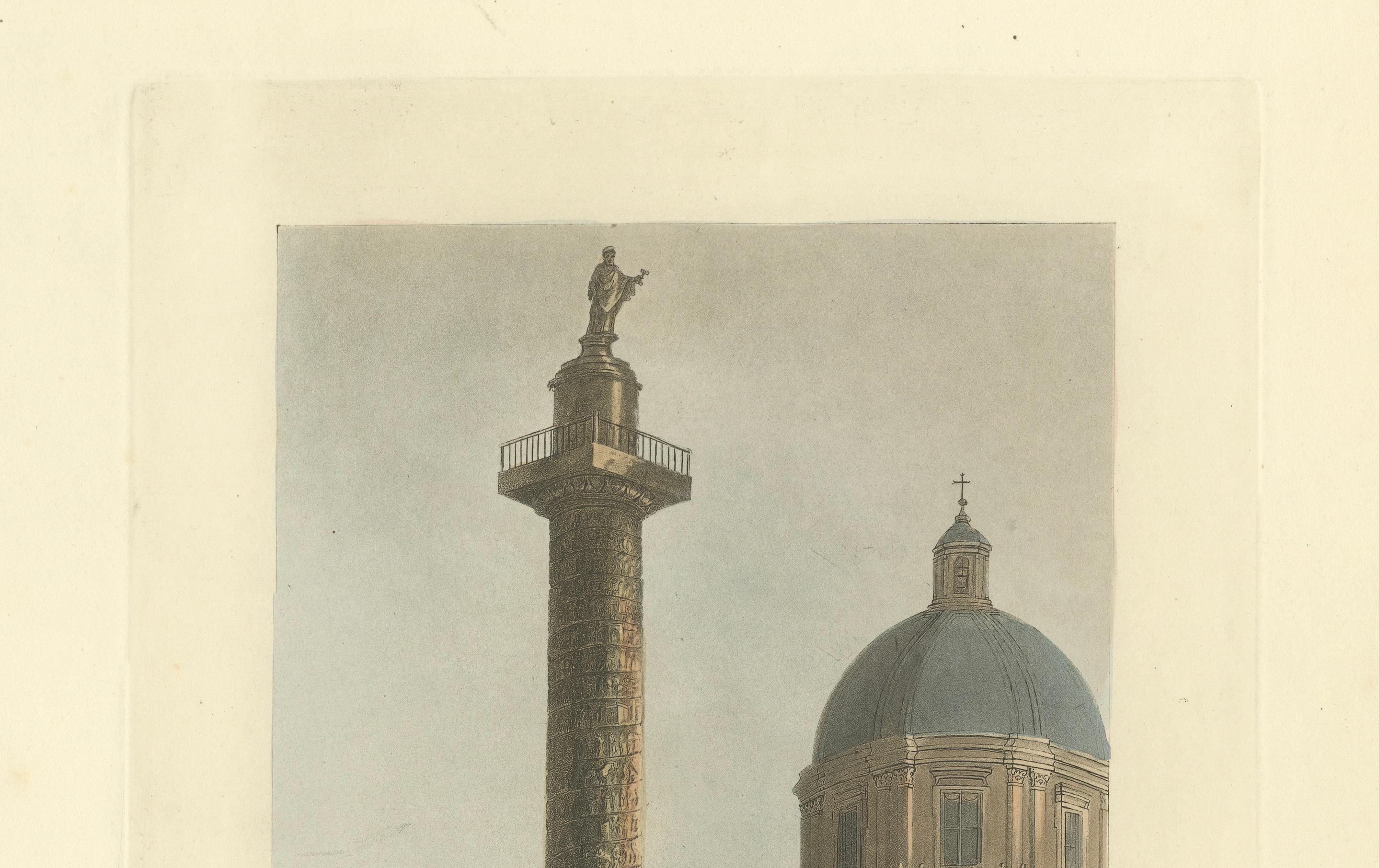
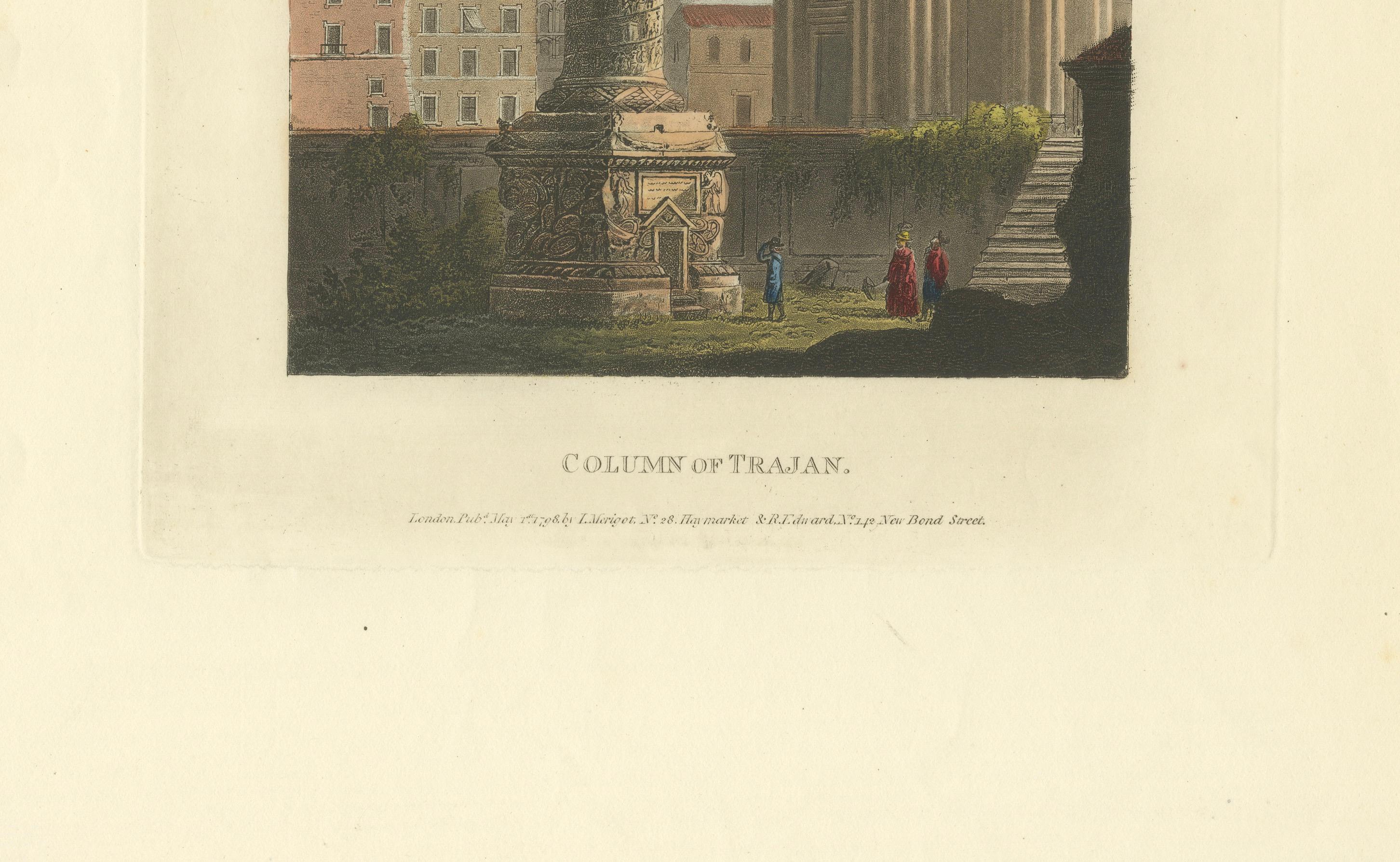
This original hand-colored engraving titled "Column of Trajan" was published in London on May 14th, 1798 by L. Merigot, No. 28 Haymarket, and R. Edwards, No. 142 New Bond Street. The print beautifully depicts the ancient Column of Trajan in Rome, one of the most iconic monuments of Imperial architecture. The column, erected in 113 AD to commemorate Emperor Trajan’s victory in the Dacian Wars, is renowned for its intricate spiral reliefs narrating the story of the campaign.
The engraving captures the monument in remarkable detail, from the sculpted frieze winding up the column to the statue crowning it—here shown as St. Peter, which replaced the original bronze statue of Trajan in the 16th century. In the background stands the Church of the Most Holy Name of Mary (Chiesa del Santissimo Nome di Maria al Foro Traiano), with its elegant Baroque dome providing a striking architectural contrast to the ancient column.
At the foot of the monument, small human figures dressed in late 18th-century attire add scale and context, reflecting the neoclassical fascination with Rome’s ancient ruins that was widespread among travelers of the Grand Tour.
Framing tips: This engraving would look striking in a dark gilt or walnut neoclassical frame with a warm ivory or antique white mat to enhance the contrast and emphasize the architectural tones.