About this sheet
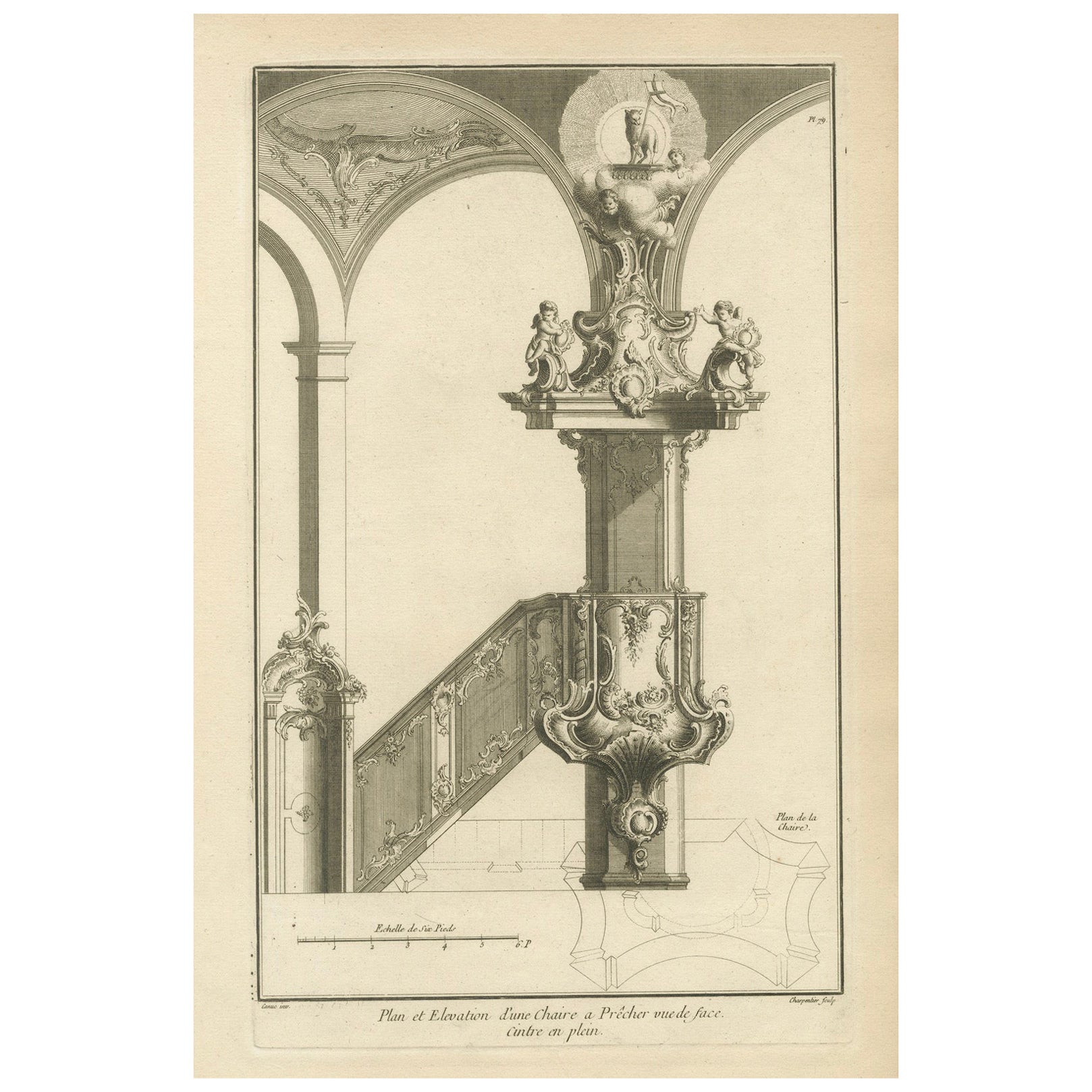
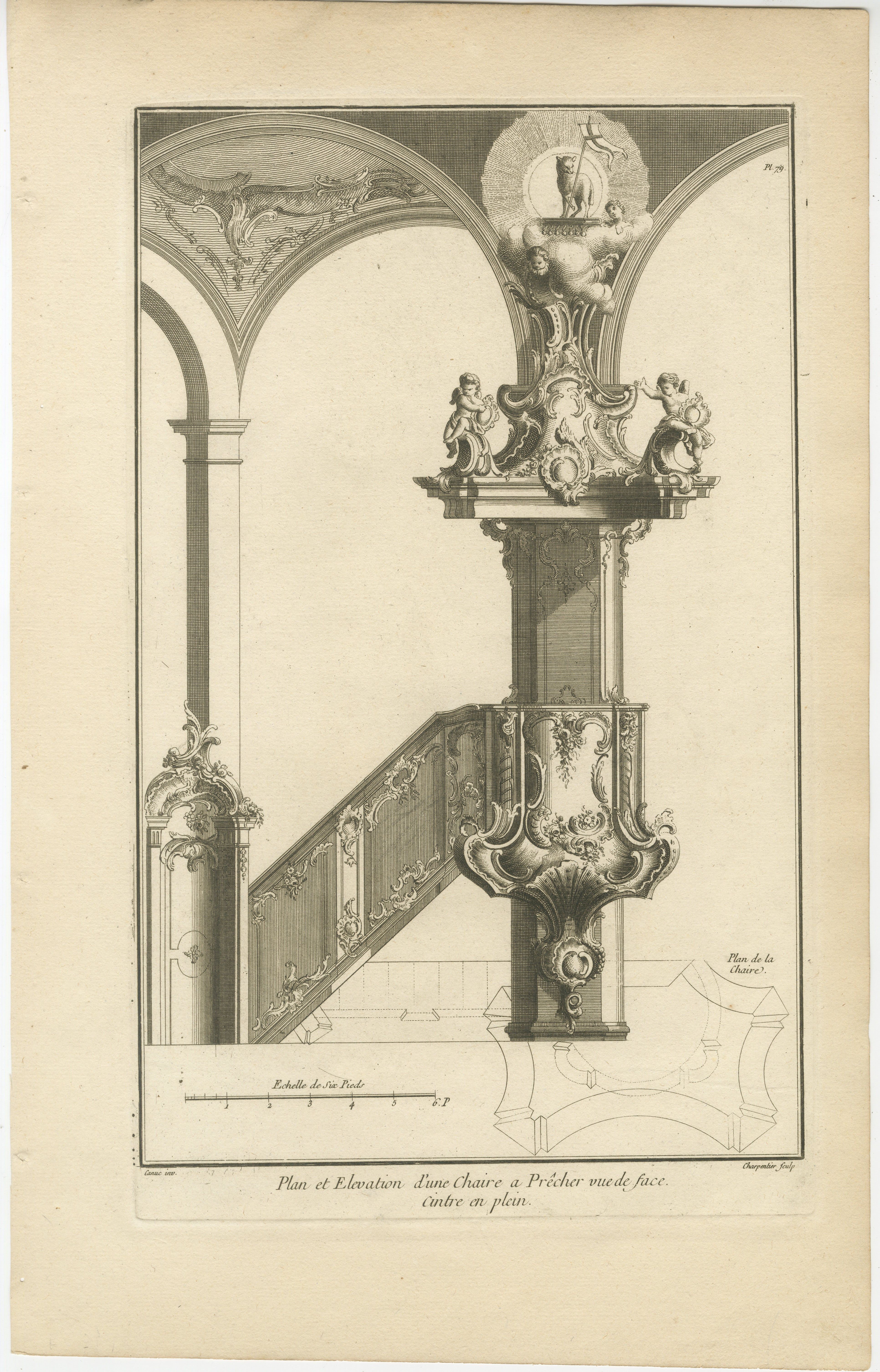
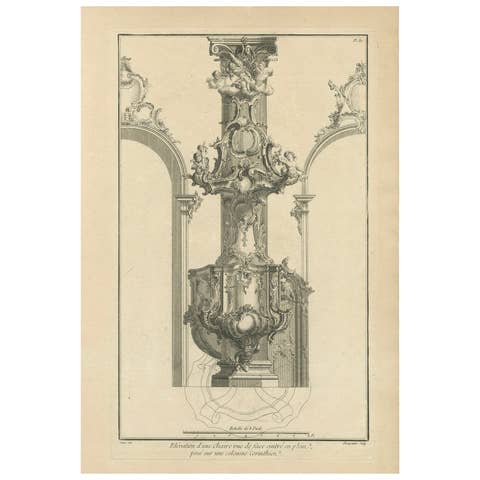
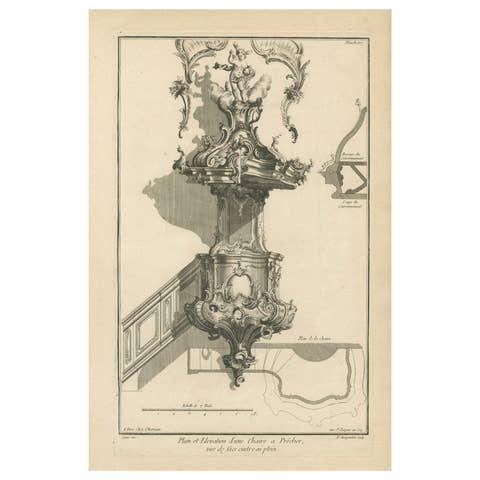
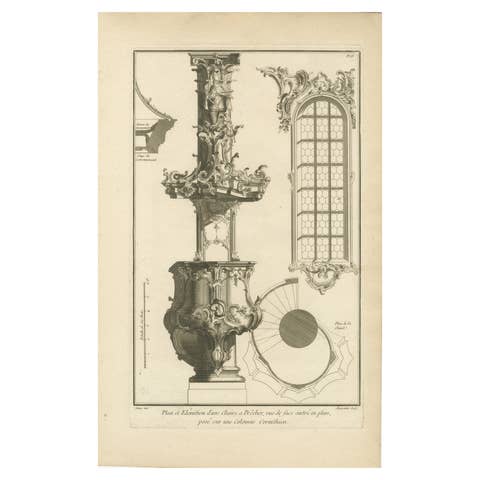
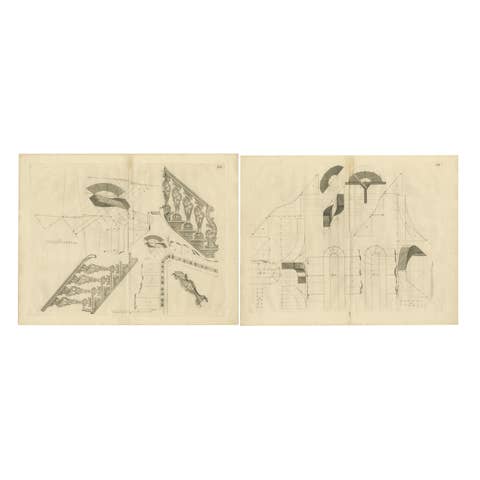
This is an original antique architectural design for a pulpit in baroque style with archway and balustrade dating approximately between 1740 and 1760.
The artist responsible for this design is Franz Xaver Habermann, and it was published by Johann Georg Hertel I in Augsburg. The design shows a richly decorated pulpit and archway, typical of the Rococo style, which is known for its elaborate ornamentation, asymmetry, and curves. This image is one of four numbered plates related to this work. The detail in the engraving is meticulous, showcasing the elaborate aesthetic that characterized much of the European art and architecture during the mid-18th century.
Franz Xaver Habermann (1721–1796) was a German engraver and etcher who was active during the 18th century, a period marked by the Rococo style. Although not as widely known as some of his contemporaries, Habermann contributed significantly to the graphic arts during his time.
Habermann's work often featured architectural designs, such as the intricate pulpit depicted in the image you've provided. He was skilled in creating prints that detailed elaborate decorative schemes and architectural fantasies, which were popular during the Rococo period. His creations were known for their intricate details and the fluidity of their lines, capturing the lightness and ornamental excesses that characterized Rococo design.
Johann Georg Hertel I, who published Habermann's work, was part of a notable family of engravers and publishers in Augsburg, a city that was an important center for publishing in Europe at the time. The Hertel family played a significant role in disseminating artistic and architectural designs through their publications.
While specific details about Habermann’s life and training may not be as well-documented as those of major artists of his time, his surviving works suggest that he was a highly skilled engraver who had mastered the Rococo style, contributing to the spread of this aesthetic through his printed works. His designs would have influenced the tastes of the period, both within Germany and across Europe, where the appetite for such elaborate designs was significant.
More in detail about this engraving:
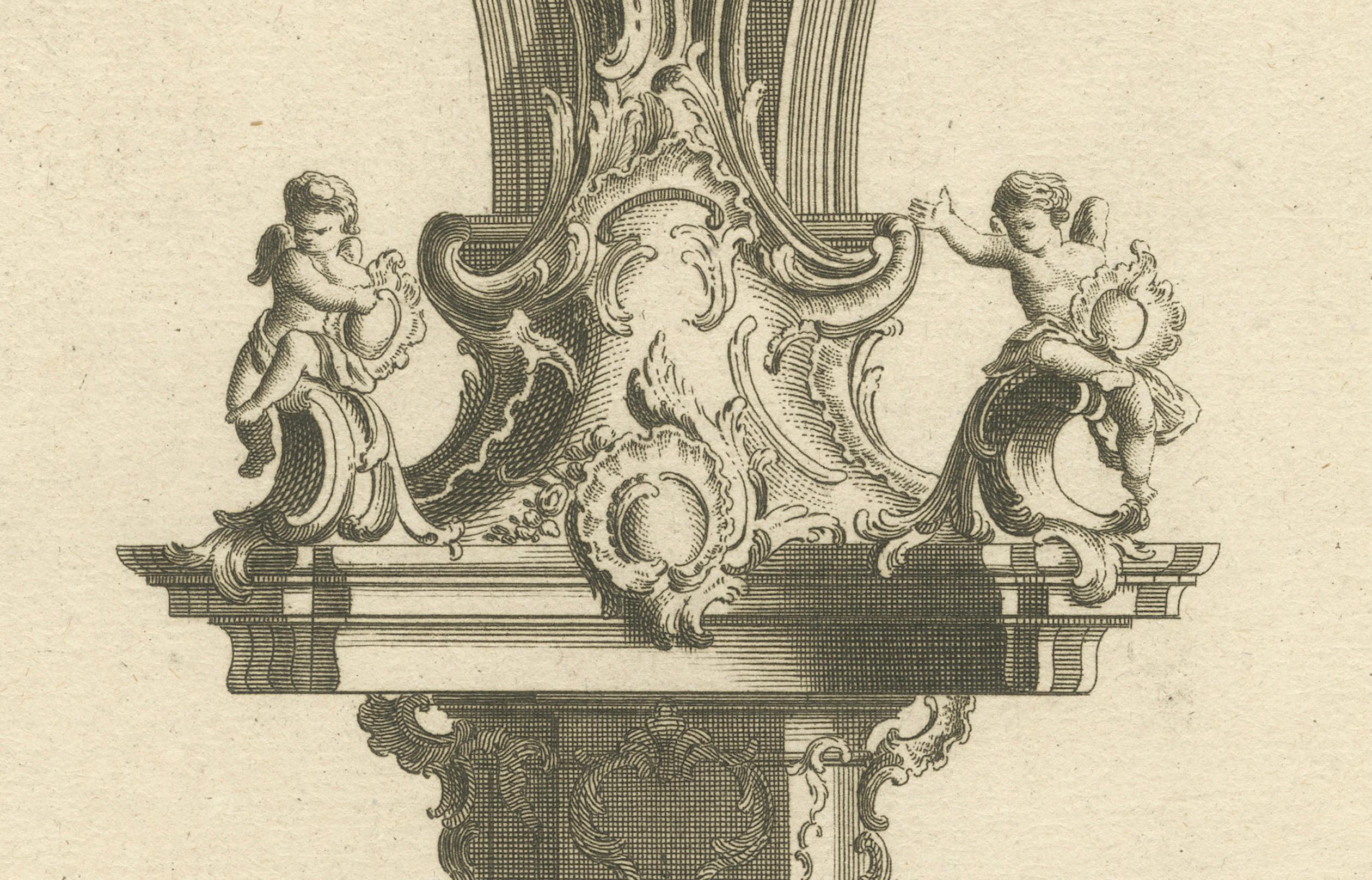
This engraving displays a Baroque-era preacher's pulpit, rich in ornamental detail, positioned within an arched architectural setting. The pulpit itself is lavishly adorned with a variety of decorative motifs that are characteristic of the Baroque style, including intricate scrollwork, acanthus leaves, and possibly floral or vine-like elements, which add to its grandeur and opulence.
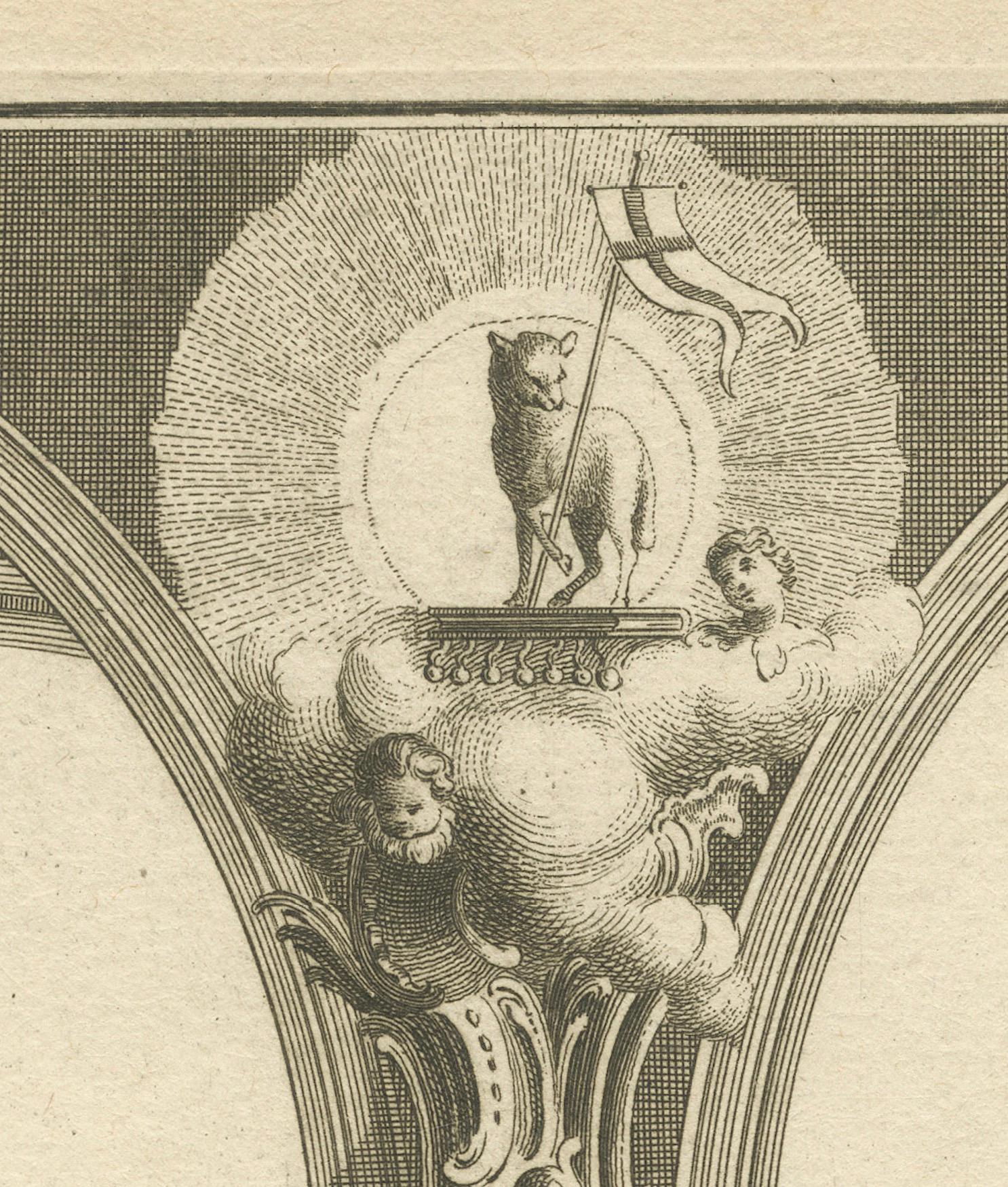
Above the pulpit, the arch is similarly embellished, with a central cartouche that appears to house a figure or emblem. This is flanked by two sculptural figures, possibly cherubs or putti, which are common decorative elements in religious Baroque art, symbolizing innocence and spirituality.
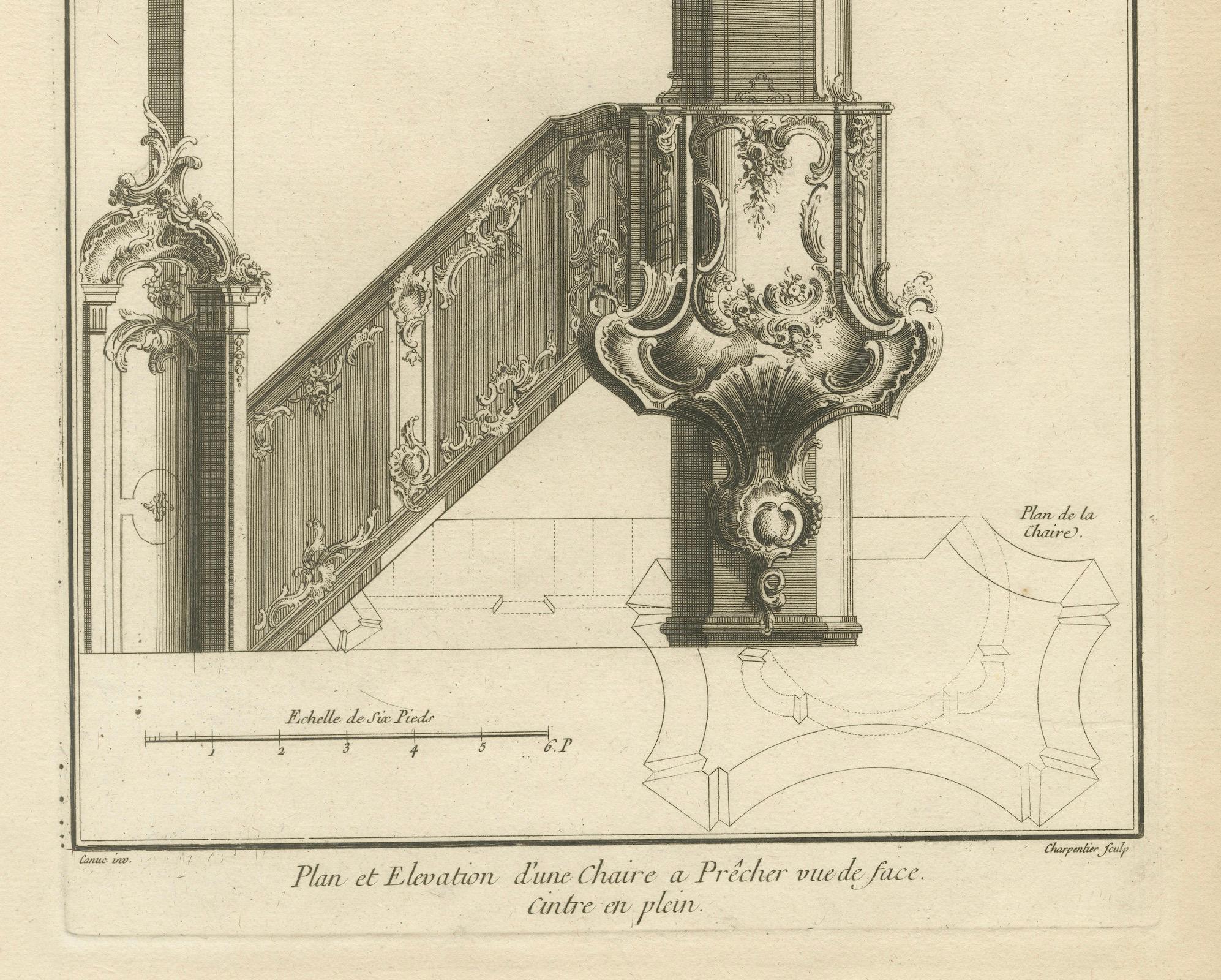
The balustrade extending from the pulpit is also finely detailed, indicating that the preacher’s platform is elevated and accessible by steps, suggesting a design that is both functional and aesthetically pleasing. The side view of the pulpit shows the depth and three-dimensional form of the structure, while the inclusion of a plan view at the bottom of the print provides a comprehensive understanding of the pulpit's design in space.
The print is meticulously executed, reflecting the skilled craftsmanship required to create such detailed engravings. It would have served as a design pattern for artisans of the time or as a means to document the elaborate design for patrons or for archival purposes. The overall effect is one of dramatic elegance, intended to inspire awe and reverence within the ecclesiastical setting.
Note from seller: In our shop we also published the other three engravings in this series and they might still be on offer as well.