About this sheet
Antique Philadelphia View, Girard’s Bank, Neoclassical Architecture, 19th Century
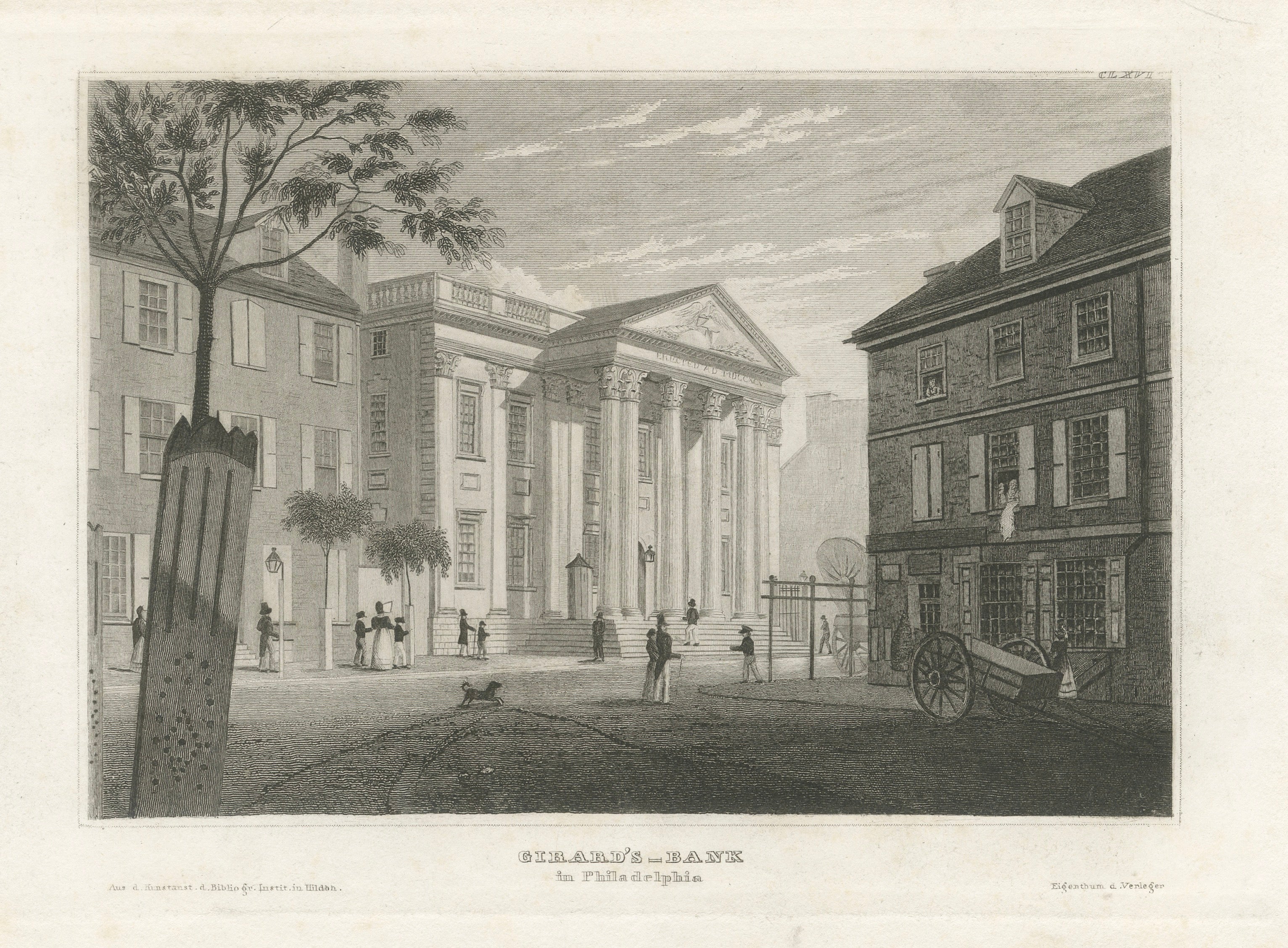
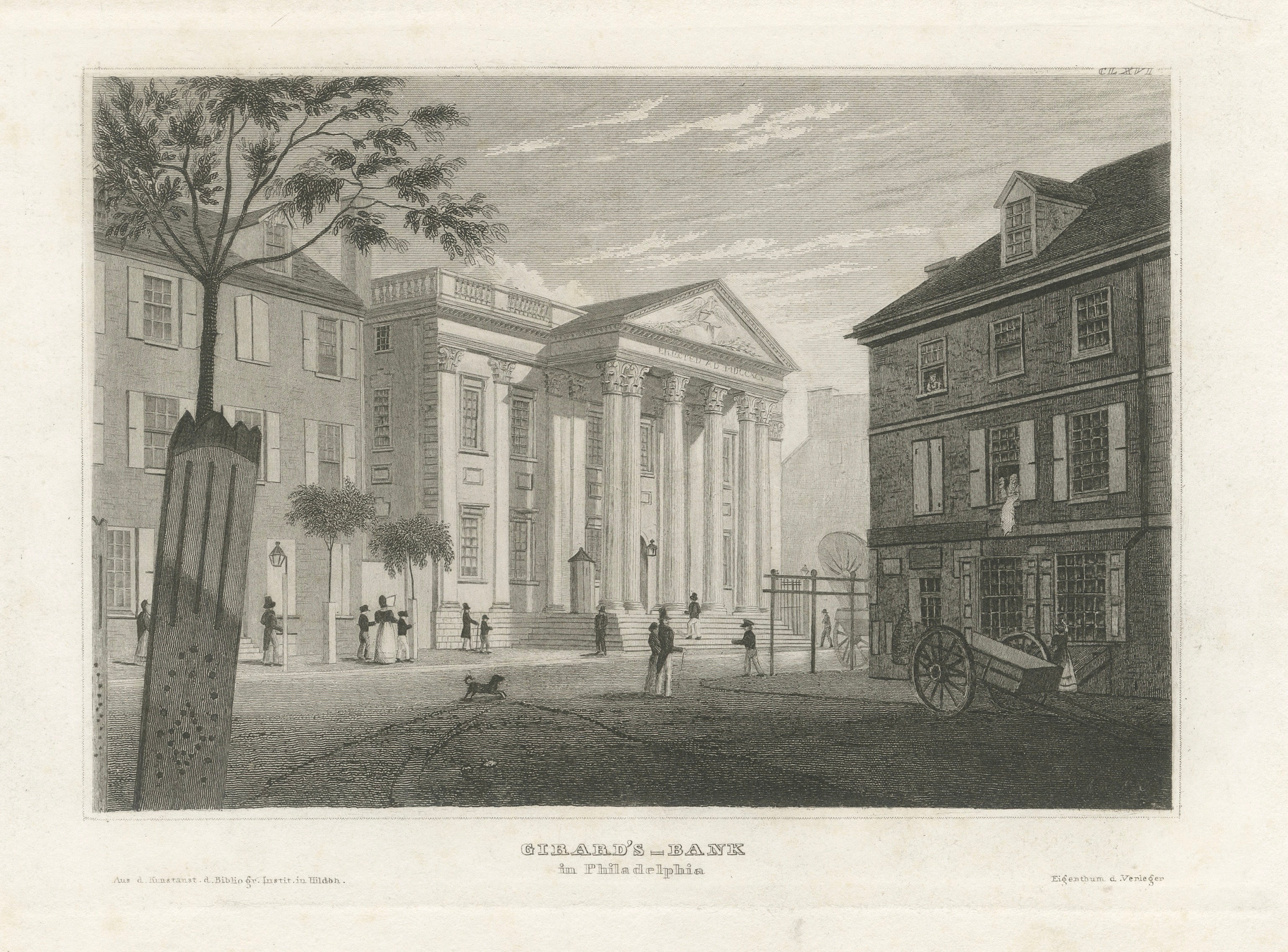
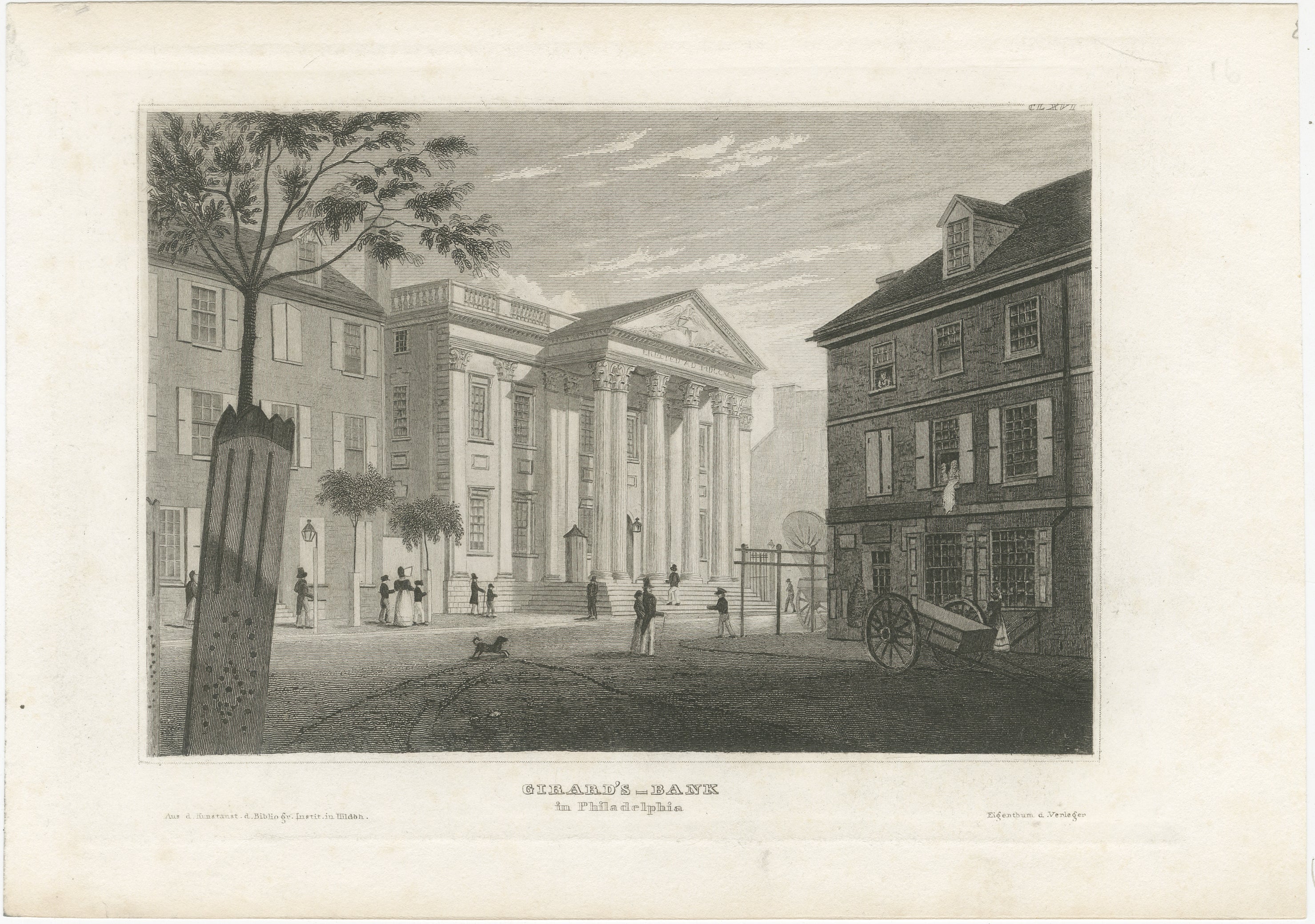
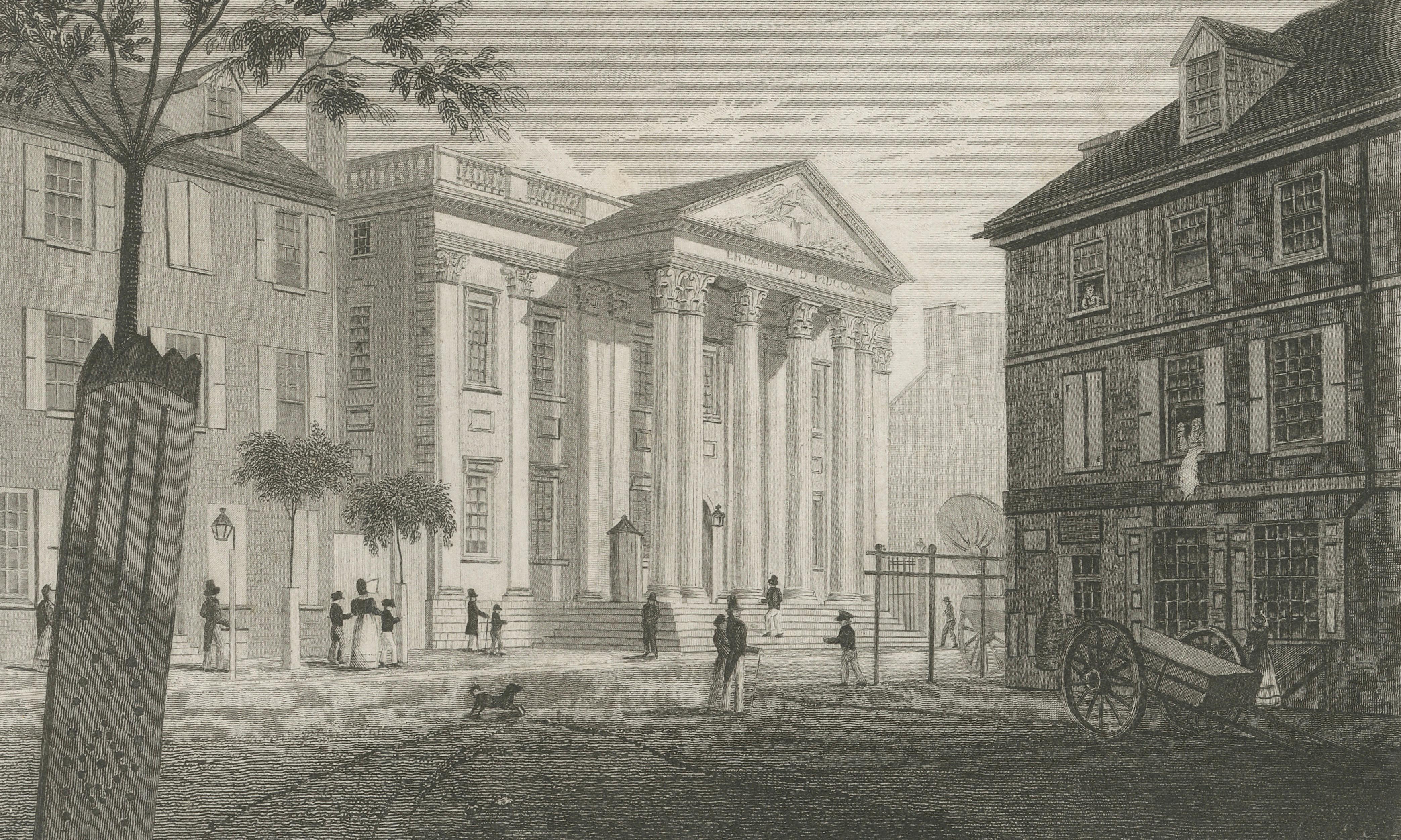
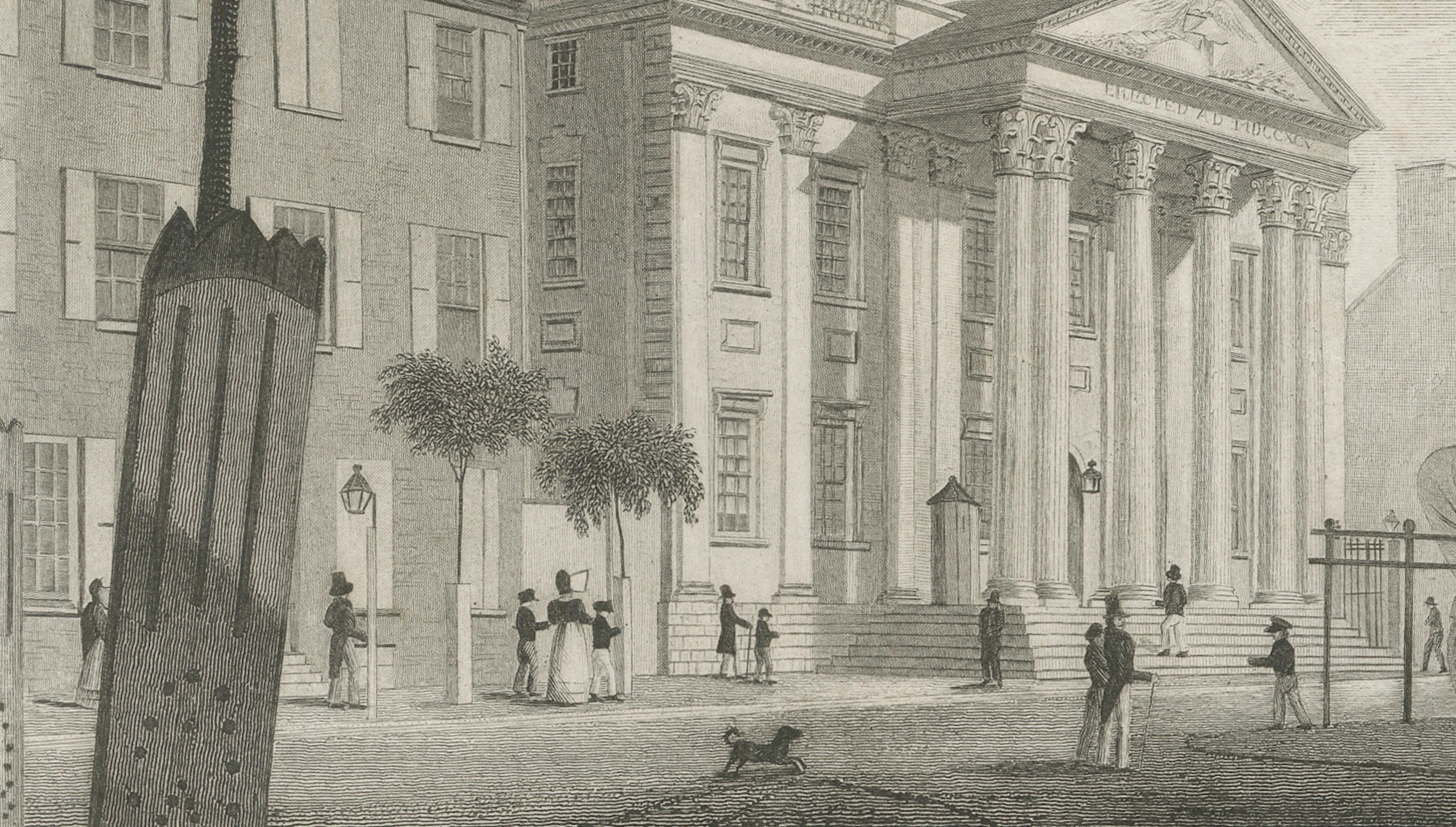
This finely detailed 19th-century engraving depicts Girard’s Bank in Philadelphia, one of the most historically significant financial buildings in early American history. The scene captures the imposing neoclassical structure on Third Street, originally constructed as the First Bank of the United States (1797–1811), and later acquired by the prominent financier Stephen Girard in 1812. Girard transformed the building into his private bank, cementing its place in the financial development of the young United States.
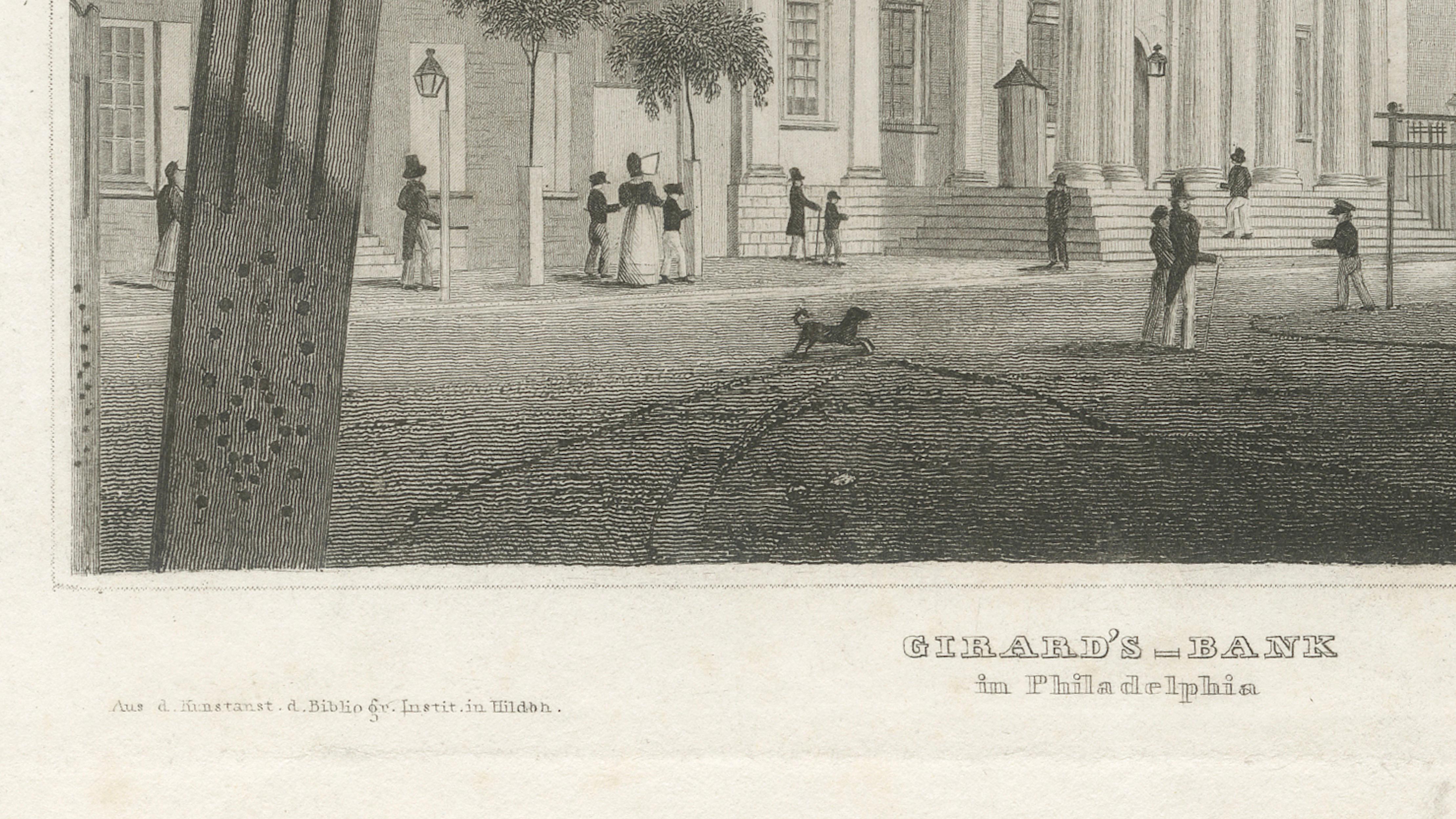
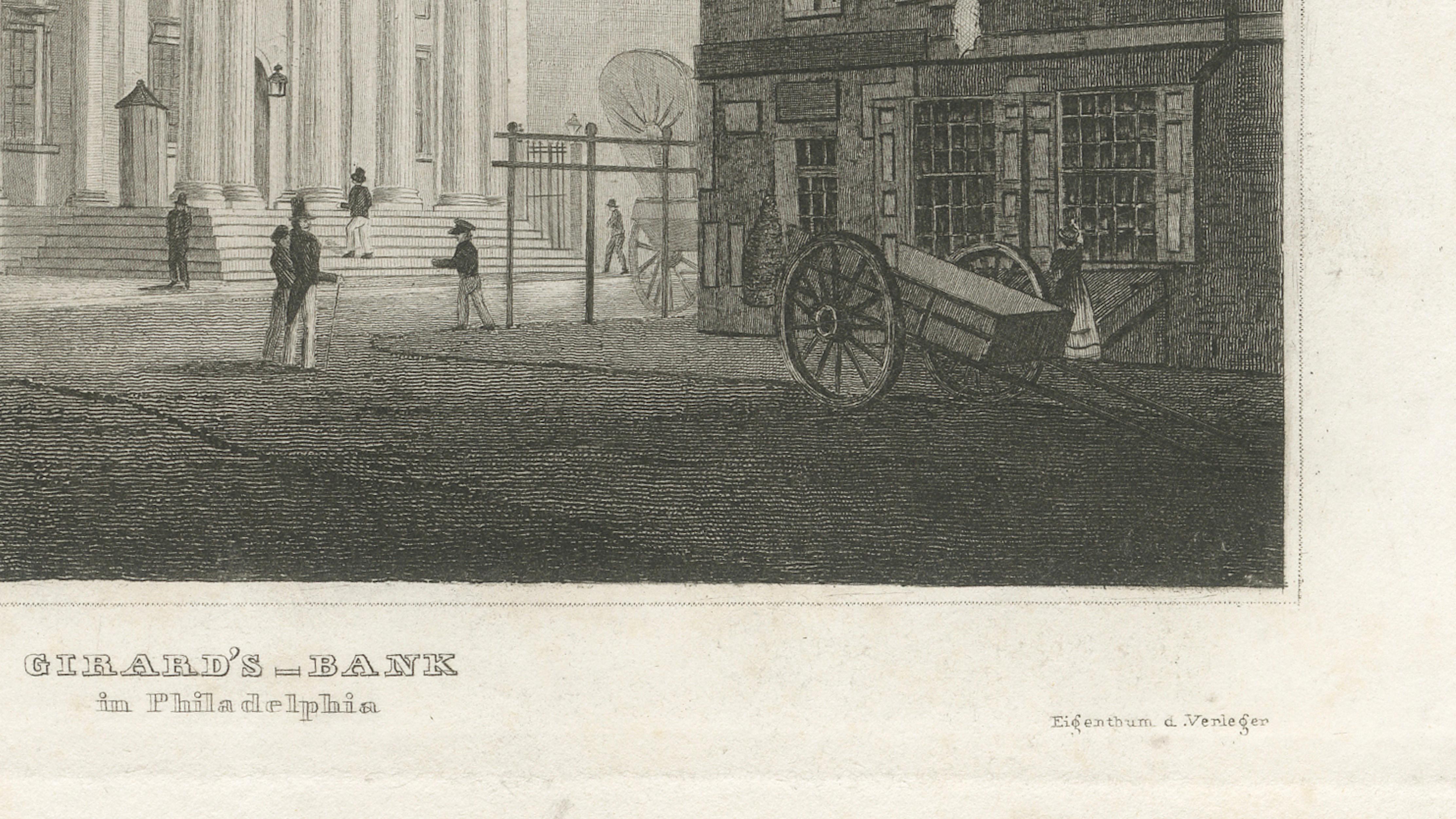
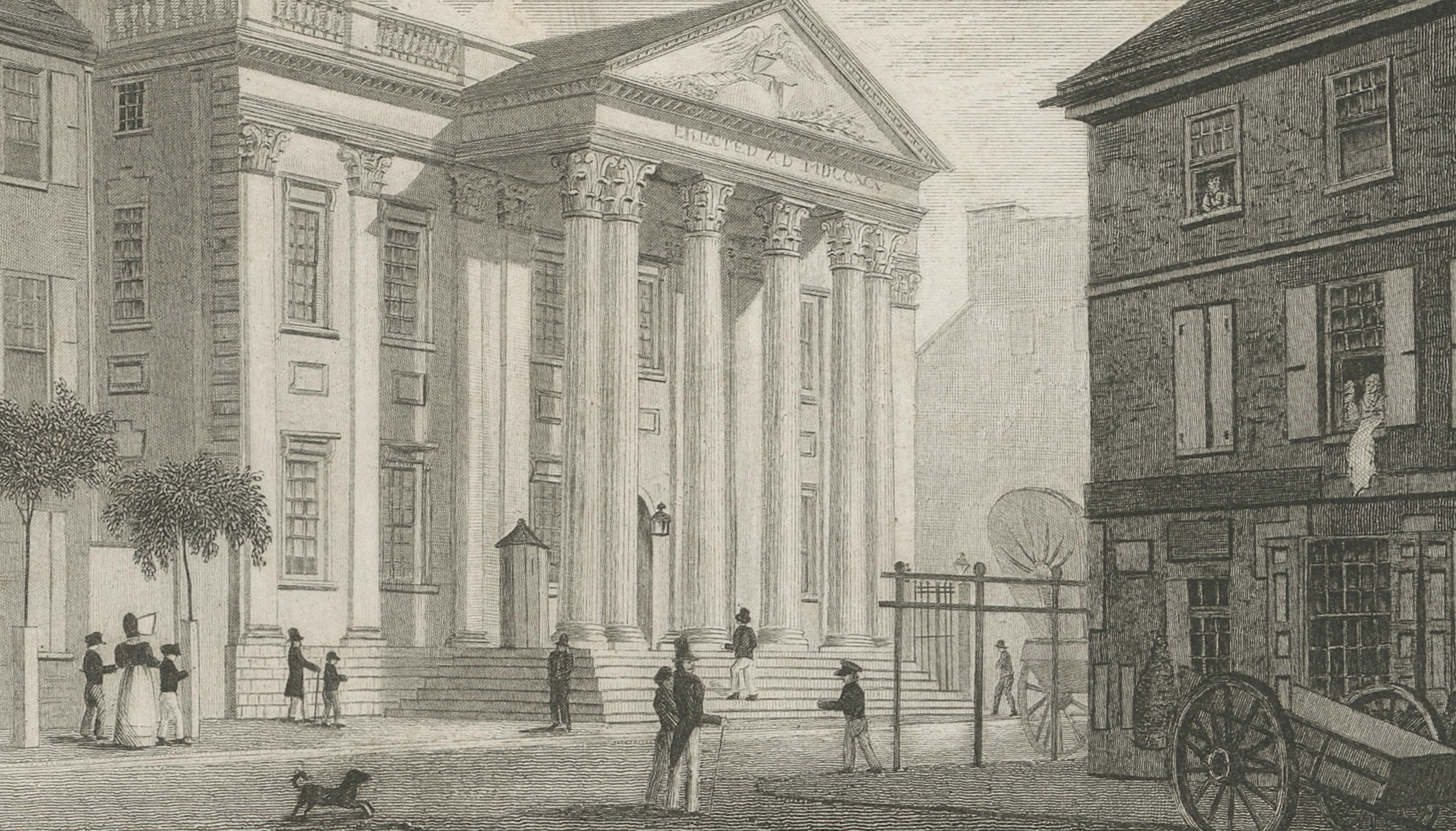
The composition presents the bank in a lively urban setting, surrounded by contemporary townhouses and animated with figures going about daily life—pedestrians, a dog crossing the foreground, and a horse-drawn cart to the right. These elements add both narrative charm and documentary value, offering insight into the rhythms of early 19th-century Philadelphia. The perspective draws the viewer toward the grand façade, dominated by a classical portico with elegant Corinthian columns and a triangular pediment, reflecting the architectural ideals of stability, order, and civic virtue.
This engraving was produced in Germany, as indicated by the lower margin inscription “Aus d. Kunstanst. d. bibliogr. Instit. in Hildburghausen,” referring to the Bibliographisches Institut, a well-known 19th-century publisher of illustrated works. The print demonstrates a high level of technical precision, with delicate linework and subtle tonal gradations that give depth to both architecture and atmosphere.
The image holds strong appeal for collectors of early American history, financial history, and architectural prints. It also works exceptionally well as a decorative piece, particularly in studies, offices, or interiors styled with a classical or historical theme. The balanced composition and architectural clarity make it both informative and visually refined.
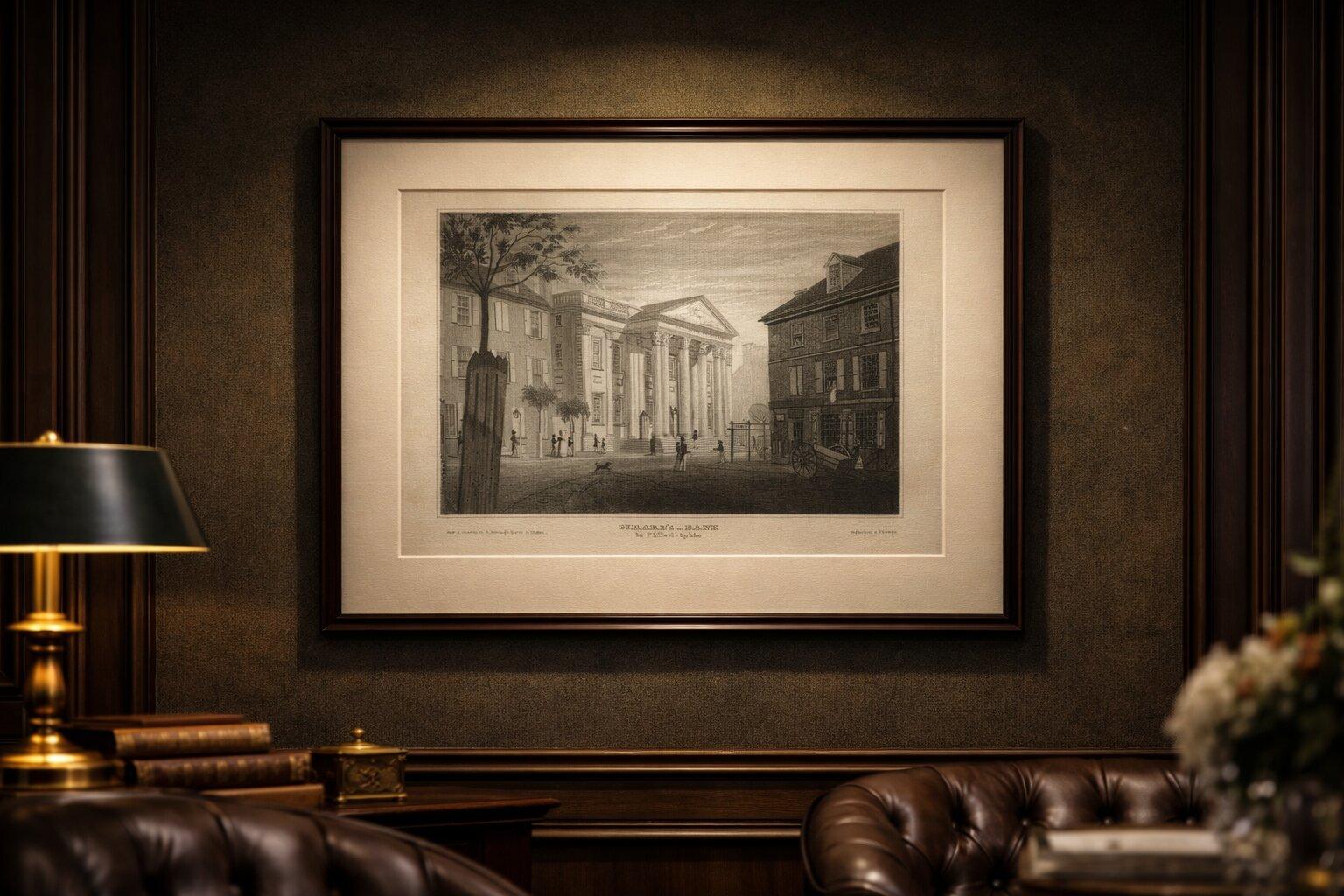
This example is an original antique engraving printed in 1855. It is not a modern reproduction. Any images showing the print framed are for visual inspiration only. The print is supplied unframed.
Condition report: Good condition for age, with light overall toning and minor age-related wear to the margins. Plate mark visible. Image clean with strong contrast and fine detail preserved.
Framing tips: This print benefits from a classic presentation—use a dark walnut or ebonized frame with a wide warm ivory or museum-white mat. This enhances the architectural lines and gives the piece a refined, gallery-quality presence.
Technique: Steel engraving
Maker: Bibliographisches Institut, Hildburghausen, Germany, 19th century