About this sheet
Antique Chromolithograph of the Großglockner Glacier and Alpine Lodge, ca. 1890
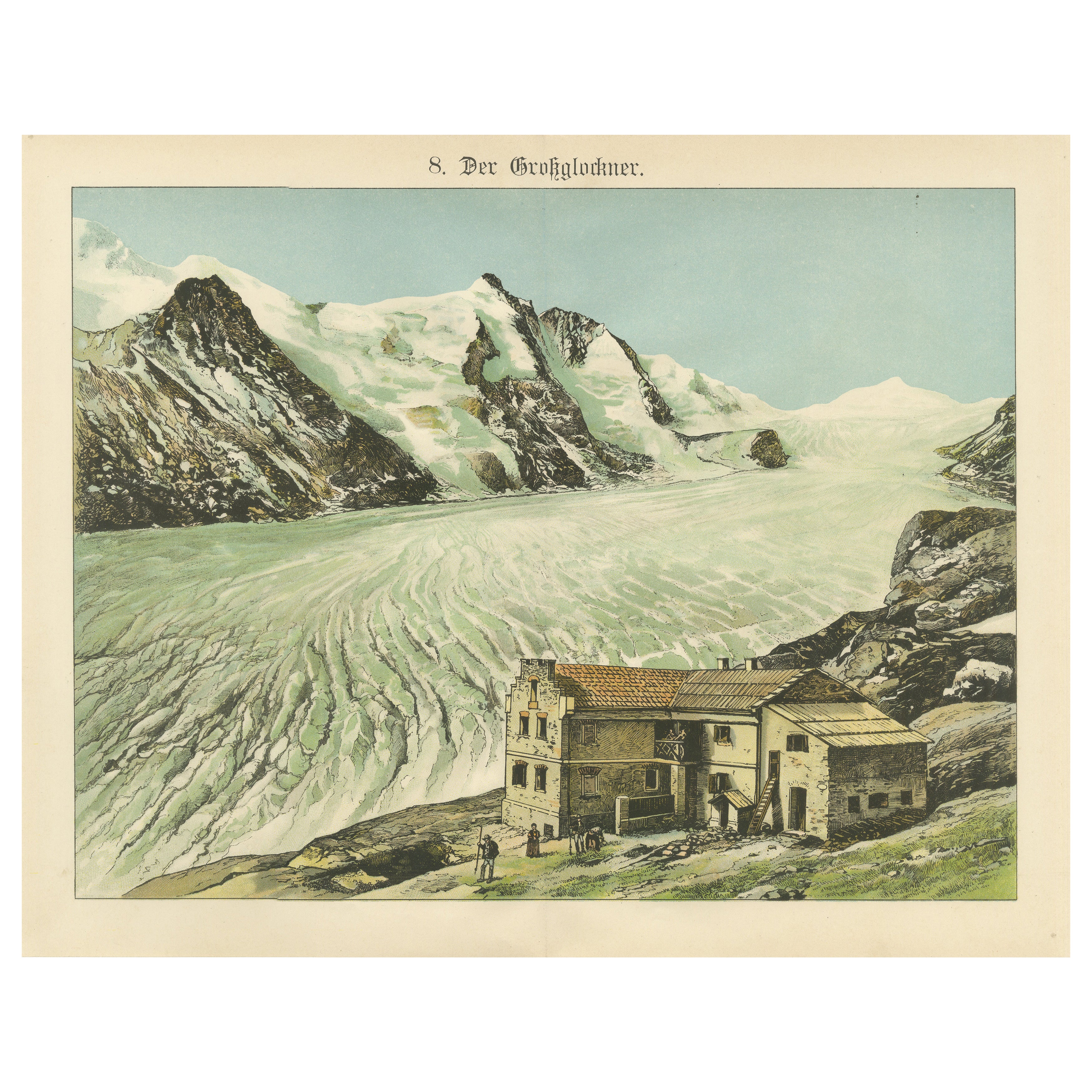
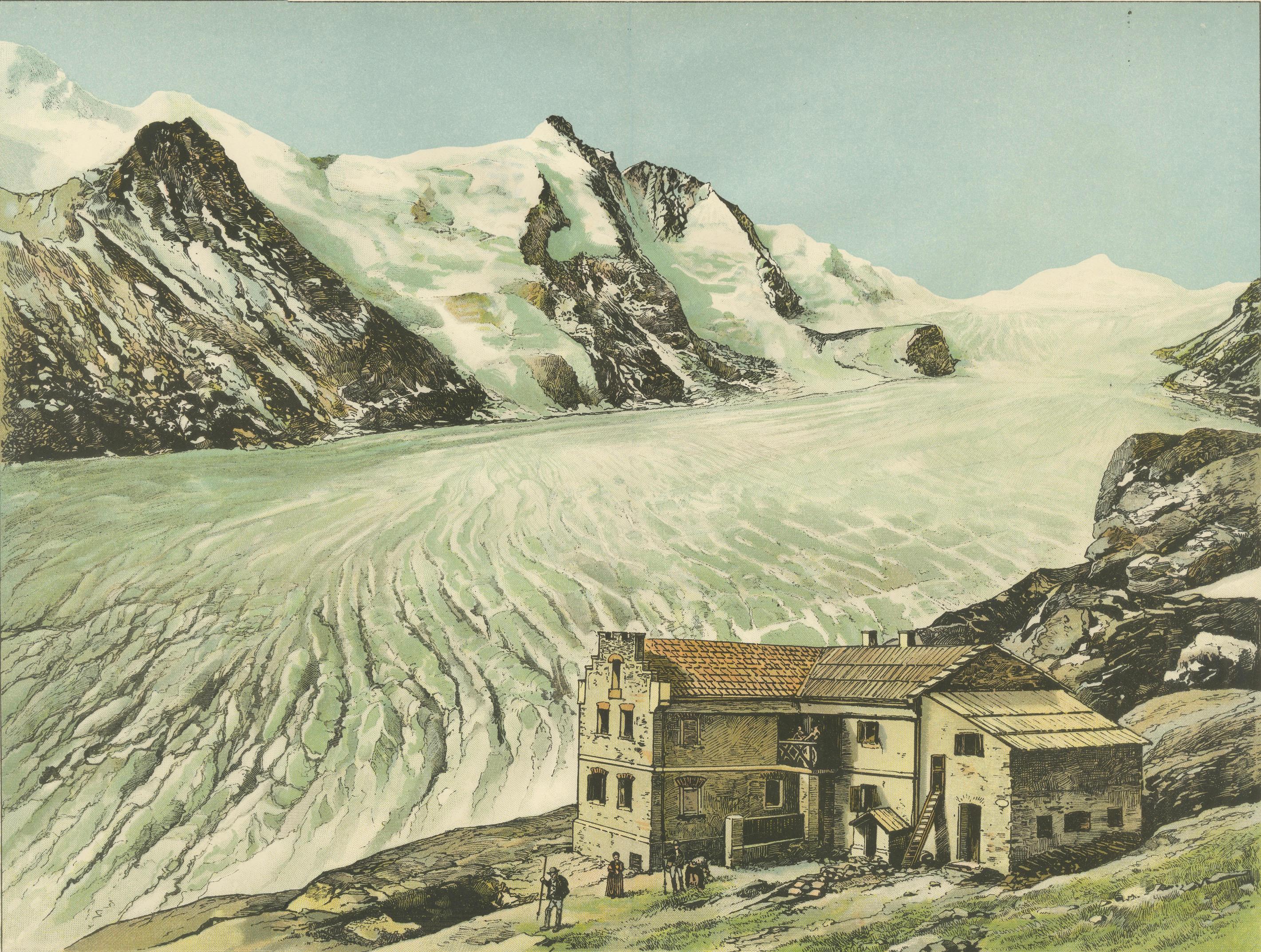
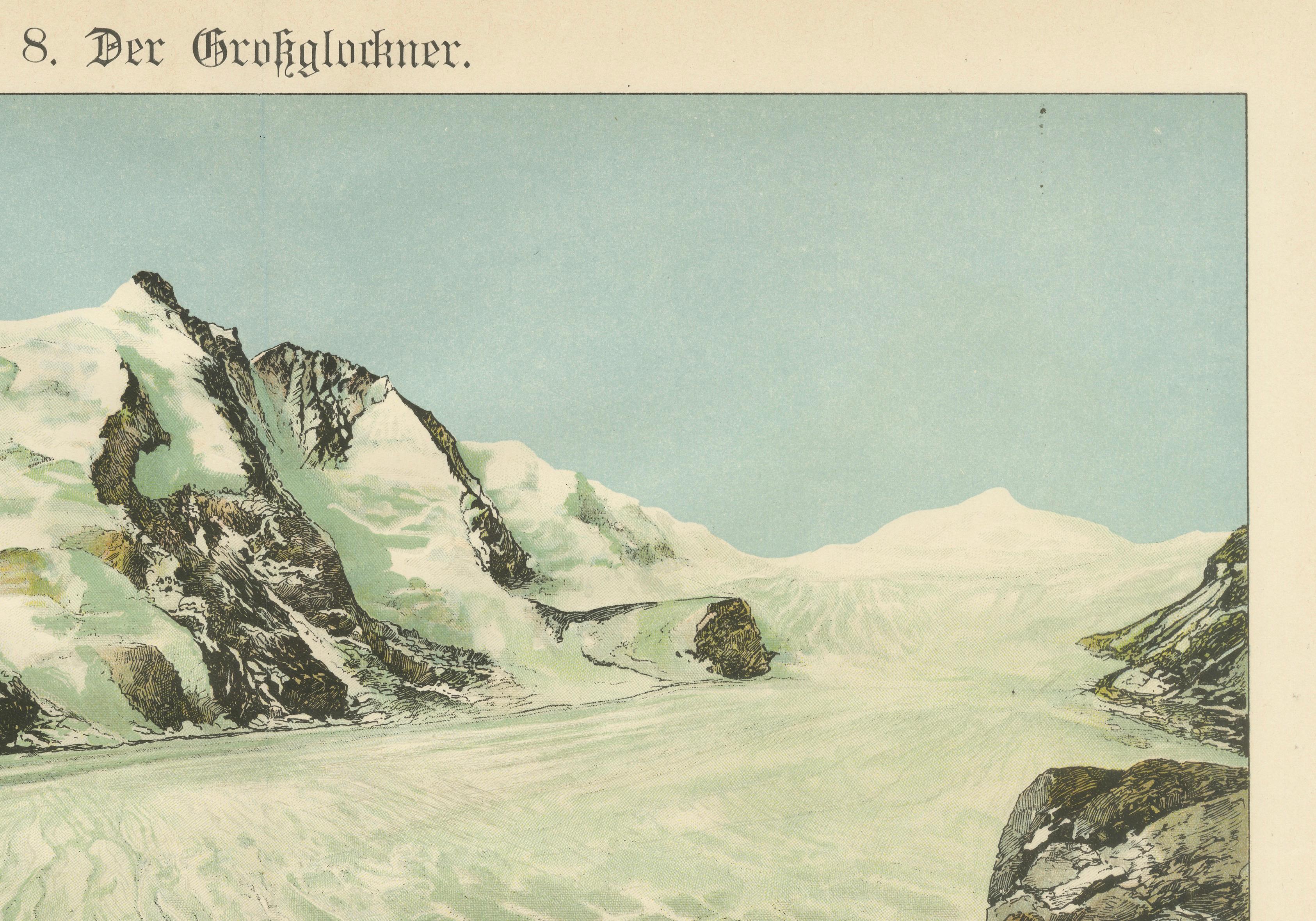
This impressive chromolithograph, titled “Der Großglockner,” captures the dramatic alpine landscape surrounding Austria’s highest peak and the vast glacier at its base. Produced circa 1890, this image is a fine example of 19th-century chromolithographic printing—a process that allowed for richly layered, full-color images well-suited to conveying the grandeur of mountainous scenery.
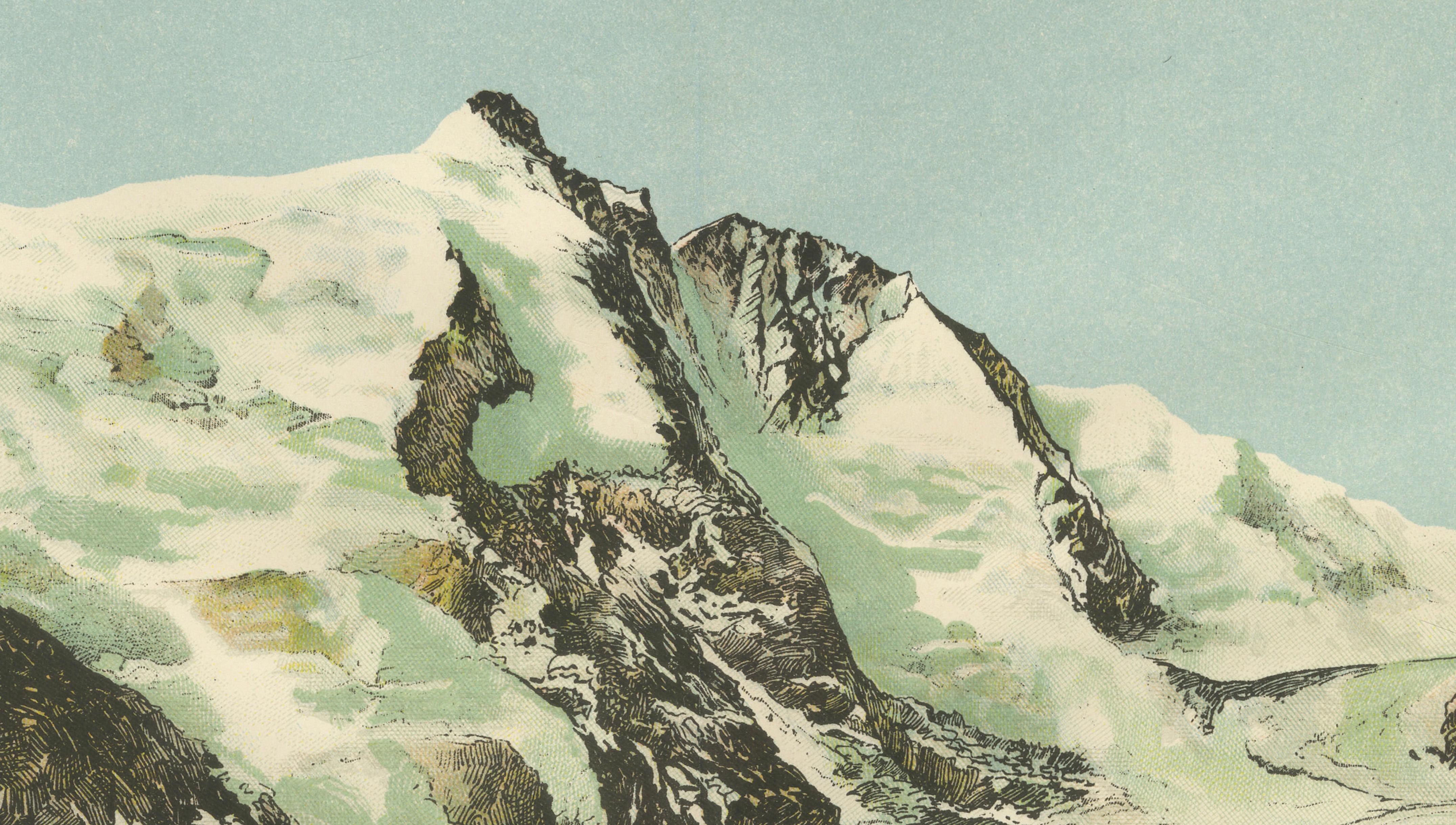
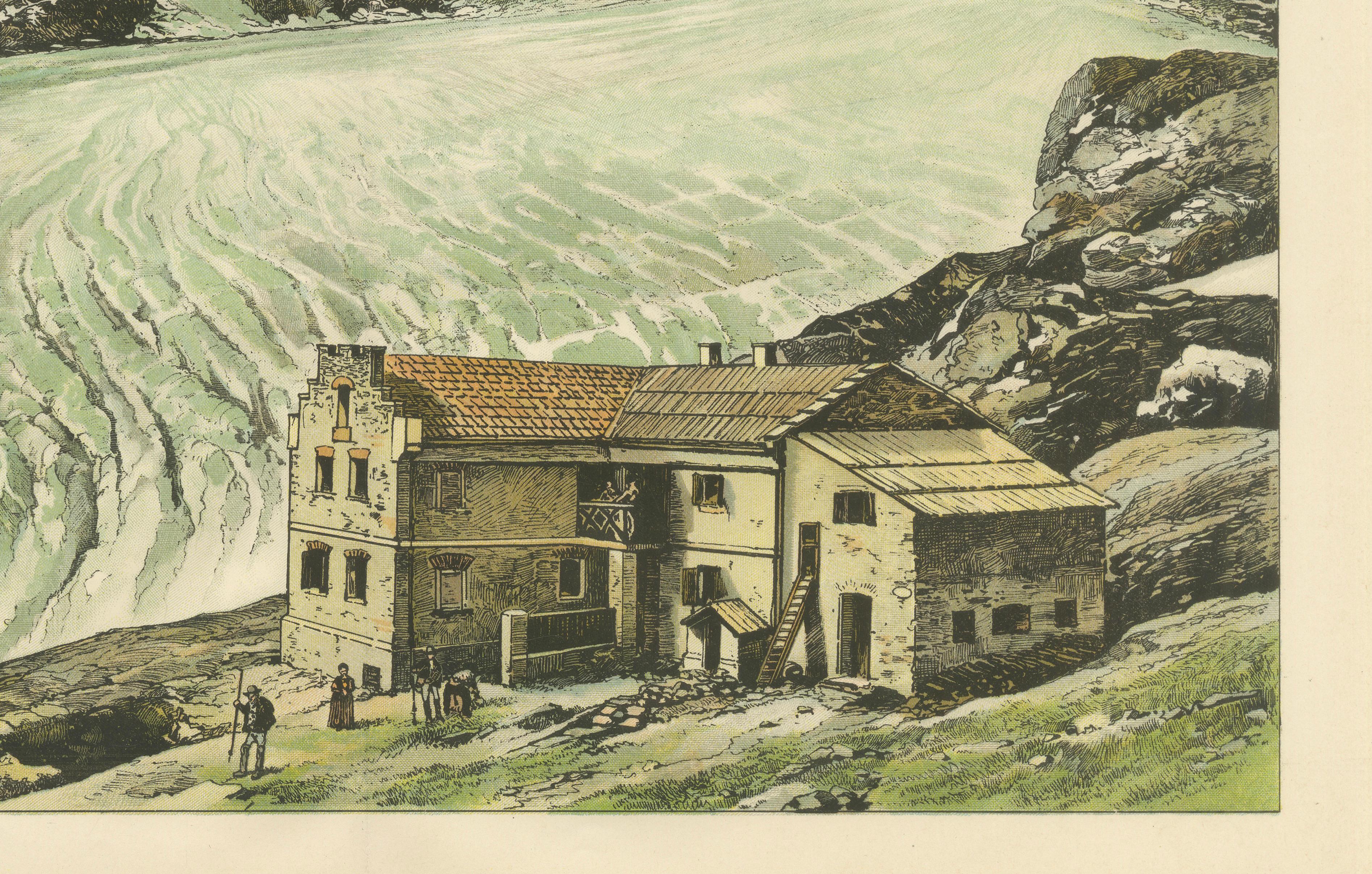
Located in the Hohe Tauern range of the Central Eastern Alps, the Großglockner stands at 3,798 meters (12,461 feet) and has long been a symbol of the Austrian Alps. The print shows the expansive Pasterze Glacier, the largest glacier in Austria, flowing majestically through the valley. The glacier’s intricate texture is rendered in soft greenish tones, with subtle crevasses and ridges that convey both the scale and the power of this natural formation.
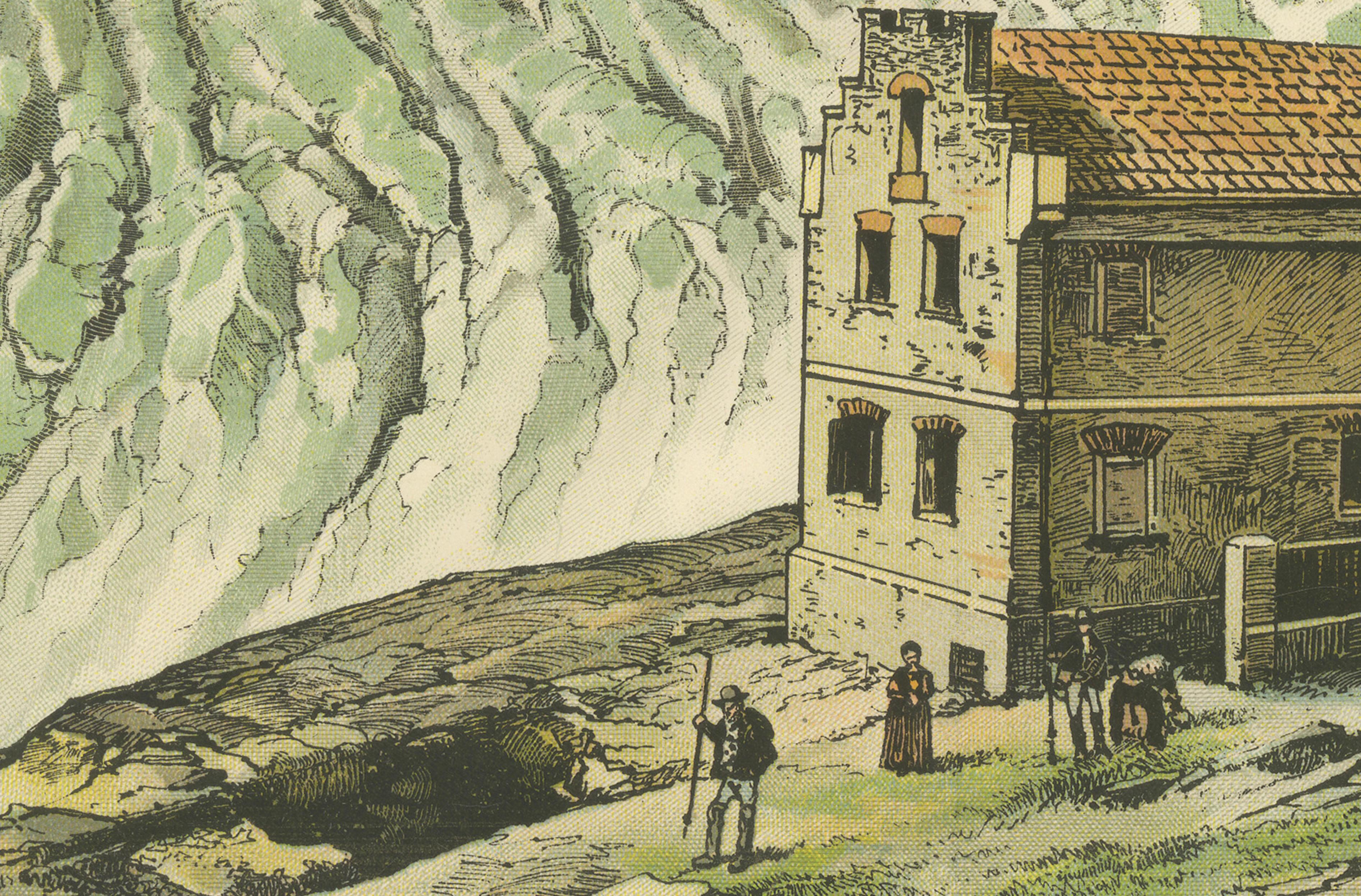
In the foreground stands an alpine refuge or mountain lodge, constructed of stone and wood, its architecture typical of high-altitude structures built for shelter and mountaineering expeditions. Small groups of figures—most likely travelers, guides, or naturalists—are depicted near the lodge, emphasizing the scale of the surrounding terrain and evoking the spirit of alpine exploration that flourished in the 19th century. At that time, the Alps became a key destination for scientists, artists, and early tourists drawn by the growing fascination with nature, geology, and the sublime.
This print is particularly appealing for collectors of mountain imagery, historical alpine scenes, or those with an interest in the early days of mountaineering and tourism in Central Europe. It captures a now-changing landscape, as the glacier has receded significantly since the time of this depiction, adding to the historical value of the piece.
Condition Report:
Very good condition overall. Colors remain bright and well-preserved. Minor age-toning to the margin and one or two faint foxing spots, but no tears, folds, or restoration. The image area is clean and crisp.
Framing Tips:
To complement the glacier’s cool tones and rocky textures, a silver-toned or grey wood frame works well. Pair with a pale blue or soft white acid-free mat to draw out the icy hues of the glacier and sky. Museum glass is recommended to protect the surface and retain the subtle coloration. This piece would look stunning in a mountain chalet, alpine lodge, or any interior with a focus on natural landscapes, exploration, or historical travel.