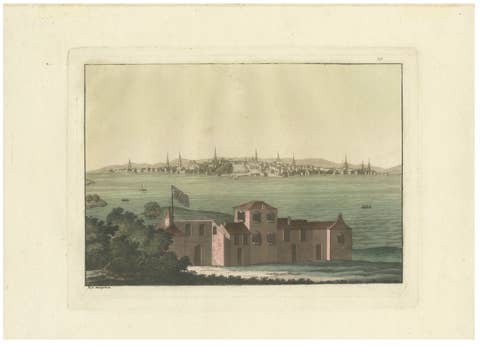
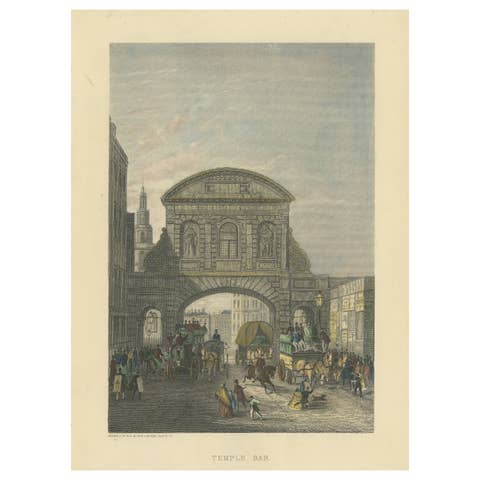
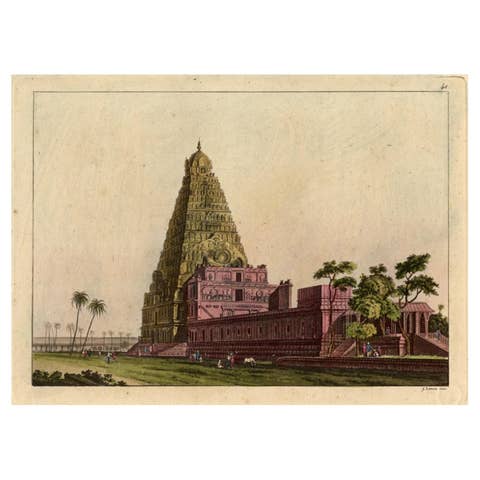
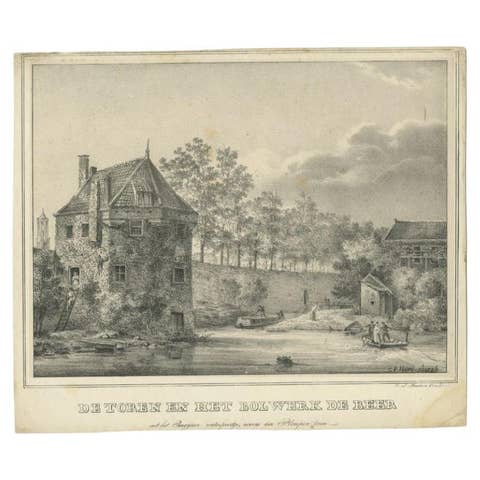
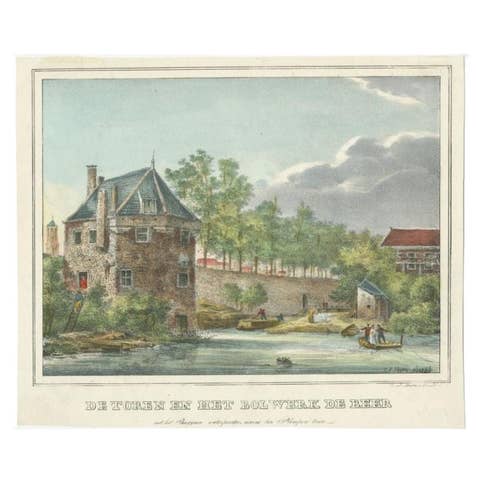
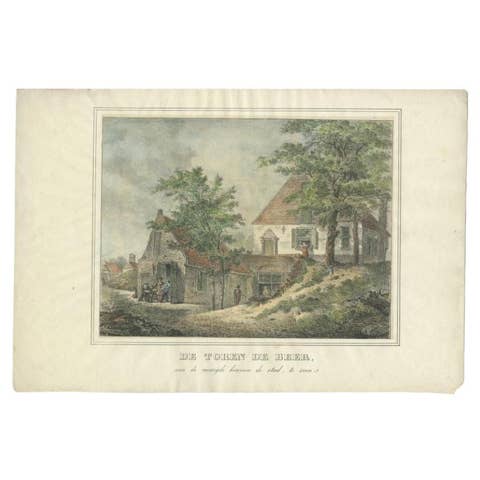
1828 Aquatint Vista of Hammersmith Bridge Over the Thames
€ 130
One of a kind: this is the sheet in the photographs. Ships from Langweer, the Netherlands.
Date
1828
Sheet size
19.5 × 25.5 cm (7.7 × 10.0 in)
Condition
Good
Reference
BG-13600-34
Condition
The print shows minor foxing and slight yellowing along the edges, typical for its age. The central image remains clear, with no tears or significant creases. The paper is intact, though delicate, requiring careful handling.
About this sheet
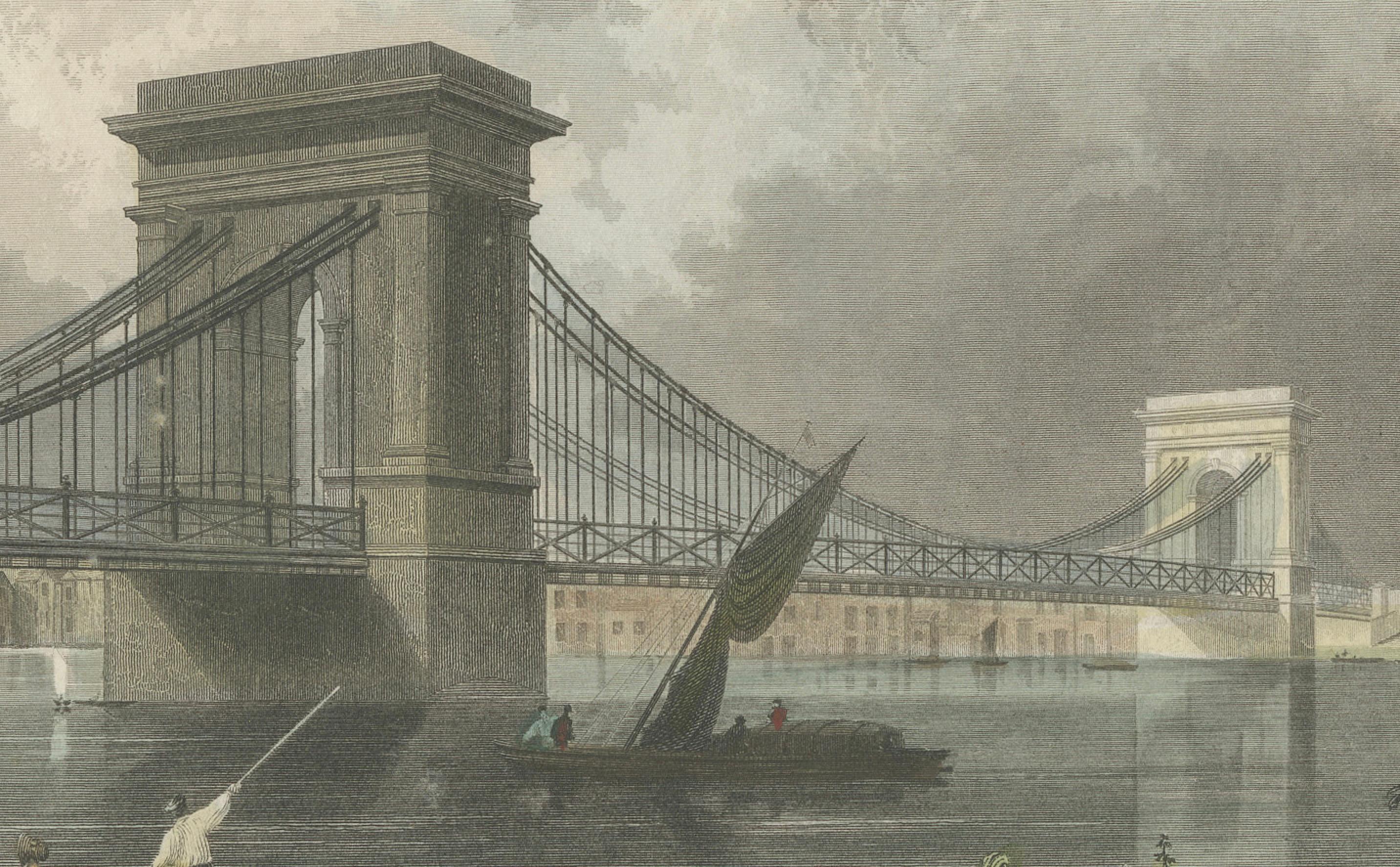
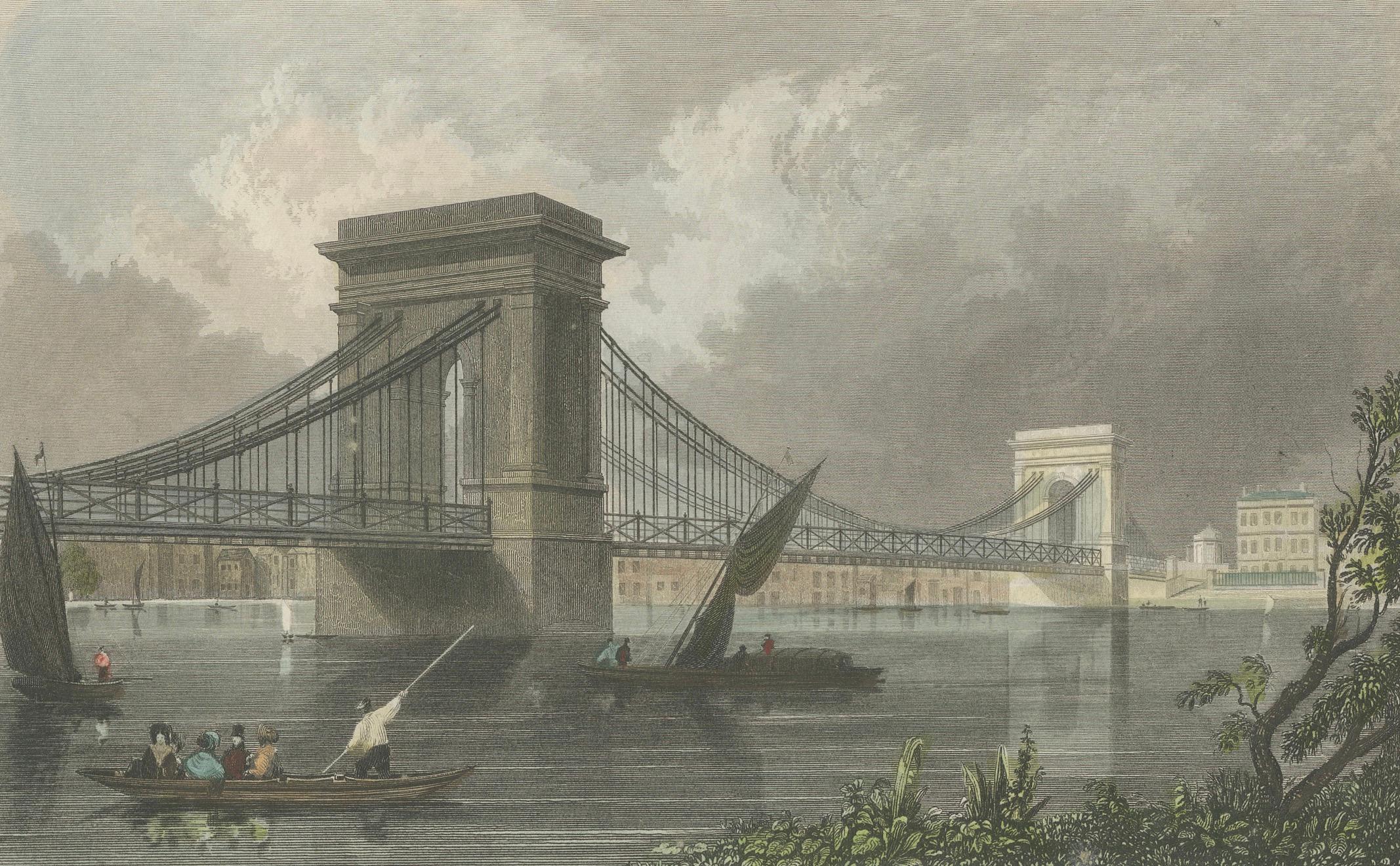
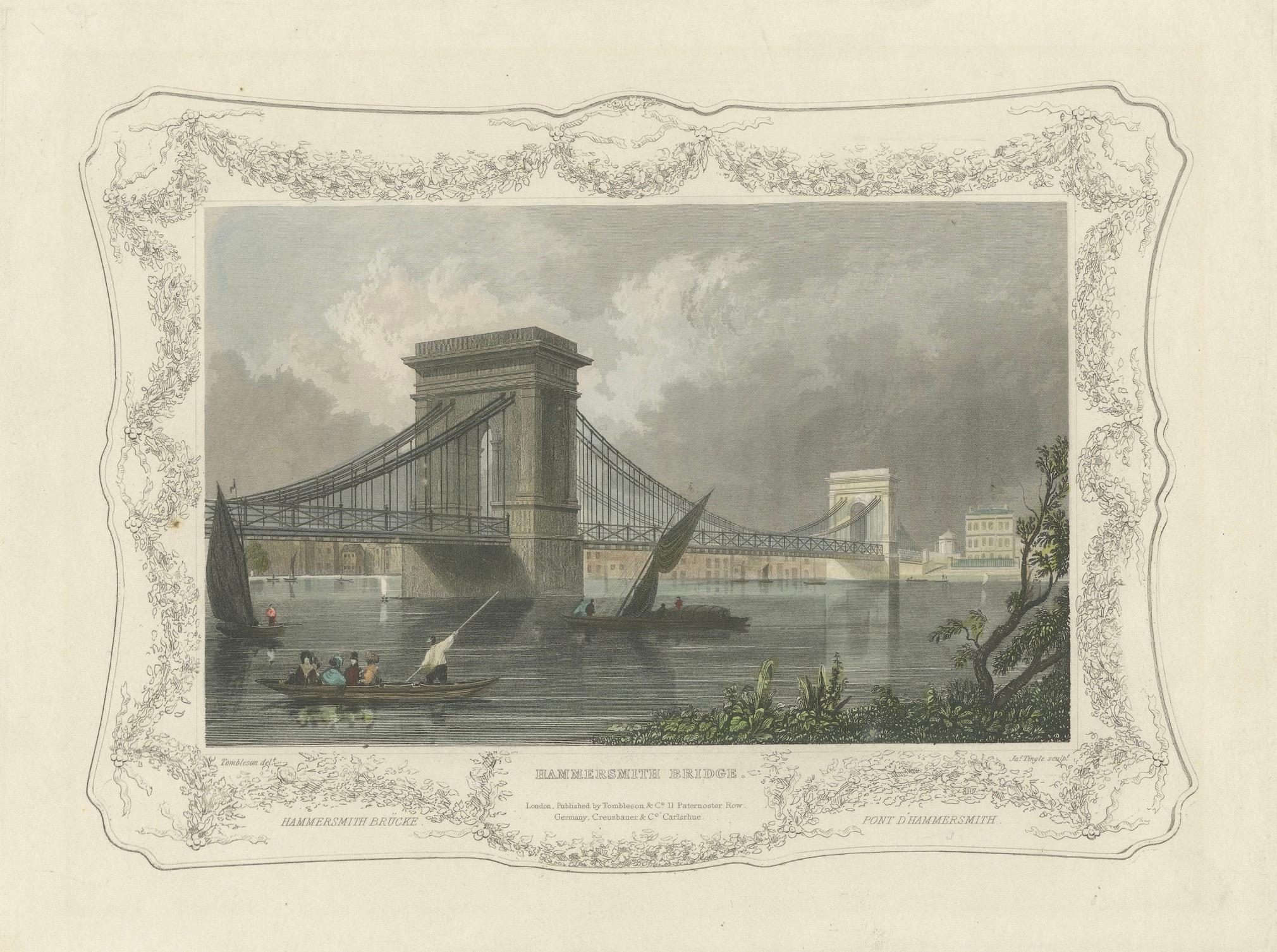
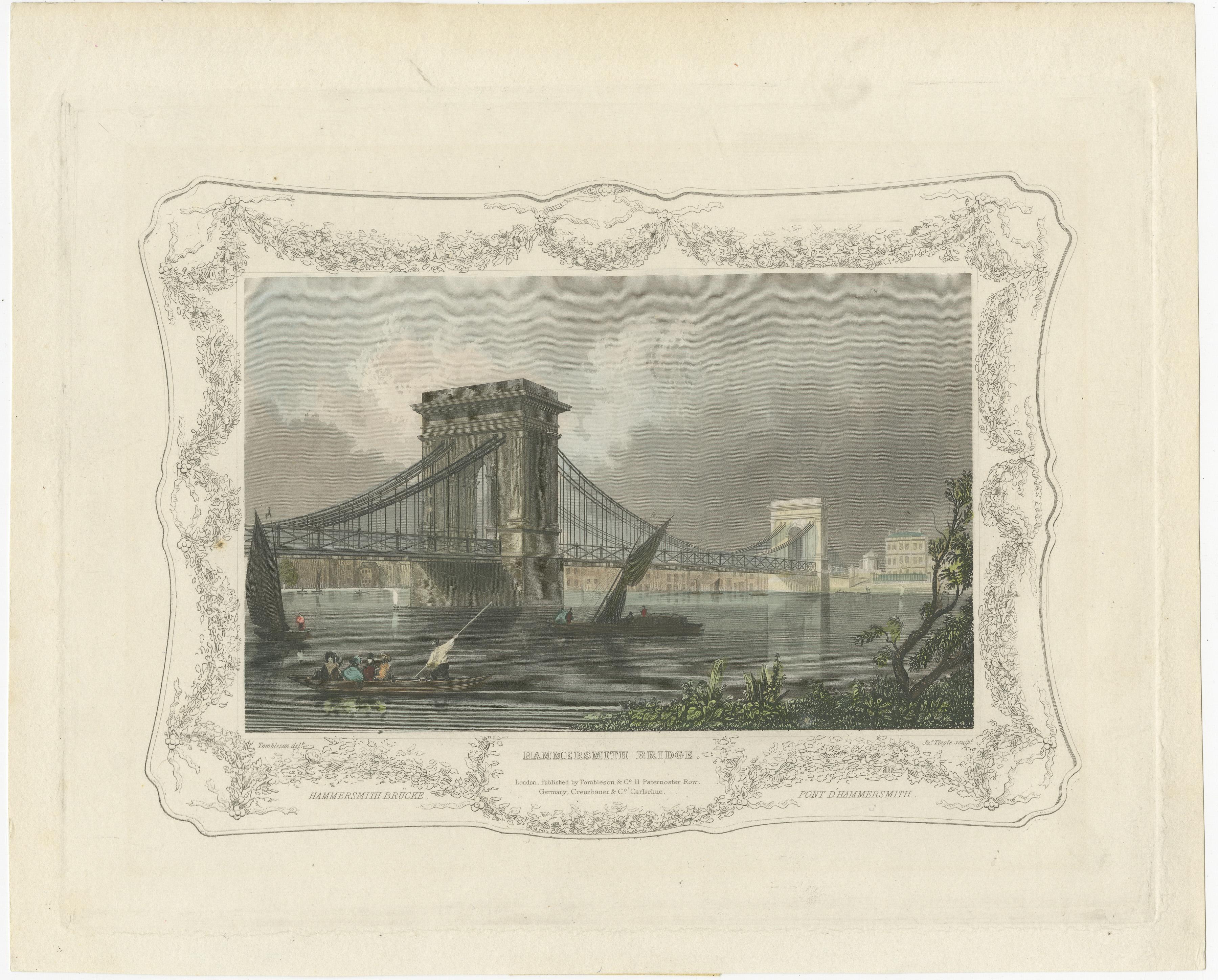
This exquisite antique print captures the iconic Hammersmith Bridge, a suspension bridge spanning the River Thames in London, in a moment of historical serenity.
Created by a renowned British engraver and artist, this piece was published in 1828 as part of a series documenting notable British architecture and landscapes. The artist, known for meticulous attention to detail, employed the aquatint technique, a form of etching that allows for soft tonal variations, giving the print a delicate, almost painterly quality.
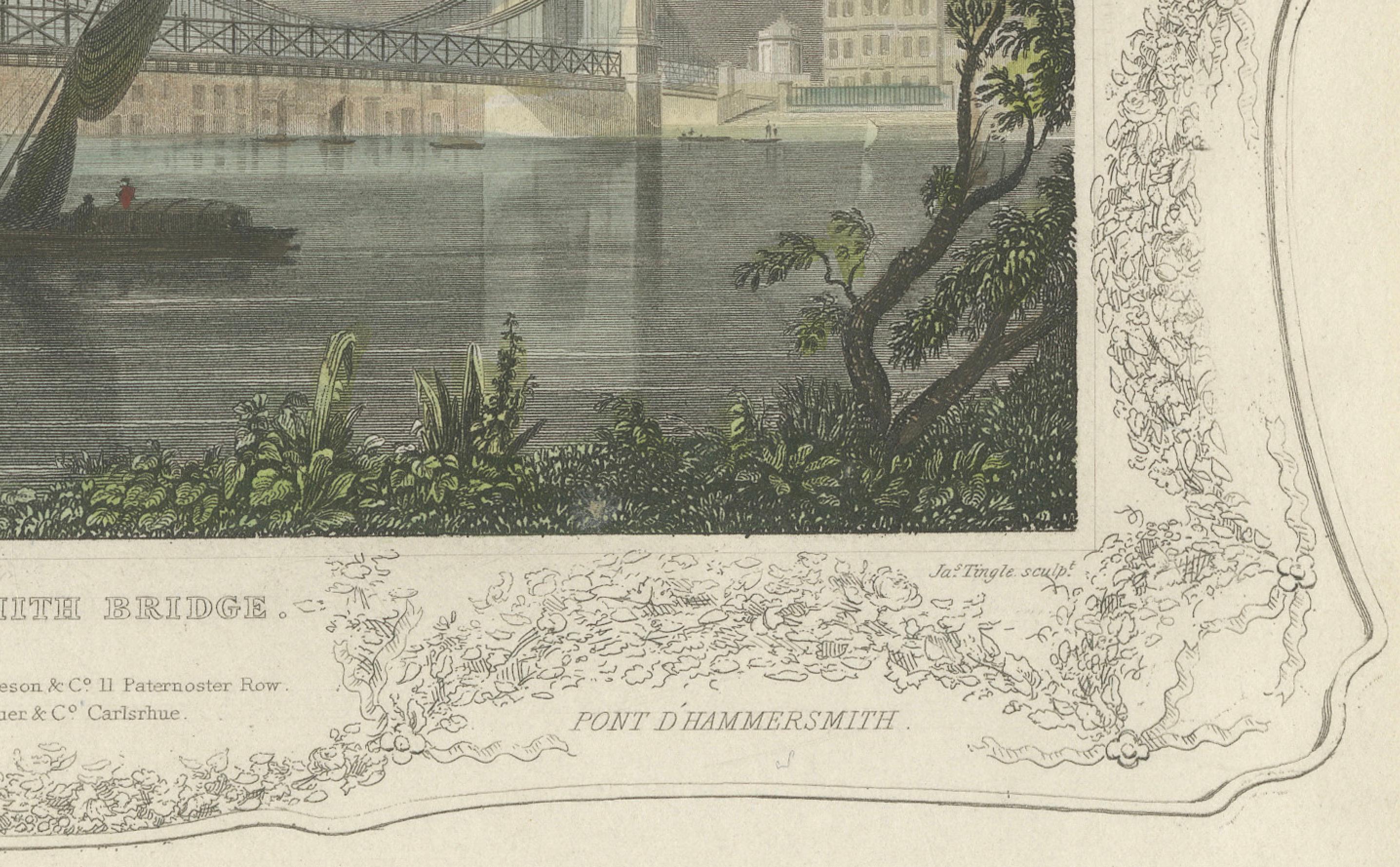
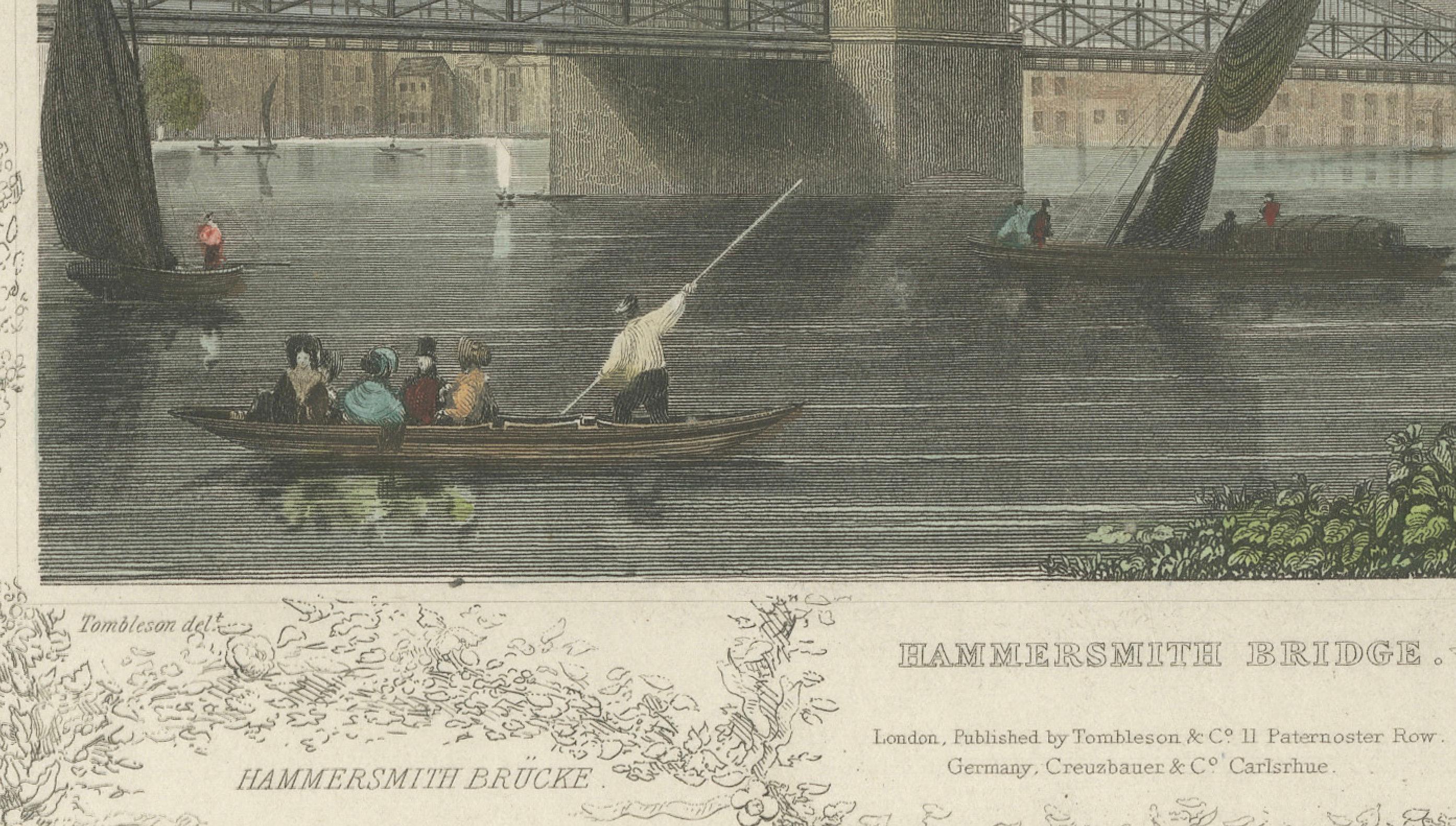
The scene showcases the bridge’s elegant structure with its suspension chains and stone piers, framed by a dramatic sky and bustling river activity, including sailing boats and rowers. The print’s border, intricately decorated with floral motifs, adds a touch of Regency-era elegance, reflecting the aesthetic sensibilities of the time.
What makes this print particularly interesting is its historical significance—Hammersmith Bridge, designed by William Tierney Clark, was one of the first suspension bridges over the Thames, completed in 1827, making this artwork a near-contemporary depiction of a groundbreaking engineering feat.
Additionally, the mastery of aquatint brings atmospheric depth to the scene, capturing the interplay of light and shadow on the water and stonework, which invites viewers to appreciate both the architectural marvel and the natural beauty of the Thames.
This print is a rare glimpse into early 19th-century London, blending art, history, and engineering in a single frame, making it a valuable addition for collectors of historical prints or those fascinated by the evolution of urban landscapes.
Condition Report: The print shows minor foxing and slight yellowing along the edges, typical for its age. The central image remains clear, with no tears or significant creases. The paper is intact, though delicate, requiring careful handling.
Framing Tips: Use a simple, elegant frame in muted gold or soft silver to complement the print’s tones. A cream or pale grey mat enhances the Regency aesthetic. Avoid bright colors; opt for neutral shades to maintain focus on the artwork’s details.