16th–17th C. Renaissance Scrollwork – Ornamental Design, Plate LXXIII, 1869
€ 220
One of a kind: this is the sheet in the photographs. Ships from Langweer, the Netherlands.
Date
1869
Sheet size
40.4 × 28.8 cm (15.9 × 11.3 in)
Condition
Excellent
Reference
BG-13766-73
Condition
condition overall. Clean margins, vivid colors, with only minor age-toning in outer edges. Plate area pristine.
About this sheet
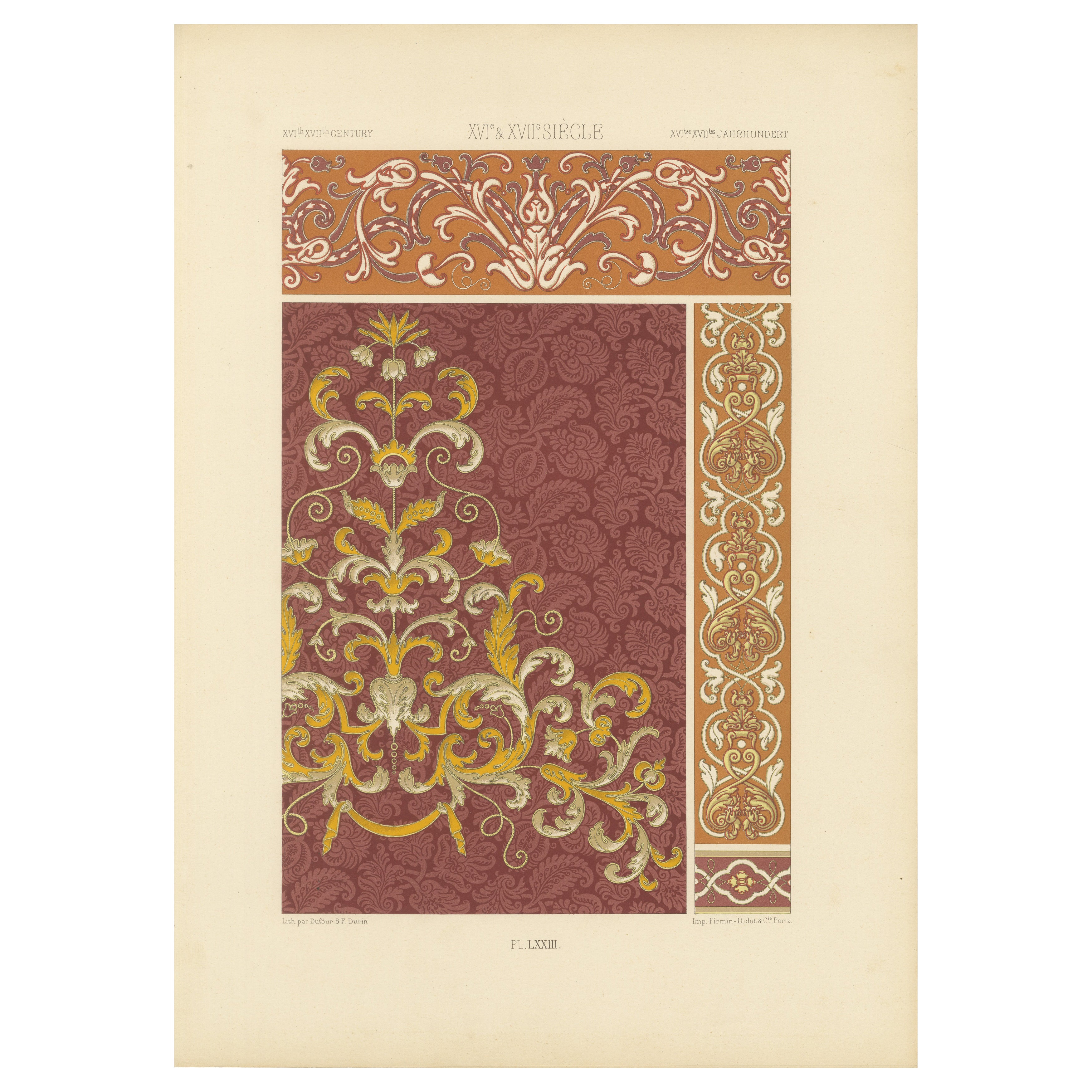
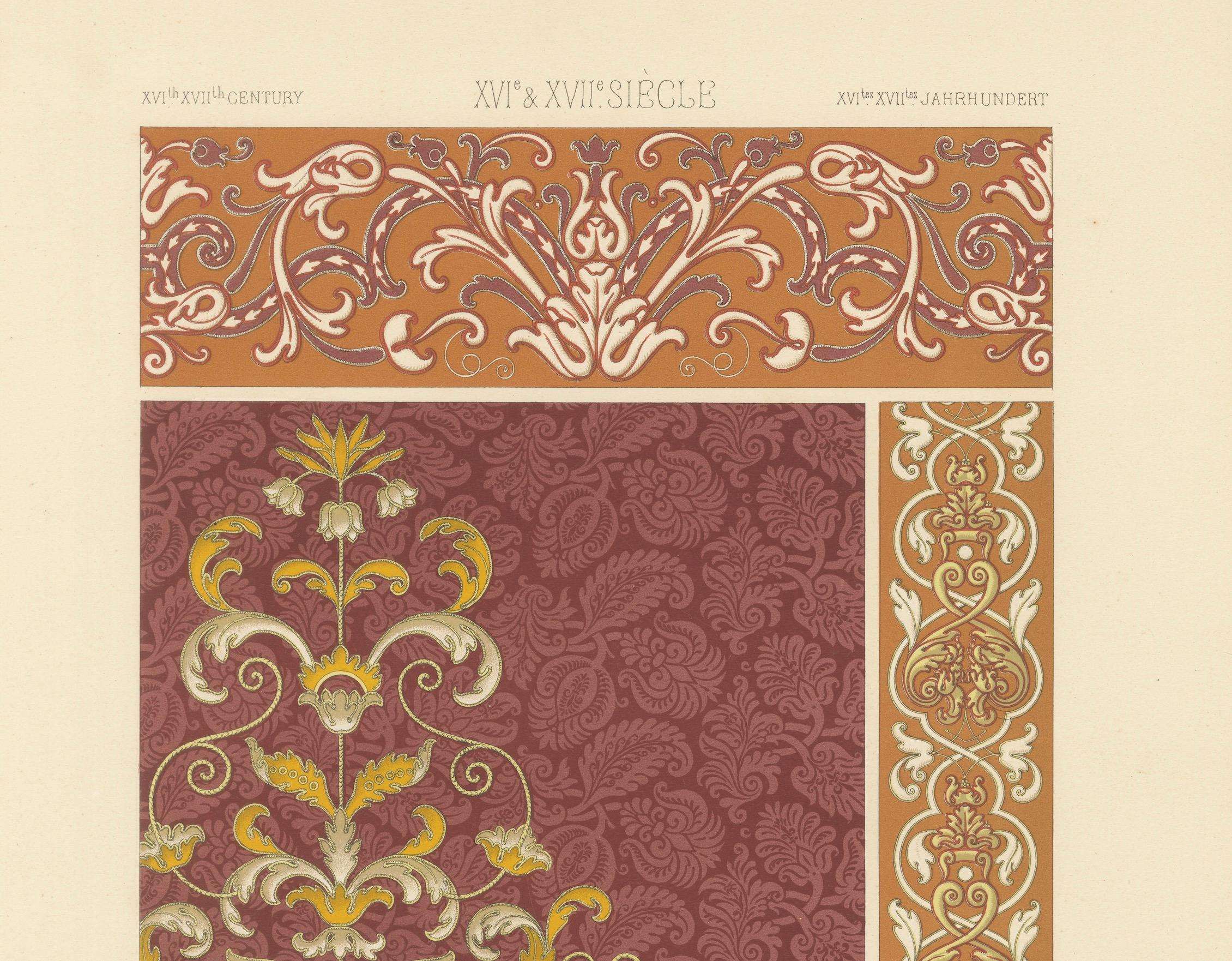
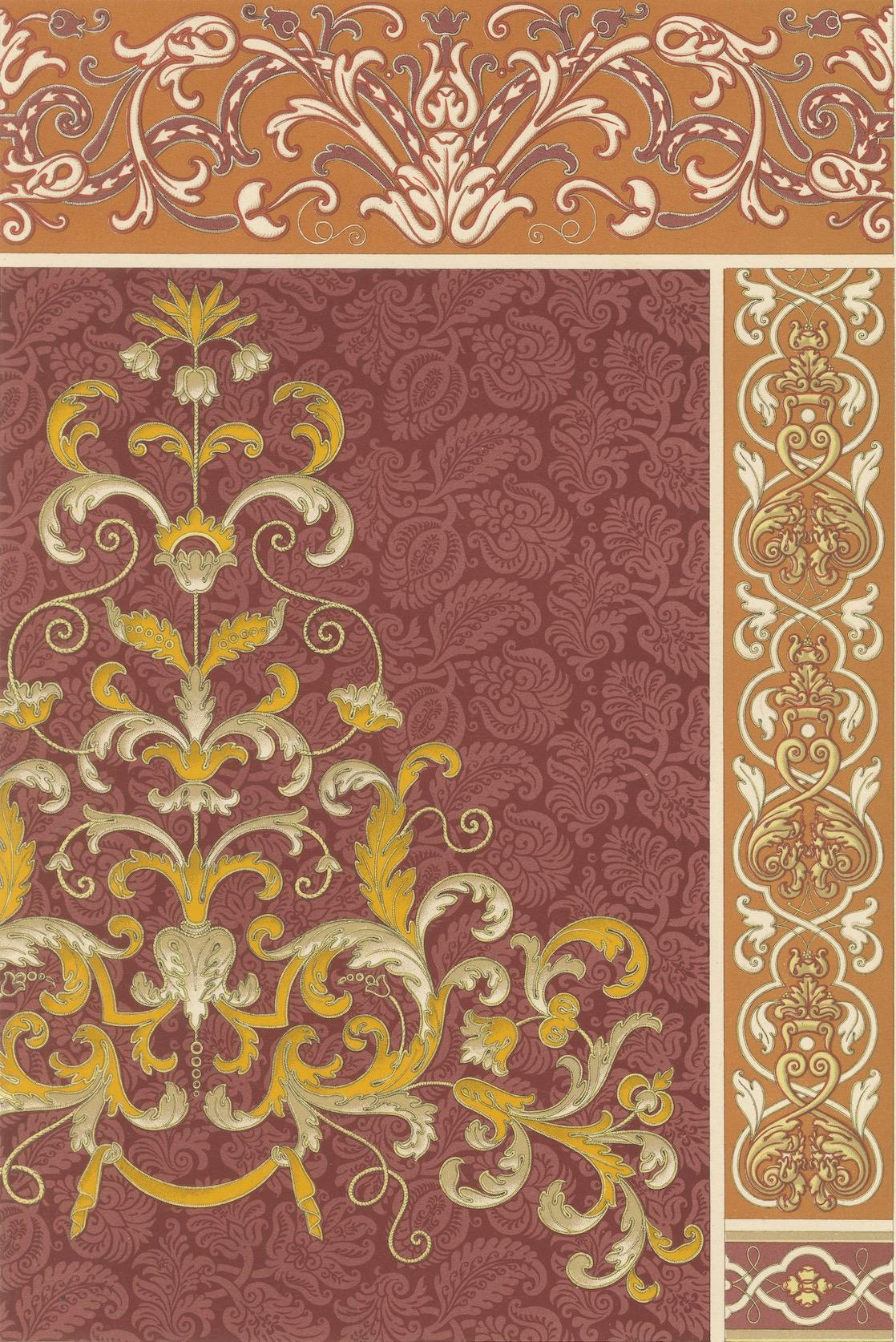
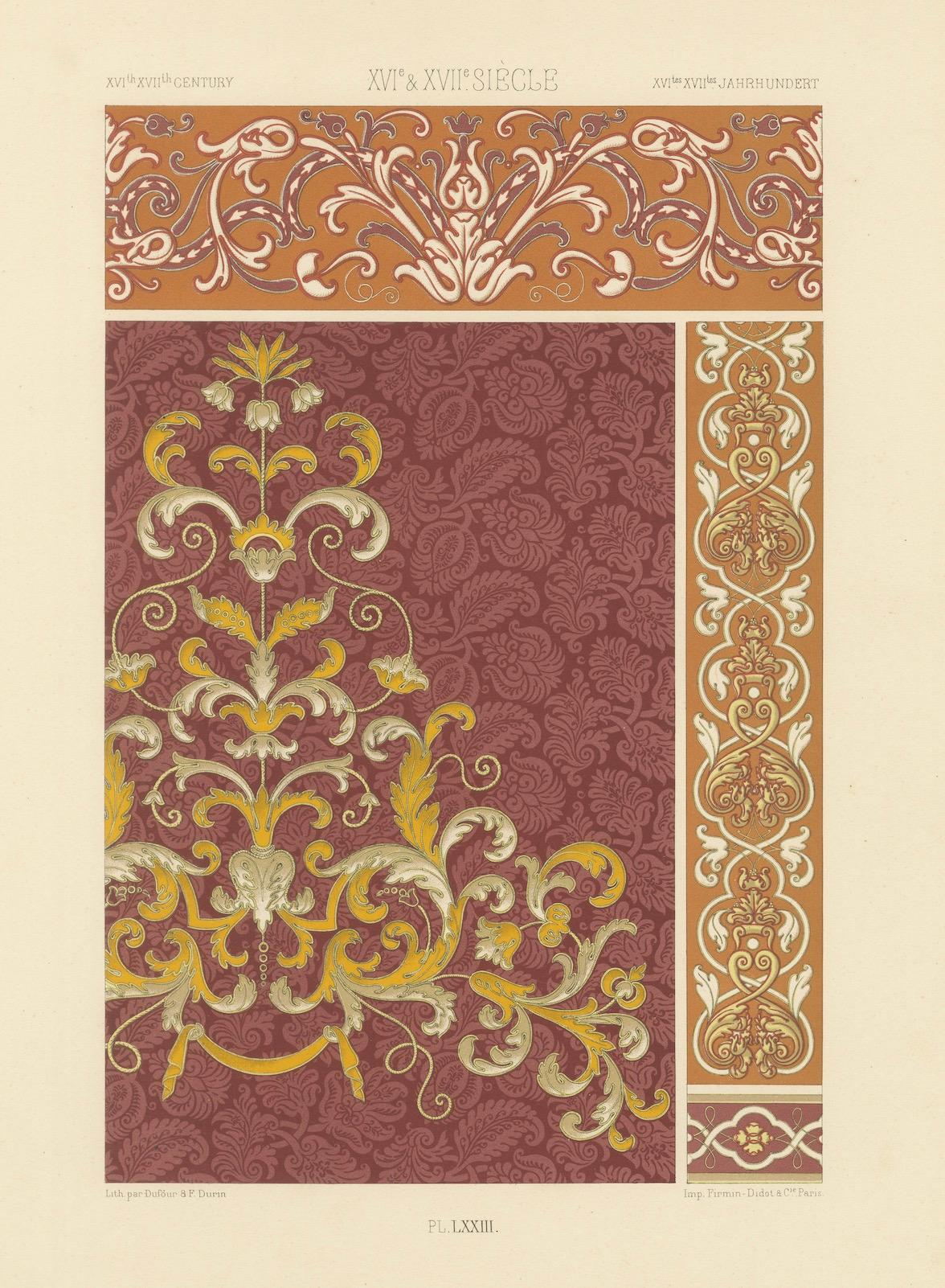
16th–17th Century Renaissance Scrollwork – Ornamental Design from L'Ornement Polychrome, Plate LXXIII
This richly colored plate, numbered LXXIII, comes from the celebrated series L'Ornement Polychrome, produced in the 1860s–70s under the direction of Auguste Racinet. It showcases ornamental designs from the 16th and 17th centuries in the Renaissance style, focusing particularly on vegetal scrollwork and arabesques.
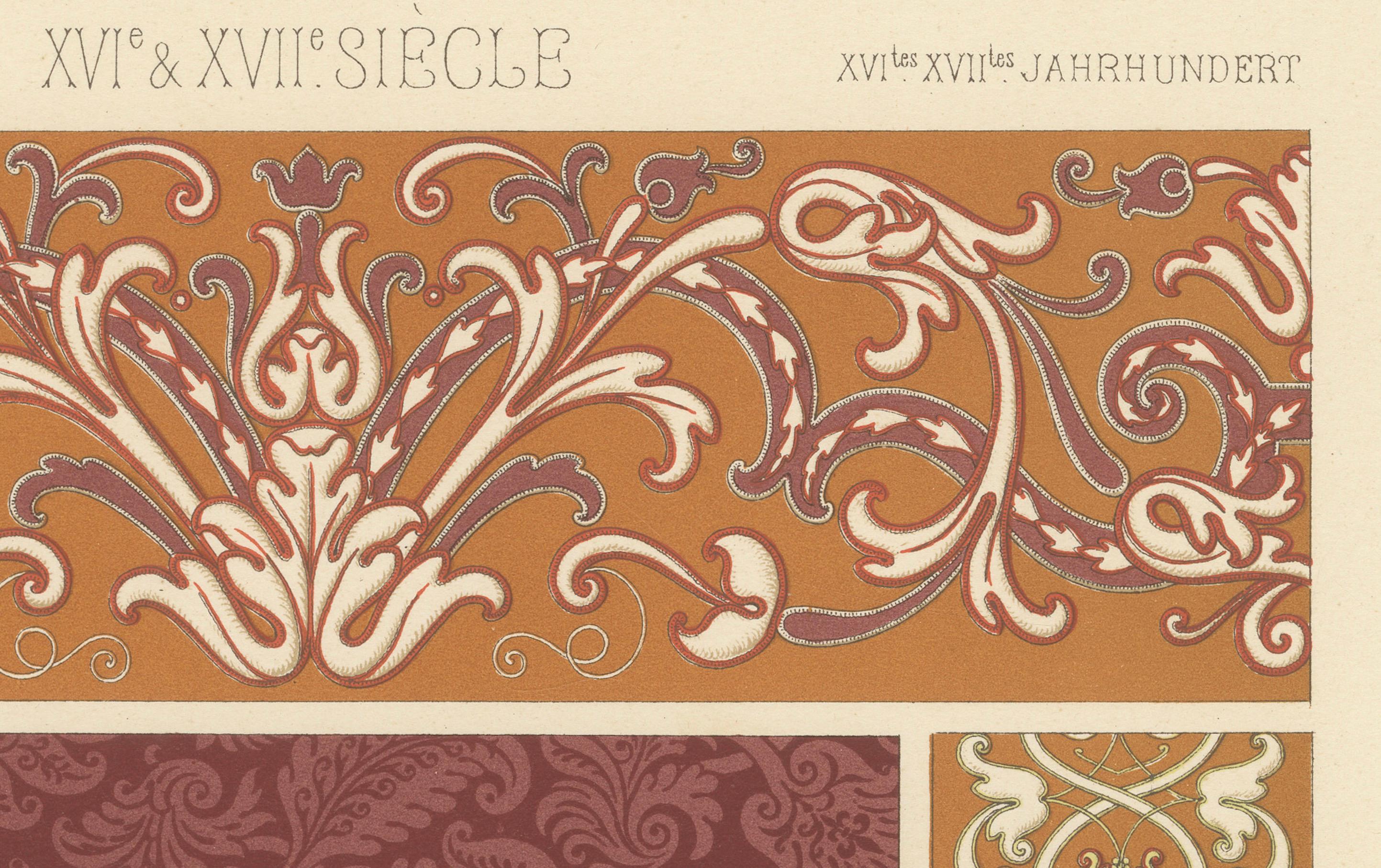
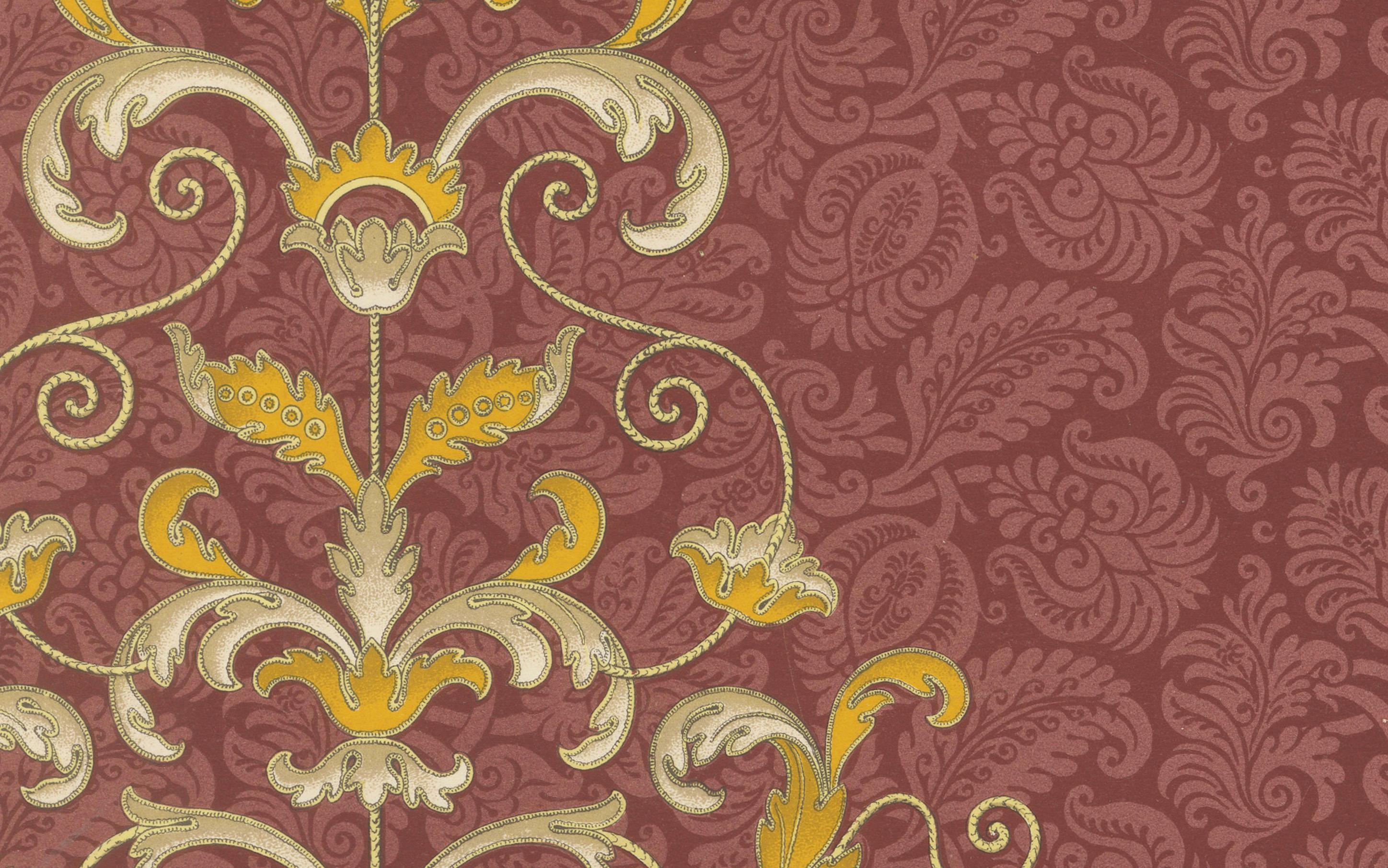
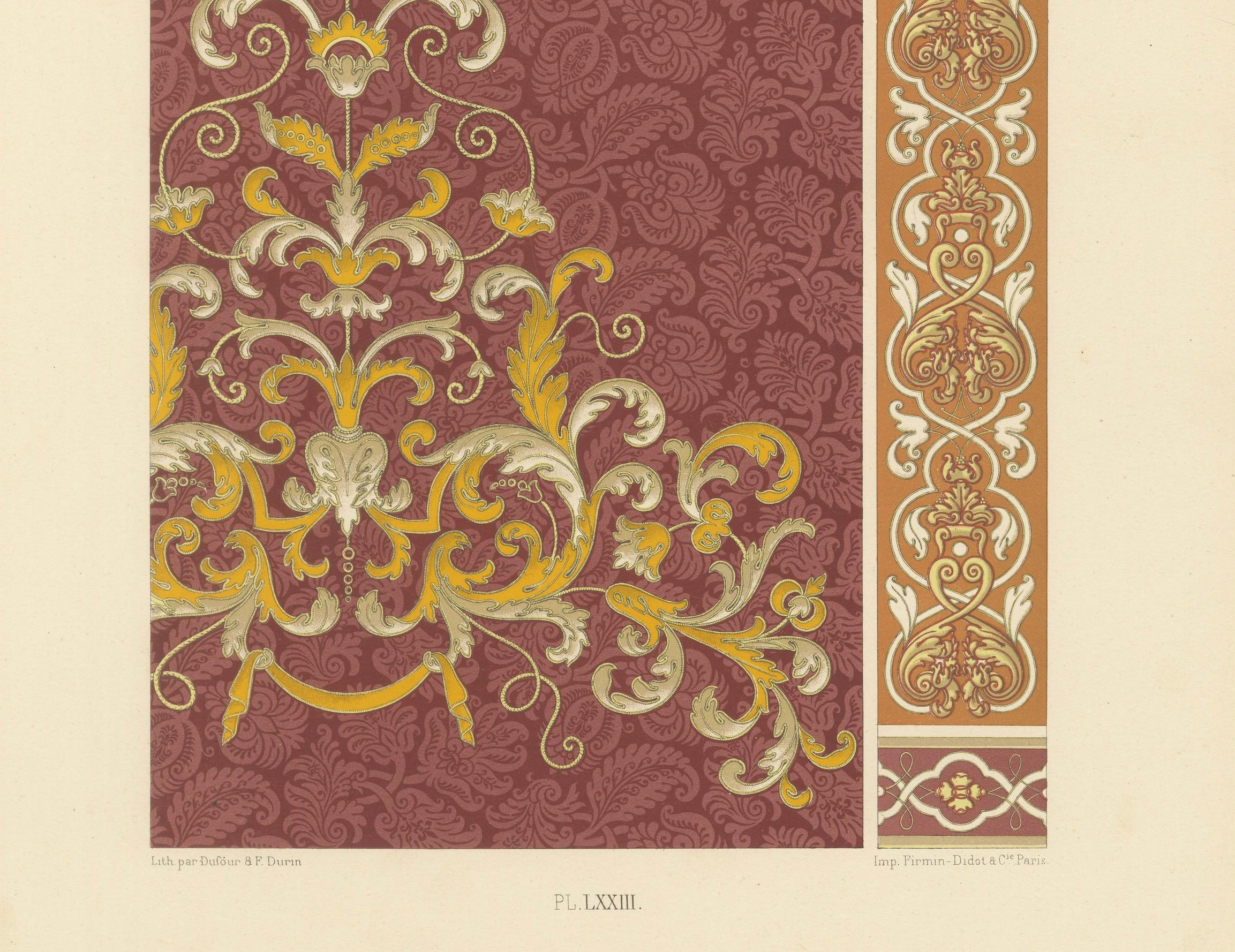
Three decorative motifs are featured in this chromolithograph: a central panel of deep burgundy filled with large-scale acanthus leaf flourishes in gold and silver-grey, an upper frieze in warm terracotta with palmette-inspired scrolls in white and violet, and a narrow side band with stylized foliage alternating in heart-like symmetry.
The central panel is a fine example of Renaissance wall or textile decoration, demonstrating both symmetry and fluidity in its botanical forms. The layered damask background contrasts beautifully with the brighter scrolls, producing a sense of richness and dimensionality. This kind of design would have appeared in tapestries, wall coverings, or interiors of stately homes and churches.
Executed by Dufosse and lithographed by Durin, this plate exemplifies the refined precision and color fidelity of 19th-century chromolithography, and it was printed by the renowned Parisian firm Firmin-Didot. Such plates were intended to inspire artists, architects, and designers by reproducing ornamental masterpieces from history in stunning polychrome detail.
Condition: Excellent condition overall. Clean margins, vivid colors, with only minor age-toning in outer edges. Plate area pristine.
Framing tips: Best presented in a gold or walnut-toned frame with a neutral off-white or burgundy mat. Ideal for interior decorators or collectors of classical design history.