Antique Print of a Design for Belton House, Lincolnshire, England, 1725
€ 550
Original antique · The actual sheet photographed · Certificate of authenticity on request · Sold unframed · Worldwide shipping from € 15 (rates)
Date
1725
Mapmaker / artist
Colen Campbell's Vitruvius Britannicus is considered one of the greatest eighteenth-century English architectural works. Campbell published the first three volu
Sheet size
32 × 50.5 cm (12.6 × 19.9 in)
Reference
BG-12208-229
What the condition grades mean
Excellent
Bright and clean, with no faults worth mentioning.
Very good
Only light signs of age, such as faint toning.
Good
Normal signs of age for a sheet of this period: toning, some foxing, small marks or neat old repairs.
Fair
Clear faults such as staining, tears or repairs, priced to match.
Every fault we see is written in the condition note, and the whole sheet is shown uncropped in the photos.
Condition
Very good, general age-related toning. Blank verso. Please review the images for further condition details.
About this sheet
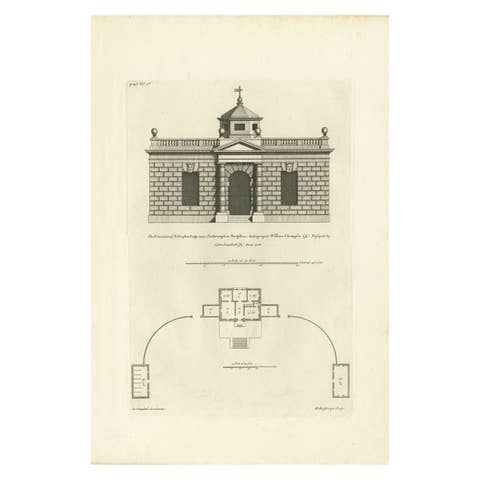
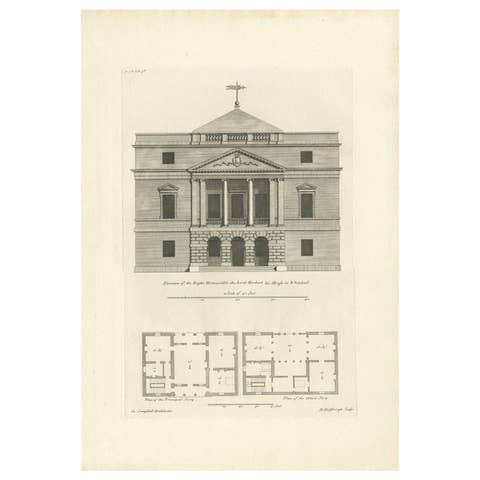
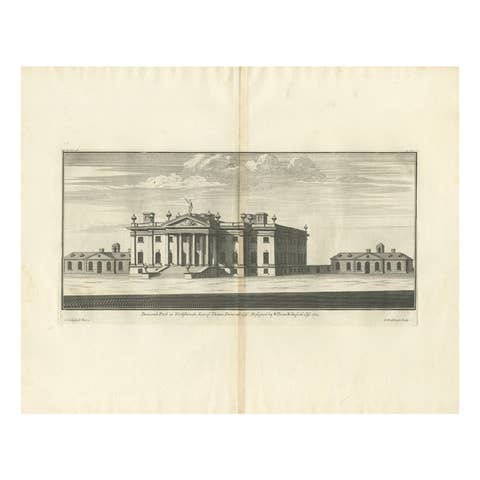
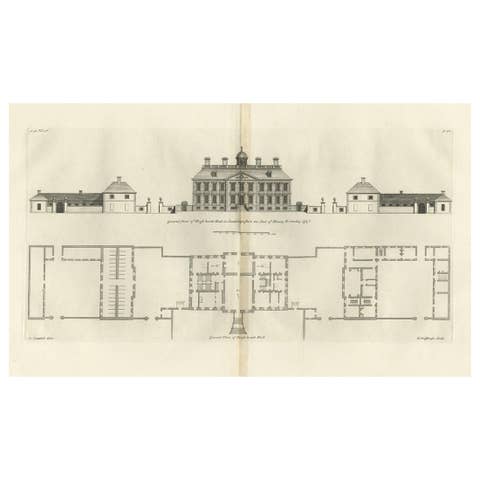
Antique print titled 'Belton in Lincolnshire, the Seat of Sr. John Brownlow Bar'.
Belton House is a Grade I listed country house in the parish of Belton near Grantham in Lincolnshire, England, built between 1685 and 1688 by Sir John Brownlow, 3rd Baronet. It is surrounded by formal gardens and a series of avenues leading to follies within a larger wooded park. Belton has been described as a compilation of all that is finest of Carolean architecture, the only truly vernacular style of architecture that England had produced since the Tudor period. It is considered to be a complete example of a typical English country house.
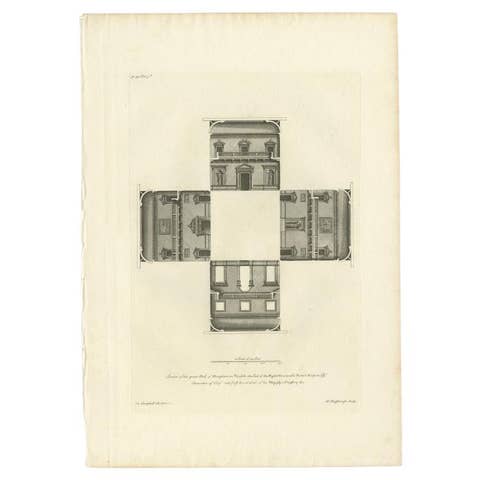
Design for Belton House, Lincolnshire, England. This print originates from 'Vitruvius Britannicus' by Colen Campbell. Artists and Engravers: Colen Campbell's Vitruvius Britannicus is considered one of the greatest eighteenth-century English architectural works.
Campbell published the first three volumes between 1715 and 1725, but the text was continued in two subsequent volumes by Woolfe and Gandon in 1767 and 1771. The work is comprised of large, finely engraved illustrations, plans, and cross sections of English country houses and parks.