The Two-Headed Serpent and the Black Butterfly, 1749
€ 390
One of a kind: this is the sheet in the photographs. Ships from Langweer, the Netherlands.
Date
1749
Sheet size
37 × 25 cm (14.6 × 9.8 in)
Condition
Good
Reference
BG-13674-5
Condition
Good condition with the original hand coloring still very vivid and vibrant. The paper is chain-lined with strong plate marks and watermark. General age related toning and minor foxing. A dirt spot in the title. Left border rough.
About this sheet
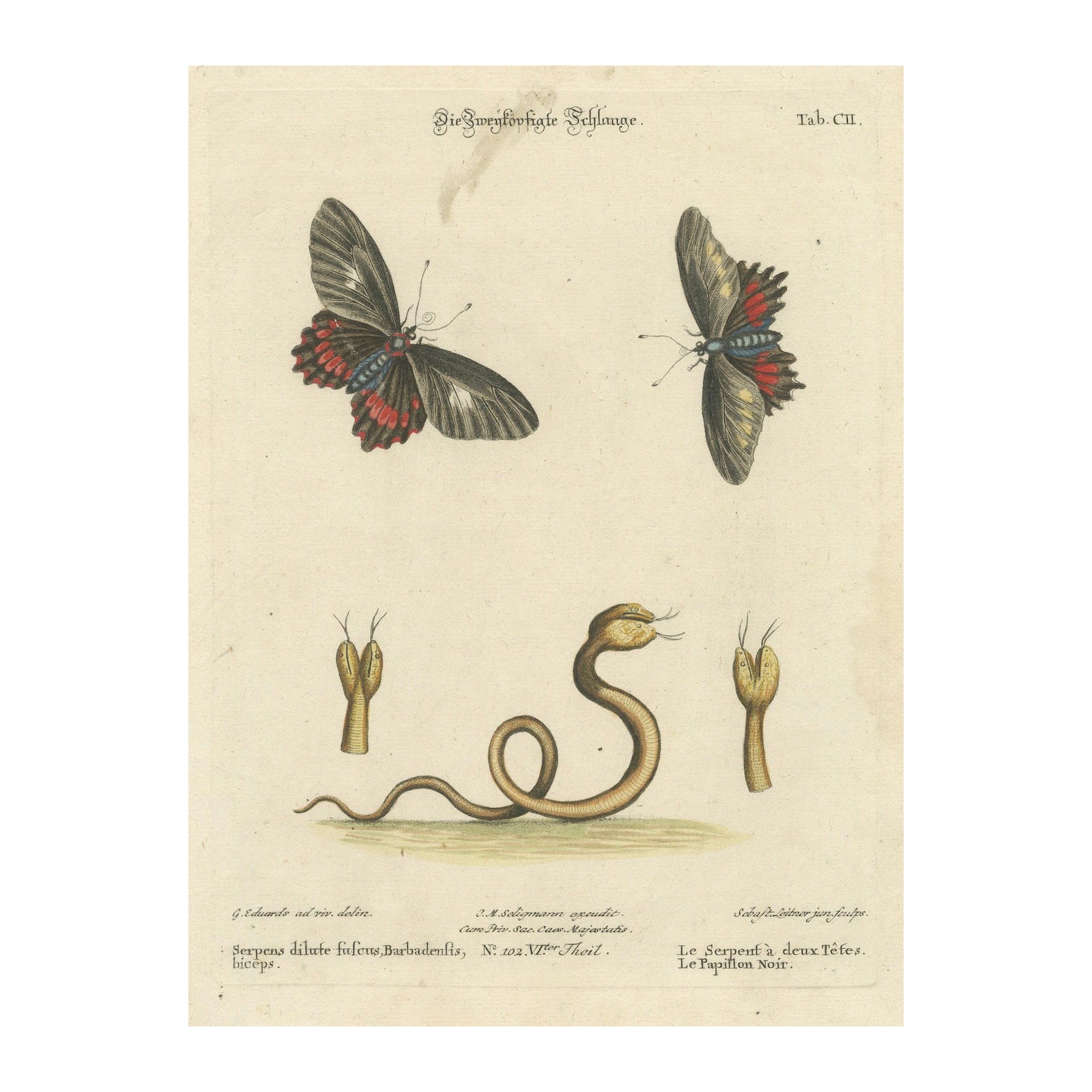
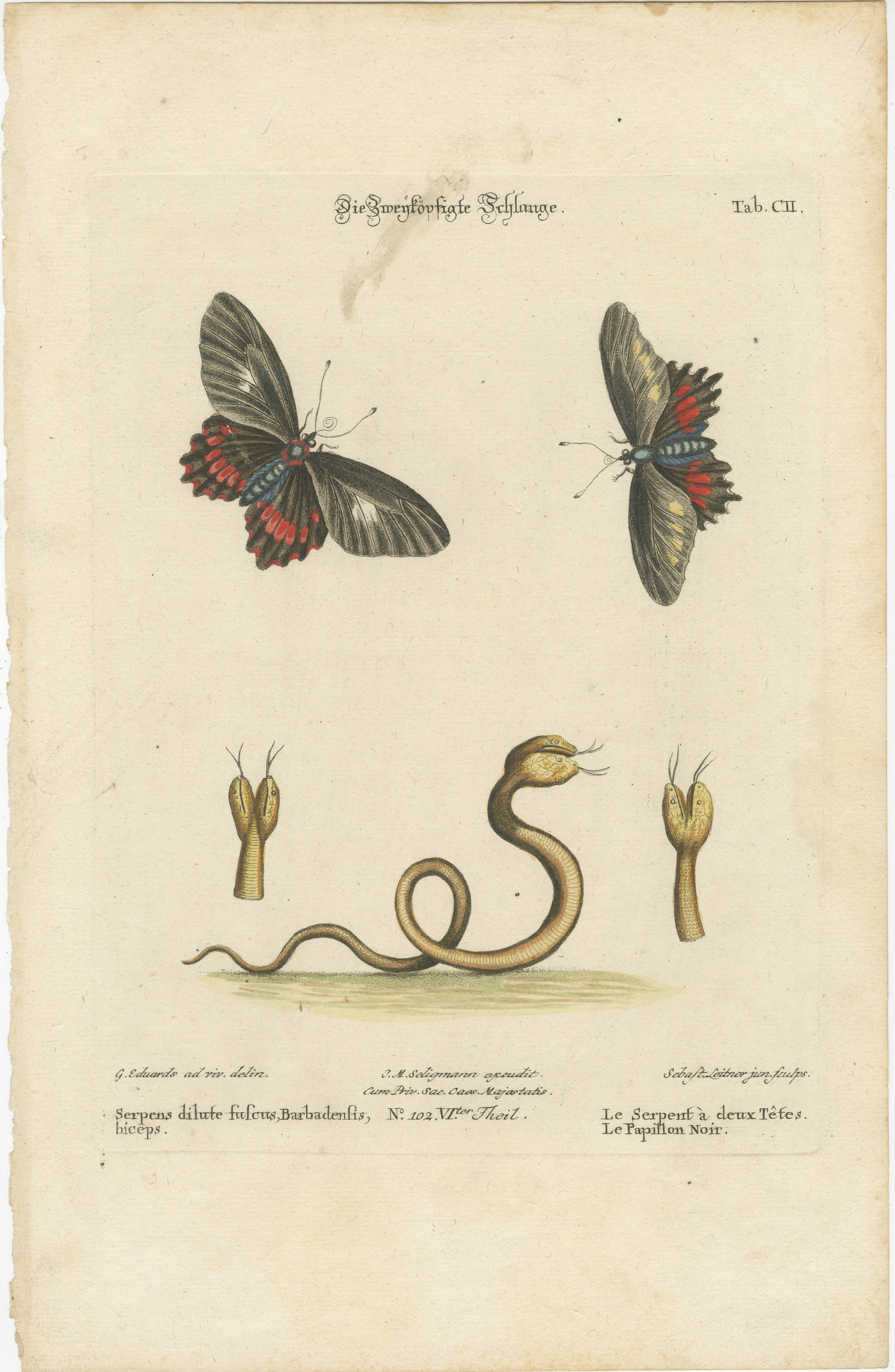
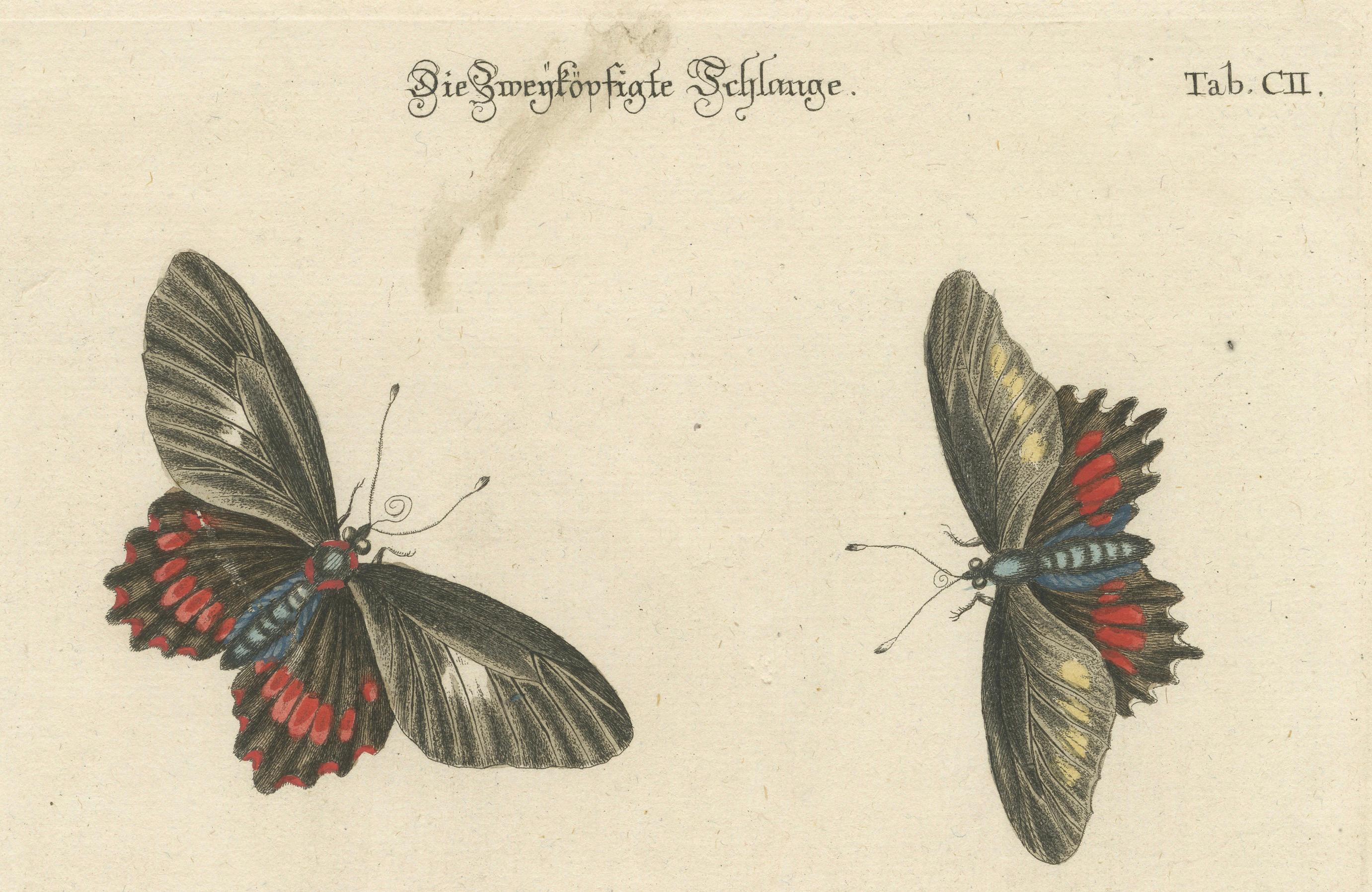
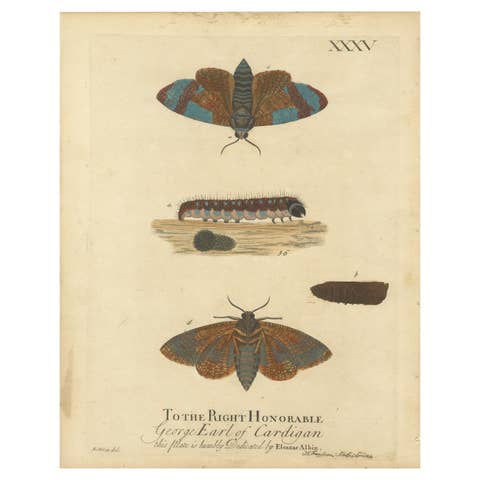
This is a hand-colored engraving from Johann Michael Seligmann's work, depicting a butterfly and a two-headed snake.
Below is the transcription and translation of the text:
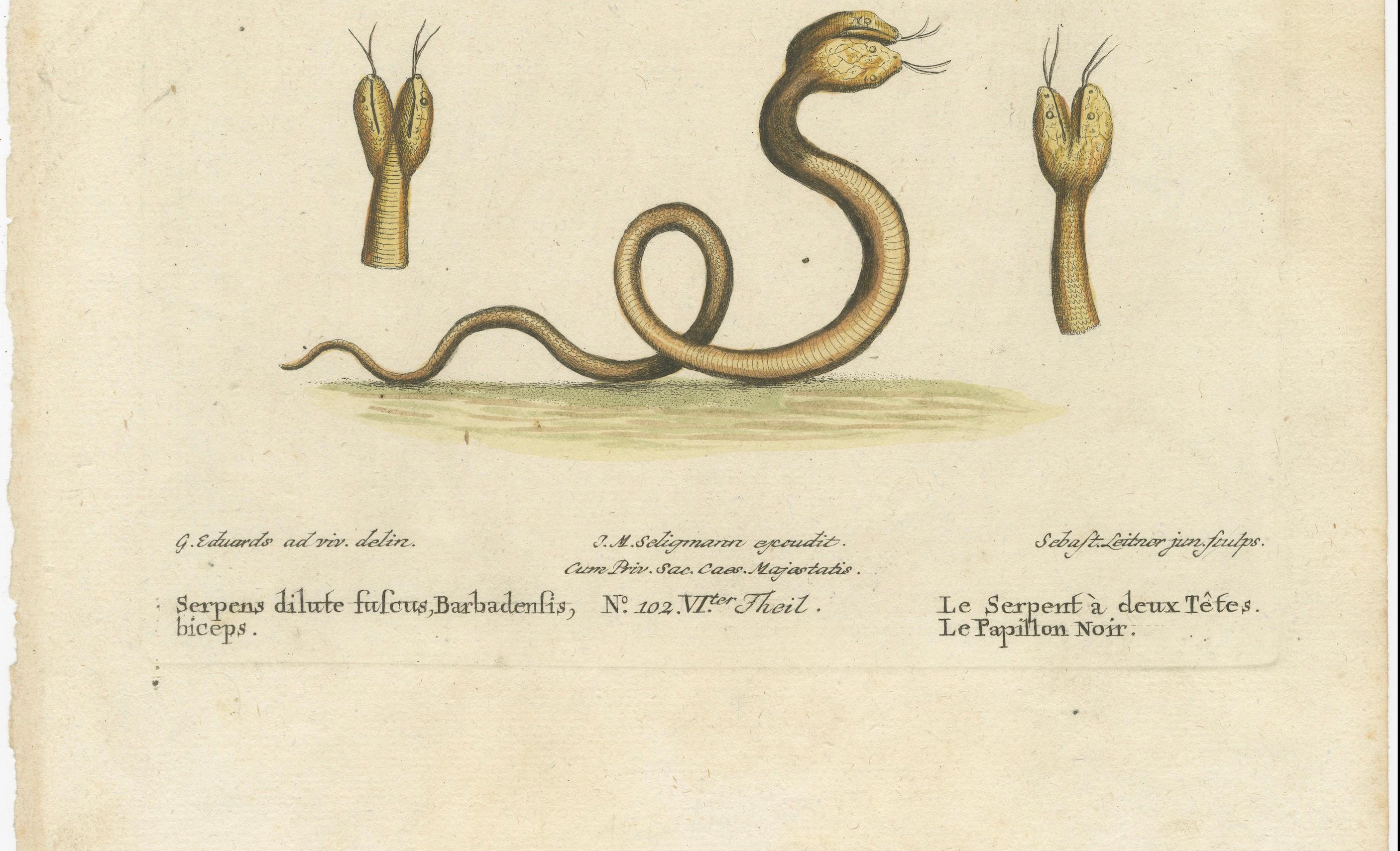
- "Die Zweykopfige Schlange." - This is German for "The Two-Headed Snake." - "Tab. CII." - This refers to "Table 102," indicating the plate number in the series. - "Serpens dilute fusculus, Barbadensis, biceps." - In Latin, this translates roughly to "Light brown snake from Barbados, two-headed." - "Le Serpent à deux Têtes. Le Papillon Noir." - This is French for "The Snake with Two Heads. The Black Butterfly."
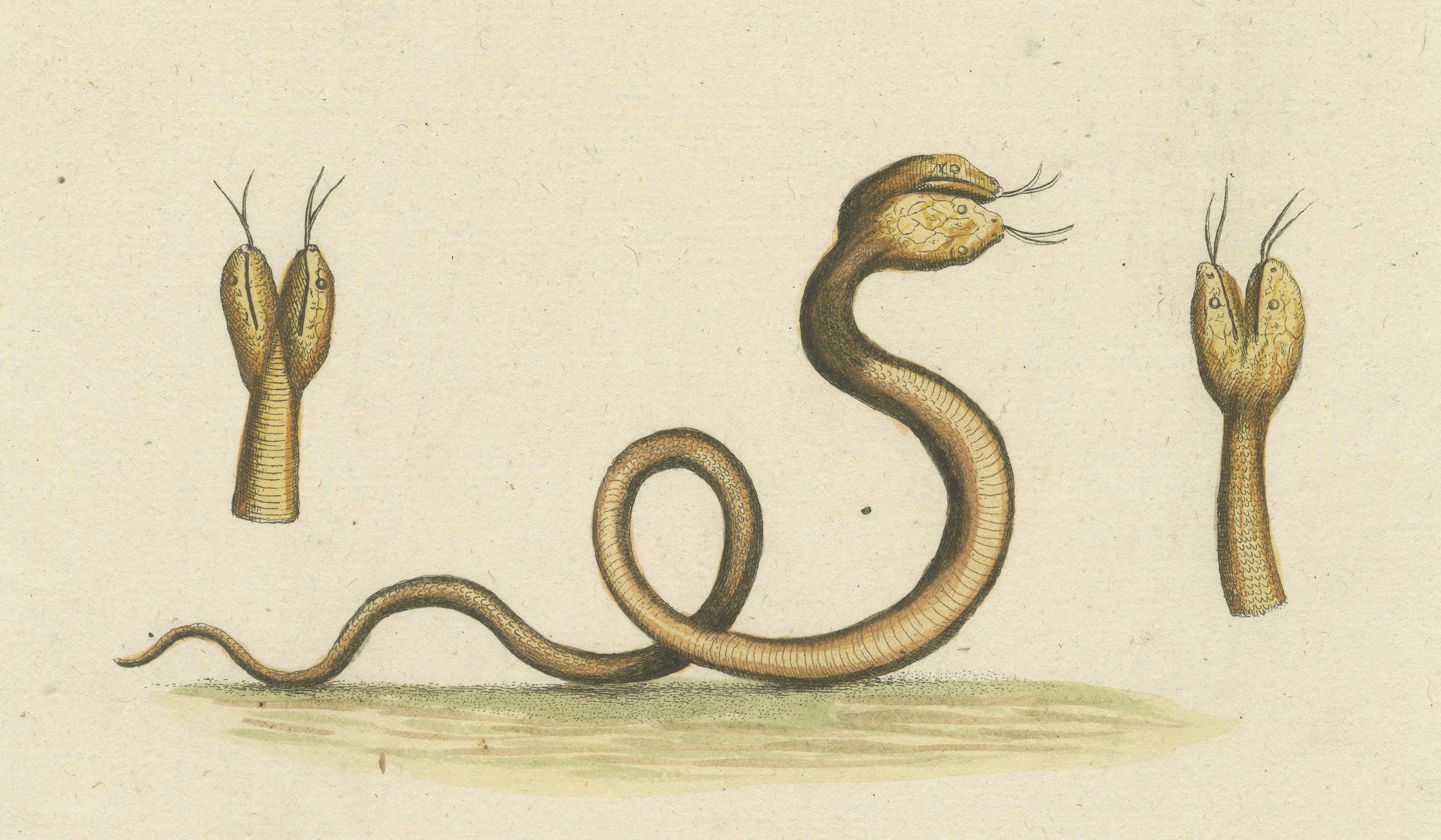
The image itself features a dark butterfly with striking red and blue markings on the wings, identified in French as "Le Papillon Noir" (The Black Butterfly). The snake below is unusually depicted with two heads, a subject that has often fascinated naturalists and the public alike, though such creatures are exceptionally rare in nature.
The fine detail of the engraving captures the intricate patterns of the butterfly's wings as well as the scales of the snake, highlighting the illustrative skill and the scientific curiosity of the 18th century. The depiction of such an unusual creature alongside the butterfly may reflect the era's fascination with natural oddities and the diversity of the animal kingdom. These illustrations were essential for the study of natural history at the time, providing a visual record of species and phenomena encountered in various parts of the world.
Source: Johann M. Seligmann, Sammlung Verschiedener Auslandischer und Seltener Vogel, 1749 / After George Edwards Natural History of Uncommon Birds, 1743 and Gleanings of Natural History, 1759.