About this sheet
Antique Moth Pair Xylina Lambda Ortholithia Sepp Brants 1905 Handcolor
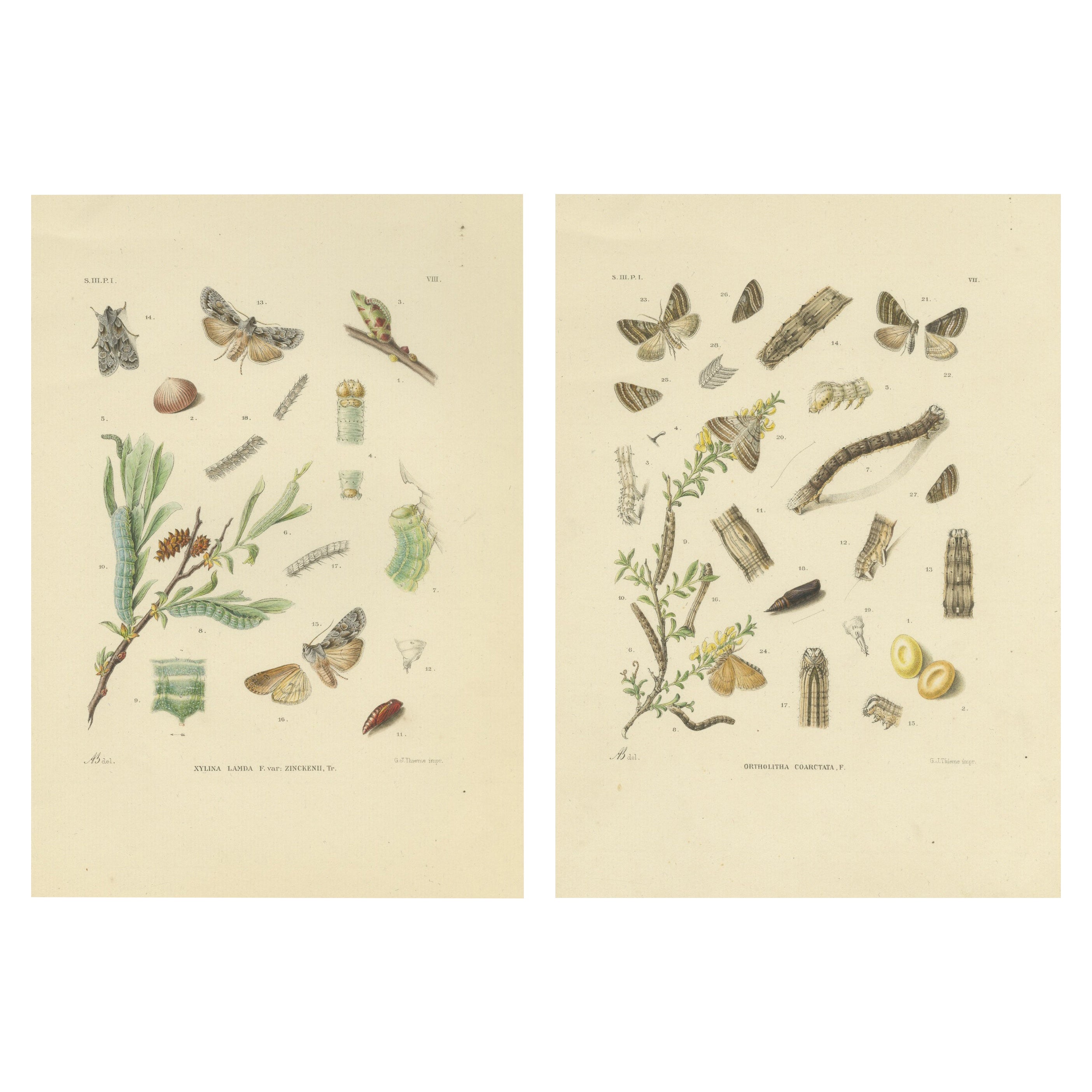
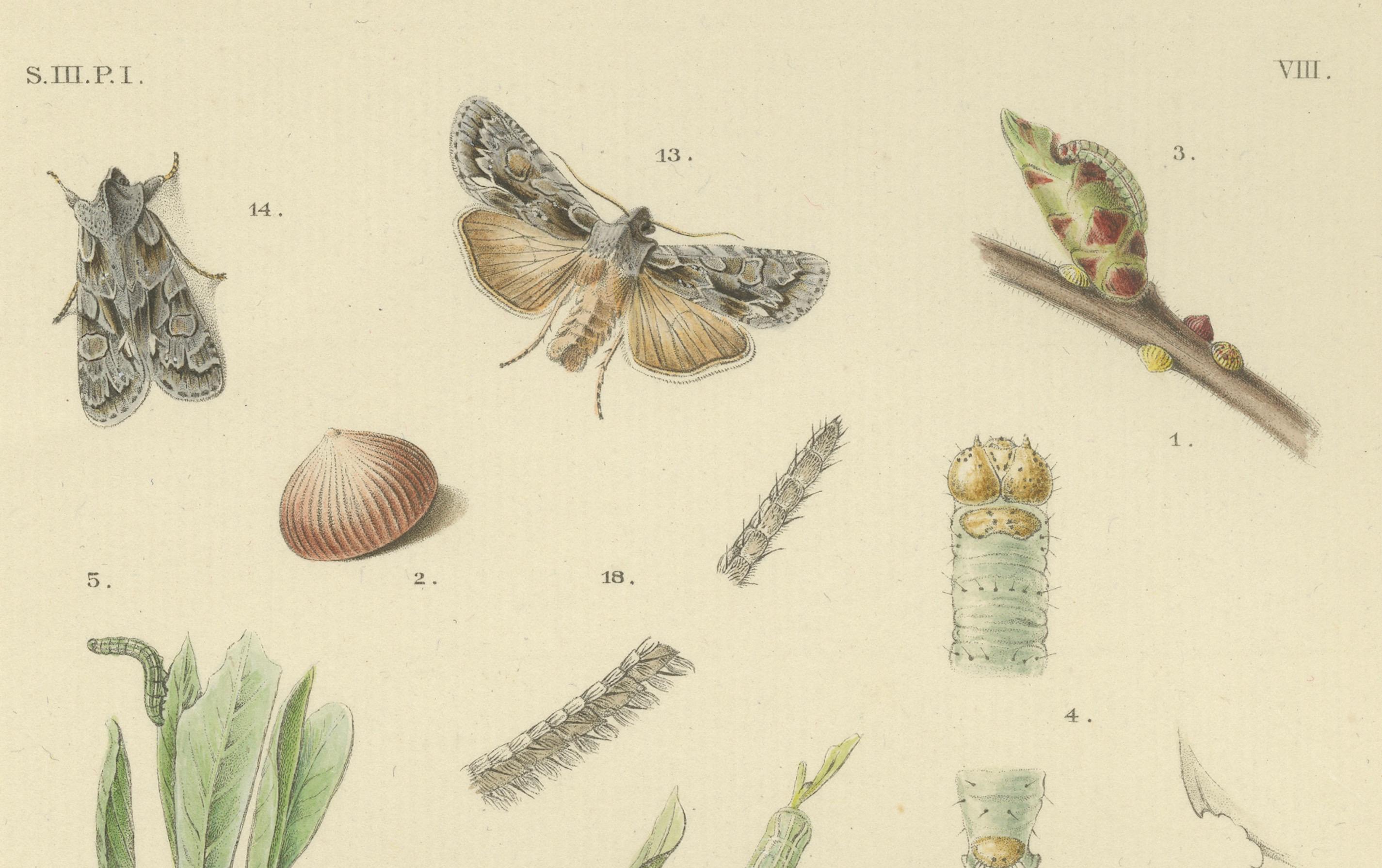
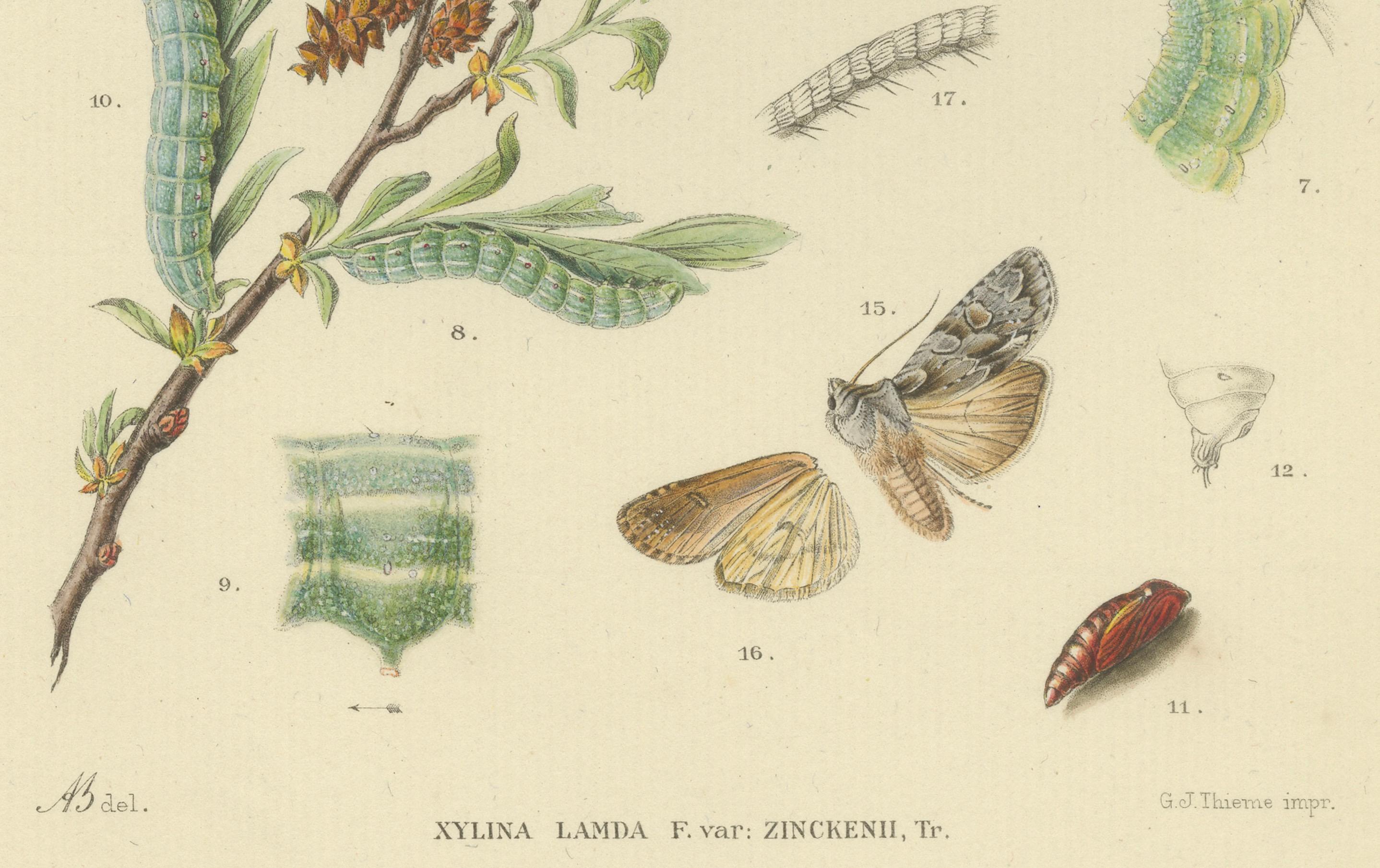
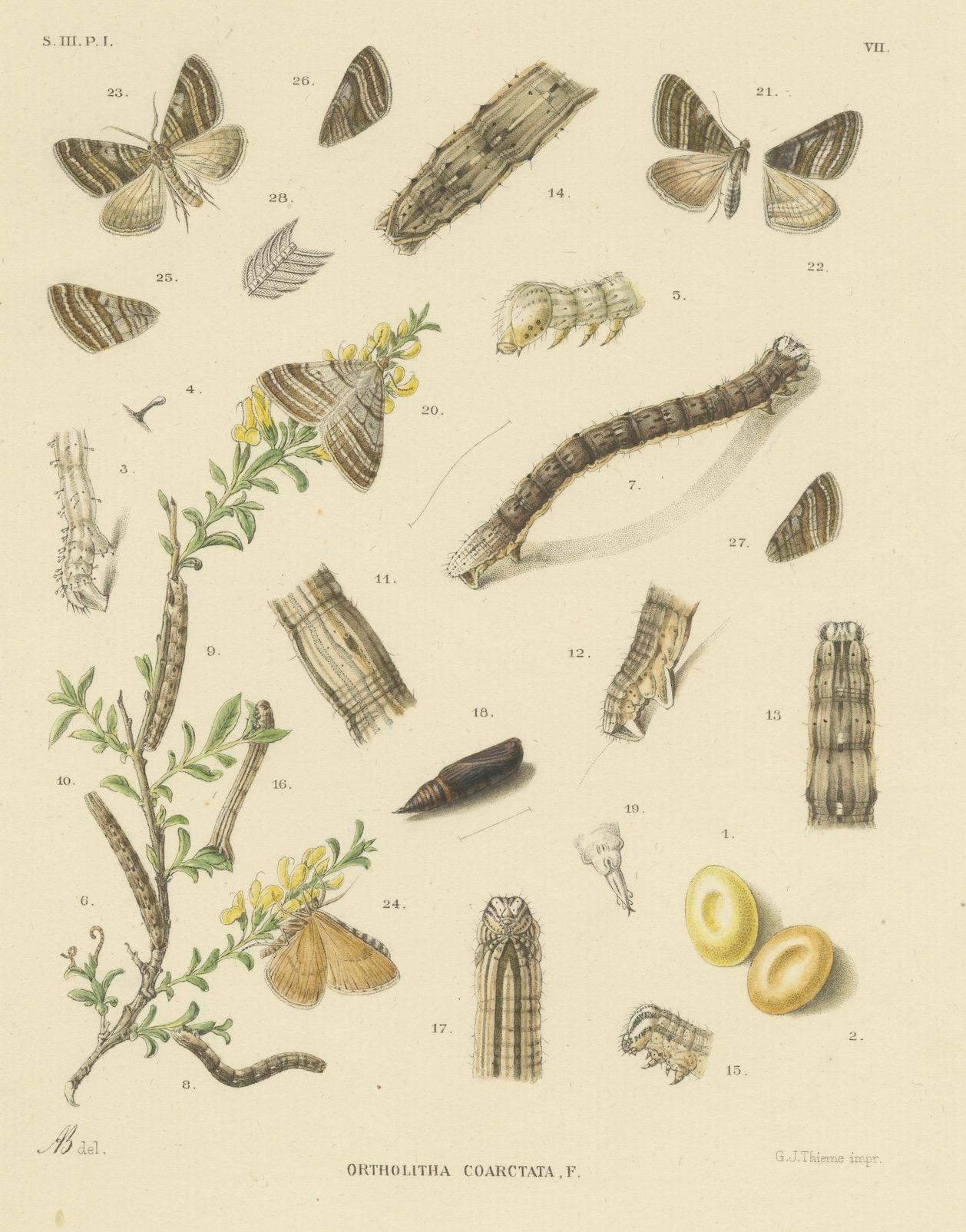
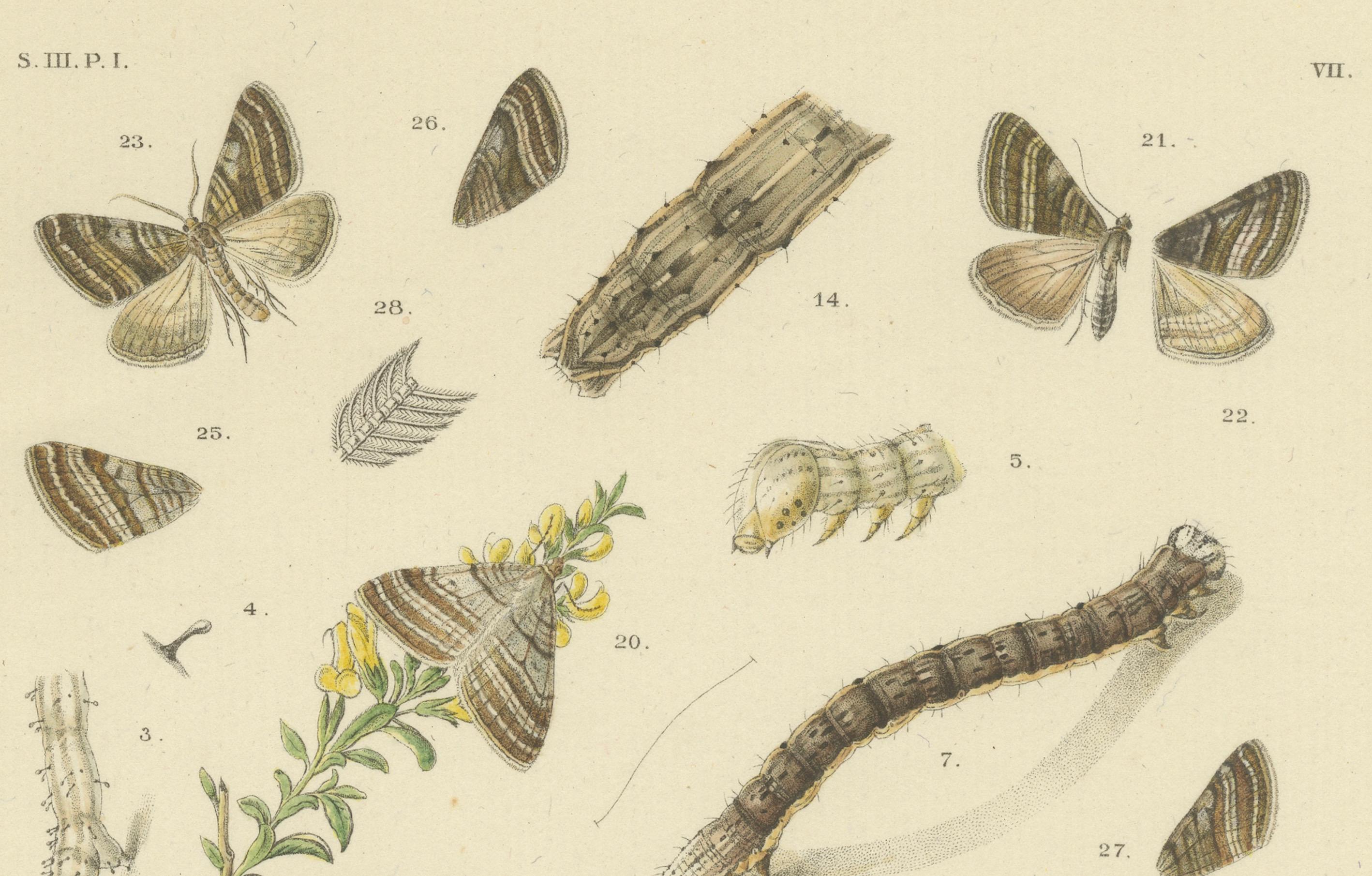
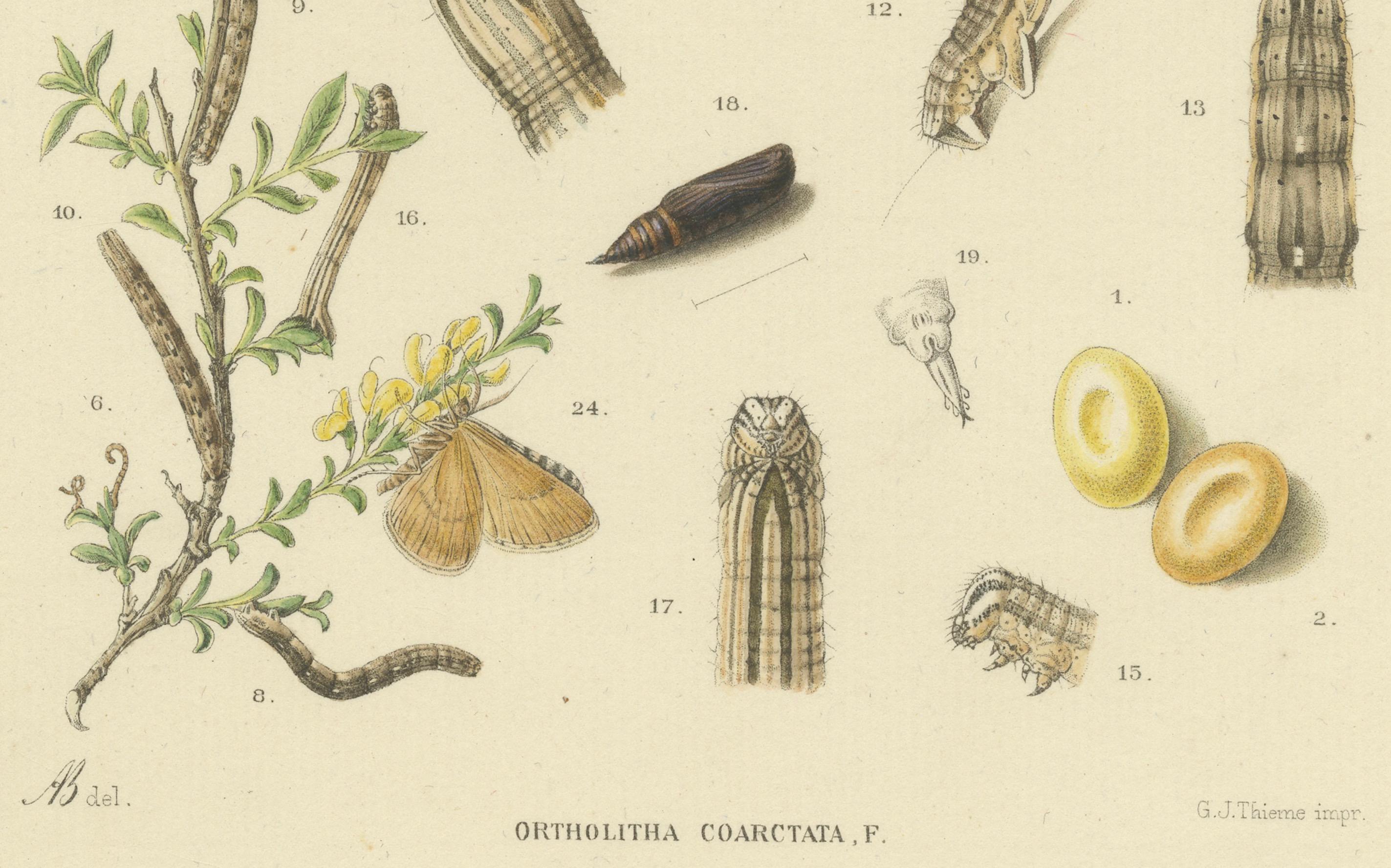
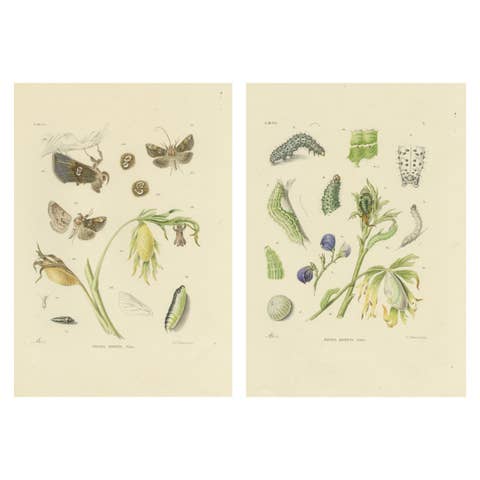
This refined matching pair of antique moth engravings originates from Parts 7–8 of the rare third and final series of Nederlandsche Vlinders, published in The Hague by Martinus Nijhoff between 1905 and 1913 under the authorship of A. Brants. This series represents the final continuation of the legendary Dutch Sepp tradition in entomological illustration, begun in 1728 and regarded as one of the most important long-running scientific illustration projects in Europe.
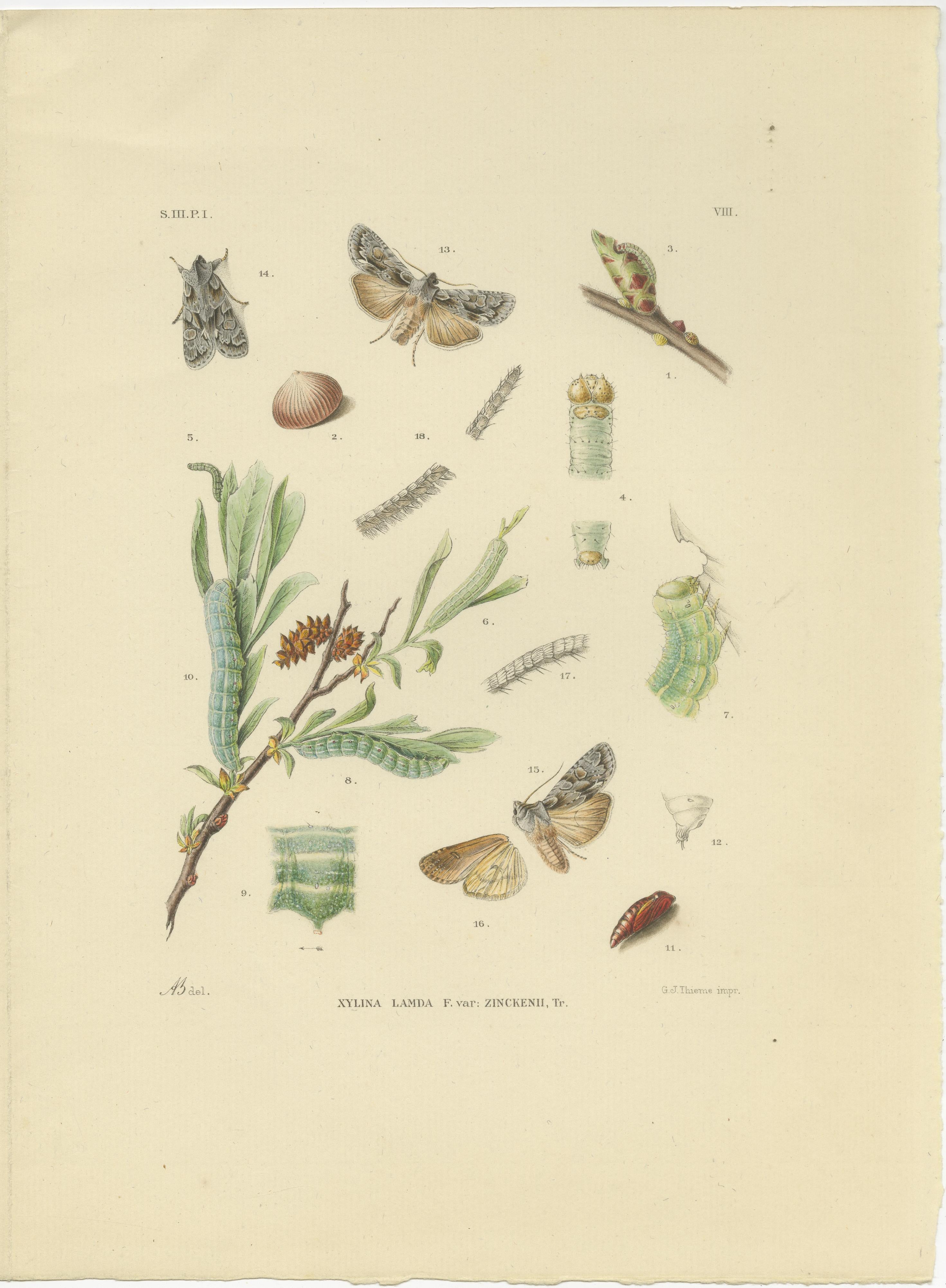
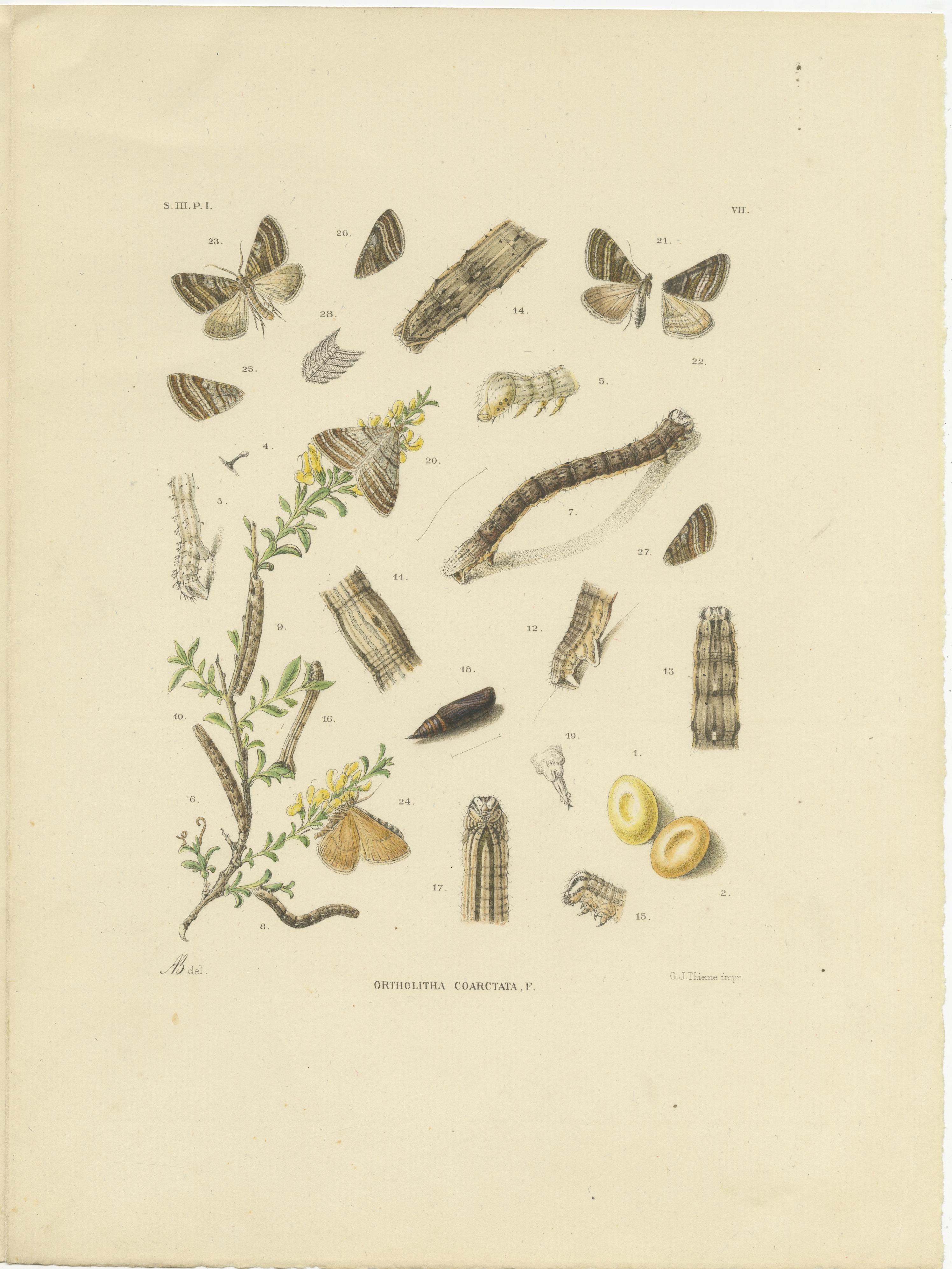
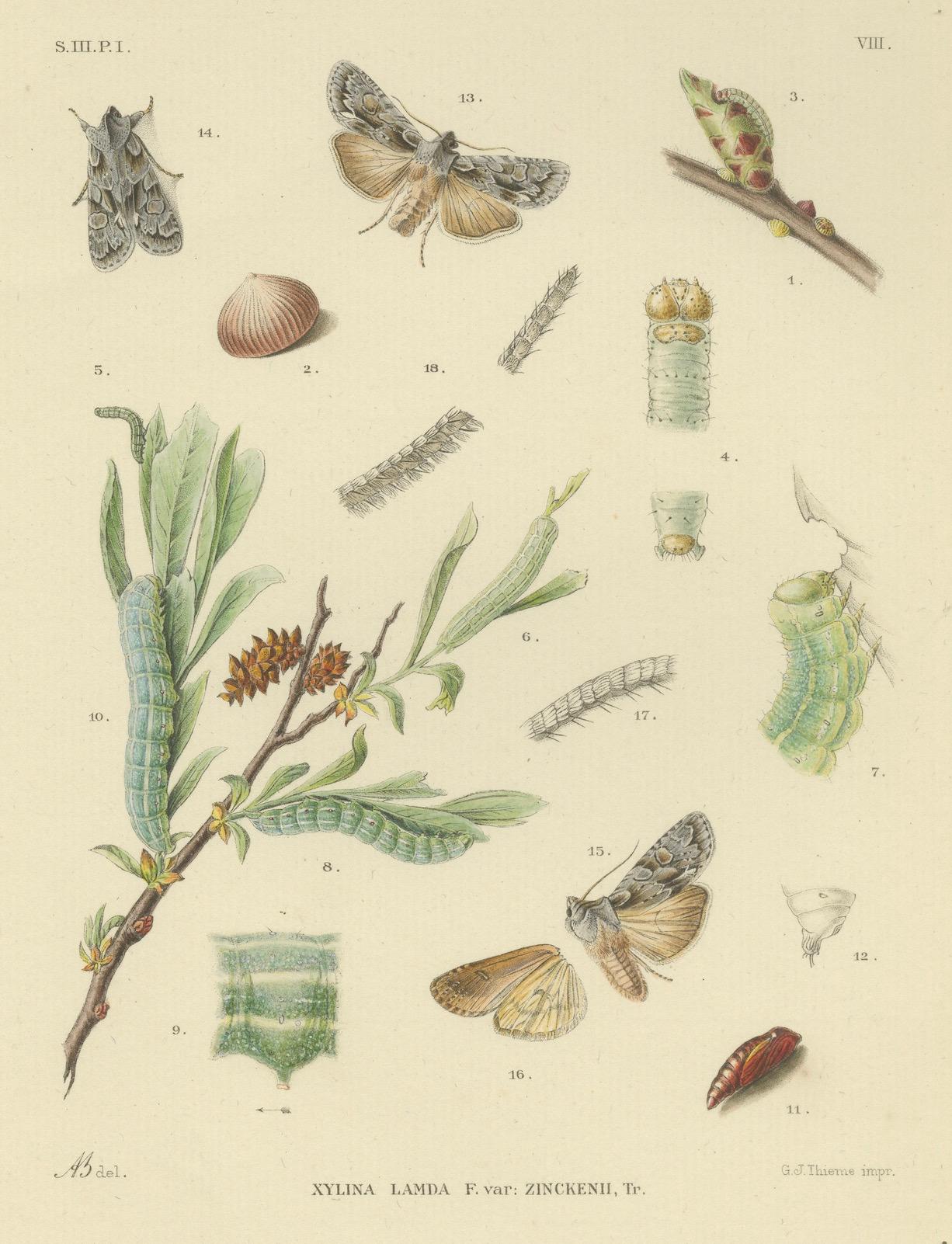
The two plates illustrate Xylina Lambda var. zinckenii and Ortholithia Coaxata, each shown through multiple developmental stages including adult moths, caterpillars, chrysalides, eggs, and host plants. The compositions combine scientific clarity with a strong decorative rhythm, where botanical elements frame the life stages in balanced, visually rich arrangements. The original hand coloring is subtle and atmospheric, with soft greens, warm browns, ochres, and delicate wing patterning applied with great precision.
This offering includes both original hand-colored copper engravings together with the complete original printed text leaves from Parts 7–8, preserving the essential historical unity between image and scientific description. The plates originate from the library of the distinguished Dutch lepidopterist Jan Hendrik Ernst Wittpen (1878–1956), identifiable by his library stamp, adding documented scholarly provenance and institutional credibility.
The third series of Nederlandsche Vlinders is markedly scarcer than the earlier Sepp volumes and is especially valued by collectors of museum-quality natural history art, rare scientific illustration, and refined decorative works on paper. As a balanced and visually dynamic diptych, this pair is particularly well suited for libraries, studies, contemporary interiors, and curated gallery walls.
Condition report
Both engravings and accompanying text leaves are in excellent, near-mint condition. Clean impressions, beautifully preserved original hand coloring, strong visible plate marks, no foxing, no tears, no stains. Overall preservation is outstanding.
Framing tips
This pair is ideally presented as a horizontal diptych with soft ivory or warm light-grey museum matting. Slim walnut, brushed bronze, or restrained gilt frames complement the natural tones. Museum glass is recommended for optimal protection of the hand coloring and paper.
Technique: Hand-colored copper engraving
Maker: A. Brants after Sepp tradition, The Hague, circa 1905–1913
SEO keyword block
antique moth engraving, sepp brants insect print, xylina lambda, ortholithia coaxata, dutch entomology art, hand colored insect print, antique scientific illustration, rare lepidoptera art, museum natural history print, early 20th century engraving, collectible insect wall art, natural history diptych