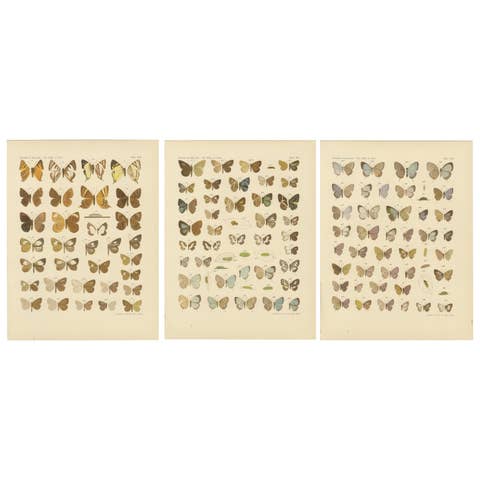
Original antique · The actual sheet photographed · Certificate of authenticity on request · Sold unframed · Worldwide shipping from € 15 (rates)
Date
1908
Mapmaker / artist
A. Brants after Sepp tradition, The Hague, circa 1905–1913
Technique
Hand-colored copper engraving
Sheet size
28 × 20 cm (11.0 × 7.9 in)
Condition
Good
Reference
BG-14173-5 & BG-14173-6
What the condition grades mean
Excellent
Bright and clean, with no faults worth mentioning.
Very good
Only light signs of age, such as faint toning.
Good
Normal signs of age for a sheet of this period: toning, some foxing, small marks or neat old repairs.
Fair
Clear faults such as staining, tears or repairs, priced to match.
Every fault we see is written in the condition note, and the whole sheet is shown uncropped in the photos.
Condition
Both engravings and accompanying text leaves are in excellent, near-mint condition. Clean impressions, beautifully preserved original hand coloring, strong visible plate marks, no foxing, no tears, no stains. Overall preservation is outstanding.
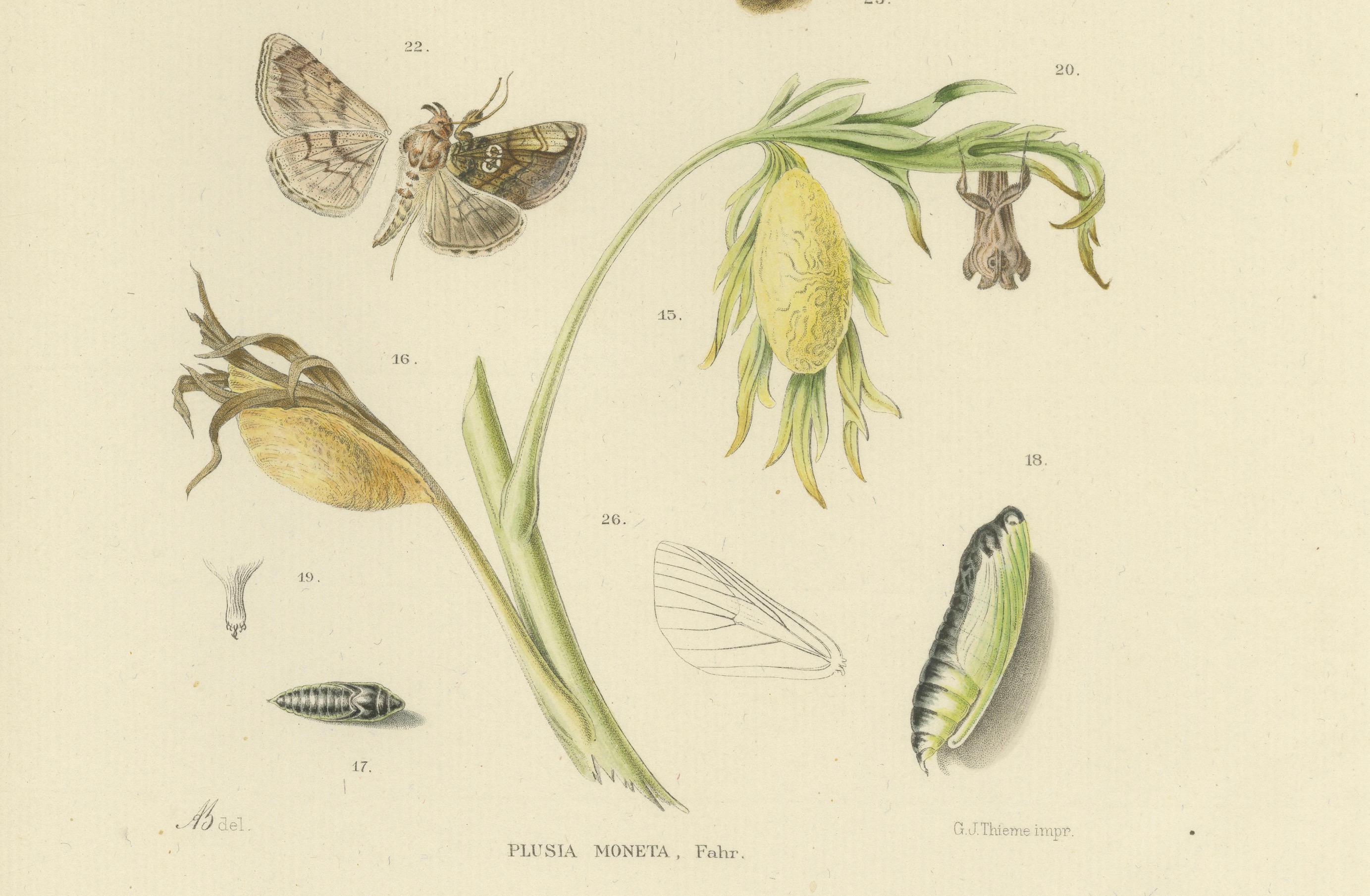
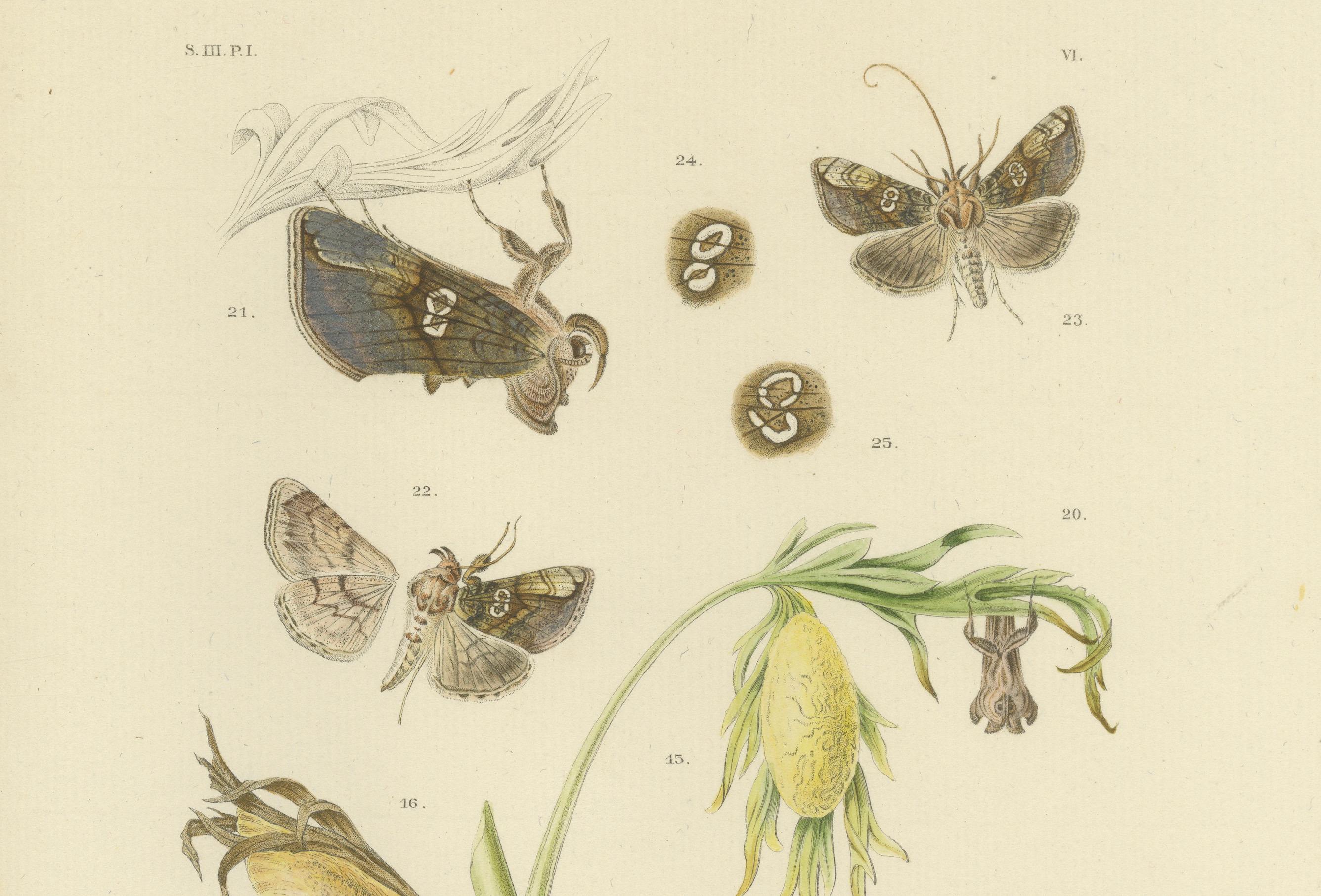
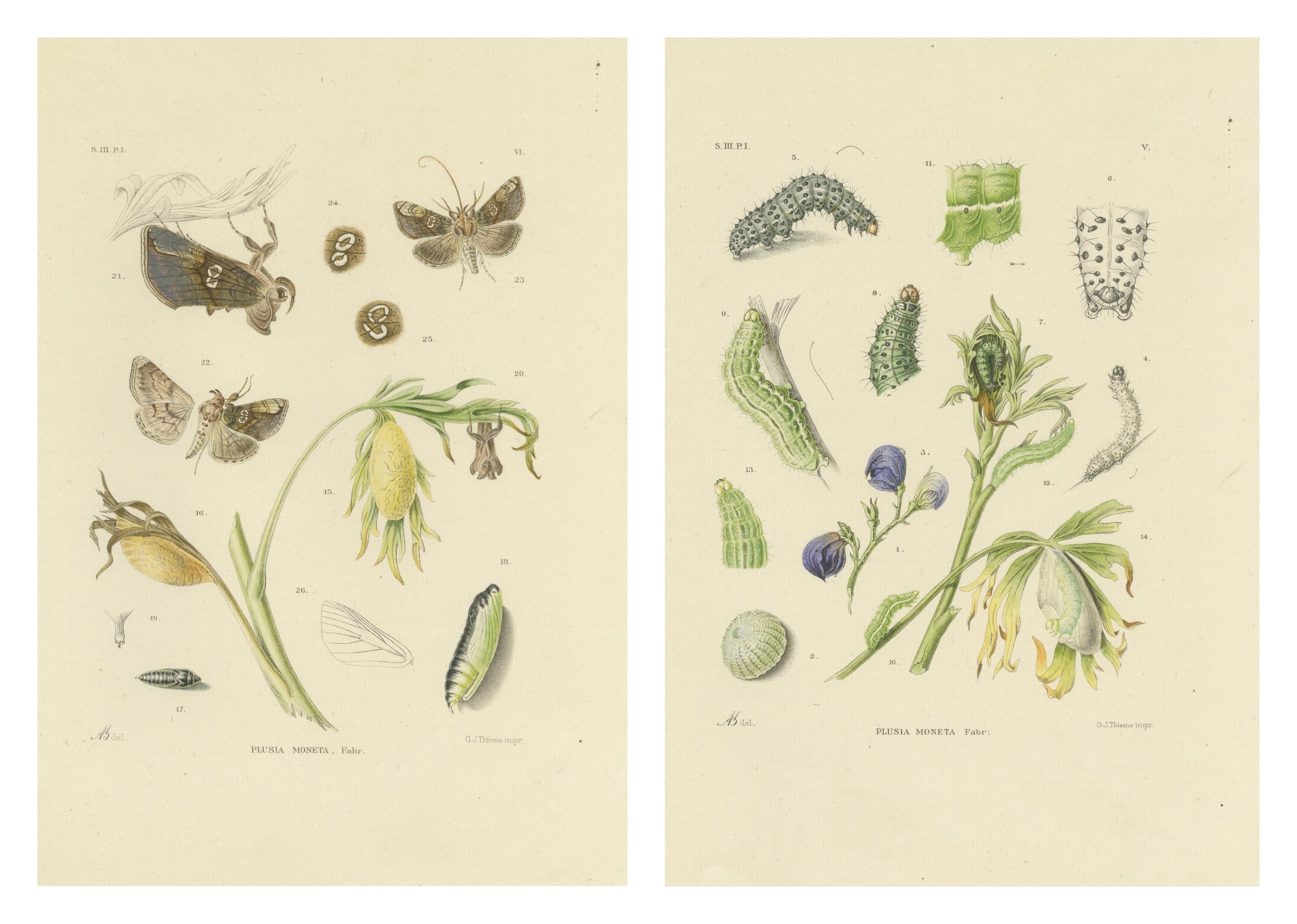
This elegant matching pair of antique moth engravings originates from Parts 7–8 of the rare third and final series of Nederlandsche Vlinders, published in The Hague by Martinus Nijhoff between 1905 and 1913 under the authorship of A. Brants. This late continuation represents the concluding chapter of the historic Sepp tradition in Dutch entomological illustration, a project that began in 1728 and shaped European scientific insect imagery for nearly two centuries.
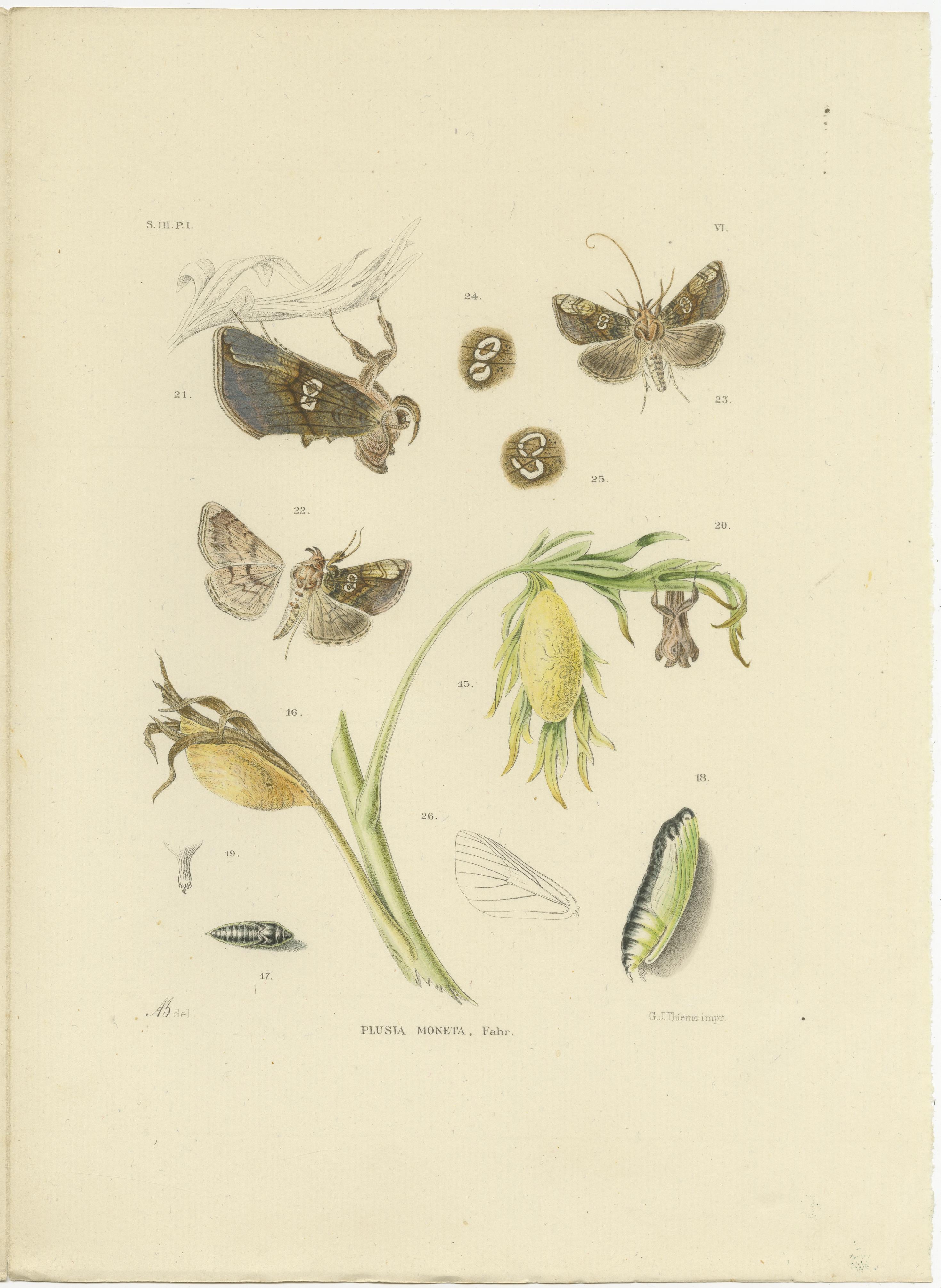
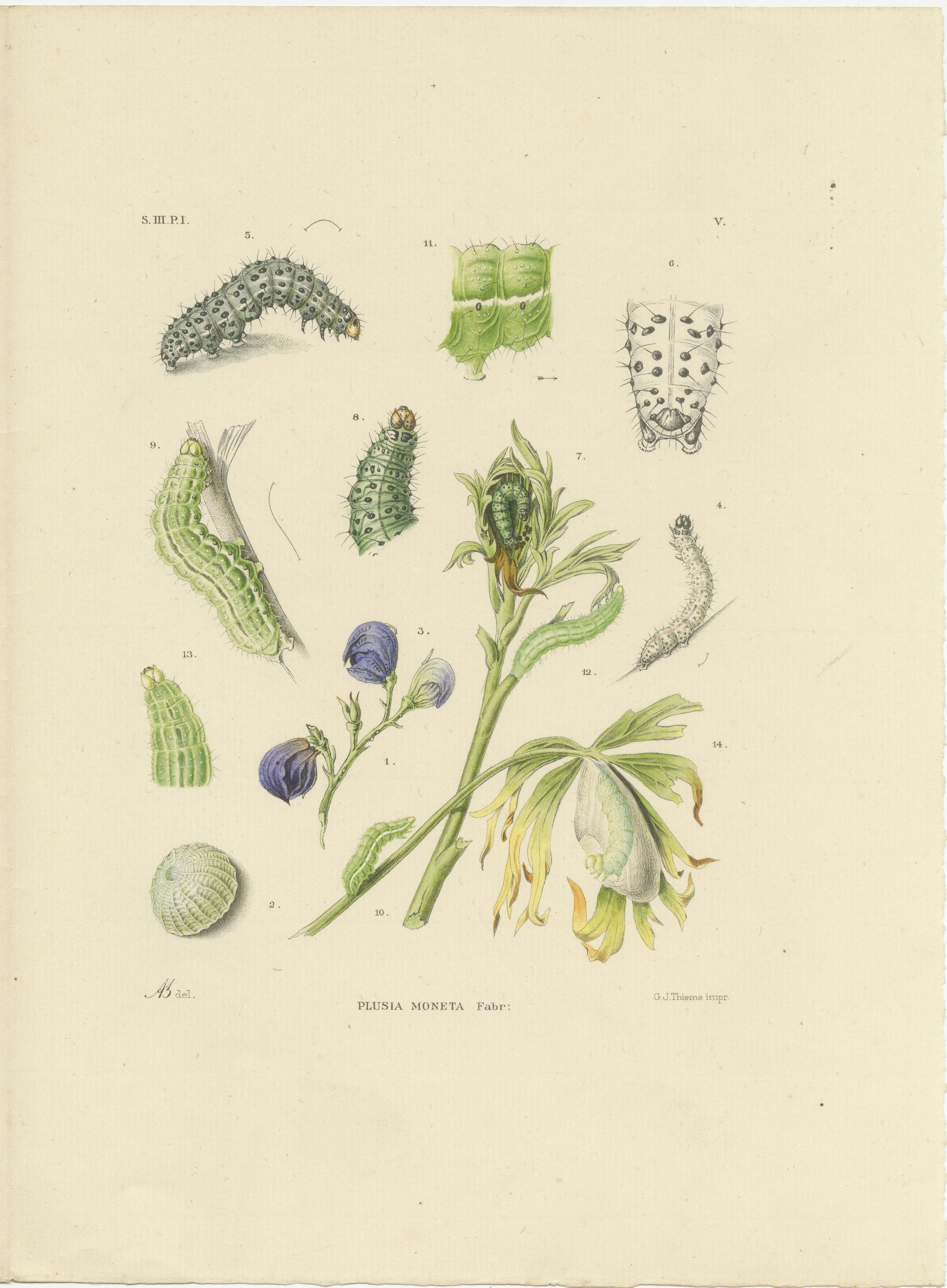
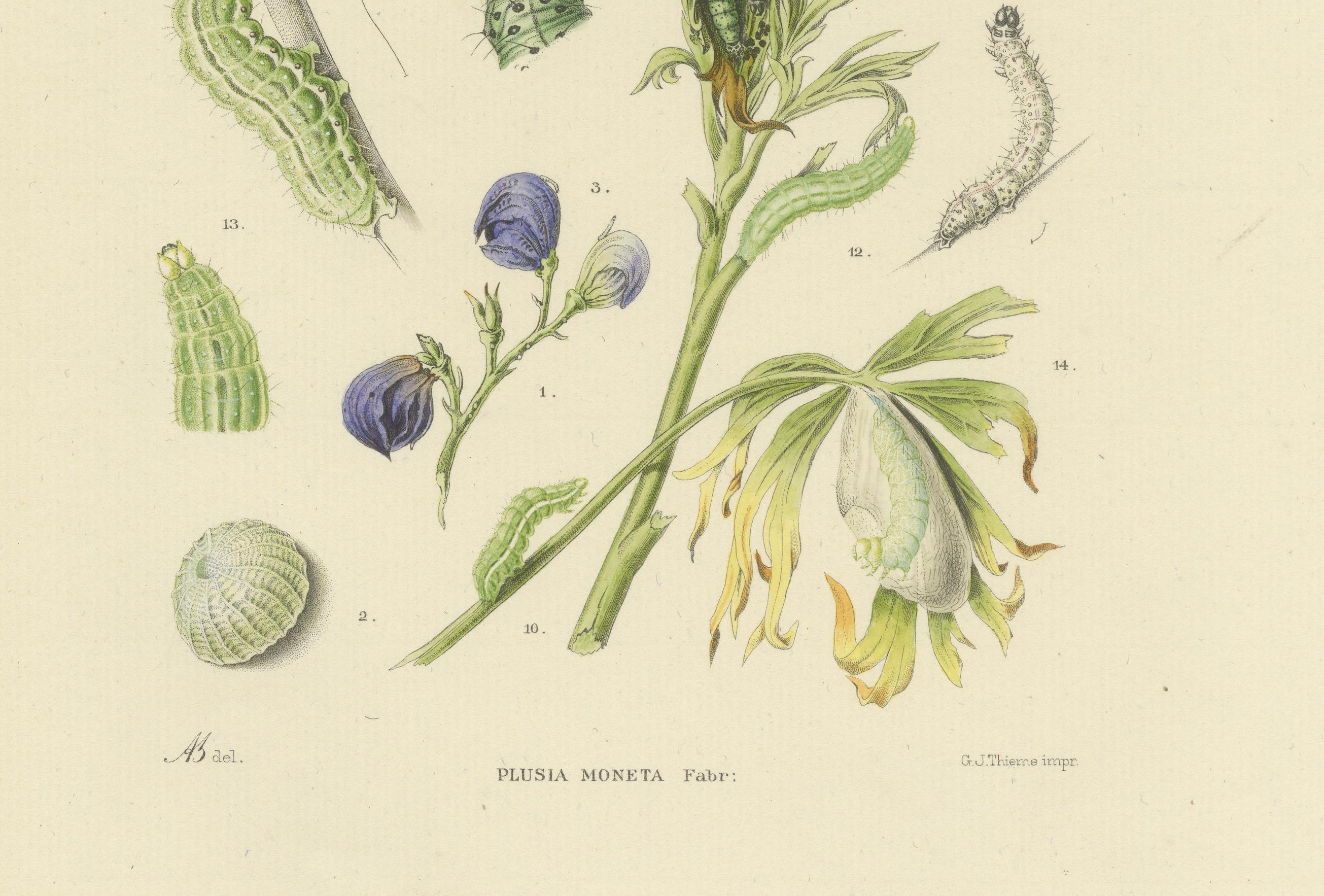
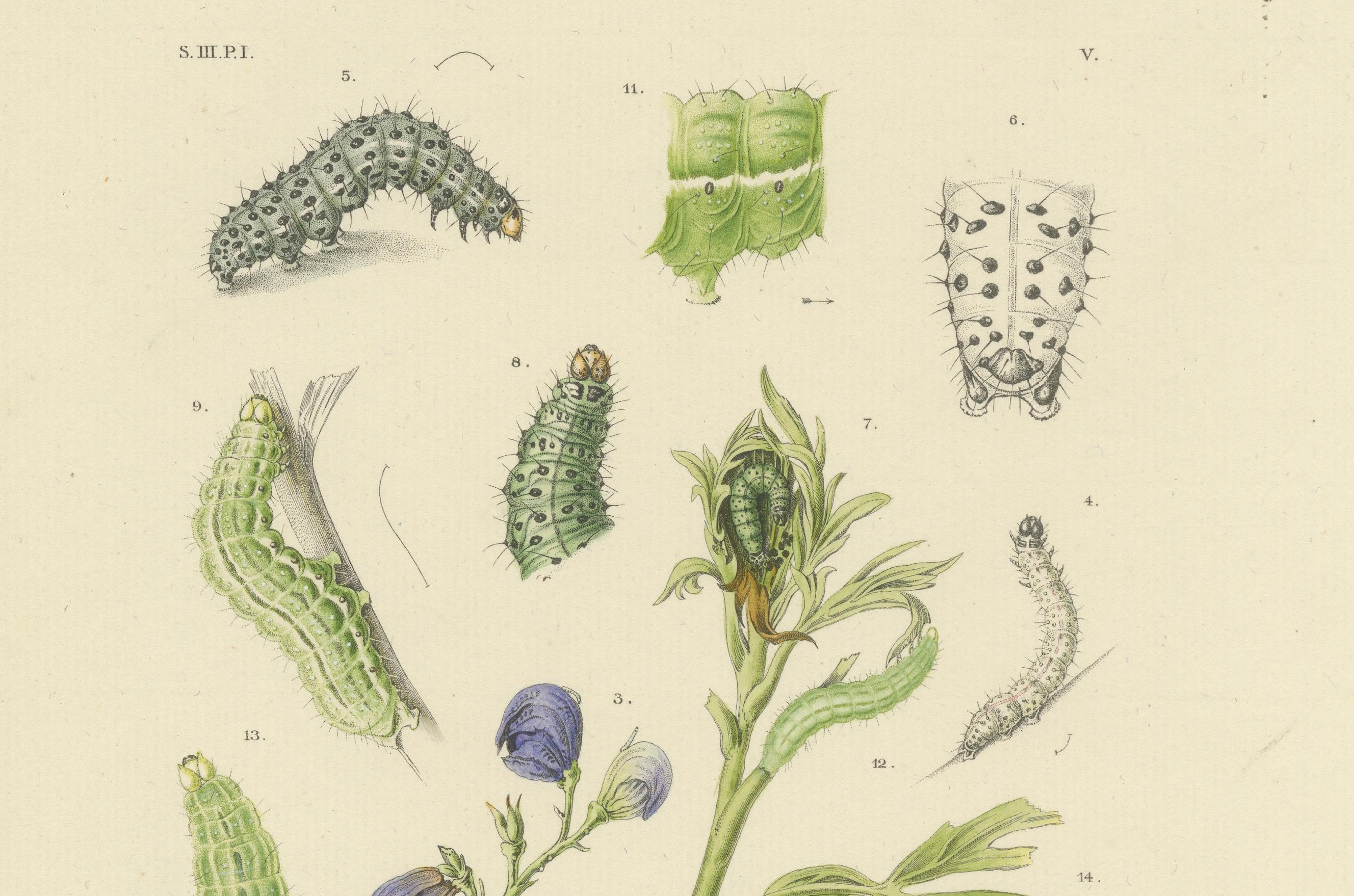
Both plates are dedicated to Plusia moneta, shown through its full metamorphosis with exceptional scientific clarity and artistic refinement. One plate presents the adult moth in several positions alongside eggs, chrysalis, and botanical elements, while the companion plate focuses on the larval stages and host plant in greater botanical and anatomical detail. Together, they form a beautifully balanced scientific diptych that combines natural history, botany, and engraving at a very high level.
This offering includes both original hand-colored copper engravings together with the complete original printed text leaves from Parts 7–8, preserving the essential unity between scientific explanation and visual documentation. The material originates from the library of the distinguished Dutch lepidopterist Jan Hendrik Ernst Wittpen (1878–1956), identifiable by his library stamp, adding important scholarly provenance and historical credibility.
The third series of Nederlandsche Vlinders is significantly scarcer than the earlier Sepp volumes and is prized by collectors of natural history, museum-quality scientific illustration, and refined decorative art. As a balanced and visually rich diptych, this pair works exceptionally well in studies, libraries, contemporary interiors, and curated gallery walls where subtle color and natural form are key.
Condition report Both engravings and accompanying text leaves are in excellent, near-mint condition. Clean impressions, beautifully preserved original hand coloring, strong visible plate marks, no foxing, no tears, no stains. Overall preservation is outstanding.
Framing tips This pair is ideally suited for a horizontal diptych arrangement with soft ivory or warm light-gray museum matting. Slim walnut, brushed bronze, or restrained gilt frames complement the subdued green and yellow tones. Museum glass is advised to fully protect the delicate hand coloring and paper surface.