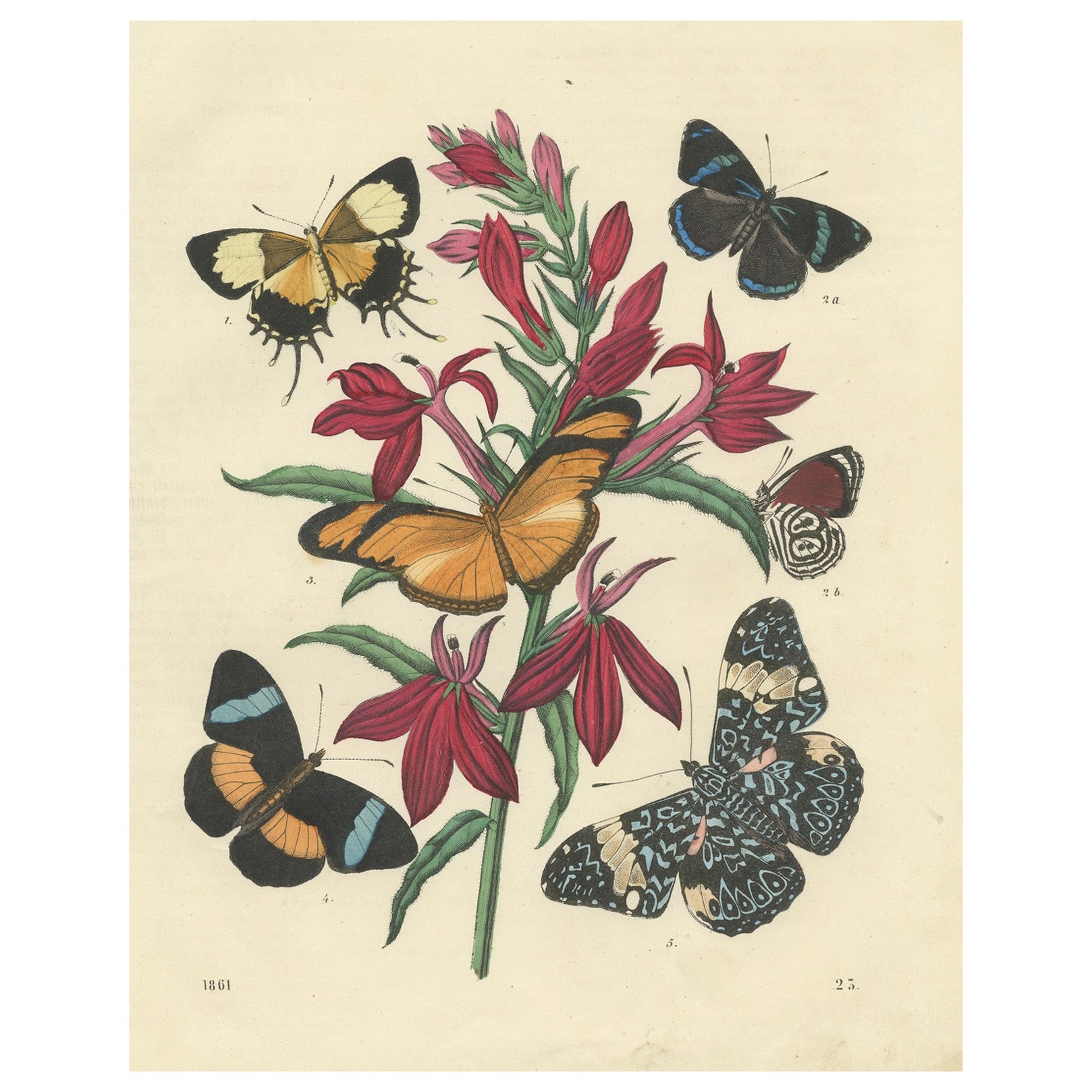
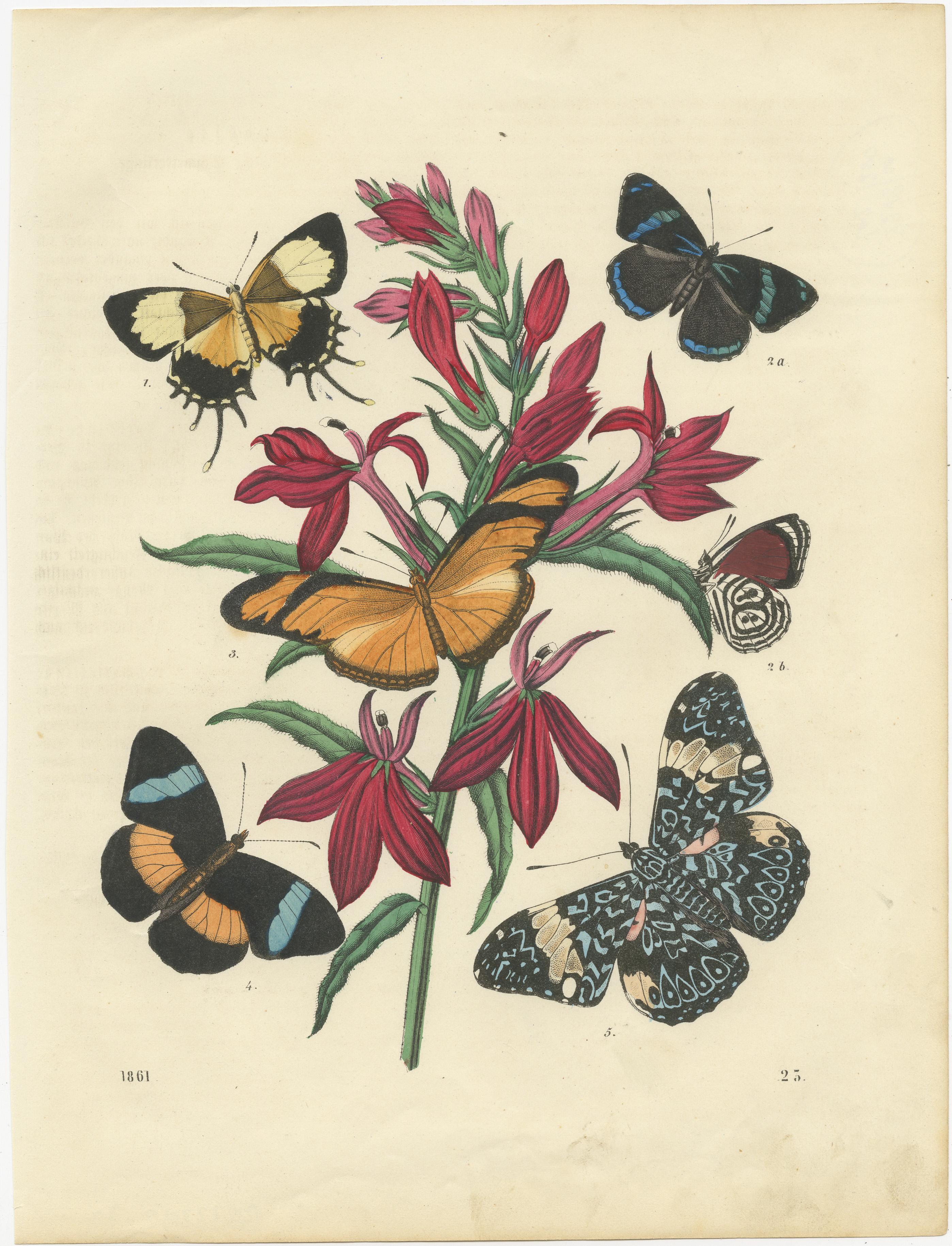
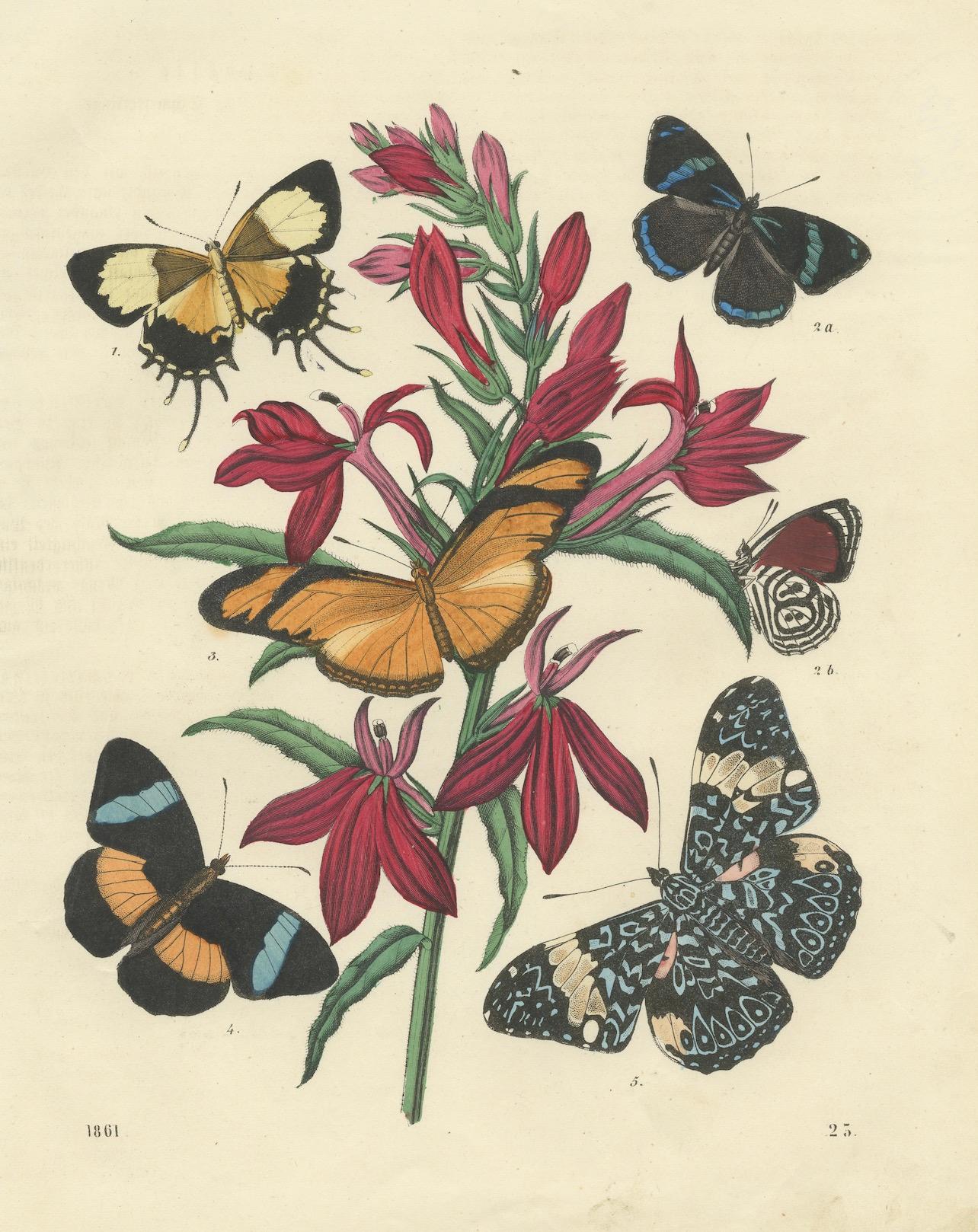
1861 Hand-Colored Lithograph of Butterflies and Botanical Flowers
€ 190
One of a kind: this is the sheet in the photographs. Ships from Langweer, the Netherlands.
Date
1861
Sheet size
25.5 × 19.5 cm (10.0 × 7.7 in)
Condition
Good
Reference
BG-13292-70
Condition
The print is in very good condition, with vibrant colors, minimal foxing, intact edges, and sharp details. Slight age-toning is visible but typical for its age, making it a well-preserved 19th-century lithograph, ideal for display or collection.
About this sheet
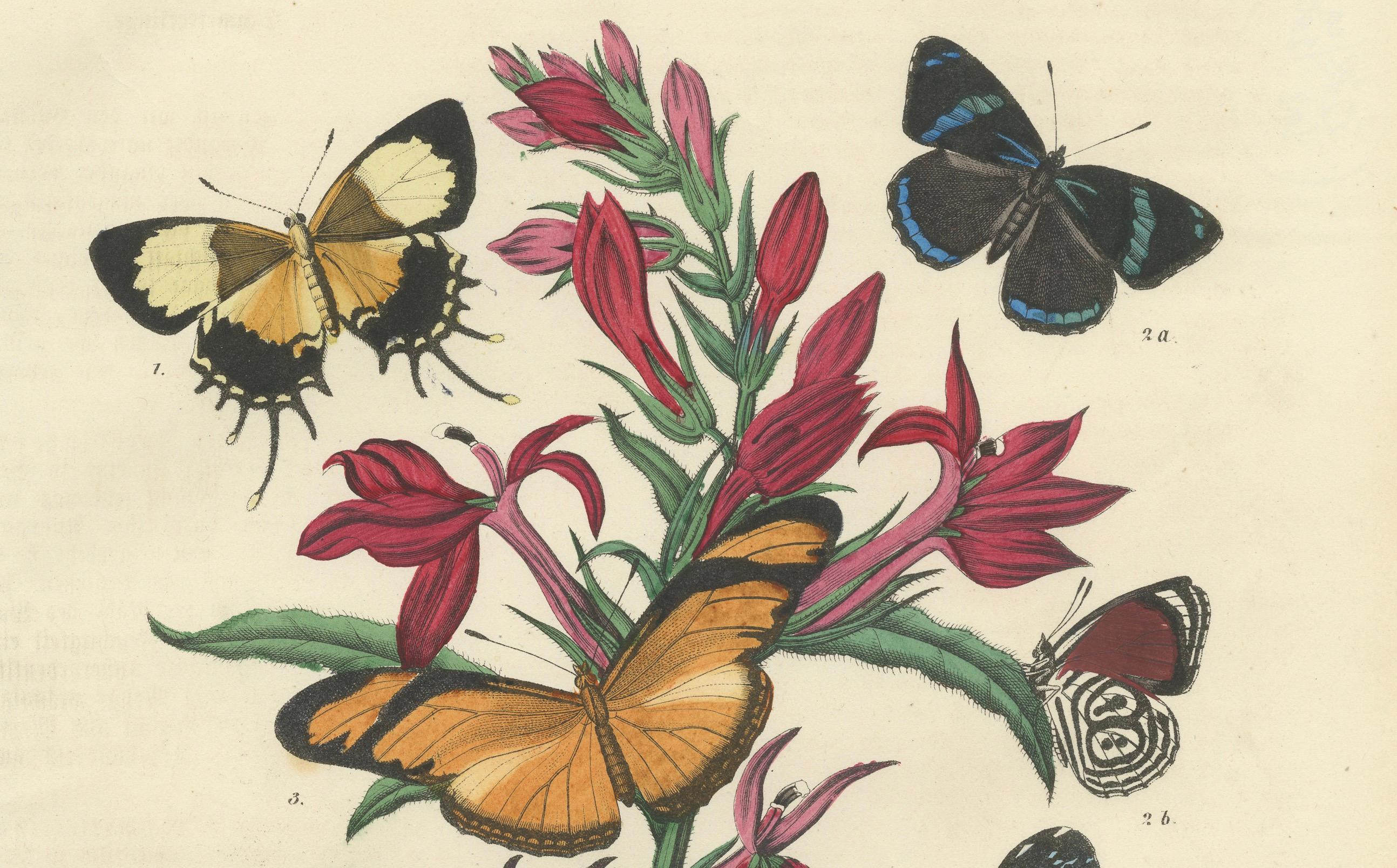
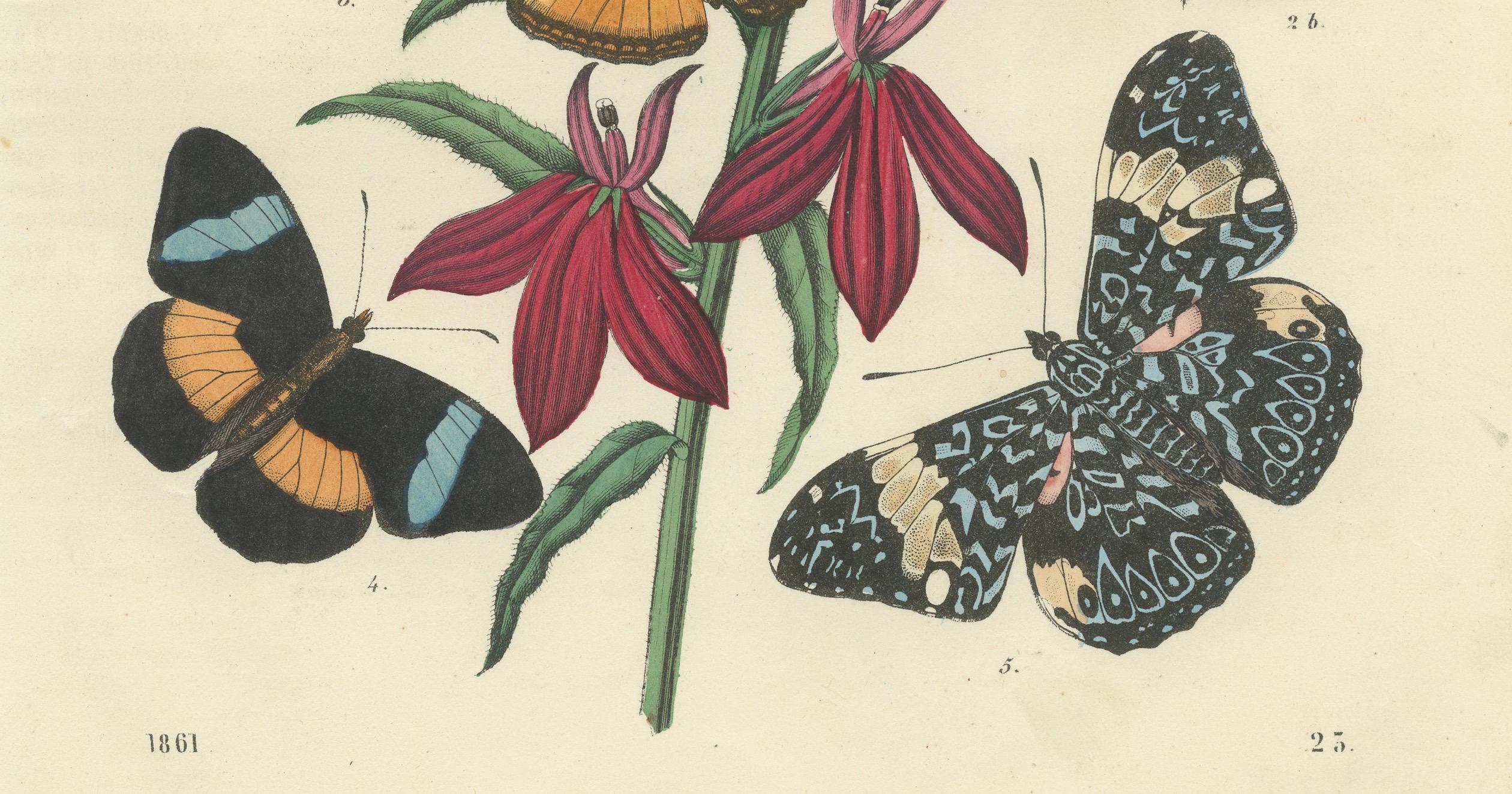
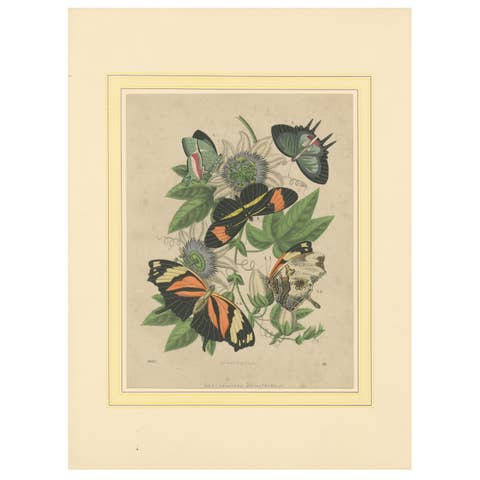
This vibrant 1861 hand-colored lithograph depicts a variety of butterfly species fluttering around a striking red flowering plant. The composition includes six meticulously detailed butterflies, each labeled with reference numbers. The colors range from the rich ochre and black of butterfly 1 to the brilliant blues and intricate patterns on butterfly 5. The botanical centerpiece features elongated red blossoms and verdant green leaves, forming a dynamic contrast with the butterflies' delicate wings. This print captures the beauty and diversity of both flora and fauna, characteristic of 19th-century natural history illustrations. It is both scientifically valuable and artistically enchanting, suitable for collectors or as an elegant decorative piece.
The butterflies in the lithograph can be described as follows:
1. Butterfly 1 is yellow and black with a scalloped wing margin, resembling a Swallowtail species, possibly from the genus Papilio. 2. Butterfly 2a is black with bright blue bands across its wings, potentially from the genus Morpho or Heliconius. 3. Butterfly 3 is orange with black edges, similar to species like the Juno Longwing (Dione juno) or other Heliconiinae butterflies. 4. Butterfly 4 is black with prominent orange and pale blue bands, possibly from the Heliconius or Adelpha genus. 5. Butterfly 5 features detailed patterns in blue, black, and cream, potentially a Cracker Butterfly (Hamadryas) or another member of the Nymphalidae family. 6. Butterfly 2b is small with black and white striped patterns on its wings, resembling Zebra Butterflies or similar small Nymphalids.
Further identification might require referencing 19th-century entomological works or modern resources on butterfly species.