1848 Hand-Colored Lithograph of the Large Indian Grasshopper
€ 160
Original antique · The actual sheet photographed · Certificate of authenticity on request · Sold unframed · Worldwide shipping from € 15 (rates)
Date
1848
Sheet size
34.8 × 25.9 cm (13.7 × 10.2 in)
Condition
Good
Reference
BG-13836-81
What the condition grades mean
Excellent
Bright and clean, with no faults worth mentioning.
Very good
Only light signs of age, such as faint toning.
Good
Normal signs of age for a sheet of this period: toning, some foxing, small marks or neat old repairs.
Fair
Clear faults such as staining, tears or repairs, priced to match.
Every fault we see is written in the condition note, and the whole sheet is shown uncropped in the photos.
Condition
The condition is very good with clear colors, minor foxing, and sharp details preserved. Protected by a small matting cover, the print has small remains of tape in the top, not visible.
About this sheet
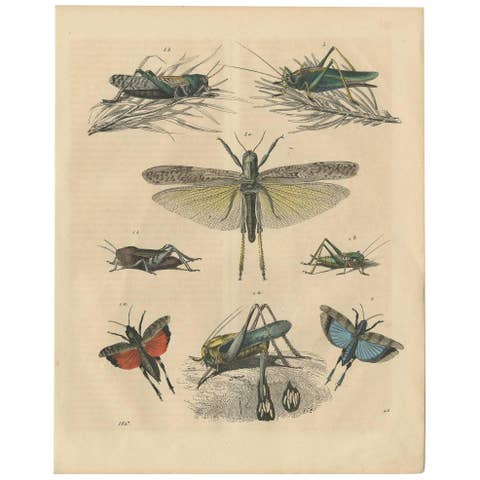
This is a stunning hand-colored lithograph from 1848, titled Die indische Heuschrecke ("The Indian Grasshopper"). The illustration depicts a vividly detailed and anatomically accurate portrayal of a large grasshopper species, possibly the Painted Grasshopper (Hieroglyphus banian), native to India. The artist has masterfully captured the intricate patterns of the wings and vibrant coloration of the body, including the distinctive turquoise and red hues. The precision in the anatomical rendering reflects the 19th-century fascination with documenting the natural world, particularly exotic species, for scientific study and public admiration.
The lithograph is an excellent example of 19th-century natural history art, likely intended for an entomological or zoological publication. Works like this were often created for European collectors, scientists, and explorers eager to study and showcase the biodiversity of distant lands.
The illustration is presented on a cream-colored mounting mat with decorative yellow borders, emphasizing its elegance and framing its historical significance. A notation of "1848" and the plate number "36" can be seen, adding to its authenticity and scholarly value.
Condition Report: The lithograph is in very good condition for its age, with the following observations:
The colors remain remarkably vibrant and well-preserved, showcasing the hand-coloring techniques used at the time. The paper shows minor age-related toning, consistent with its age, which does not detract from its overall presentation. A few faint spots of foxing are visible, mostly confined to the margins, not affecting the central illustration. The plate is mounted within a protective cream-colored mat, ready for framing or display.
This piece is a rare and valuable artifact, perfect for collectors of entomological art, natural history illustrations, or 19th-century lithographs. It serves as both a scientific record and an artistic celebration of biodiversity.