About this sheet
"Historic Pioneer Scene: Awaiting the Return of Mr. Tinkham in the American West"
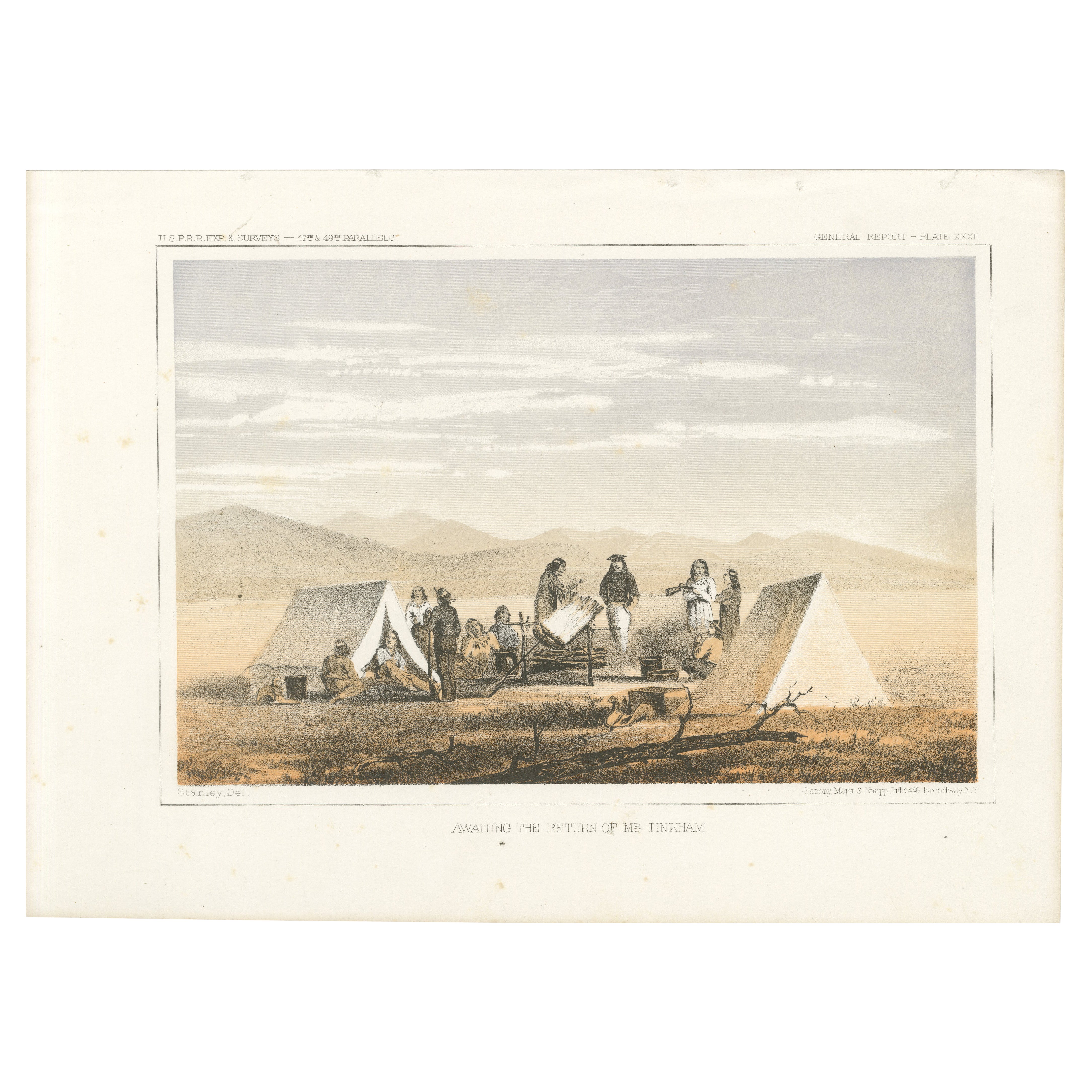
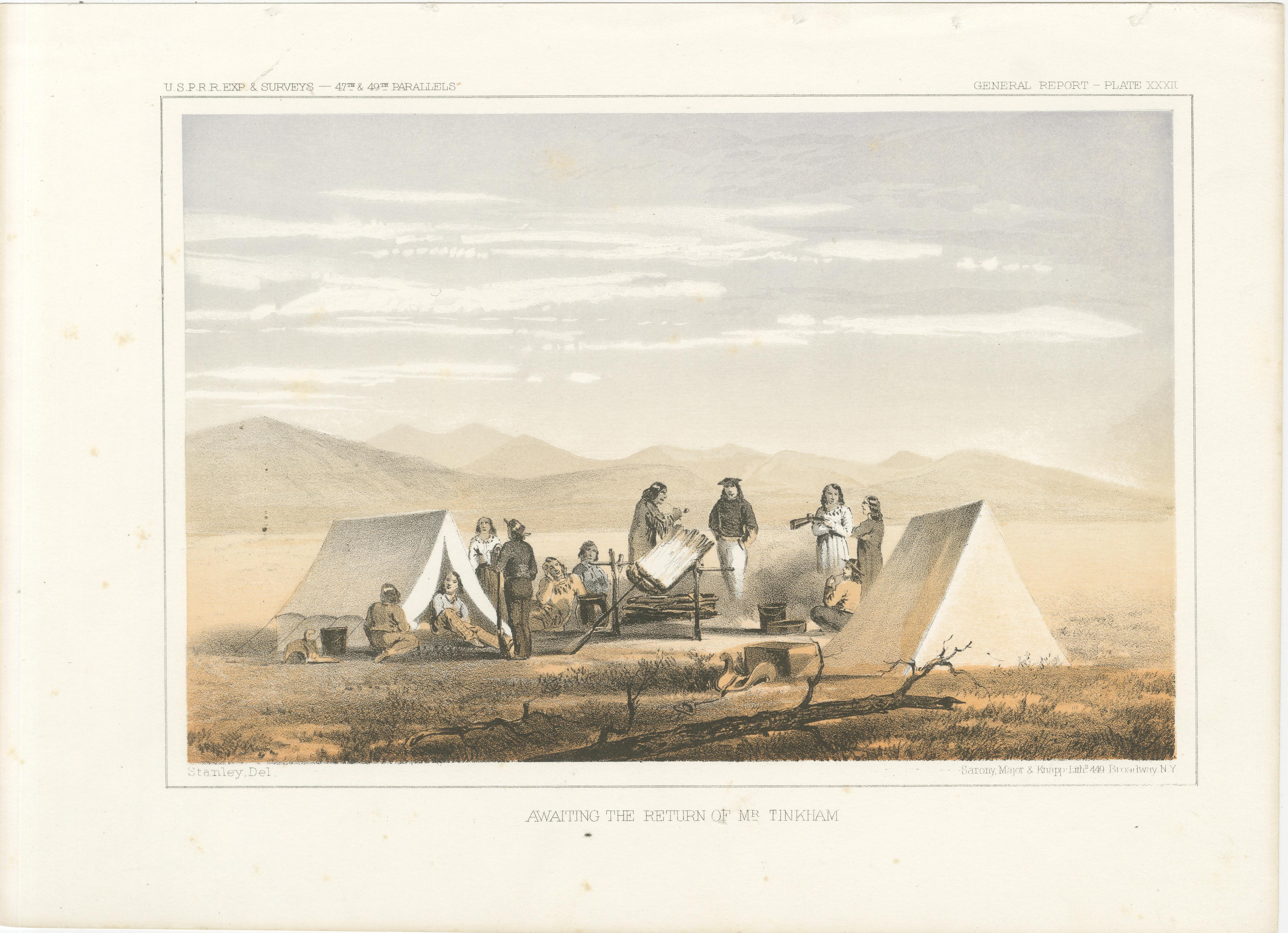
This evocative lithograph, titled "Awaiting the Return of Mr. Tinkham," captures a vivid moment of life in the American West during the mid-19th century. The scene is set in a barren yet majestic desert landscape, likely within the territory explored during the U.S. Pacific Railroad Surveys. The pioneers' encampment is depicted with remarkable detail, featuring tents, a cooking area, and individuals engaged in various activities as they await the return of Mr. Tinkham, presumably a key figure in their expedition. The inclusion of people from different backgrounds adds a narrative richness, hinting at the diversity and camaraderie typical of frontier life.
It is possible that the scene titled "Awaiting the Return of Mr. Tinkham" could be set near Hell Gate, Montana, as this was an area of significance during the 19th-century exploration and settlement of the American West. Hell Gate was located near present-day Missoula, Montana, and served as a key location for fur trading and pioneer camps during westward expansion.
As for Mr. Tinkham, he is likely identified as Albert Tinkham, a civil engineer and surveyor associated with the Pacific Railroad Surveys of the mid-19th century. These surveys were conducted to find feasible routes for the construction of the transcontinental railroad, which would connect the eastern United States with the Pacific coast. Tinkham worked under the command of prominent survey leaders such as Isaac I. Stevens, the governor of Washington Territory and leader of the northern route surveys. His role would have included mapping the terrain, documenting geographic features, and assessing the feasibility of specific routes.
The depiction of pioneers awaiting Tinkham’s return suggests that he might have been exploring or scouting ahead to assess the conditions of the trail or terrain. This type of work was critical during such expeditions, as the information provided by surveyors determined the safety and viability of paths through challenging landscapes. Tinkham’s contributions to the survey efforts likely played an important role in shaping decisions about the railroad's eventual placement and the opening of the West to settlers and trade.
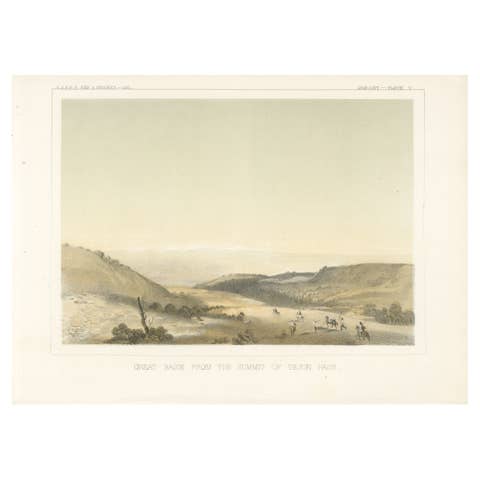
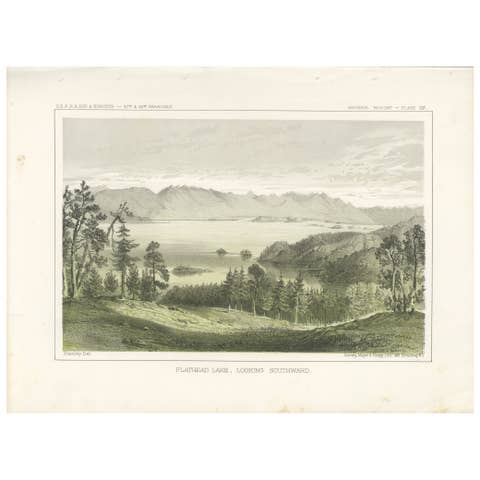
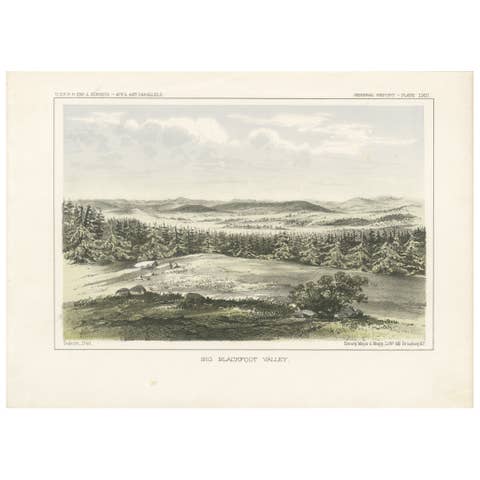
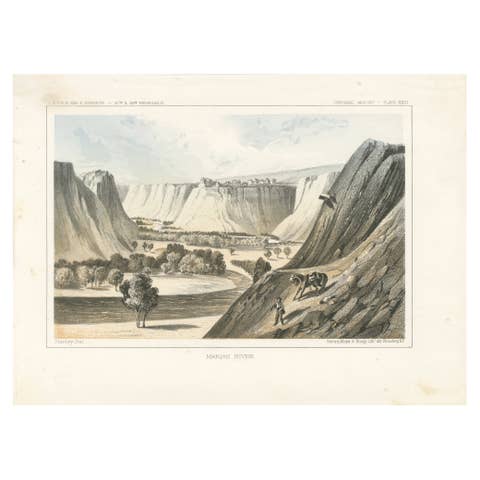
The lithograph was executed using the hand-colored stone lithography technique, a process that blends artistic precision with vibrant hand-applied colors. This technique was widely used in the 19th century for its ability to produce richly detailed and enduring images. The subtle coloring enhances the atmospheric qualities of the scene, from the warm earth tones of the landscape to the delicate shading in the sky.
This print is an excellent example of the intersection of art and history, offering a window into the daily life and challenges of Western pioneers. It holds particular interest for collectors of Americana, historic prints, and scenes documenting the exploration of the United States.
Condition: The print is in good condition with light age-related toning and minor foxing at the edges. Colors remain vivid.
Matting and Framing Tips: Use a neutral cream or pale beige mat to complement the tones of the print, and pair it with a simple wooden or bronze-tone frame. Non-reflective glass is recommended to enhance the visual depth while protecting the delicate lithography. Consider a wide mat border to highlight the historical significance and allow the image to stand out.