Old Engraving of Cape Good Hope in South Africa, 1754
€ 130
One of a kind: this is the sheet in the photographs. Ships from Langweer, the Netherlands.
Date
1754
Sheet size
12.3 × 20 cm (4.8 × 7.9 in)
Condition
Good
Reference
BG-13600-51
Condition
Good. The sheet overall a little browned. General age-related toning and/or occasional minor defects from handling. Margin cut short on the right and bottom right. Please study scan carefully.
About this sheet
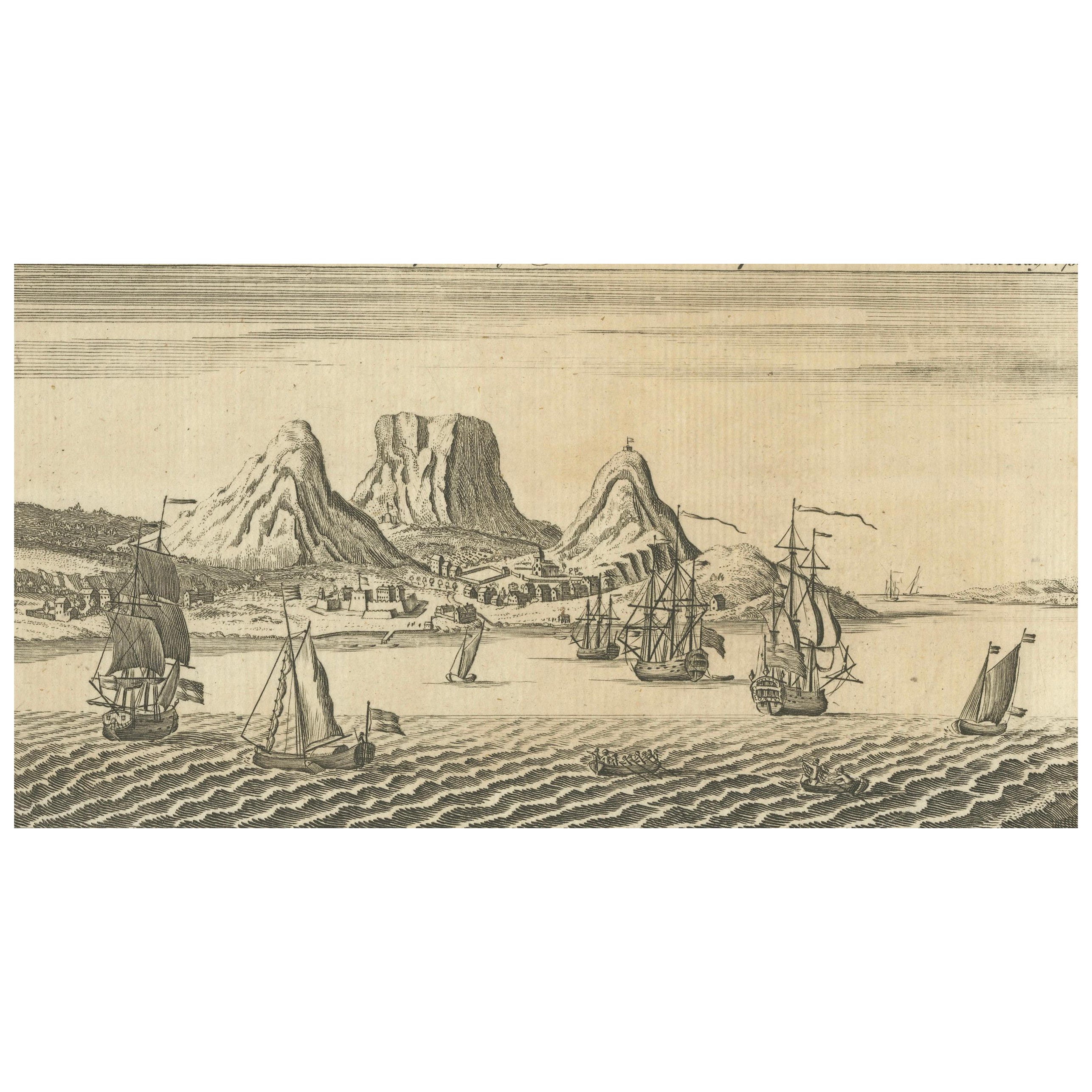
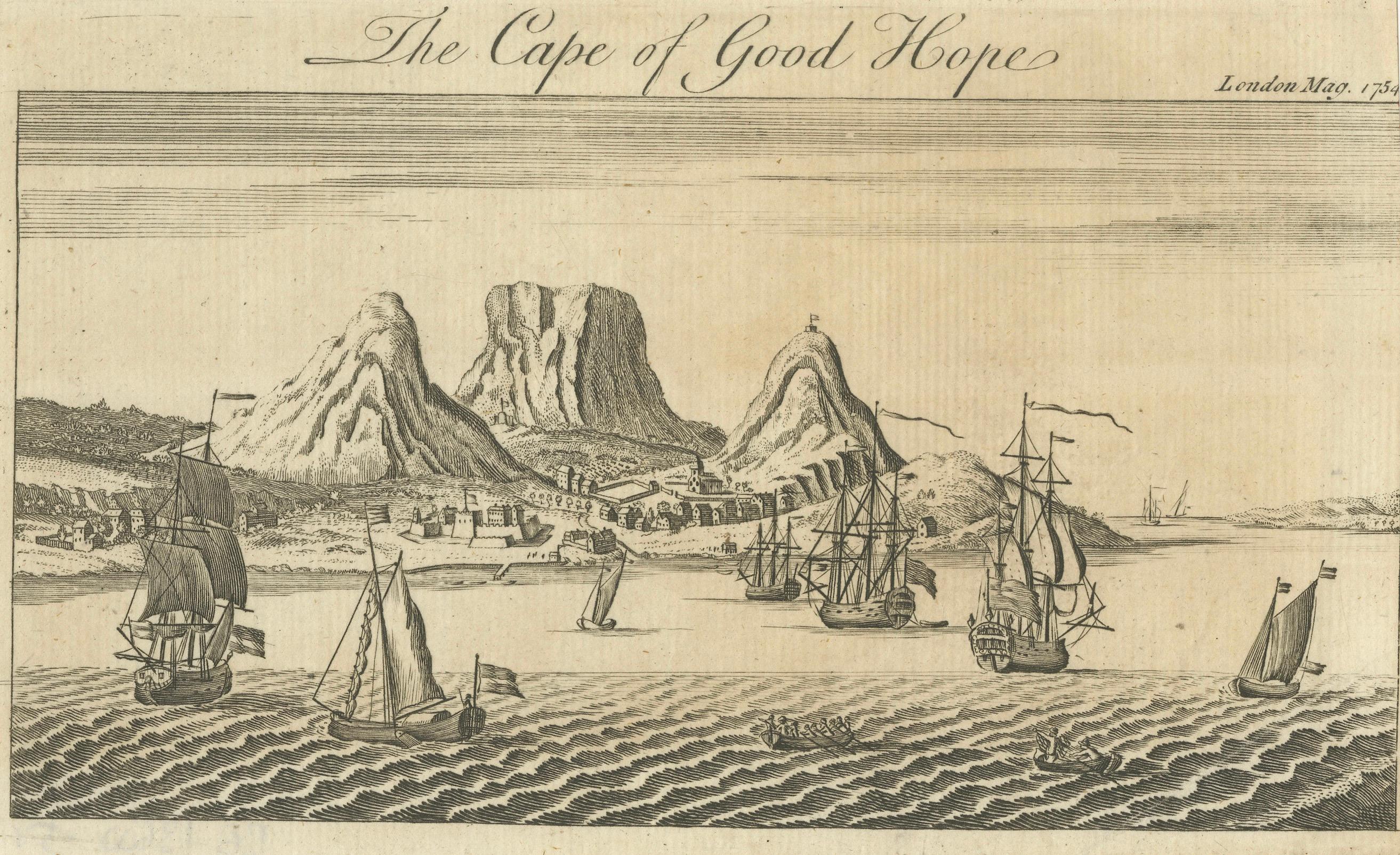
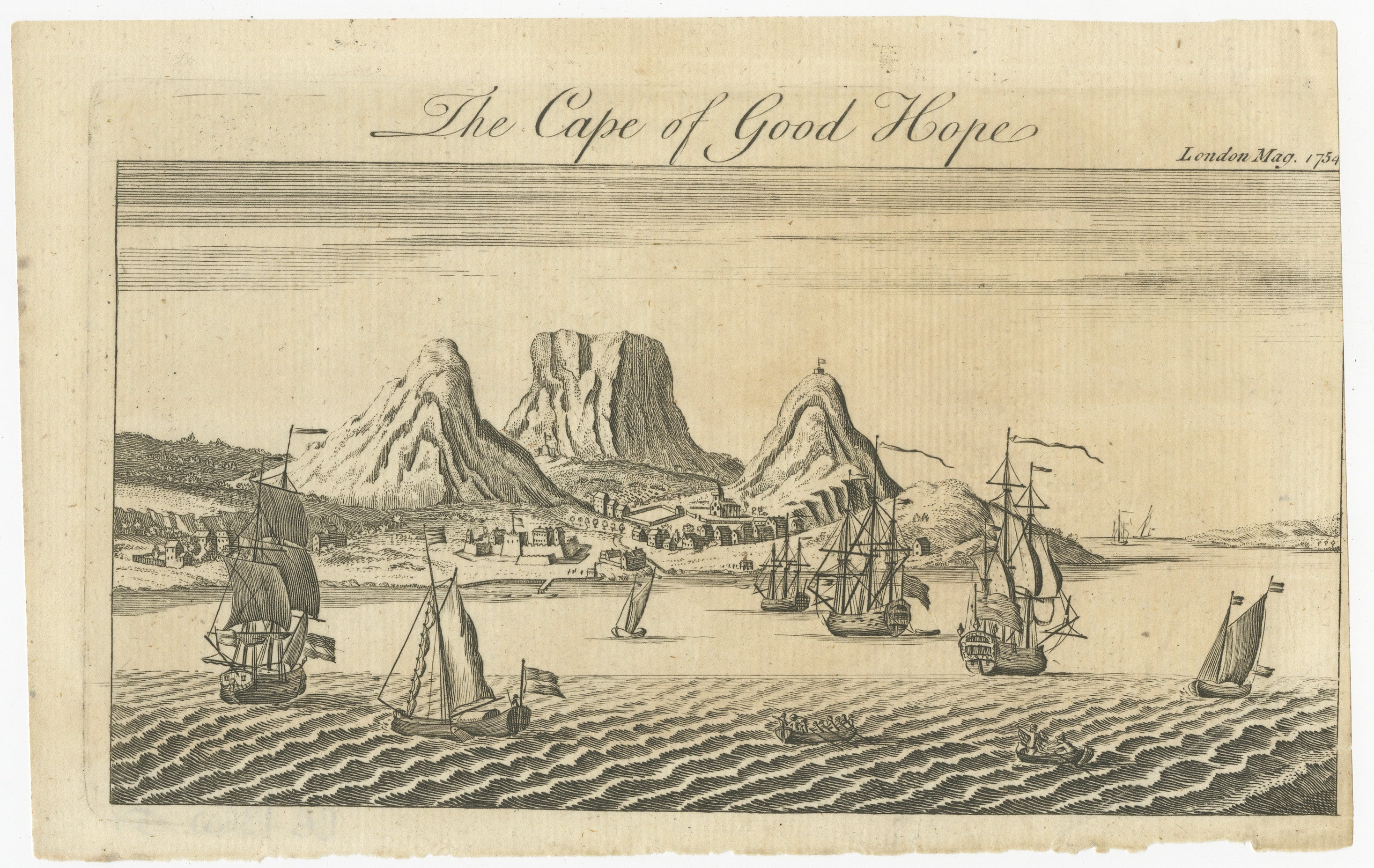
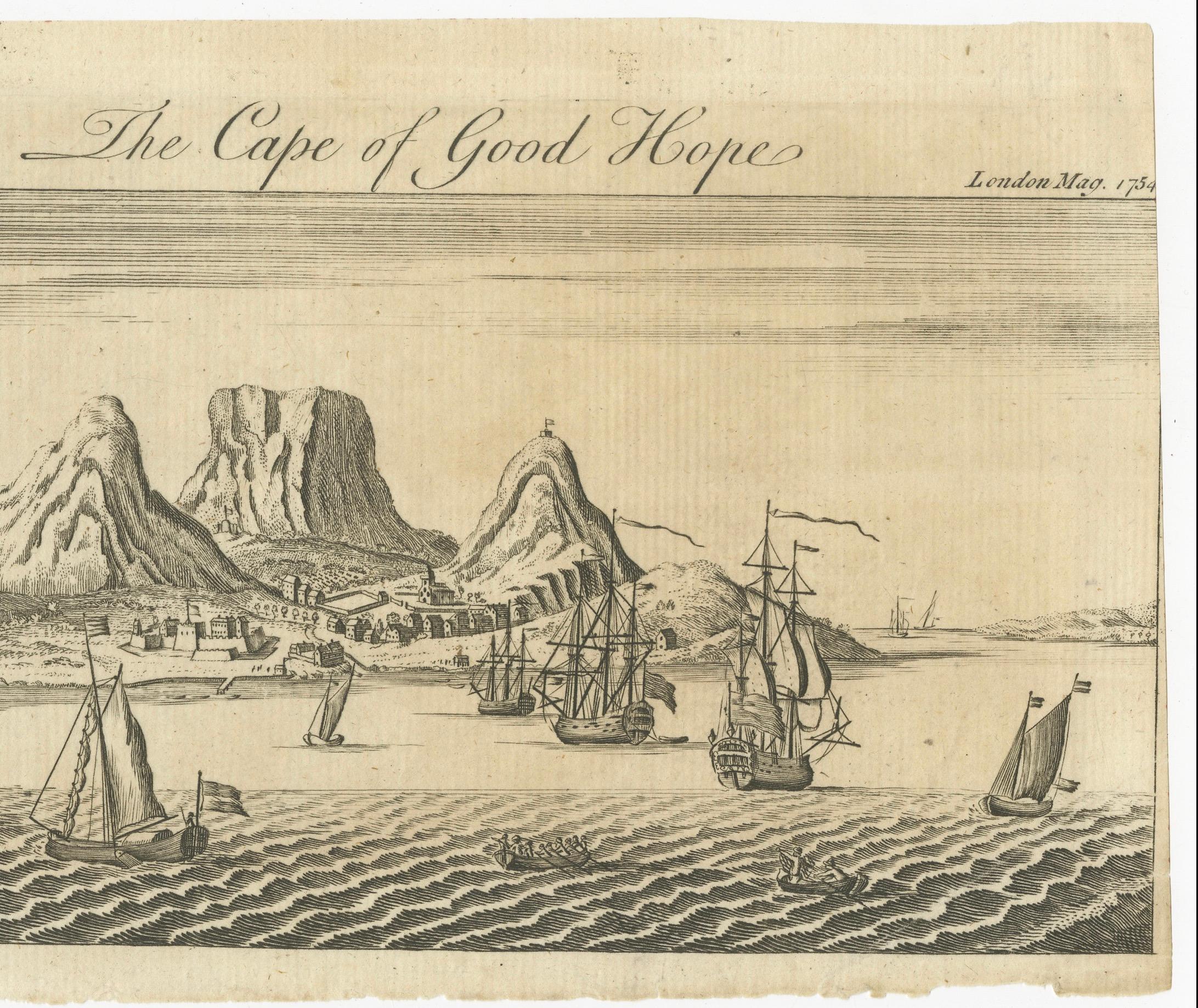
The text in the image reads: "The Cape of Good Hope" and "London Mag: 1754." This suggests that this small image is a rare copper engraving that was featured in the London Magazine in the year 1754.
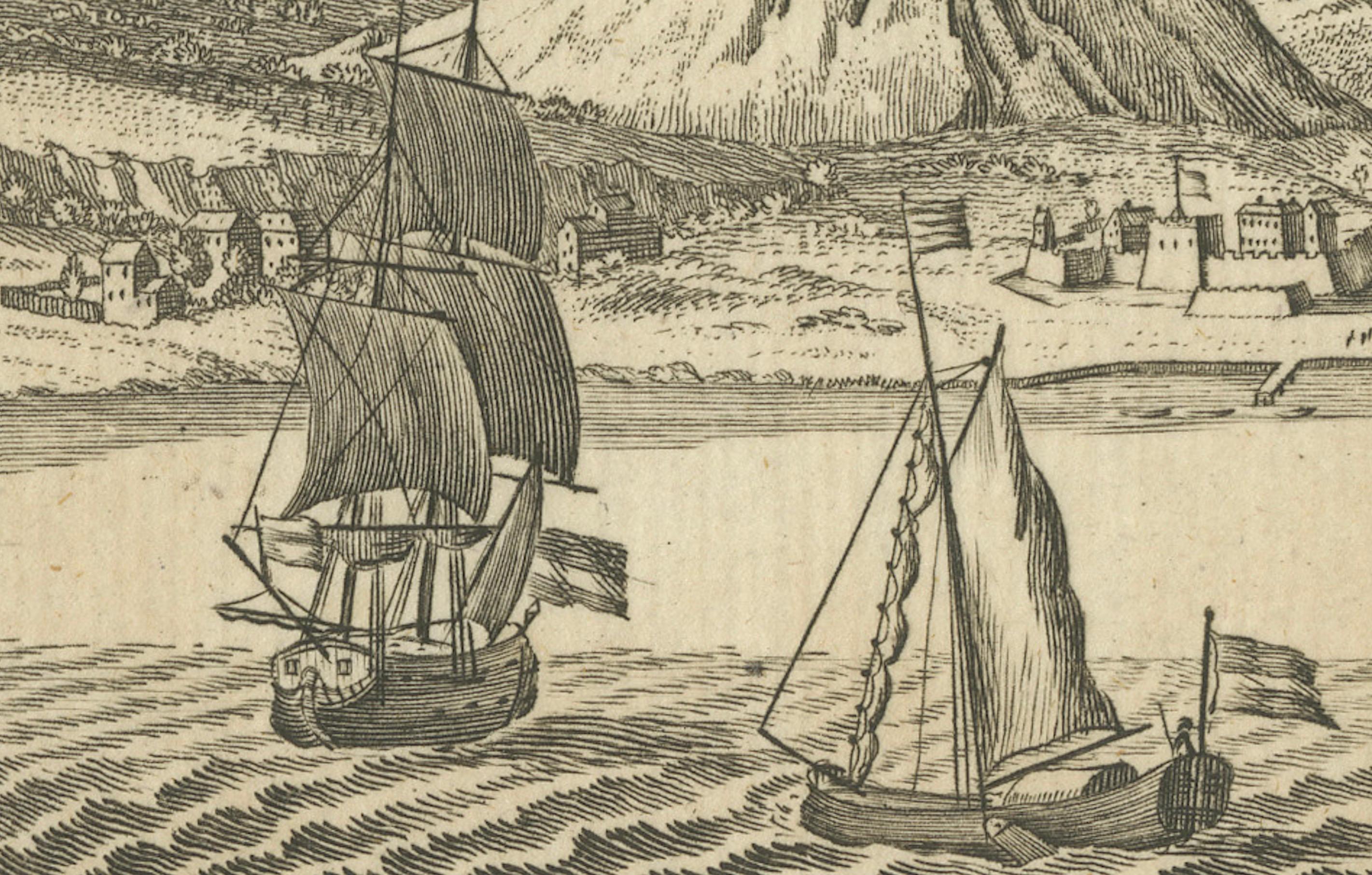
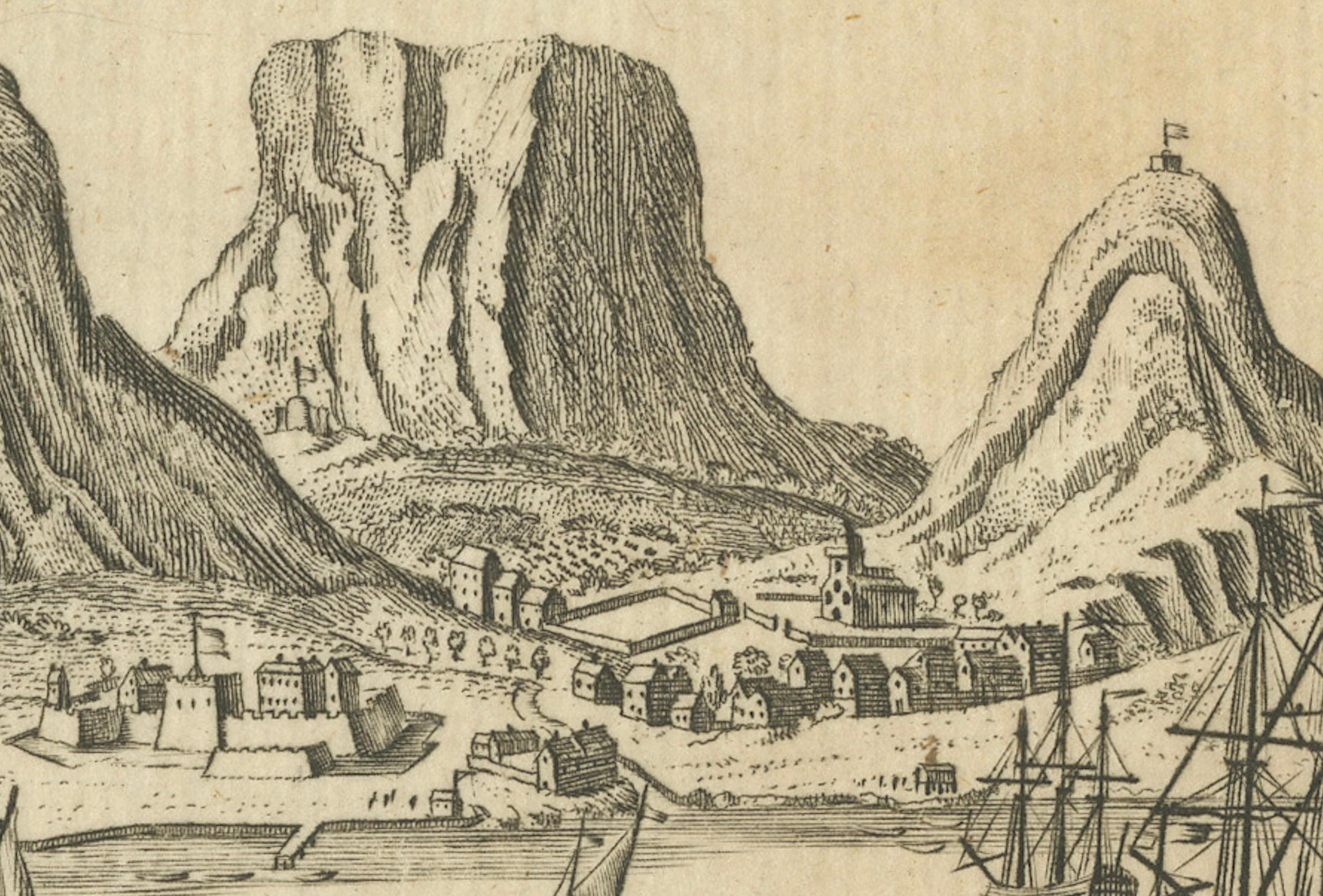
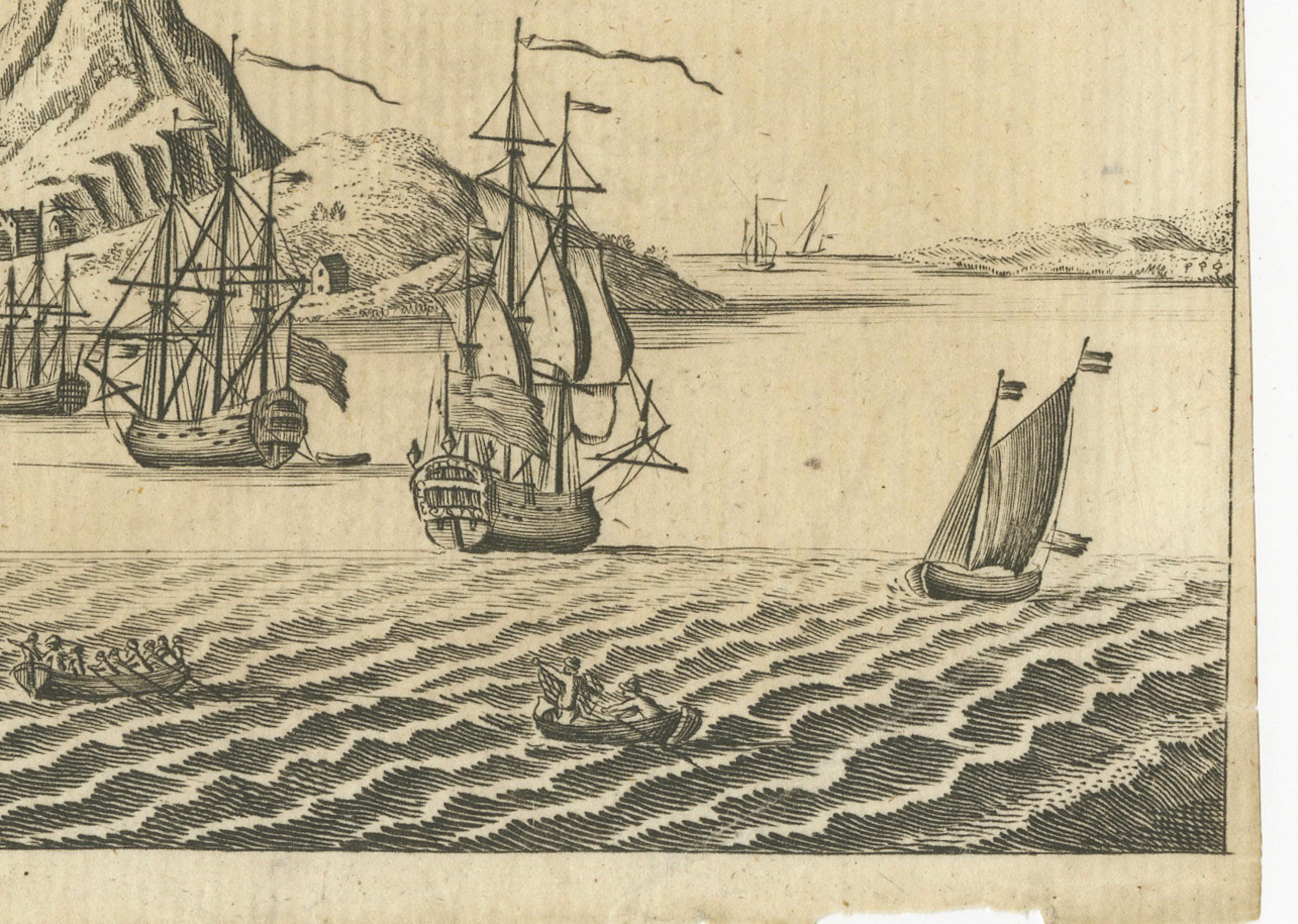
The image depicts the Cape of Good Hope, which is located in South Africa and was a significant stopover point for ships traveling to or from the East Indies. The engraving shows a detailed seascape with several ships, including galleons and smaller boats, in the foreground, suggesting the importance of the Cape as a hub of maritime activity during the 18th century. The presence of galleons is indicative of the era's maritime technology, where such ships were commonly used for long sea voyages.
The style of the engraving, with its fine lines and attention to detail, is typical of the period's illustrations. Copper engraving was a popular method for reproducing images before the advent of modern printing techniques. It involved etching a design onto a copper plate, which was then inked and used to print images onto paper.
The illustration also shows the rough waves of the sea, emphasizing the challenging conditions sailors often faced. On the shore, we can see buildings and structures, hinting at the colonial presence and development in the area. The mountainous backdrop is likely a representation of the iconic Table Mountain and the surrounding landscape, which are defining features of the Cape of Good Hope.
This engraving would have served to inform and educate the magazine's readership about distant places, as well as to serve as a visual record of the prominence of the Cape in global trade and exploration. It is an example of how print media of the time played a role in the dissemination of geographical knowledge.