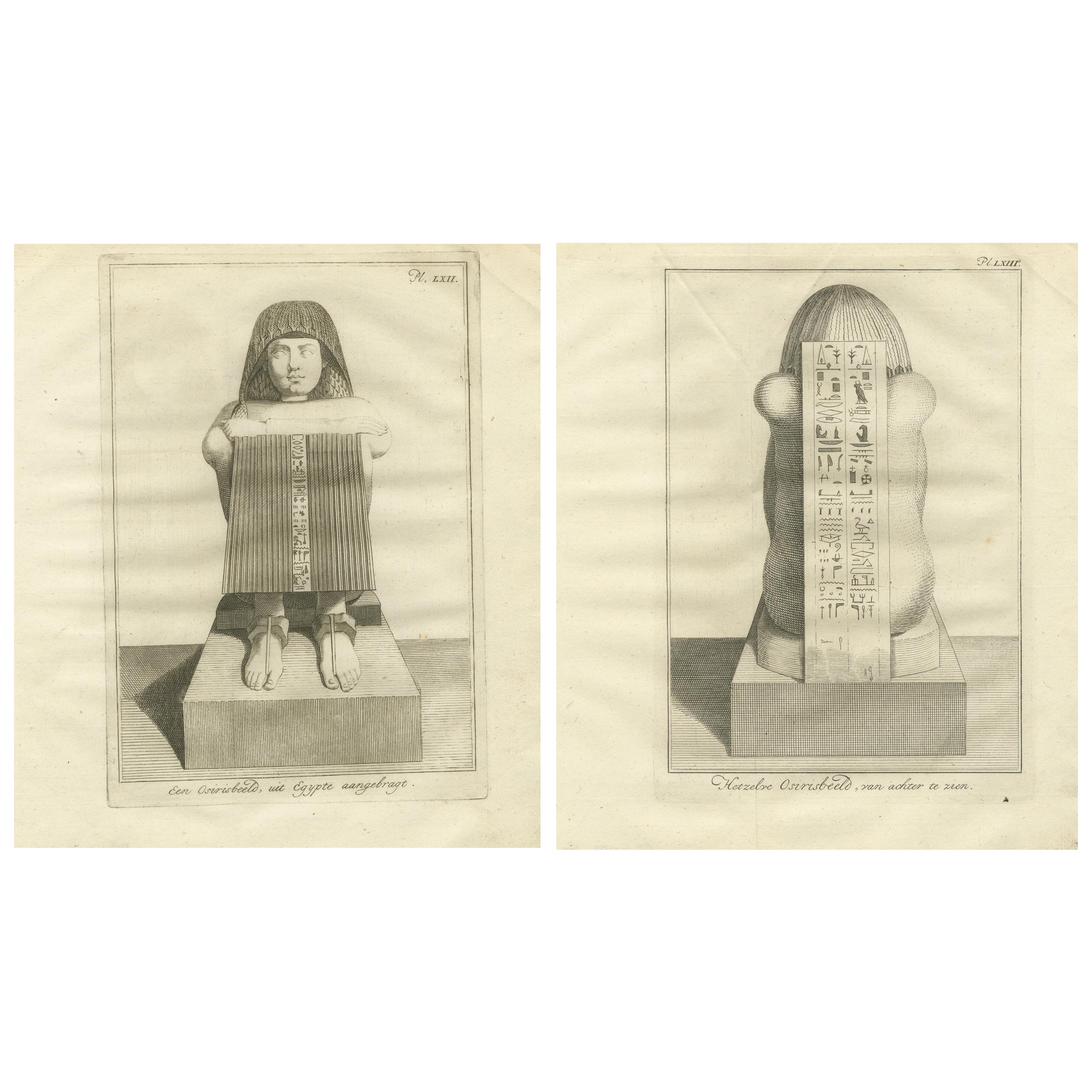
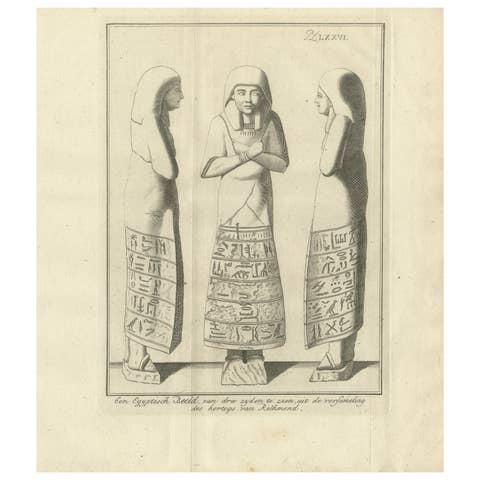
Egyptian Osiris Statue with Hieroglyphs – Front and Rear Views Engraving, c.1776
€ 290
One of a kind: this is the sheet in the photographs. Ships from Langweer, the Netherlands.
Date
1776
Sheet size
27.3 × 25 cm (10.7 × 9.8 in)
Condition
Excellent
Reference
BG-14102-44, -45
Condition
impression with minor age-related toning. Slight edge creases and faint spotting in margins, consistent with prints of this period. Overall clean and highly suitable for framing. Folding lines as issued.
About this sheet
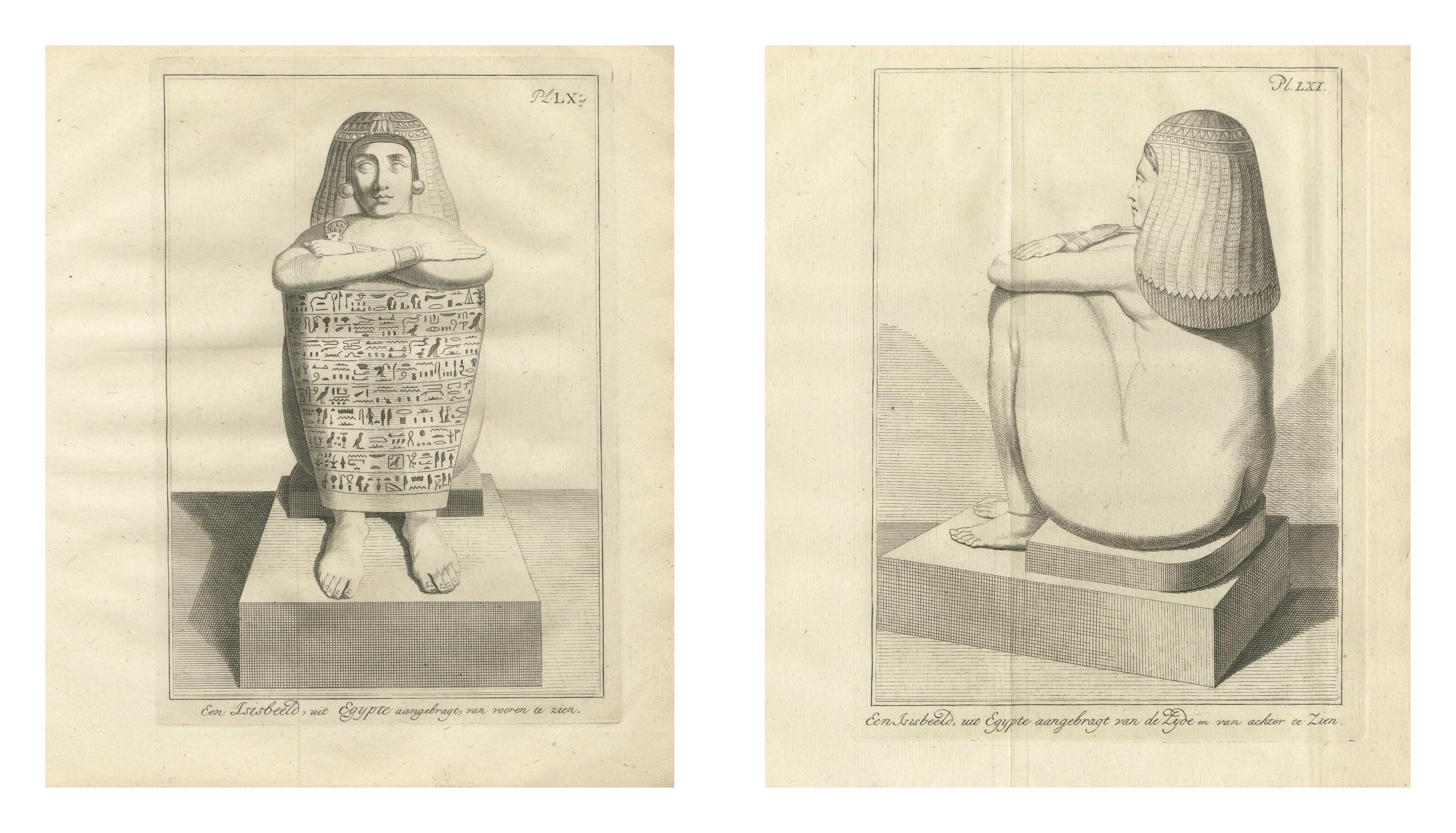
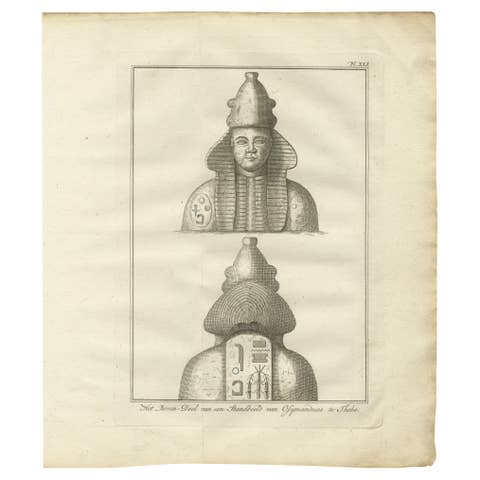
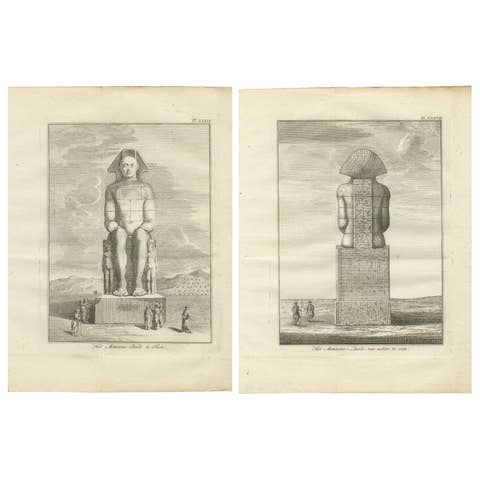
Egyptian Osiris Statue with Hieroglyphs – Front and Rear Views Engraving
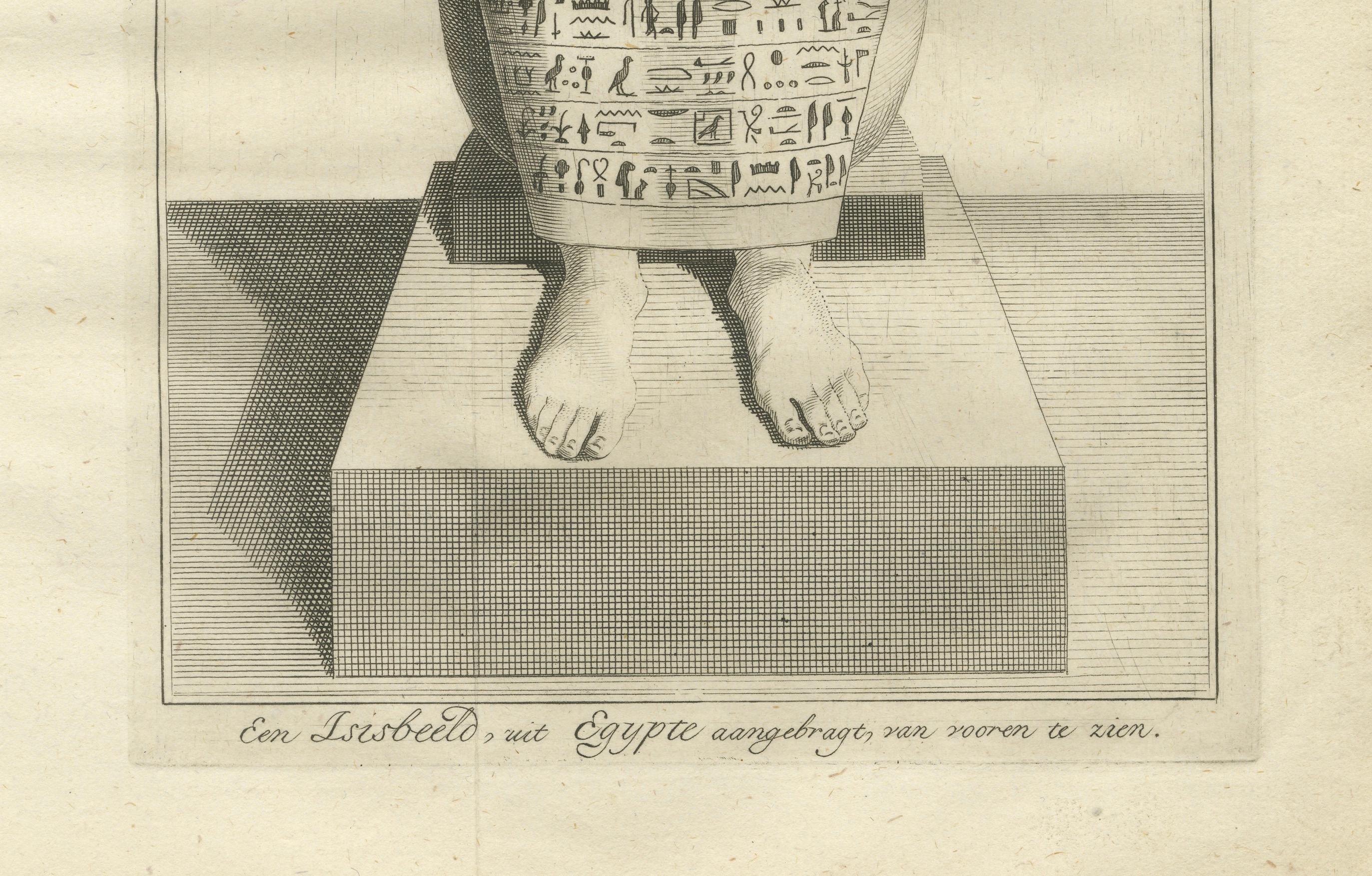
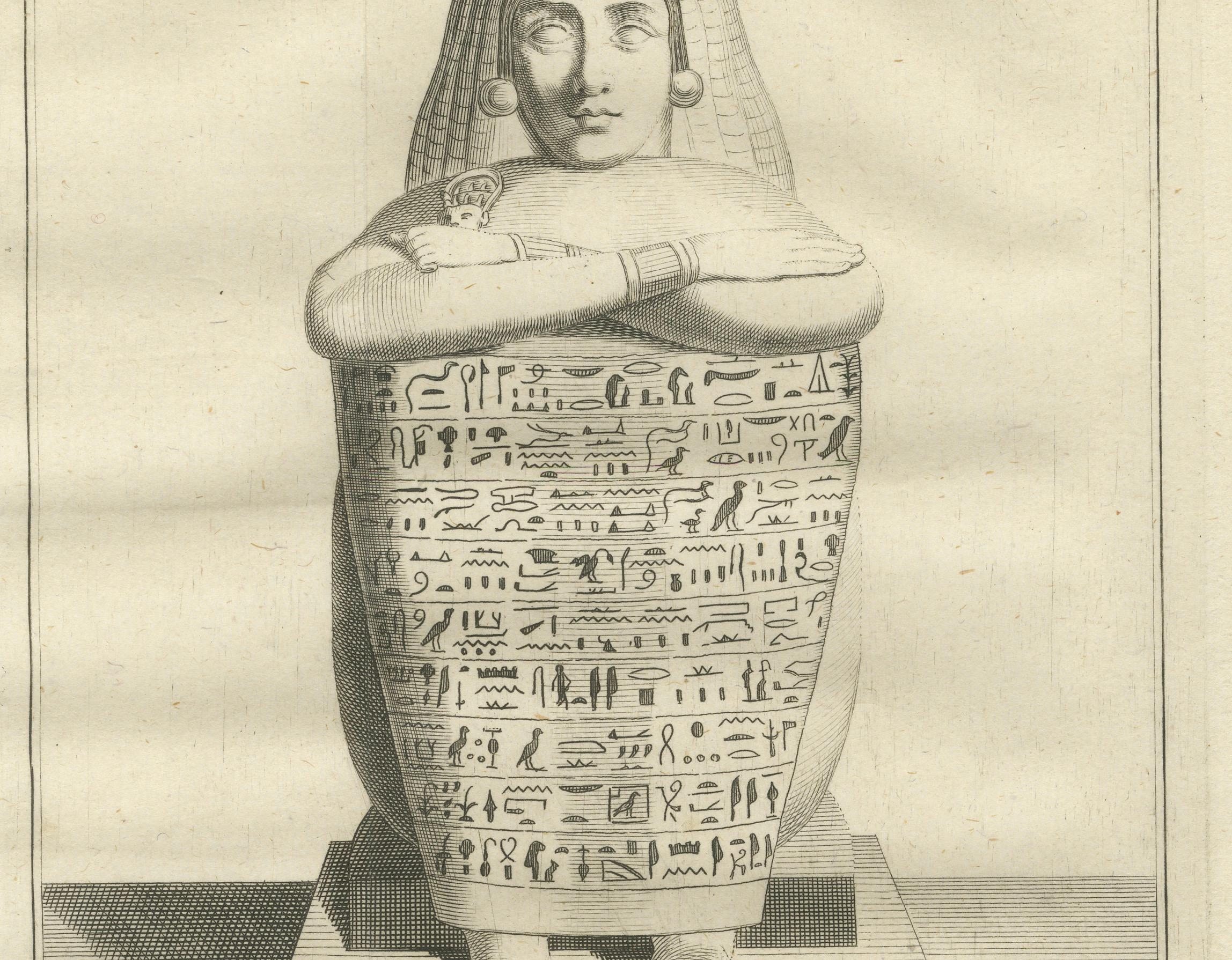
This antique pair of engravings presents a compelling depiction of an ancient Egyptian statue of Osiris, shown from both the front and the rear, with rich hieroglyphic inscriptions. The engravings originate from an 18th-century Dutch publication exploring classical antiquities, especially the monumental statuary and artifacts recovered or recorded in Egypt during European expeditions.
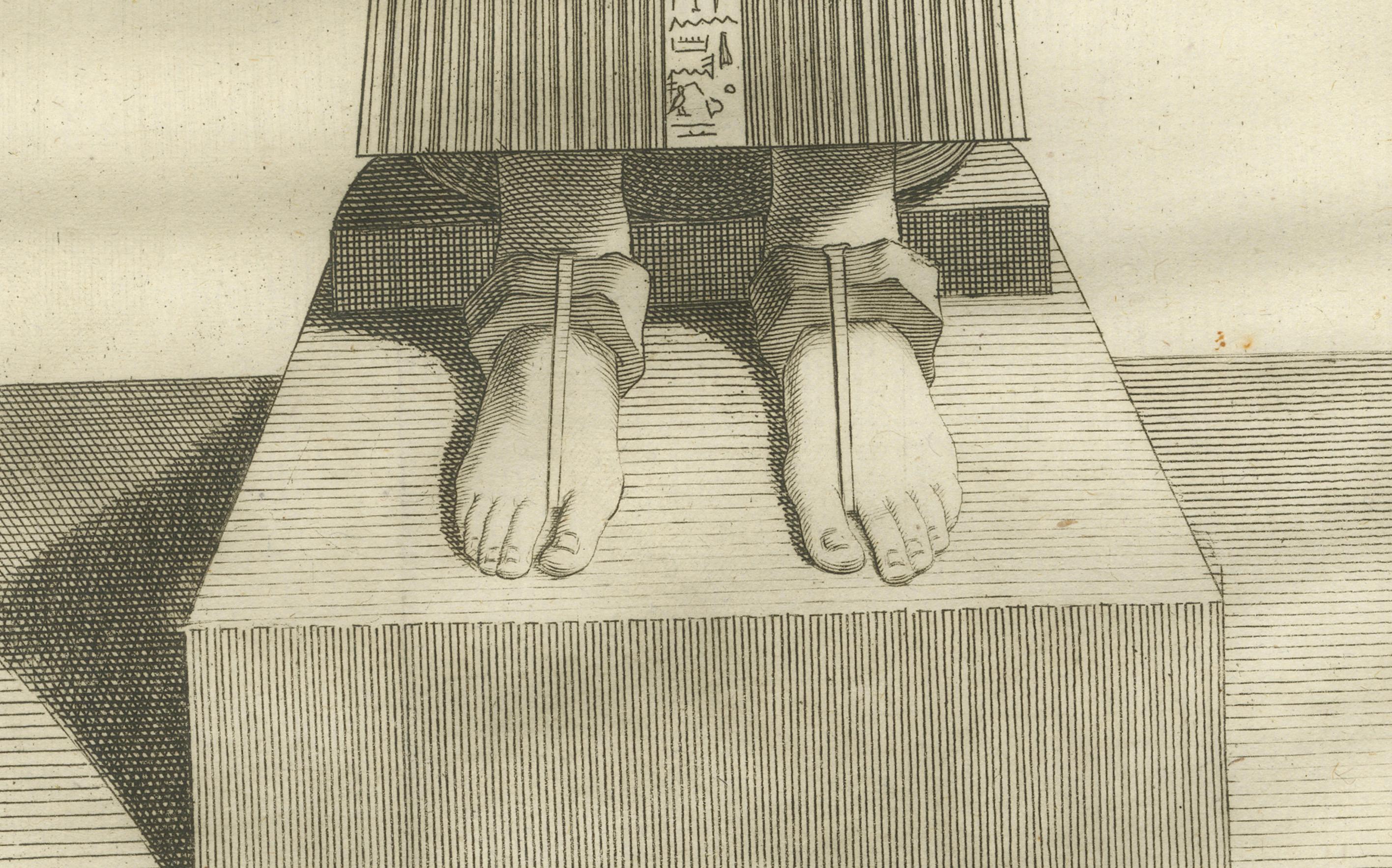
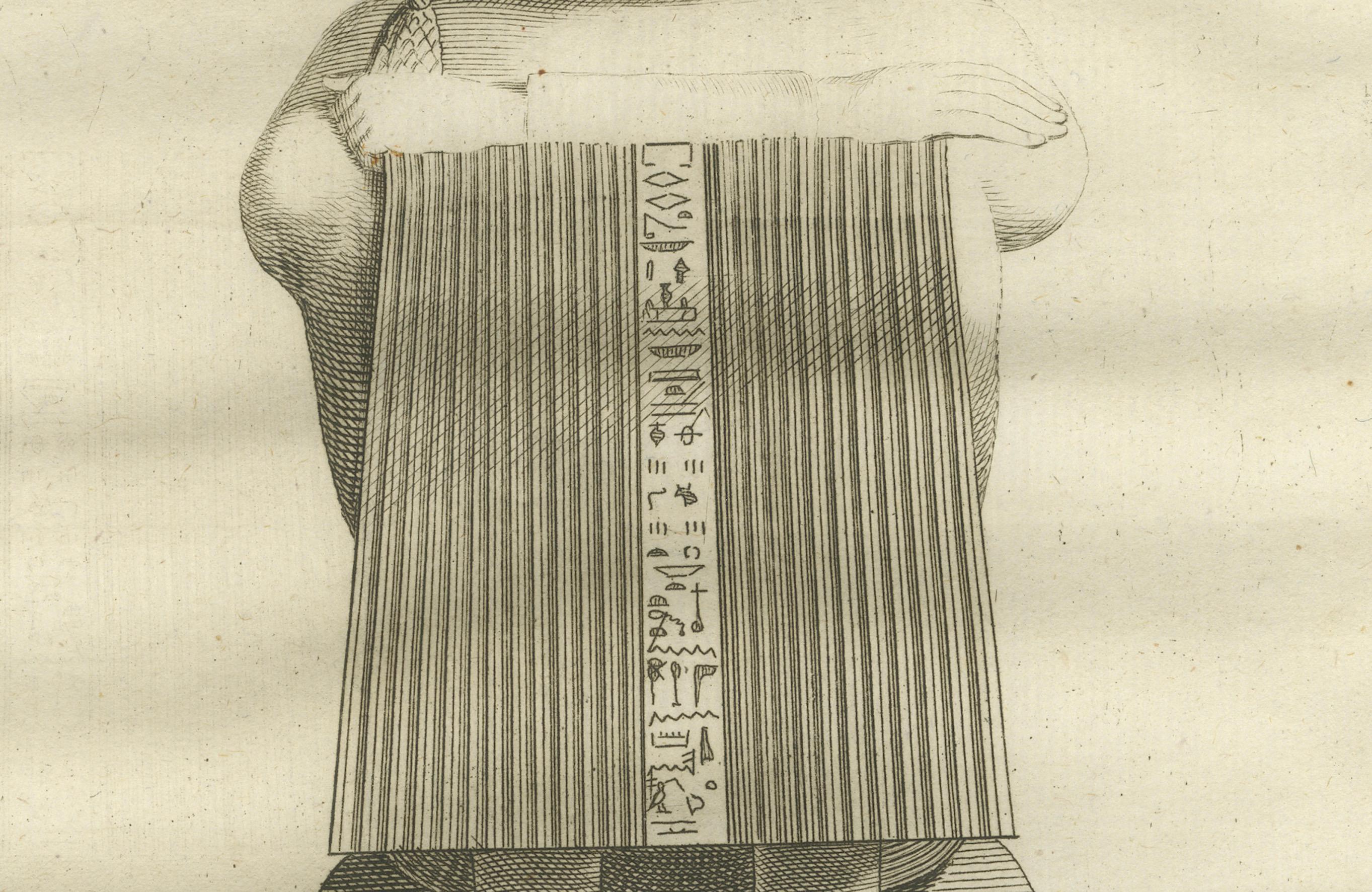
The left engraving (Pl. LXII) shows the statue from the front. The figure is seated in a traditional Egyptian pose with knees drawn up and arms folded across the knees. Unlike other cube statues, this Osiris figure rests his forearms on a large inscribed tablet that covers the torso and legs. The hieroglyphs are meticulously rendered, suggesting either a funerary dedication or a commemorative inscription. The subject wears a traditional tripartite wig and appears calm, solemn, and eternal—qualities closely associated with Osiris, the god of the afterlife, resurrection, and judgment. Notably, the figure wears sandals, adding an element of individual identity often seen in personalized depictions of Egyptian officials or priests.
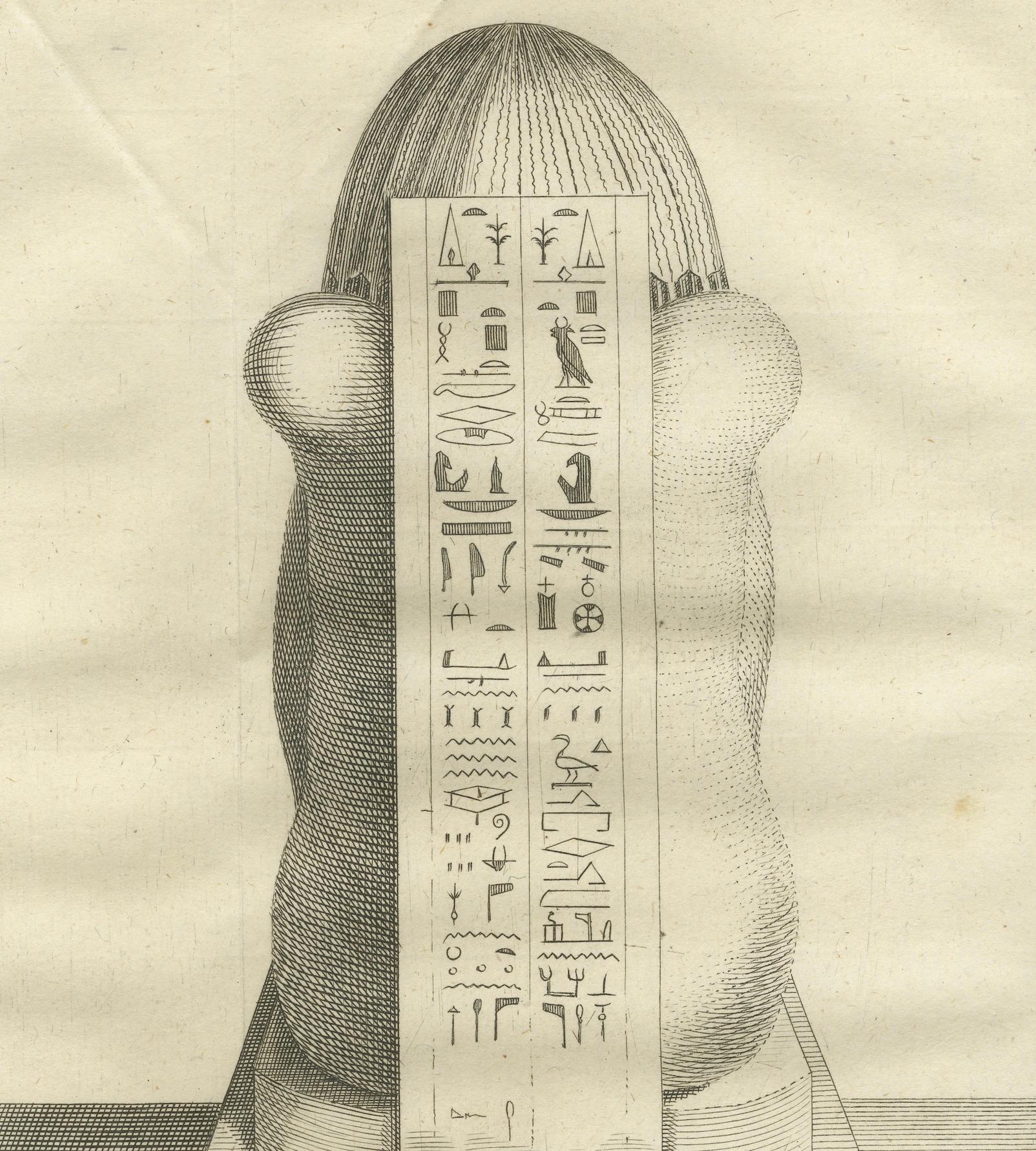
The companion engraving (Pl. LXIII) provides a rare rear view of the same statue. The reverse features a tall back pillar fully inscribed with vertical columns of hieroglyphs. The hieroglyphs are clearly delineated, including divine and ritual symbols such as the seated god, falcon, and ankh. The rear pillar, a common element in Egyptian sculpture, not only stabilizes the figure but also often served a ceremonial or spiritual purpose, connecting the statue to divine protection and remembrance.
These plates are a testament to the Enlightenment-era fascination with Egyptian antiquities and the effort to document them in exacting detail. The engravings offer valuable insight into how European artists interpreted and represented Egyptian religious iconography, often adapting it into symmetrical, formalized illustrations for scholarly audiences.
Condition: Excellent impression with minor age-related toning. Slight edge creases and faint spotting in margins, consistent with prints of this period. Overall clean and highly suitable for framing. Folding lines as issued.
Framing Tips: These companion prints would be ideally framed side by side in matching frames with dark wood or black and gold edging. Use a warm cream or soft gray mat to highlight the precision of the engraving lines and hieroglyphic detail.
Technique: Engraving Maker: Anonymous, Dutch, circa 1750–1770