About this sheet
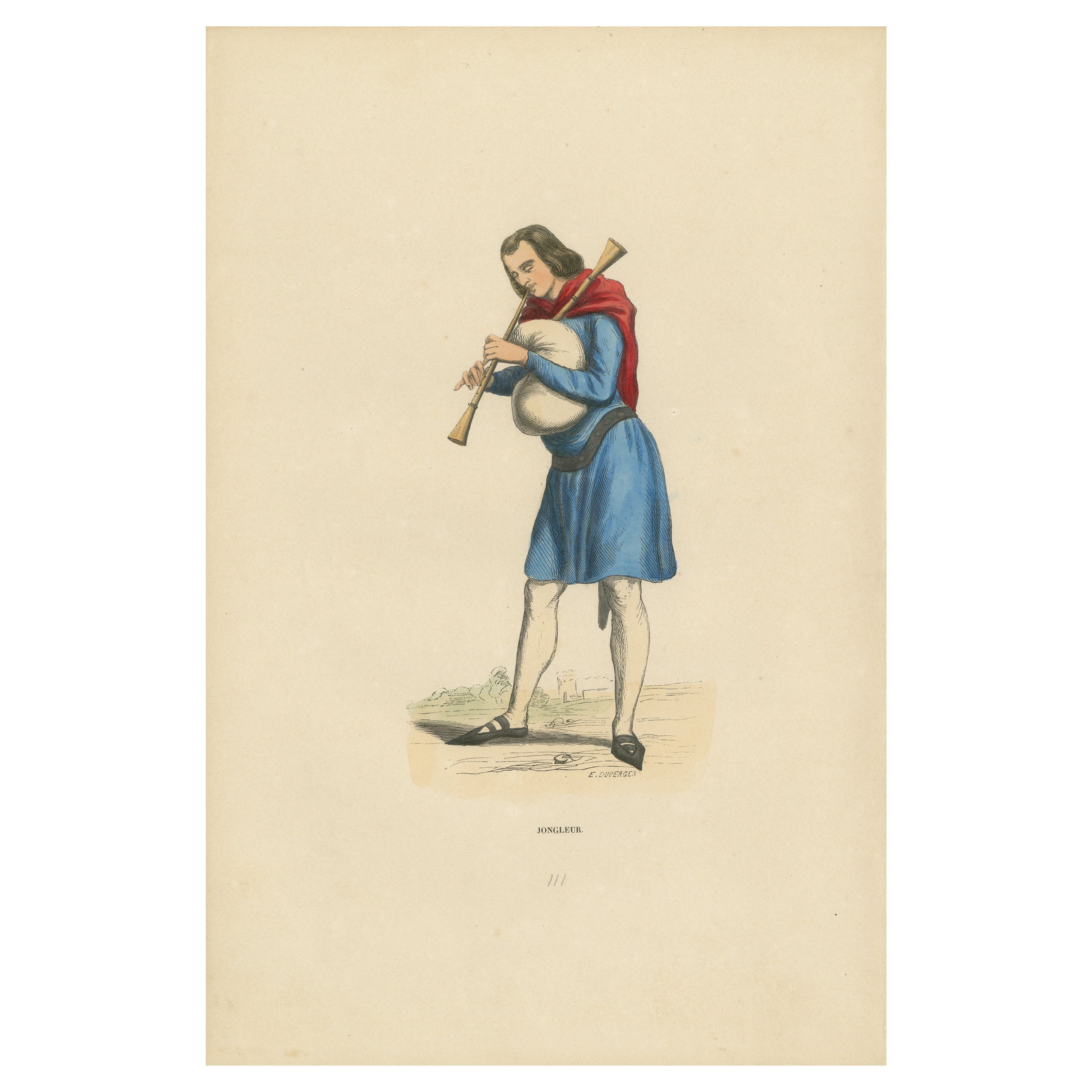
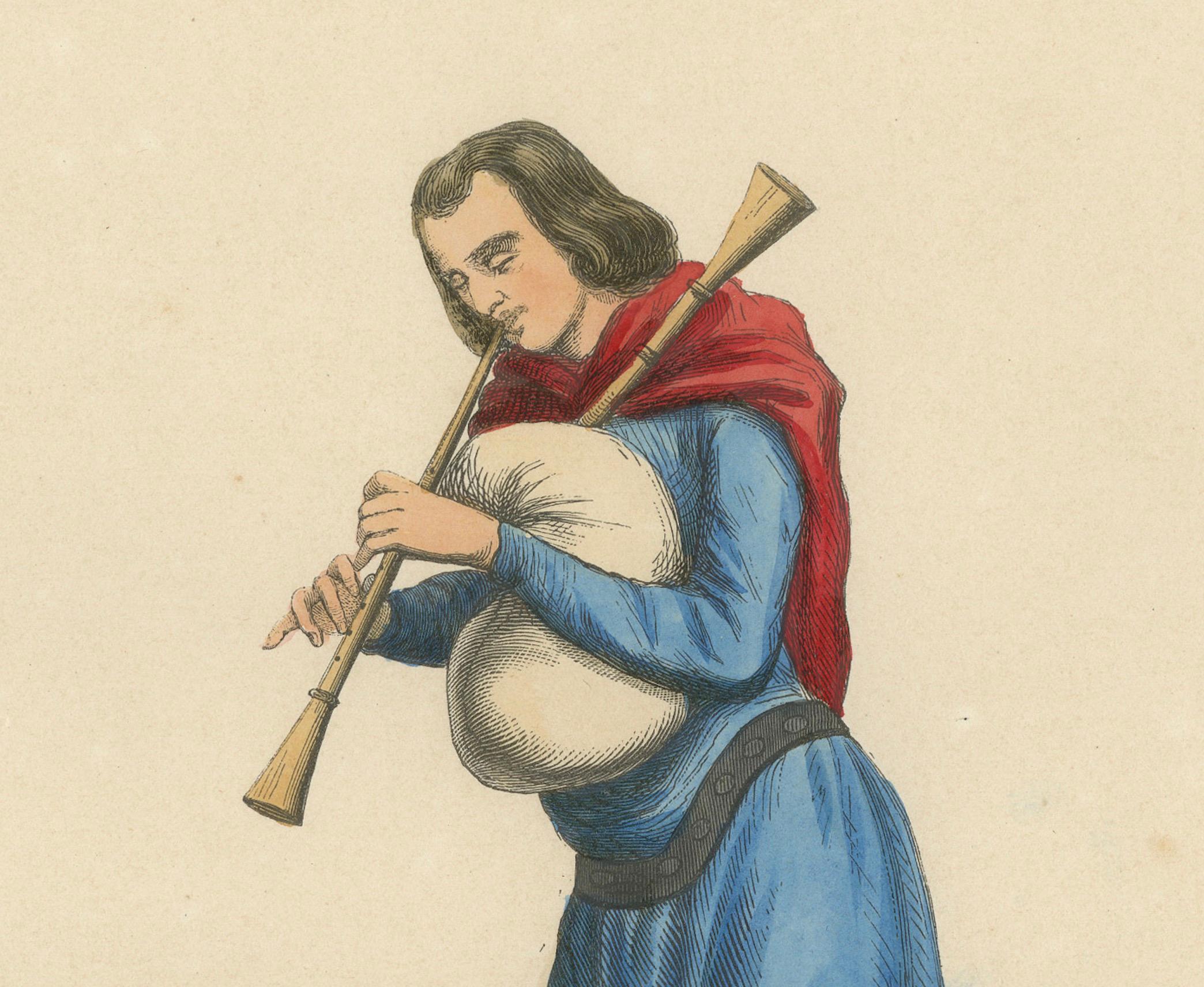
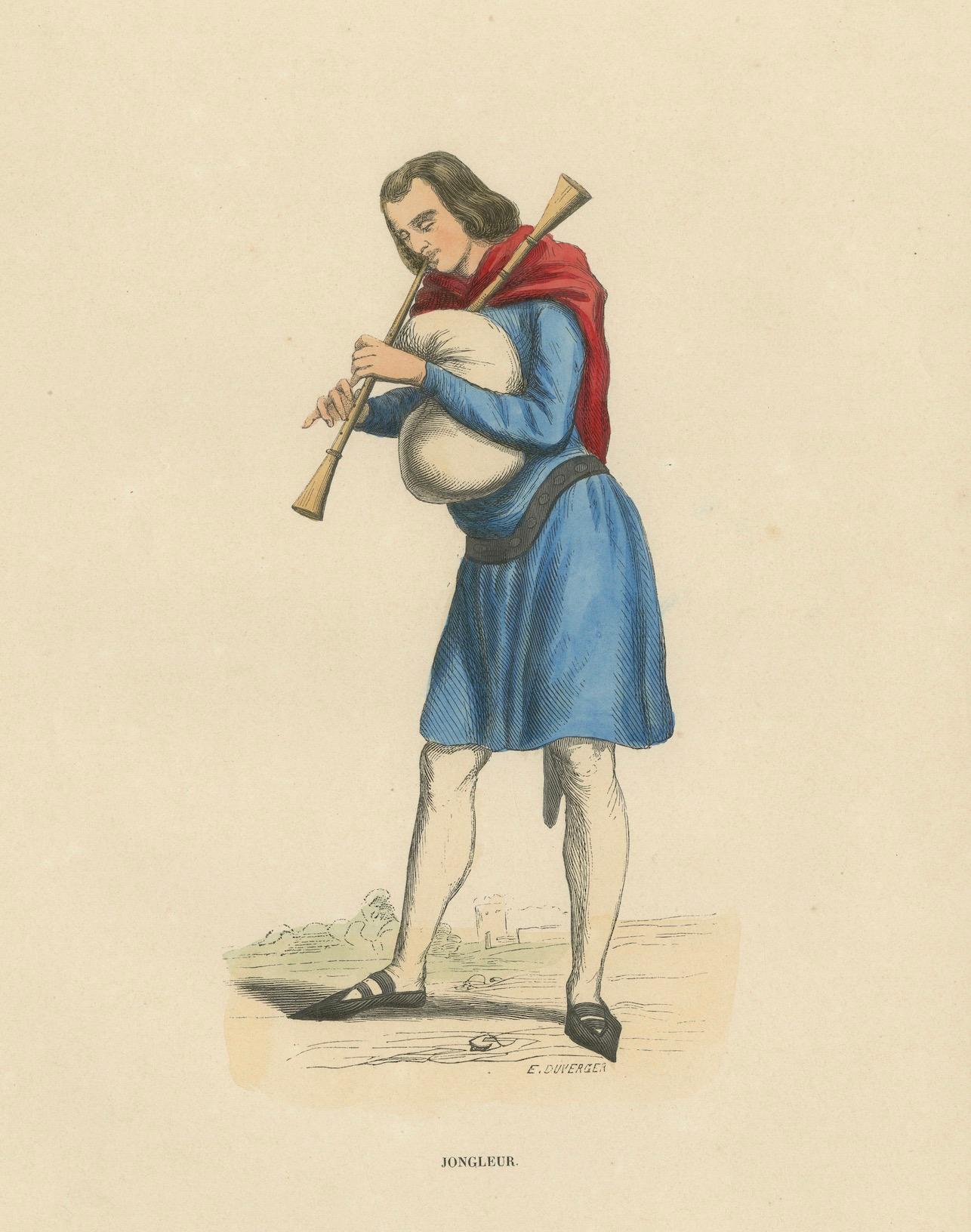
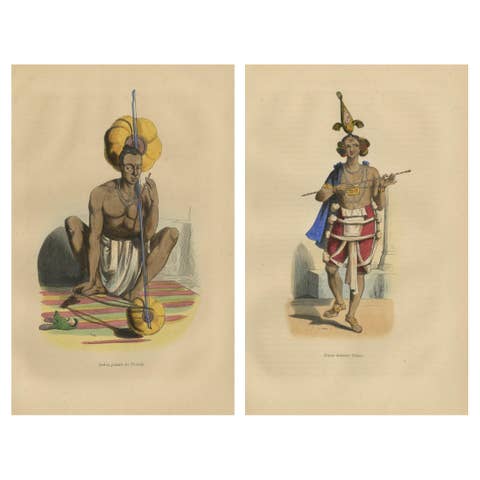
This hand-colored engraving, titled "Jongleur," portrays a medieval entertainer, a precursor to modern-day musicians and performers. The term "jongleur" denotes a versatile artist commonly seen in medieval courts and public spaces, engaging audiences with music, poetry, and storytelling.
In this print, the jongleur is shown playing a flute-like instrument, focused intently on his performance. His attire is strikingly colored, with a blue tunic that falls above the knee, allowing for ease of movement during his performance. The tunic is cinched at the waist by a darker belt, which helps to secure his garment during his active profession. Over his shoulders, he wears a red cape, which may symbolize his role as an entertainer, often brightly dressed to stand out in a crowd.
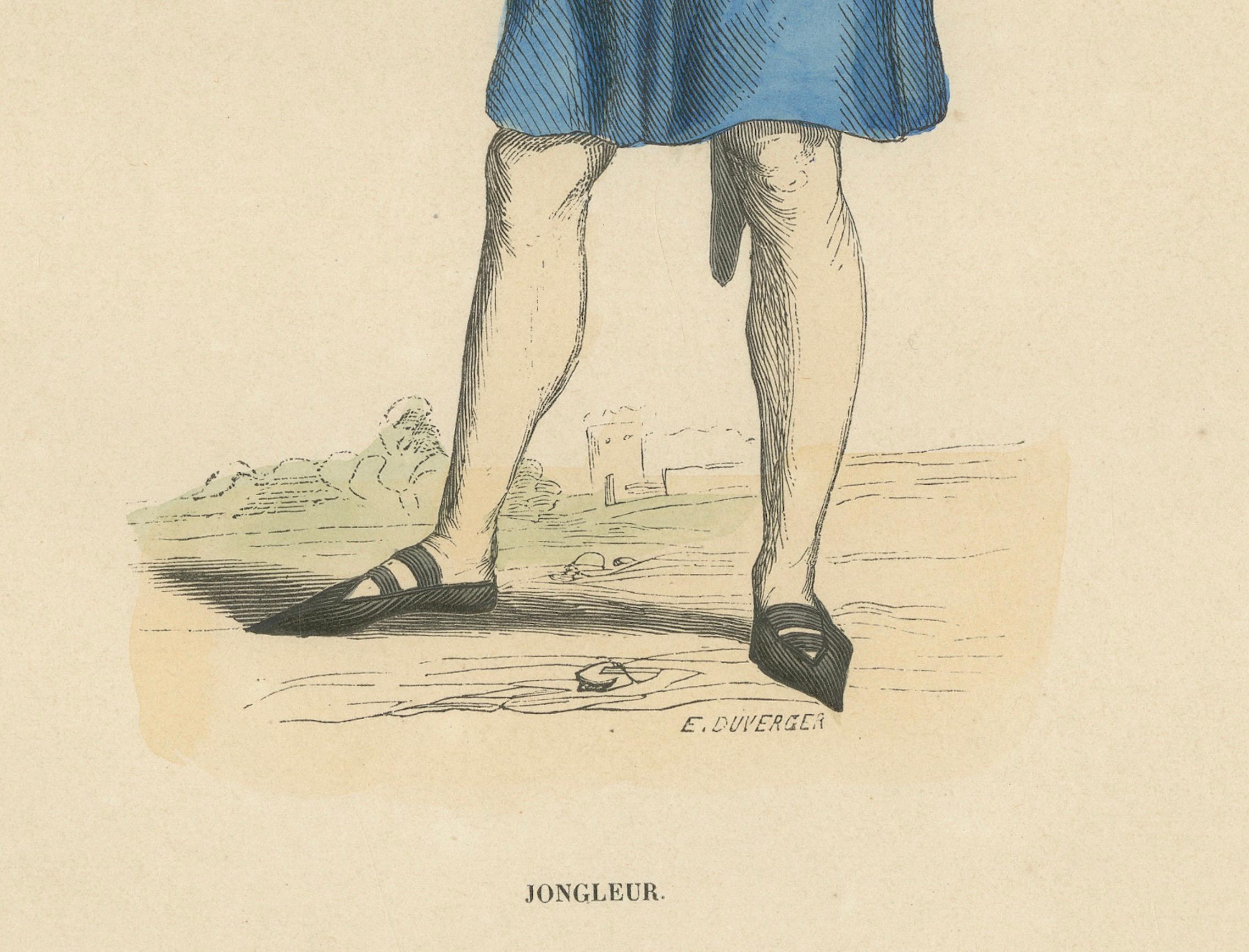
He wears tight red hose, a common element of medieval clothing, which contrasts with the blue of his tunic. His shoes are simple and practical, reflecting the itinerant nature of his profession. The jongleur's hair is long, as was the style of the time, and flows freely, suggesting a sense of freedom and nonconformity often associated with artistic individuals.
In the background, the faint outline of a rural landscape can be discerned, suggesting that the jongleur performs in various settings, perhaps traveling from village to village. This image, numbered "111," is a part of the "Costume du Moyen Age" series and offers a glimpse into the life and attire of a medieval performer, capturing the cultural essence of the period.
The colors have a nice glow over them. Historically, egg whites, known as glair, and sometimes egg yolk were indeed used in illumination and painting, particularly in manuscripts, to give colors a brighter appearance and to add a sheen or gloss to the work. This technique was quite common during the Middle Ages and into the Renaissance.
Egg whites can be applied as a varnish over pigments to enhance their brightness and to protect the colors. This application could make the colors appear more vivid and also add a slight glossy sheen to the surface of the image.
Egg yolk, on the other hand, was commonly used as a binding agent in paint. It forms the basis of tempera paint, a medium that was widely used before the advent of oil painting. Egg yolk helps to create a durable and long-lasting color that adheres well to various surfaces.
In the context of the print from 1847, it's less likely that egg whites or yolks were used directly on the print, as by that time, commercial printing processes would have been more advanced and less reliant on such manual methods. However, if this print is a representation of an earlier style or is meant to mimic the appearance of hand-painted manuscripts, the original artists might have employed techniques or materials that gave a similar effect to those achieved with egg-based binders and varnishes.