About this sheet
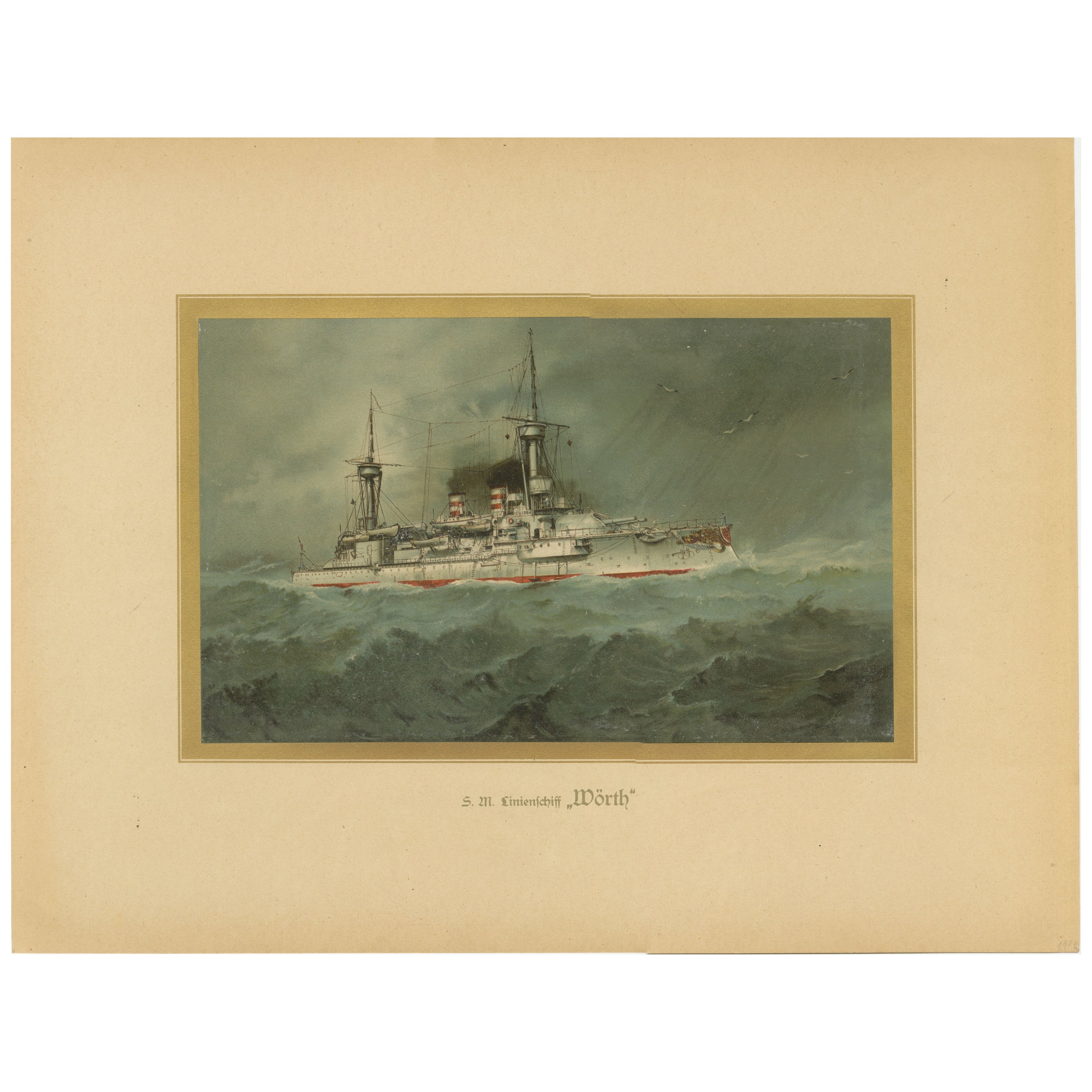
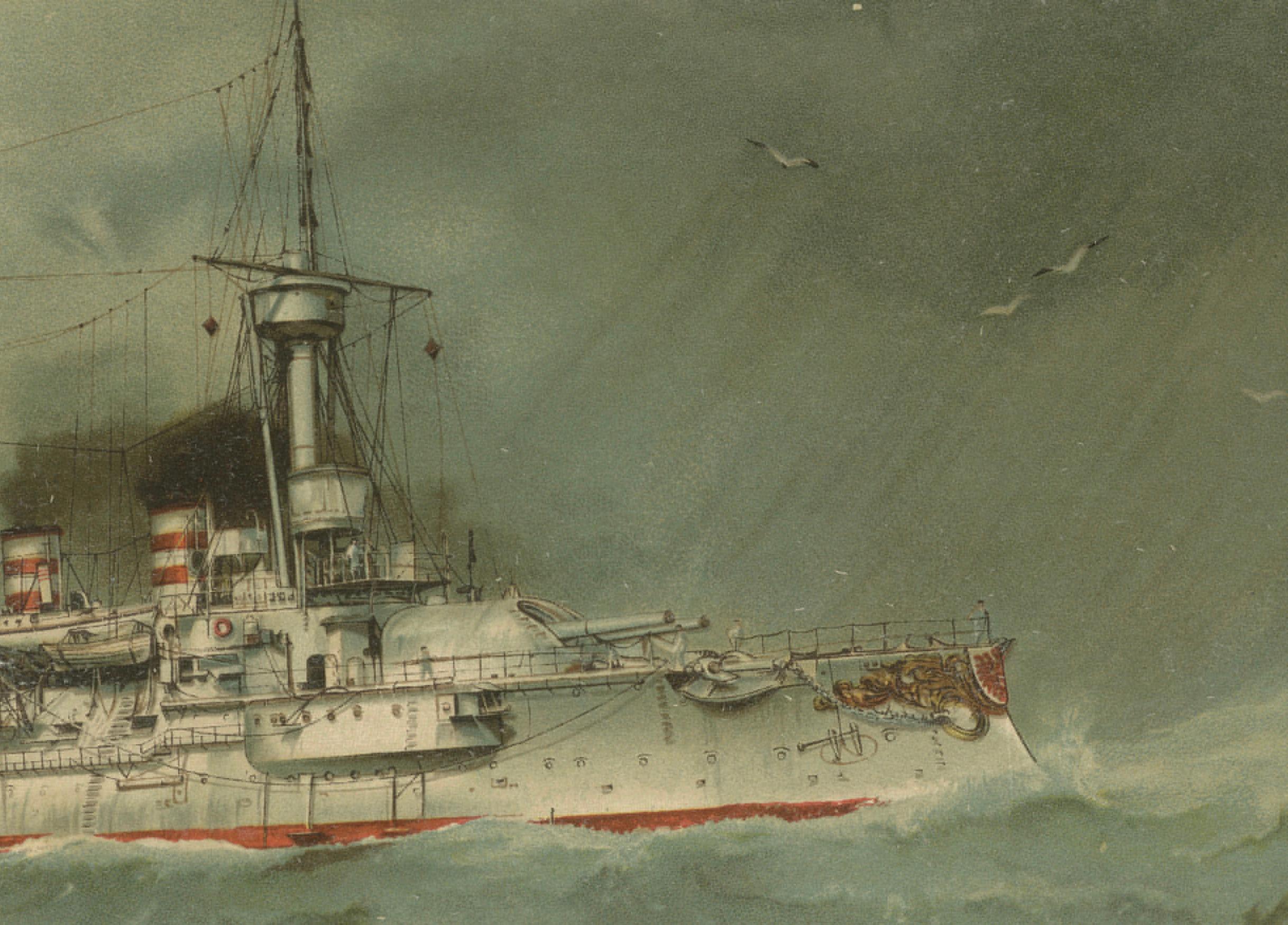
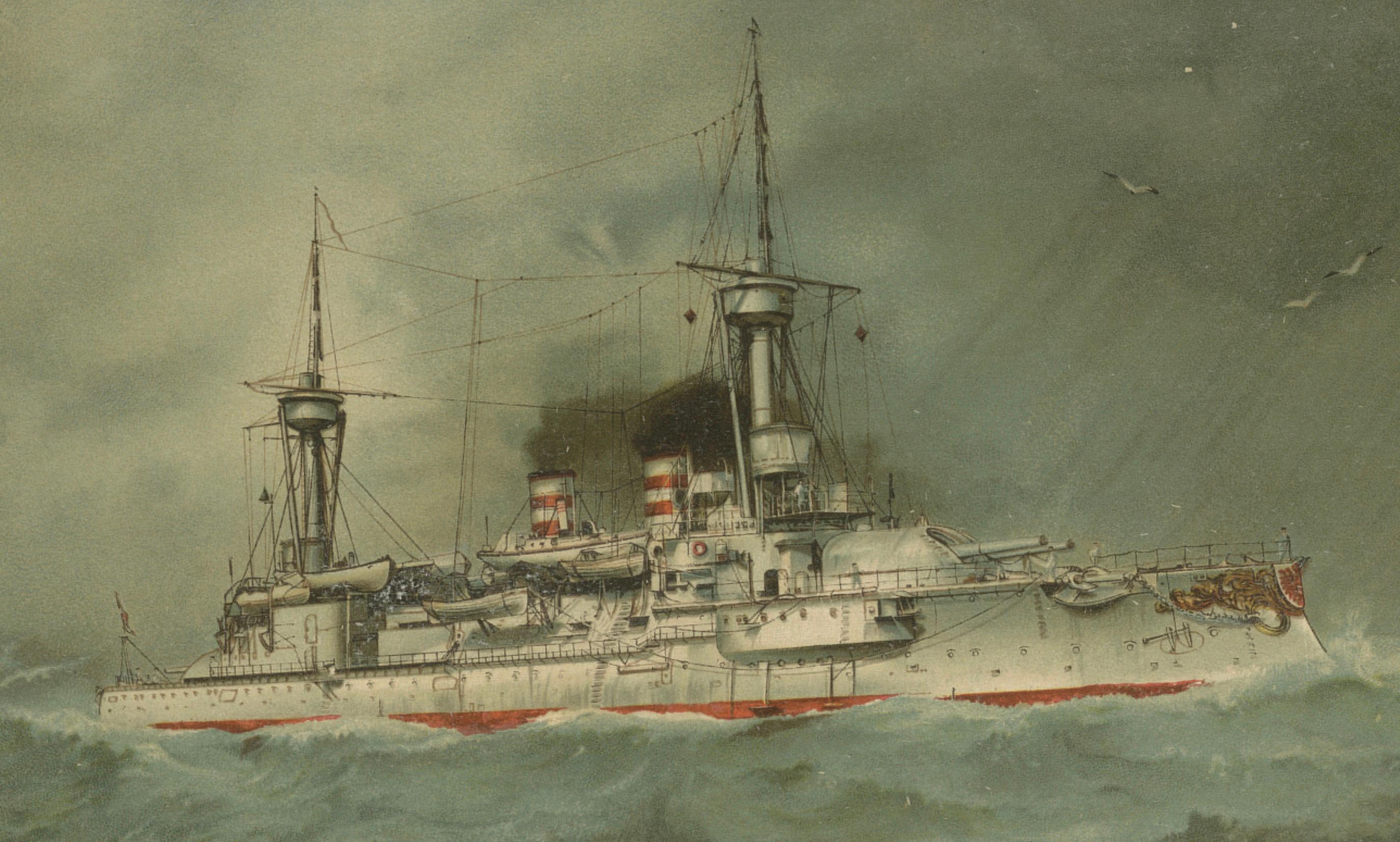
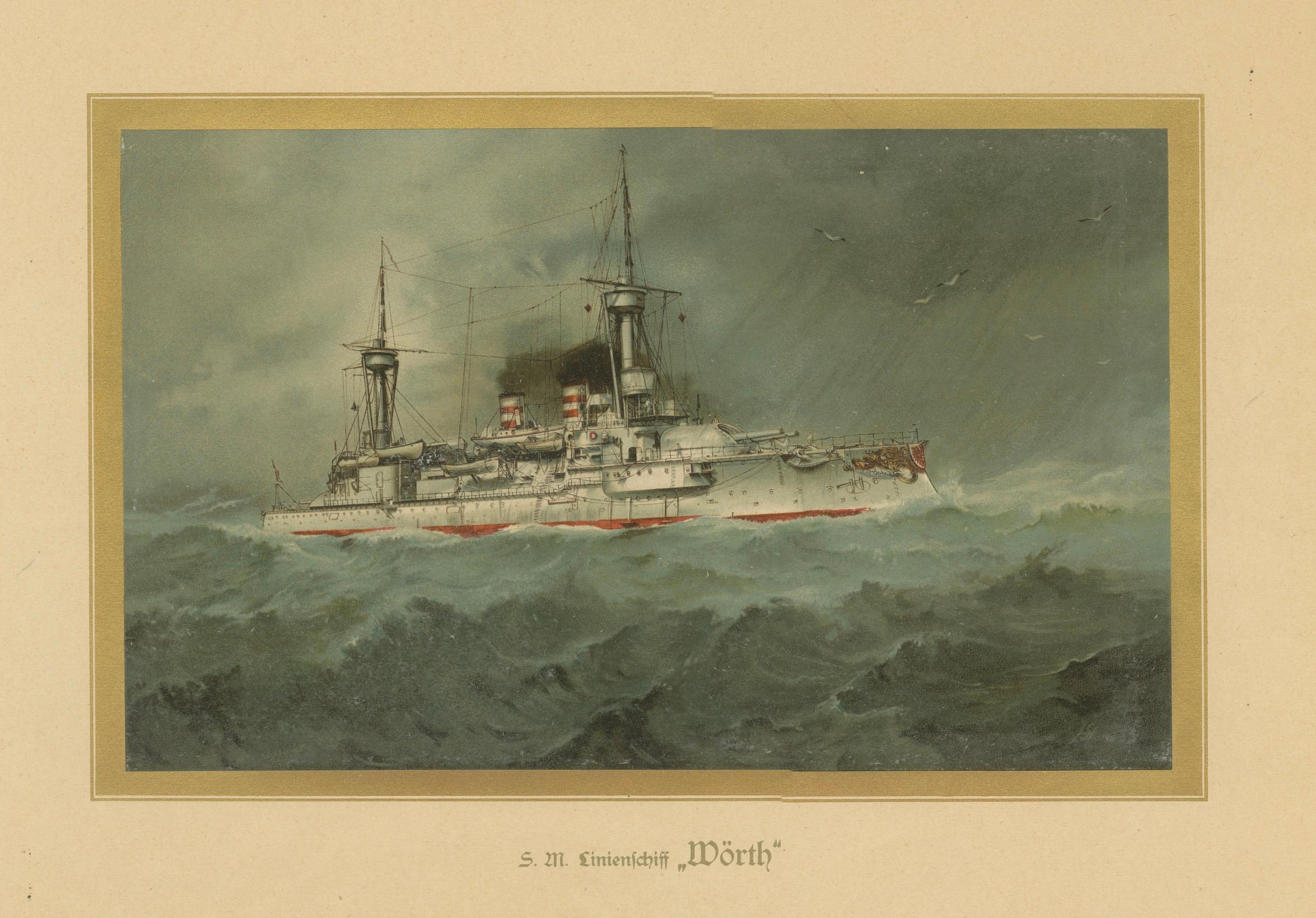
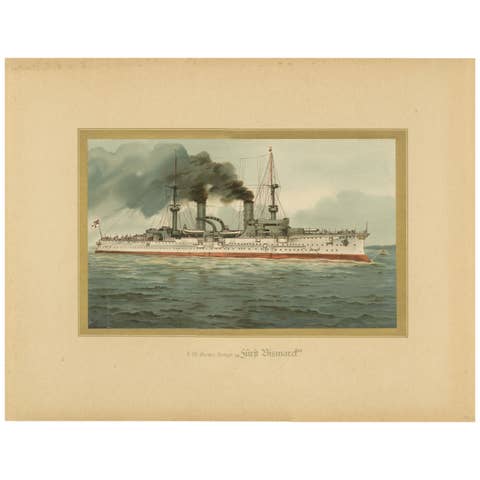
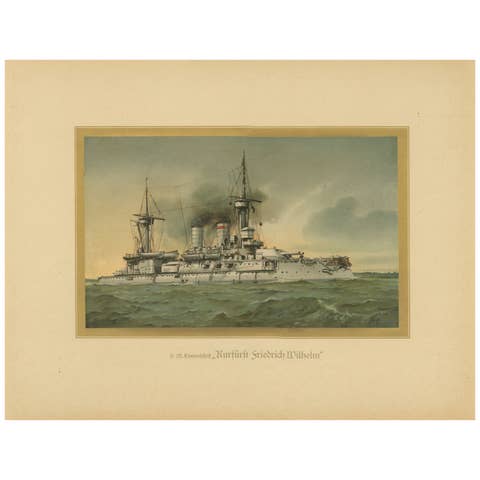
This 1903 chromolithograph by Hugo Graf from 'Deutschland zur See' features the SMS Wörth, a pre-dreadnought battleship of the German Imperial Navy launched in 1893. The print, approximately 20 x 33 cm on its original 39 x 51 cm mount, captures the ship braving turbulent waters, showcasing its imposing structure and resilience. SMS Wörth, part of the Brandenburg-class, was among Germany's first true battleships, representing a significant step in the evolution of the German navy. Although it saw limited action, it was instrumental in establishing Germany’s modern naval force. The print's mount has slight wear and spotting, adding historical character. A perfect addition for enthusiasts of German naval history and pre-WWI maritime art.
---
Here are some notable facts about SMS Wörth:
1. Brandenburg-Class Battleship: SMS Wörth was part of the Brandenburg-class, Germany’s first class of ocean-going battleships. These ships marked Germany’s entry into the battleship arms race, competing with other European powers to build powerful navies.
2. Heavy Armament: The ship was armed with six 28 cm (11 in) guns in three turrets, giving it significant firepower for its time. This armament allowed SMS Wörth to engage effectively in close-range battles, although it had limited range and flexibility compared to later designs.
3. Early Naval Exercises: SMS Wörth and its sister ships were frequently involved in training exercises and fleet maneuvers, helping to establish a skilled and disciplined force within the German Imperial Navy. These exercises also served to project Germany’s growing naval power and ambitions.
4. Role During the Boxer Rebellion: While SMS Wörth did not see combat in major battles, it was briefly deployed to East Asia during the Boxer Rebellion. However, due to logistical and operational challenges, it played a minor role and returned to Germany shortly after.
5. Limited Service During World War I: By the start of World War I, SMS Wörth was largely obsolete, with the German navy favoring more modern dreadnoughts. It served in secondary roles during the war and was eventually decommissioned and scrapped following the Treaty of Versailles.
6. Significance in German Naval Development: As part of the first generation of German battleships, SMS Wörth symbolized the country’s efforts to establish a powerful fleet. Its design and service marked a transition from coastal defense to a high-seas fleet, paving the way for Germany’s later naval advancements.
SMS Wörth, with its robust design and role in the early German fleet, serves as a testament to the Imperial Navy’s growth during a time of intense naval competition. Its service reflects the formative years of Germany's ambition to become a world-class naval power.