About this sheet
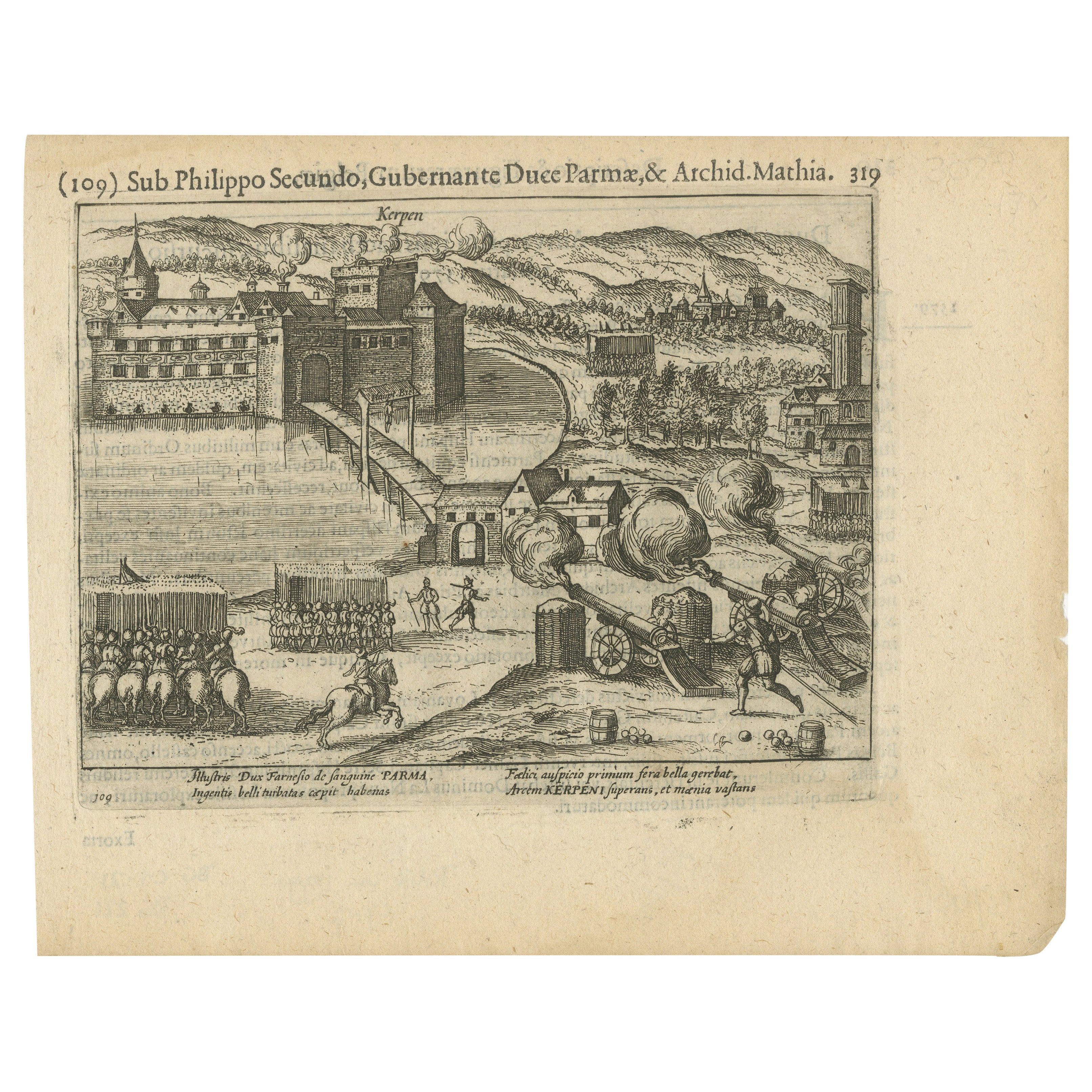
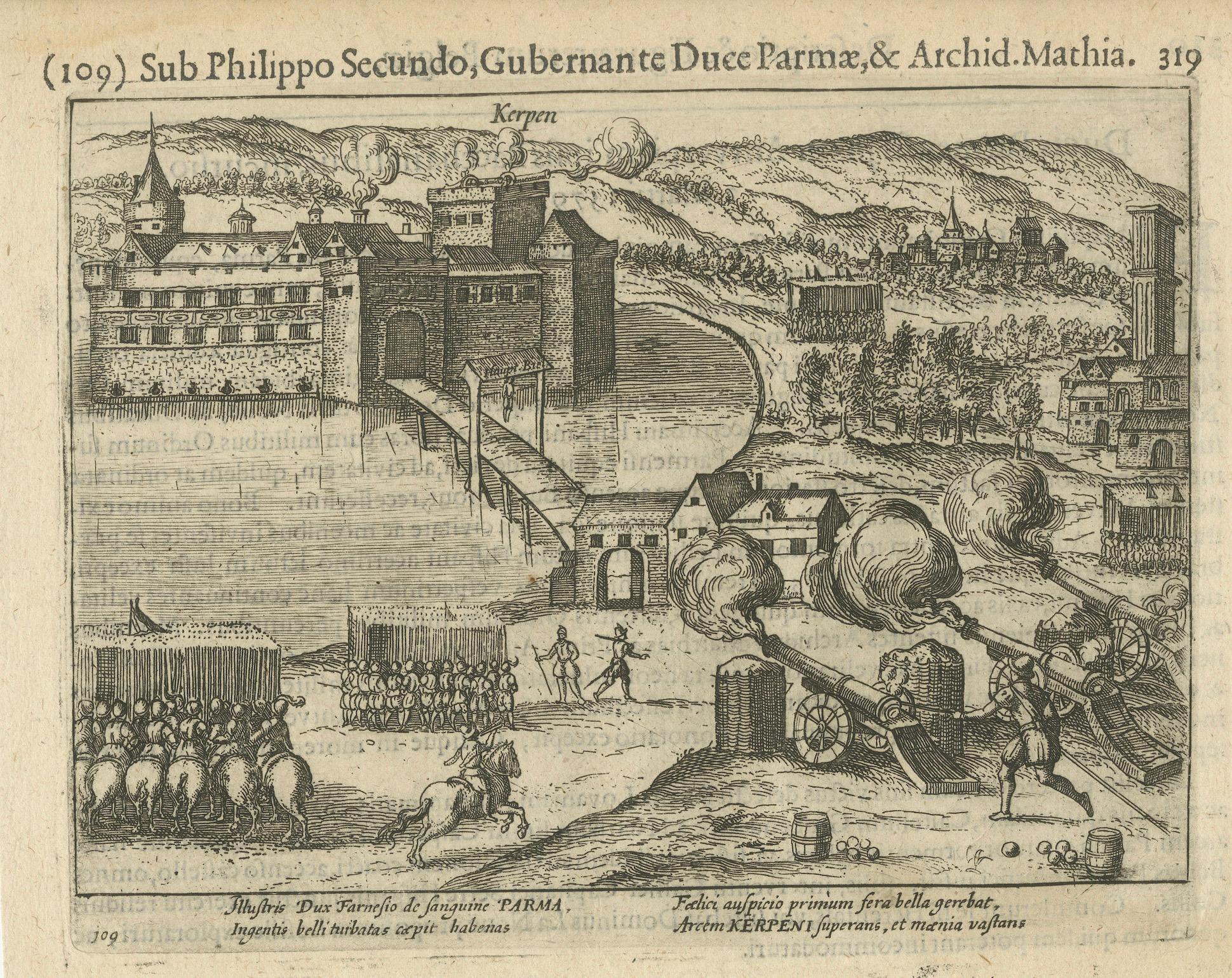
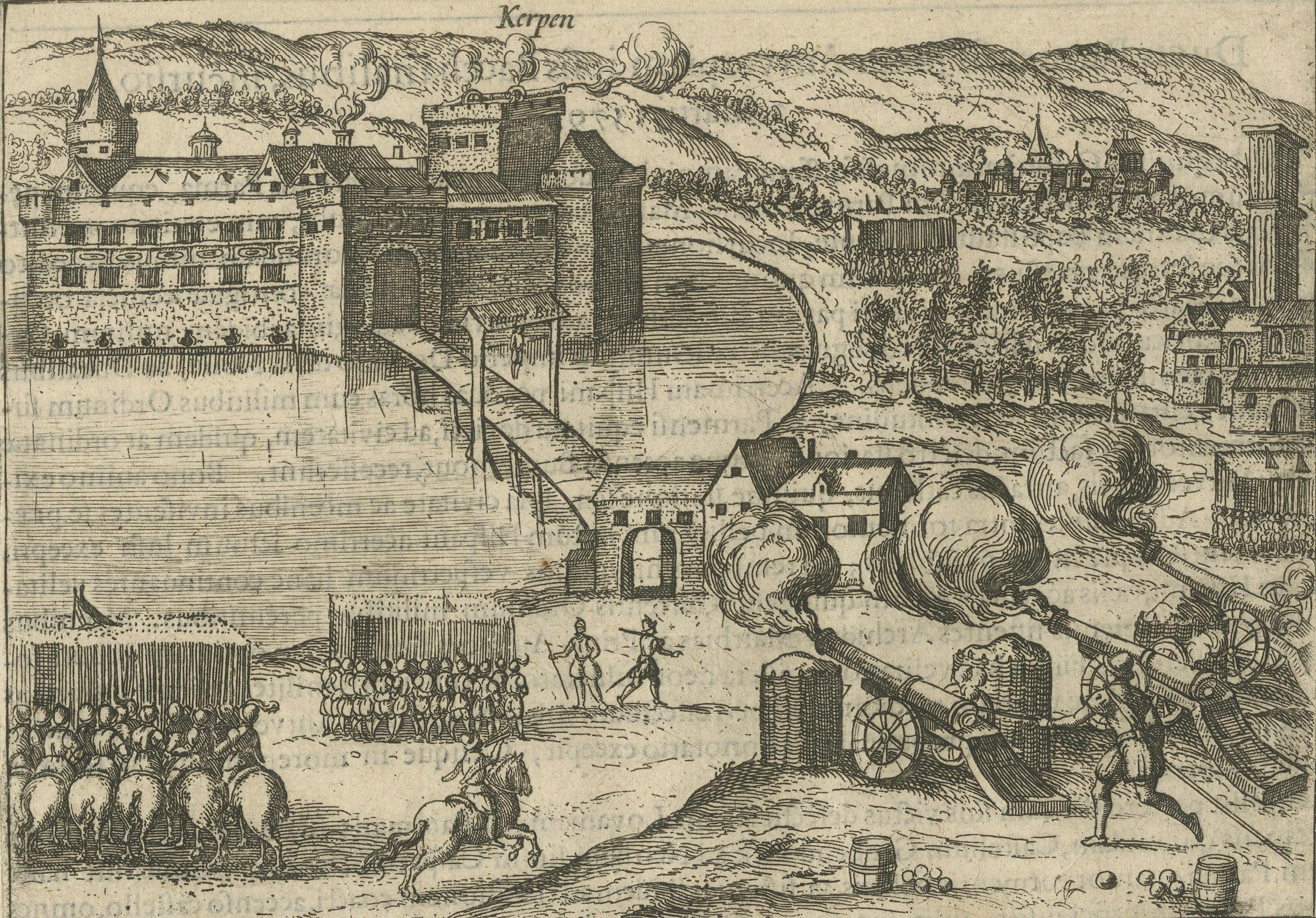
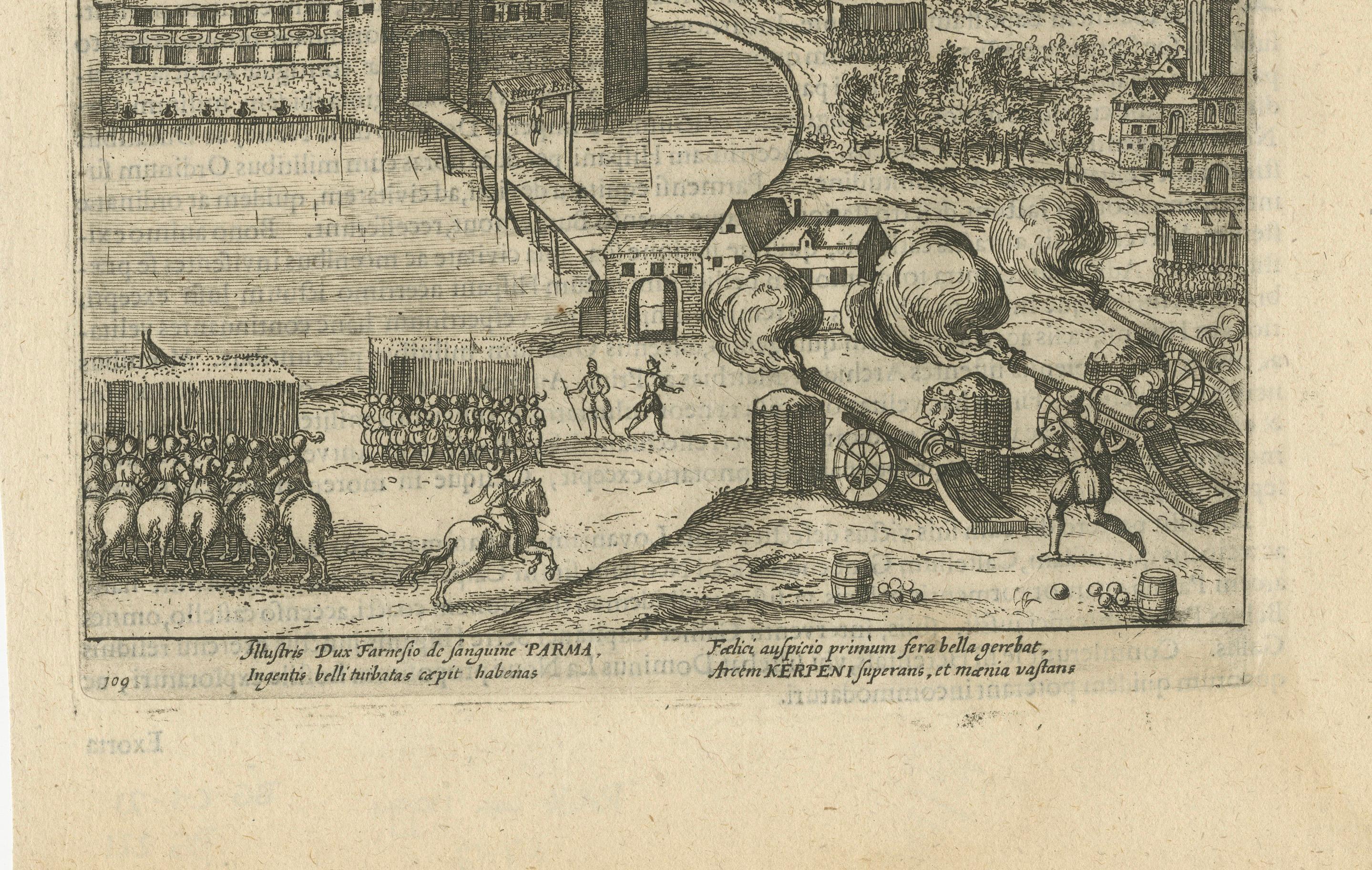
Siege of Kerpen under Duke of Parma – Original Engraving from Baudartius, 1616
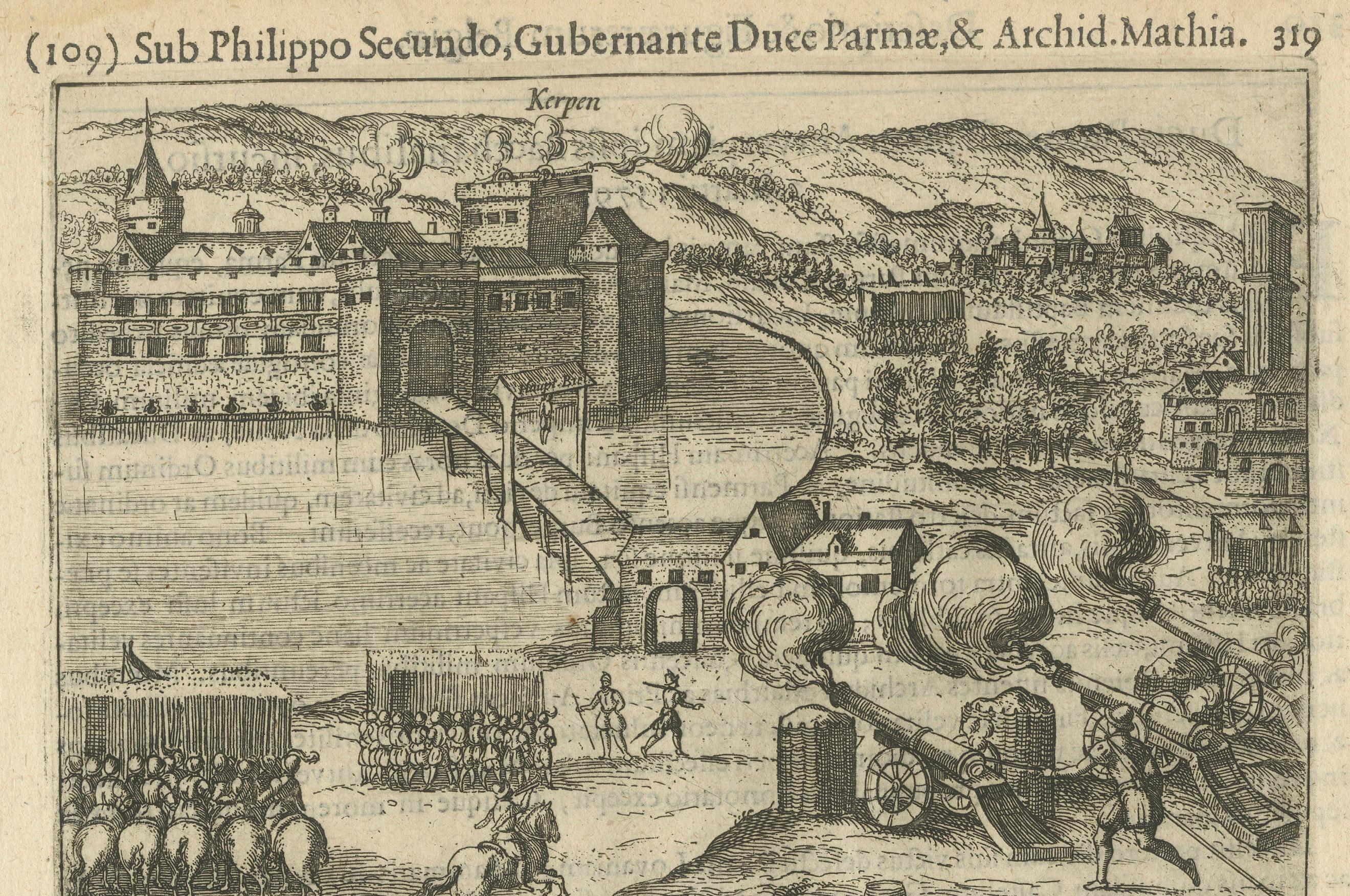
This finely detailed early 17th-century copperplate engraving depicts the attack on the fortified town of Kerpen in 1579, during the early decades of the Eighty Years’ War (1568–1648) between Spain and the Low Countries. The print originates from Les guerres de Nassau... by Willem (G.) Baudartius, published in Amsterdam by M. Colin de Thovoyon in 1616. This important chronicle covers the first fifty years of the conflict from a distinctly Contra-Remonstrant perspective and was richly illustrated with engravings based on the celebrated Geschichtsblätter by Frans Hogenberg, as well as on plates from J.J. Orlers’ works, with several newly engraved scenes added.
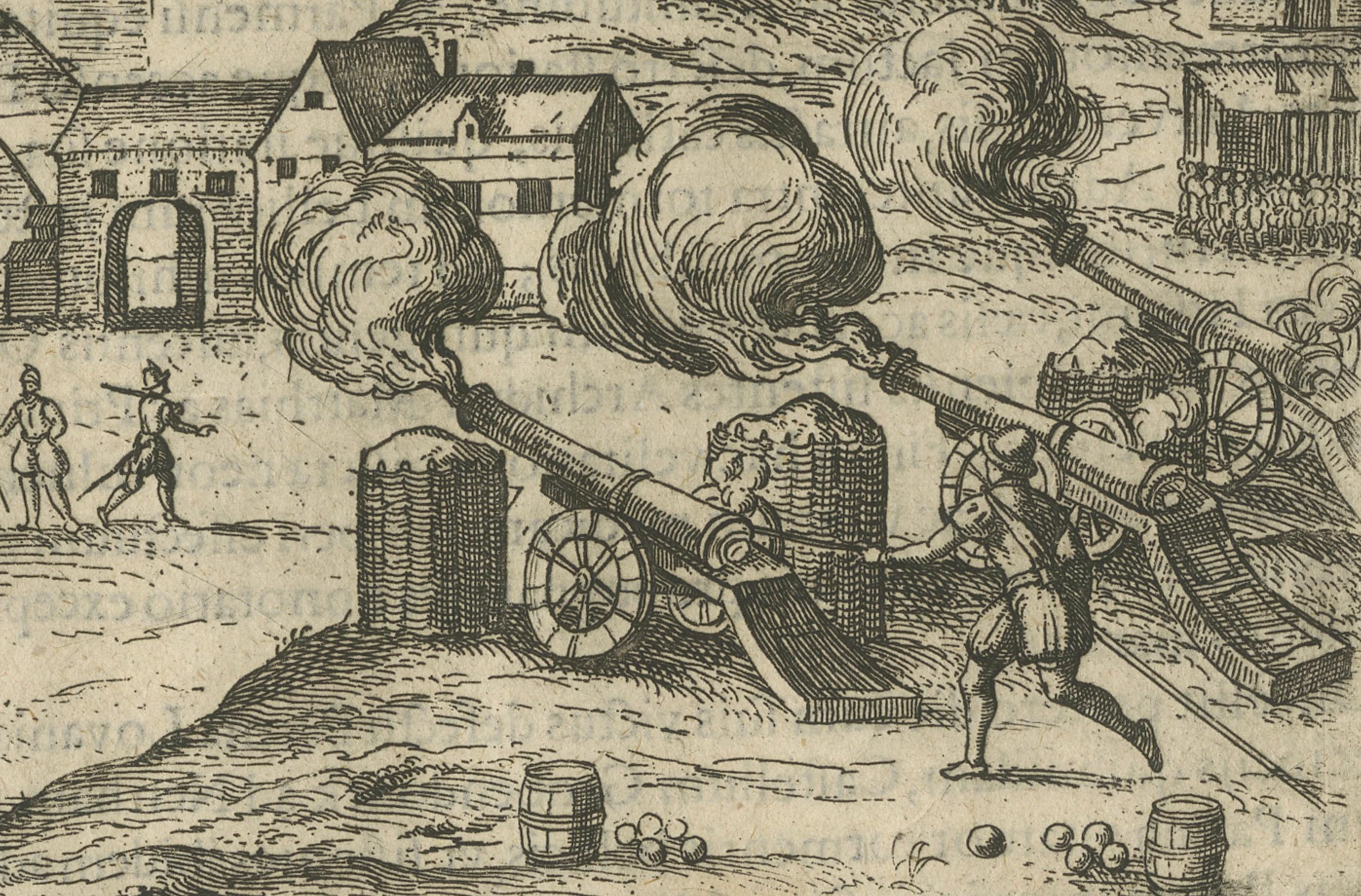
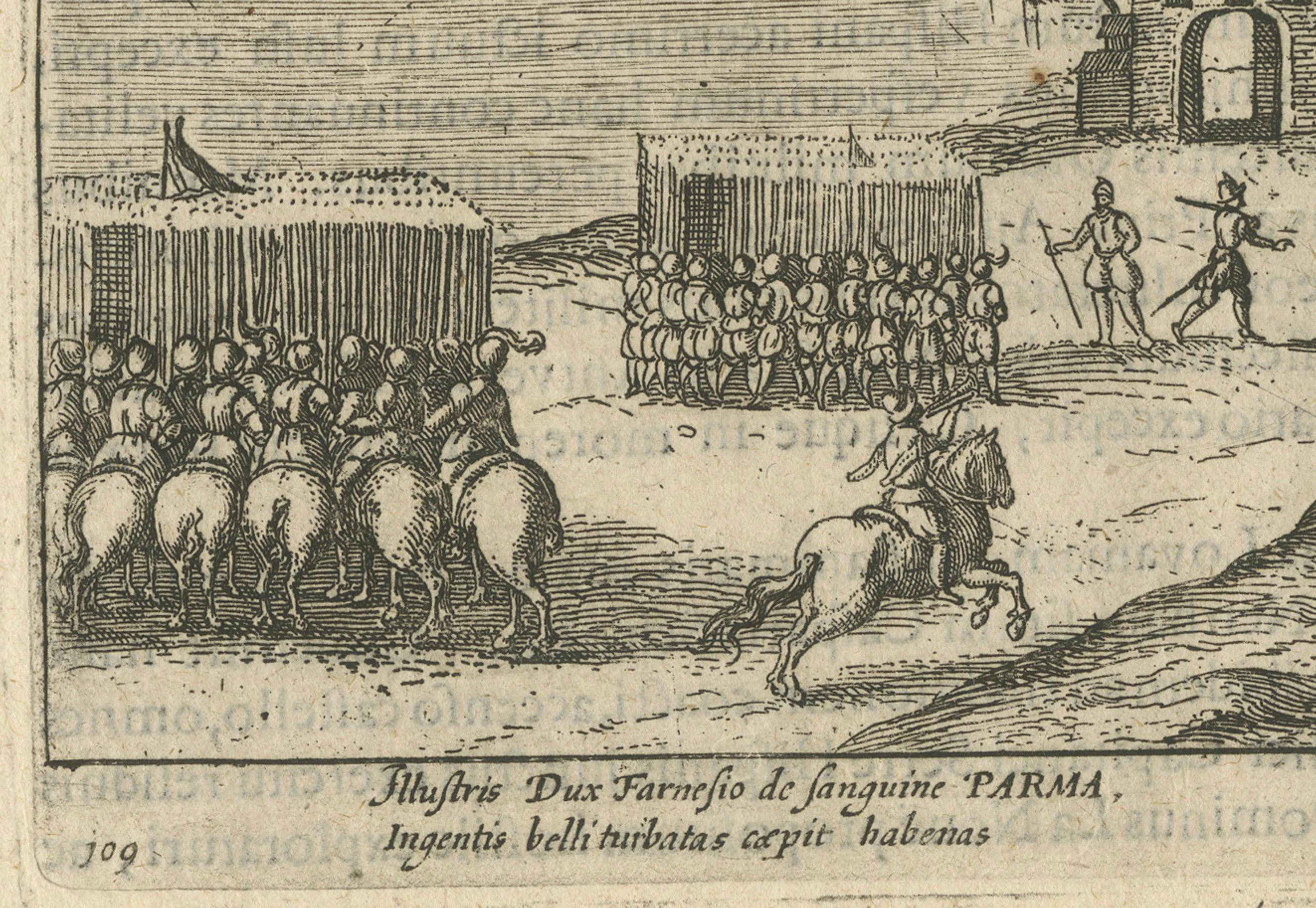
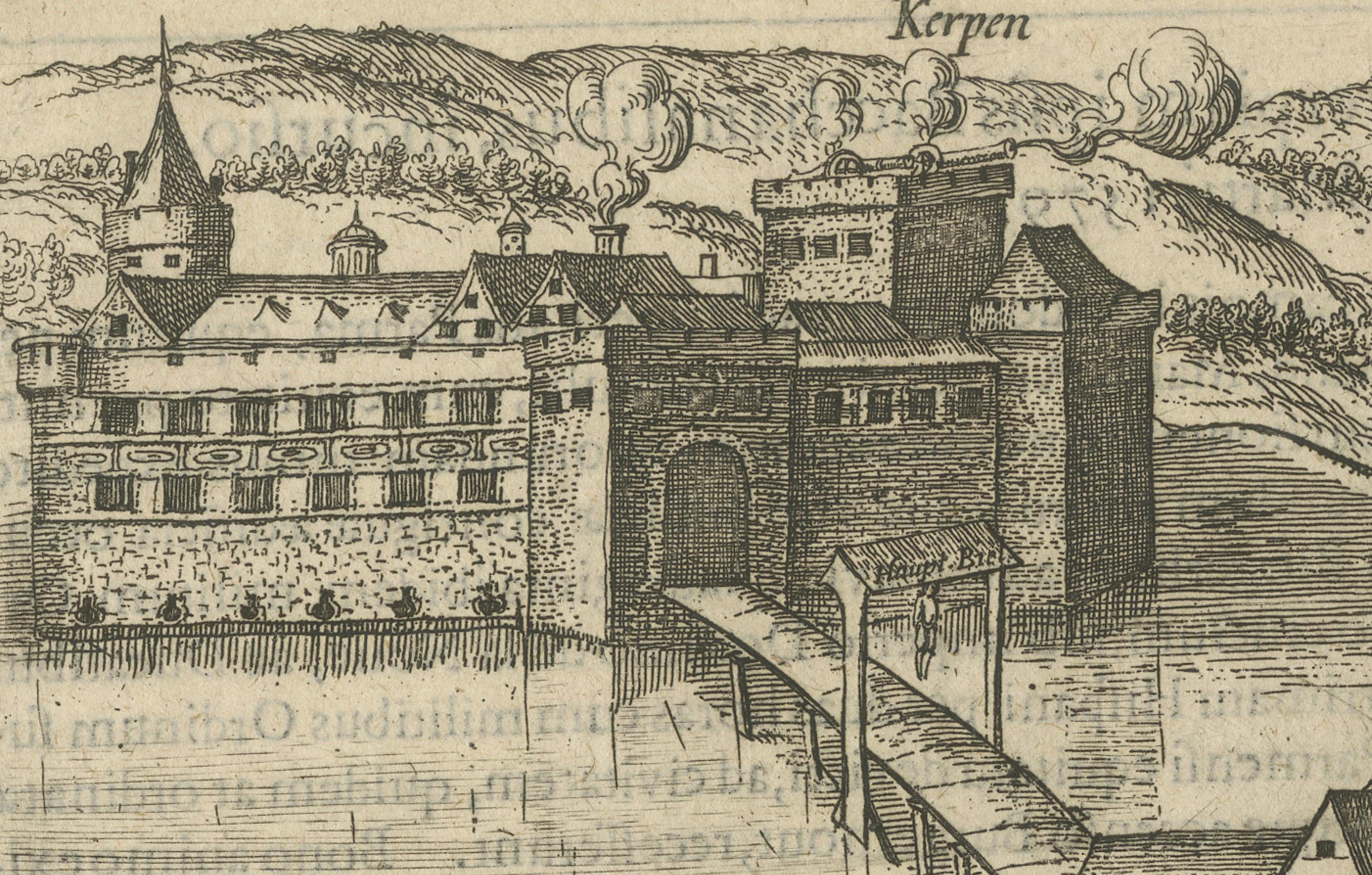
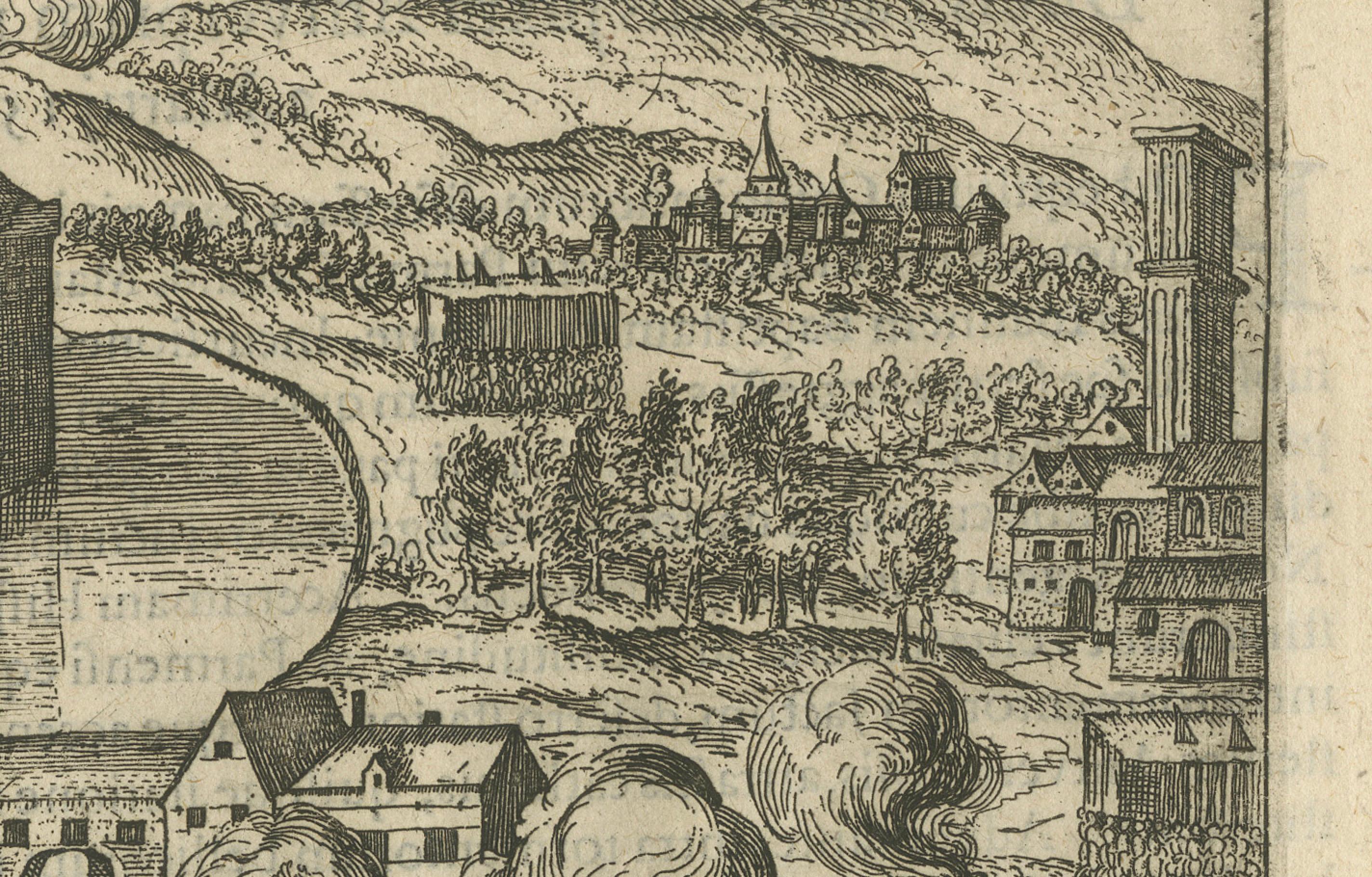
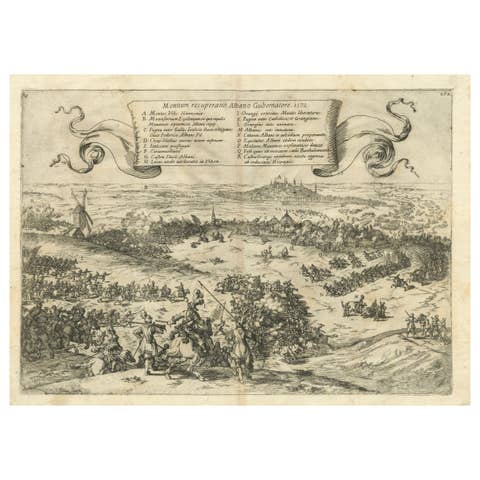
The present plate (numbered 109) shows the attack on Kerpen, commanded by Alexander Farnese, Duke of Parma, under King Philip II of Spain. The scene captures the ferocity of siege warfare in the late sixteenth century: artillery batteries fire upon the town’s fortifications, infantry and cavalry units advance toward the gates, and smoke billows dramatically over the landscape. The Latin inscription above, Sub Philippo Secundo, Gubernante Duce Parmae, & Archid. Mathia, places the event during the Spanish governance of the Low Countries under Parma and Archduke Matthias.
Willem Baudartius (1565–1640) was a Flemish theologian, historian, and author born in Deinze, Flanders. Having fled religious persecution to England and later the Northern Netherlands, he became a prominent minister of the Dutch Reformed Church and was one of the translators of the Dutch States Bible (Statenbijbel) after being invited by the Synod of Dordrecht in 1619. The engravings in his Les guerres de Nassau were executed by various artists, including Simon Wynhoutsz. Frisius (1580–1629), one of the most accomplished Dutch engravers of the period.
This engraving exemplifies the dramatic historical imagery used to record and glorify key events of the Eighty Years’ War. Its vigorous line work and topographical accuracy make it both a valuable historical document and a highly decorative early print.
Condition: Good, strong impression on laid paper with visible plate mark and light even toning. Minor text offset visible from the reverse, as often with early prints.
Framing tips: Best presented in a dark wood or black frame with a cream or light grey mat to emphasize the contrast and fine historical linework.
Technique: Copperplate engraving and etching on laid paper
Maker: After Frans Hogenberg / Simon Wynhoutsz. Frisius, from Willem Baudartius, Amsterdam, 1616