About this sheet
Portraits of the British and Allied Commanders at the Battle of Waterloo, 1815
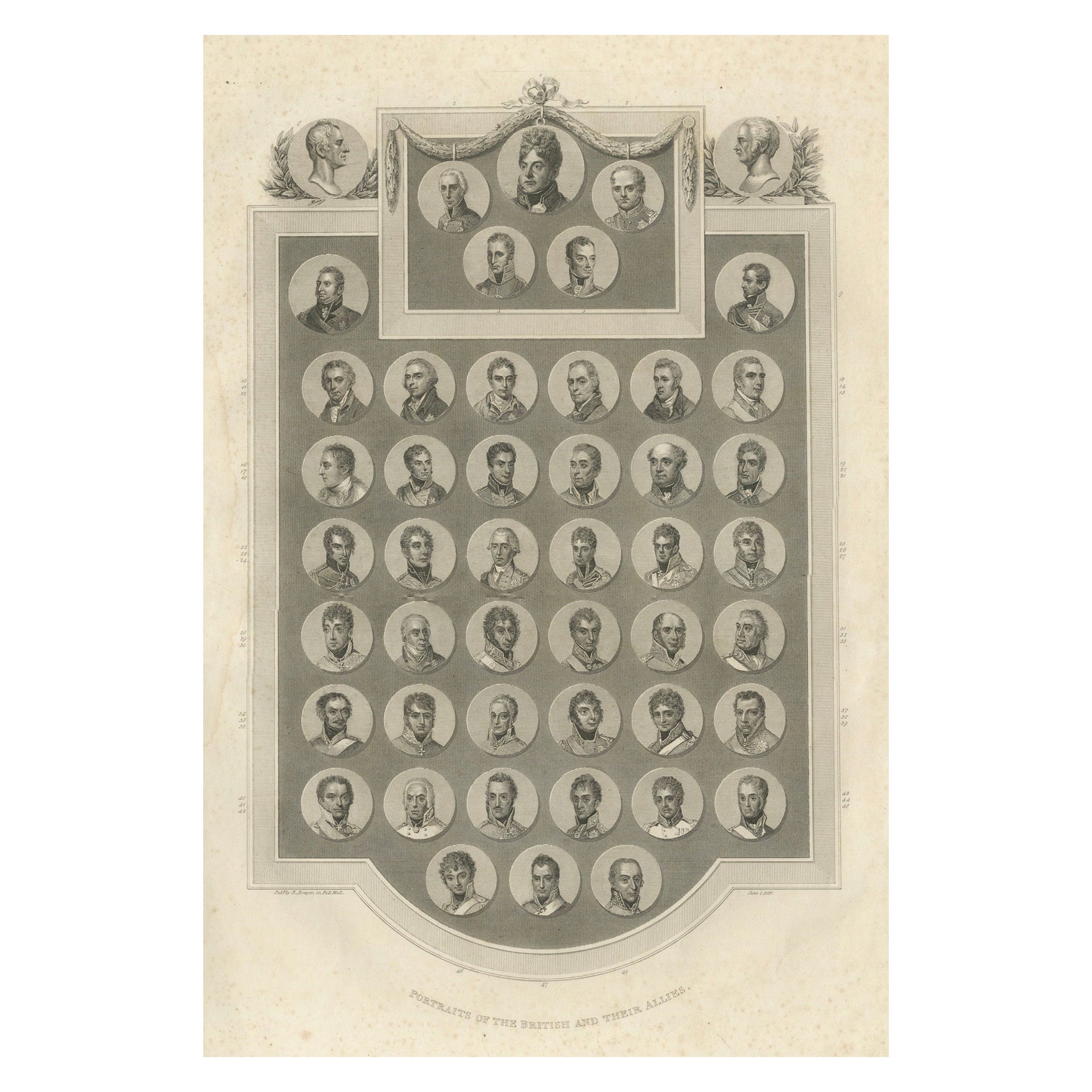
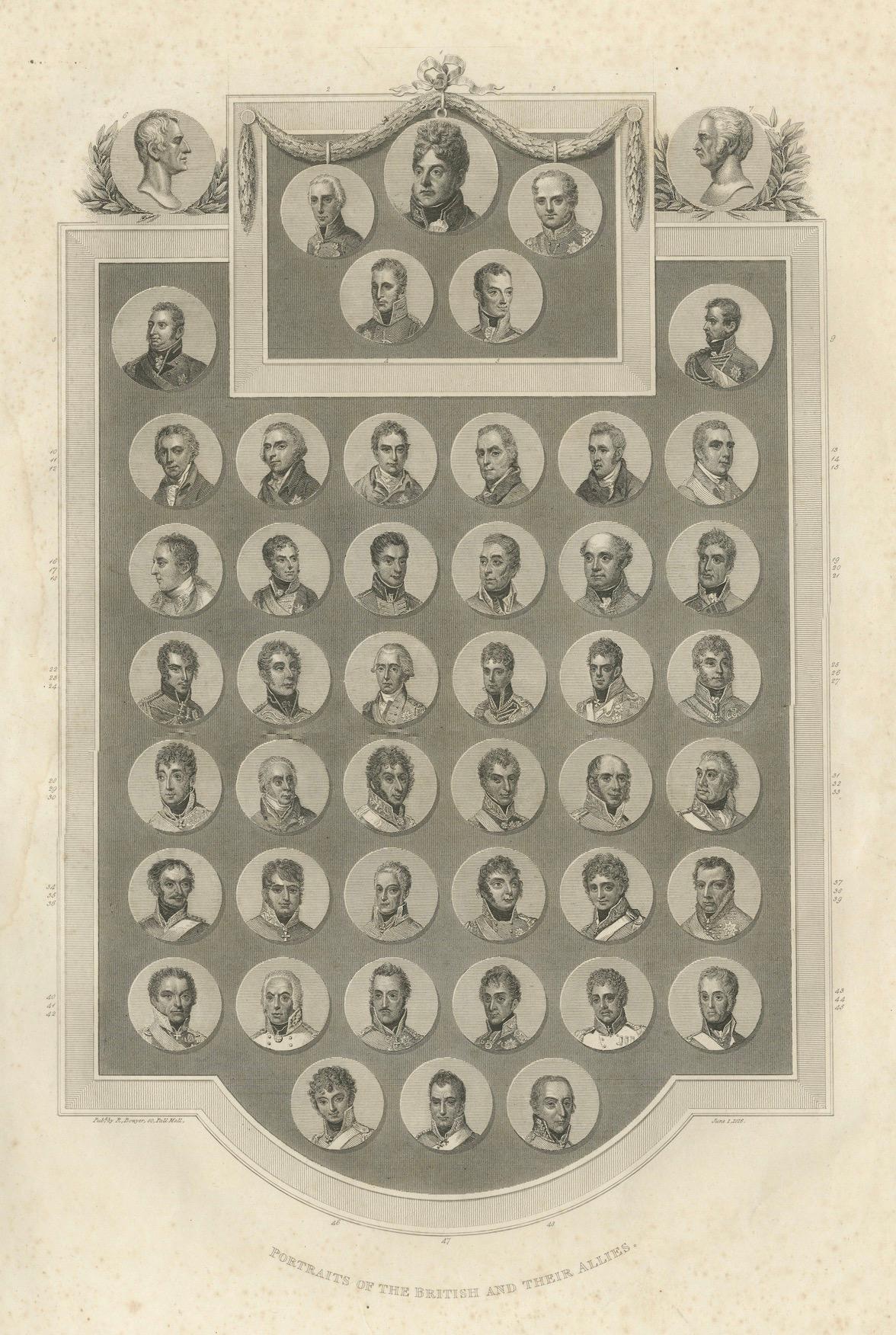
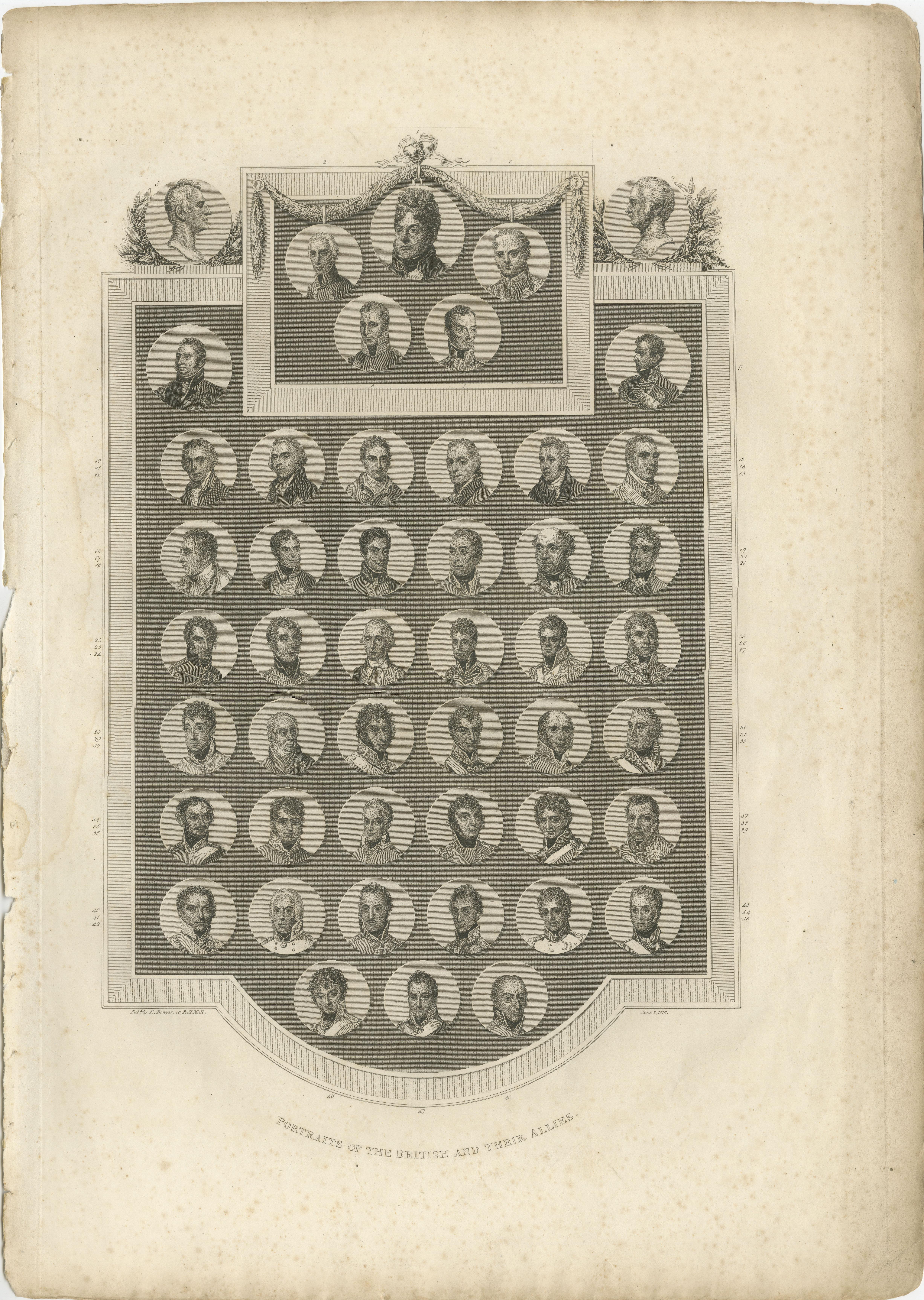
This striking 1816 engraving presents a meticulously arranged composition of the key British and Allied commanders who played a decisive role in the victory over Napoleon at the Battle of Waterloo. Published as part of *The Campaign of Waterloo*, this print serves as a commemorative tribute to the military leaders whose strategies and courage shaped one of the most significant battles in European history.
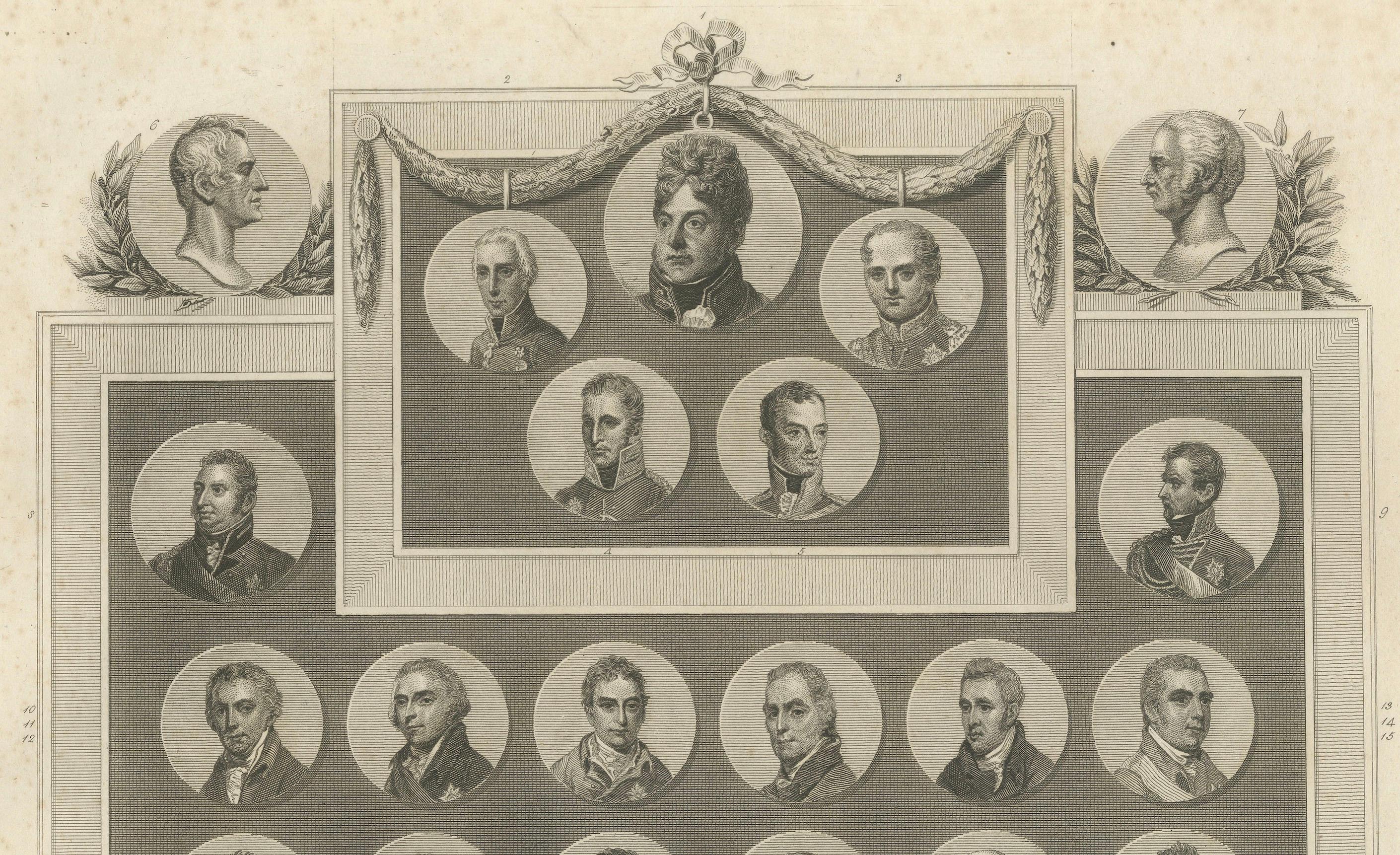
At the top center of the engraving, the Duke of Wellington, Arthur Wellesley, is given the most prominent position, flanked by his closest officers. To his right and left are some of the most influential British and Allied commanders, including Prince William of Orange, General Sir Thomas Picton, and Field Marshal Gebhard Leberecht von Blücher, the Prussian commander whose timely arrival at Waterloo ensured Napoleon’s defeat.
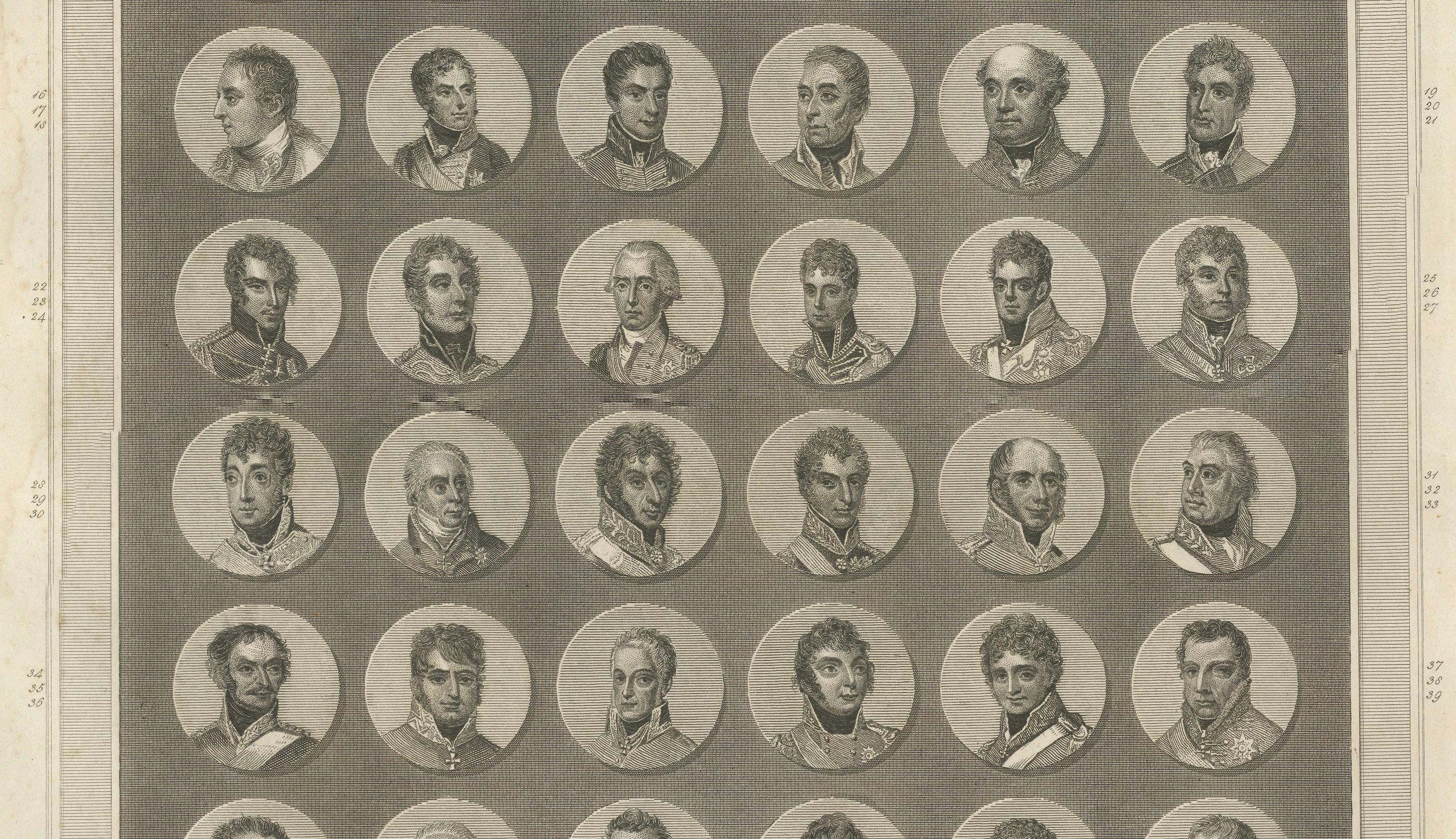
Further down, we see distinguished British generals such as Lord Uxbridge, who commanded the cavalry and famously lost his leg during the battle, General Rowland Hill, and Sir Henry Clinton. Among the Dutch and Belgian commanders are Prince Frederick of the Netherlands and General Chassé, whose troops played a crucial role in reinforcing the Allied line. The engraving also features Prussian leaders such as General von Zieten and General Bülow, whose forces pressured the French from the east.
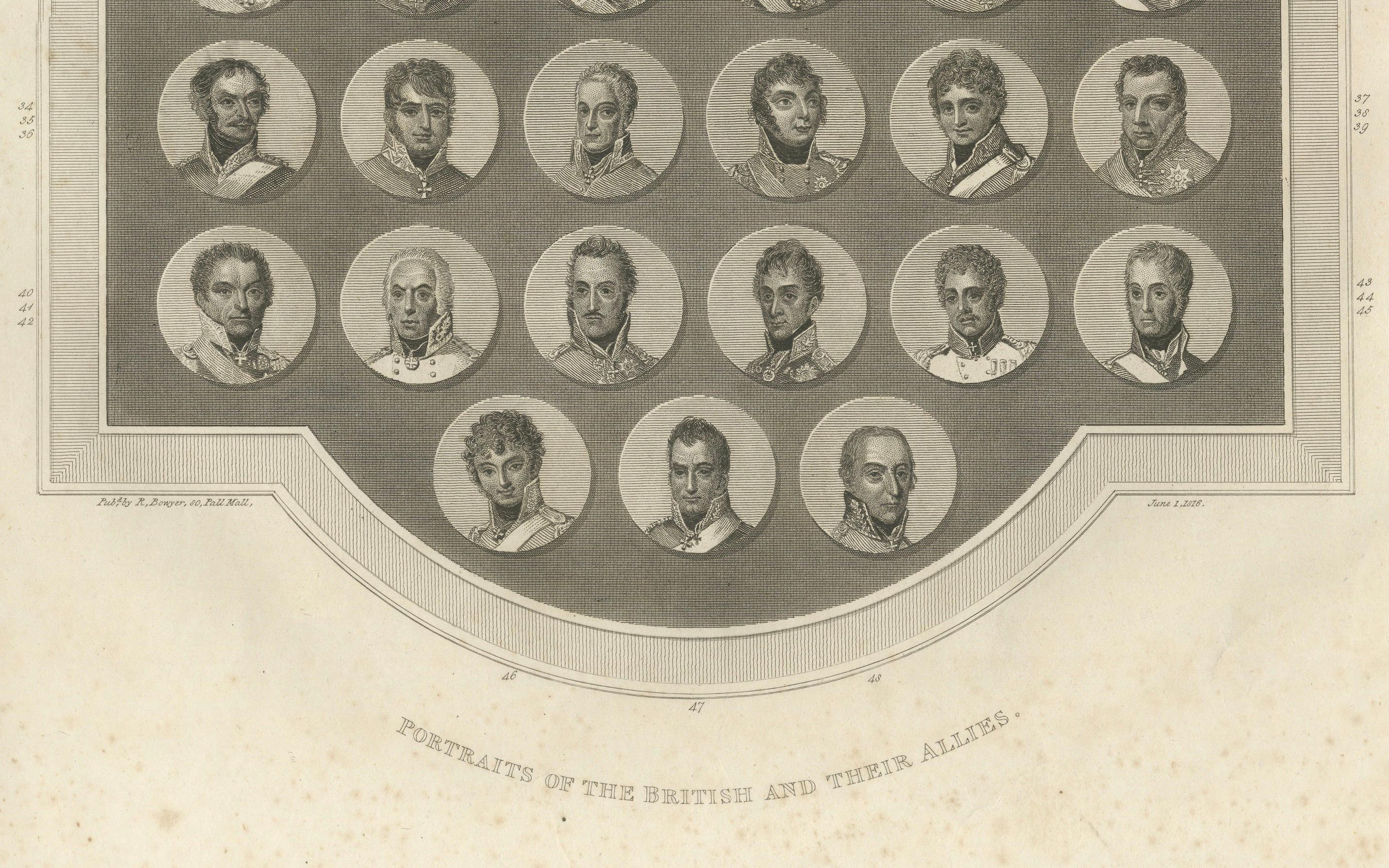
The engraving masterfully combines precision and artistry, with each face rendered to reflect distinct characteristics, uniforms, and military insignia. The composition is framed by classical decorative elements, including laurel wreaths and drapery, further emphasizing the dignified commemoration of these leaders. The inclusion of bust profiles at the top corners, possibly representing earlier military figures or symbols of victory, adds an additional layer of visual interest, reinforcing the neoclassical style popular in early 19th-century historical prints.
This print, published by Robert Bowyer, would have appealed to contemporary audiences eager to honor and remember the victors of Waterloo. It functioned both as a historical record and a patriotic statement, immortalizing those who shaped Europe’s post-Napoleonic order. Today, it remains an essential piece for collectors interested in Napoleonic military history, portrait engravings, and historical memorabilia.
Condition Report:
Paper in good condition with scattered foxing and minor edge wear. Some age-related discoloration, particularly near the margins. Engraving details remain sharp and clear. Some handling marks and minor creases, but no major tears or losses. A well-preserved and highly collectible example.
Framing Tips:
- Use acid-free, museum-quality matting to protect the paper and enhance visual contrast.
- UV-resistant glass or acrylic is recommended to preserve the engraving’s crisp details.
- A neoclassical-style wooden frame, dark-stained or gilded, will complement the engraving’s period aesthetic.
- Display in a stable environment away from direct sunlight and high humidity to ensure long-term preservation.
This impressive engraving stands as both a visual tribute and a historical document, offering a lasting homage to the commanders whose leadership secured victory over Napoleon at Waterloo.