About this sheet
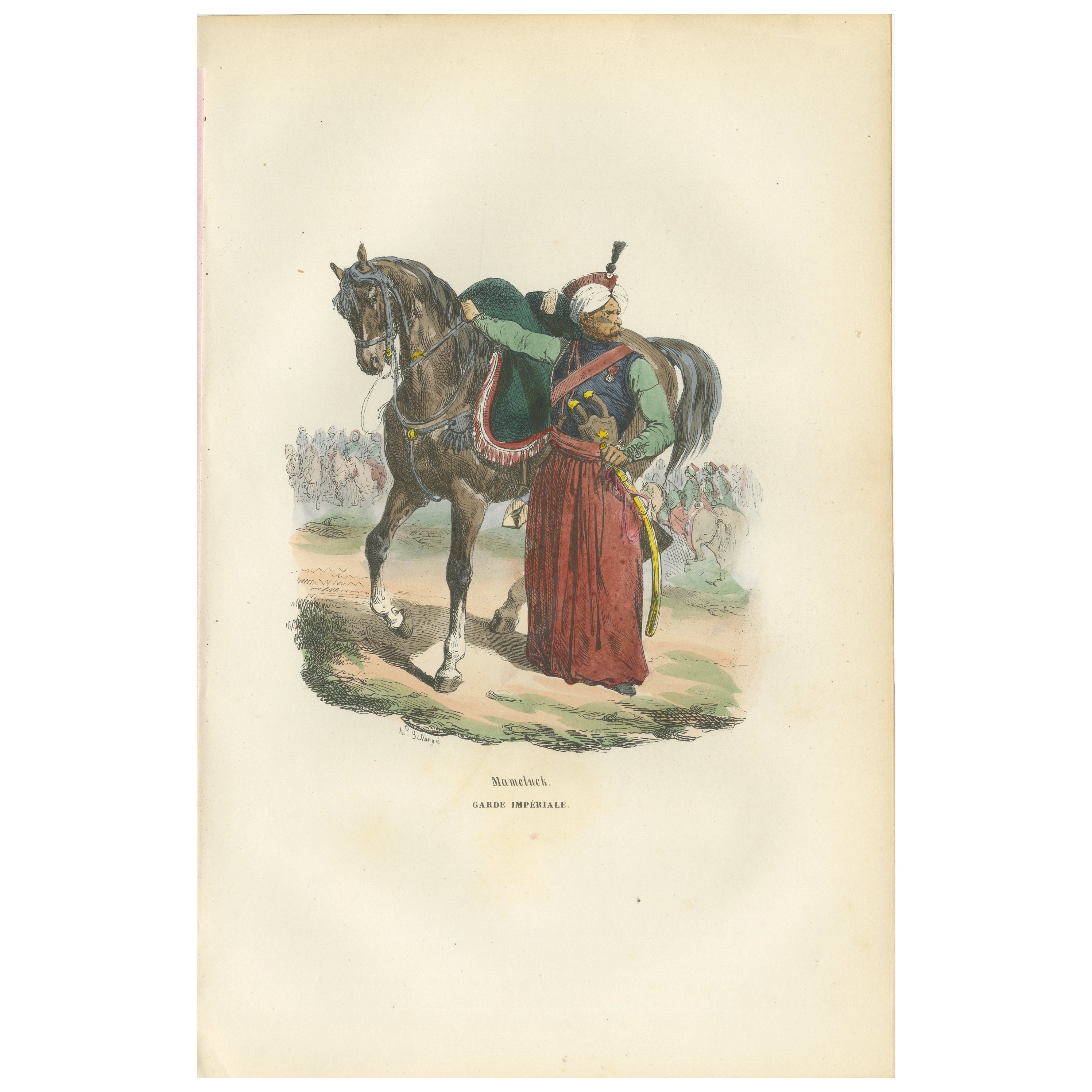
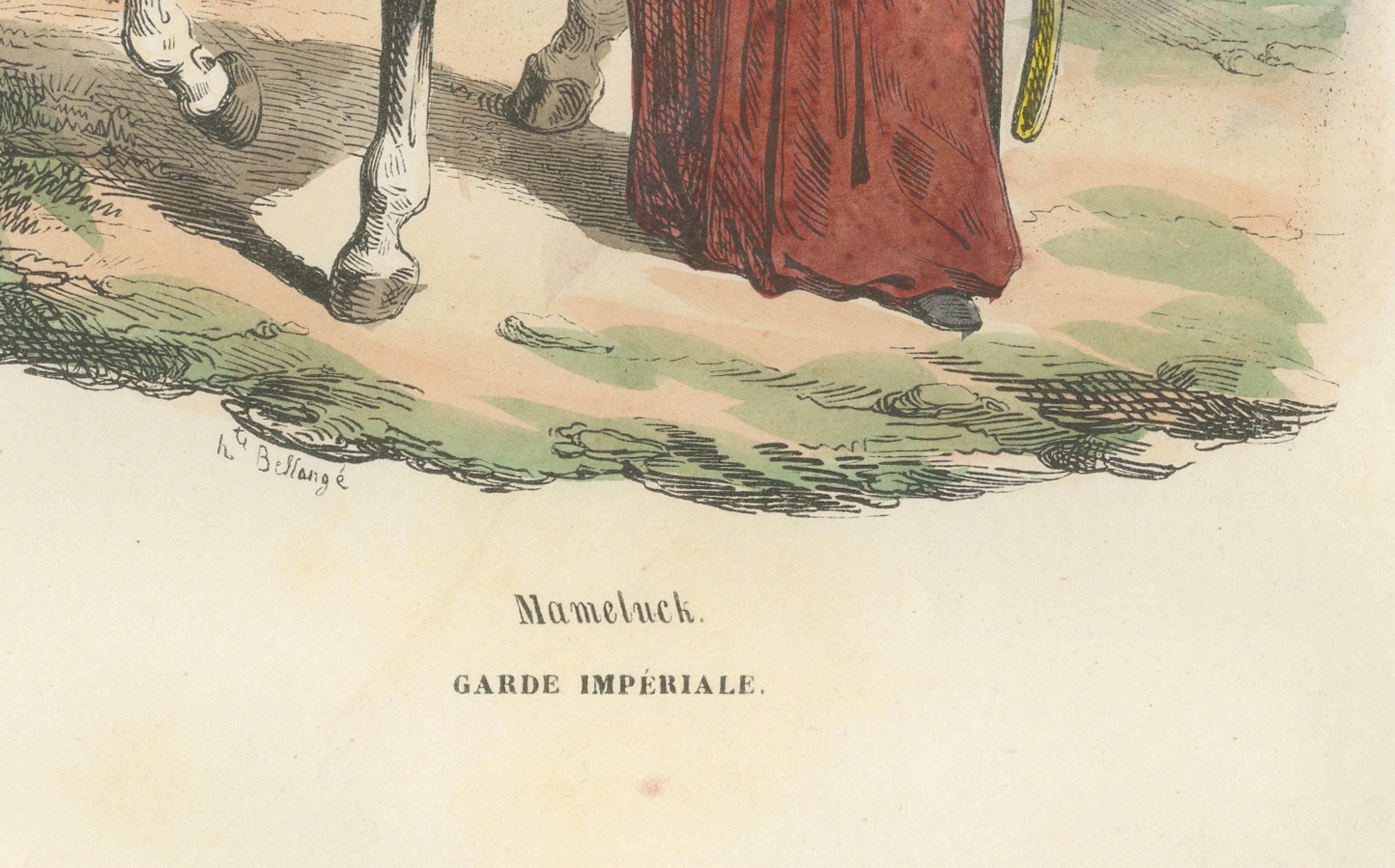
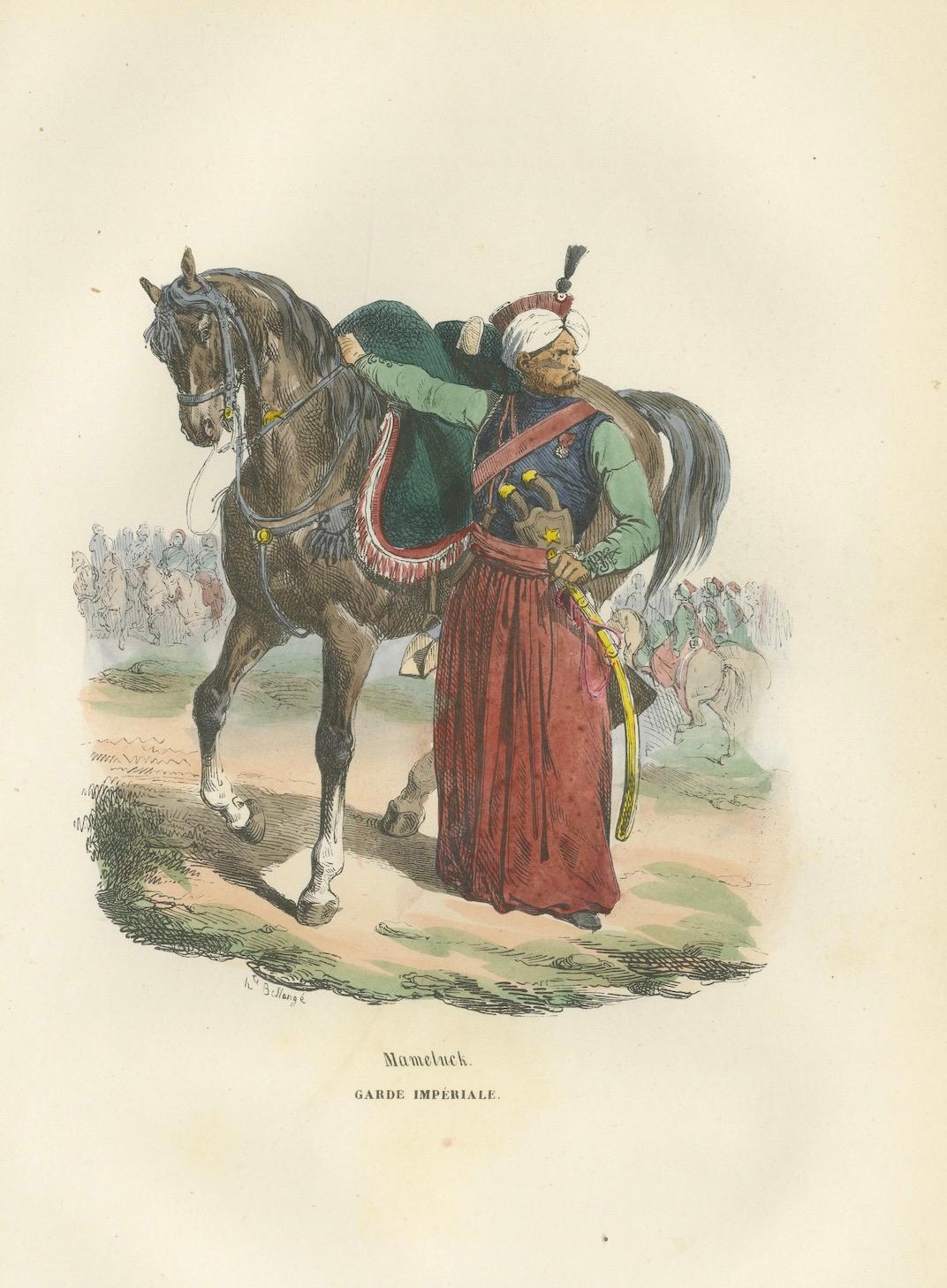
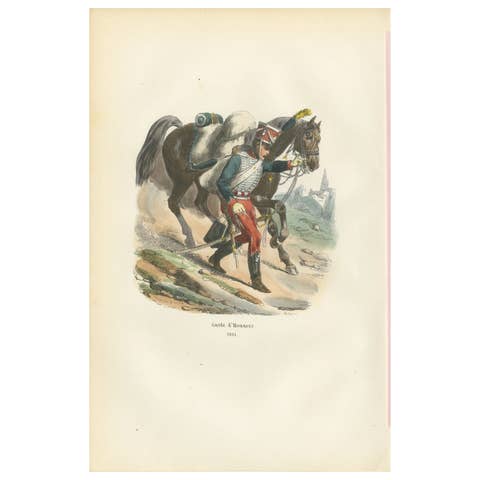
Napoleonic Mameluck of the Imperial Guard, hand-colored military print, 1843
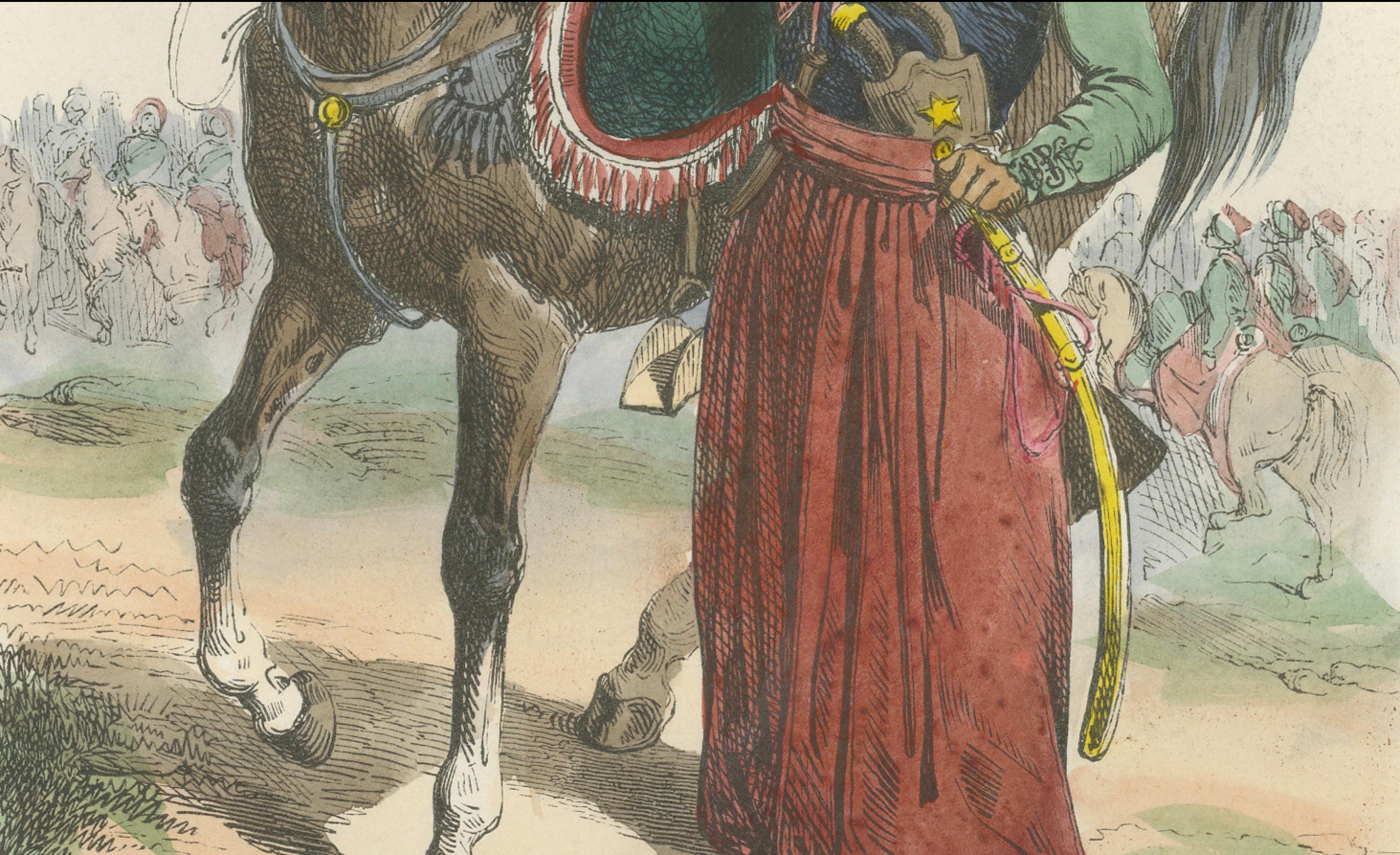
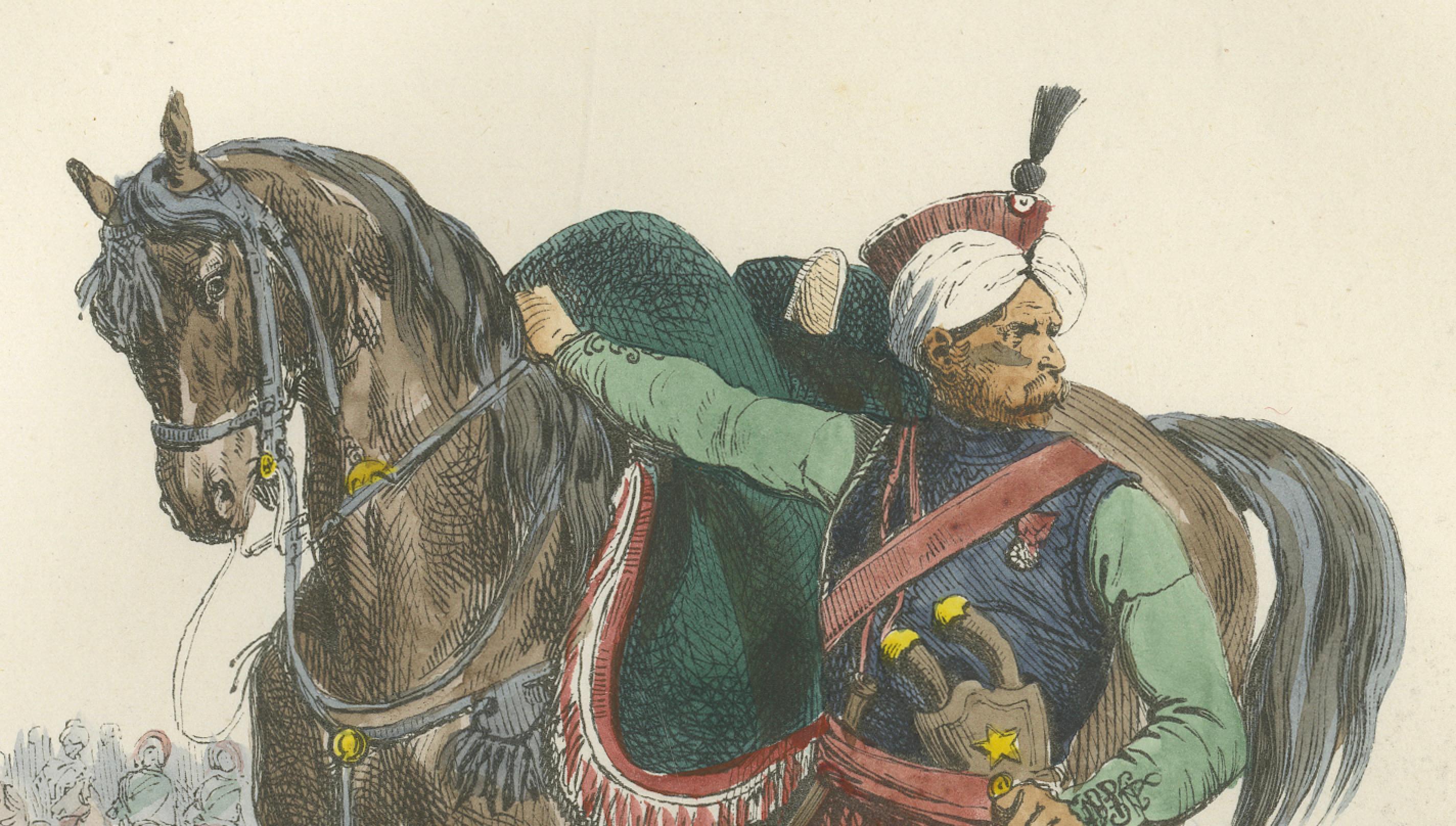
This finely executed hand-colored military print depicts a Mameluck of the Imperial Guard, one of the most distinctive and exotic units in Napoleon Bonaparte’s army. The figure is shown leading a richly harnessed horse, dressed in the characteristic Near Eastern-inspired costume that made the Mamelukes immediately recognizable within the Grande Armée. The flowing robes, sash, curved sabre, and turban with plume reflect the fusion of Ottoman and French military traditions that defined this elite corps.
The Mamelukes of the Imperial Guard originated from Egyptian cavalrymen encountered by Napoleon during the Egyptian Campaign of 1798–1801. Deeply impressed by their horsemanship, bravery, and striking appearance, Napoleon incorporated them into his personal guard, where they served as both a combat unit and a powerful symbol of imperial reach and prestige. By the height of the Empire, the Mamelukes were among the most visually celebrated troops, frequently depicted in official publications and military costume albums.
This print was issued in Paris in 1843 as part of P.-M. Laurent de l’Ardèche’s “Histoire de l’Empereur Napoléon,” with illustrations after designs by Horace Vernet, one of the leading military artists of 19th-century France. Although published after the fall of the Empire, the work reflects the strong Romantic and nostalgic interest in Napoleonic history during the July Monarchy. The scene is rendered with careful attention to uniform detail, equipment, and posture, making it both an artistic and documentary record of Napoleonic military dress.
Such plates are highly sought after by collectors of Napoleonic material, military costume studies, and French imperial history. The combination of dramatic subject matter, fine hand coloring, and association with Vernet places this print firmly within the canon of classic 19th-century Napoleonic imagery.
Condition
Good overall condition. Light, even age toning to the paper, with minor scattered foxing typical of mid-19th-century prints. Margins ample. No major tears or restorations observed.
Framing tips
This print presents beautifully in a classic black or dark walnut frame with a wide off-white or light cream mat, which complements the warm paper tone and enhances the vivid hand coloring. Museum-style glazing is recommended to protect the pigments.
Technique: Hand-colored engraving
Maker: After Horace Vernet, Paris, published 1843