About this sheet
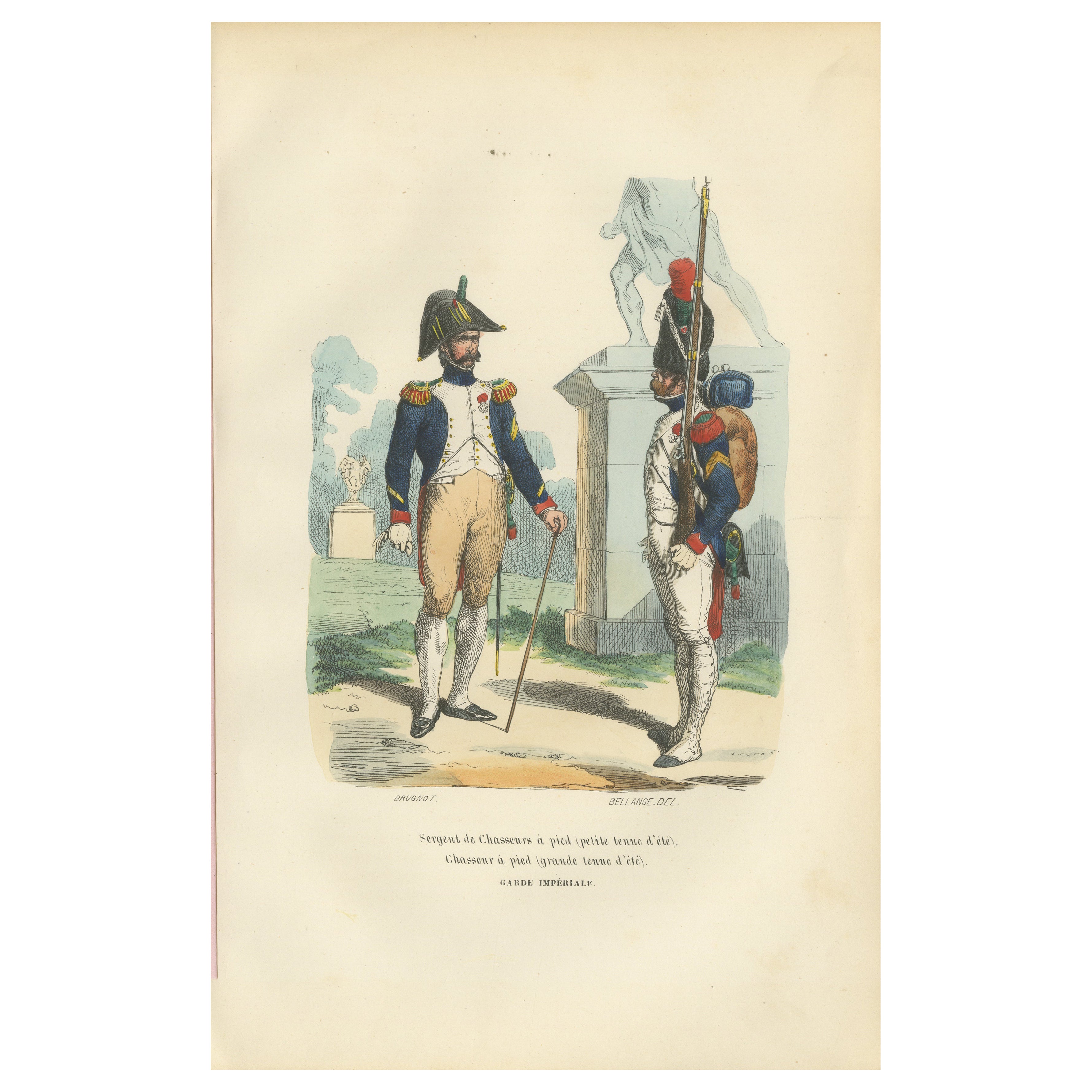
Napoleonic Imperial Guard Chasseurs à Pied Summer Uniform Print c.1843
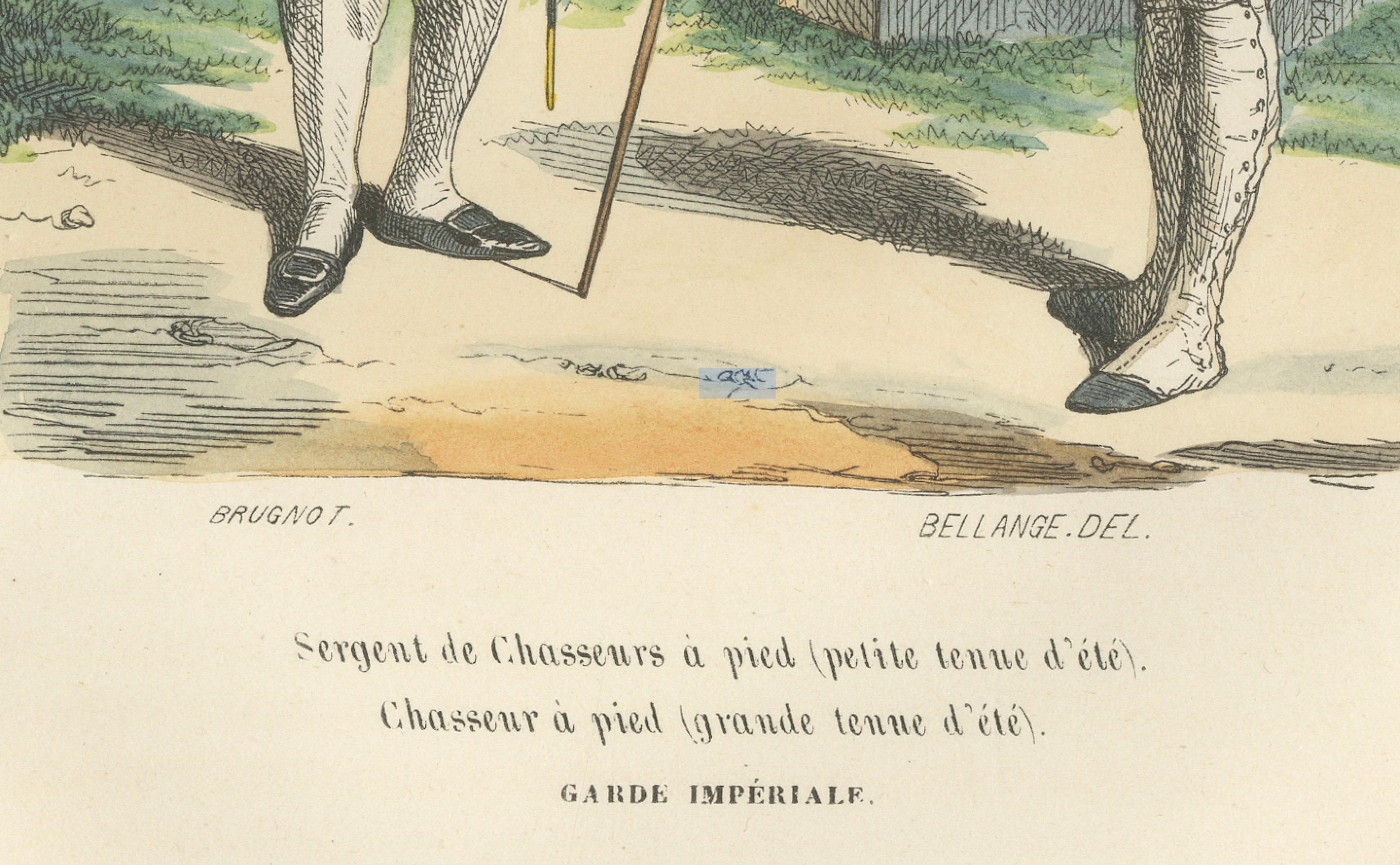
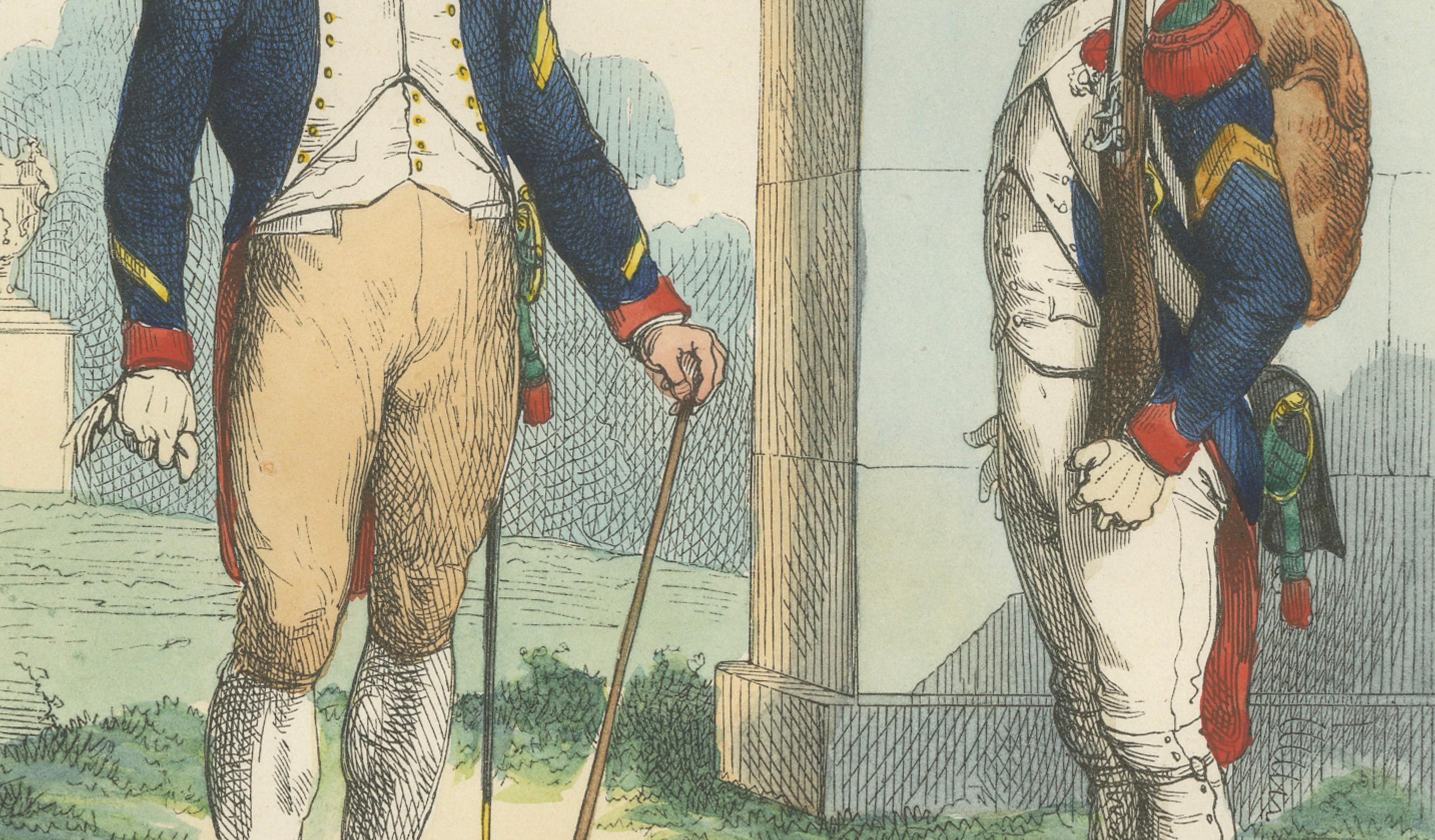
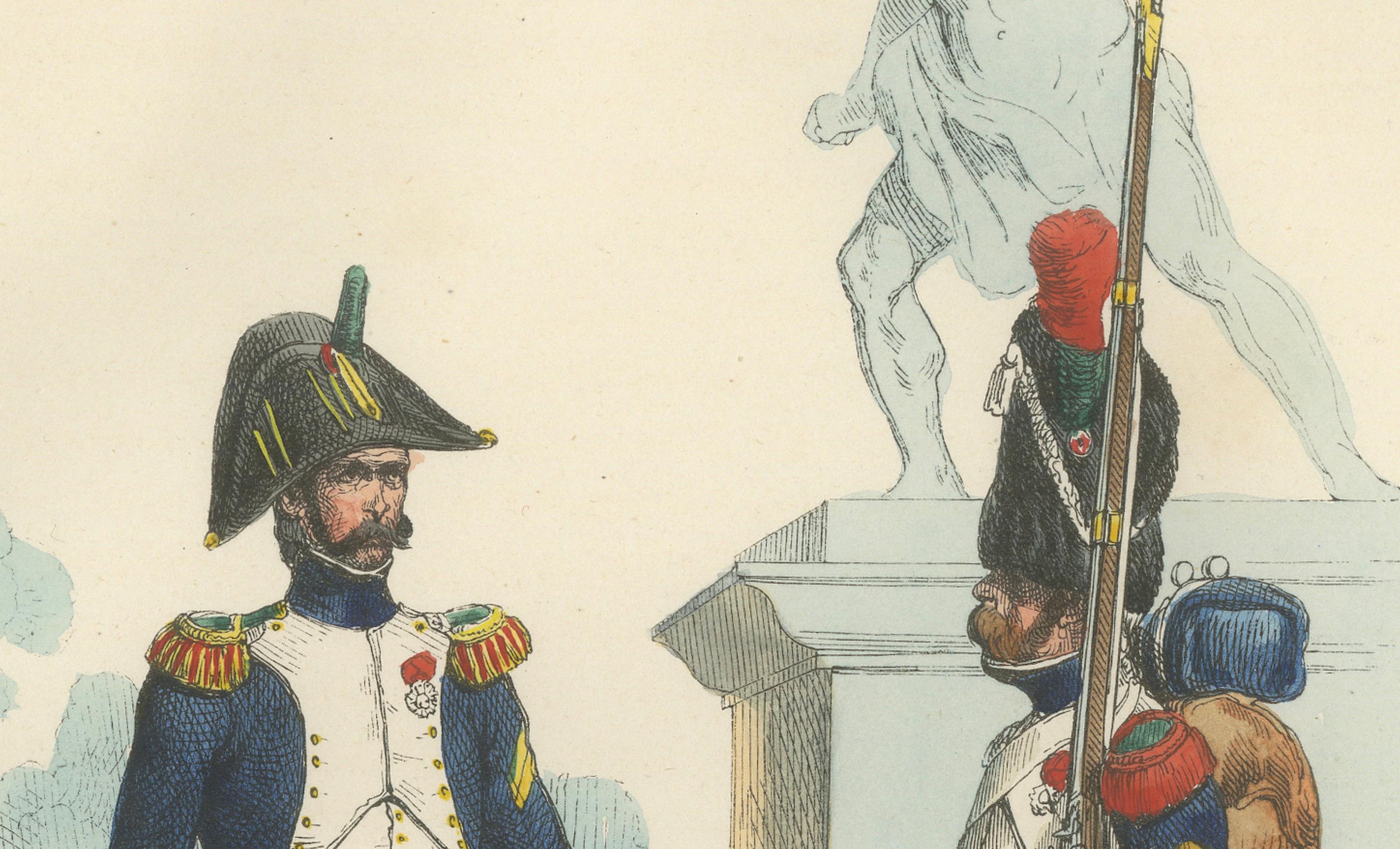
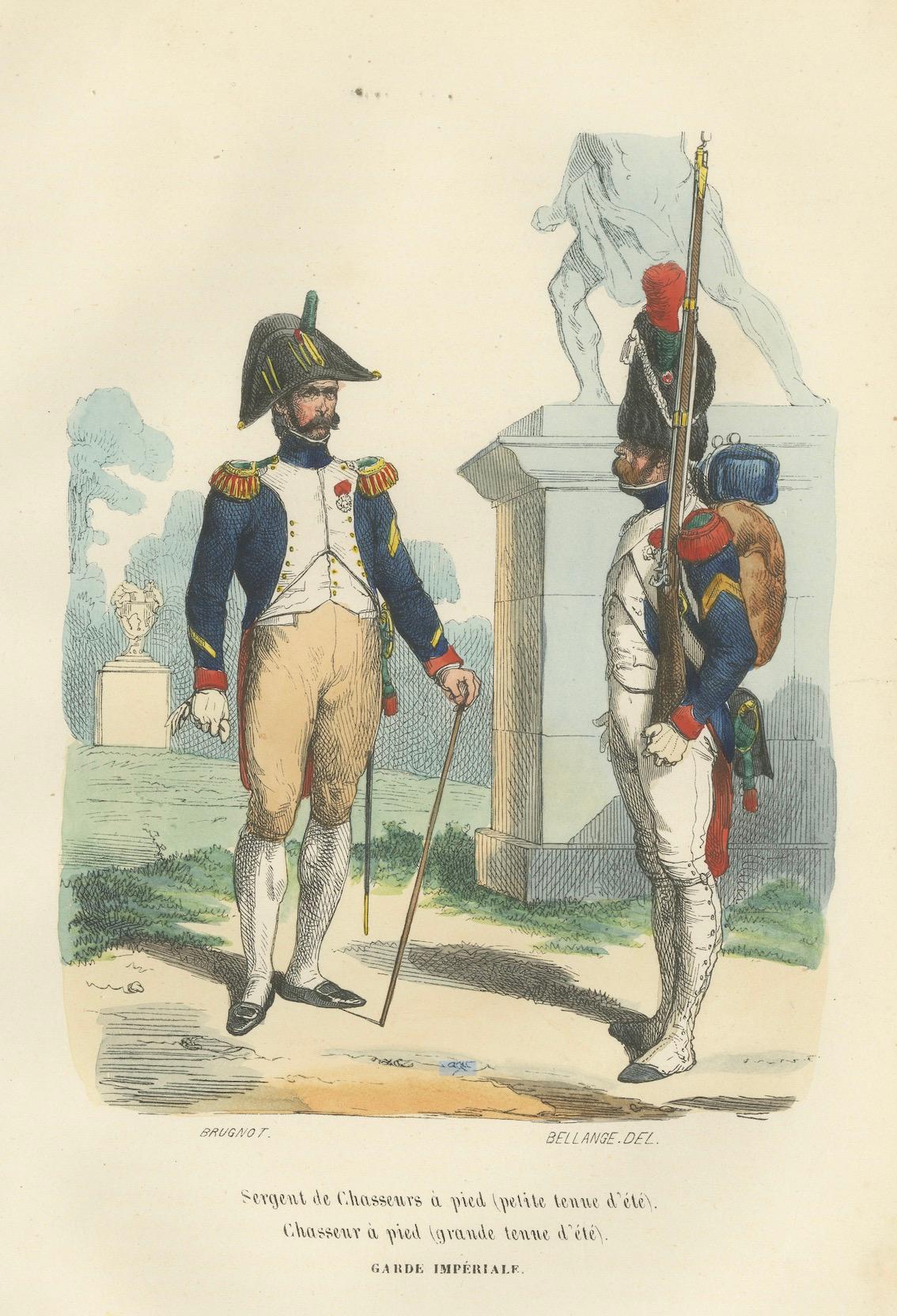
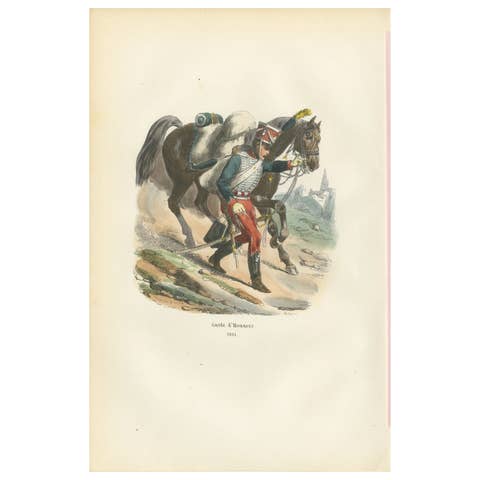
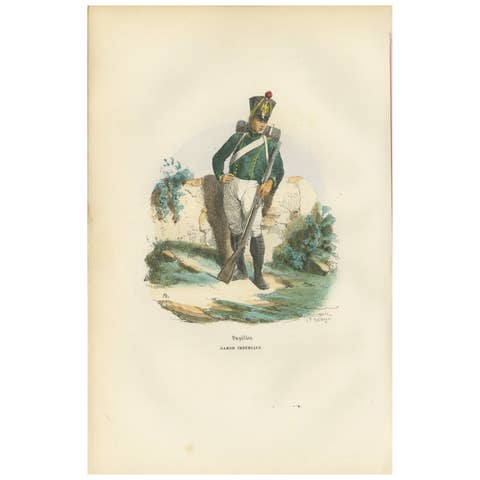
This refined military costume plate depicts two ranks of Napoleon Bonaparte’s elite Chasseurs à pied of the Imperial Guard, shown in summer dress and published in Paris in 1843. The figures represent a sergeant in light summer tenue and a private in full summer uniform, emphasizing the distinction of rank through subtle variations in posture, accoutrements, and tailoring.
The Chasseurs à pied formed one of the most prestigious infantry units of the Imperial Guard, serving as light infantry and personal protectors of Napoleon himself. Selected for their experience, discipline, and battlefield merit, these soldiers embodied the highest standards of the Napoleonic army. Unlike line infantry, Guard Chasseurs enjoyed superior pay, status, and ceremonial visibility, making them a favored subject for 19th-century military artists and collectors.
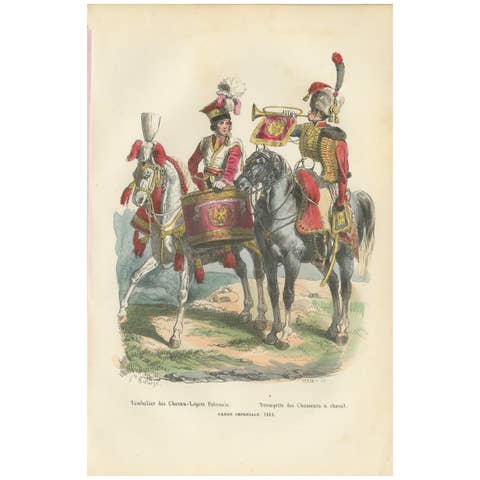
The composition is after Horace Vernet, the leading painter of Napoleonic military life, whose work defined the visual memory of the Empire. The plate is finely engraved and delicately hand-colored, capturing precise uniform details such as epaulettes, shakos, cartridge boxes, and weapons. The setting, with classical statuary and landscaped grounds, reinforces the ceremonial and symbolic role of the Imperial Guard rather than a battlefield scene.
It is important to note that this plate does **not** depict Dutch troops of the Imperial Guard. Dutch soldiers are explicitly identified in the series by the designation “Hollandais,” most notably in plates of the 3rd Regiment of Foot Grenadiers. This example represents the French core of Napoleon’s Guard and stands as a quintessential image of Imperial military prestige.
Highly sought after by collectors of Napoleonic history, military costume, and Imperial Guard material, this print offers both historical accuracy and strong decorative appeal, suitable for study, framing, or inclusion in a focused Guard collection.
Condition Report
Good overall condition. Light age toning to the sheet, with scattered minor foxing consistent with age. Margins ample. Original plate mark visible. No significant tears or losses.
Framing Tips
This print presents beautifully in a dark wood or black frame with a wide off-white or light grey mat. A double mat with a subtle blue or olive inner line echoes the uniform colors and enhances the formal, museum-style appearance.
Technique: Hand-colored engraving
Maker: After Horace Vernet, France, published Paris, 1843