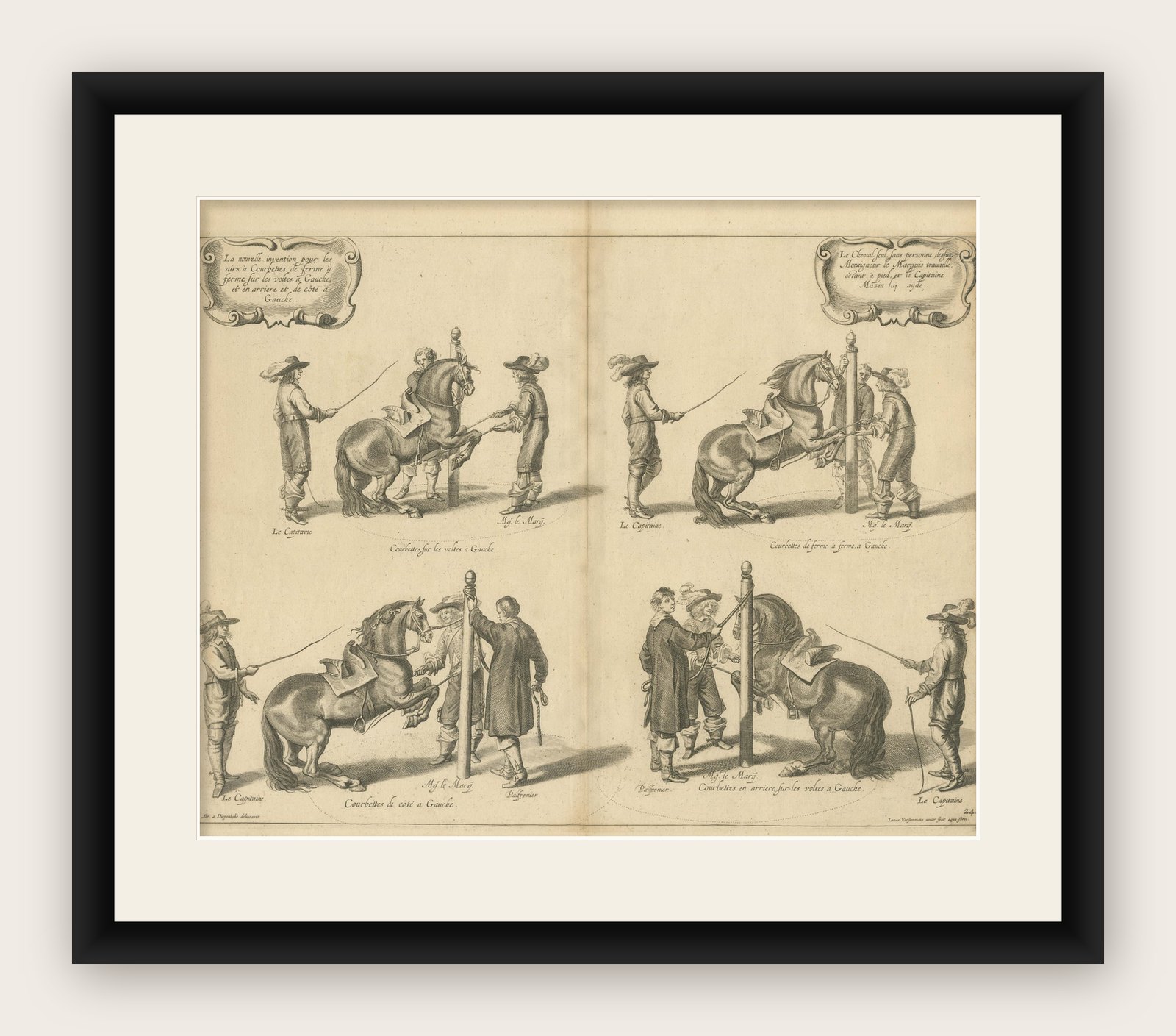
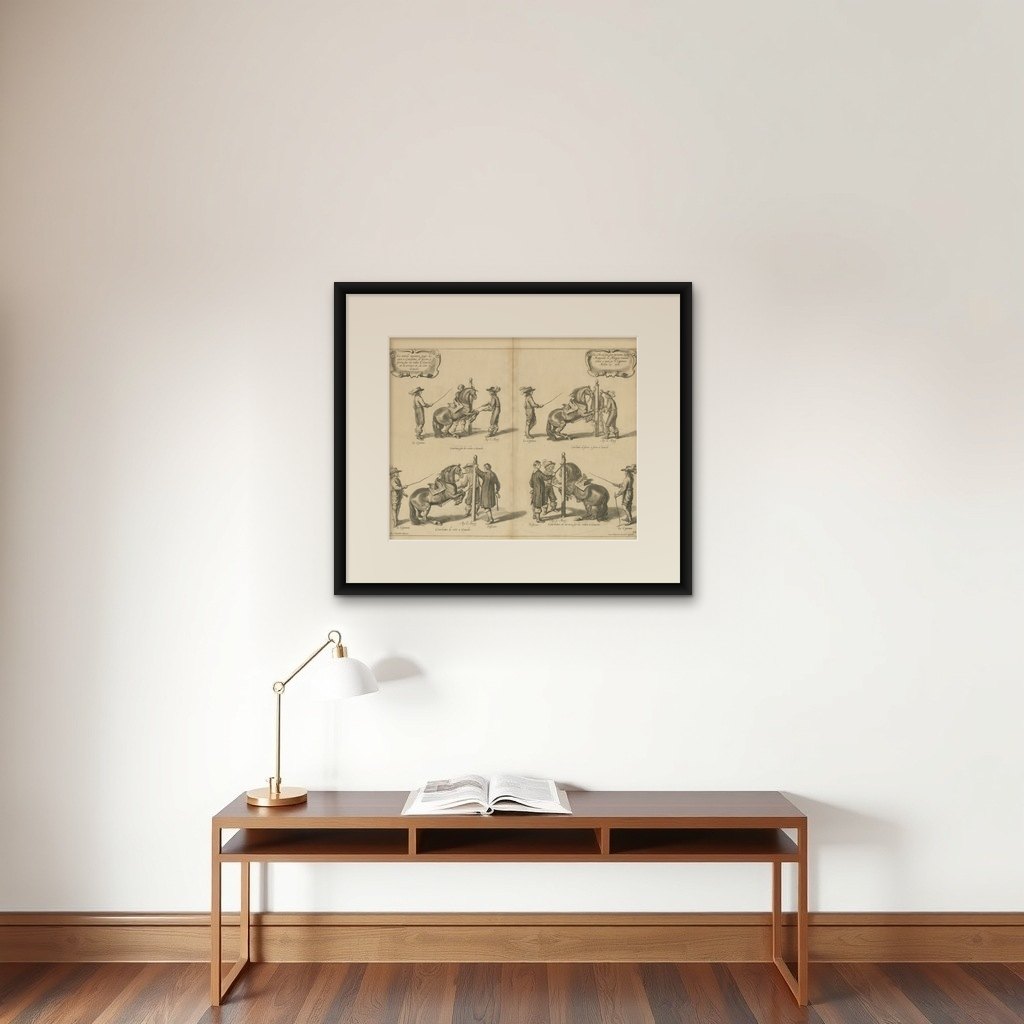
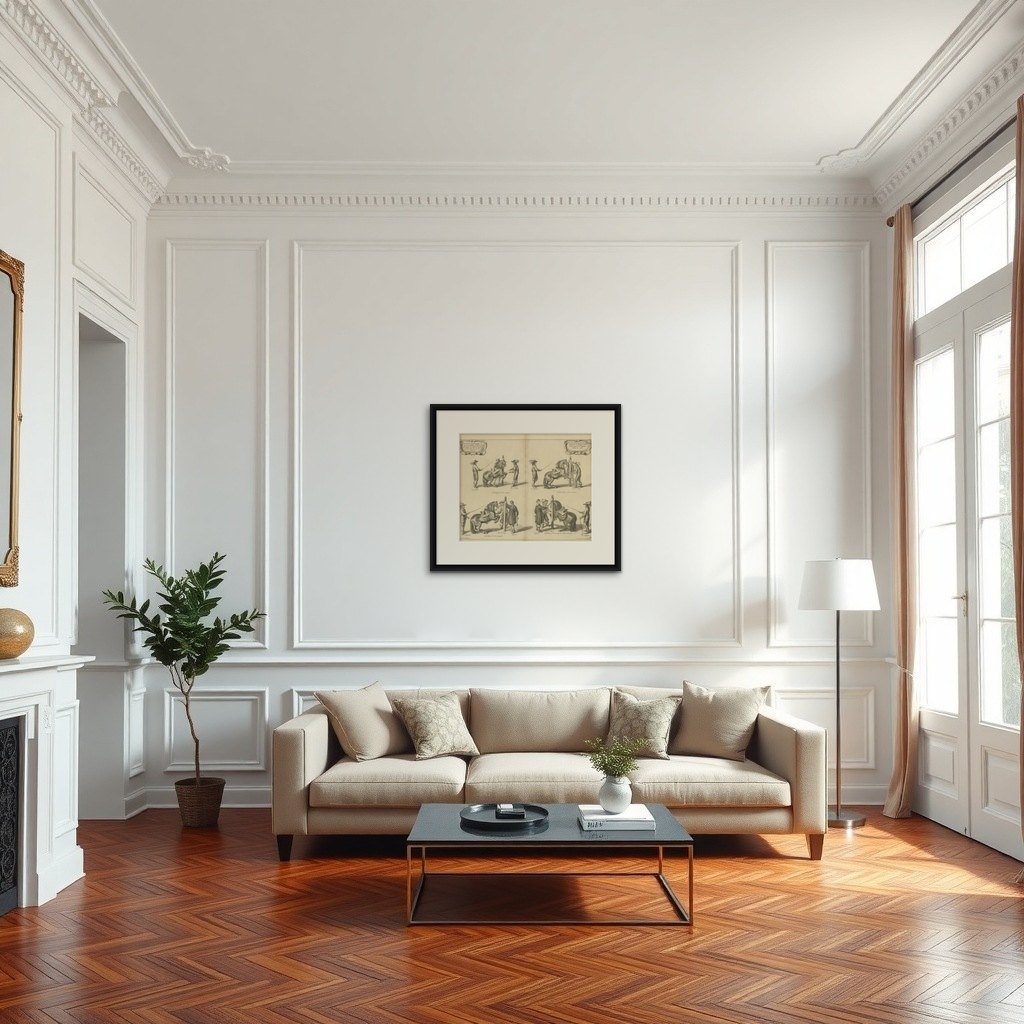
Equestrian Engravings of Cavendish's General System of Horsemanship, 1743
€ 860
Original antique · The actual sheet photographed · Certificate of authenticity on request · Sold unframed · Worldwide shipping from € 15 (rates)
Date
1743
Sheet size
44 × 53 cm (17.3 × 20.9 in)
Condition
Good
Reference
BG-13626-2
What the condition grades mean
Excellent
Bright and clean, with no faults worth mentioning.
Very good
Only light signs of age, such as faint toning.
Good
Normal signs of age for a sheet of this period: toning, some foxing, small marks or neat old repairs.
Fair
Clear faults such as staining, tears or repairs, priced to match.
Every fault we see is written in the condition note, and the whole sheet is shown uncropped in the photos.
Condition
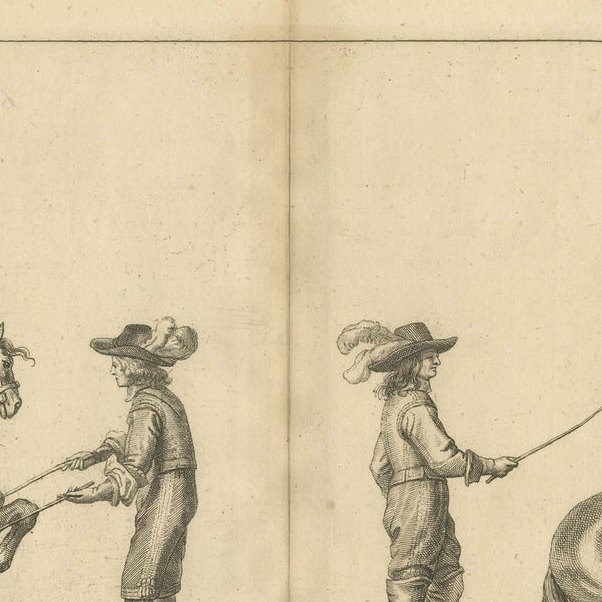
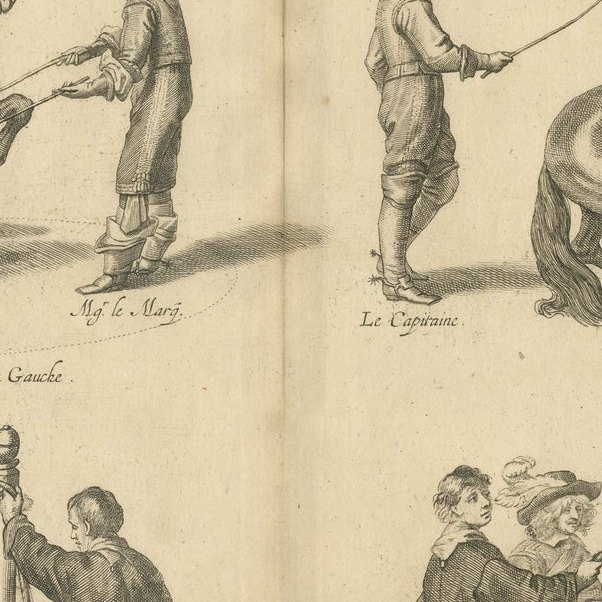
Good condition with minor wear from handling. Split in the middle from the original publication and minor soiling or browning, mostly around the edges outside the plate mark. Please review the images for further condition details.
About this sheet
Plate 24 from "A General System of Horsemanship in All Its Branches," (La Methode et Invention nouvelle de Dresser les Chevaux). William Cavendish Duke of Newcastle's work on equestrian training and dressage, one of the finest seventeenth century illustrated books of horses.
William Cavendish Duke of Newcastle (1592 – 1676) an affluent politician, soldier and royalist, fought for Charles I during the English Civil War. He established a riding school in Antwerp with several Barbary horses obtained in Paris, and in 1657, published his influential work on equestrian training techniques, "A General System of Horsemanship in All Its Branches", "La Methode et Invention nouvelle de Dresser les Chevaux". This work contained beautiful illustrations of Cavendish training and skilfully riding his horses at his Antwerp ménage and his various English estates like Welbeck Abbey and Bolsover Castle.
Lucas Vorsterman (1595-1675) was a Flemish engraver, active in Antwerp. He worked in Pieter Paul Rubens' studio from c. 1617 and soon became the painter's primary engraver. Rubens was a very demanding employer and got in a fight with Vorsterman, after having fired many of the other engravers resulting in more pressure landing on Vorsterman's shoulders. In 1624 Vorsterman moved to England, working for patrons such as Thomas Howard, 2nd Earl of Arundel and Charles I of England, before returning to Antwerp 1630. Back in Antwerp he collaborated with Anthony Van Dyck, for example on the publication of artists' portraits in "Iconographie".
Abraham van Diepenbeeck (1596 - 1675) was a Flemish painter, glass-painter and designer of prints and tapestries. He was a pupil and assistant of Peter Paul Rubens. He worked in 's-Hertogenbosch, Antwerp, and in the early 1630s in Paris.