About this sheet
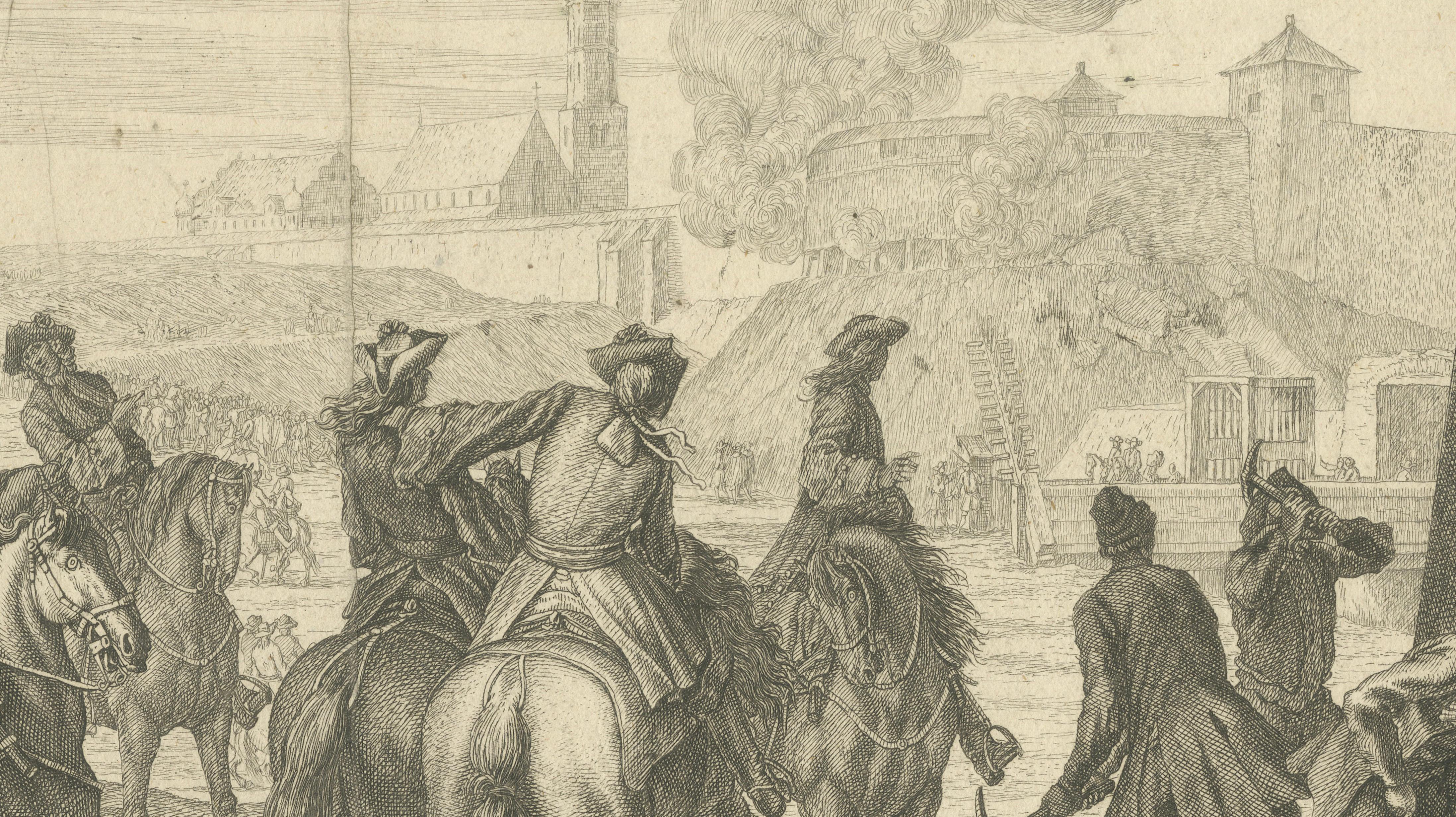
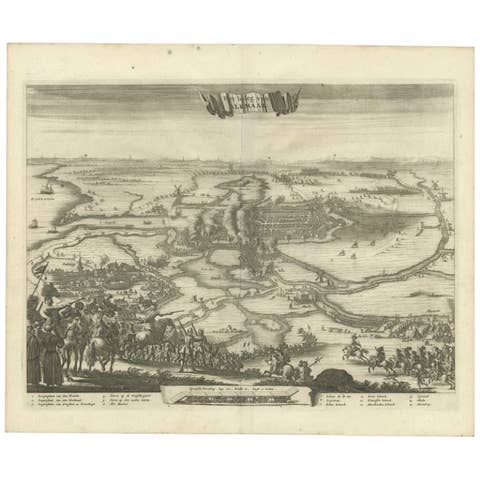
Battle of Augsburg 1703 – Bavarian Succession War, Rugendas Engraving
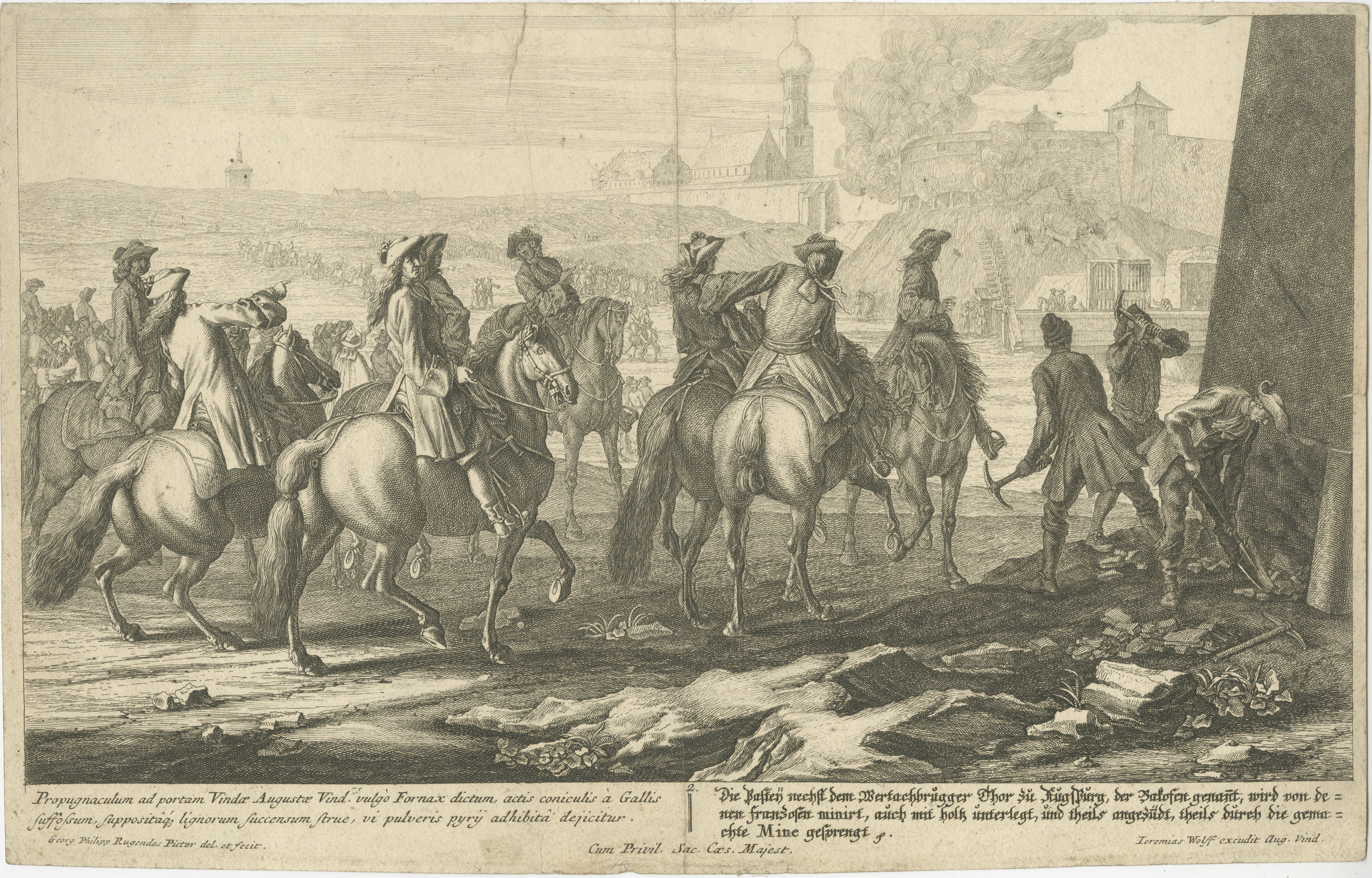
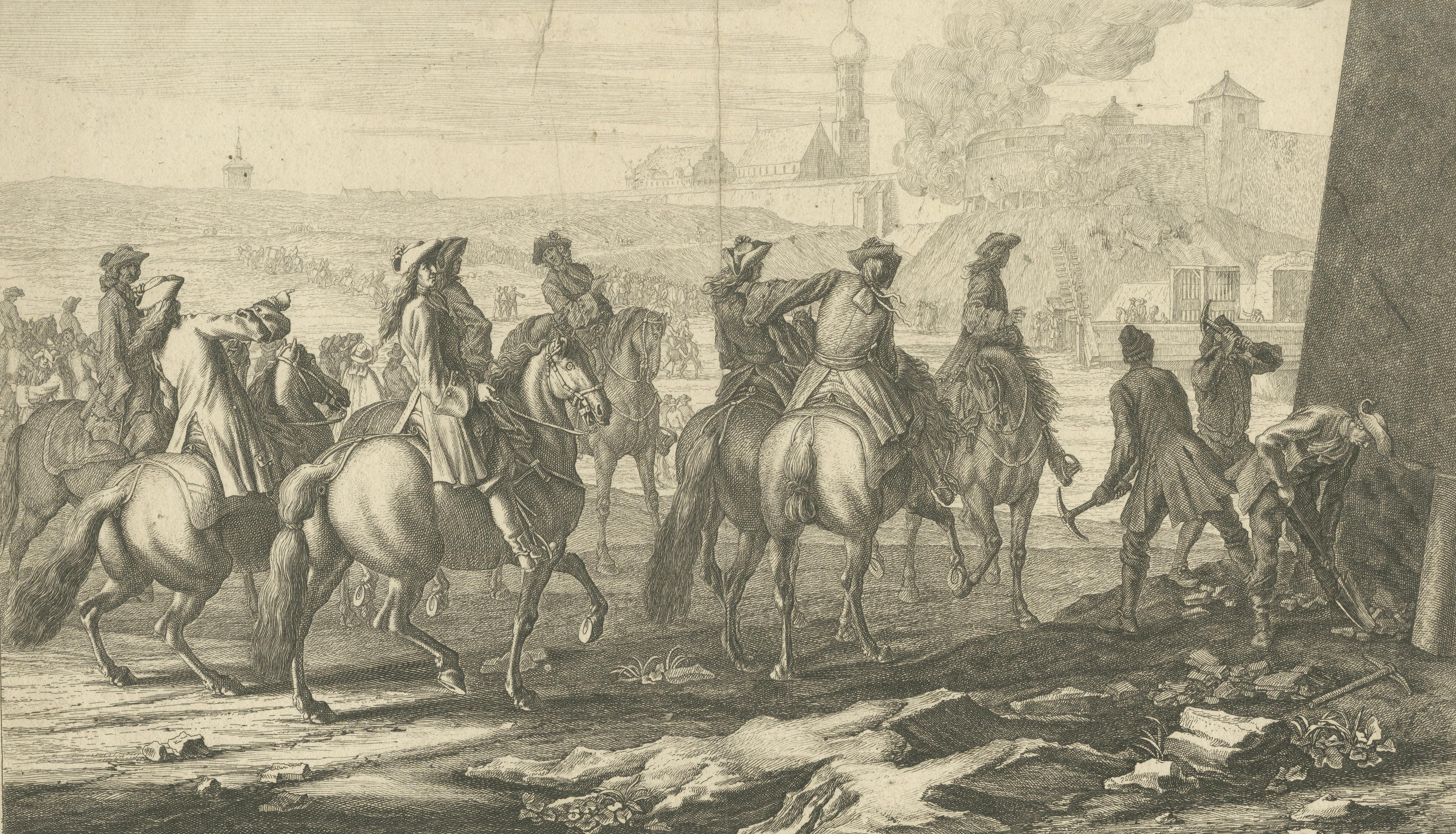
This large and finely executed engraving depicts the dramatic assault on Augsburg in 1703, during the War of the Spanish Succession. The scene shows the moment of attack as French and Bavarian forces advance against the fortified city, with cavalry officers in the foreground, infantry formations in motion, and smoke rising from the breached defenses in the background.
The composition is characteristic of early 18th-century German battle engravings, combining documentary intent with strong narrative drama. Rugendas presents the action from a slightly elevated viewpoint, allowing the viewer to read the scene in layers: mounted commanders directing the attack, foot soldiers advancing under fire, and the city’s fortifications under assault. The architectural details of Augsburg, including towers and defensive works, anchor the scene firmly in place, while the animated figures and dynamic horse poses lend the image a sense of immediacy and movement.
This print relates to the 1703 campaign in which Augsburg was attacked by the combined French and Bavarian army as part of Louis XIV’s broader military strategy in southern Germany. Although later bound into the Augsburg publication “Vorstellung einige conquestes Ludovici XIV,” issued around 1720, the engraving itself appears to have been produced separately and added to the volume, rather than conceived as part of the original core series.
Artistically, the sheet is a strong example of Georg Philipp Rugendas’ mature battle style, with confident line work, carefully modelled horses, and dense, energetic crowd scenes. The engraving was printed on verge-type hand-laid paper, and the presence of a watermark confirms its early 18th-century origin. Today, the print appeals equally to collectors of military history and to interior designers seeking a large-scale, monochrome historical image with depth and gravitas.
Condition report:
Engraving and etching on verge-type hand-laid paper with visible watermark. Overall light age toning, with vertical fold lines from early binding. Minor edge wear and small handling marks consistent with age. Impression remains clear and well-inked, with strong detail throughout.
Framing suggestions:
Particularly effective when float-mounted to reveal the deckled edges and watermark. A natural oak, walnut, or dark-stained frame with an off-white or light grey mat will complement the tonal range of the engraving. Museum glass recommended.
Technique: Engraving and etching
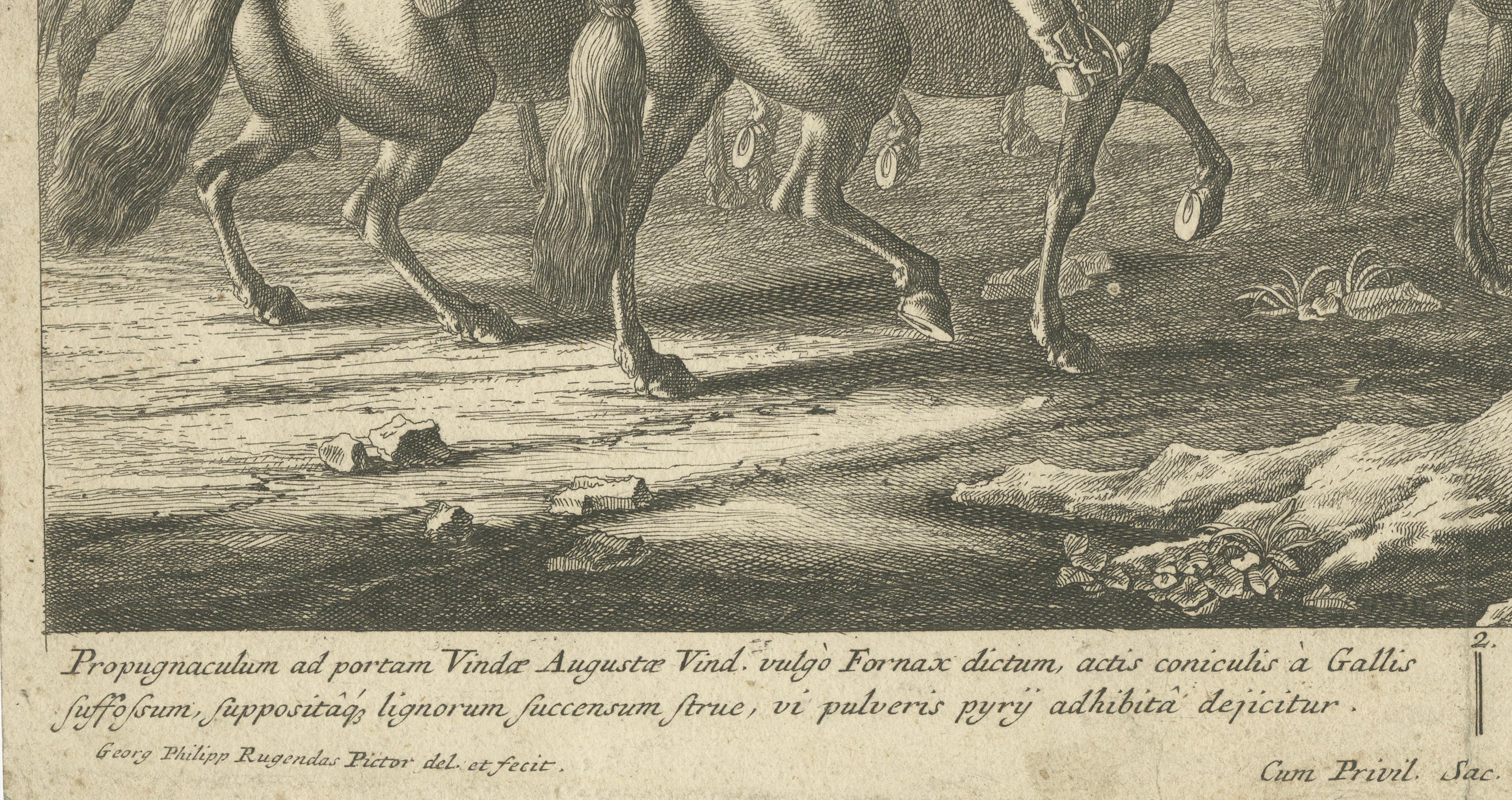
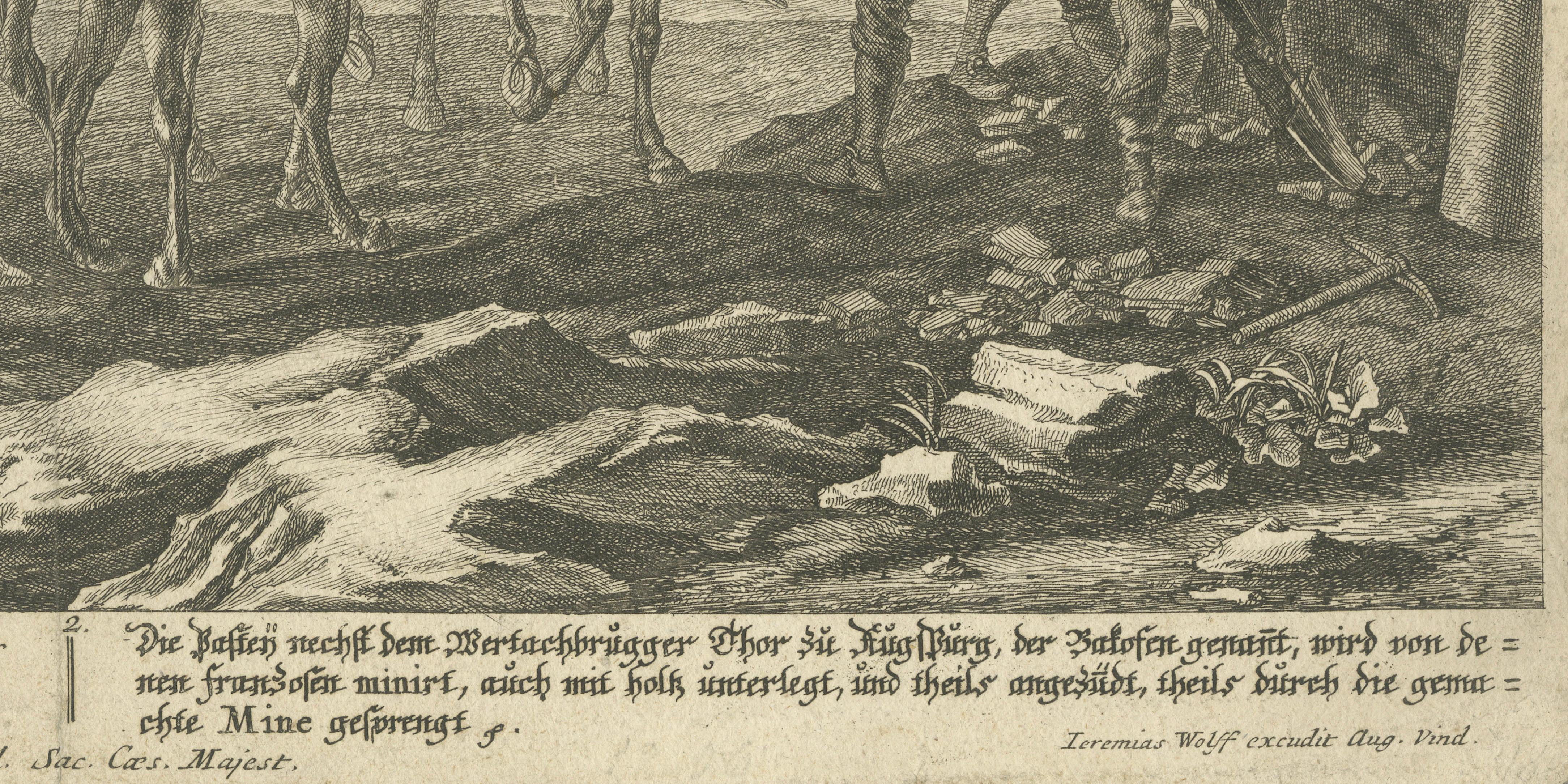
Maker: Georg Philipp Rugendas, Augsburg; published by Jeremias J. Wolff, ca. 1720