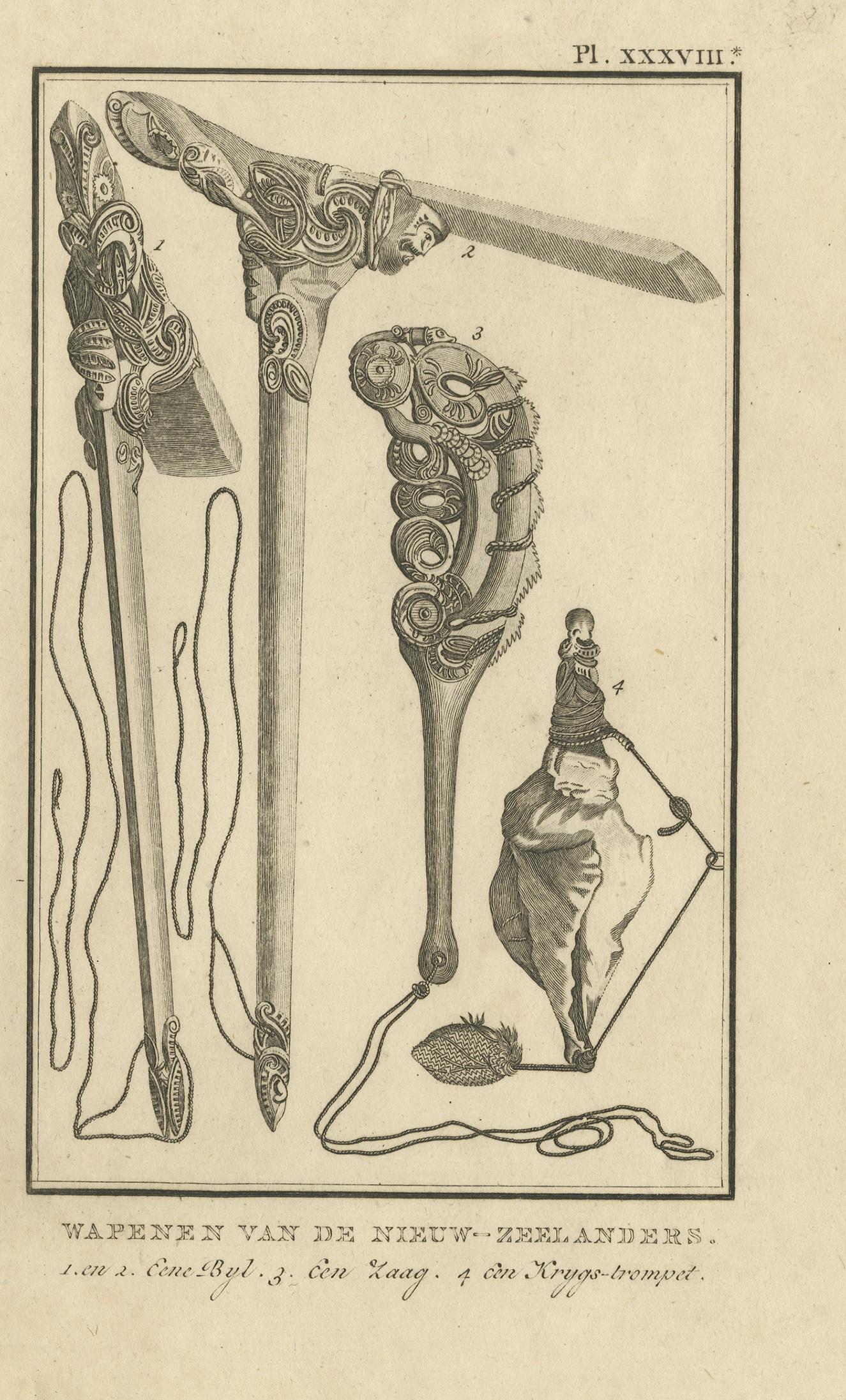
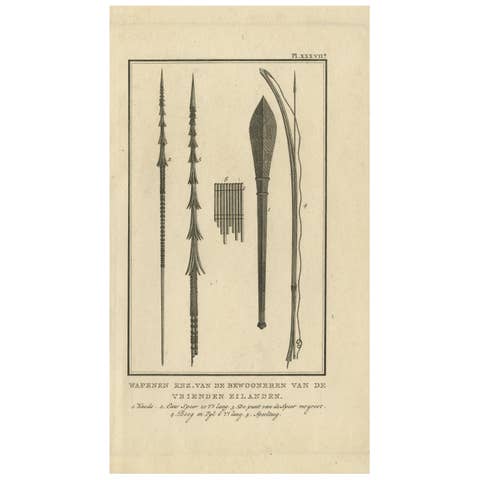
Antique Print Depicting Weapons of the New Zealand Inhabitants by Cook, 1803
€ 96
One of a kind: this is the sheet in the photographs. Ships from Langweer, the Netherlands.
Date
1803
Mapmaker / artist
J. Cook (Author)
Technique
Engraved
Sheet size
24.5 × 13.5 cm (9.6 × 5.3 in)
Condition
Good
Reference
BG-11487-173
Condition
Few tears, lower left corner. General age-related toning, please study images carefully.
About this sheet
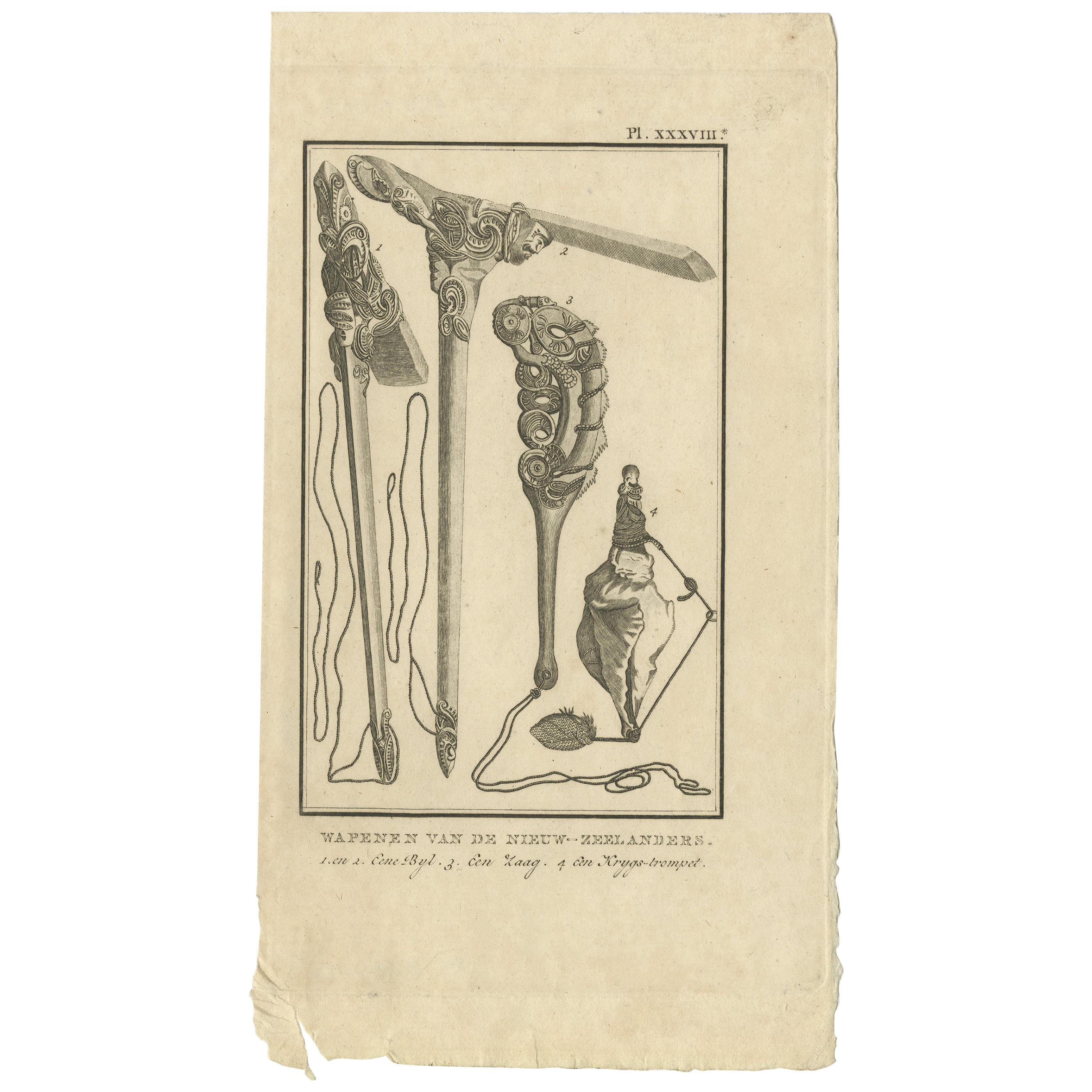
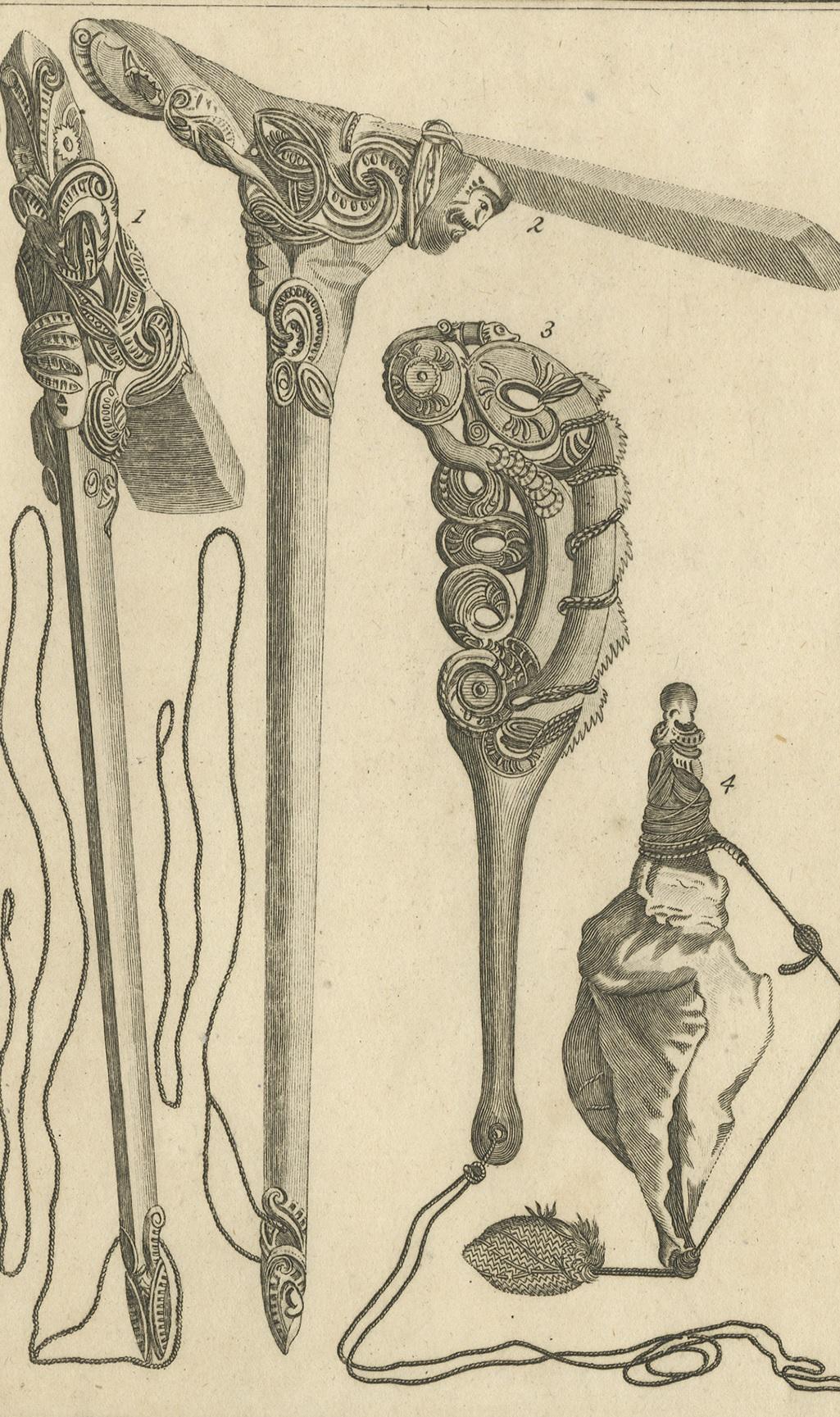
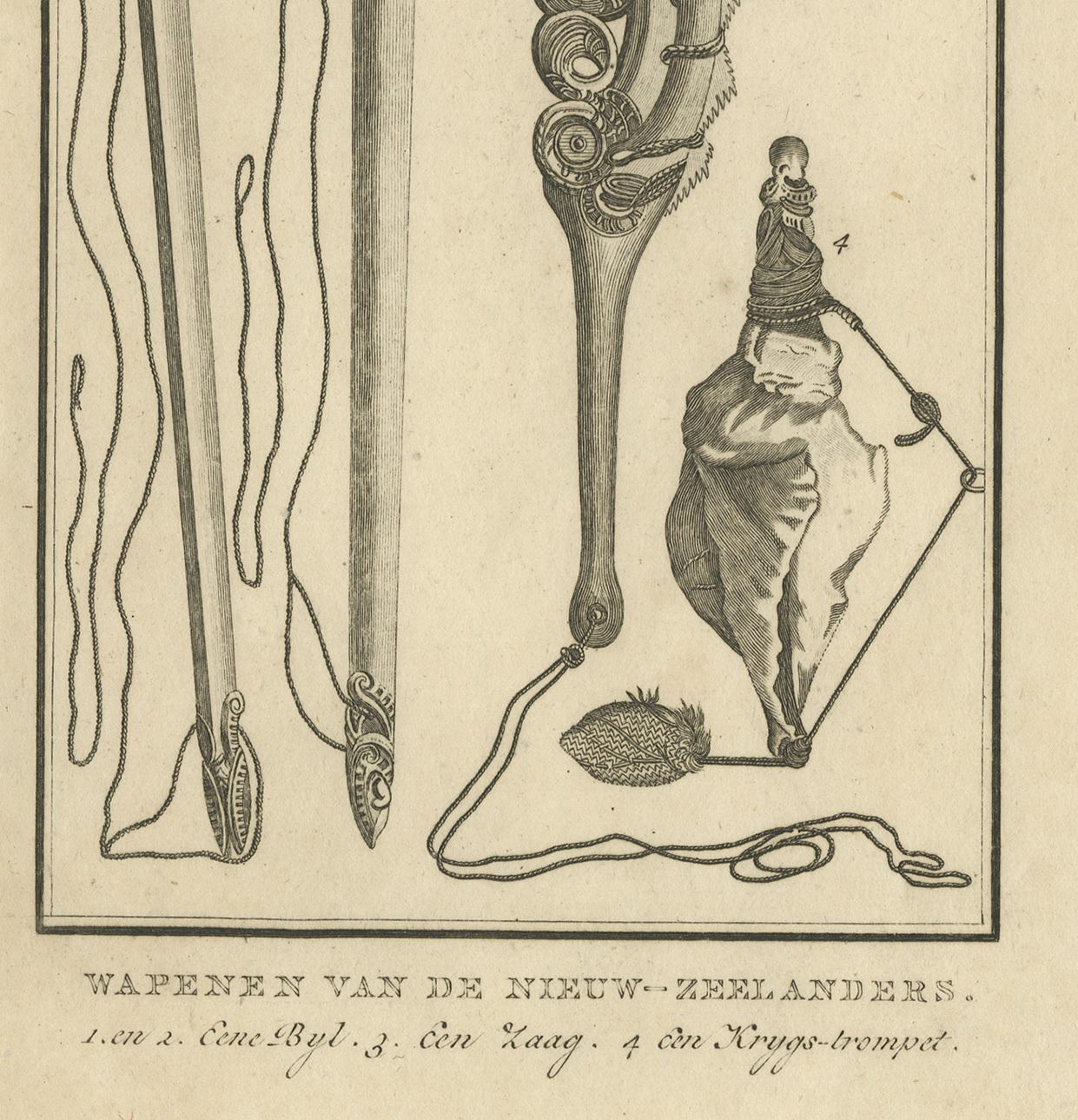
Antique print titled 'Wapenen van de Nieuw-Zeelanders'. This print depicts various Weapons from New Zealand. Originates from 'Reizen Rondom de Waereld door James Cook (..)'. Translated by J.D. Pasteur. Published by Honkoop, Allart en Van Cleef. The antique print titled 'Wapenen van de Nieuw-Zeelanders' presents a fascinating array of weaponry originating from New Zealand, offering a glimpse into the indigenous arms used by the Maori people. This visual treasure is traced back to the work 'Reizen Rondom de Waereld door James Cook (...)' and finds its translated publication under J.D. Pasteur, brought to life by the publishers Honkoop, Allart, and Van Cleef.
The print showcases a diverse collection of traditional Maori weapons, each meticulously detailed to illustrate their distinctive features and purposes. Among these artifacts, one might expect to encounter the iconic taiaha—a long-handled weapon with a pointed head and carved designs, symbolizing both a weapon and a status symbol in Maori culture. Additionally, the mere, a short, broad-bladed weapon, might be displayed, renowned for its multifunctional use in combat.
Other implements depicted could include the patu, a short-handled weapon characterized by its broad, flat blade, and the intricately designed mere pounamu, crafted from the esteemed greenstone (pounamu), revered for its spiritual significance among the Maori people.
The print likely offers a visual narrative, illustrating the craftsmanship, cultural significance, and varied forms of weaponry employed by the indigenous Maori warriors, shedding light on their martial traditions and historical practices.
As an artifact from 'Reizen Rondom de Waereld door James Cook (...)' and translated by J.D. Pasteur, this print serves as a testament to the meticulous documentation and appreciation of indigenous cultures, enabling viewers to appreciate the ingenuity and artistry behind Maori weaponry while preserving a vital aspect of New Zealand's rich cultural heritage.