18th Century Engraving Neoclassical Fortified Gateways by Neufforge, Circa 1770
€ 380
One of a kind: this is the sheet in the photographs. Ships from Langweer, the Netherlands.
Date
1770
Sheet size
40.5 × 26 cm (15.9 × 10.2 in)
Condition
Good
Reference
BG-13610-2
Condition
The print is good condition, with clear lines, legible text, and minimal discoloration or damage. It’s well-preserved, with no visible restorations.
About this sheet
The engraving is from the Jean-François de Neufforge's collection "Recueil élémentaire d'architecture," which was an influential publication in the 18th century that detailed various architectural elements and designs. Neufforge was a Flemish engraver, architect, and publisher, and his works are known for their precise and detailed representations of architectural plans, elevations, and details.
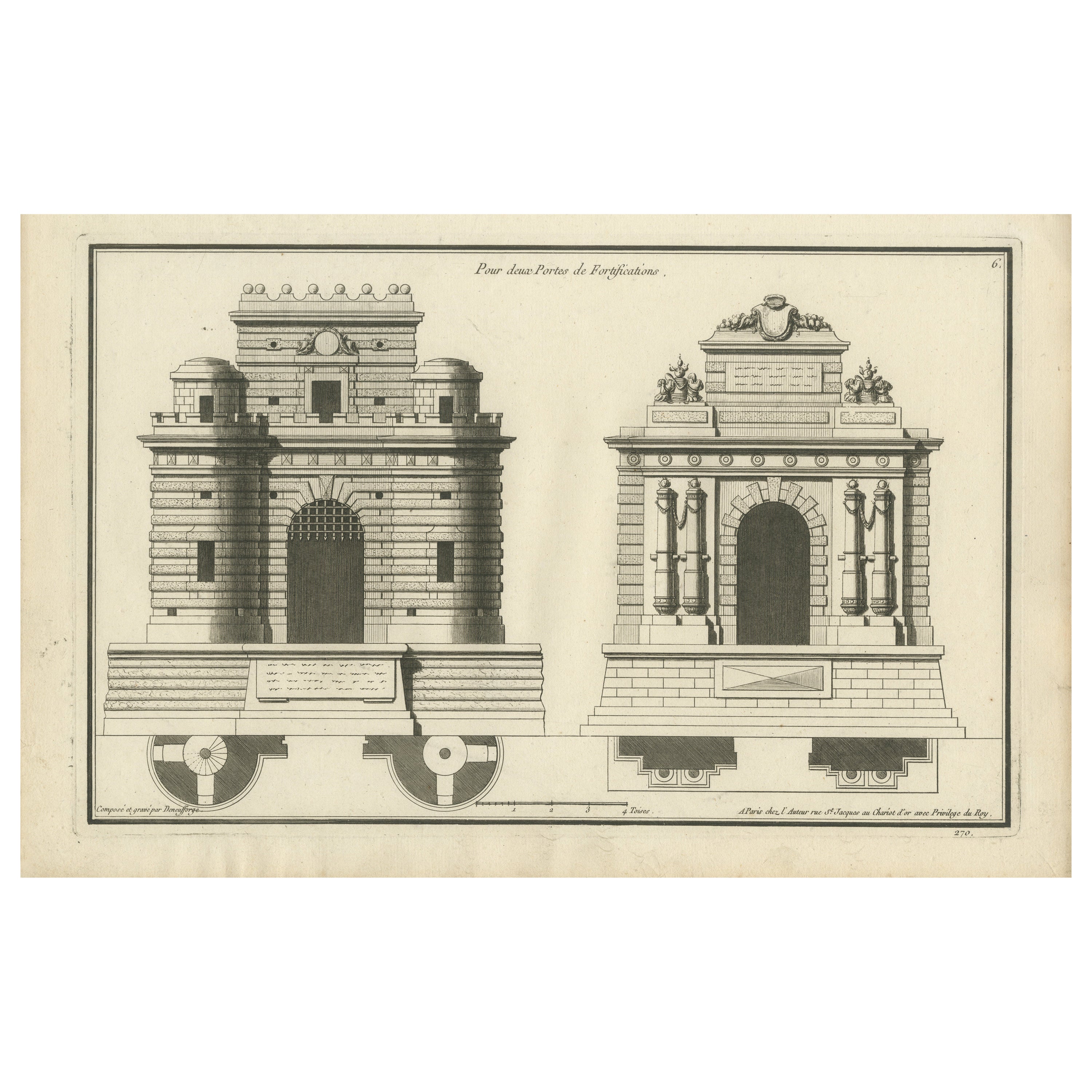
This particular engraving shows two designs for "Portes de Fortification," which means "Gates of Fortification." These designs were likely intended as proposals for city gates or entrances to fortified structures. They are depicted in a side-by-side format for comparison.
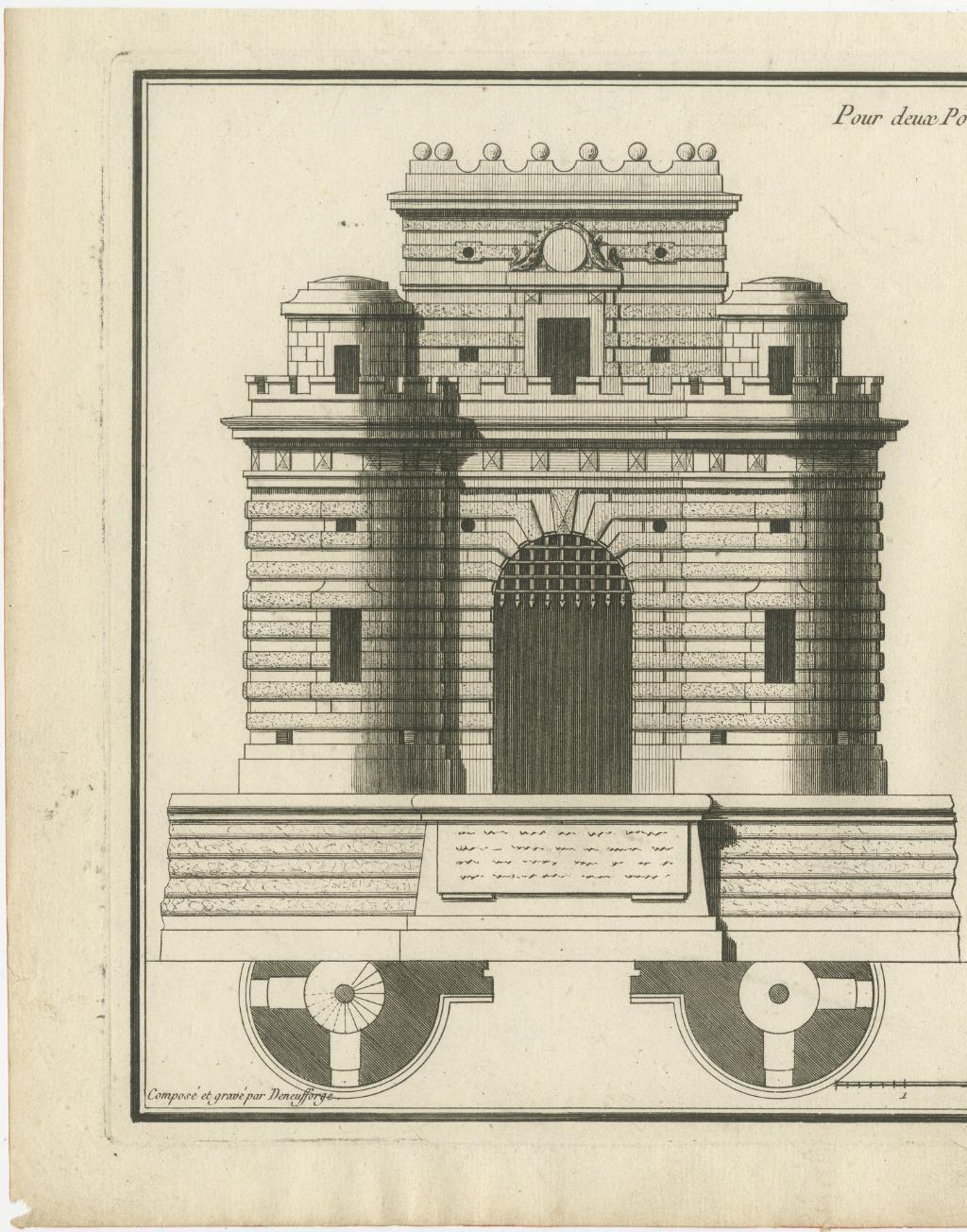
The left design features a more robust and heavy structure with a central arched gateway flanked by projecting bastions or towers. The towers are topped with what appears to be crenellations or battlements, which would be consistent with military architecture of the period. There is also a round detail above the arch that might represent a clock or an emblem.
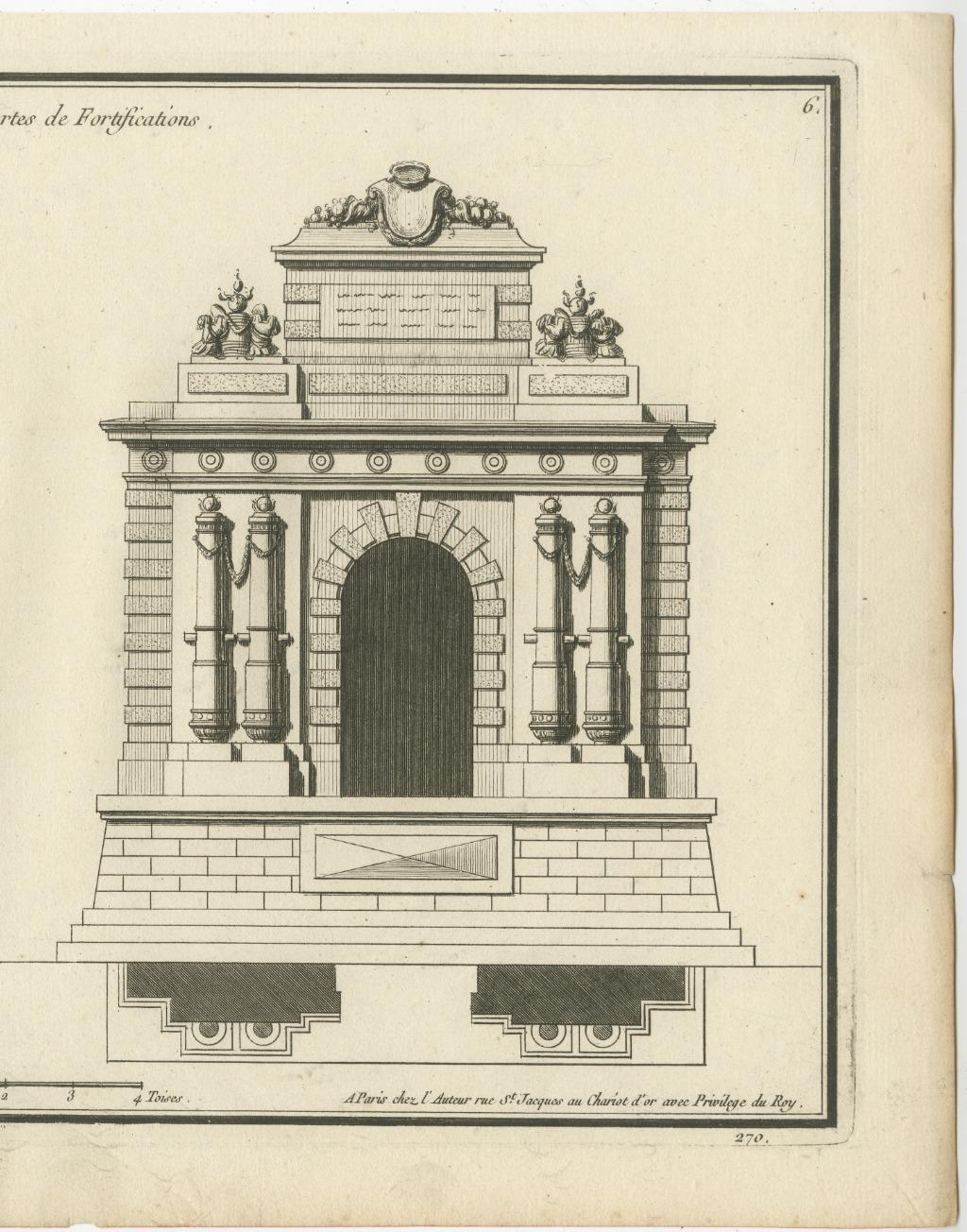
The right design is somewhat simpler and more classical in its architecture, with a clean rectangular gateway and a pair of columns on either side. This design features less of the heavy fortification and more decorative elements, like vases and statuary atop the structure, which suggests a blend of defensive and ornamental purposes.
Both sections of the engraving show the façades of the gates as well as cross-sectional views below, which provide insight into the thickness of the walls and the foundations. These cross-sections are key for understanding the engineering and construction techniques of the time.
The engraving is detailed and precise, typical of Neufforge's work, which was used as a reference for architects and craftsmen. It reflects the classical influences of the time and the transition towards more ornamental and symbolic architecture in the period leading up to the neoclassical movement.