Detailed Study of the Housefly: Anatomy Under the Microscope, Bertuch, 1805
€ 160
One of a kind: this is the sheet in the photographs. Ships from Langweer, the Netherlands.
Date
1805
Sheet size
23 × 19 cm (9.1 × 7.5 in)
Condition
Good
Reference
BG-14000-82
Condition
Well-preserved with vibrant hand-coloring and fine details. Margins exhibit light age-related toning, and minor foxing is present. Edges are slightly worn but do not detract from the overall integrity of the engraving.
About this sheet
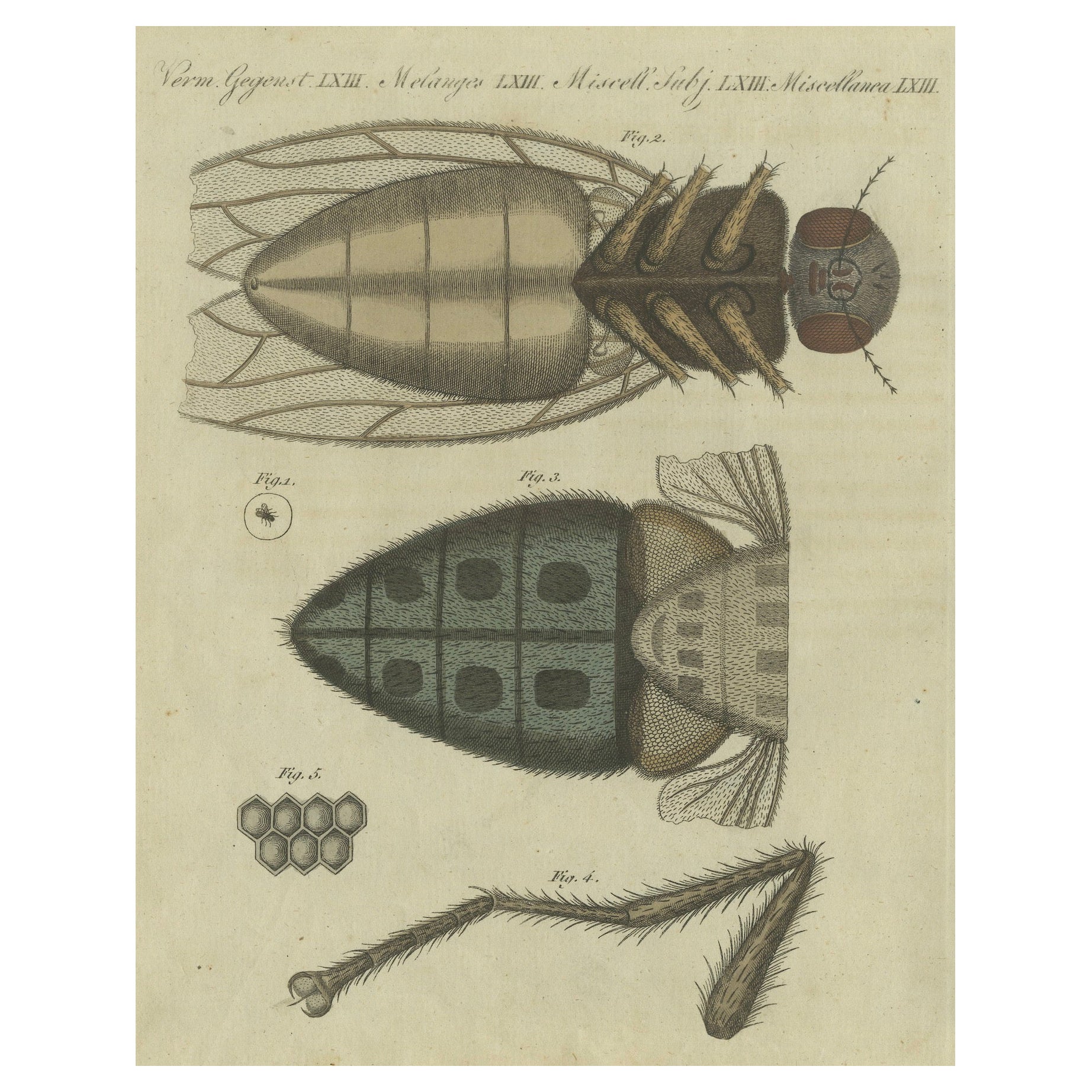
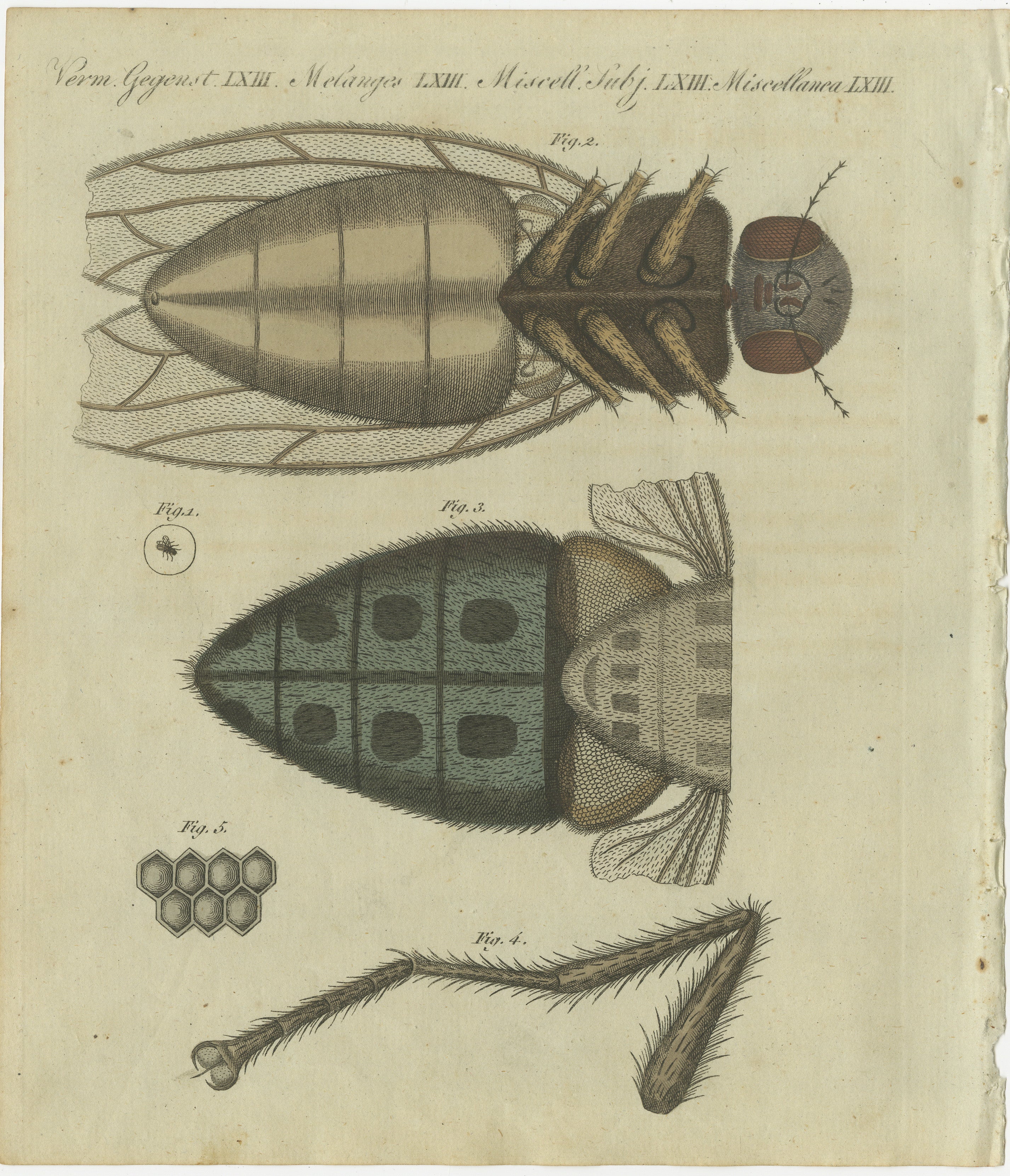
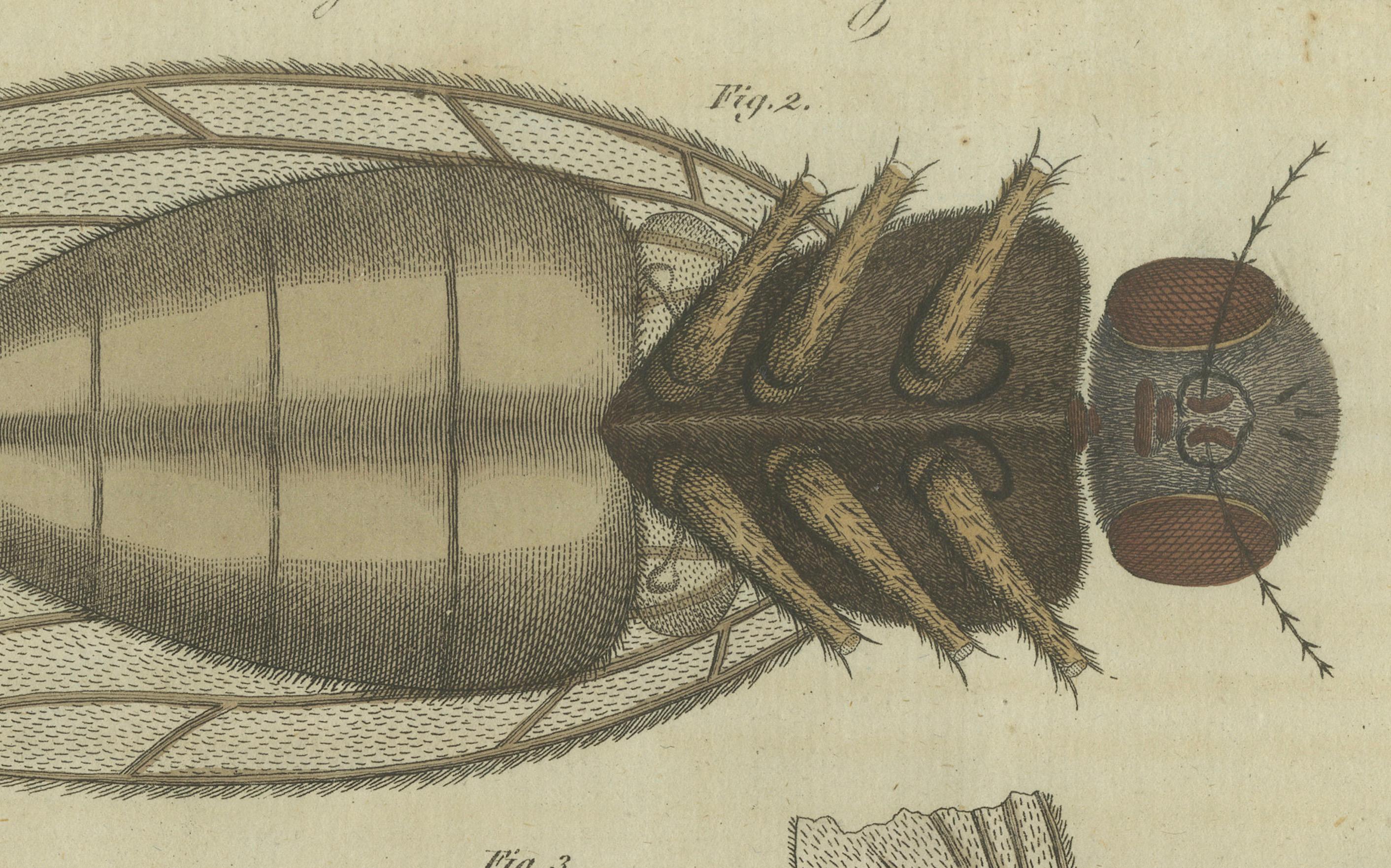
Description This fascinating hand-colored copperplate engraving presents an intricate, magnified view of the housefly (Musca domestica) as seen through a microscope. The engraving provides a meticulous exploration of its anatomy, including:
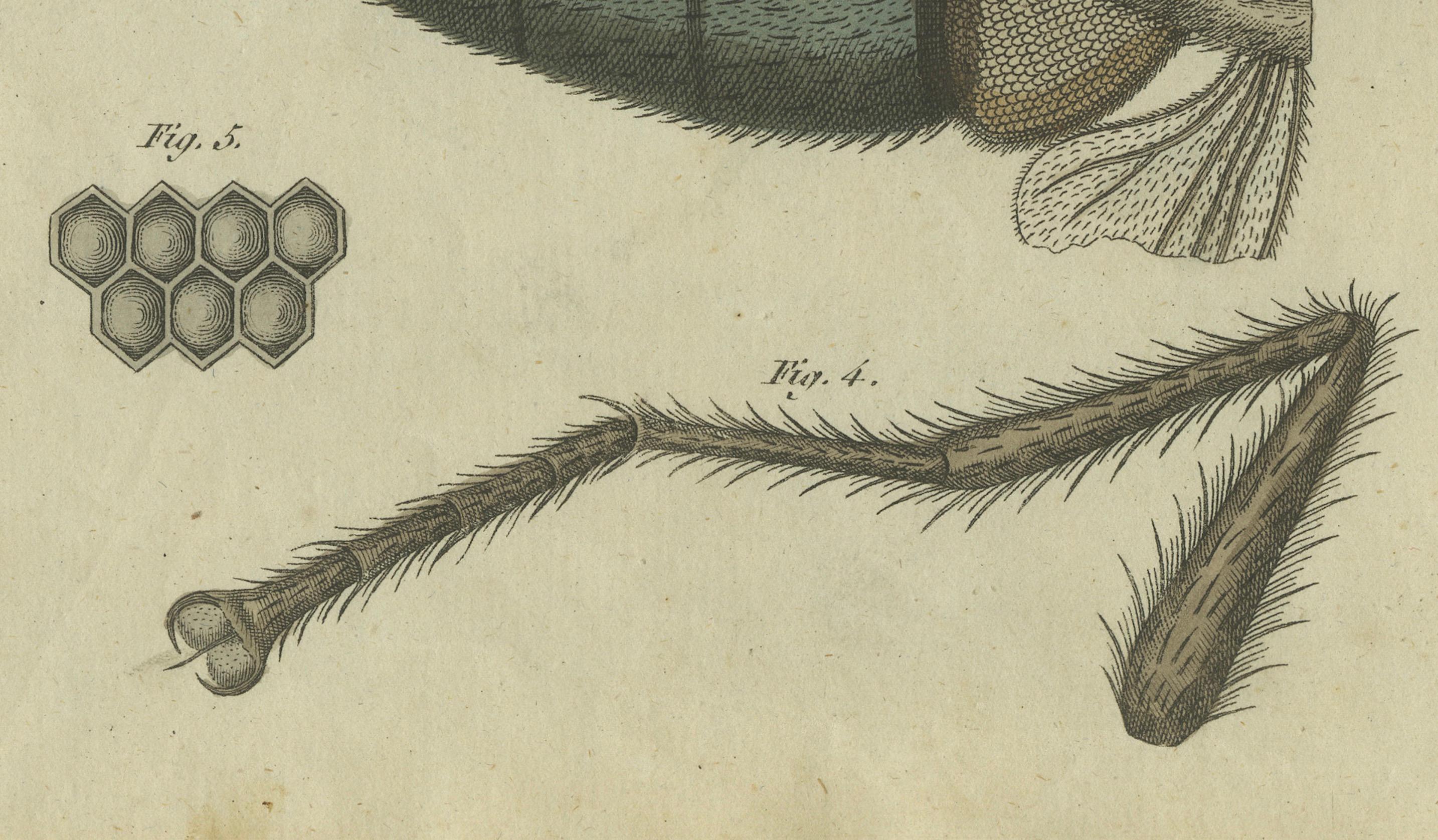
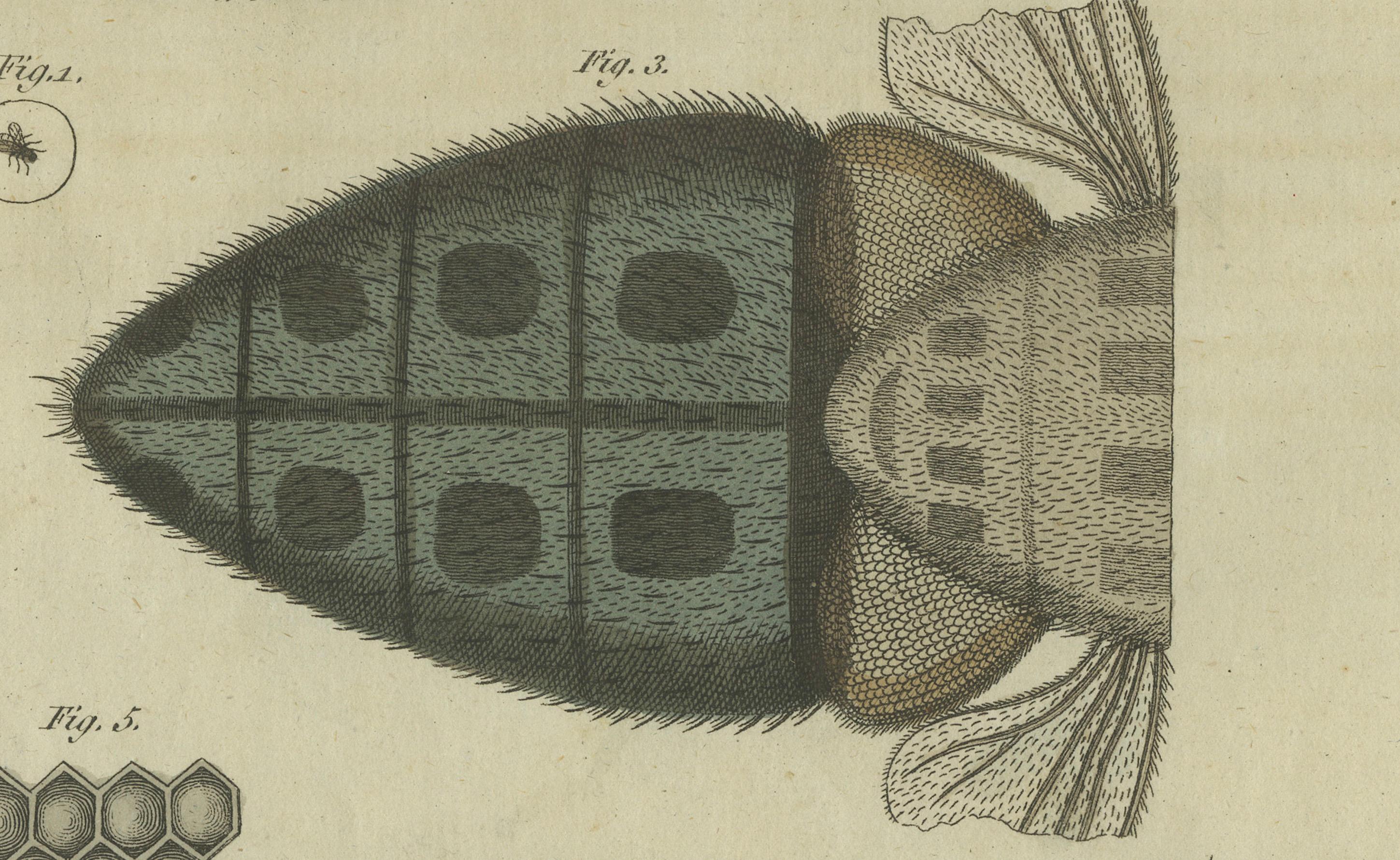
- **Figure 1**: Actual size of the housefly, offering a point of comparison to the magnified details. - **Figure 2**: A detailed underside view of the head and body, showcasing the complex structure of the fly's thorax and appendages. - **Figure 3**: A close examination of the segmented abdomen, highlighting the unique pattern and intricate venation. - **Figure 4**: The leg of the housefly, emphasizing the fine bristles and jointed segments adapted for movement and sensory functions. - **Figure 5**: A striking visualization of the compound eye, illustrating the hexagonal structure of the ommatidia, responsible for the fly's wide field of vision.
Published in 1805 as part of Friedrich Johann Bertuch’s "Bilderbuch für Kinder" (Picture Book for Children), this engraving bridges art and science, making complex biological concepts accessible and visually compelling. Bertuch, a prominent German publisher, included 1,200 plates in his groundbreaking 12-volume encyclopedia, covering natural history, science, costume, mythology, and more, from 1790 to 1830.
Condition Report Well-preserved with vibrant hand-coloring and fine details. Margins exhibit light age-related toning, and minor foxing is present. Edges are slightly worn but do not detract from the overall integrity of the engraving.
Framing Tip This engraving would shine in a minimalist frame with a neutral mat, allowing the detailed scientific illustrations and soft coloration to command attention. A museum-grade UV-protective glass is recommended to preserve the vibrancy of the hand-colored features.