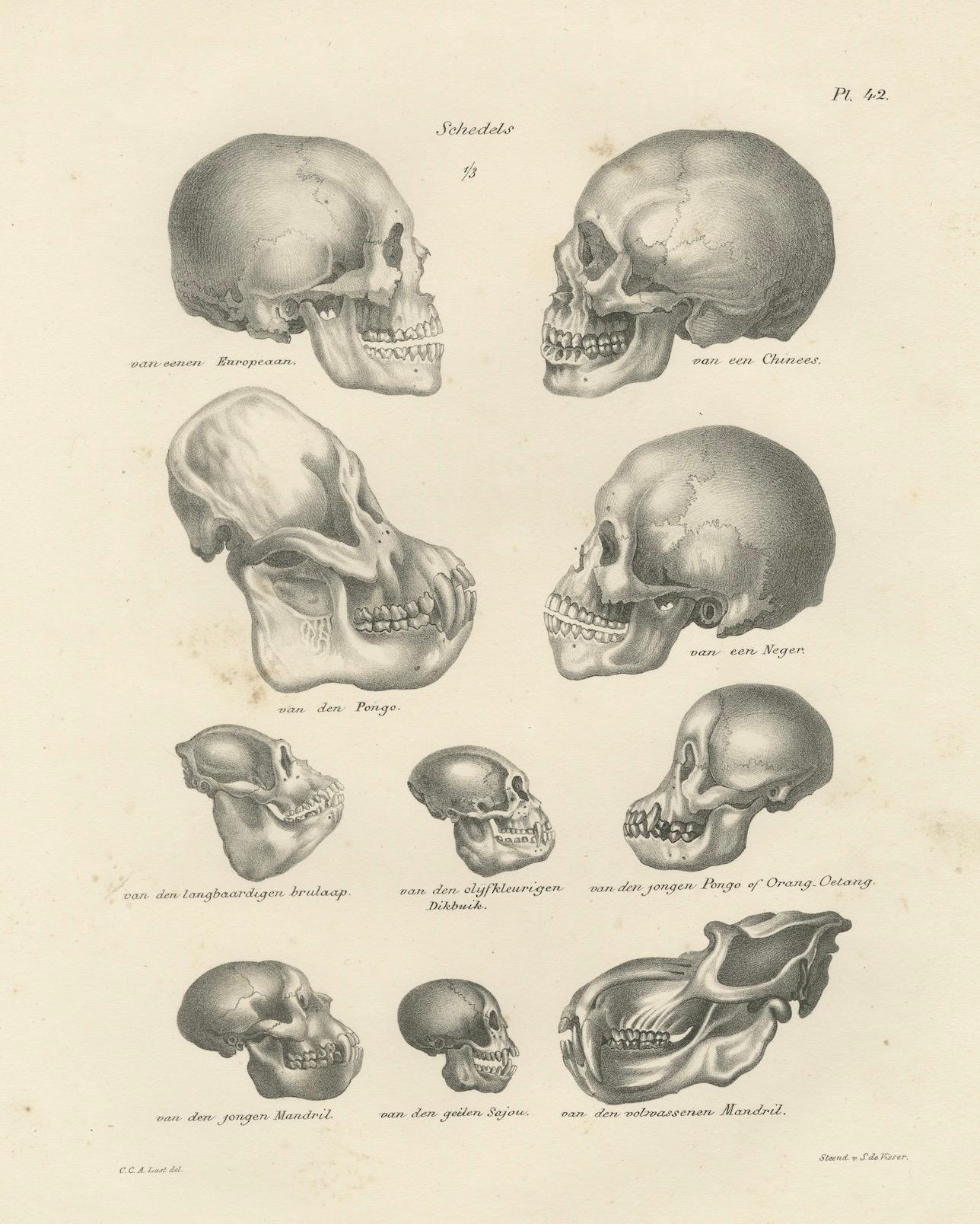
Comparison of Human and Primate Skulls, Lithograph by C.C. Last, 1836
€ 360
One of a kind: this is the sheet in the photographs. Ships from Langweer, the Netherlands.
Date
1836
Sheet size
32.2 × 26 cm (12.7 × 10.2 in)
Reference
BG-13176-42
Condition
good, given age. Light foxing / soiling. General age-related toning and/or occasional minor defects from handling. Please study scan carefully.
About this sheet
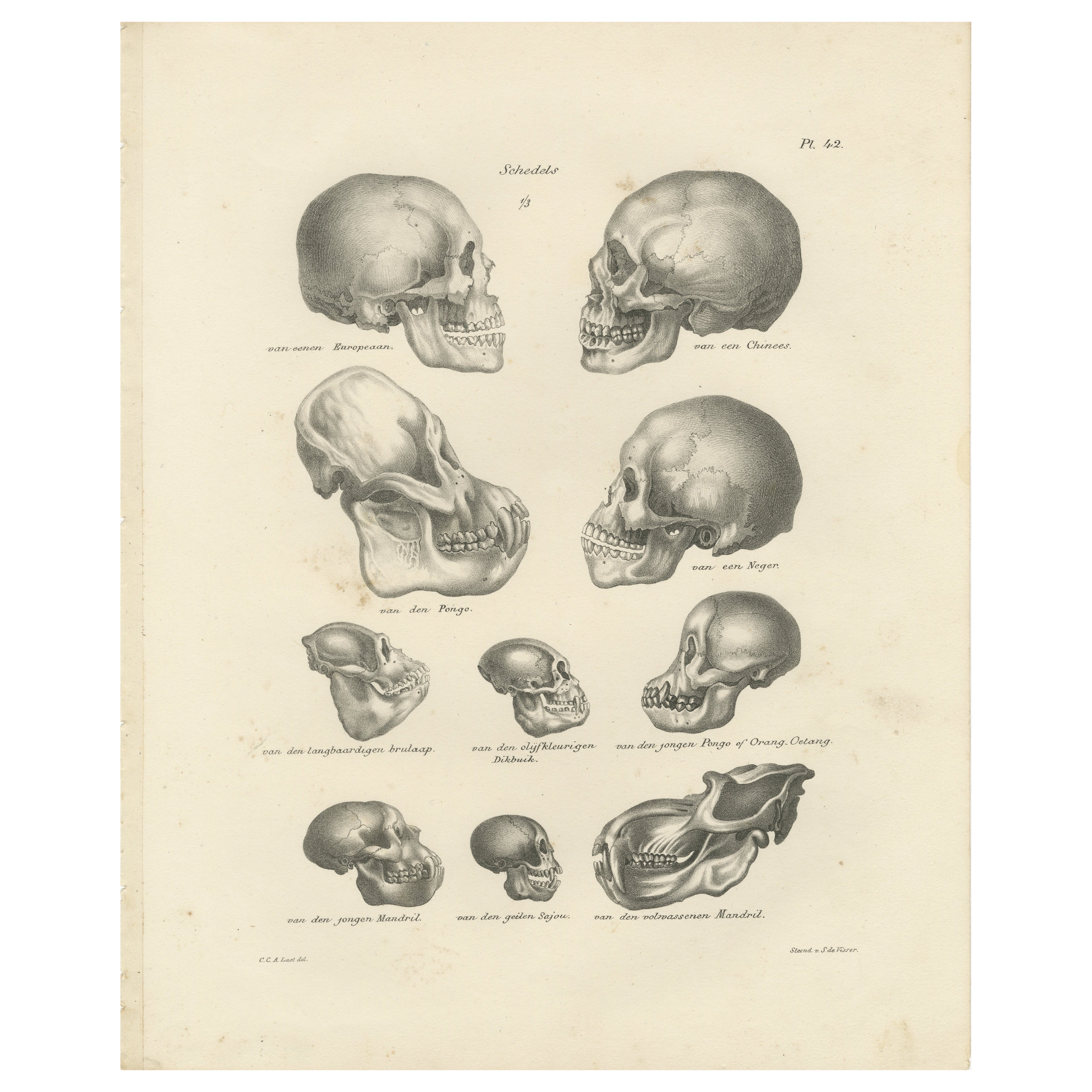
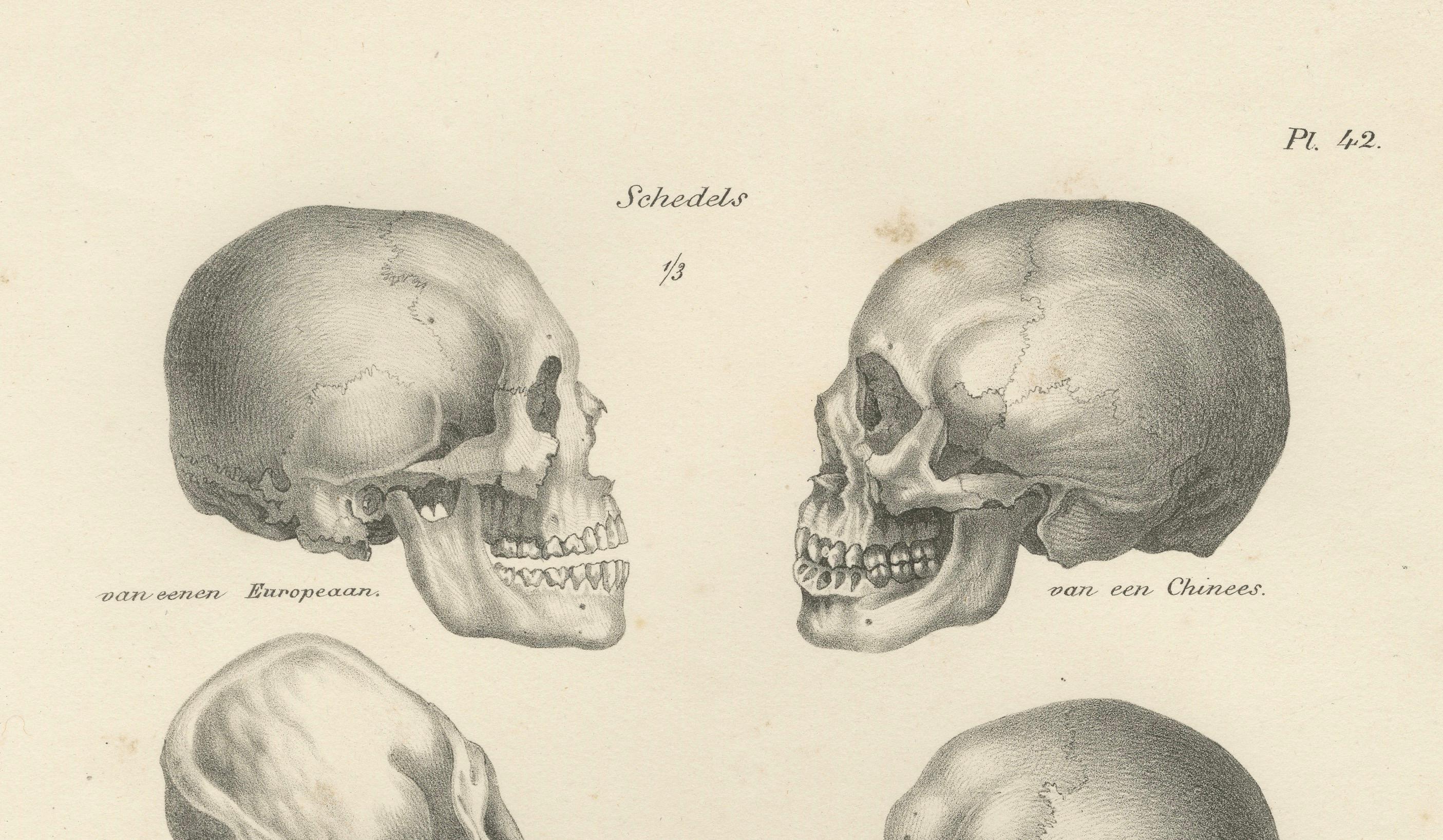
This lithograph, titled *Schedels* (Skulls), is another detailed work by Carel Christiaan Antony Last from Heinrich Rudolf Schinz's *Volledige Natuurlijke Historie der Zoogdieren* (1836). Published by S. de Visser en Zoon, the lithograph showcases a comparison of human and primate skulls, emphasizing the anatomical similarities and differences between species.
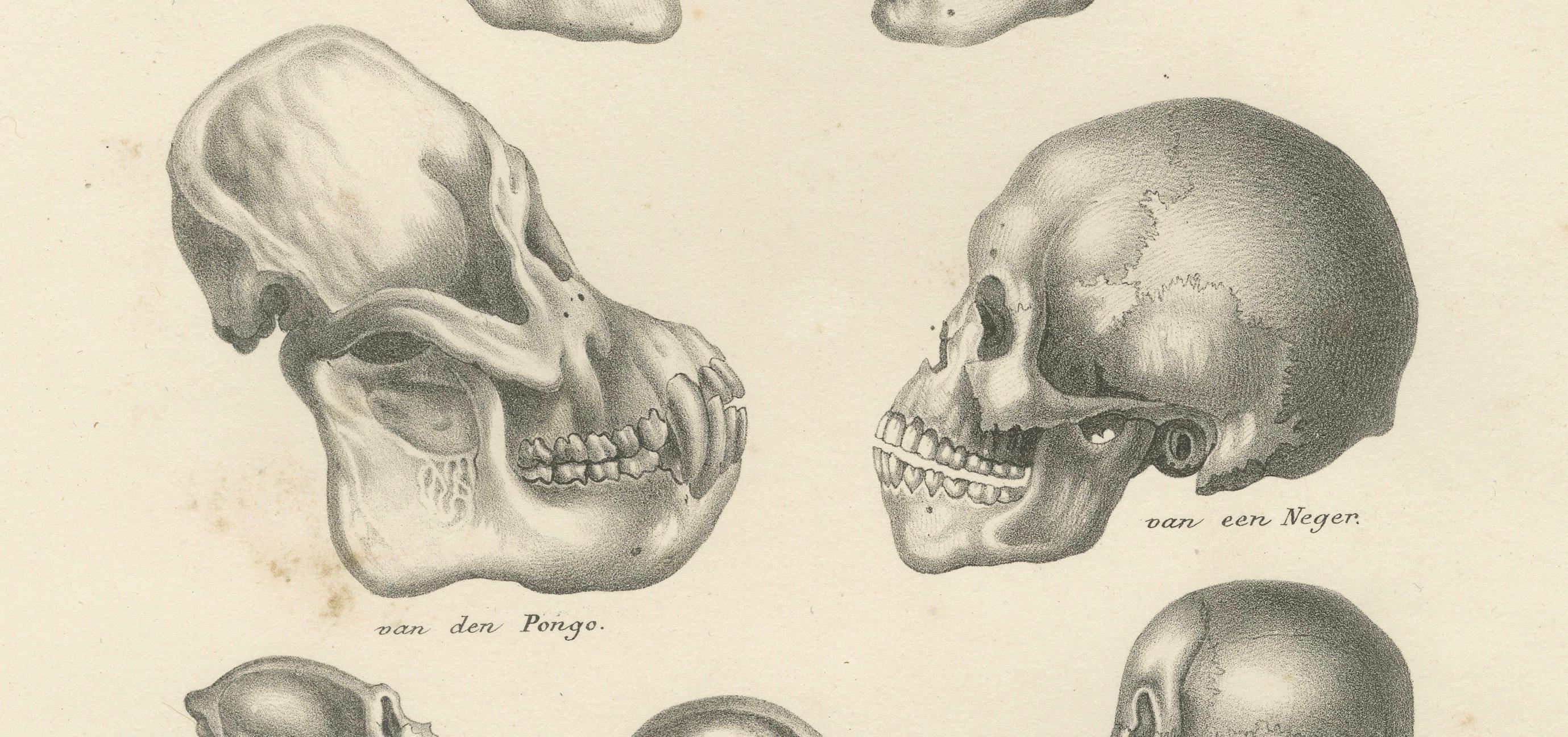
The top row of the illustration depicts human skulls, labeled as "van eenen Europeaan" (European), "van een Chinees" (Chinese), and "van een Neger" (African), reflecting 19th-century racial categories, which are now outdated and considered scientifically incorrect. These skulls are positioned to compare cranial structure and shape, a common practice in comparative anatomy during this period.
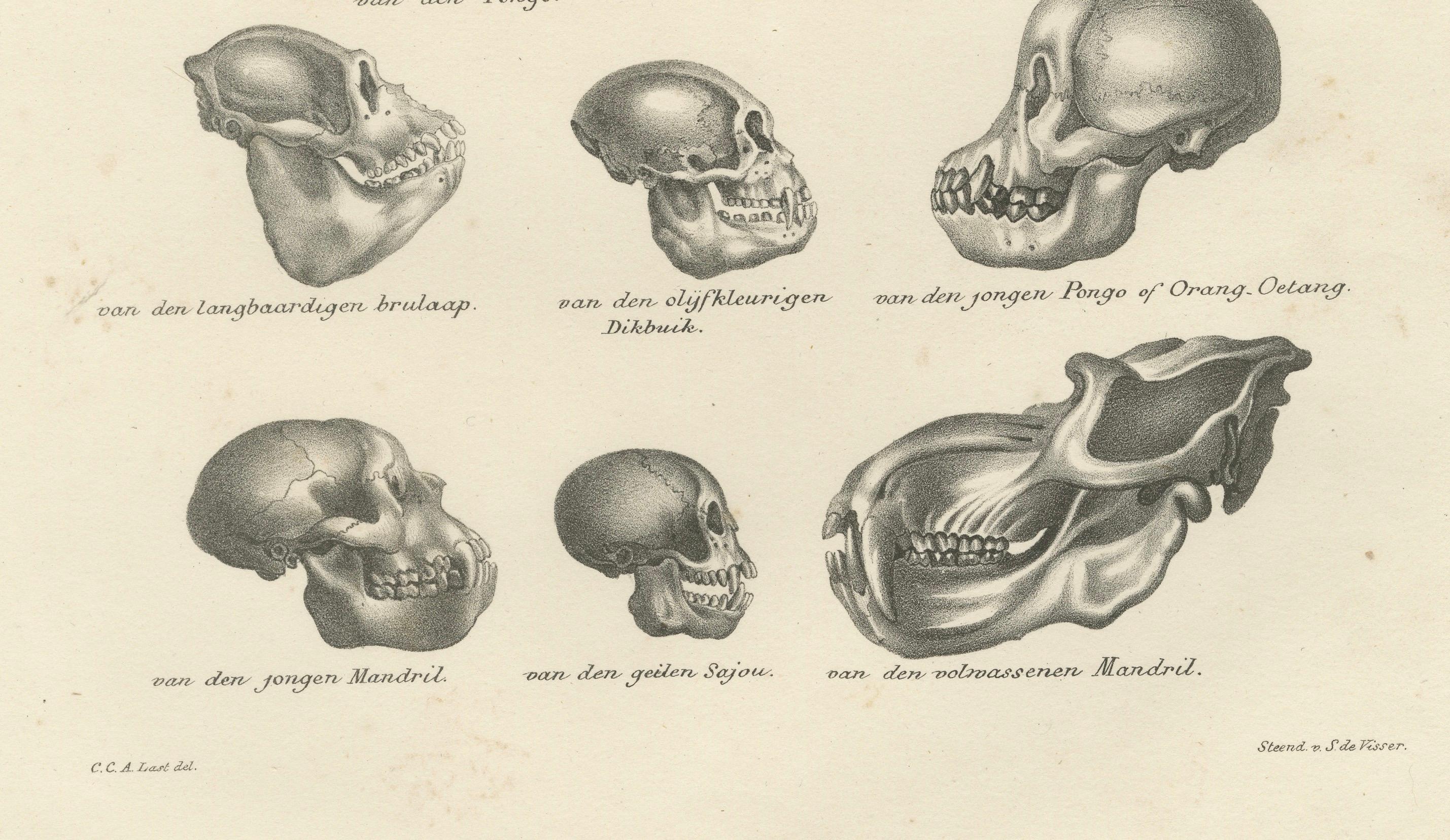
Below the human skulls, the lithograph transitions to non-human primate skulls, showing various species, including the *Pongo* (orangutan), *langbaardigen brulaap* (long-bearded howler monkey), *olijfkleurigen dikbuik* (olive-colored pot-bellied monkey), *jongen Pongo of Orang Oetang* (young orangutan), and *jongen Mandril* (young mandrill). The diversity in skull structures across primate species is evident, with each species exhibiting unique characteristics, such as variations in jaw size, dental arrangement, and cranial capacity.
The final row includes skulls of the *gouden Sionis* (golden lion tamarin), the *volwassenen Mandril* (adult mandrill), and other primate species, offering a broader comparison across age and species. The meticulous rendering of the skulls highlights the intricate details of each species, contributing to both scientific knowledge and the aesthetic value of the illustration.
This plate serves as a visual tool for understanding the evolutionary connections between humans and primates, reflecting the 19th-century fascination with comparative anatomy and the emerging field of anthropology.