Antique Medical Print 'Seconde Pl. XIV' by D. Diderot, circa 1760
€ 295
Original antique · The actual sheet photographed · Certificate of authenticity on request · Sold unframed · Worldwide shipping from € 15 (rates)
Date
1760
Sheet size
41 × 27 cm (16.1 × 10.6 in)
Condition
Good
Reference
BG-10671
What the condition grades mean
Excellent
Bright and clean, with no faults worth mentioning.
Very good
Only light signs of age, such as faint toning.
Good
Normal signs of age for a sheet of this period: toning, some foxing, small marks or neat old repairs.
Fair
Clear faults such as staining, tears or repairs, priced to match.
Every fault we see is written in the condition note, and the whole sheet is shown uncropped in the photos.
Condition
Good. Please review the images for further condition details.
About this sheet
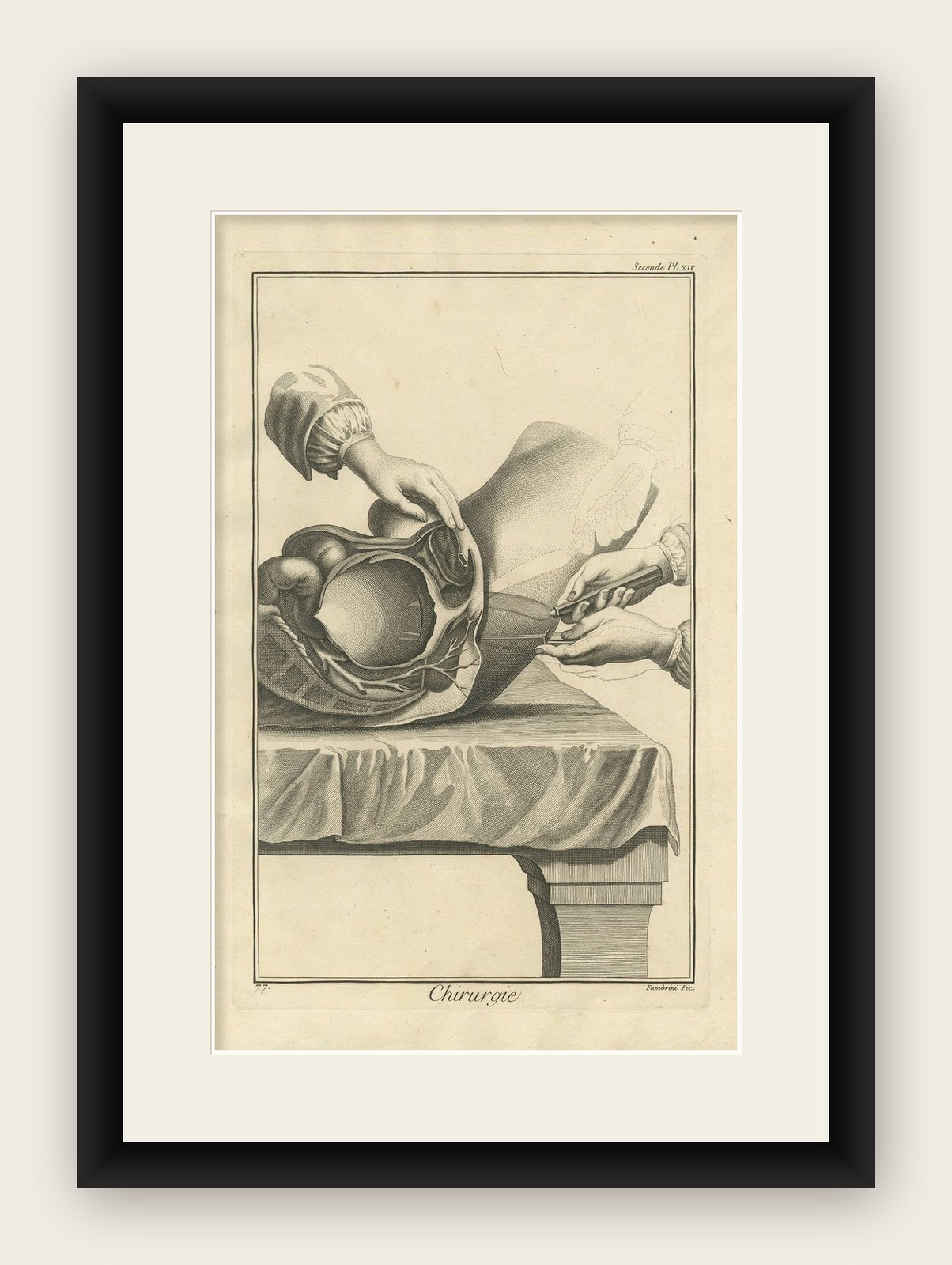
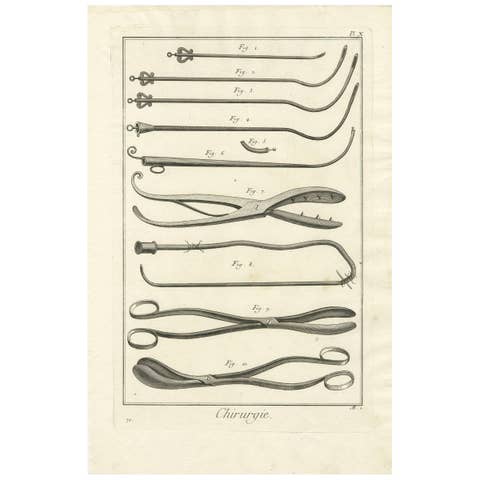
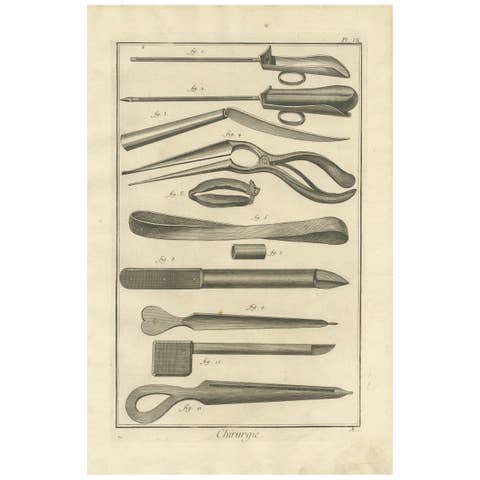
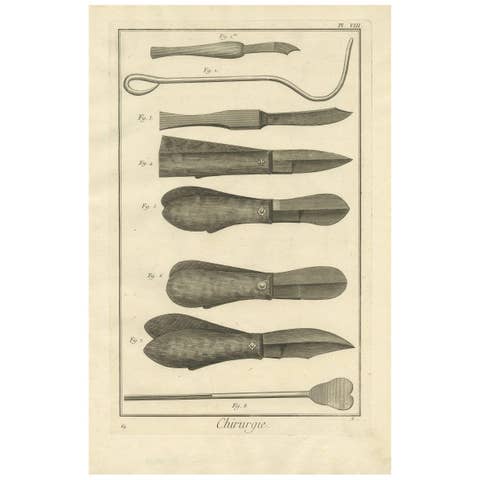
"Plate XIV seconde: 'Chirurgie'" is a historical illustration from the 'Encyclopédie' by D. Diderot, which provides a visual guide to the lower abdominal area known as the hypogastrium, detailed with various surgical instruments of the era. Published around 1760, this work is part of an extensive series that sought to catalog and disseminate the breadth of contemporary knowledge and practice.
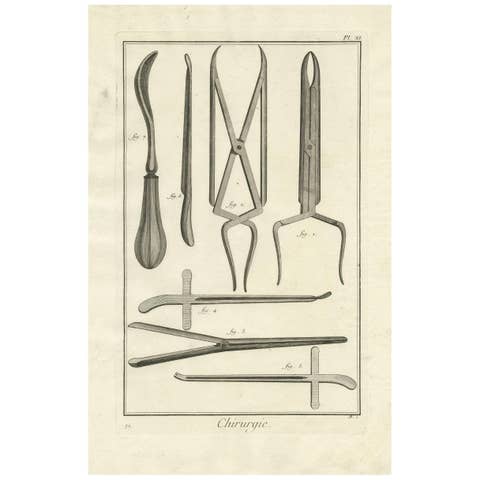
The plate showcases the anatomical features pertinent to surgical intervention, along with the tools of the trade at that time—scalpels, forceps, and other instruments that would have been at the forefront of 18th-century medical technology. It serves not only as an educational tool for the medical community of the time but also as a fascinating historical record of the tools and techniques available to surgeons in the pre-modern era.
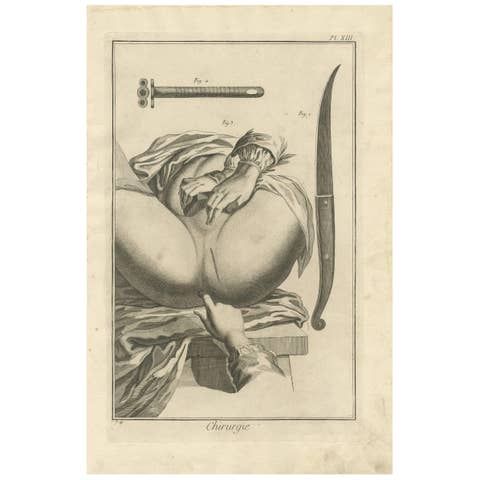
As a second plate on the subject, it would complement an earlier in our collection by offering a more applied perspective, integrating the medical instruments into the anatomical context. This combination of pure anatomical illustration with practical surgical applications reflects the Encyclopédie’s comprehensive approach to knowledge, combining theory with practice for a holistic understanding of the subject matter.
The print is a testament to the Enlightenment's commitment to the advancement of science and the improvement of medical practice. It embodies the era's intellectual spirit, characterized by inquiry, education, and a deep respect for empirical knowledge and discovery.