Naval Might of Tahiti: War Canoes Observed by Captain Cook, circa 1817
€ 240
Original antique · The actual sheet photographed · Certificate of authenticity on request · Sold unframed · Worldwide shipping from € 15 (rates)
Date
1817
Sheet size
21 × 27 cm (8.3 × 10.6 in)
Condition
Good
Reference
BG-13597-56
What the condition grades mean
Excellent
Bright and clean, with no faults worth mentioning.
Very good
Only light signs of age, such as faint toning.
Good
Normal signs of age for a sheet of this period: toning, some foxing, small marks or neat old repairs.
Fair
Clear faults such as staining, tears or repairs, priced to match.
Every fault we see is written in the condition note, and the whole sheet is shown uncropped in the photos.
Condition
Good. Overal light foxing and some soiling and offset. Lower left corner creased, outside the plate-mark. Image itself undisturbed and sharply detailed. Please review the images for further condition details.
About this sheet
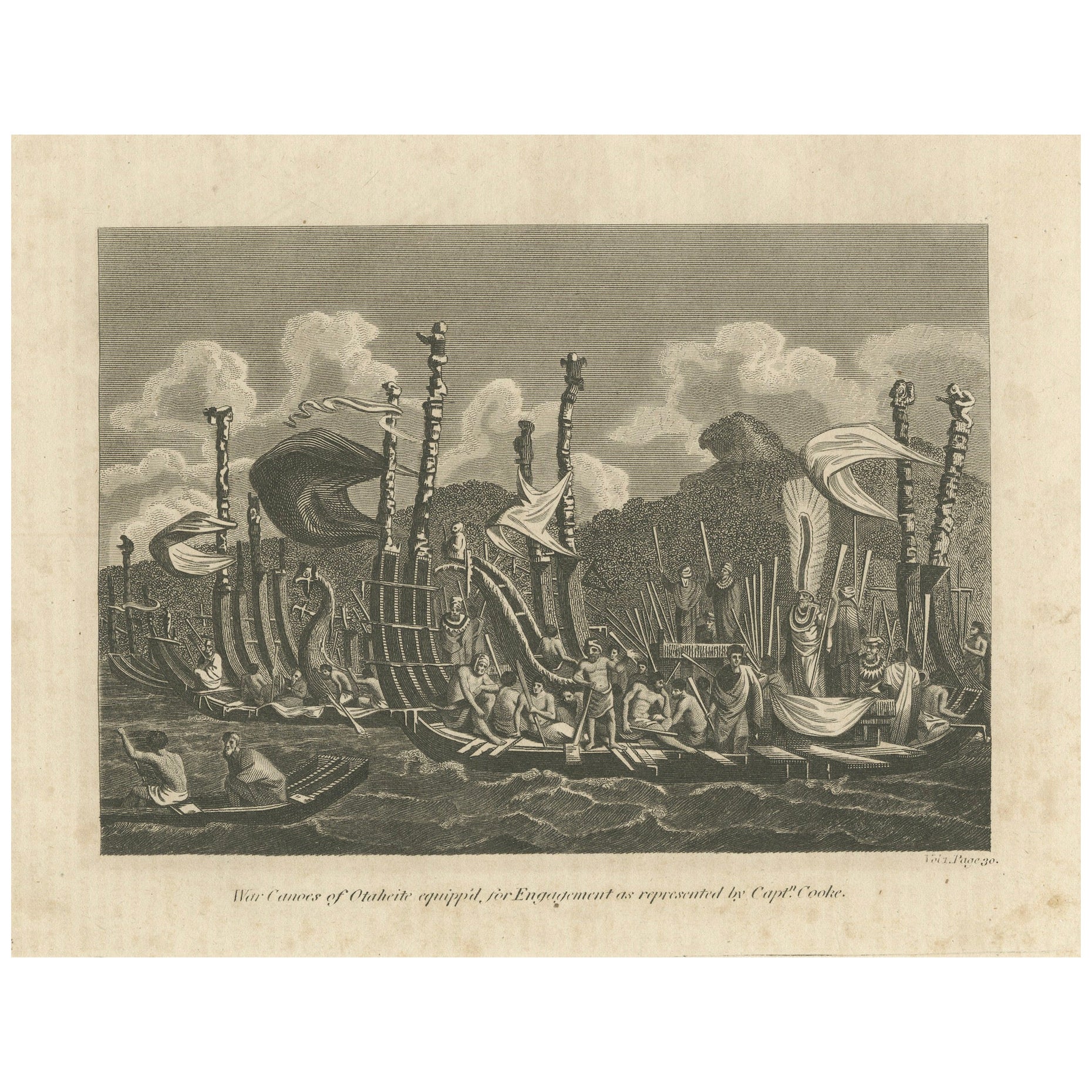
This detailed engraving depicts the "War Canoes of Otaheite (Tahiti), as represented by Capt'n Cook," referencing Captain James Cook's second voyage from 1772 to 1775. The image is from Volume 1, page 30, of a publication documenting his journeys. It shows a group of Tahitian war canoes with highly ornate and intricate designs. The canoes are adorned with figures and carvings that hold significant cultural value and represent the craftsmanship and maritime skills of the Tahitian people.
In the foreground, the Tahitians are seen paddling and maneuvering these large vessels with dexterity, while others appear to be in a state of readiness or celebration, indicating a display of power or preparation for an event. The sails are distinctive, with a possible depiction of traditional motifs. The background is marked by a dramatic sky and the lush landscape of Tahiti, capturing the tropical ambiance of the island.
This print is a historical portrayal of Tahitian culture as witnessed by European explorers, showcasing the interaction between European voyagers and Pacific islanders during the Age of Discovery. The engraving would have served as an exotic and intriguing illustration for European audiences of the time, who were fascinated by tales and visuals from distant lands.