Maritime Majesty: The 17th-Century Skyline of Kalmar in Sweden, 1693
€ 450
Original antique · The actual sheet photographed · Certificate of authenticity on request · Sold unframed · Worldwide shipping from € 15 (rates)
Date
1693
Sheet size
33.2 × 51 cm (13.1 × 20.1 in)
Condition
Good
Reference
Bg-13670-23
What the condition grades mean
Excellent
Bright and clean, with no faults worth mentioning.
Very good
Only light signs of age, such as faint toning.
Good
Normal signs of age for a sheet of this period: toning, some foxing, small marks or neat old repairs.
Fair
Clear faults such as staining, tears or repairs, priced to match.
Every fault we see is written in the condition note, and the whole sheet is shown uncropped in the photos.
Condition
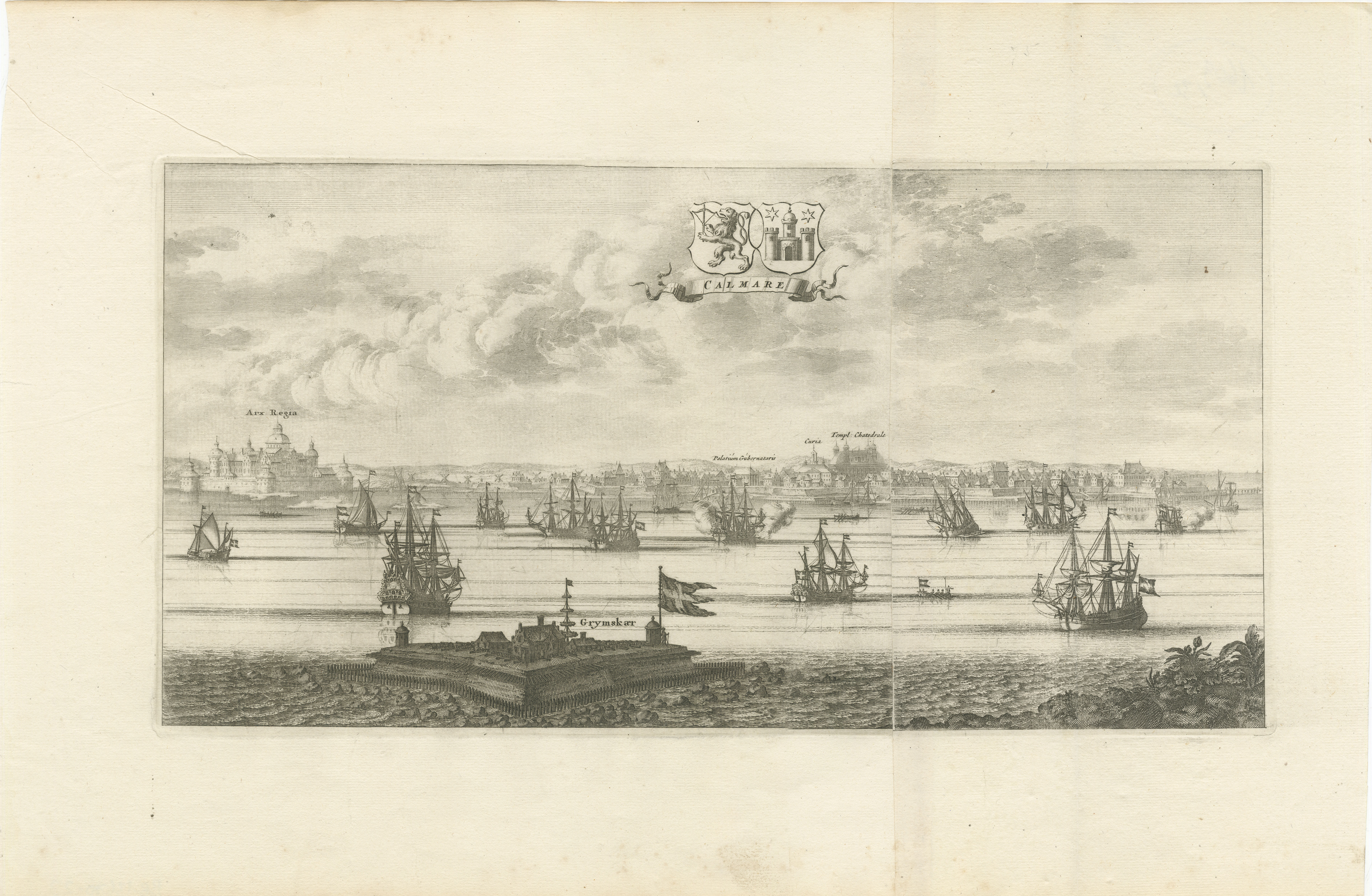
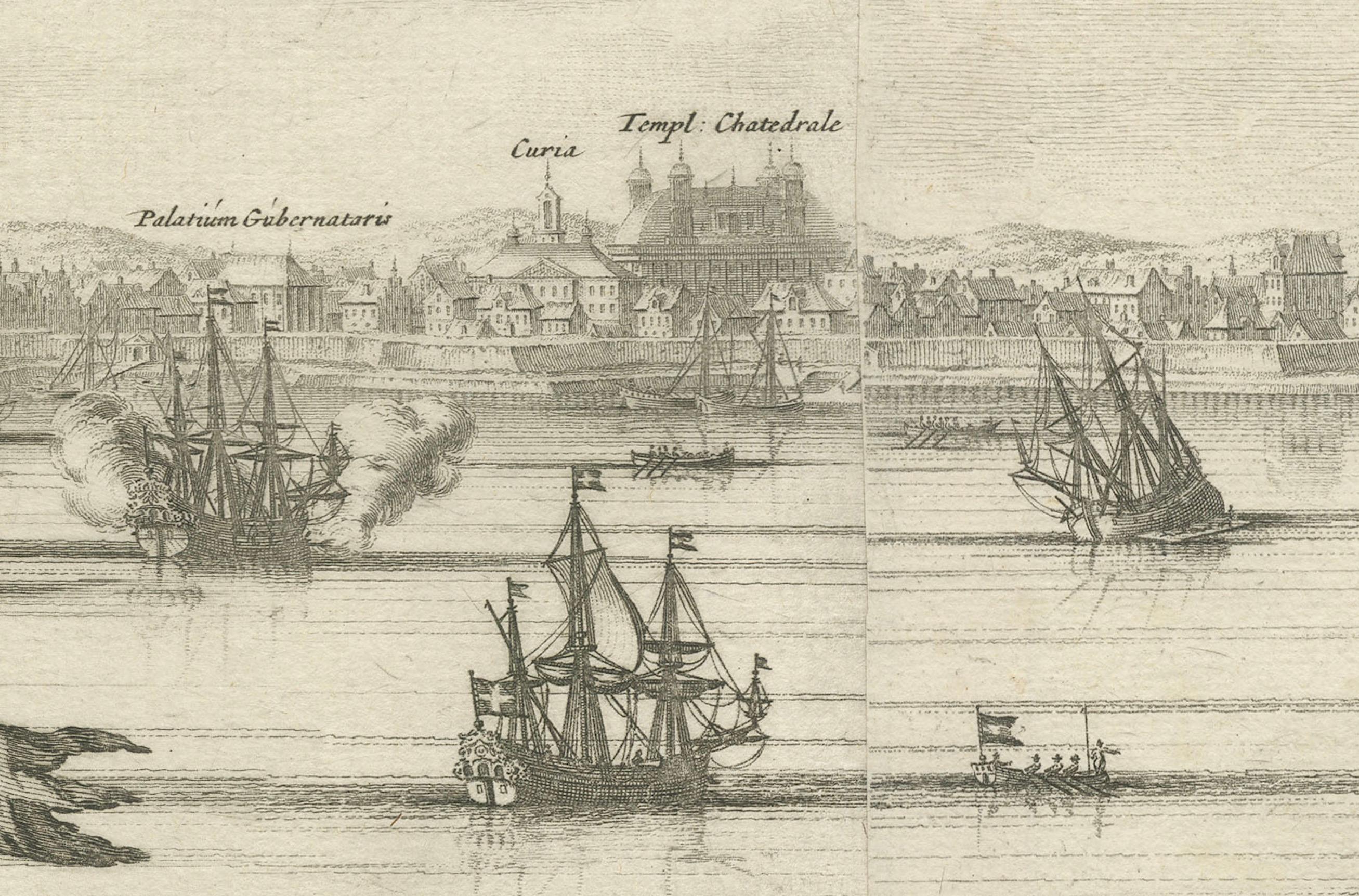
Good. Minor soiling. Very clean overall, especially considering its age. Two plates joined with the vertical line visible. Please review the images for further condition details.
About this sheet
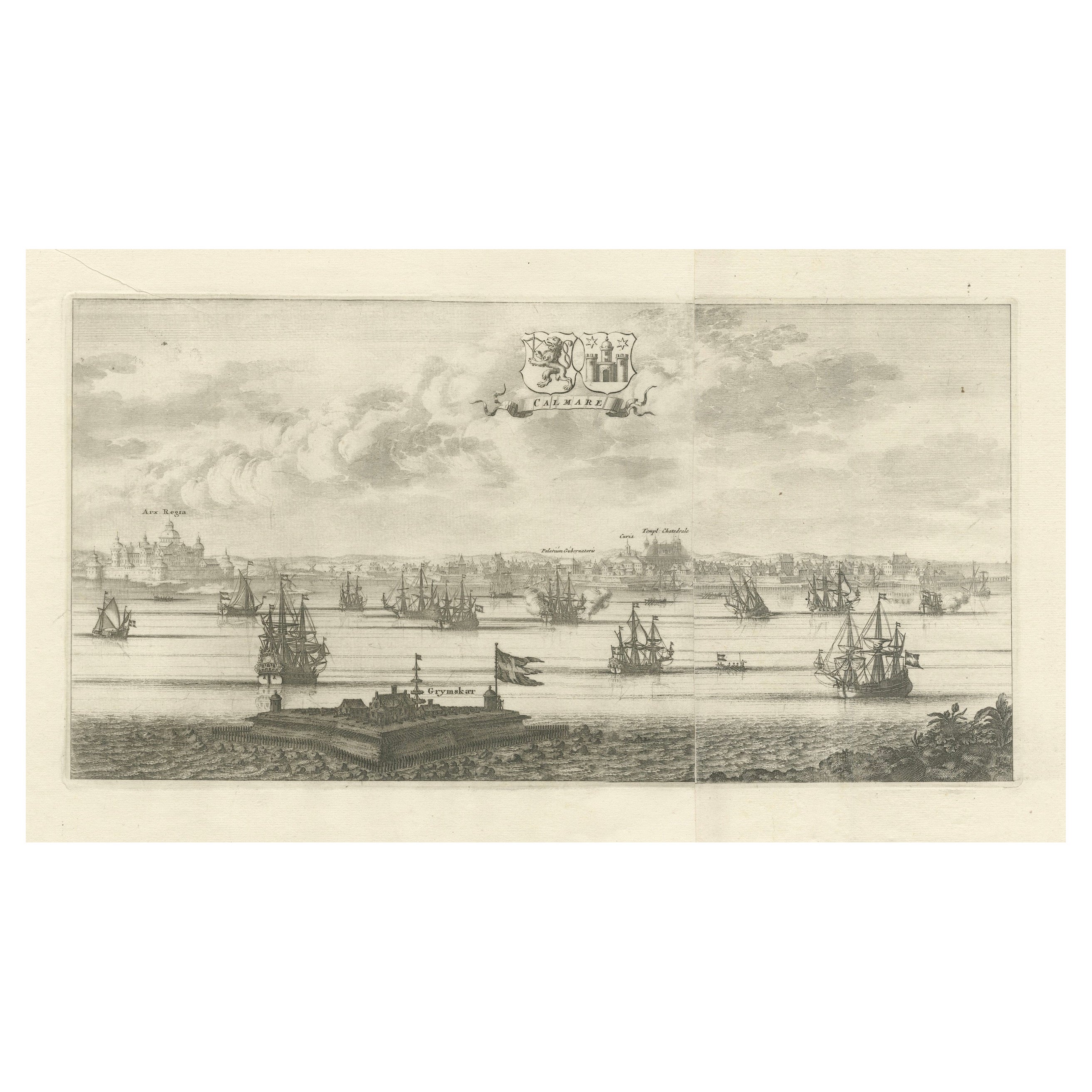
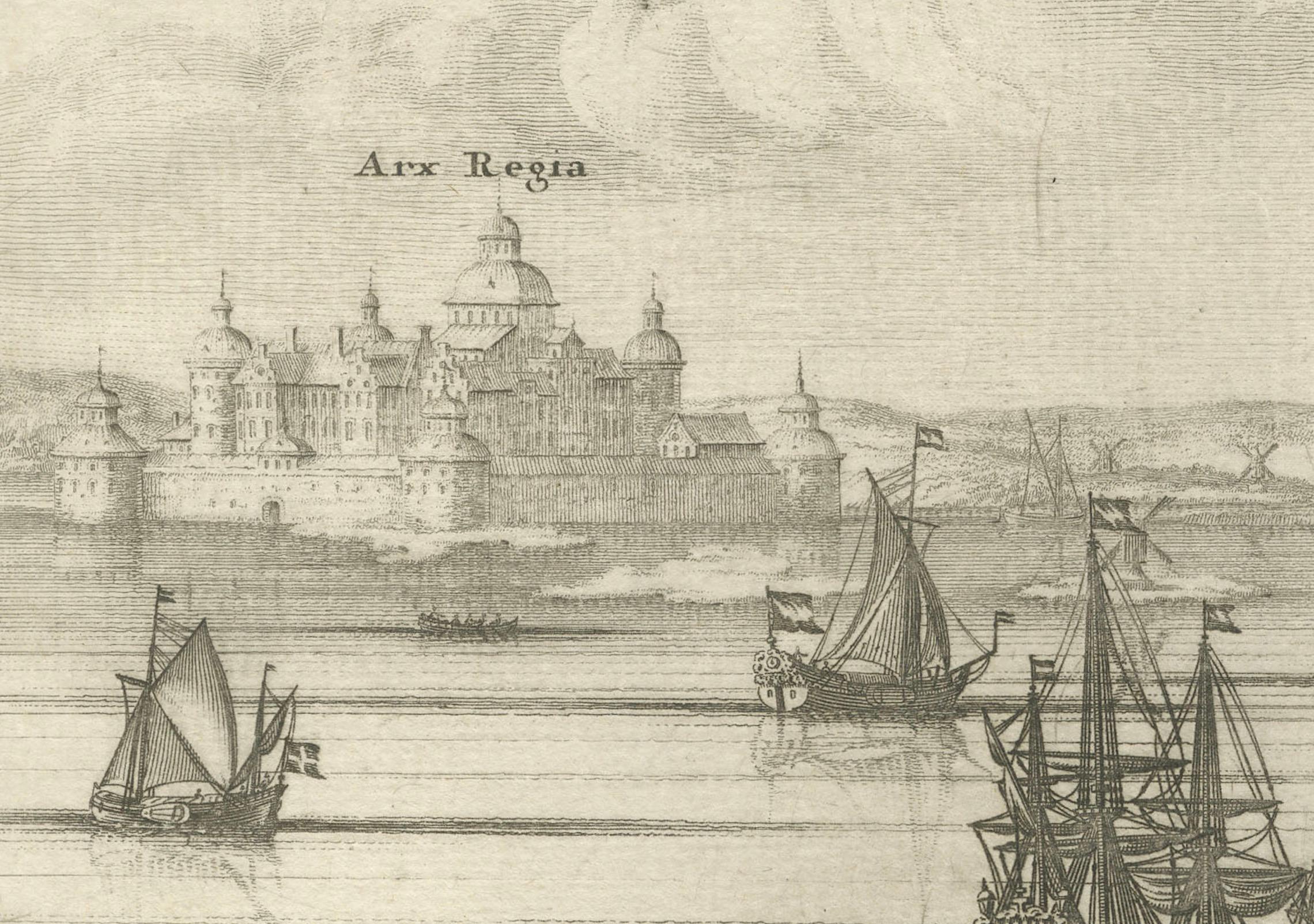
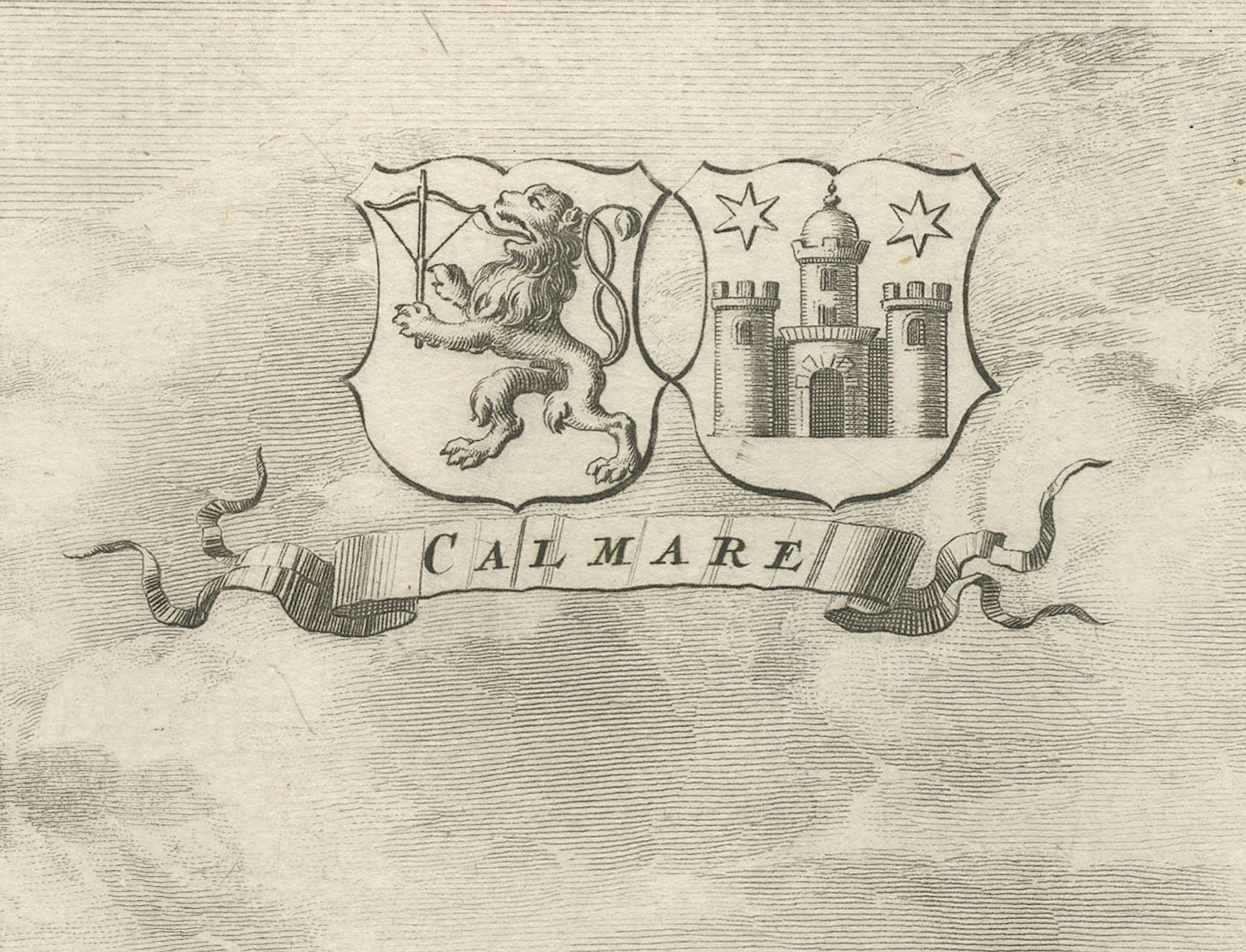
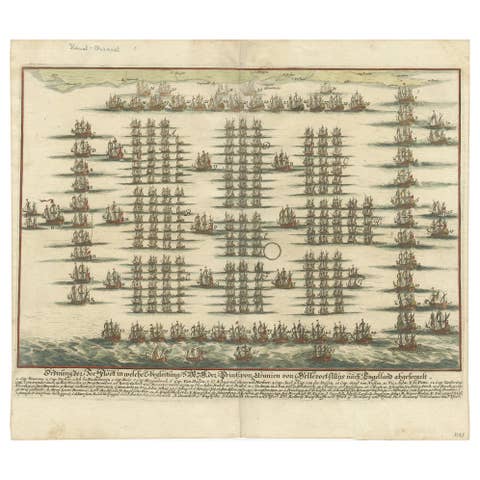
The engraving depicts the city of Kalmar, a historically significant city on the east coast of Sweden. This panoramic view captures the bustling port and the city's skyline during the late 17th to early 18th century. It's part of "Suecia Antiqua et Hodierna," a work by Erik Dahlberg, which translates to "Ancient and Modern Sweden." This ambitious work aimed to document Swedish architecture, landscapes, and towns, and was a major project of national interest at the time.
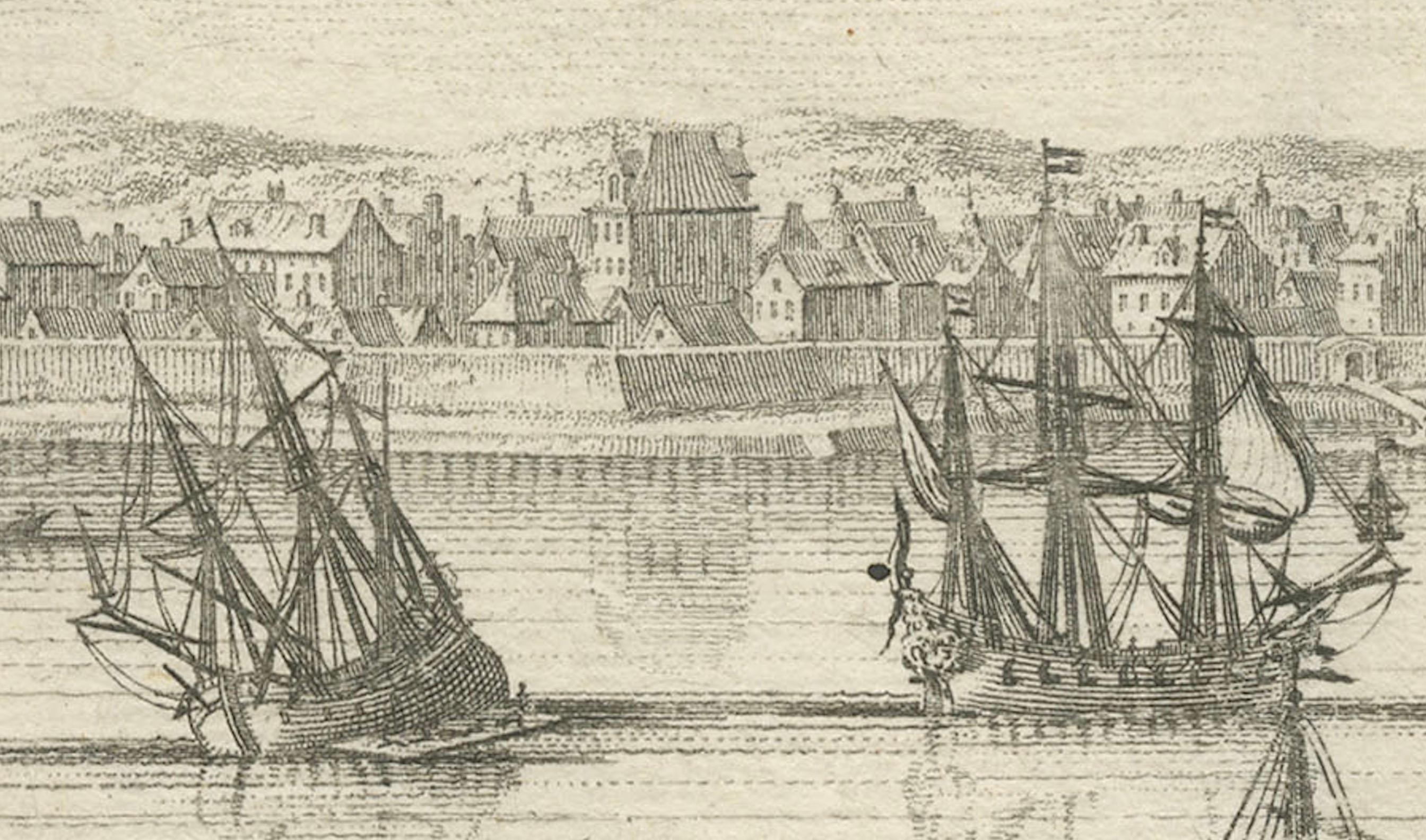
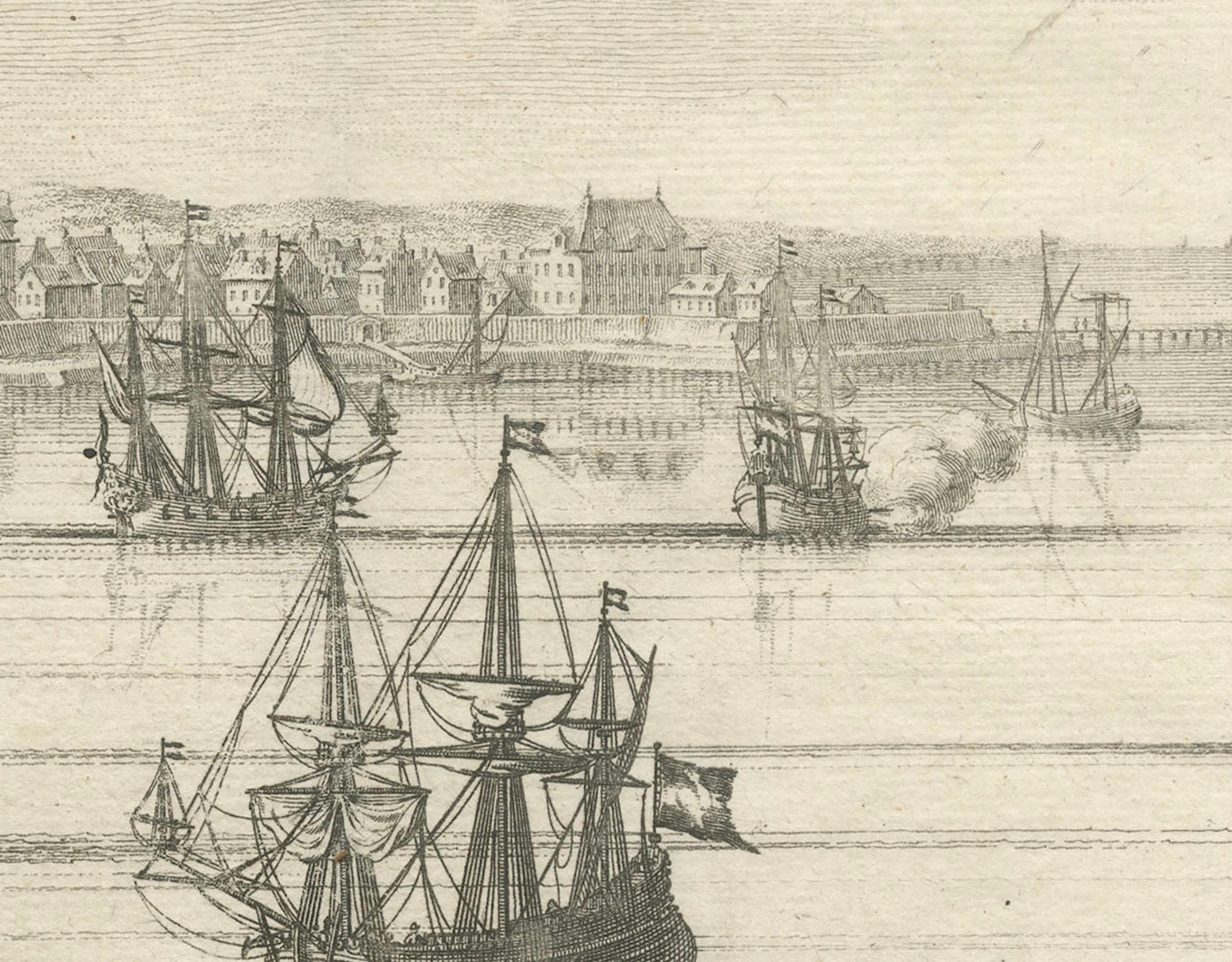
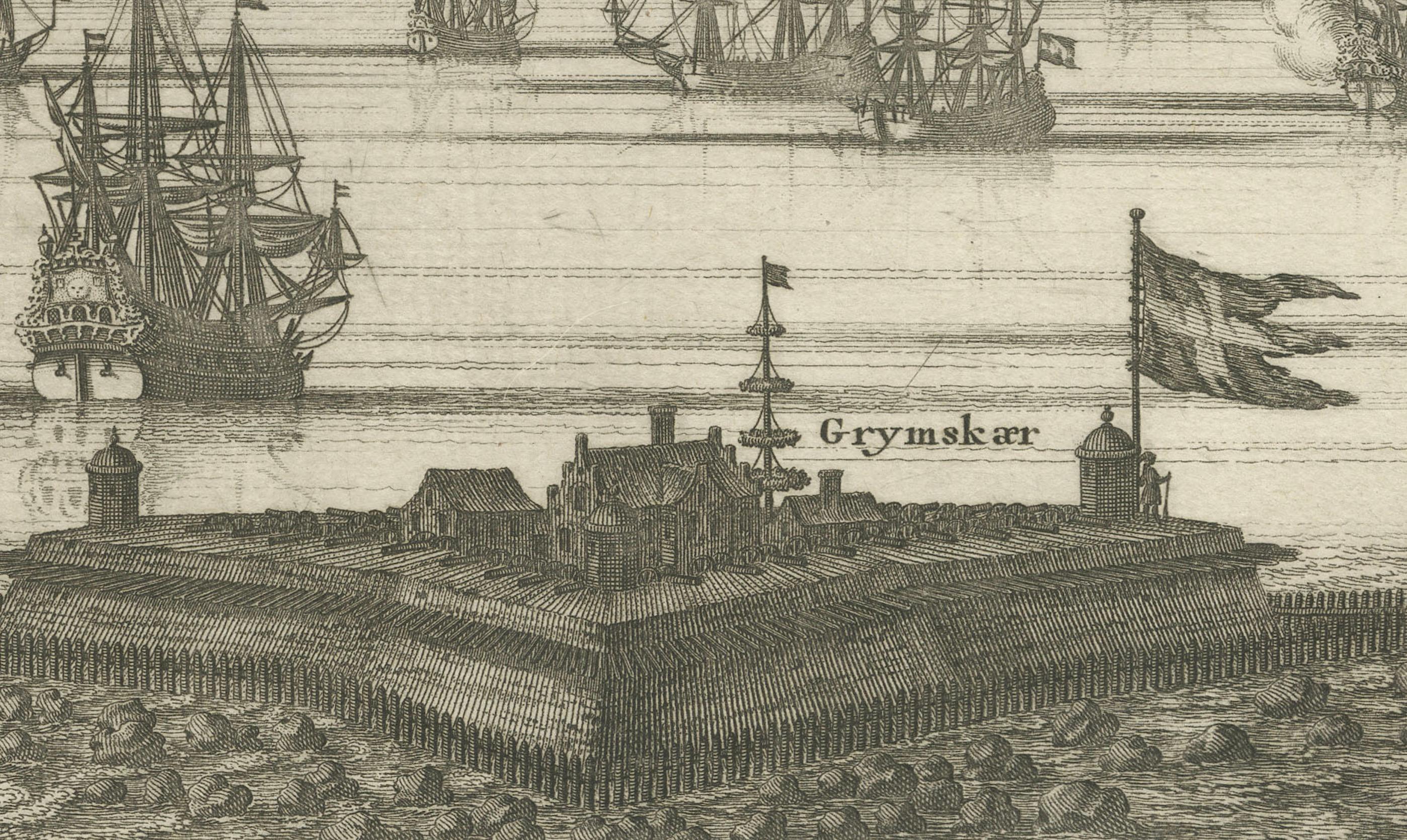
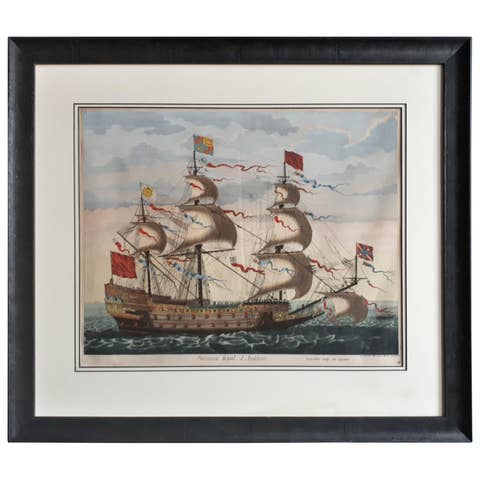
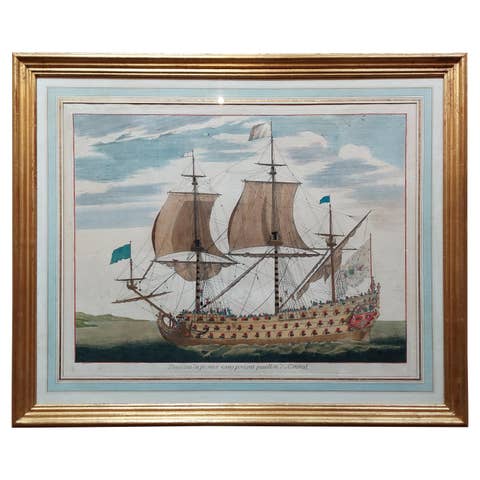
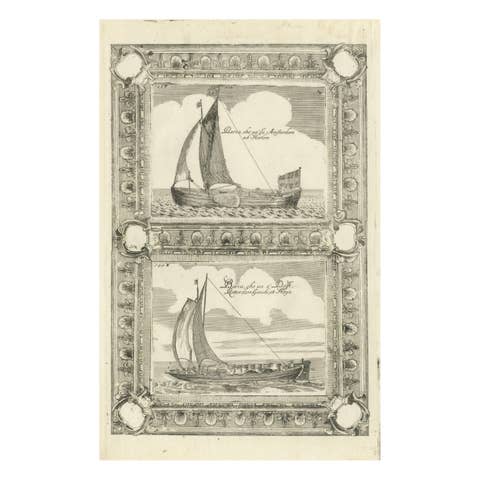
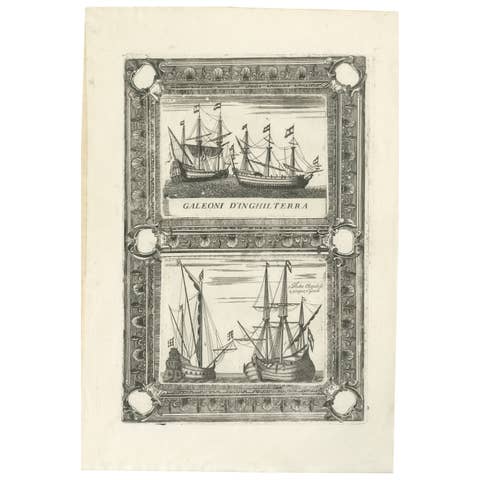
The image shows a variety of sailing vessels, indicative of Kalmar's importance as a maritime center. In the foreground, you can see the fortress of Kalmarsund, which would have been key to the city's defenses. The cityscape is rendered with fine detail, showing church spires, the characteristic rooftops of the period, and other architectural features that would have been prominent in Kalmar.
Kalmar itself is a city with a rich history, being the location where the Kalmar Union was signed in 1397, uniting Denmark, Norway, and Sweden under a single monarch. The city was also an important site for trade and military activities due to its strategic location.
Today, Kalmar is known for its well-preserved historical buildings, including Kalmar Castle, which dates back to the 12th century and was a key defensive structure throughout Sweden's history. The city has maintained much of its historical charm, with many of its older buildings and streetscapes carefully preserved, allowing visitors to get a sense of its historical significance. However, it has also evolved, with modern amenities and a vibrant cultural scene.
The engraving serves not only as a beautiful representation of Kalmar's historical vista but also as a document reflecting the city's importance during the period of its creation. For those interested in the history of Swedish cities and their development, Kalmar provides an excellent case study of the blend of historical preservation and contemporary evolution.