About this sheet
Antique Greek Sphinx-Shaped Vessel & Pottery Lithograph, 1883
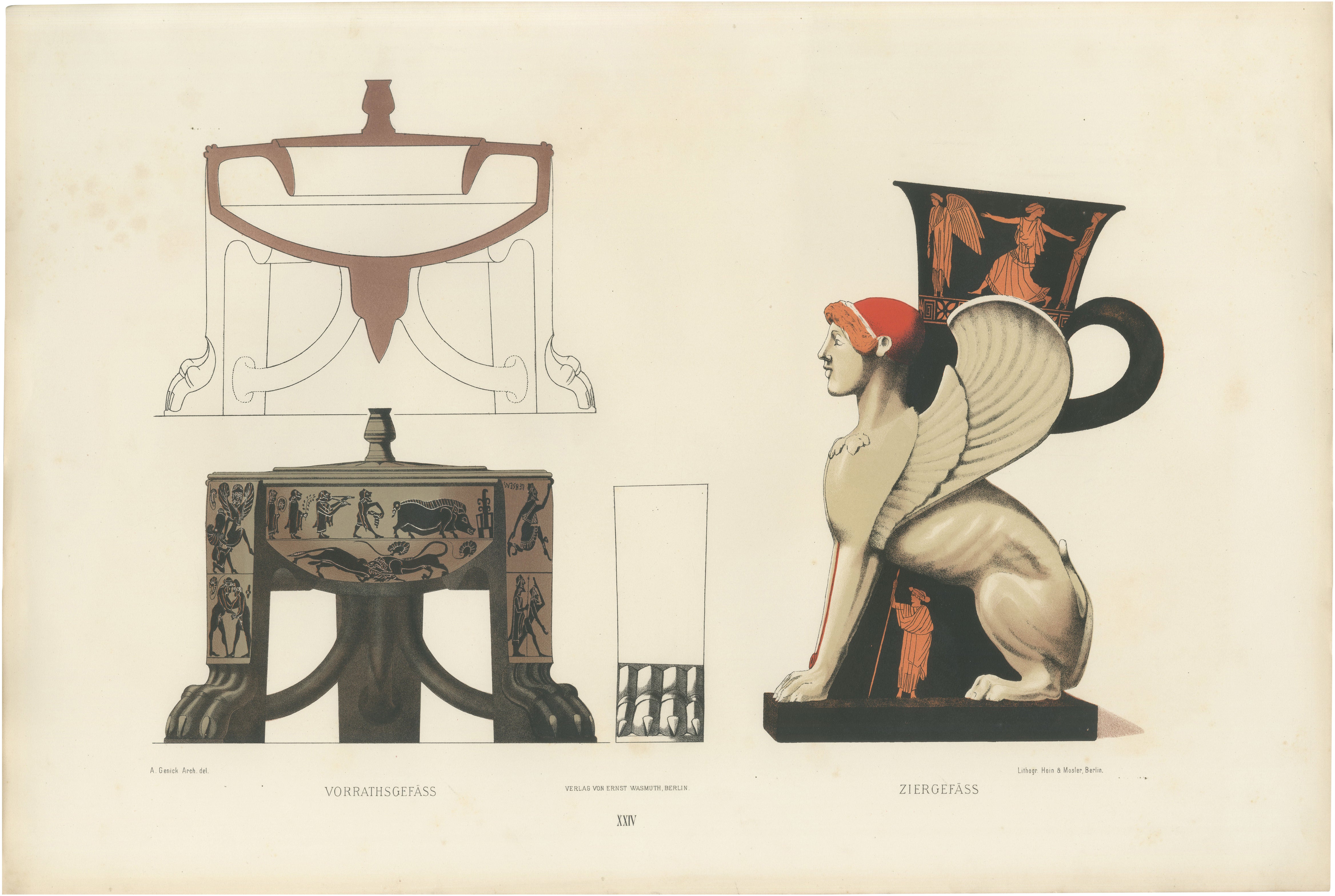
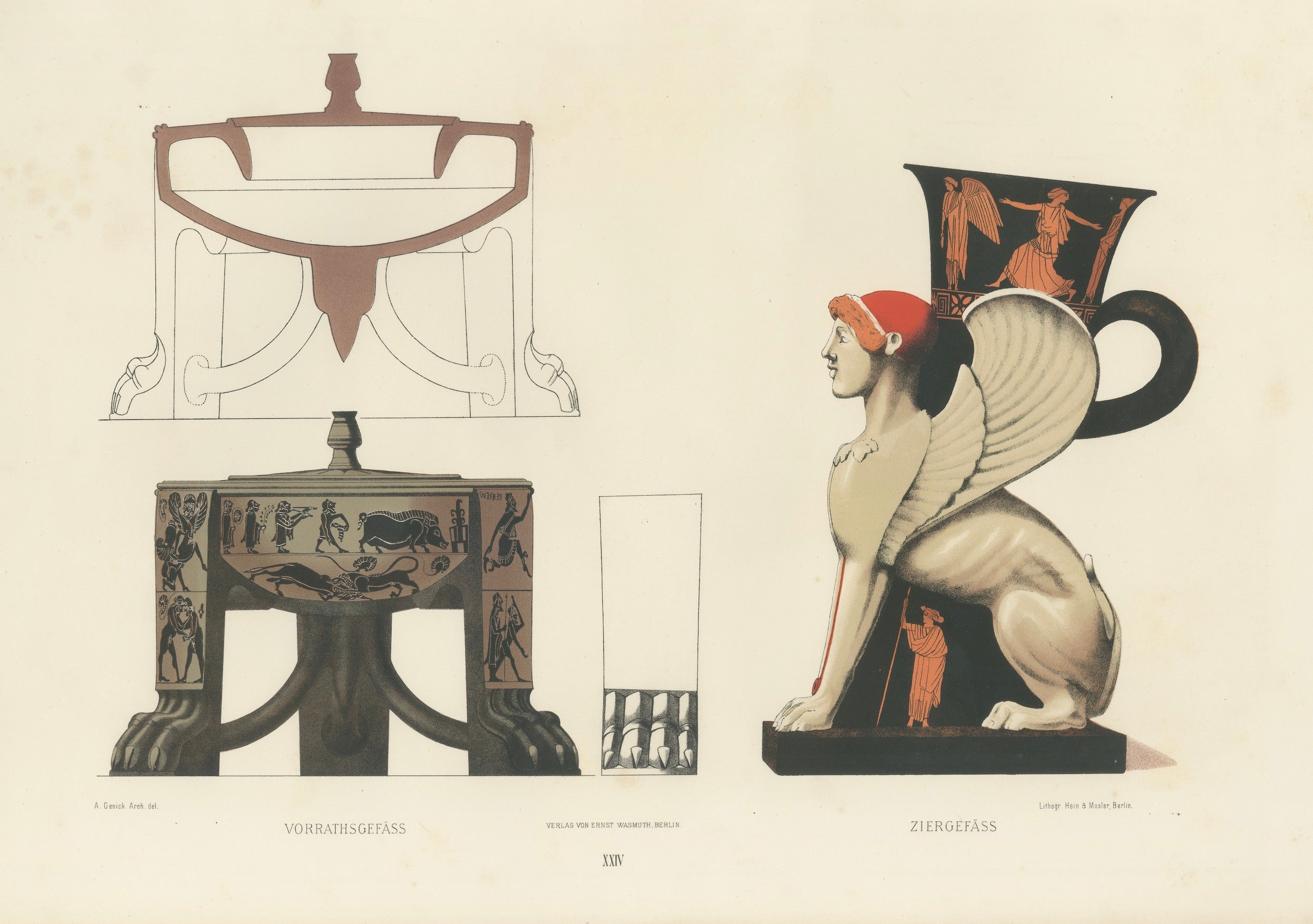
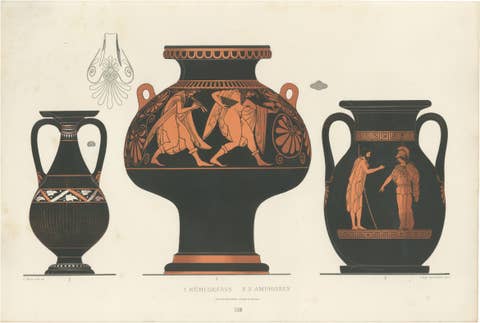
Original antique color lithograph depicting two remarkable examples of ancient Greek ceramic art, including an extraordinary sphinx-shaped decorative vessel, published in Berlin in 1883 as part of Albert Genick’s monumental work on Greek ceramics.
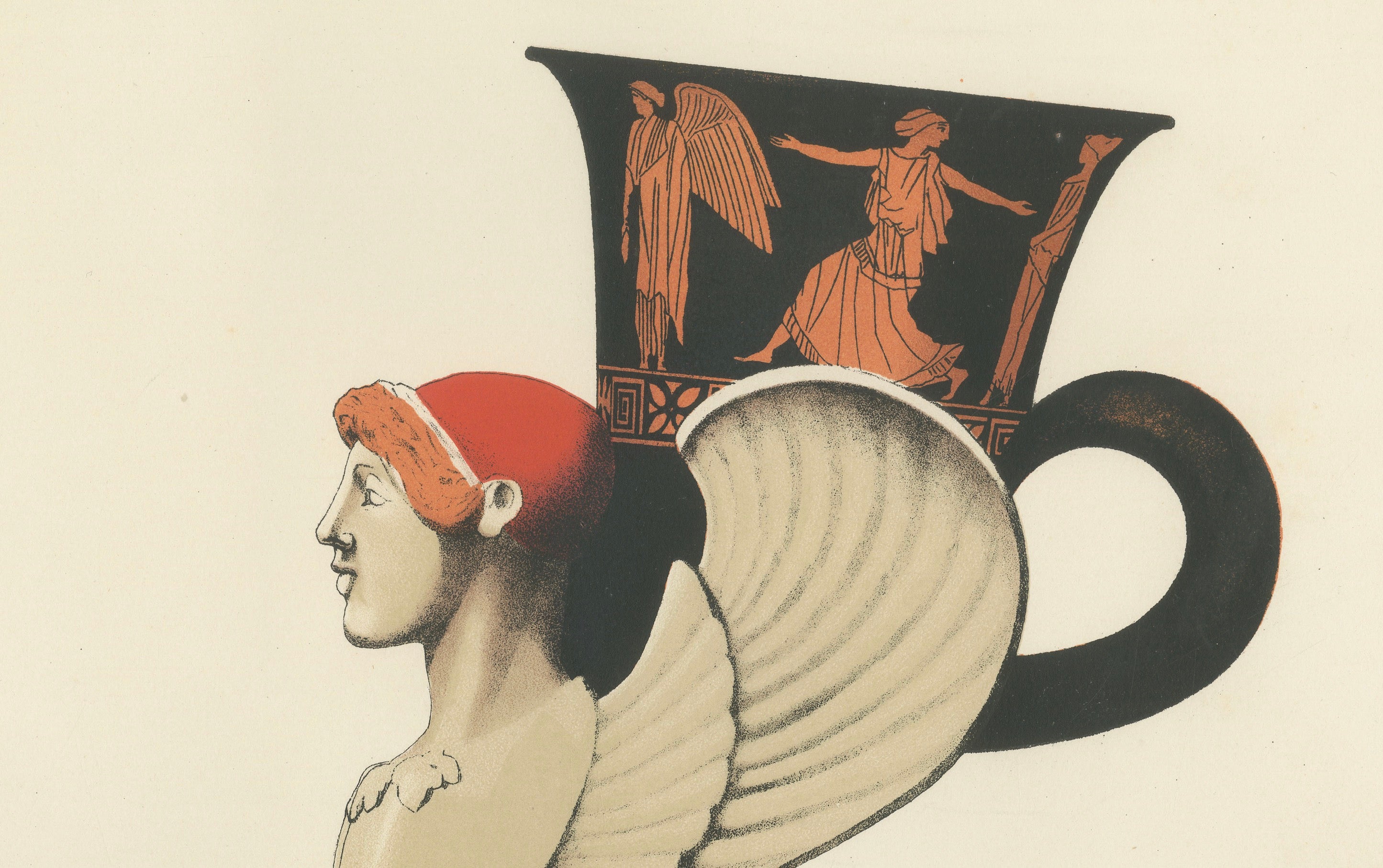
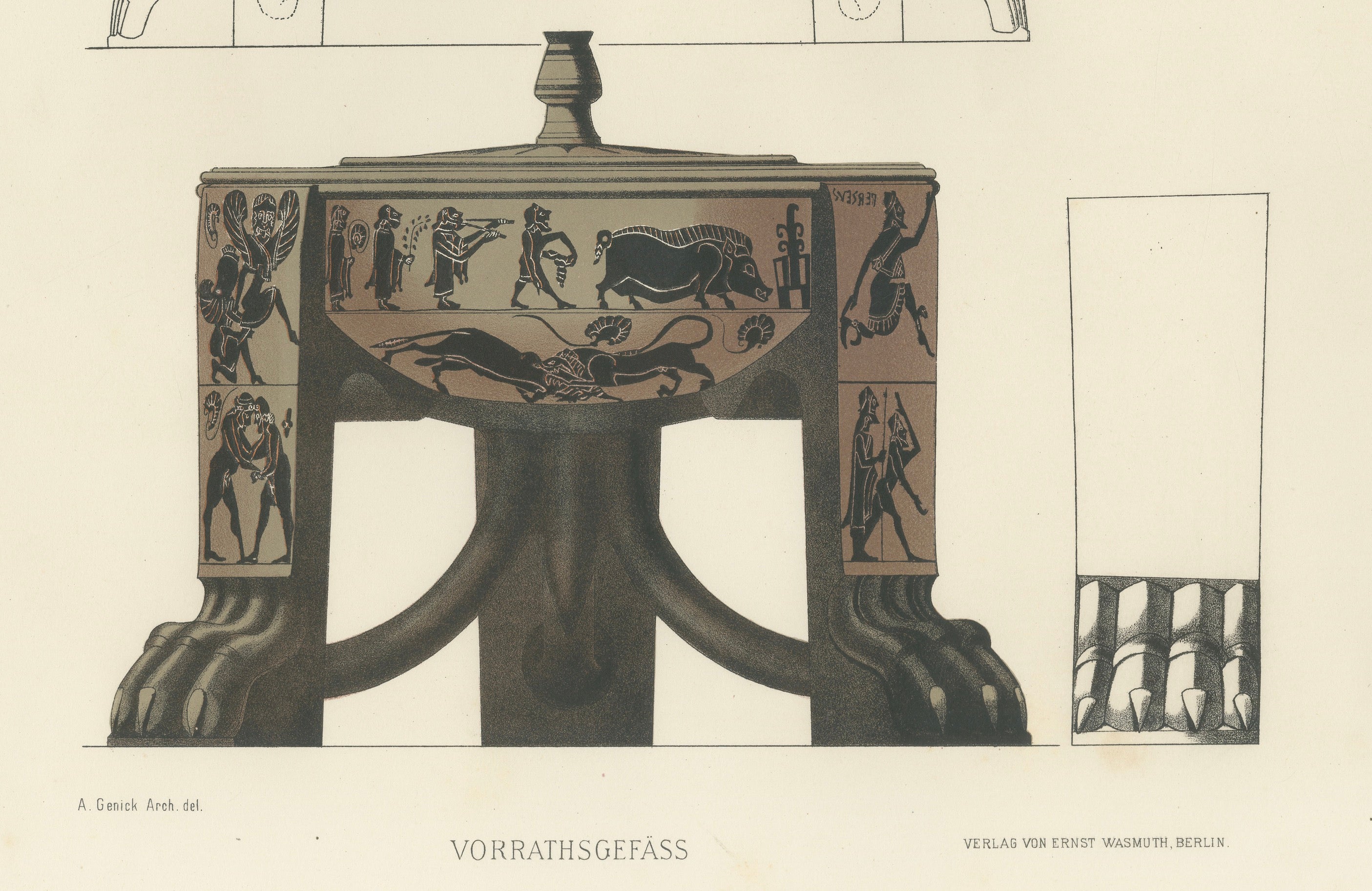
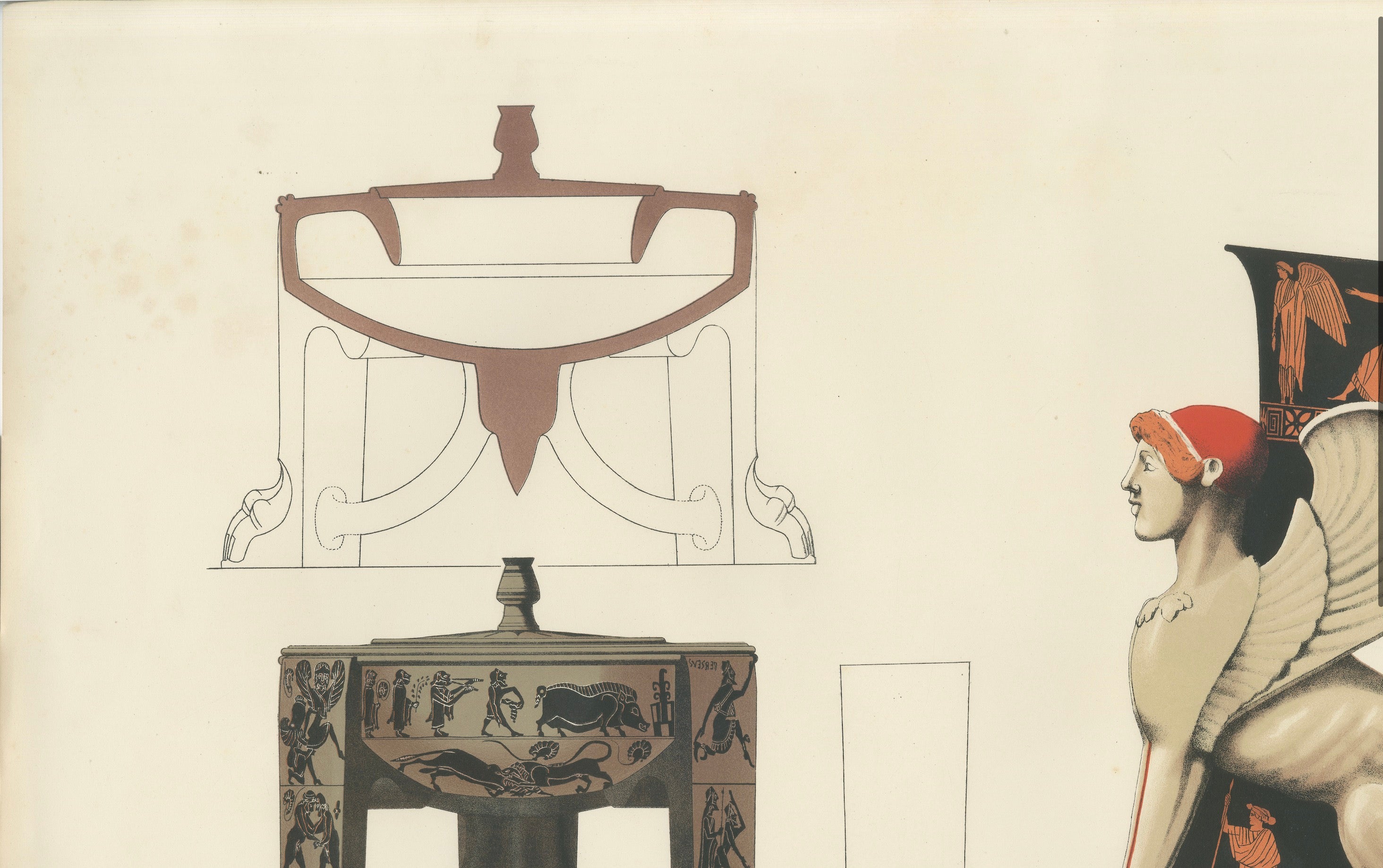
This unusual landscape-format plate presents a storage vessel at left and an elaborate figural decorative vessel at right, identified on the plate respectively as “Vorrathsgefäss” and “Ziergefäss.”
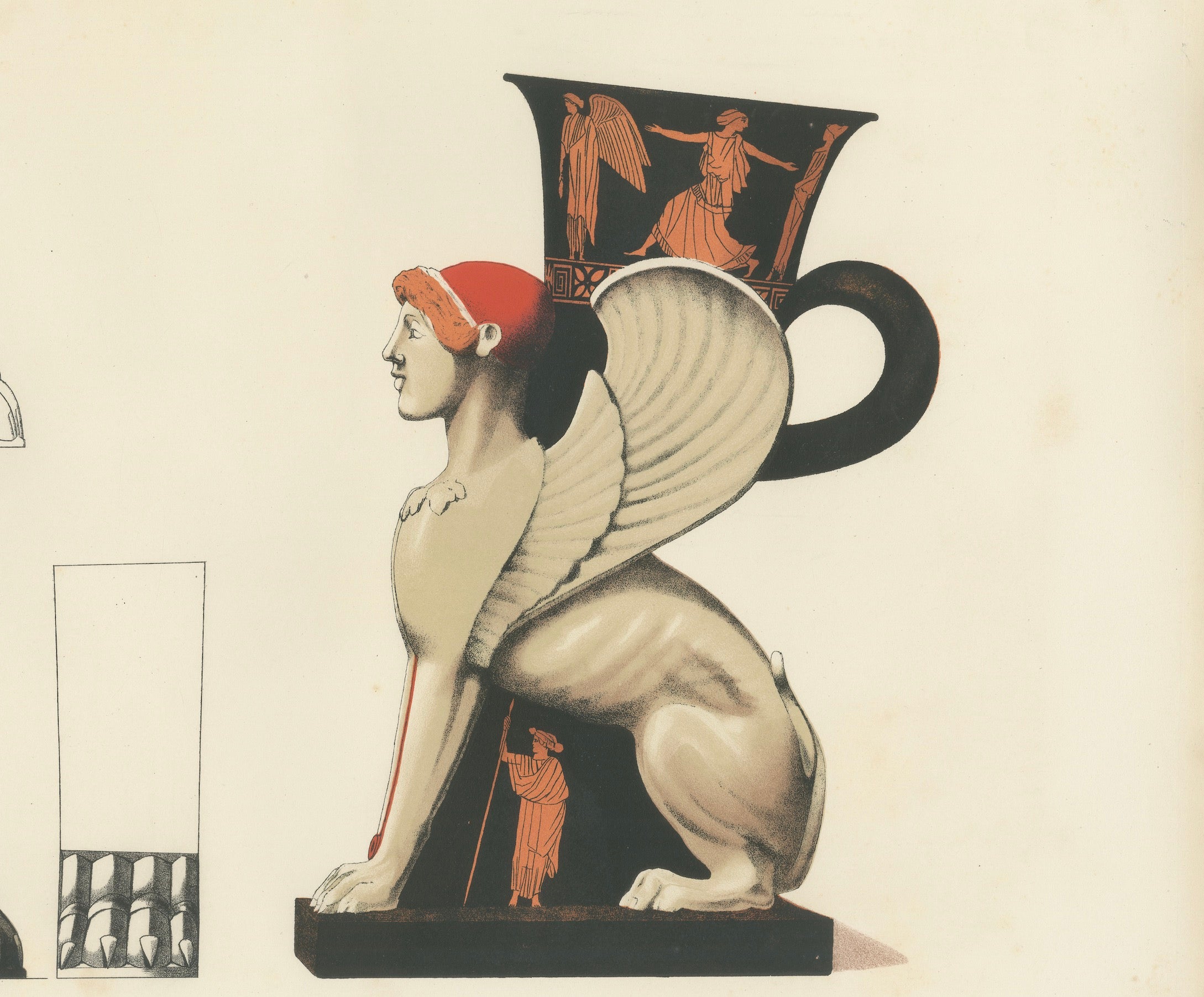
The right-hand object is particularly striking. Formed as a seated sphinx, it combines the head and upper torso of a woman with large wings and the crouching body of a lion-like creature. The sculptural vessel is rendered in cream, black, terracotta and muted earth tones, with additional painted figural decoration incorporated into its body.
Rising behind the sphinx is a black vessel element decorated with classical figures in terracotta red. The unusual combination of sculpture and functional ceramic form makes this one of the most distinctive objects illustrated anywhere in Genick’s series.
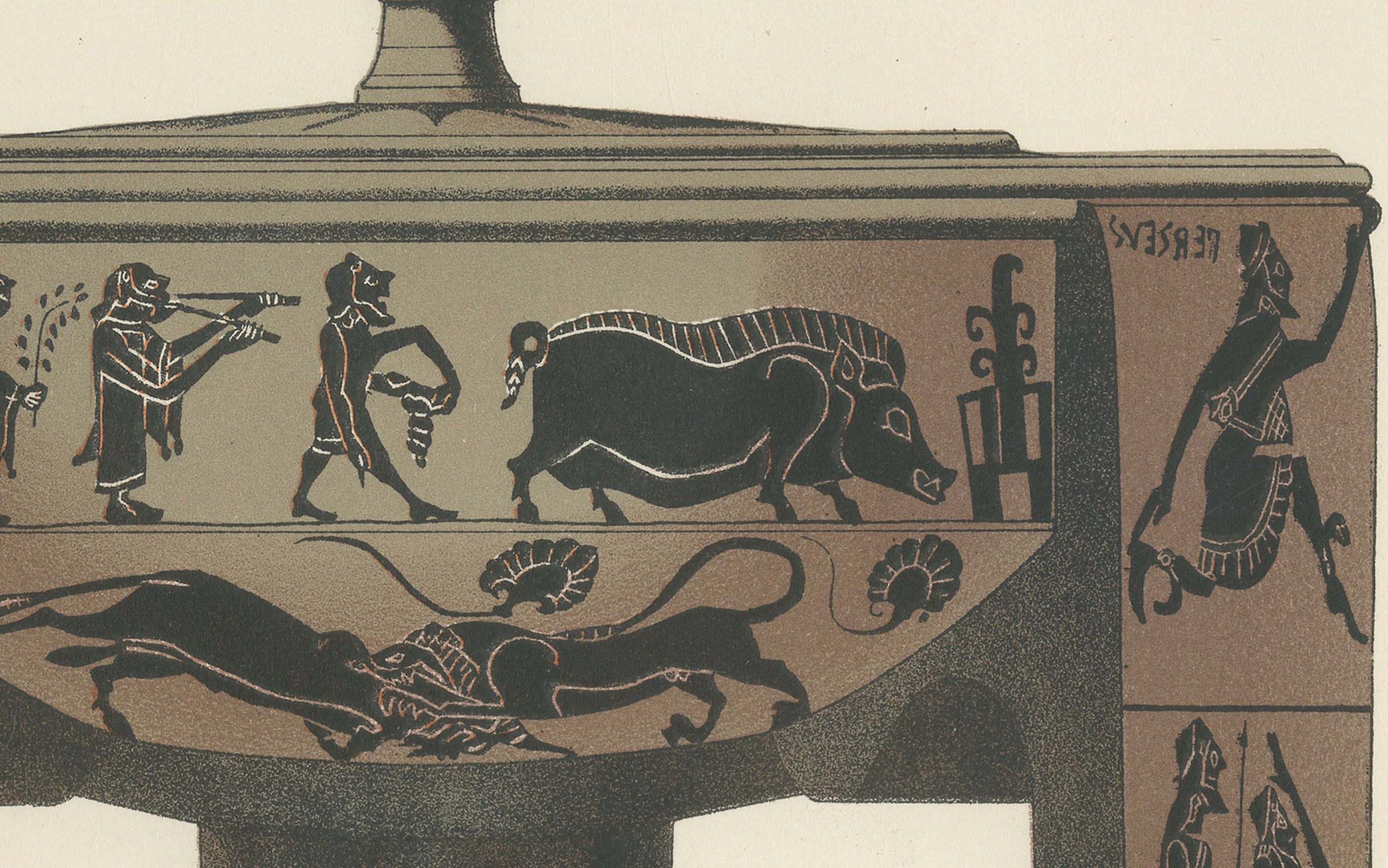
At left is an equally fascinating architectural storage vessel supported on substantial animal-paw feet. Its surfaces are covered with small narrative and ornamental panels containing numerous figures and animals. Above it, Genick provides a large sectional drawing showing the construction of the vessel and its supporting structure. A further technical detail appears alongside.
Unlike the more familiar amphora and krater plates from the publication, this sheet demonstrates the extraordinary variety and inventiveness of ancient ceramic forms. The sphinx vessel in particular gives the composition exceptional decorative and archaeological interest.
The print originates from the second edition of Albert Genick’s important publication on Greek ceramics, published by Ernst Wasmuth in Berlin in 1883. The complete work comprised 36 color lithographic plates, including four double-page plates, illustrating amphorae, kraters, rhyta, storage vessels, decorative vessels and other examples of ancient Greek ceramic art.
The lithographs were produced by the Berlin printing establishment Hein & Mosler. Albert Genick (1837–1906), a Berlin-trained architect, became particularly known for his precise graphic documentation of ancient ceramics. This publication is regarded as his principal work. Complete examples are rare, and individual plates from the series are increasingly difficult to find.
Creator: Albert Genick (1837–1906)
Publisher: Ernst Wasmuth, Berlin
Printer: Hein & Mosler, Berlin
Plate: XXIV
Titles on plate: Vorrathsgefäss / Ziergefäss
Date: 1883
Edition: Second edition
Technique: Color lithograph
Origin: Germany
Sheet size: Approximately 46 x 68 cm (18.1 x 26.8 inches)
Orientation: Landscape
Period: Late 19th Century
Style: Neoclassical / Archaeological Revival
Condition:
Very good antique condition. The black, terracotta, cream and muted polychrome coloring remains well preserved. Light age-related toning with scattered minor foxing and spotting, principally visible in the surrounding margins. Minor wear and slight irregularity along the sheet edges consistent with age. Please study the photographs carefully as they form part of the condition description.
An original antique lithograph printed in 1883, not a modern reproduction.
The print is offered unframed. Any framed or interior images, if shown, are for presentation and inspiration only.
Additional companion plates from Albert Genick’s series are available separately.
Keywords:
Albert Genick, Greek sphinx, sphinx vessel, sphinx pottery, Greek mythology, ancient Greek sphinx, ancient Greek pottery, Greek ceramics, figural vessel, zoomorphic vessel, decorative vessel, storage vessel, Vorrathsgefäss, Ziergefäss, archaeological print, archaeological drawing, classical antiquity, ancient Greece, Greek art, Greek vase, ancient vessels, mythological creature, classical archaeology, neoclassical decor, Archaeological Revival, antique lithograph, color lithograph, ceramic art, classical art, Greek Revival, Grand Tour, Ernst Wasmuth, Hein Mosler, Berlin 1883, 19th century print, museum style decor