About this sheet
Orientalist Title Page Print - Maximilian in Bavaria, Middle East - 19th Century
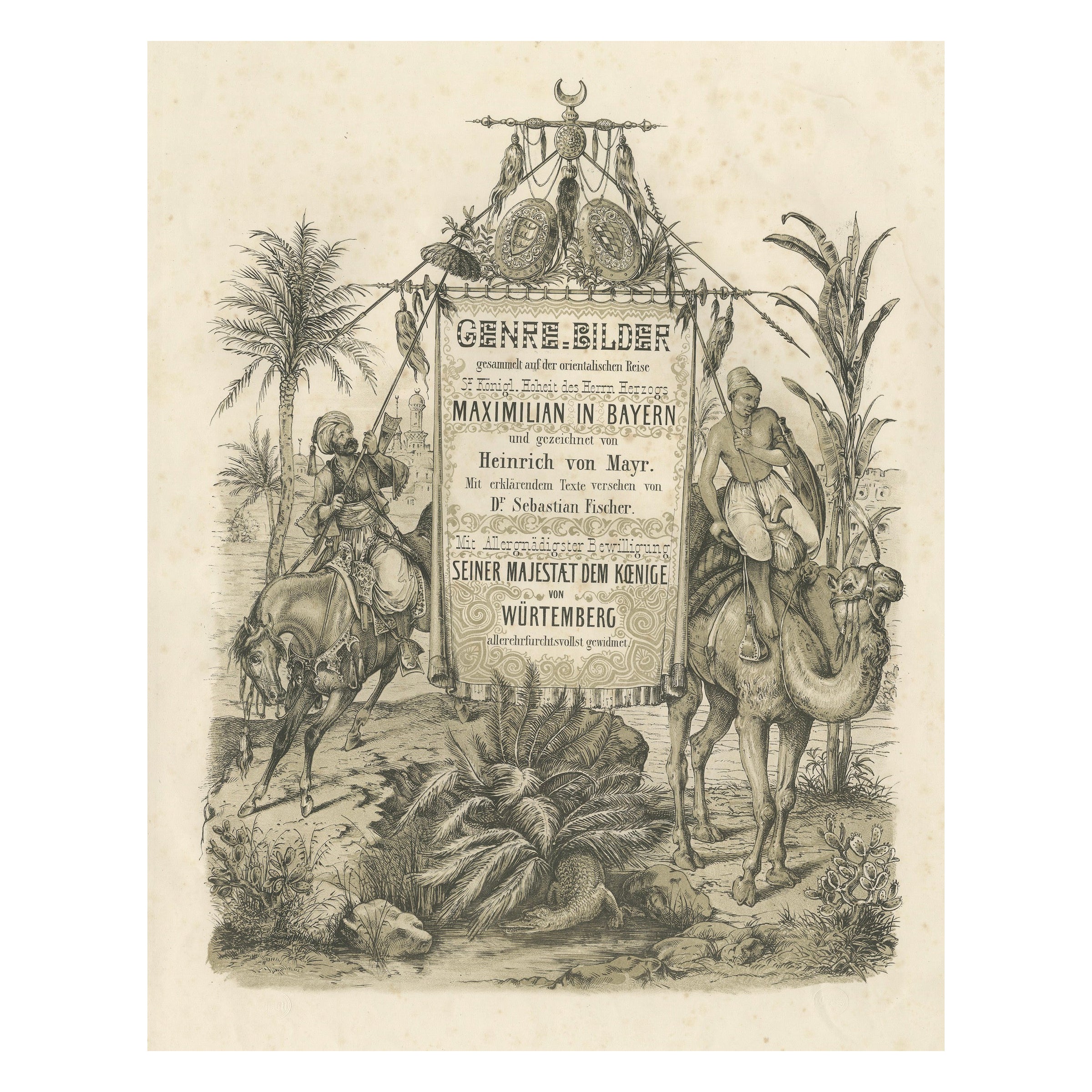
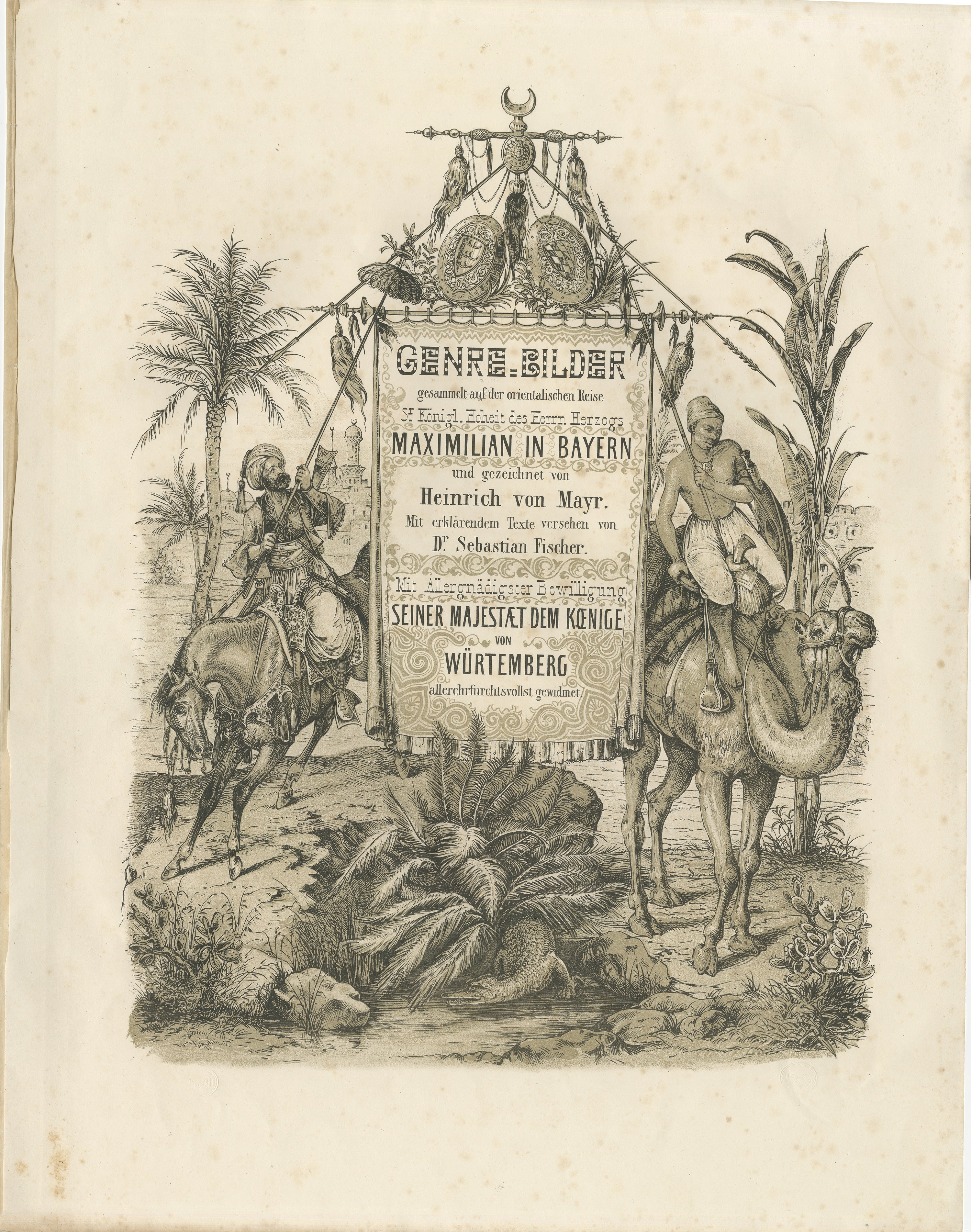
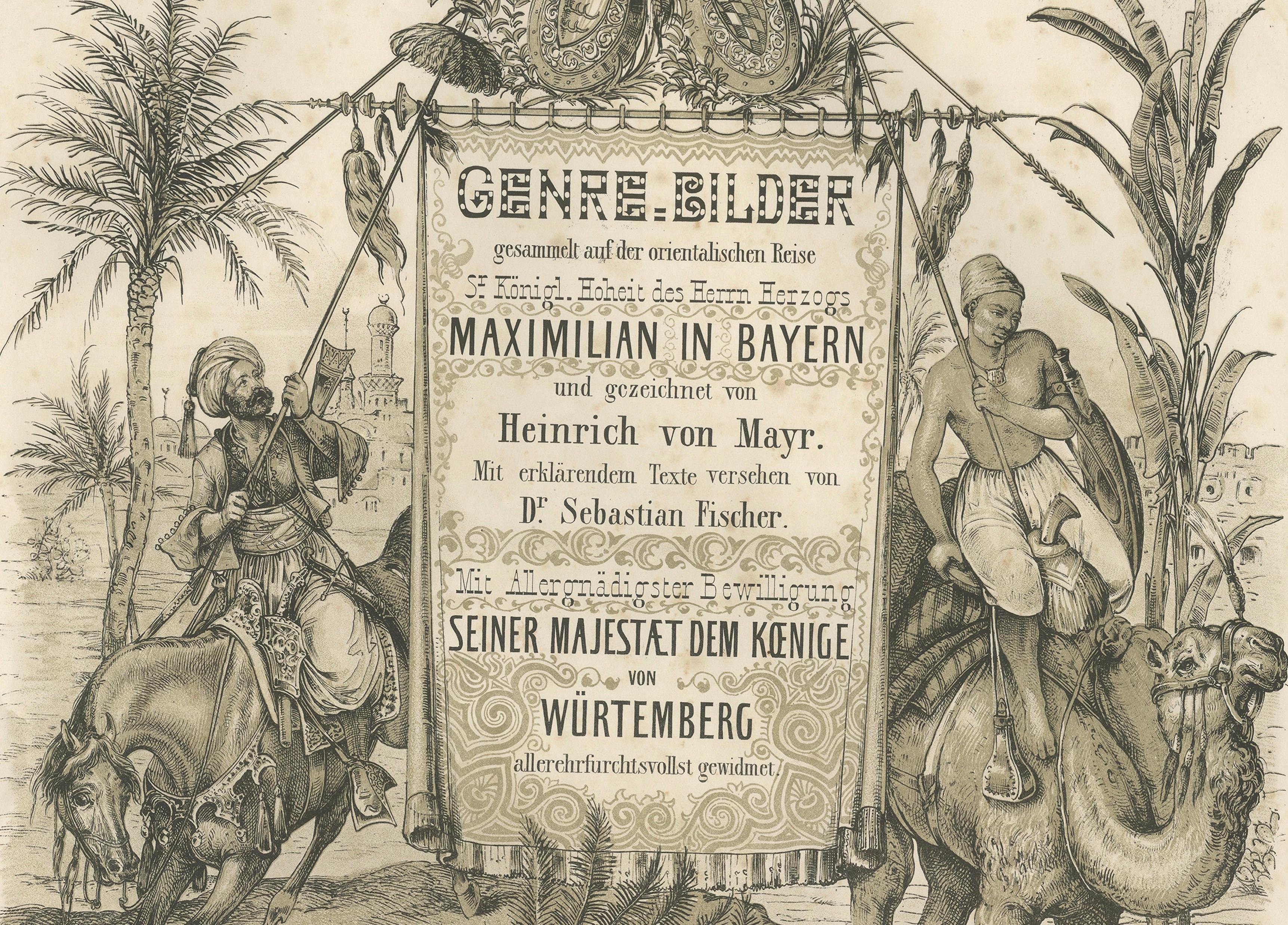
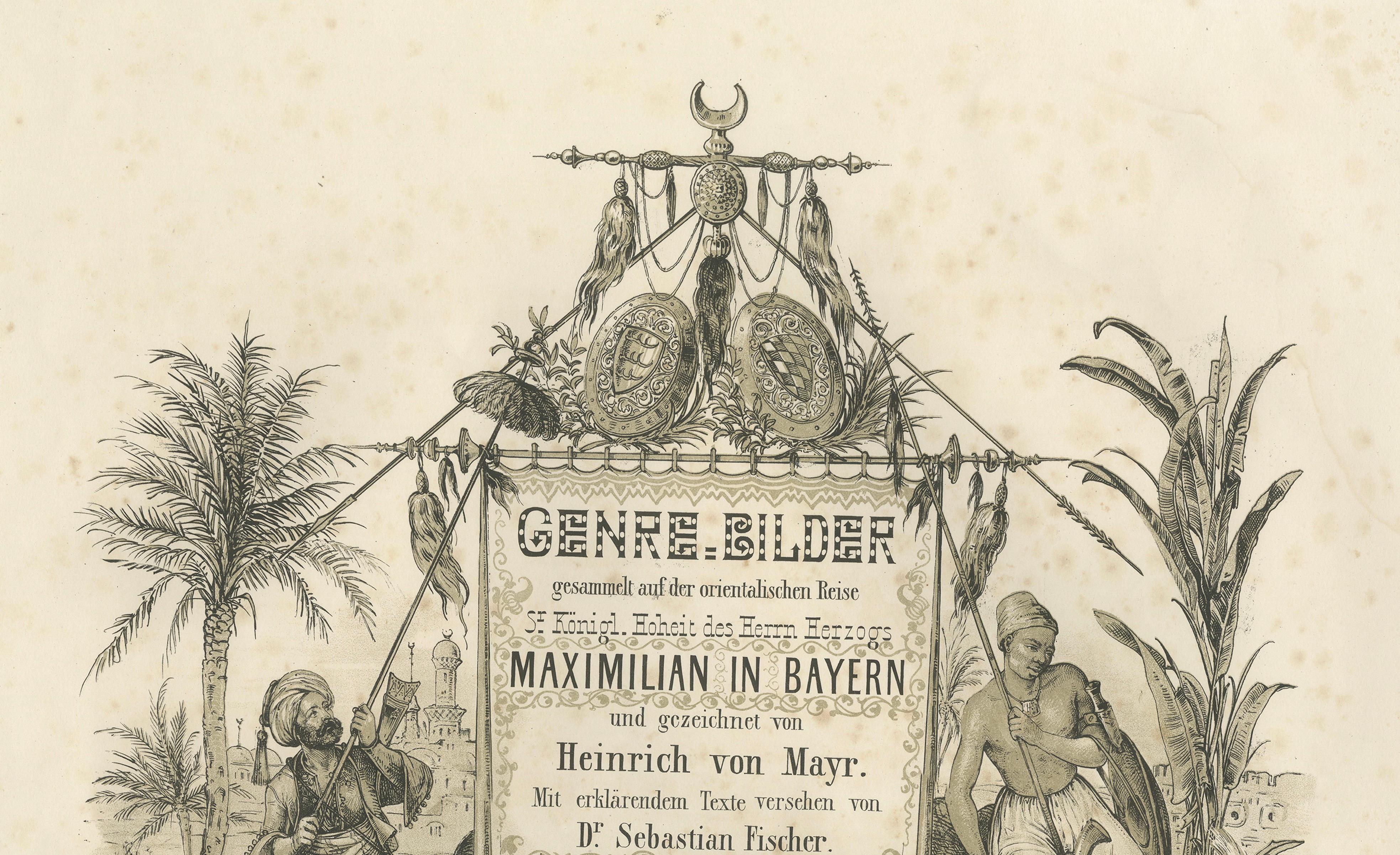
This highly decorative and visually powerful antique title page engraving introduces the celebrated work “Genre-Bilder,” documenting the oriental journey of His Royal Highness Duke Maximilian of Bavaria. Executed after drawings by Heinrich von Mayr and accompanied by scholarly text by Dr. Sebastian Fischer, this grand composition represents one of the finest examples of 19th-century European Orientalist book illustration.
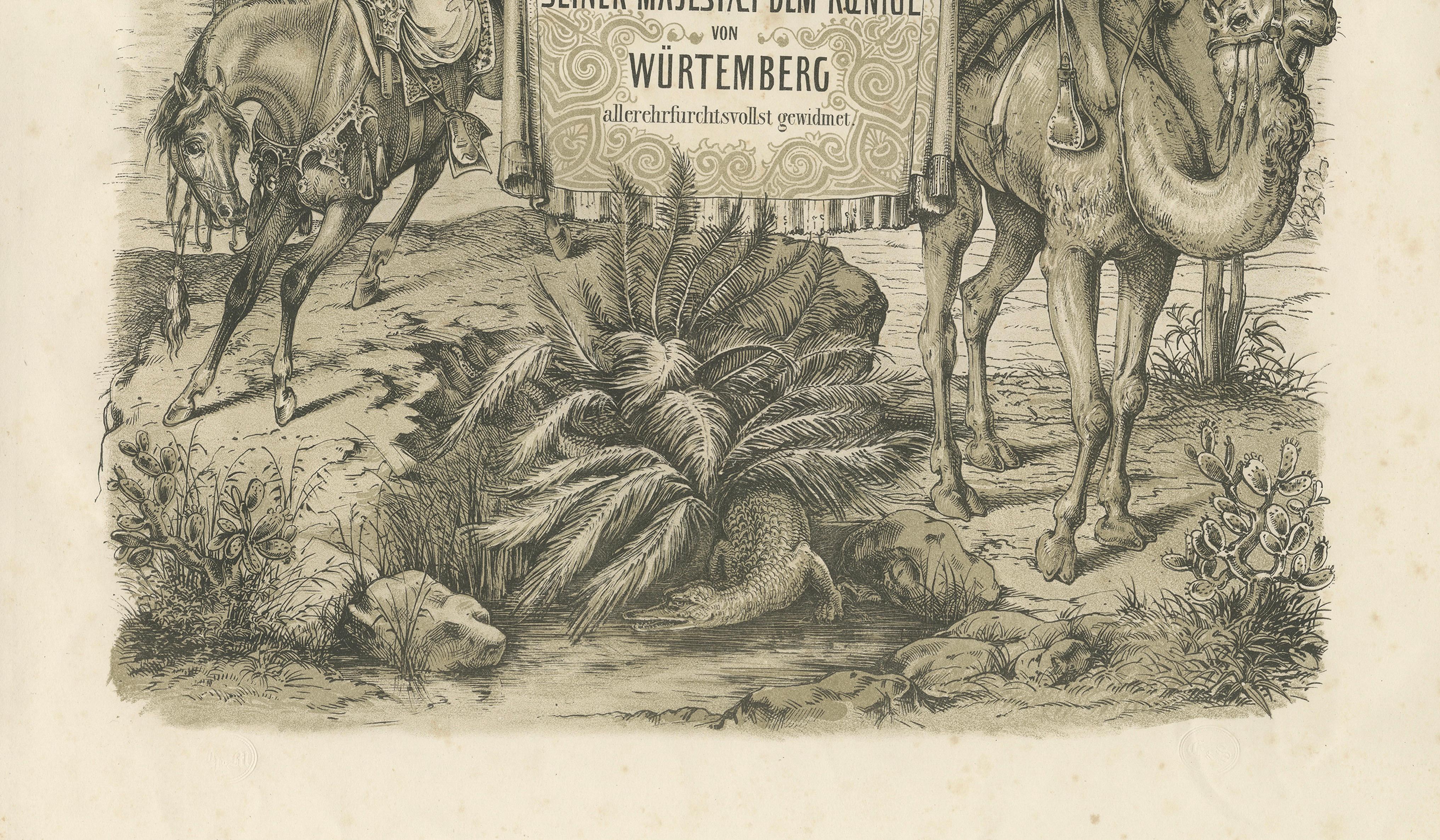
At the centre of the composition hangs an ornate cartouche bearing the full dedication, framed by rich symbolic elements of the Middle East. To the left stands a mounted rider in traditional Near Eastern attire, his horse stepping dynamically forward, with an exotic city skyline and minarets rising behind him. To the right, a camel and handler create a perfect visual counterbalance. Lush palms, reeds, desert flora, and a small crocodile in the foreground reinforce the romanticized vision of the Orient that captured the European imagination during this period.
Above the title hang crescent symbols, shields, tassels, and ceremonial weapons, evoking both Islamic iconography and chivalric European heraldry. The entire composition is carefully staged like a theatrical proscenium, demonstrating the era’s flair for storytelling through decorative engraving.
Duke Maximilian of Bavaria was a noted traveler and patron of the arts, and his Middle Eastern journey was widely celebrated in aristocratic and academic circles. Heinrich von Mayr’s refined draftsmanship captures both ethnographic detail and romantic drama, blending documentary observation with artistic fantasy. This title page served not only as an introduction to the book but also as a statement piece symbolizing European curiosity, imperial reach, and the growing fascination with the cultures of North Africa and the Middle East.
Today, this engraving stands as both a striking standalone artwork and an important historical document of 19th-century Orientalism. Its strong symmetry, narrative richness, and architectural framing make it exceptionally suitable for high-end interior decoration, whether in a library, study, gallery wall, or hospitality setting. Collectors of travel history, Middle Eastern imagery, and European book illustration will recognize this as a foundational visual artifact of the genre.
Condition report:
Good antique condition. Light overall age-related toning and scattered foxing visible in the margins. Image area remains strong and well-defined. No major tears or losses observed. Plate impression faintly visible.
Framing tips:
This piece benefits beautifully from a large-format presentation. A wide ivory or warm cream mat will balance the detailed engraving and soften the aged paper tone. A dark walnut, black, or lightly distressed gilt frame will provide strong architectural presence without overpowering the image. Museum glass with UV protection is recommended.
Technique: Steel engraving
Maker: Heinrich von Mayr, Germany, mid-19th century