Victorian Bridal Elegance: Exquisite Wedding Gowns in Lithograph, 1889
€ 210
One of a kind: this is the sheet in the photographs. Ships from Langweer, the Netherlands.
Date
1889
Sheet size
43.5 × 29 cm (17.1 × 11.4 in)
Condition
Good
Reference
BG-13828-14
Condition
given age. General age-related toning and/or occasional minor defects from handling. A few remains of fingerprints, but outside the image. Please study scan carefully.
About this sheet
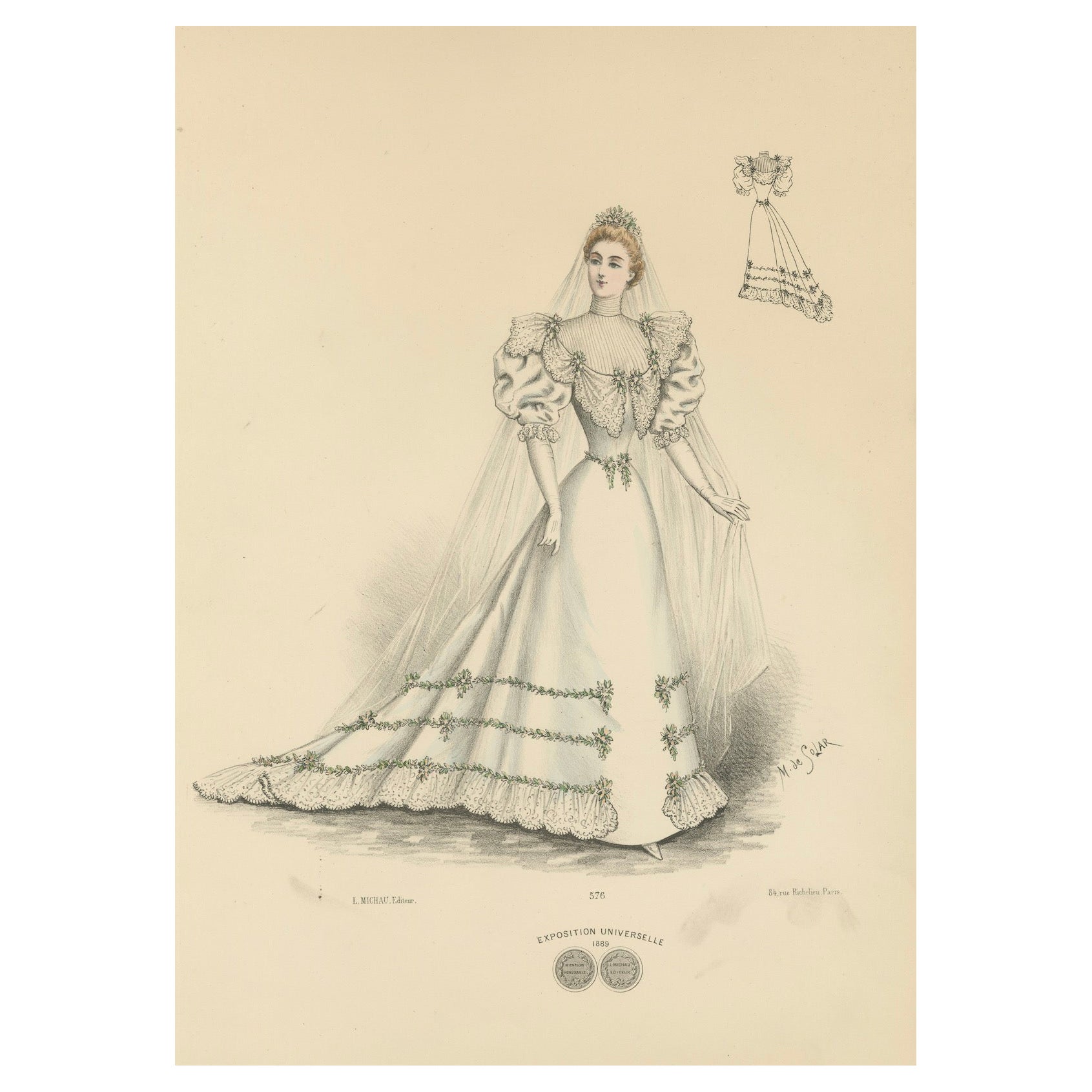
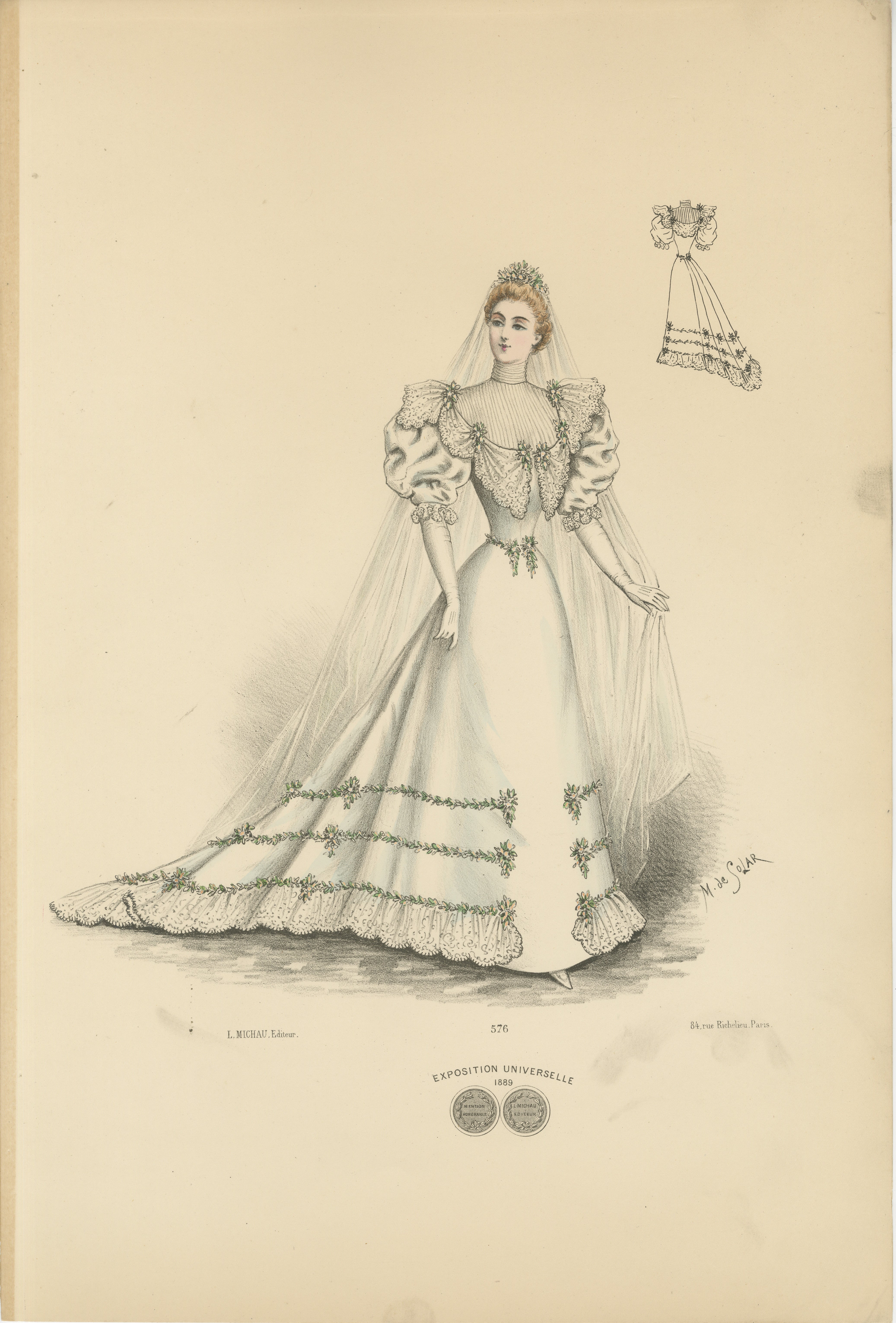
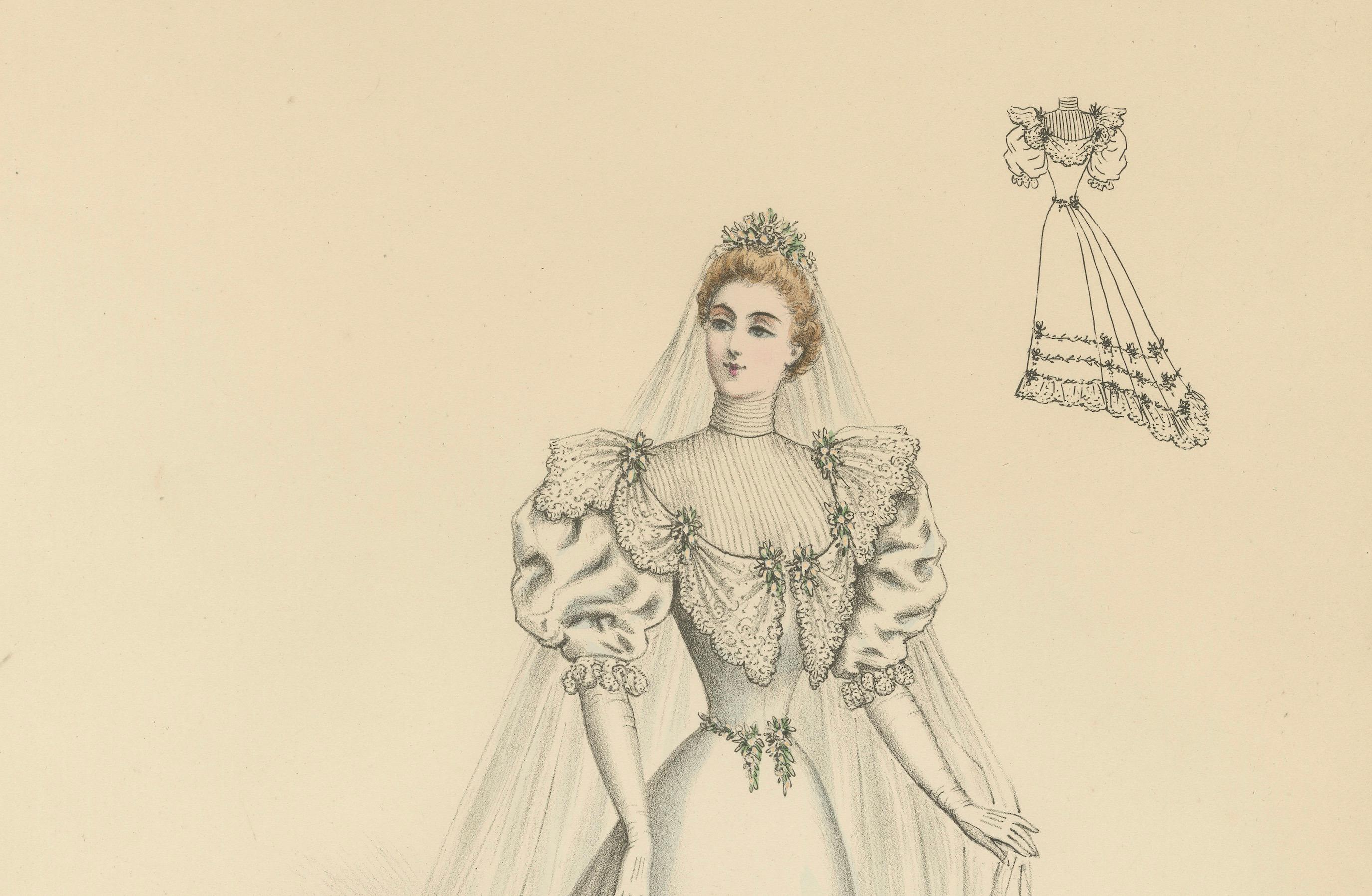
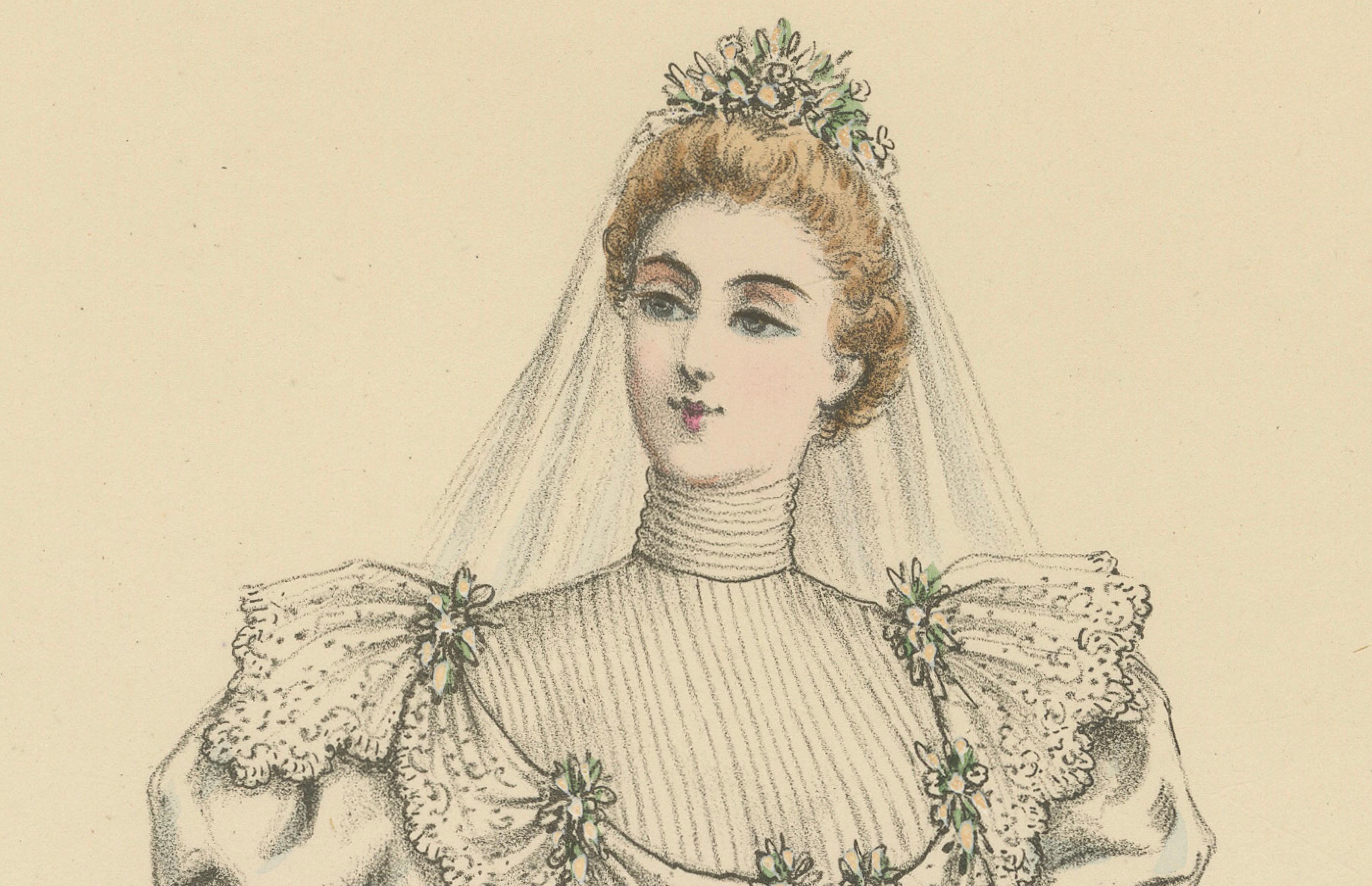
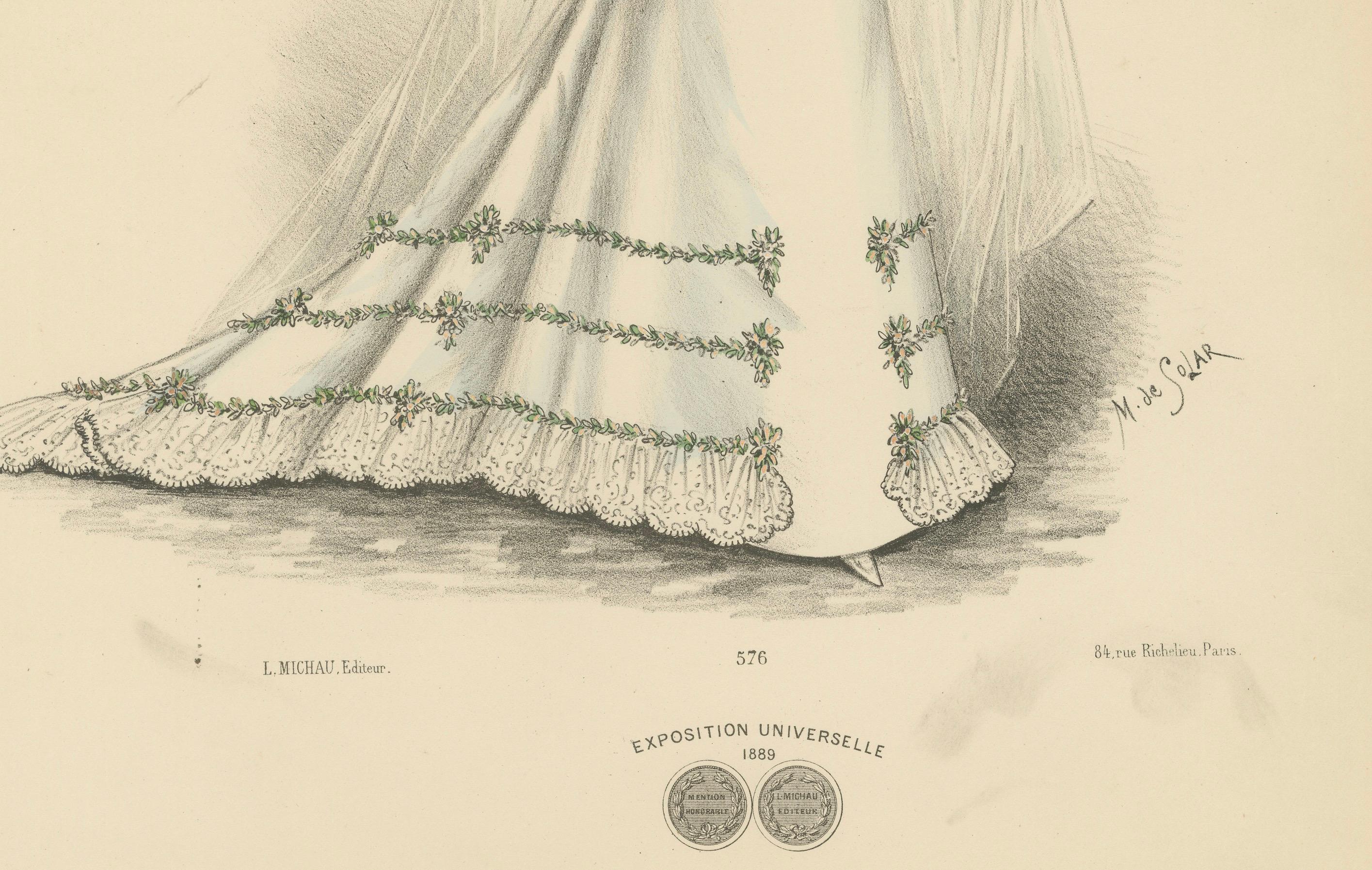
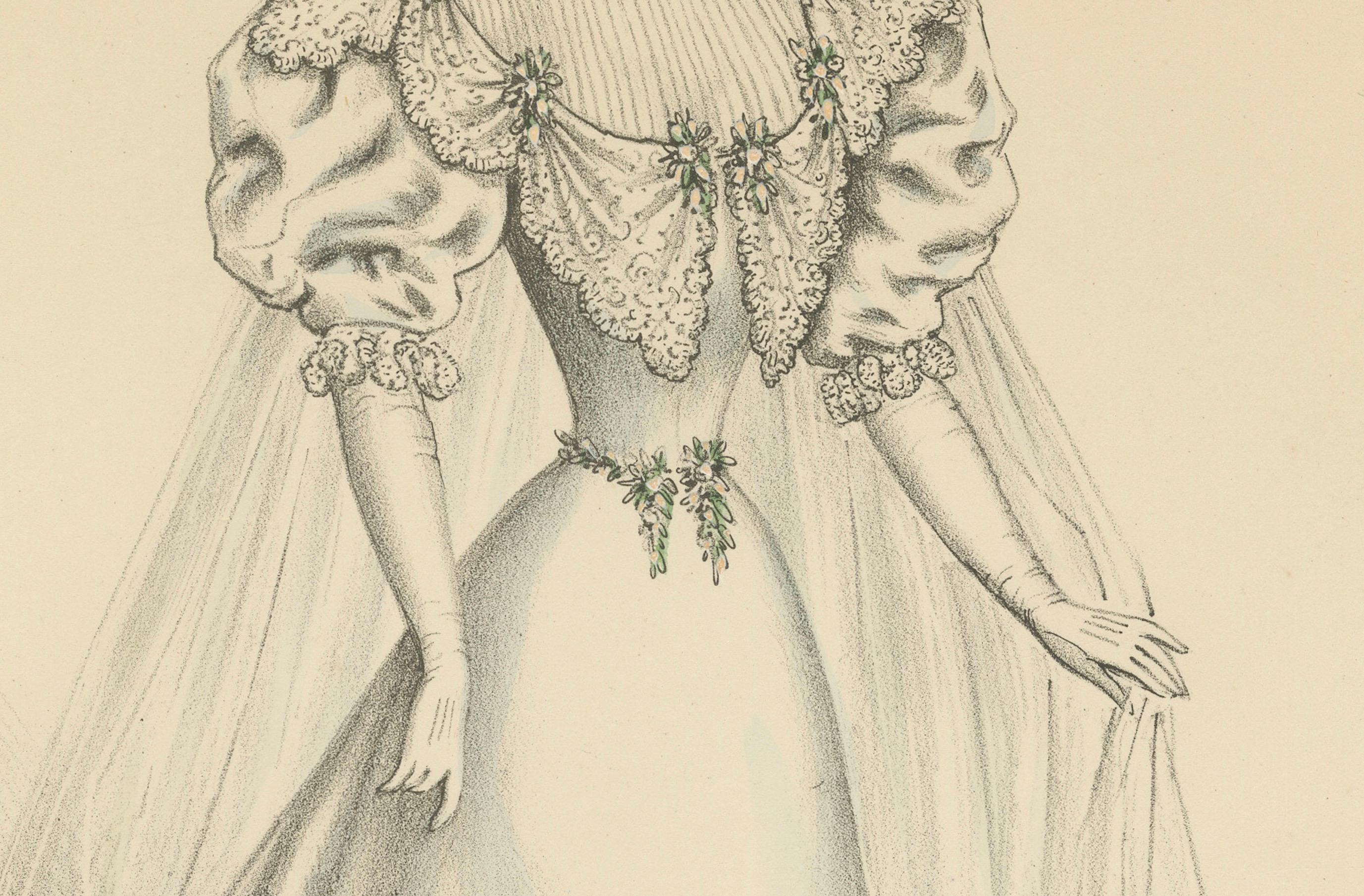
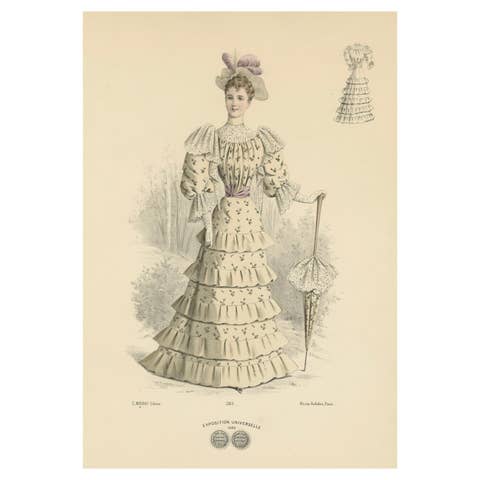
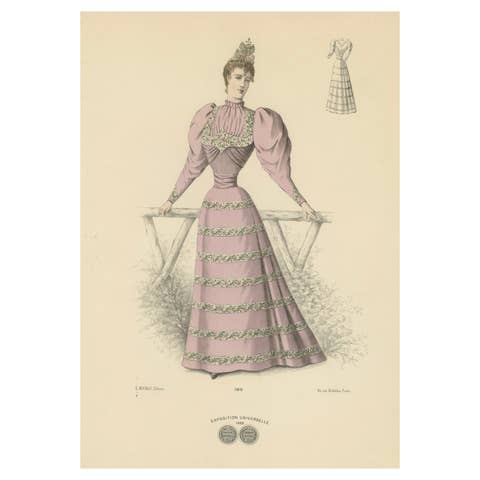
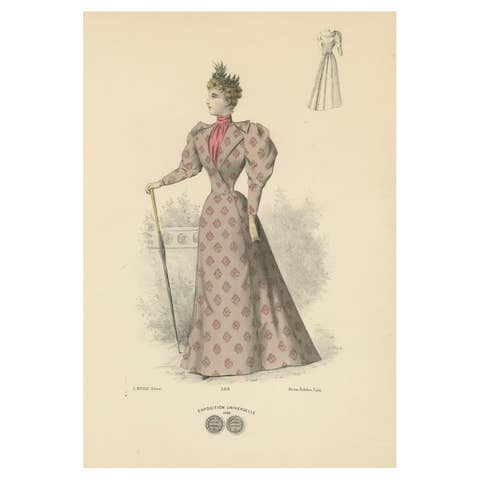
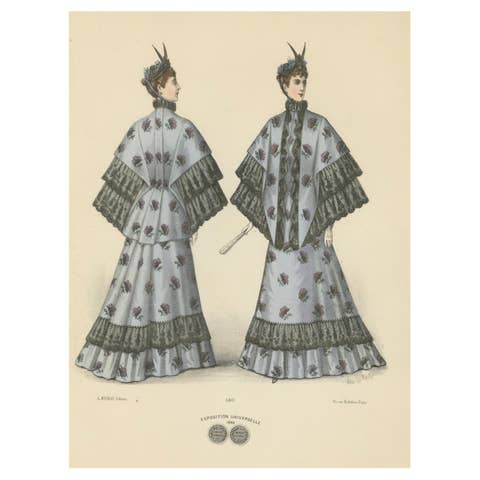
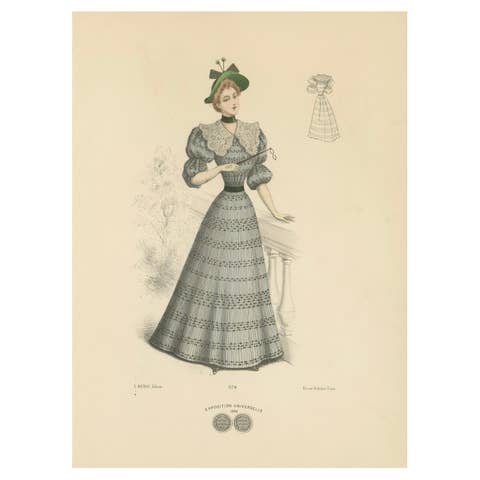
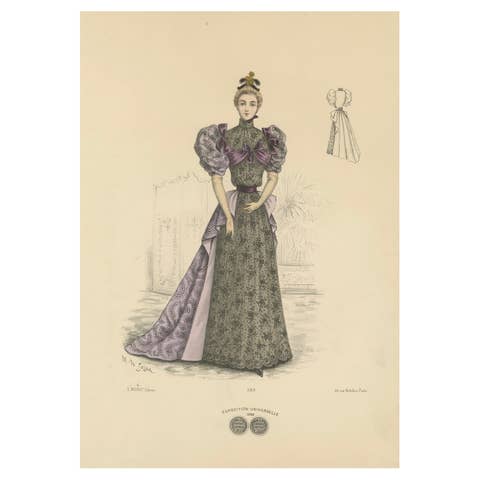
This lithograph portrays a bride in a magnificent wedding gown from 1889, exemplifying the opulent and romantic style of the late Victorian era. The gown is crafted from a luxurious white fabric, adorned with intricate lace and delicate floral appliqués. The bodice features a high lace collar and puffed sleeves, which taper elegantly at the wrists, while the neckline and shoulders are decorated with ornate lace detailing. The waist is cinched, and the full skirt flows into a long train embellished with garlands of flowers and lace trim. The bride wears a long, flowing veil attached to a floral headpiece, adding to her regal and ethereal appearance. She is depicted standing with grace, holding her veil delicately, as if preparing to walk down the aisle.
This lithograph was produced by L. Michau, a well-known publisher of fashion illustrations during the 19th century. The design is attributed to M. de Solar, as indicated by the signature on the image.
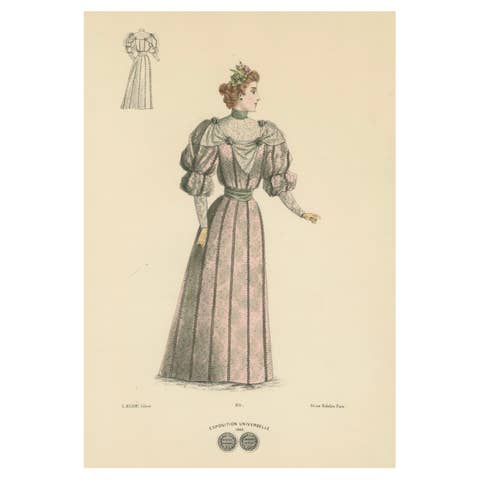
This illustration is part of a series likely created for the Exposition Universelle of 1889, held in Paris. The fashion plates from this collection were designed to showcase the latest trends in women's fashion, including bridal wear, reflecting the elegance and luxury that were celebrated at this grand international exhibition.
The piece is a lithograph, a popular printmaking technique in the 19th century that allowed for the production of detailed and high-quality images. Lithography involves drawing on a flat surface with a greasy substance, which is then treated to allow ink to adhere only to the drawn areas. This method was especially favored for fashion plates due to its ability to capture intricate details and subtle color variations, making it ideal for depicting elaborate clothing designs.