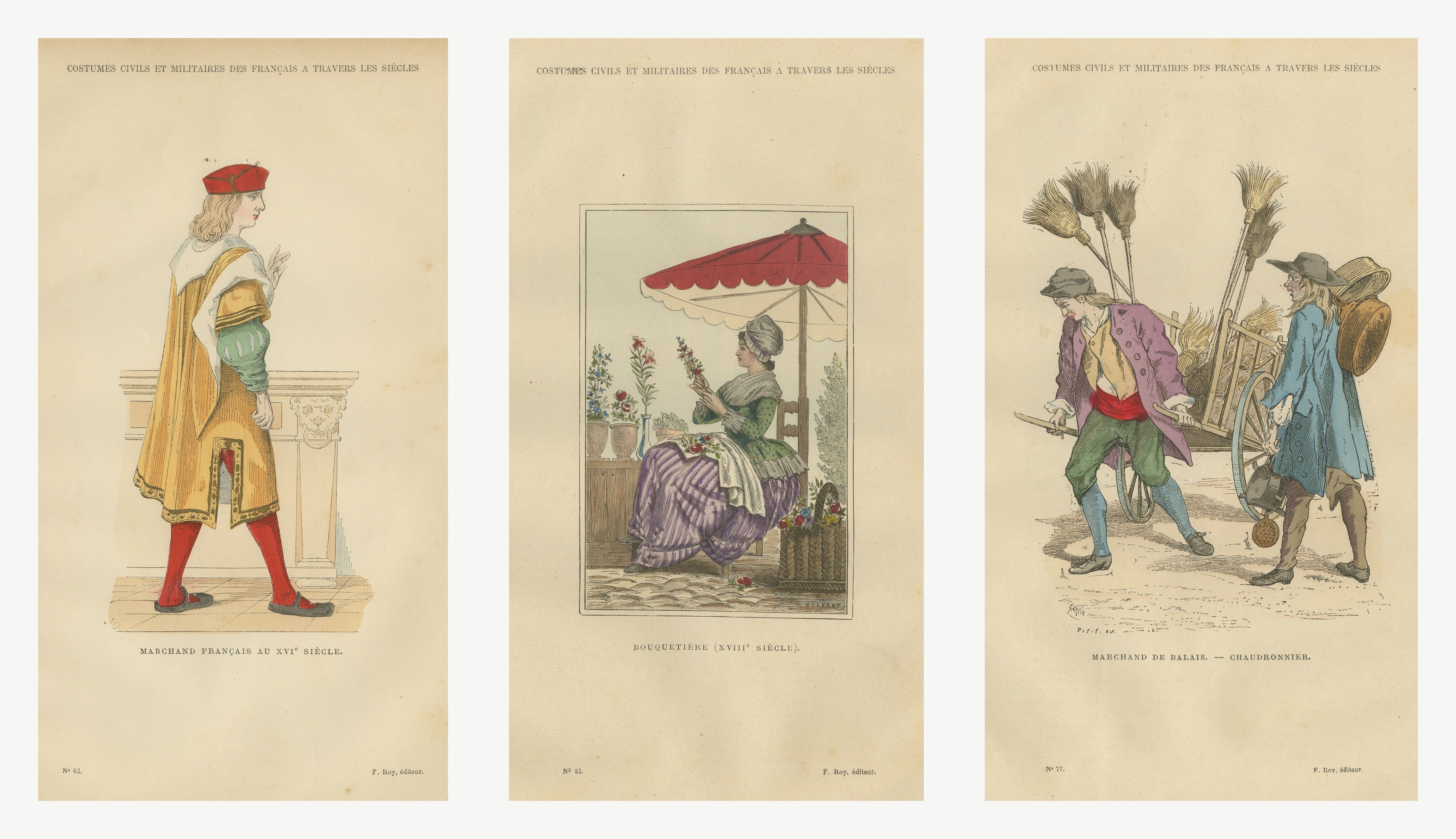
Street Traders of Old France, Set of Three Antique Prints, circa 1882
€ 270
Original antique · The actual sheet photographed · Certificate of authenticity on request · Sold unframed · Worldwide shipping from € 15 (rates)
Date
circa 1882
Mapmaker / artist
French School
Publisher
F. Roy, editeur, 185 rue Saint-Antoine, Paris
Technique
Woodcut
Coloring
Original hand color
Sheet size
28.5 × 20 cm (11.2 × 7.9 in)
Condition
Good
Reference
BG-13382-50
What the condition grades mean
Excellent
Bright and clean, with no faults worth mentioning.
Very good
Only light signs of age, such as faint toning.
Good
Normal signs of age for a sheet of this period: toning, some foxing, small marks or neat old repairs.
Fair
Clear faults such as staining, tears or repairs, priced to match.
Every fault we see is written in the condition note, and the whole sheet is shown uncropped in the photos.
Condition
Light uneven toning, browner toward the edges. Marked handling soiling along the edges of all three sheets. Scattered foxing in the margins of all three sheets. Slight wear at the corners of one of the three sheets.
About this sheet
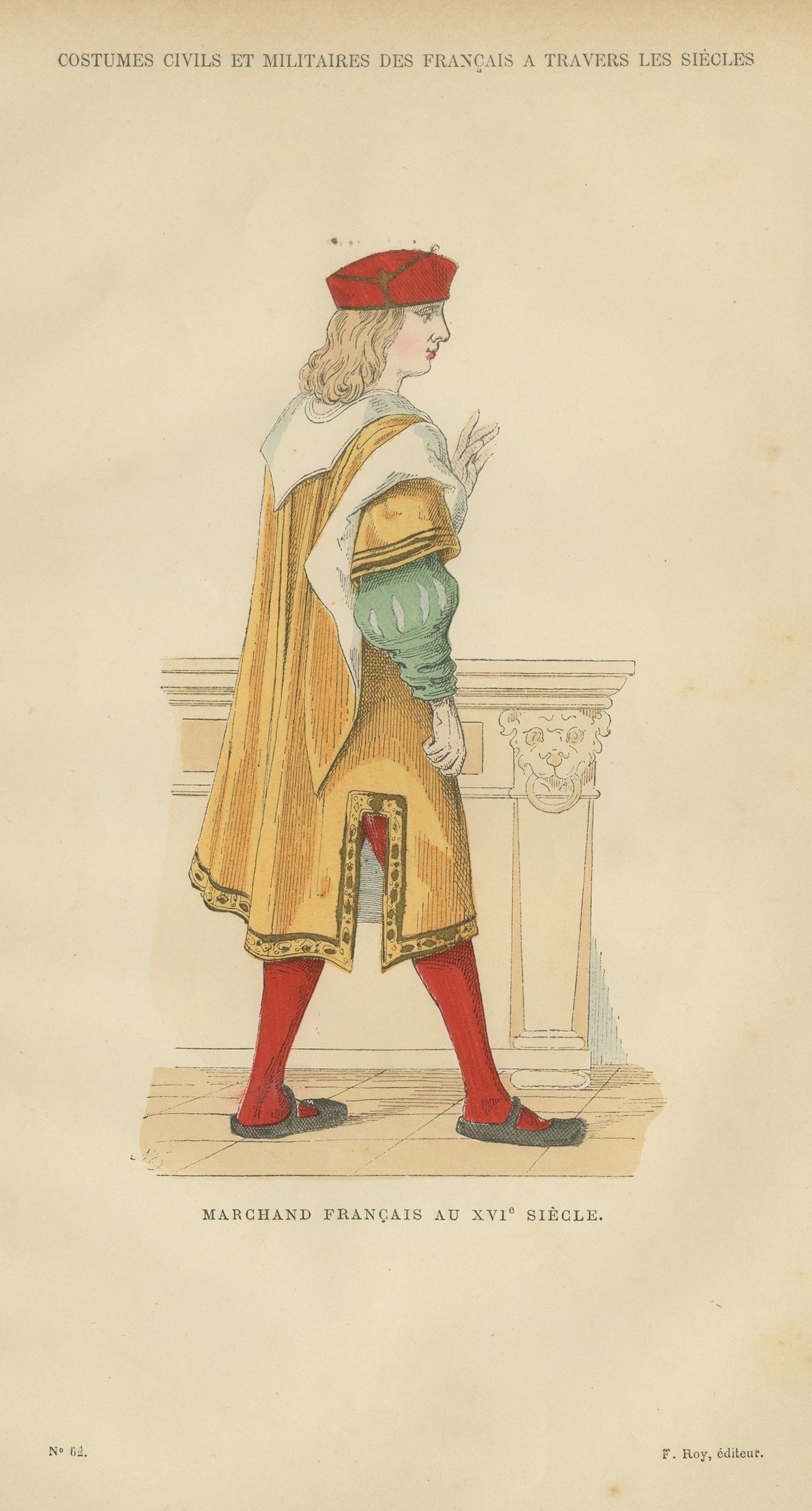
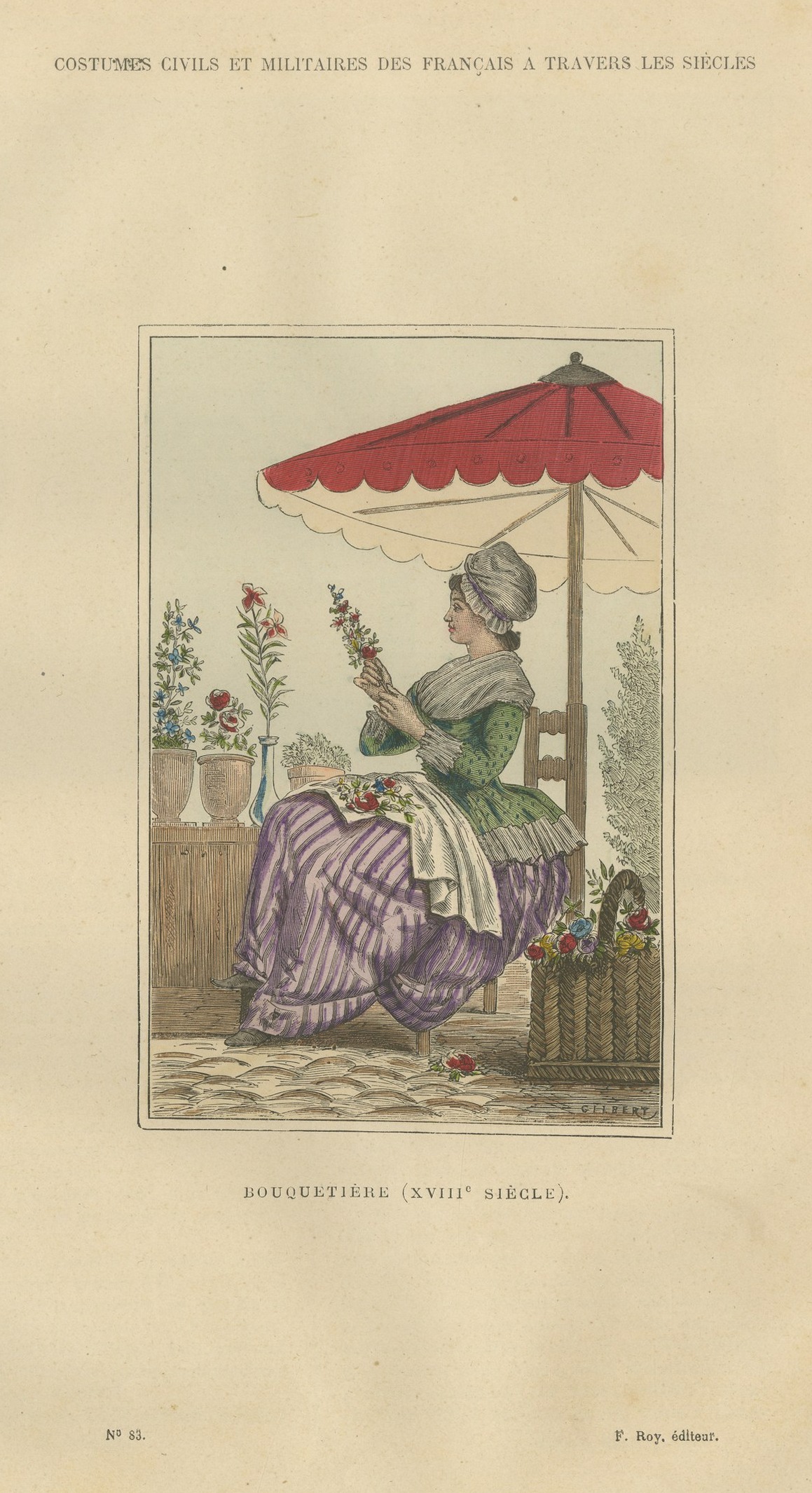
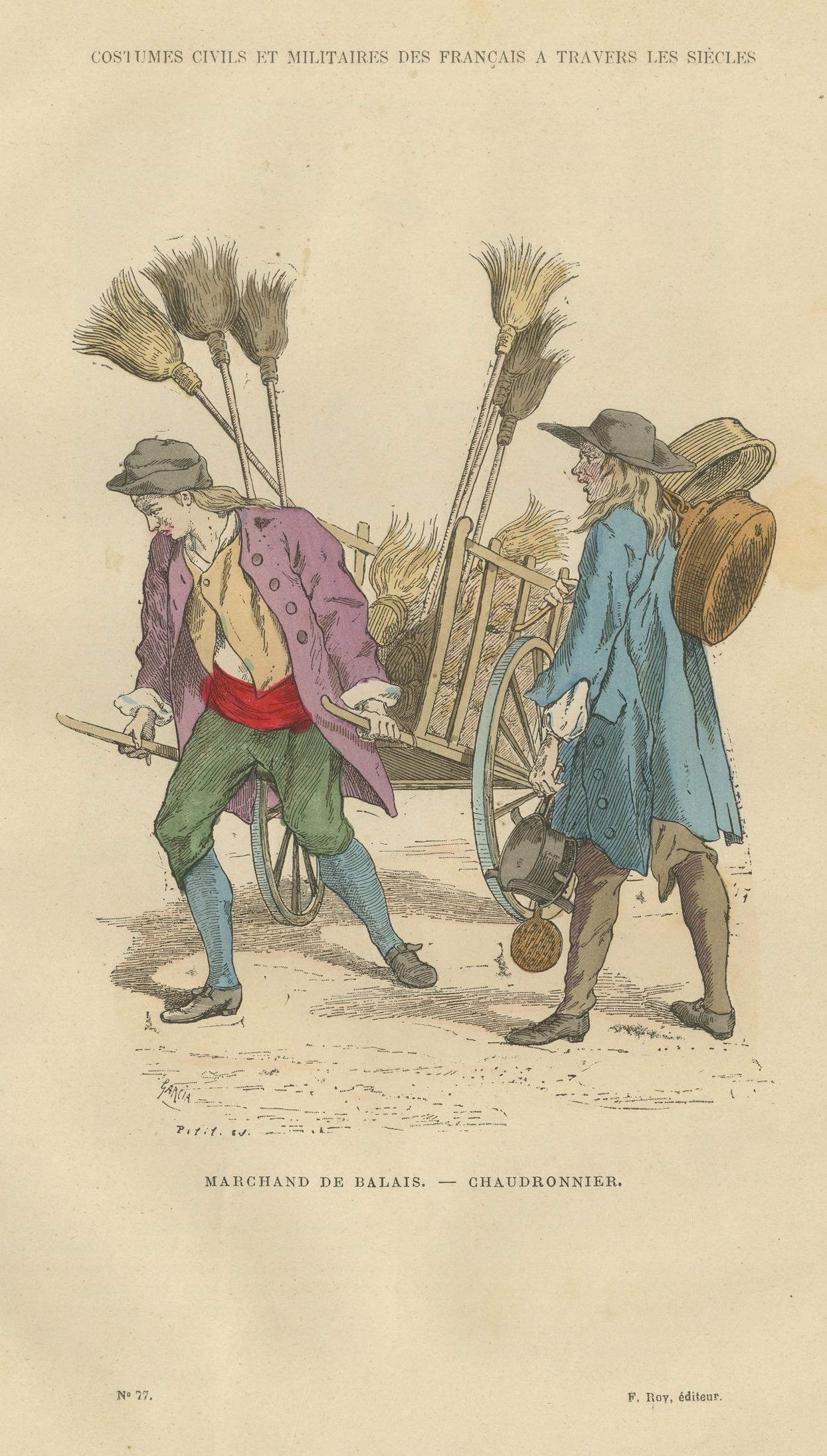
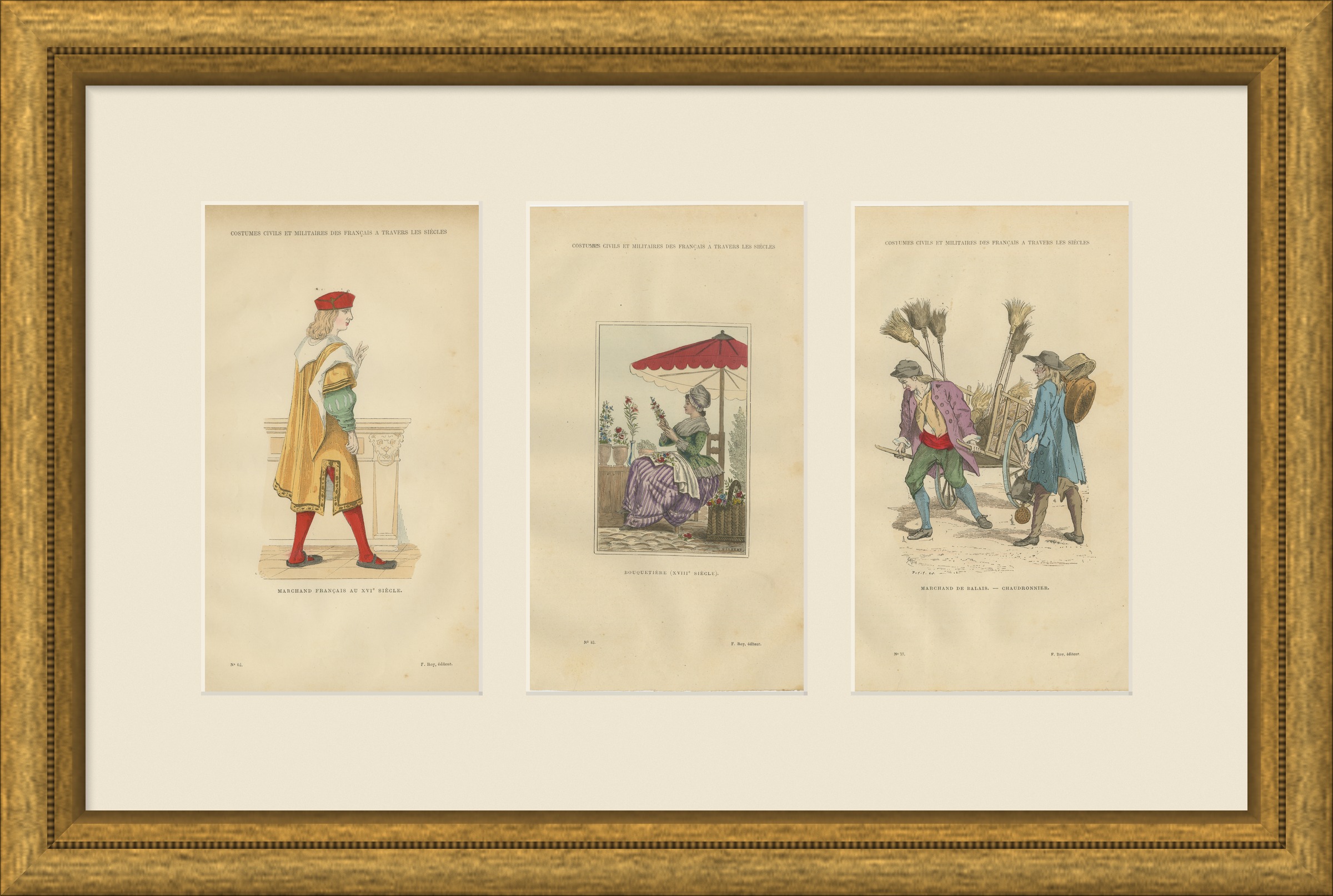
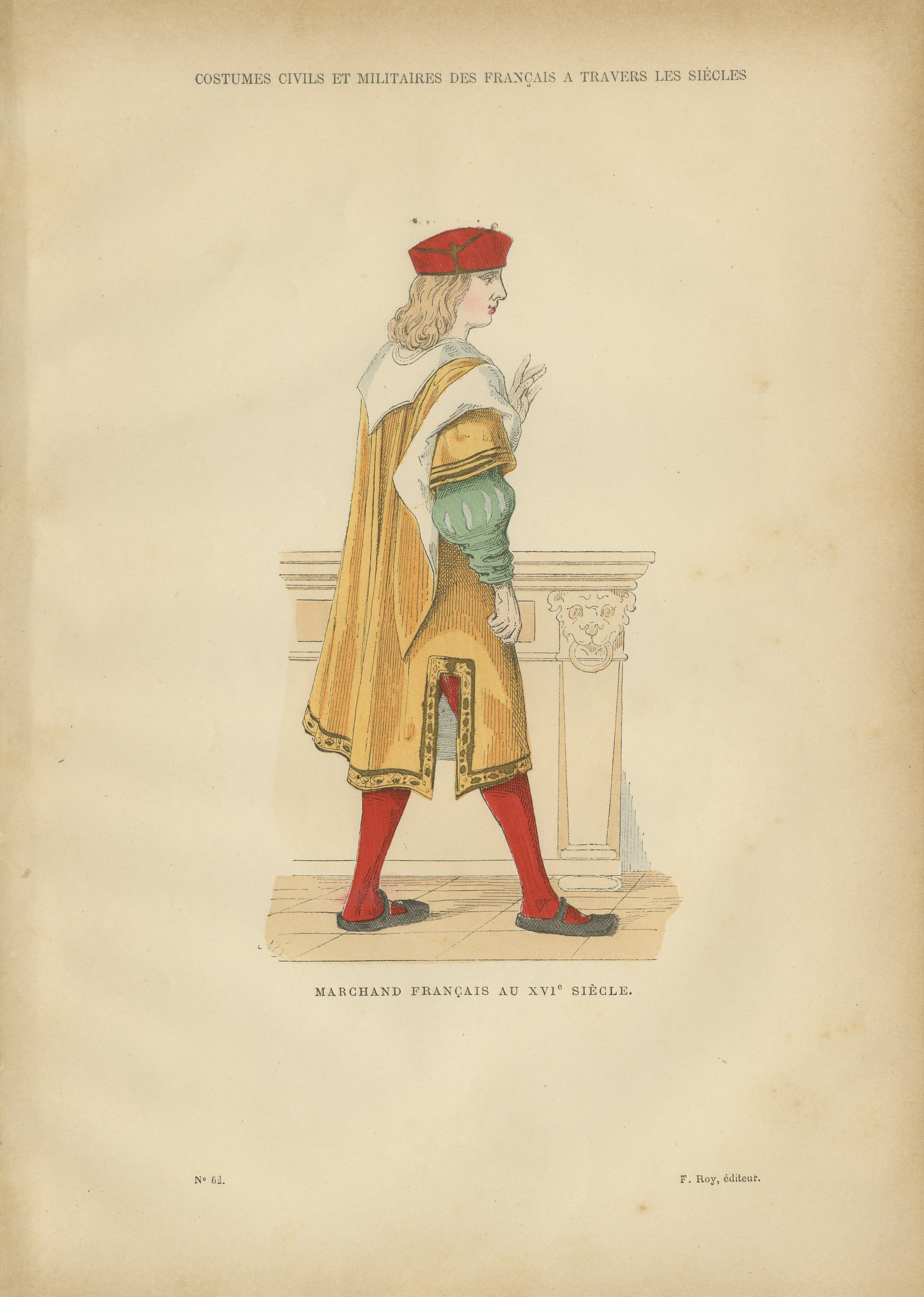
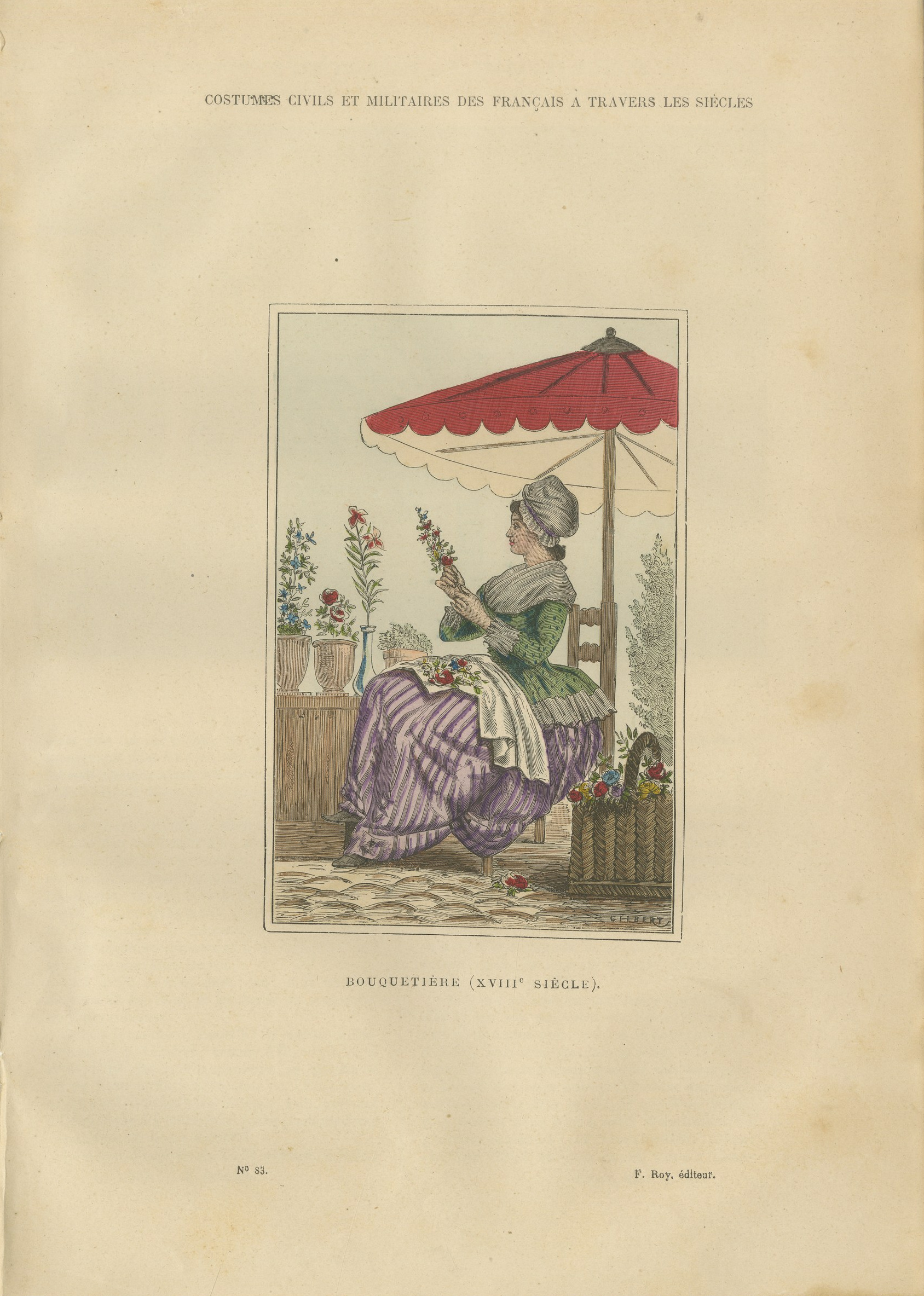
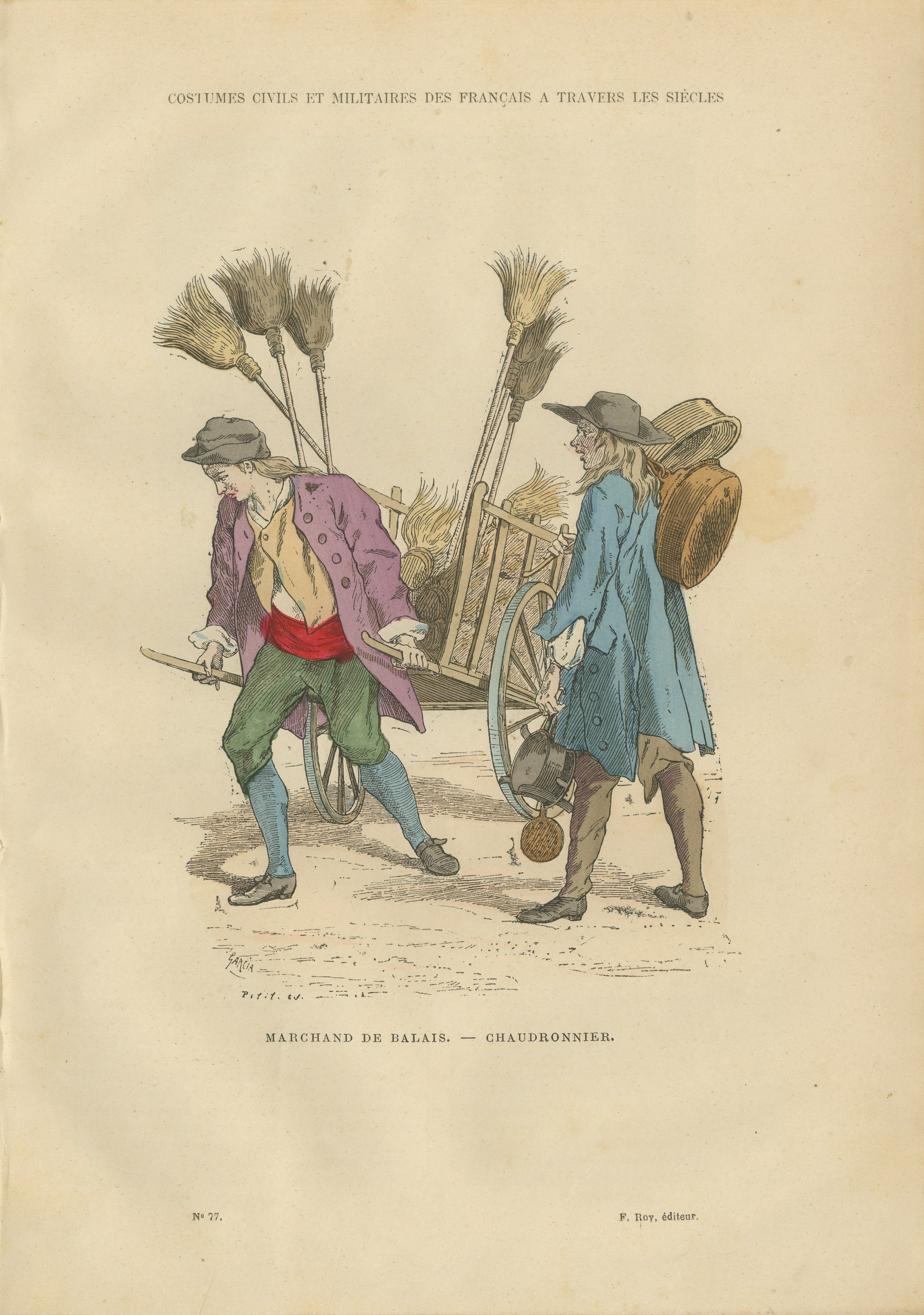
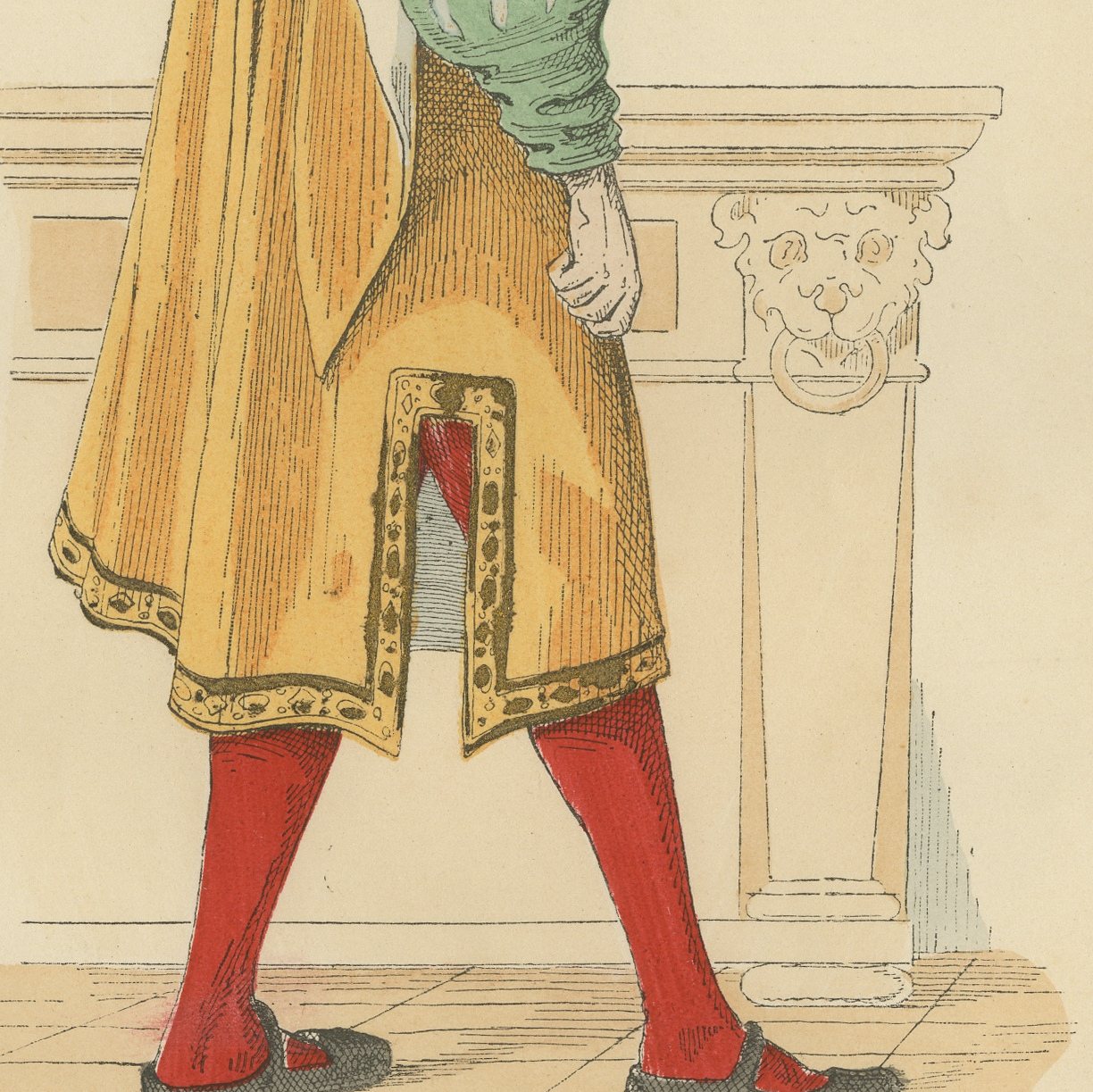
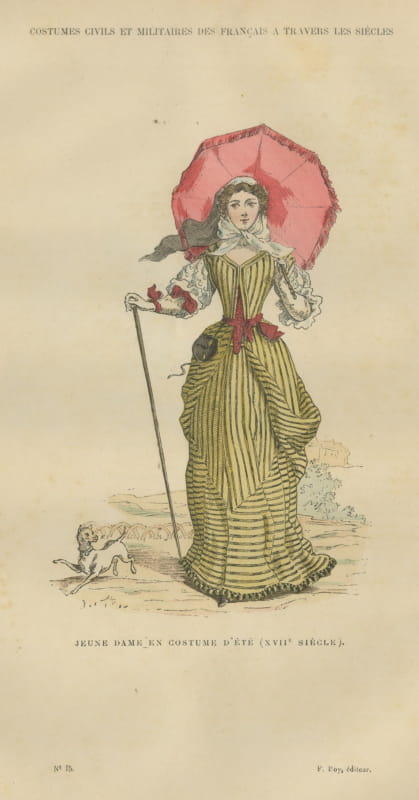
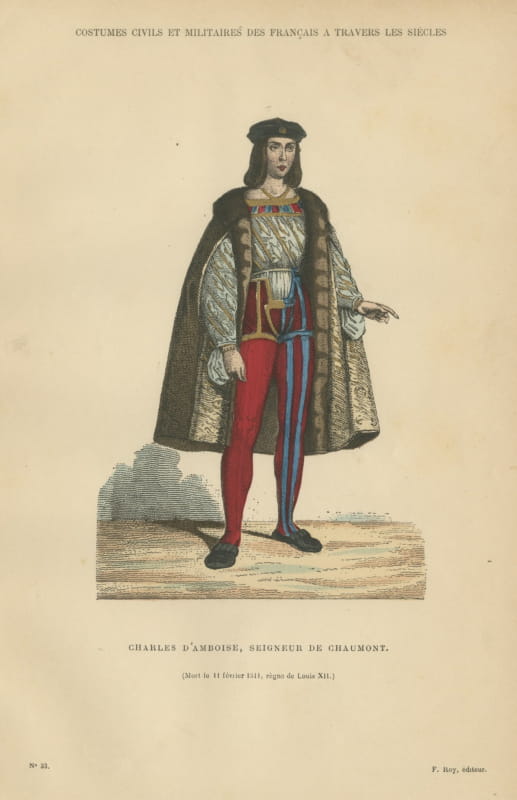
This is a set of three original antique hand-colored wood engravings, sold together as one lot, from Augustin Challamel's La France et les Francais a travers les siecles, Paris, circa 1882. The sheets are, in order: French Merchant of the 16th Century; Flower Seller of the 18th Century; Broom Seller and Tinker. A French merchant of the sixteenth century in a long dark gown faced with fur over a doublet, a flat cap and a purse hung at his belt, standing with one hand holding a folded paper. A flower seller of the eighteenth century standing with her basket on her arm, in a caraco jacket, a striped petticoat, an apron and a flat straw hat tied under the chin. A broom seller with his bundle of besoms on his shoulder beside a tinker carrying his pots and a brazier, both in patched working clothes and heavy shoes, engraved by Petit.
The engraving comes from the costume suite of Augustin Challamel's La France et les Francais a travers les siecles, F. Roy, editeur, Paris, circa 1882. Almost every plate in the series cites its source in the caption, a miniature in the Bibliotheque nationale, a tapestry, a picture in the Louvre or a sheet from the Gaignieres collection, and that habit of citation is what lifts the series above the invented costume books of the same decade. The technique is wood engraving, cut on the end grain so that the block could be locked up with the type and printed together with the text, and the color is applied by hand afterwards over the printed line. The washes in this suite are flat and confident, laid in a small number of strong tones, and they cross the engraved outline here and there in the way that only hand work does.
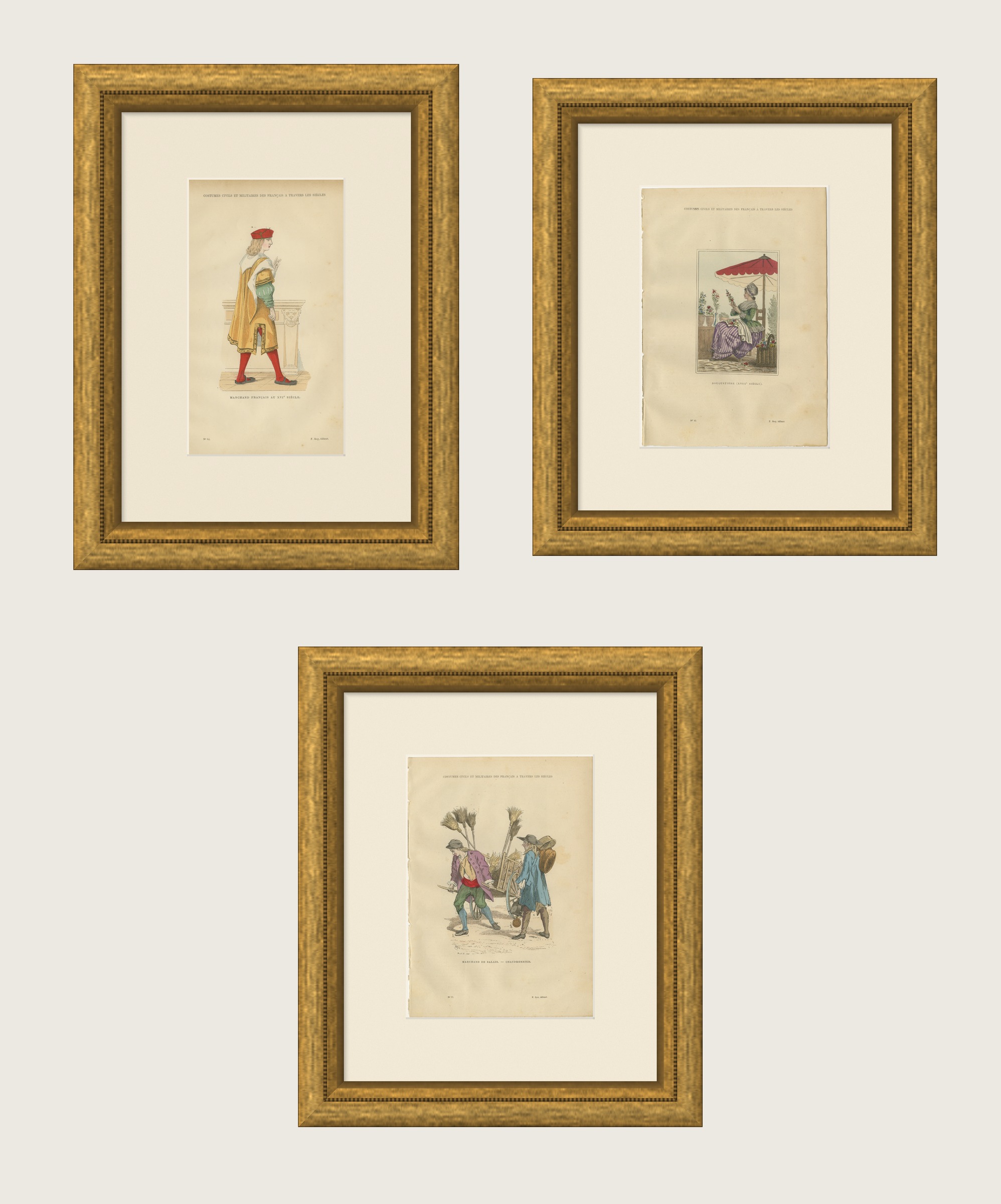
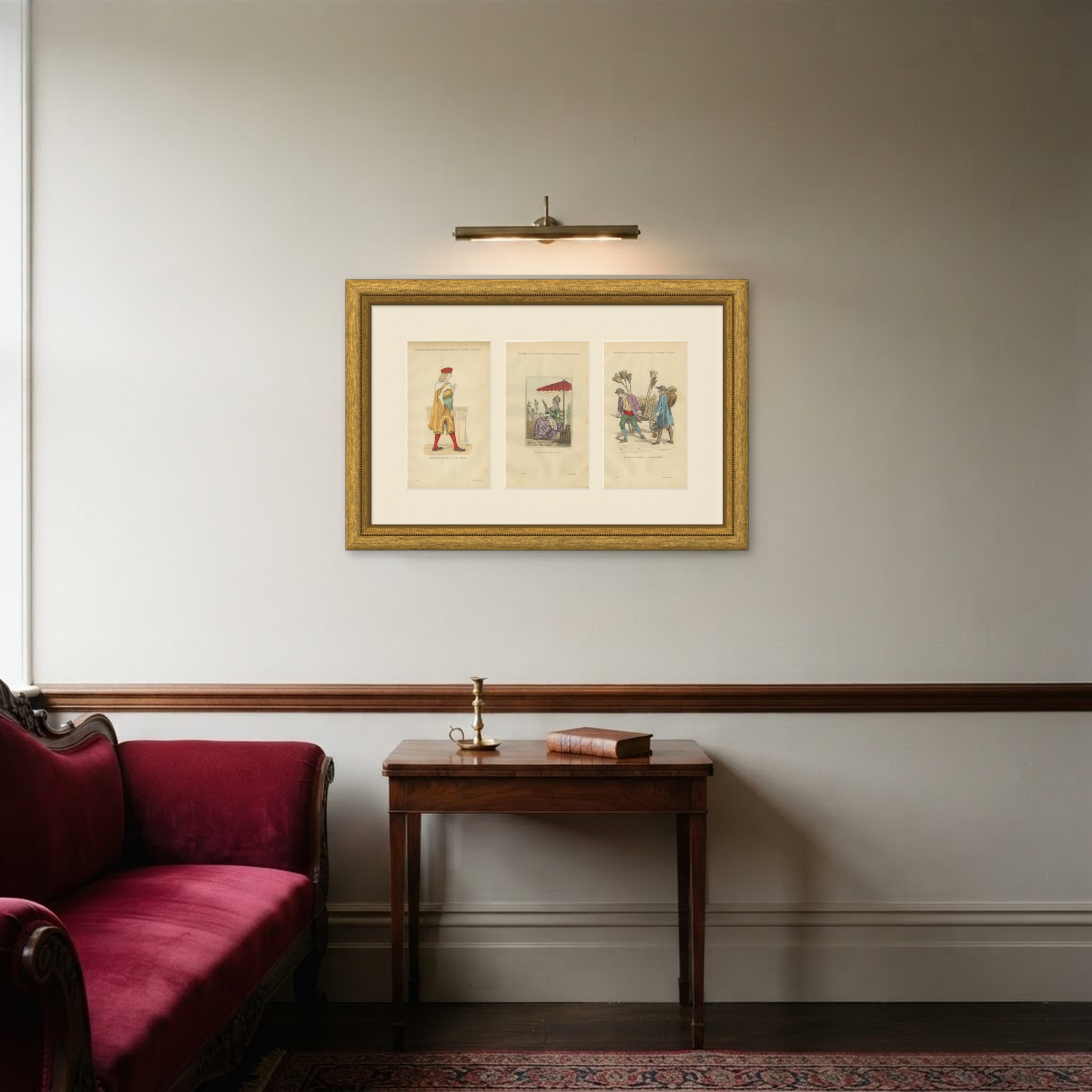
The merchant class dressed deliberately below the nobility and the sumptuary laws made sure of it, so the sober gown and the purse in this plate are a direct illustration of how rank was enforced through cloth. The cries of Paris were a standing subject for printmakers, and the flower seller is the most decorative of them, which is why this is among the most immediately hangable sheets in the eighteenth century part of the volume. They are three original sheets sold together, and the set is never split. Framed as a set in plain wood or in gilt, the sheets give a hallway, a study or a dining room a deliberate and finished line that a single print cannot.
Light uneven toning, browner toward the edges. Marked handling soiling along the edges of all three sheets. Scattered foxing in the margins of all three sheets. Slight wear at the corners of one of the three sheets.
This is an original antique print, not a modern reproduction. This item is sold unframed. Any framed or interior images are shown for presentation and inspiration only, unless the listing explicitly states that the item is sold framed.