About this sheet
Six Medieval Italian Costume Figures XIII–XV c. – Bonnard Hand-Colored Set
The prints are offered unframed, enabling custom framing to personal or interior preferences.
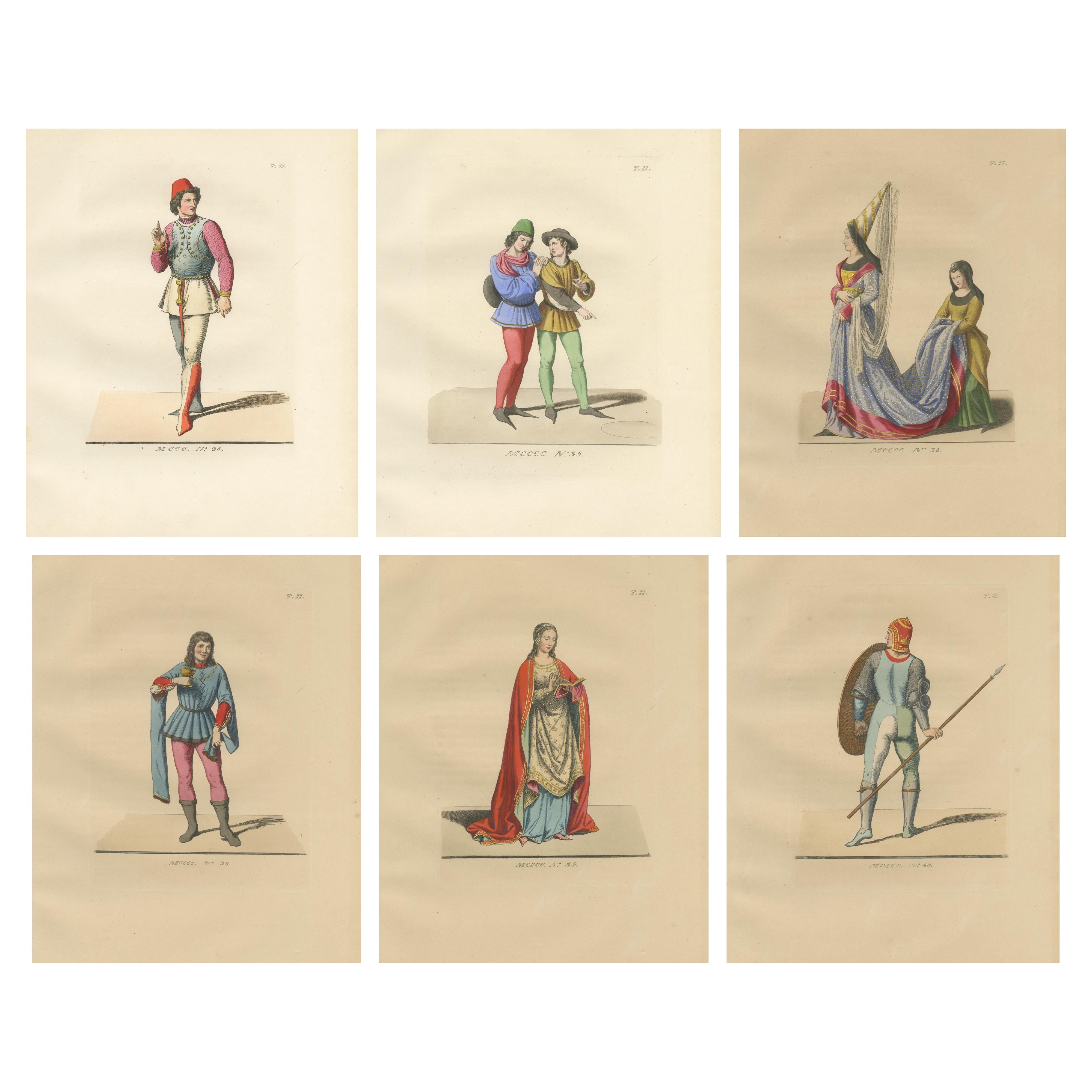
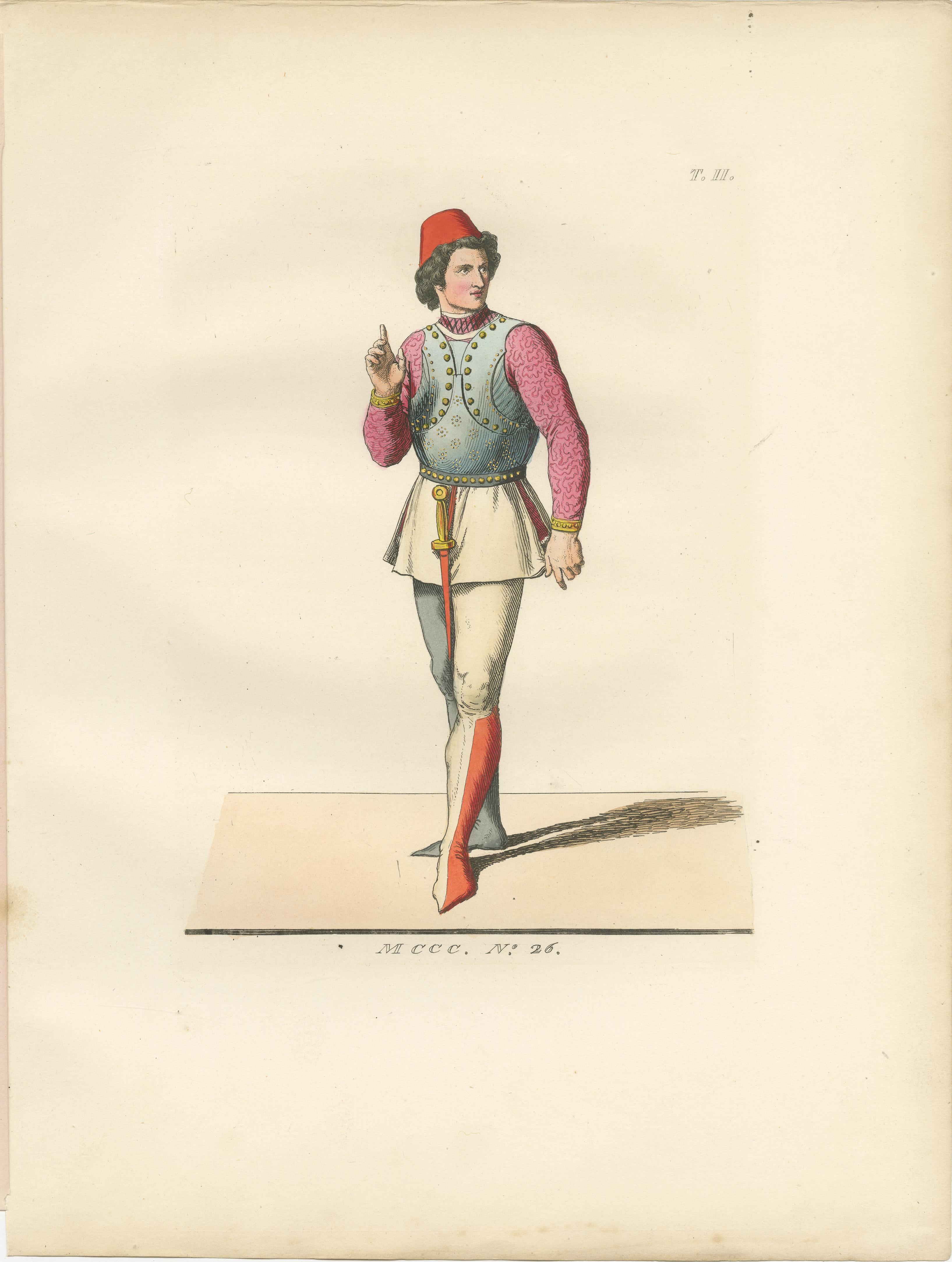
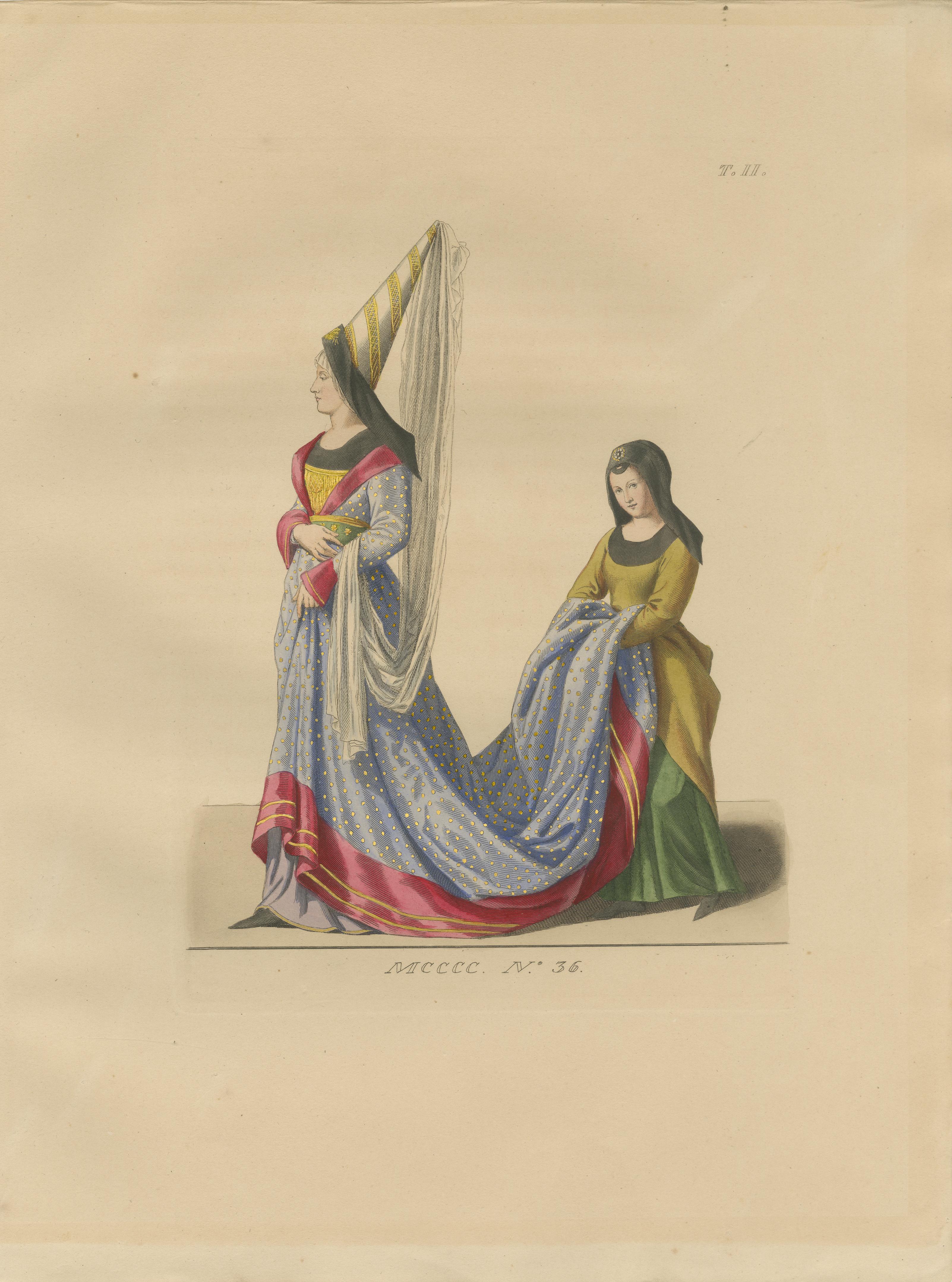
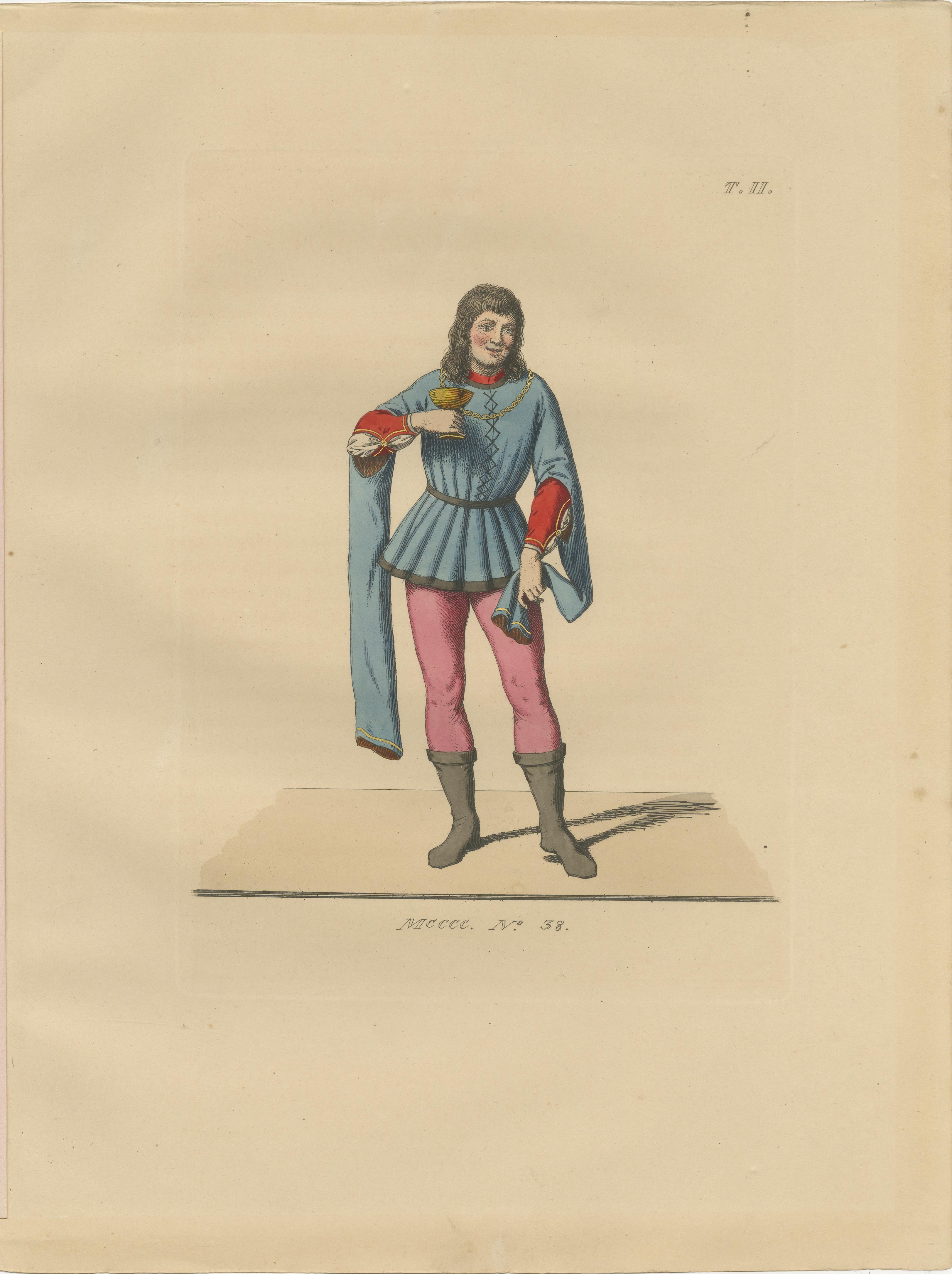
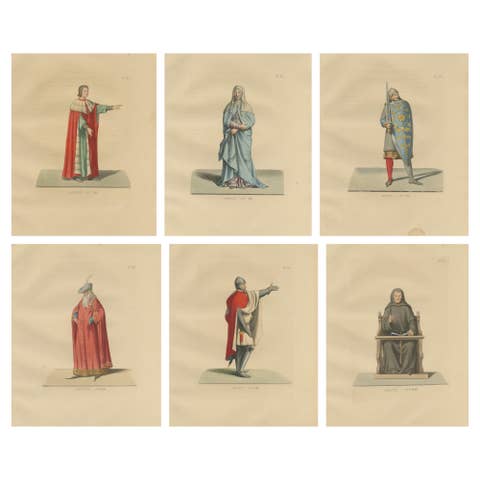
This cohesive set of six original hand-colored lithographs was published circa 1860 by Camille Bonnard and forms part of his influential historical costume works, including Costumes historiques de femmes du XIII, XIV et XV siècle and Il costume antico e moderno. Bonnard’s publications were conceived as scholarly visual reconstructions of medieval dress, gesture, and social roles, based on monuments, manuscripts, sculpture, and archival sources. The plates are unified by scale, palette, and period focus, making this a visually balanced and academically grounded ensemble.
Plate 1 (upper left): A young nobleman or court attendant, shown standing and gesturing, dressed in a fitted tunic with decorative buttons, hose, and a short skirted over-garment. Bonnard presents this figure as a representative male costume of the late medieval period, emphasizing silhouette and color contrasts typical of Italian civic and courtly dress.
Plate 2 (upper center): Two male figures in animated conversation, wearing short tunics, hose in contrasting colors, and soft caps. This plate illustrates everyday male urban attire of the 14th–15th centuries, highlighting social interaction and informal posture rather than ceremonial display.
Plate 3 (upper right): A noblewoman accompanied by a younger female attendant, both dressed in flowing gowns with long trains and elaborate head coverings. Bonnard based this composition on courtly female costume of the 15th century, with particular attention to textile drape, layered fabrics, and the social symbolism of train-bearing garments.
Plate 4 (lower left): A male figure holding an object of daily use, dressed in a belted tunic with long sleeves and fitted hose. This plate represents civilian male attire, likely referencing merchants or educated urban classes rather than nobility or military figures.
Plate 5 (lower center): A richly dressed noblewoman wearing a long gown and mantle, holding a book. Bonnard frequently used such attributes to indicate education, piety, or aristocratic refinement. The costume reflects late medieval elite female dress, with careful detailing of embroidery and layered garments.
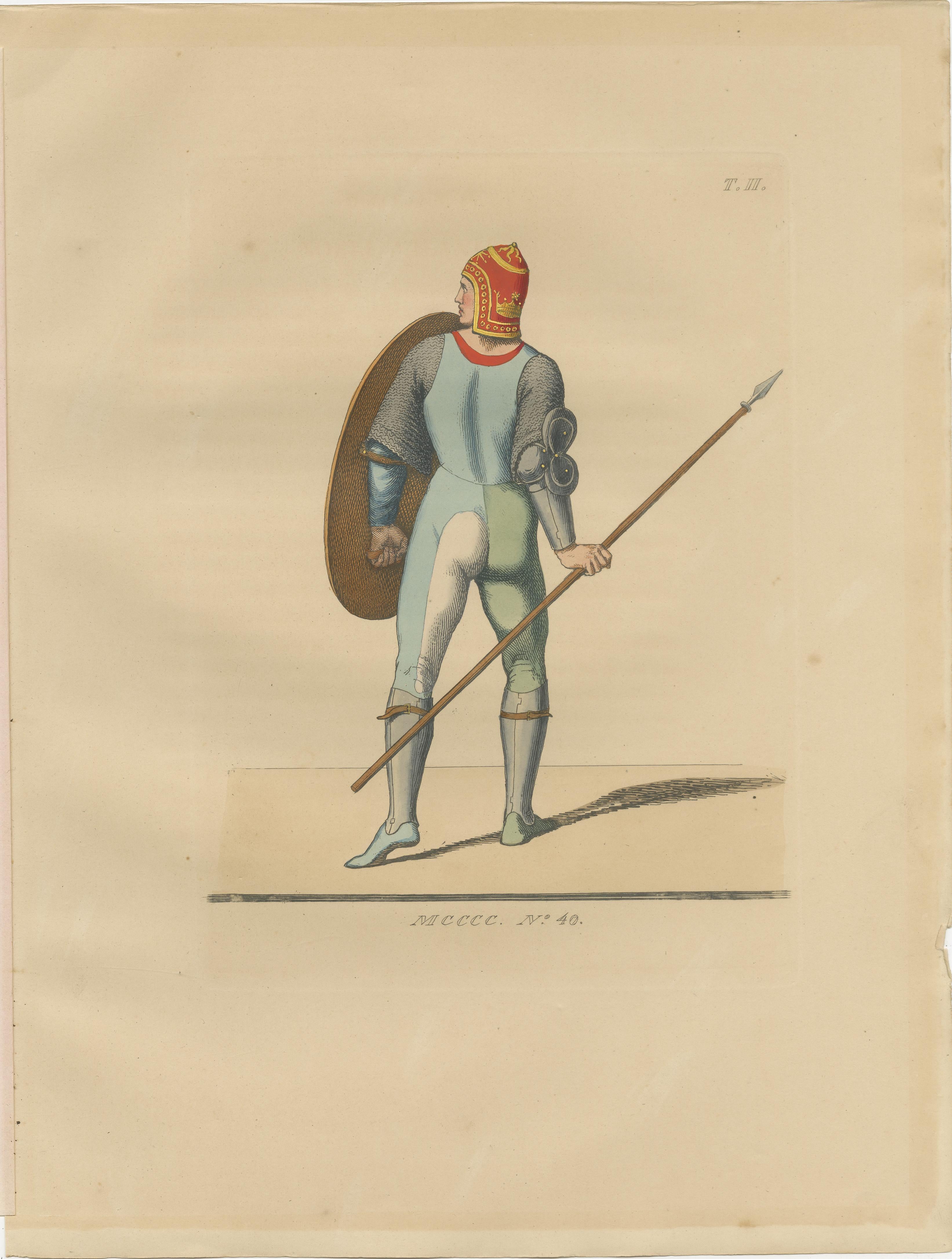
Plate 6 (lower right): A foot soldier or guard, equipped with spear and shield, wearing a helmet and simple protective clothing. This figure illustrates military costume of the late medieval period, emphasizing functional dress and arms rather than heraldic display.
Together, the six plates form a representative cross-section of medieval Italian society as interpreted by 19th-century historical scholarship. The set is particularly attractive to collectors of costume history, medieval studies, and decorative prints, and works exceptionally well as a unified wall display.
Condition:
Overall very good antique condition. Light, even age toning and occasional small foxing spots throughout, consistent with age. Hand-coloring remains fresh and well-defined. No major tears, losses, or restorations observed. Margins ample with visible plate impressions.
NOTE: The prints are offered unframed, enabling custom framing to personal or interior preferences.
Framing tips:
This set is ideally framed as a 2 × 3 grid in matching dark walnut or blackened wood frames with generous ivory or parchment-toned mats. Museum-style spacing enhances the narrative clarity and scholarly character of the ensemble, suitable for a library, study, or refined interior.
Technique: Hand-colored lithographs
Maker: Camille Bonnard, France, circa 1860