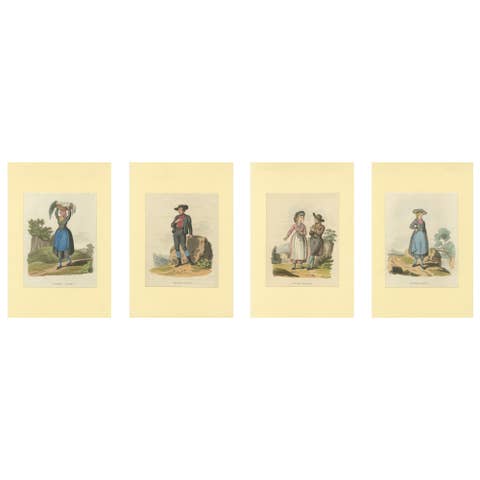
Hand-Colored Prints of Dutch and Flemish Costumes – Figures and Headwear, 1820
€ 300
One of a kind: this is the sheet in the photographs. Ships from Langweer, the Netherlands.
Date
1820
Sheet size
44 × 29.5 cm (17.3 × 11.6 in)
Condition
Good
Reference
BG-12687-30 & BG-12687-31
Condition
Mild foxing and age-related toning on margins; colors remain vibrant, and details are well-preserved. Strong paper.
About this sheet
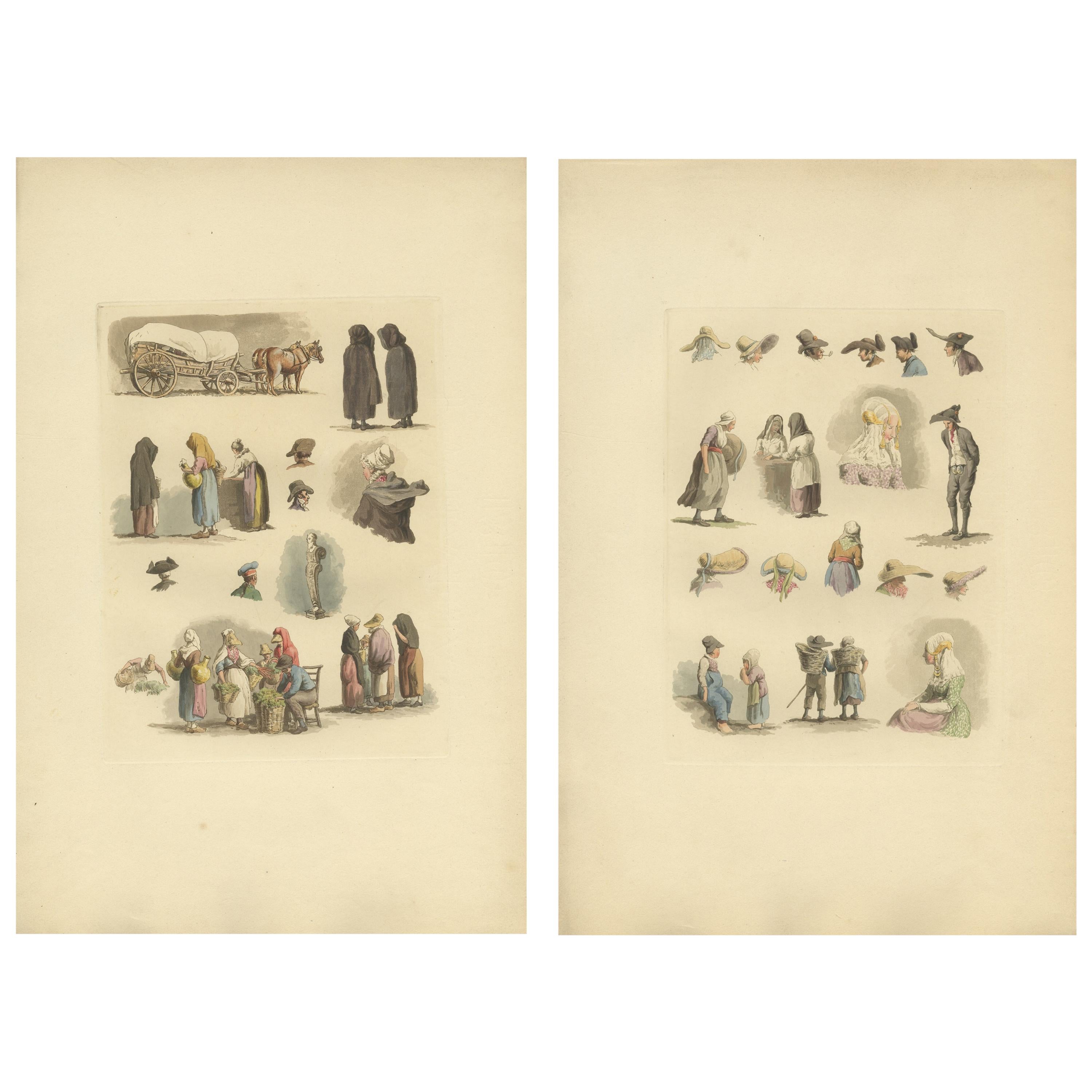
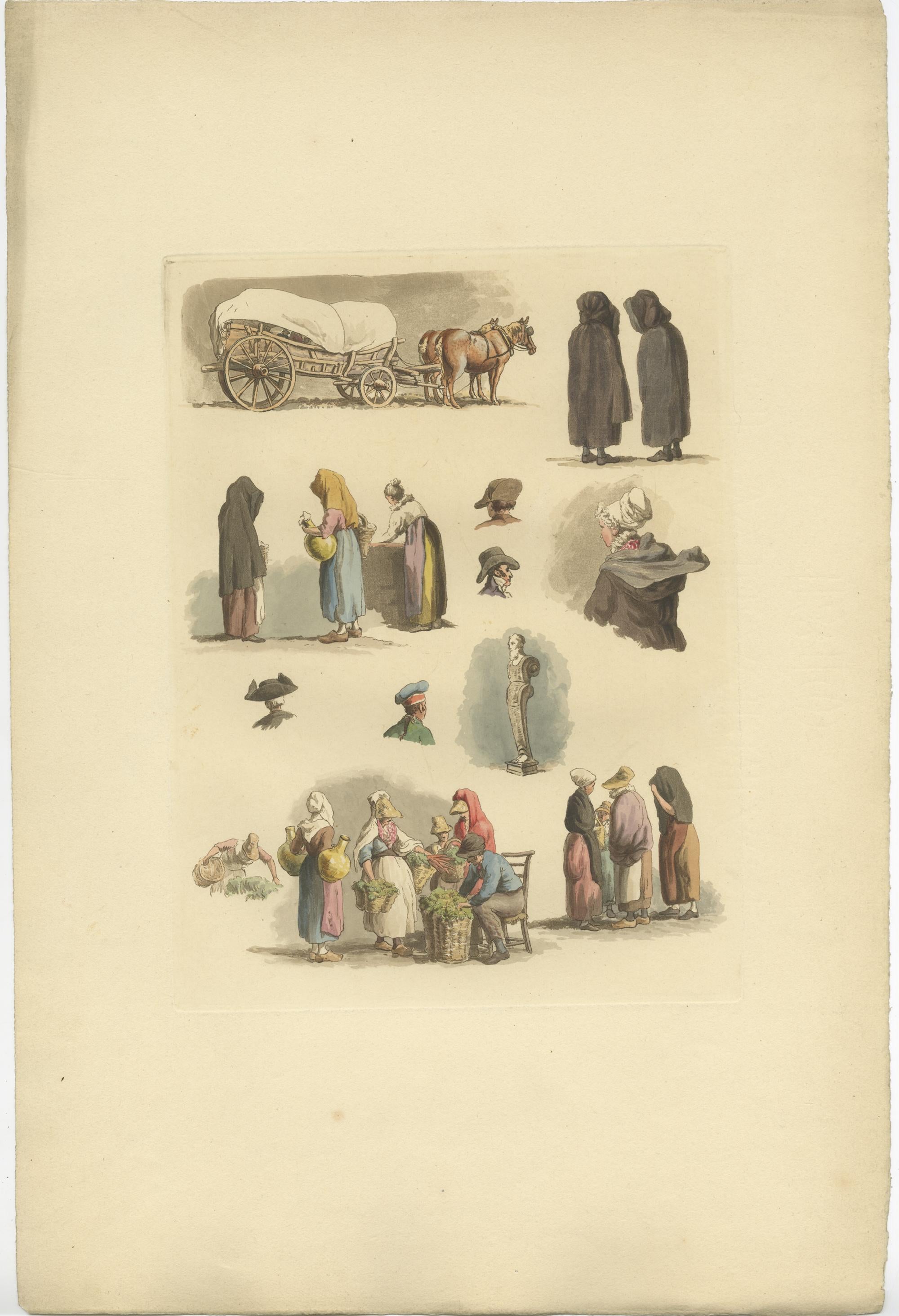
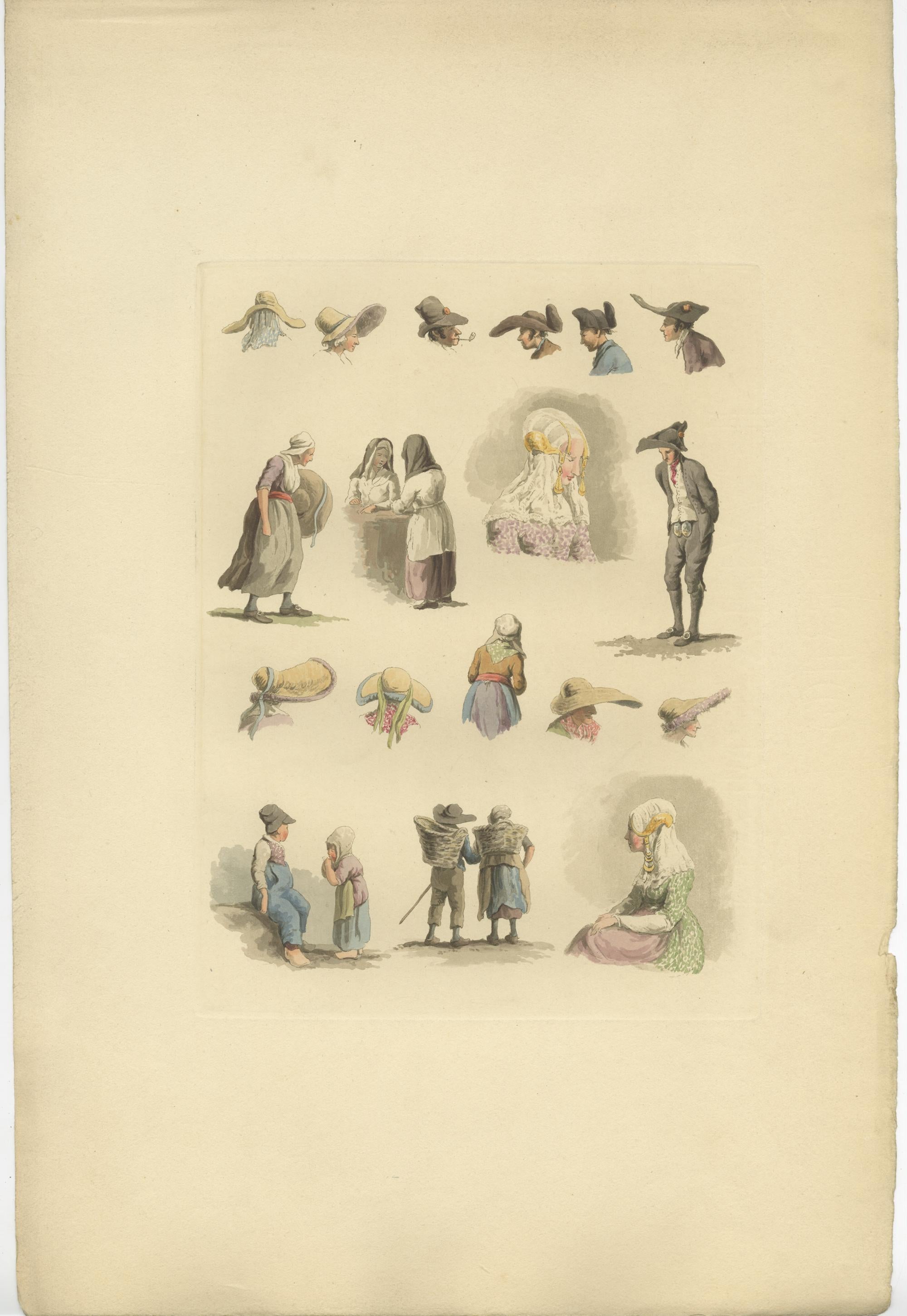
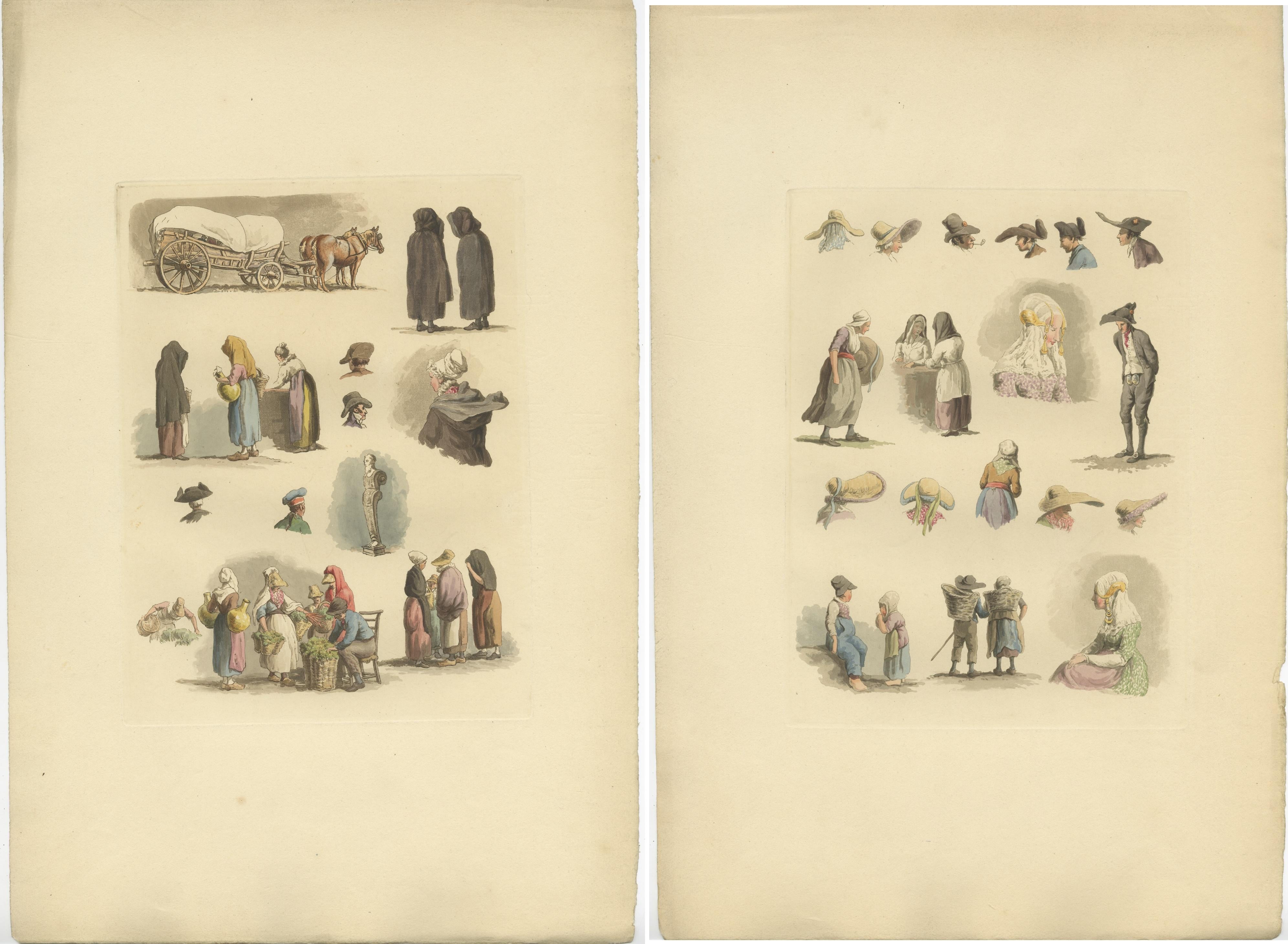
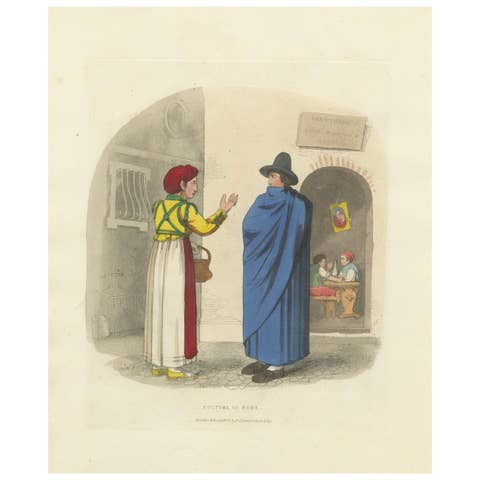
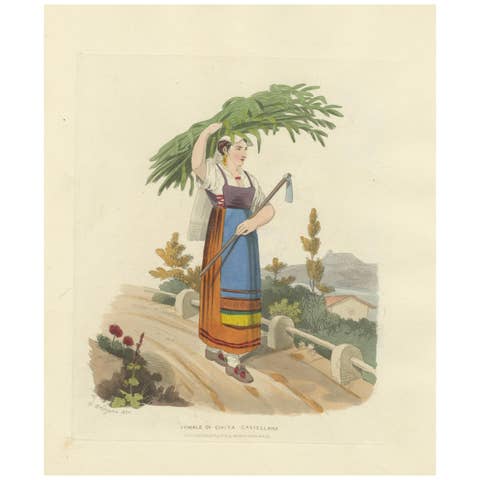
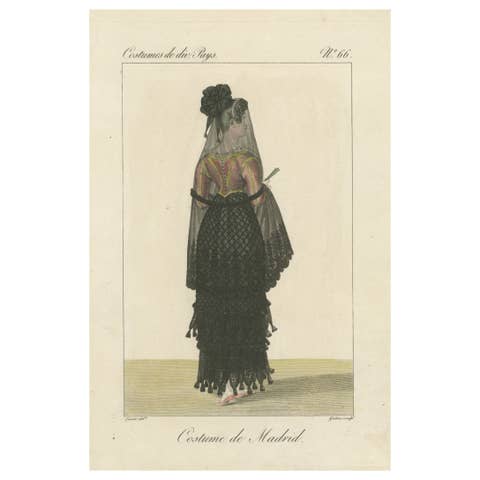
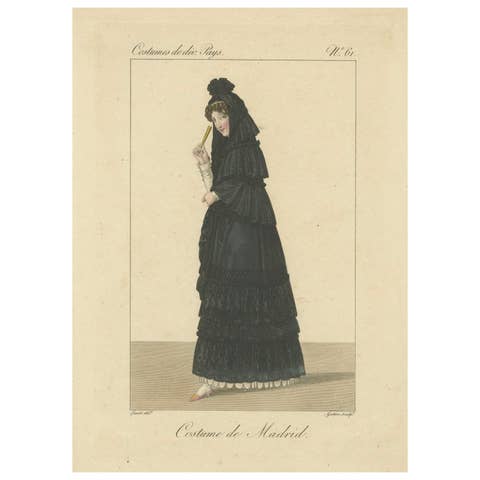
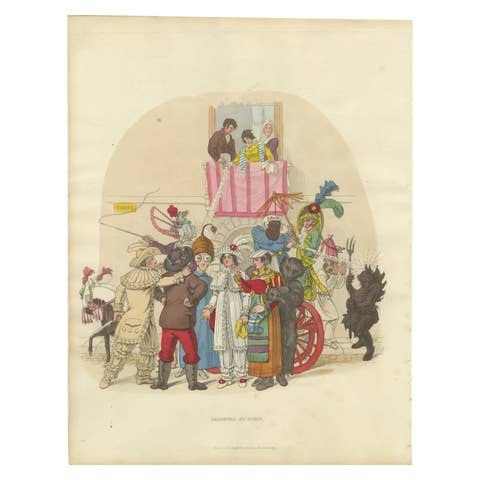
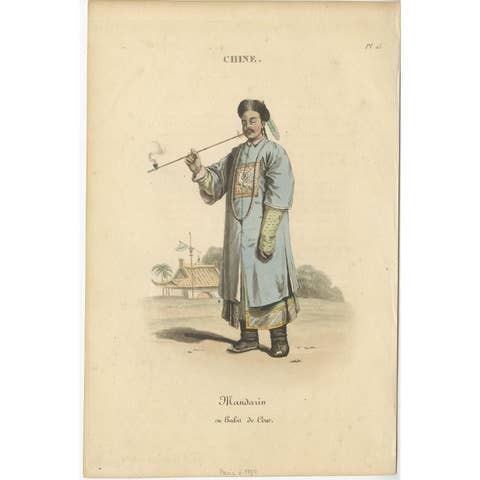
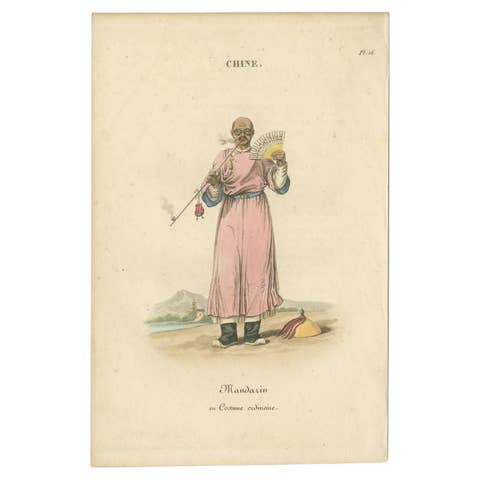
This exquisite set of two antique prints showcases traditional costumes and headwear of Flanders and Holland, offering a rare glimpse into early 19th-century regional attire and daily life. Published around 1820, these finely detailed works are attributed to or inspired by Robert Hills, a British artist renowned for his skillful depictions of rural life and costume studies.
The prints feature an array of carefully rendered figures, including women in traditional bonnets, market vendors, peasants, and men in distinctive headgear. Each sheet presents a collage-like arrangement of costume details, highlighting the unique styles worn in the Low Countries during this period. These elements provide valuable insight into historical dress, particularly the regional variations of hats, shawls, and work garments that were emblematic of social class and local identity. The left print includes a charming depiction of a covered wagon drawn by a horse, emphasizing the rural and pastoral character of Flemish and Dutch life.
Executed using fine line engraving with delicate hand-coloring, these prints exhibit a rich, painterly quality that brings each figure to life. The soft washes of color enhance the textures and folds of the fabrics, adding warmth and realism to the scenes. This set is particularly appealing to collectors of historical fashion, European costume studies, and those interested in the cultural heritage of the Netherlands and Belgium.
Condition: Mild foxing and age-related toning on margins; colors remain vibrant, and details are well-preserved.
Matting and Framing Tips: A cream or off-white mat will highlight the delicate hand-coloring, while a gilt or dark wood frame will complement the historical charm of these rare costume prints.