About this sheet
Costumes of Peru, 18th Century: Hand-Colored Engraving from Bertuch’s *Bilderbuch für Kinder
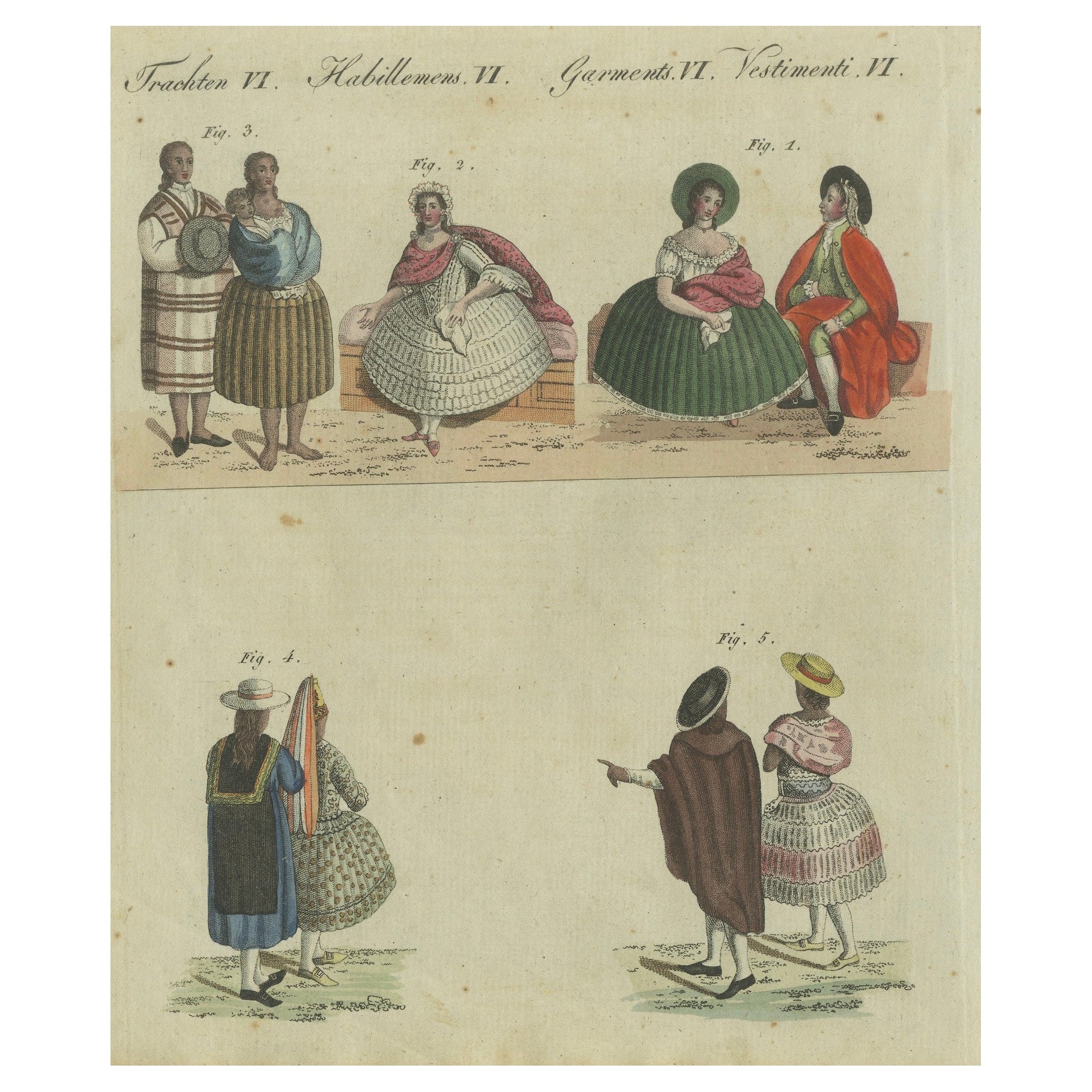
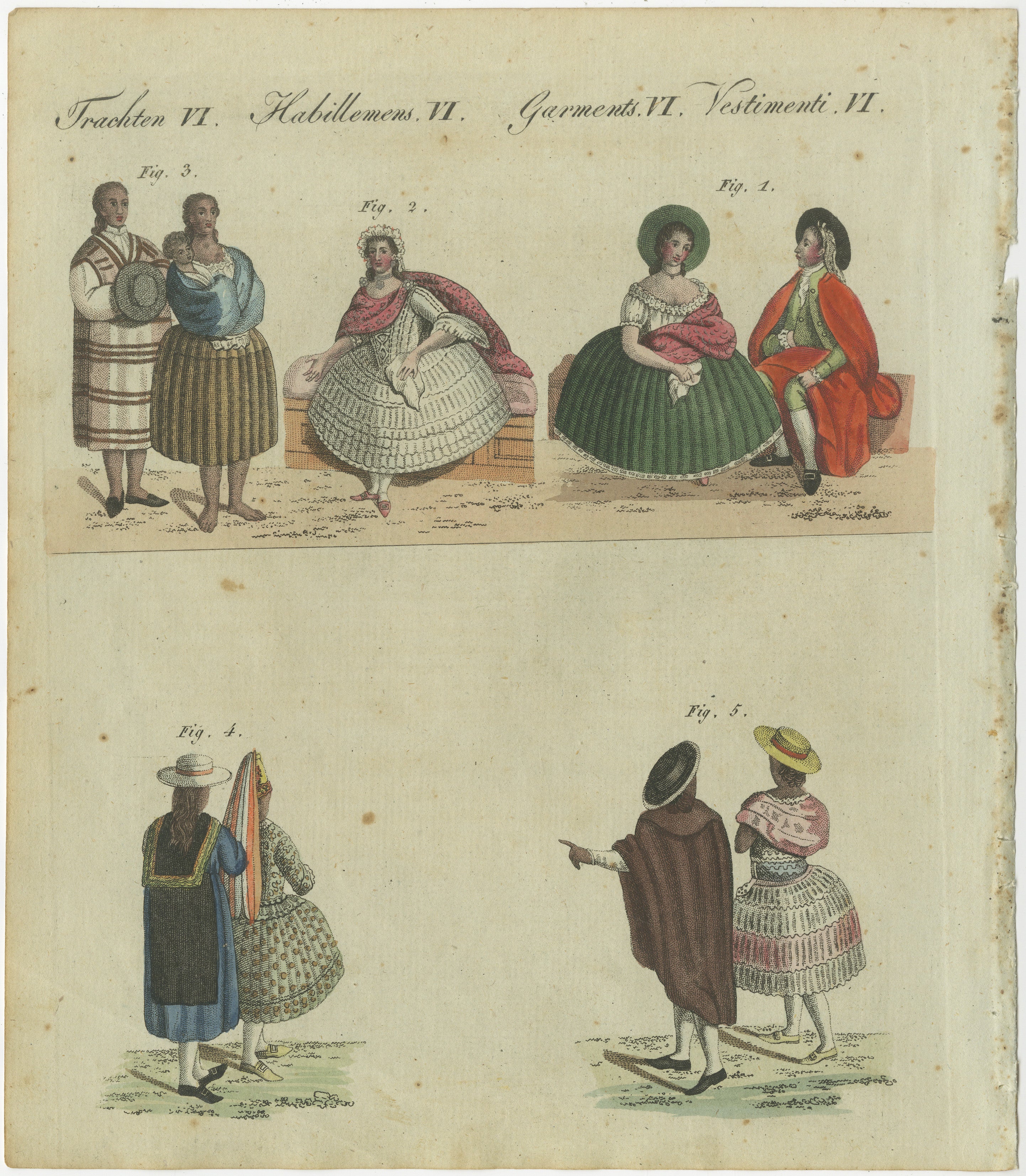
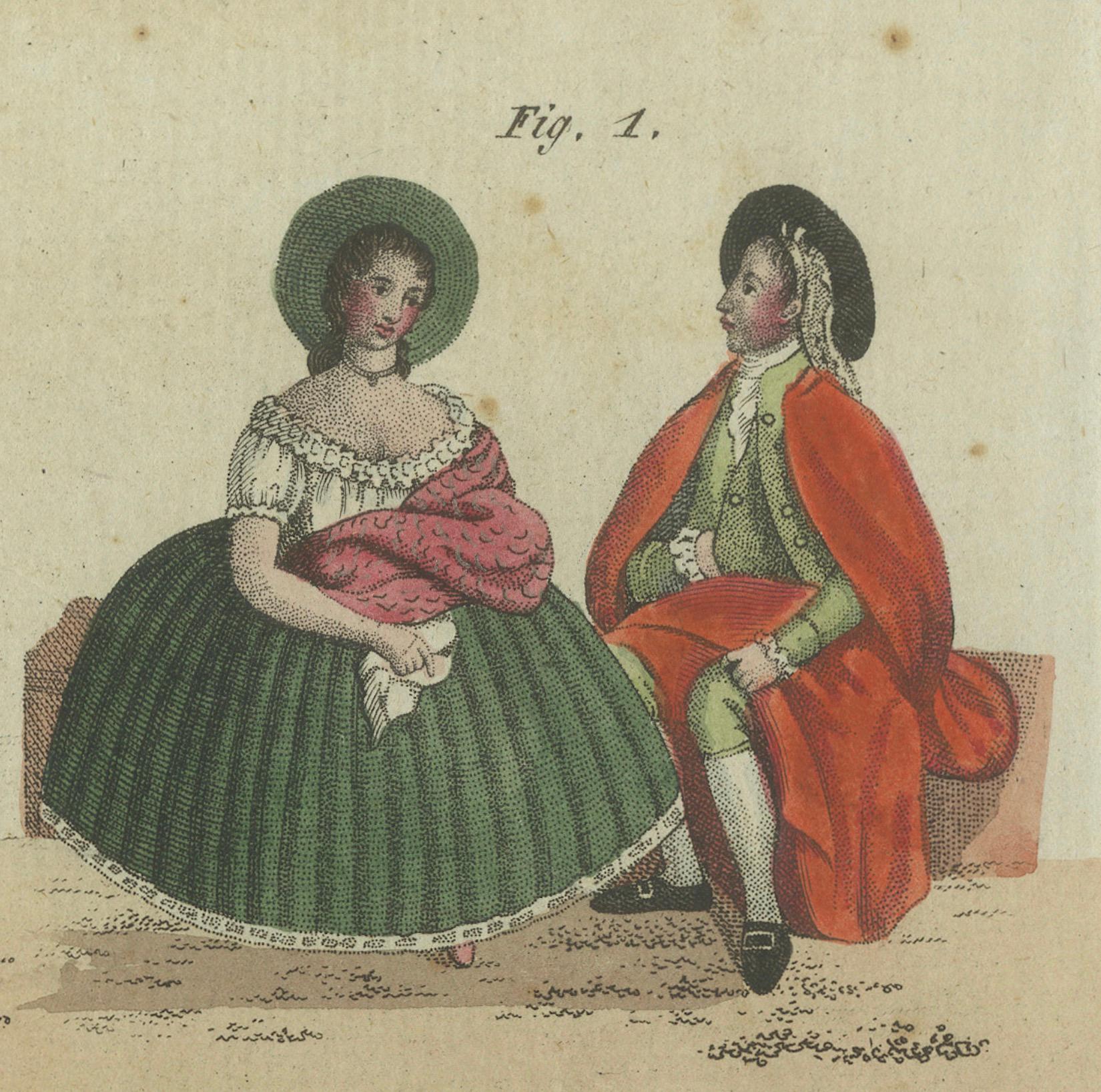
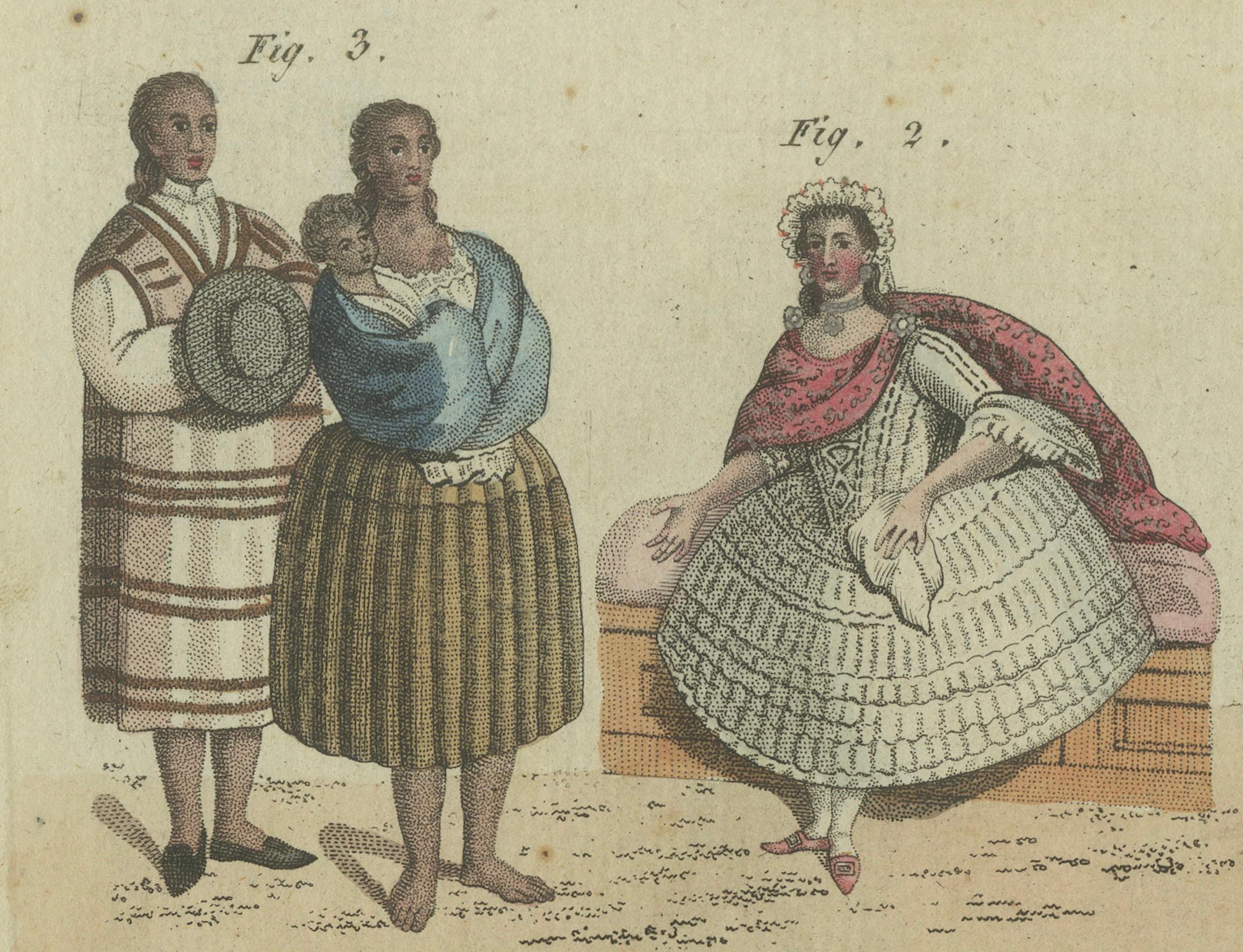
This detailed 19th-century hand-colored copperplate engraving illustrates traditional costumes of Peru from the 18th century, providing an artistic and historical window into the clothing and cultural distinctions of the time. Published in 1805 as part of Friedrich Johann Bertuch’s renowned *Bilderbuch für Kinder* (*Picture Book for Children*), this engraving celebrates the diversity of Peruvian attire during the colonial era.
Figures include:
1. A couple from Lima, showcasing European-inspired formal attire, with the gentleman in a red coat and the lady in an elegant green gown and bonnet.
2. A noblewoman of Lima, seated gracefully in an elaborate lace dress with a shawl, reflecting her social status and Spanish colonial influence.
3. Indigenous people dressed in traditional striped garments, featuring practical yet vibrant clothing that highlights their cultural heritage.
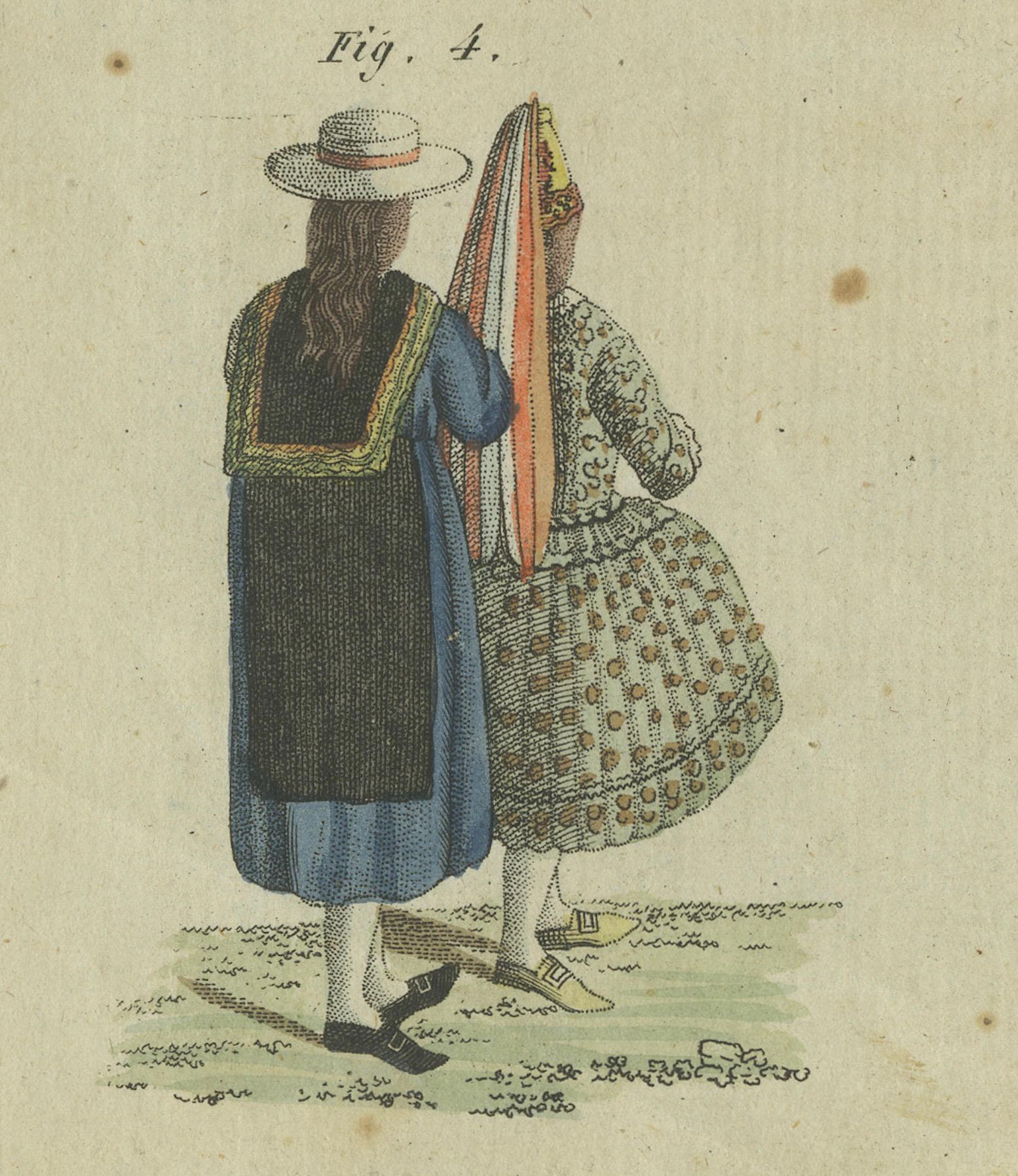
4. Indigenous people in their best clothes, wearing finely woven skirts, shawls, and hats, emphasizing the artistry and richness of their ceremonial attire.
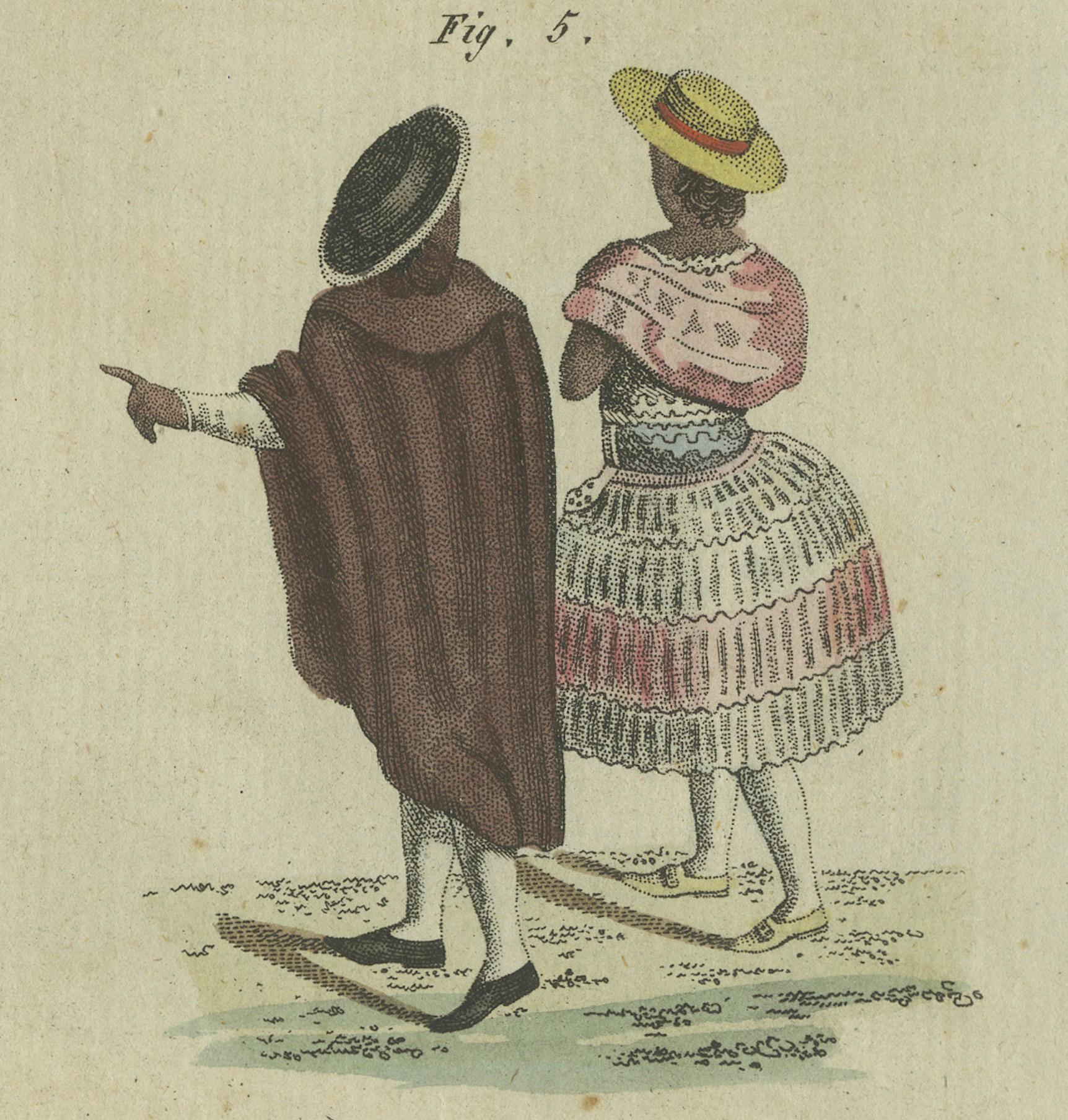
5. Inhabitants of Quito, depicted in colorful woven garments and straw hats, with layered skirts and distinctive patterns that reflect the regional styles of the time.
Friedrich Johann Bertuch (1747–1822), a prominent German publisher and artist, was best known for his 12-volume encyclopedia for children, illustrated with over 1,200 engraved plates on topics such as natural history, science, costume, and mythology. Published between 1790 and 1830, Bertuch’s *Bilderbuch für Kinder* remains an important work for its blend of artistic excellence and educational purpose.
Condition:
The engraving is in very good condition, with some light foxing and minor edge discoloration typical of its age. The hand-applied colors are vivid, capturing the intricacies of each costume and cultural detail.
Advice on presentation:
1. Frame the engraving in a wooden or gold-accented frame to complement its historical and artistic significance. Use an acid-free mat in ivory or light beige to protect and highlight the vibrant colors.
2. Display in a collection of ethnographic or historical art, or as a centerpiece in a study or gallery.
3. Include a descriptive plaque to provide context about its Peruvian focus and the broader *Bilderbuch für Kinder* series.
4. If not framed, store in an archival-quality portfolio to ensure its preservation while allowing for detailed study.
This engraving is ideal for collectors, historians, or enthusiasts of cultural and fashion history, offering a rich combination of artistry and education.