About this sheet
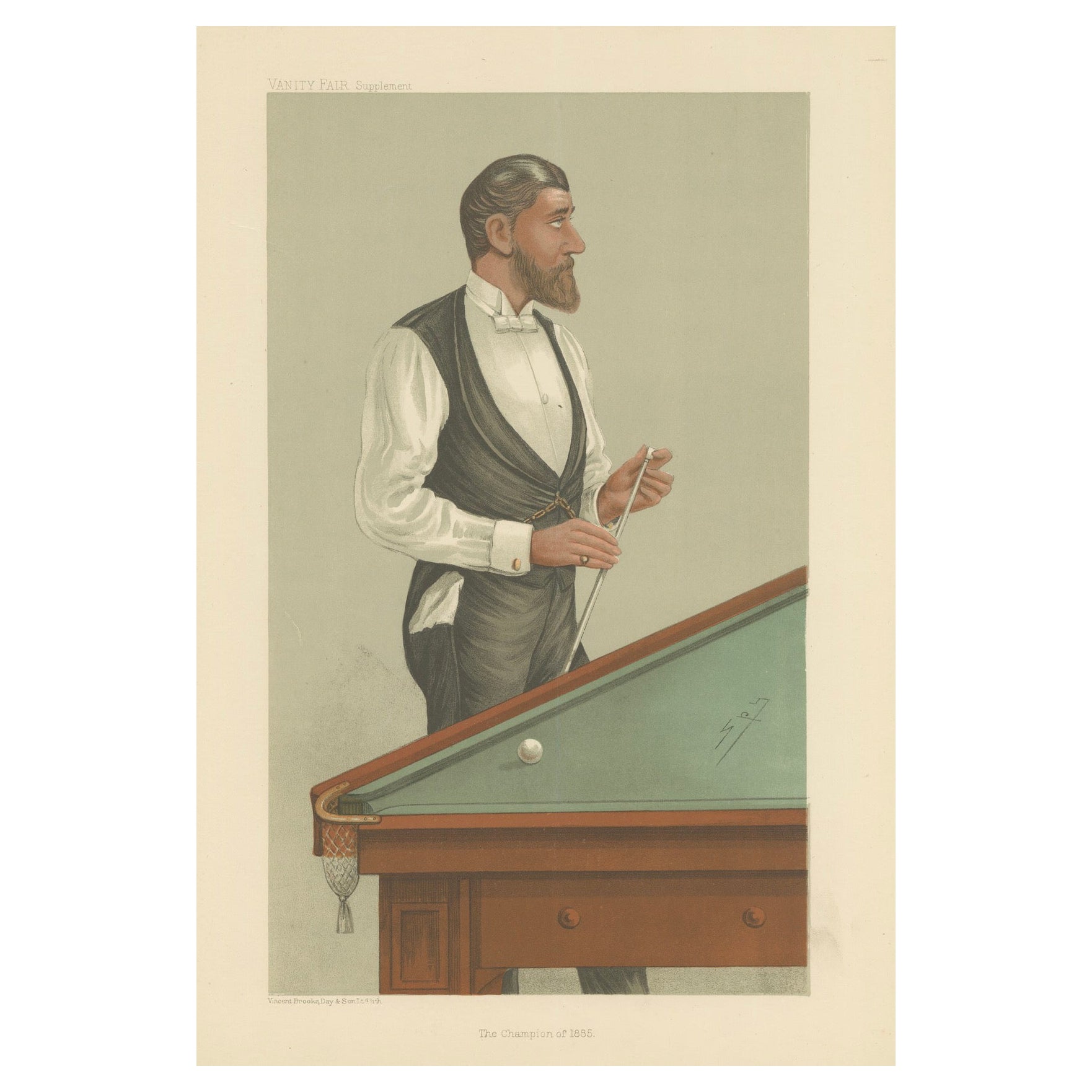
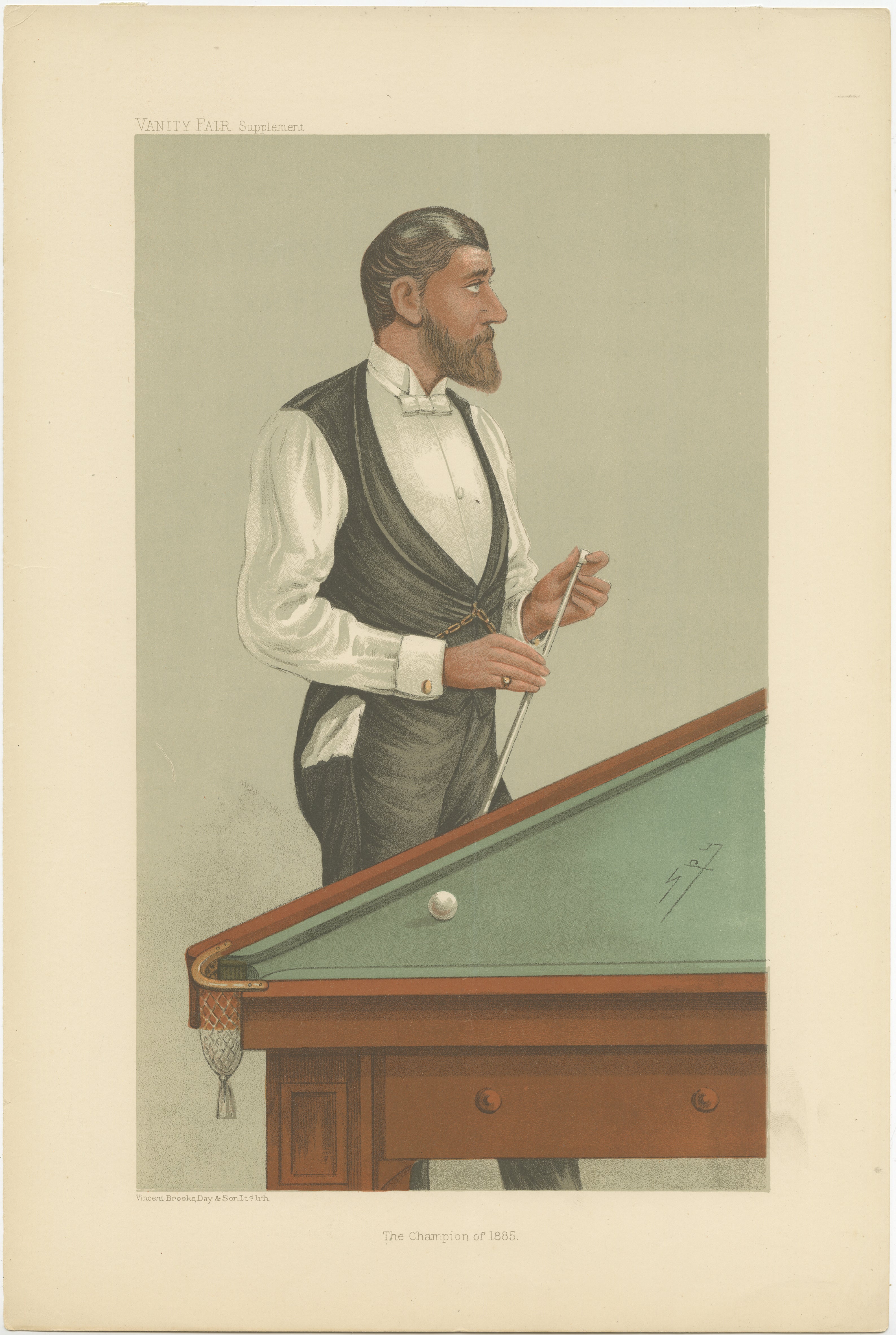
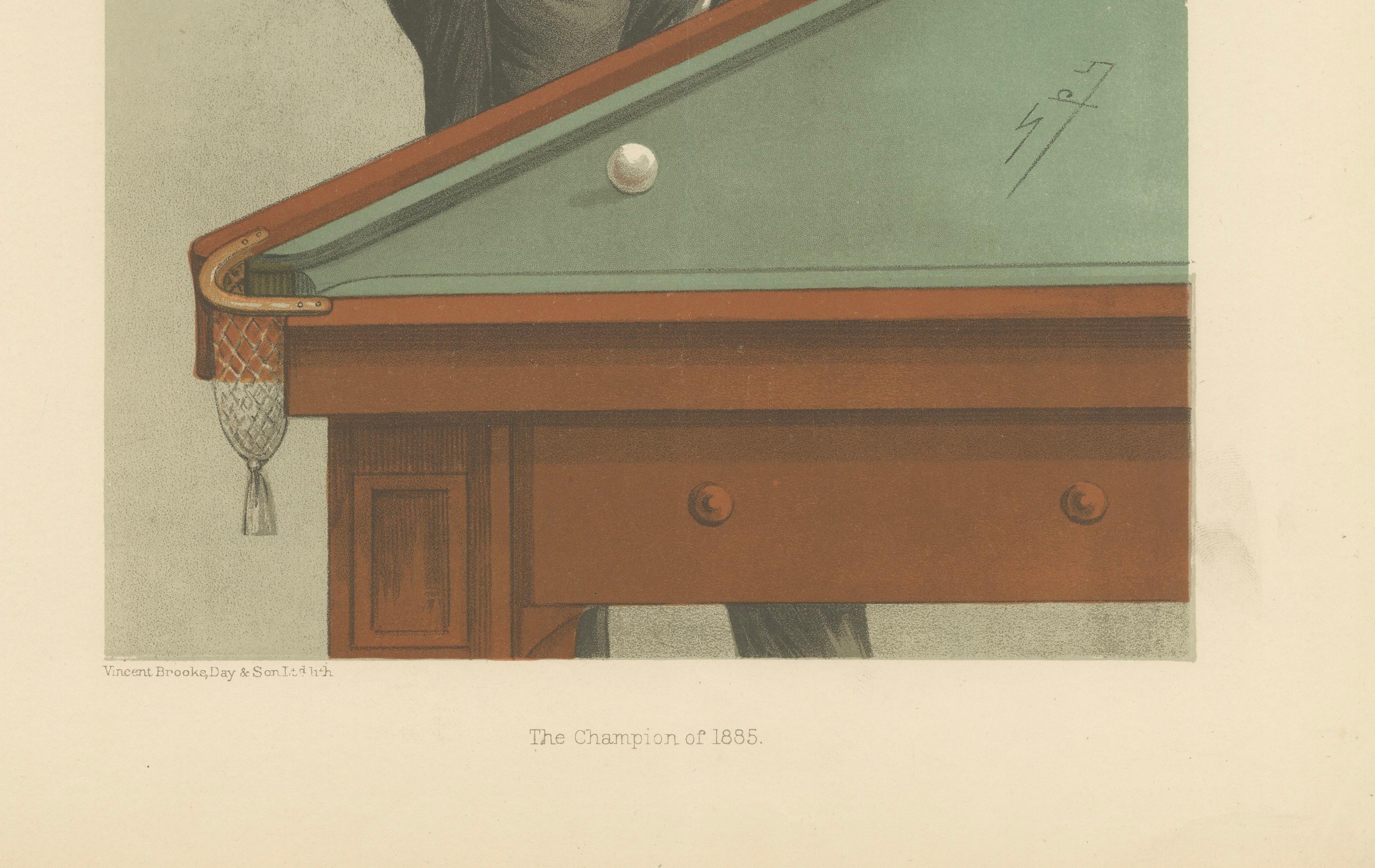
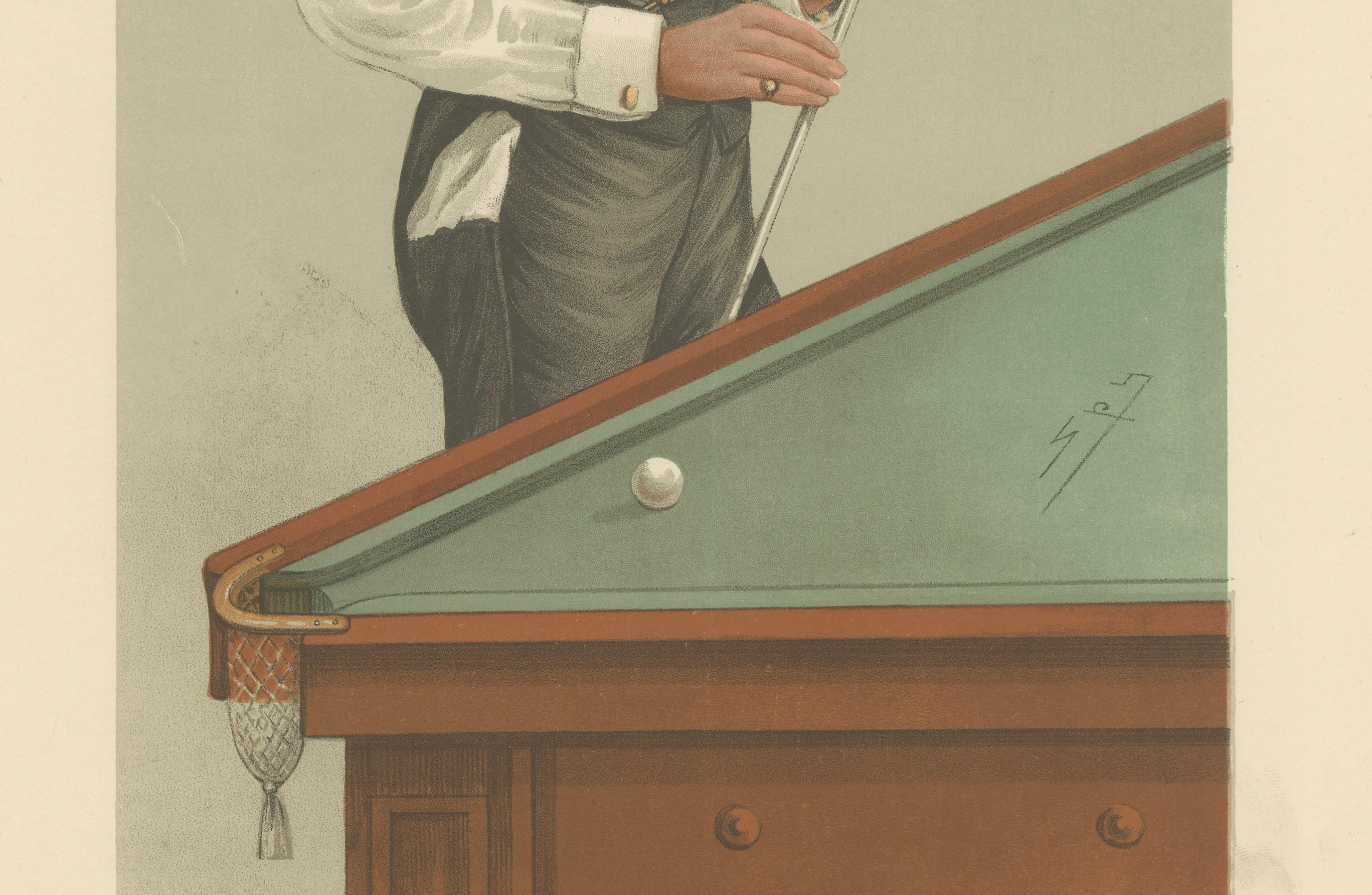
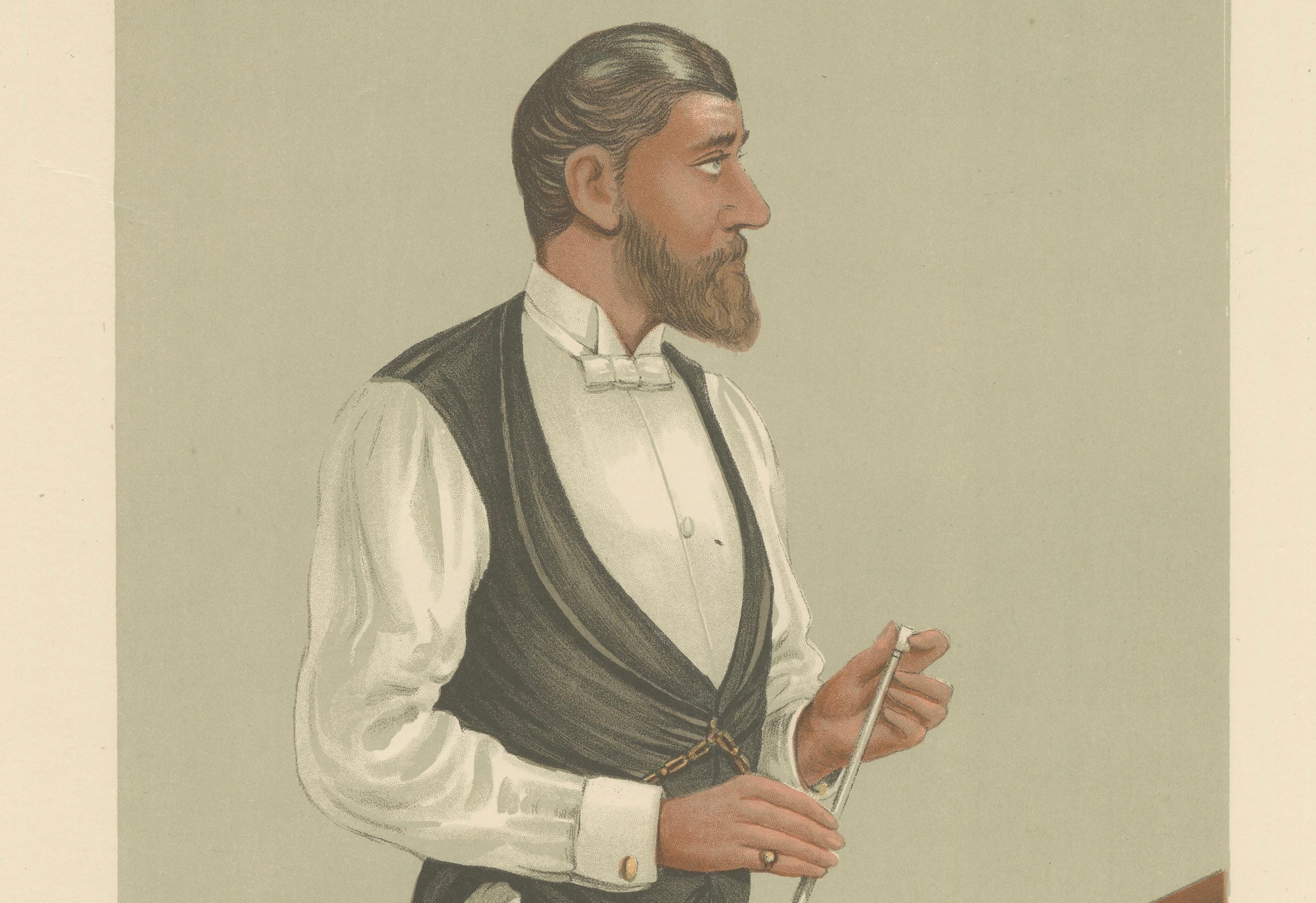
This Vanity Fair caricature, dated April 4, 1885, features John Roberts Jr., famously known as 'The Champion Roberts.' The illustration depicts him engaged in a game of billiards, a sport in which he excelled and became a renowned figure during the late 19th century. John Roberts Jr. was celebrated for his skill in billiards, winning multiple championships and helping to popularize the game.
The caricature by 'Spy,' whose real name is Sir Leslie Ward, captures Roberts in an elegant pose, typical of a gentleman player of the era, dressed in formal attire with his billiard cue in hand. The depiction emphasizes his concentration and finesse, qualities essential to a billiards champion. This artwork not only highlights his sportsmanship but also his status within the social and sporting circles of his time.
This print on offer would appeal to collectors interested in sports history, particularly those fascinated by the legacy of billiards, as well as enthusiasts of Victorian era art and culture. It emphasizes the athlete's mastery and the artistic portrayal that captures a defining moment in sports history.
The illustration in Vanity Fair was created using lithography, a popular printing technique in the 19th century. Lithography involves drawing an image with a grease-based medium on a limestone plate, then treating the surface with a chemical that ensures the ink only adheres to the drawn areas. This plate is then used to print the image on paper. The technique allows for high-quality, detailed prints that capture subtle gradations of tone and sharp contrasts, ideal for vividly portraying the unique caricatures for which Vanity Fair was known.
Vanity Fair prints gained popularity due to several factors:
1. Celebrity and Notoriety: The magazine featured prominent figures from various fields, including politics, royalty, arts, and sports. This wide range appealed to a broad audience interested in different aspects of society and celebrity.
2. Artistic Quality: The prints were known for their high artistic quality and the distinctive styles of the contributing artists, such as 'Ape' (Carlo Pellegrini), and 'Spy', who had a keen eye for detail and a wry sense of humor that shone through in his caricatures.
3. Humor and Satire: The caricatures often included humorous and satirical interpretations of the subjects’ personalities and careers, making them not only visually engaging but also entertaining.
4. Collectibility and Decoration: These prints were collectible items even at the time of their publication. They were often framed and displayed, serving as conversation pieces due to their striking and often amusing portrayals of well-known personalities.
5. Social Commentary: By exaggerating features and mannerisms, the caricatures provided insightful, though playful, commentary on the public figures of the day, resonating with the Victorian society’s appetite for social and political satire.
The combination of high artistic standards, humor, and social critique in a format accessible to the Victorian middle class made Vanity Fair lithographs highly popular and sought after as both collectibles and decor.