About this sheet
Three Antique Oceania Engravings – Guam Chamorro Life, Distillery & Costumes, 1836
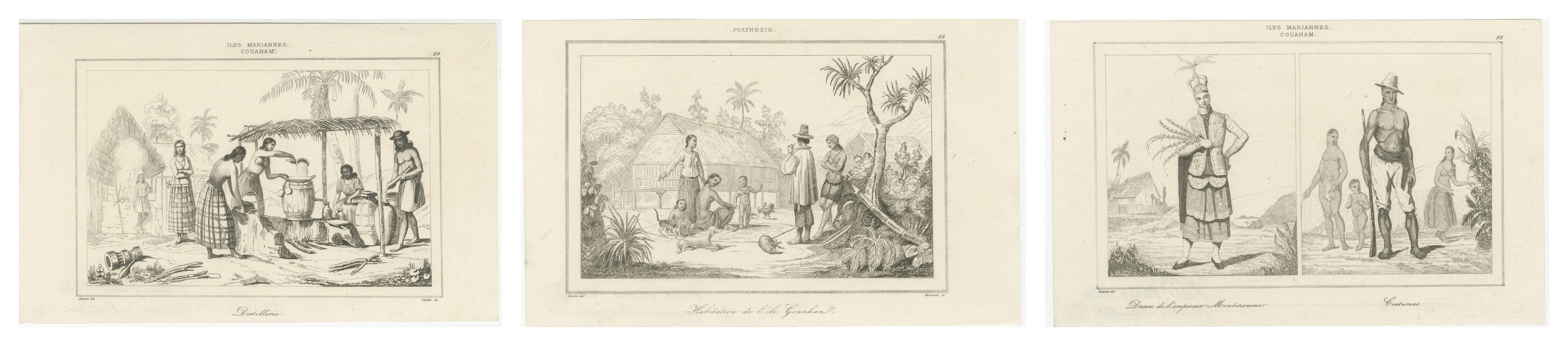
This set of three original 19th-century engravings illustrates scenes of daily life and cultural traditions in the Mariana Islands and Polynesia, published in the important French ethnographic work Océanie ou la Cinquième Partie du Monde by the explorer and writer Grégoire Louis Domeny de Rienzi, issued in Paris in 1836. The engravings form part of one of the earliest richly illustrated European attempts to document the peoples and cultures of Oceania.
The plates were designed by the French artist Victor Marie Félix Danvin and engraved by Bernard and other skilled engravers working for the publication. Danvin produced many of the ethnographic scenes in the book, based on travel accounts, exploration reports, and earlier voyage illustrations circulating in Europe during the early nineteenth century.
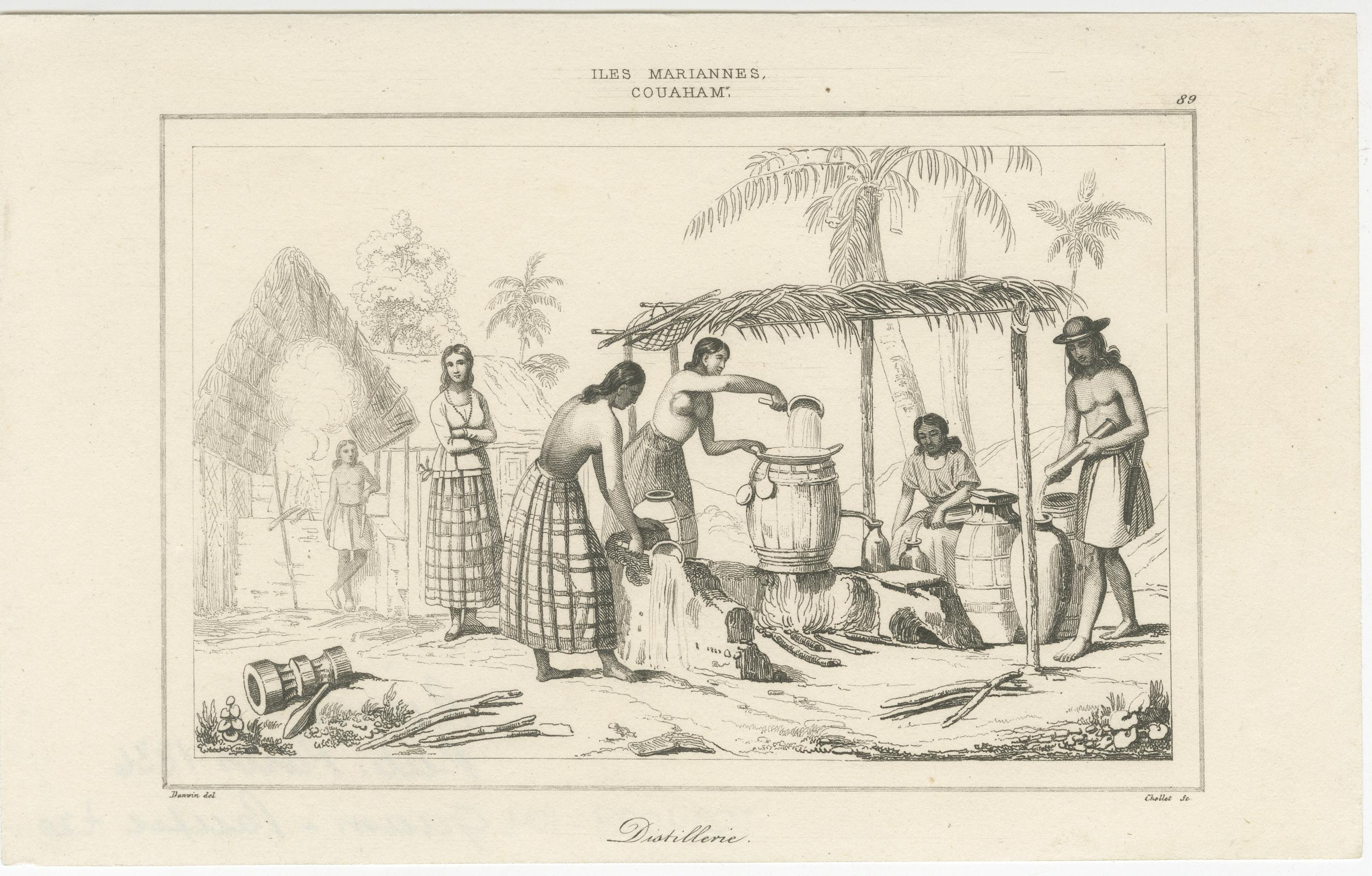
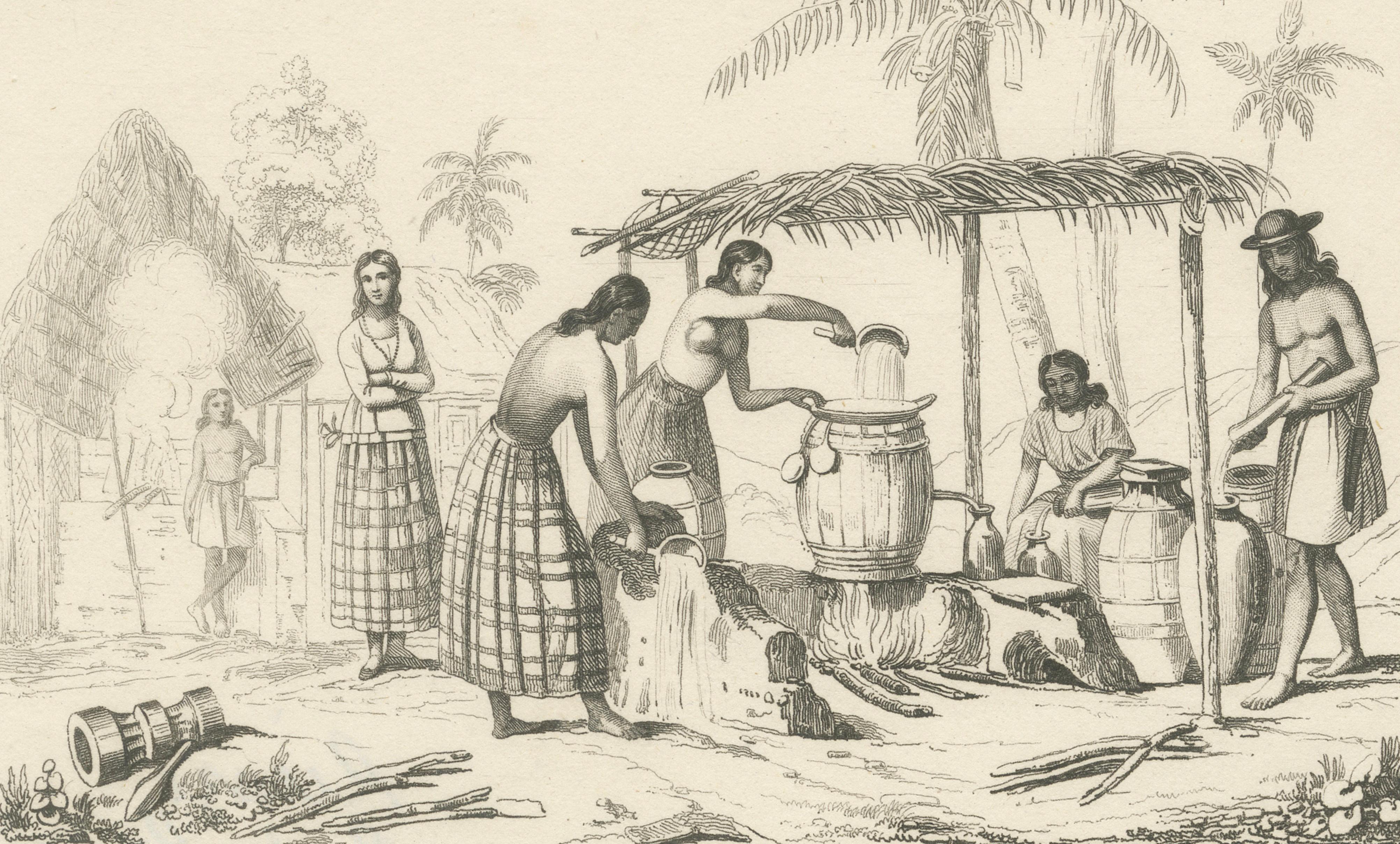
The first engraving, titled “Distillerie – Iles Mariannes, Gouaham,” depicts the traditional distillation of coconut liquor in Guam. Chamorro men and women are shown around a rustic distillation apparatus constructed from wooden vessels and barrels under a palm-thatched shelter. The scene illustrates the production of aguardiente from fermented coconut sap, a practice known throughout parts of the Pacific and Southeast Asia. The composition captures both the technical process and the social environment in which it occurred.
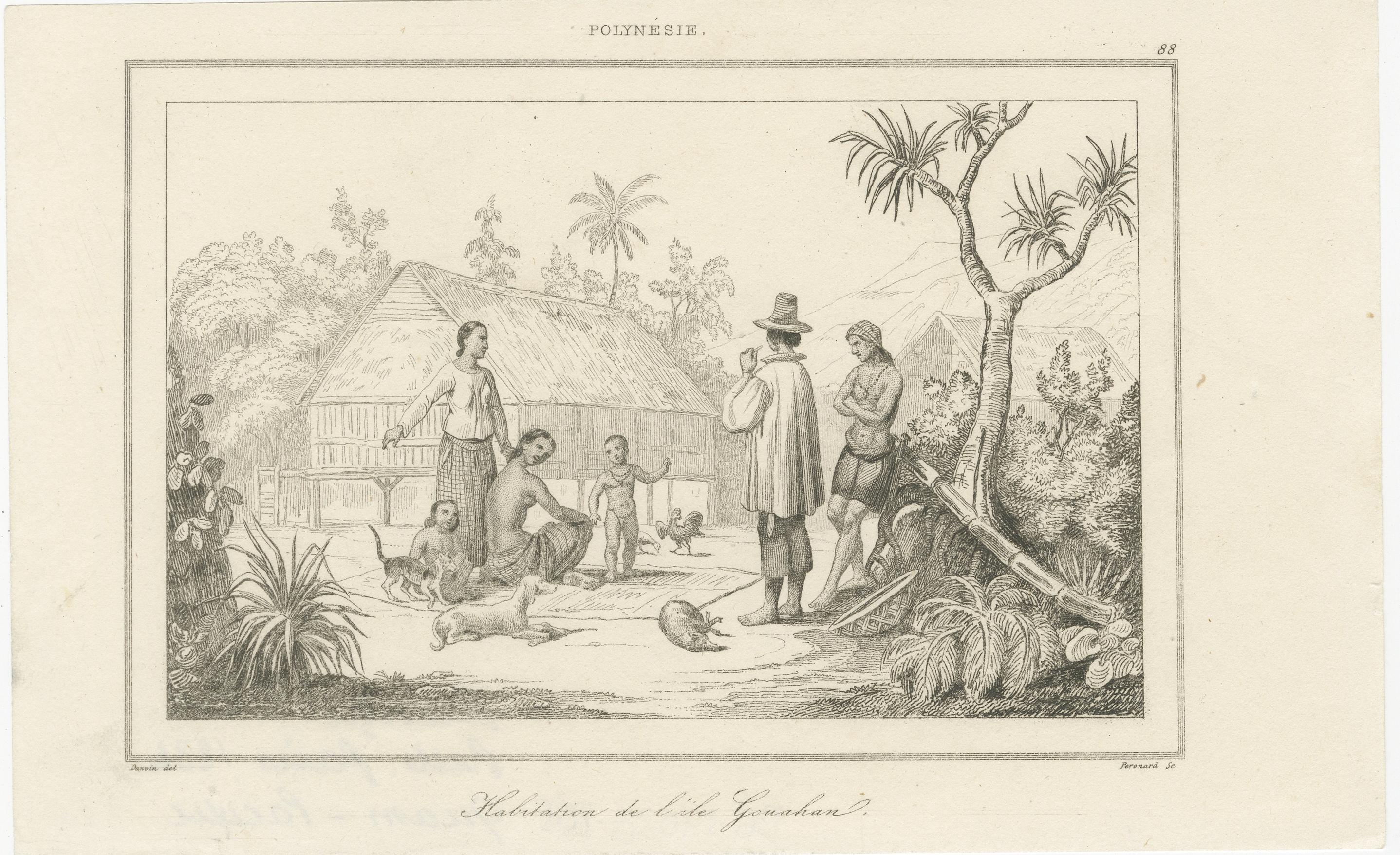
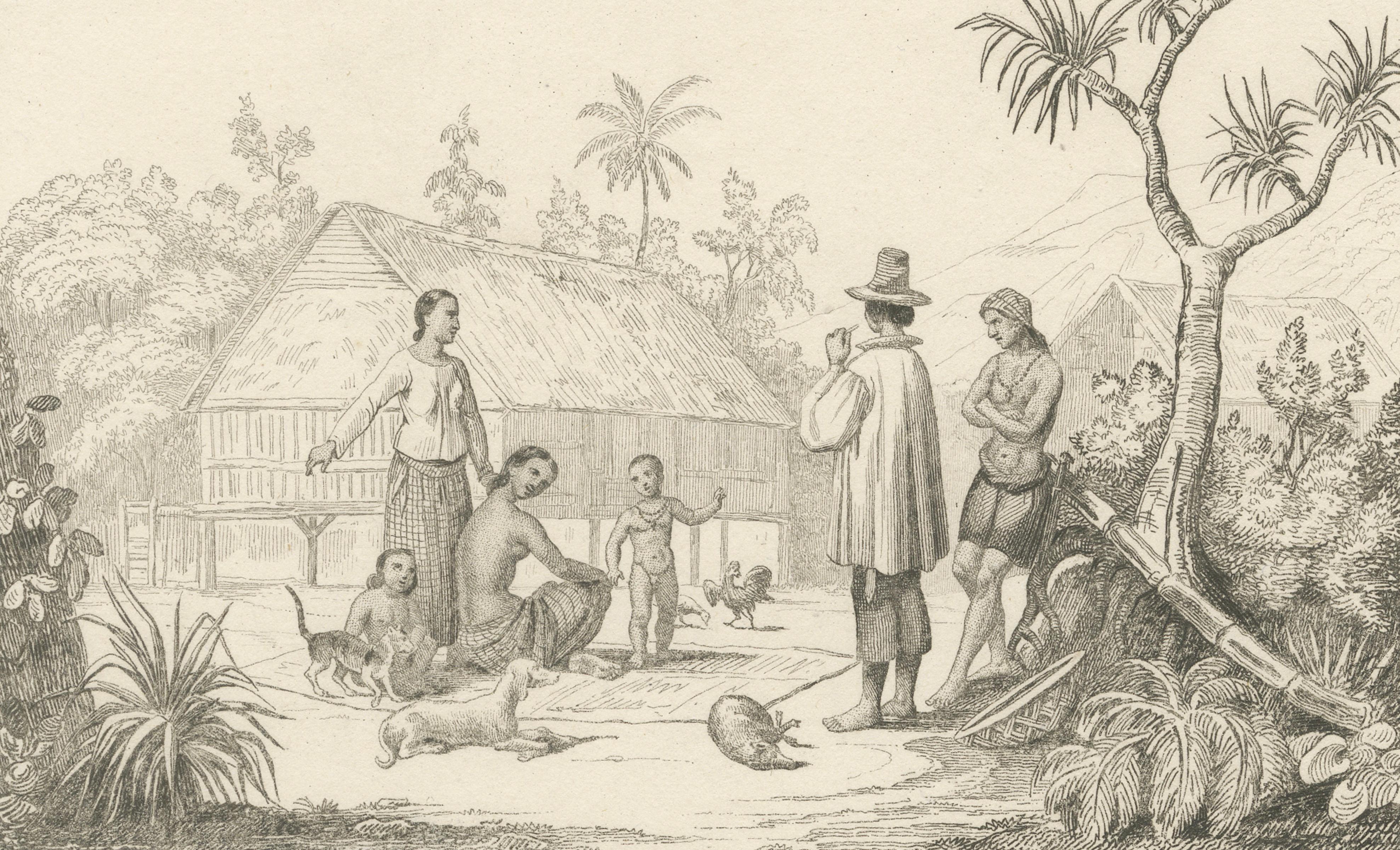
The second engraving, “Habitation de l’île Touahan,” shows a domestic Polynesian scene centered around a large thatched dwelling built on wooden supports. Several island inhabitants interact in front of the structure while a European visitor stands observing the group. Dogs, chickens, and tropical vegetation create a sense of everyday life in a village setting. Such imagery reflects early European curiosity about the domestic architecture and social life of Polynesian communities.
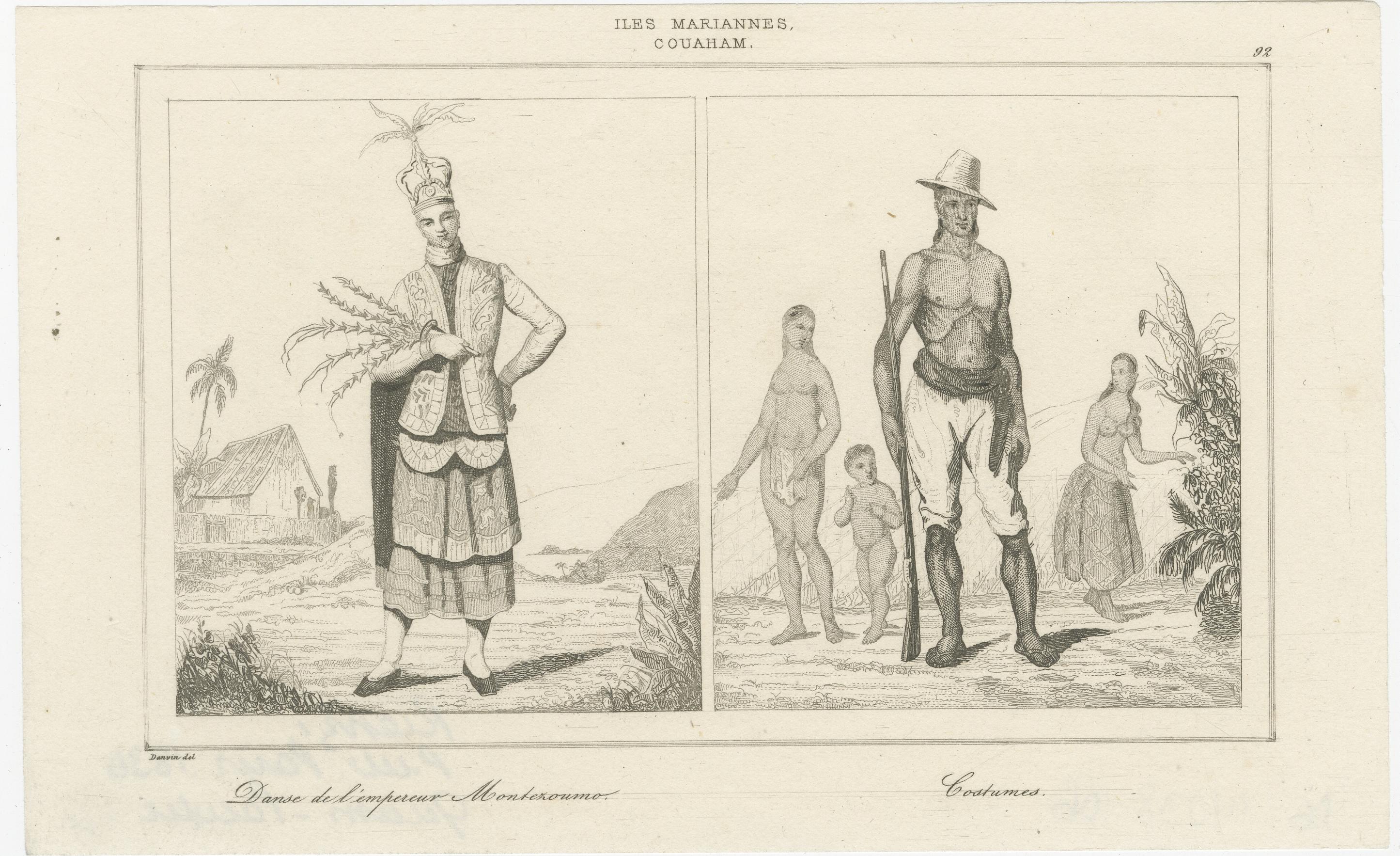
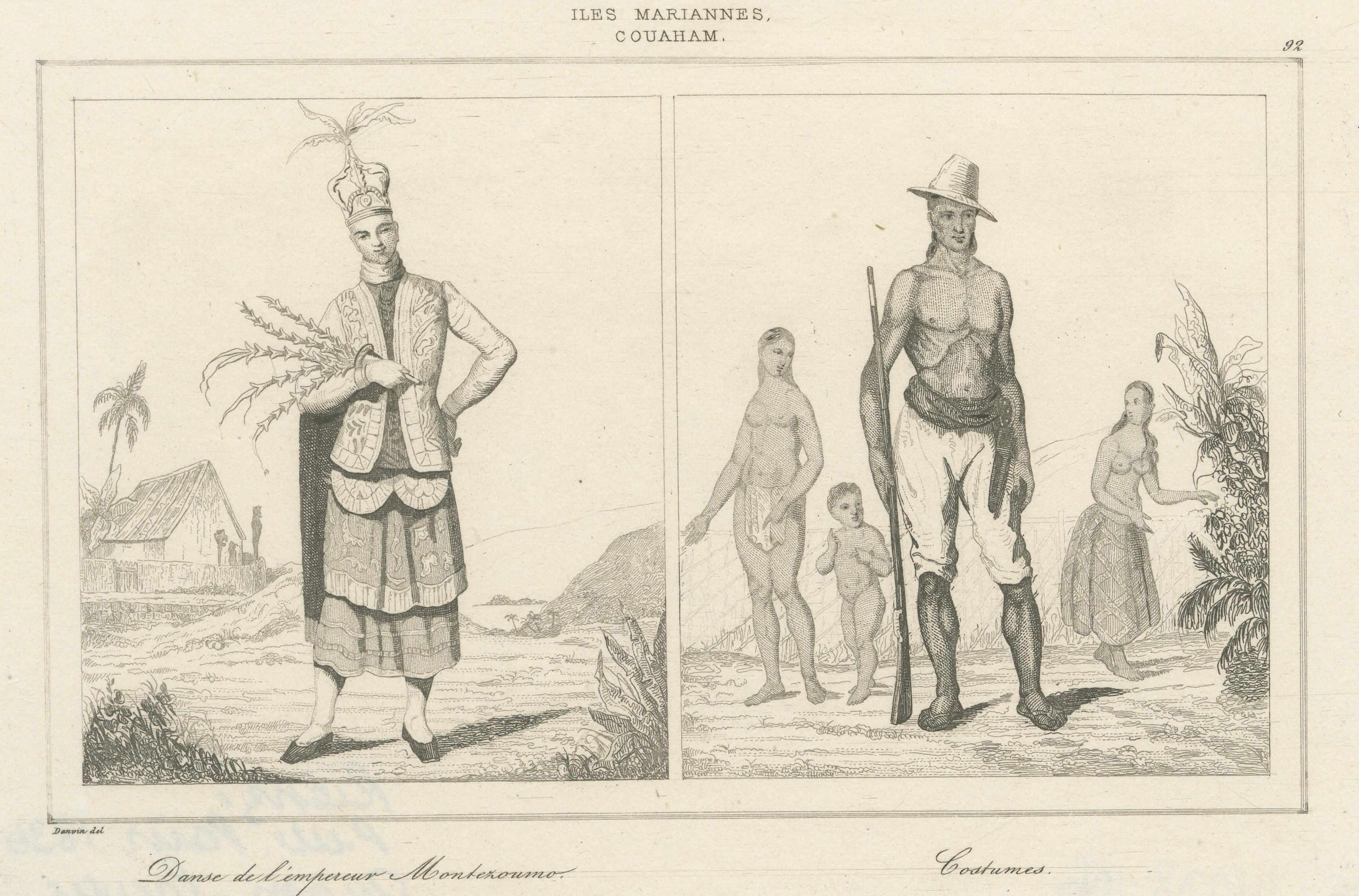
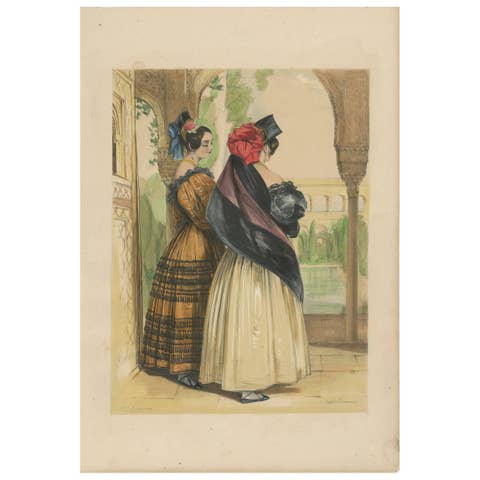
The third plate illustrates Chamorro costume and ceremonial culture in the Mariana Islands. Titled “Danse de l’empereur Monteroumo – Costumes,” the composition presents figures in traditional dress, including a ceremonial costume associated with a dance attributed to a local leader named Monteroumo. The detailed rendering of garments, weapons, and ornament reflects the ethnographic ambitions of Domeny de Rienzi’s publication, which aimed to catalog the peoples of Oceania for a European audience.
Together these engravings form a compelling visual record of nineteenth-century European perceptions of Micronesian and Polynesian societies. Their balanced compositions, precise line work, and ethnographic subject matter make them particularly attractive as a framed group. Sets such as this appeal to collectors of exploration prints, Pacific history, and early ethnographic illustration.
The engravings originate from the 1836 Paris publication and are genuine period impressions printed on laid paper. They are not modern reproductions.
Condition:
Good antique condition with light age toning and minor handling marks. Wide margins. Plate marks visible. Small spots or faint paper toning consistent with age.
Framing tips:
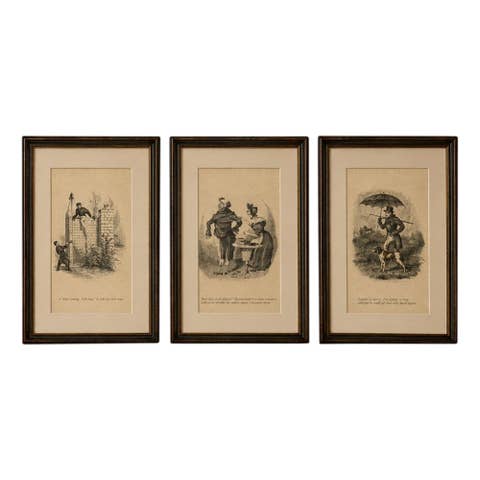
These prints frame beautifully as a horizontal triptych. A dark walnut or ebonized frame with a warm ivory mat works particularly well and enhances the fine line work of the engravings. In interior design settings they also pair well with natural wood frames and neutral gallery walls.
Technique: steel engraving
Maker: Victor Marie Félix Danvin, France, 1836
Keywords:
Oceania, Guam, Chamorro, Mariana Islands, Polynesia, Micronesia, Pacific Islands, Domeny de Rienzi, Danvin, Bernard, ethnographic print, exploration print, Pacific culture, coconut distillation, island life, Polynesian house, Chamorro costume, 19th century engraving, French travel illustration, Oceania exploration