About this sheet
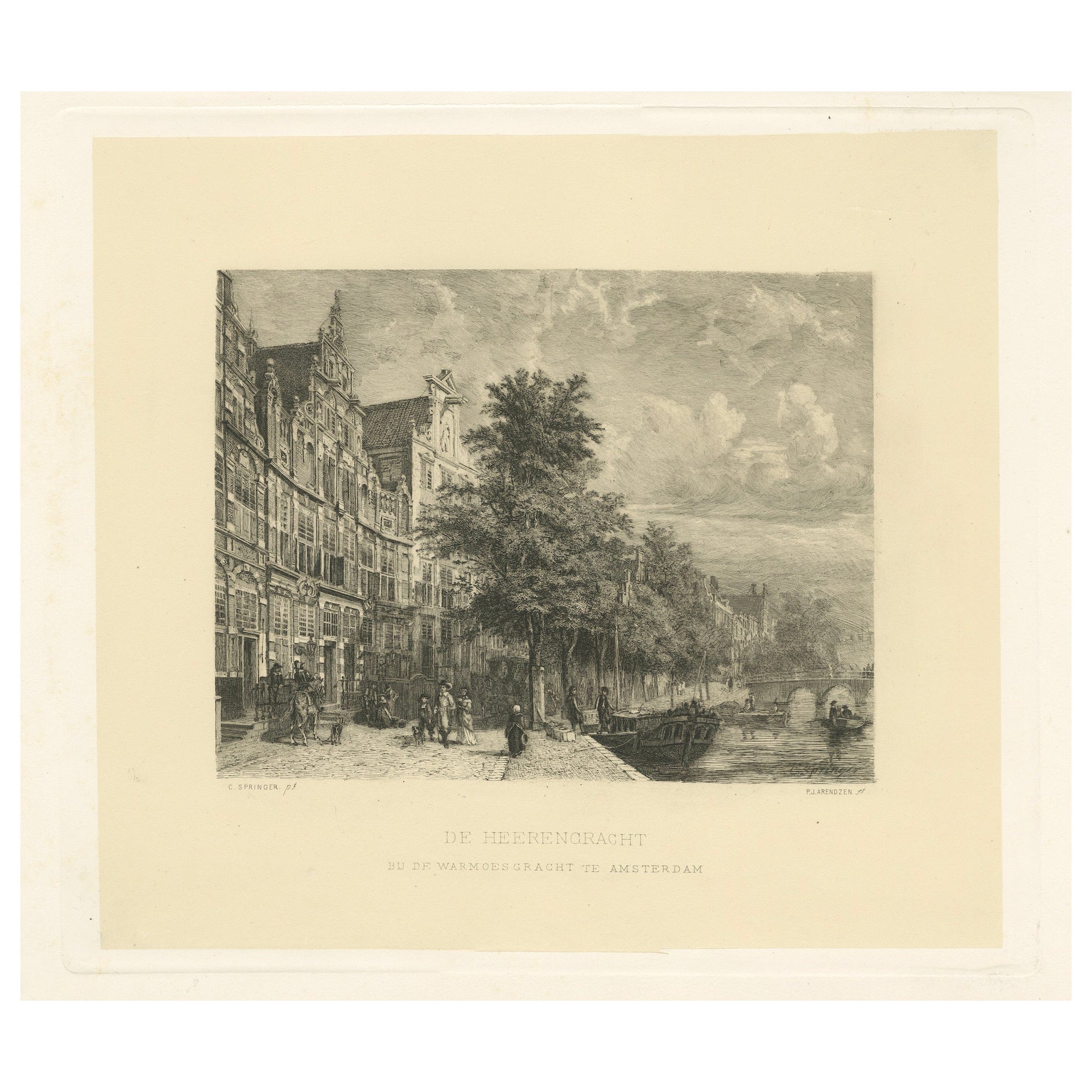
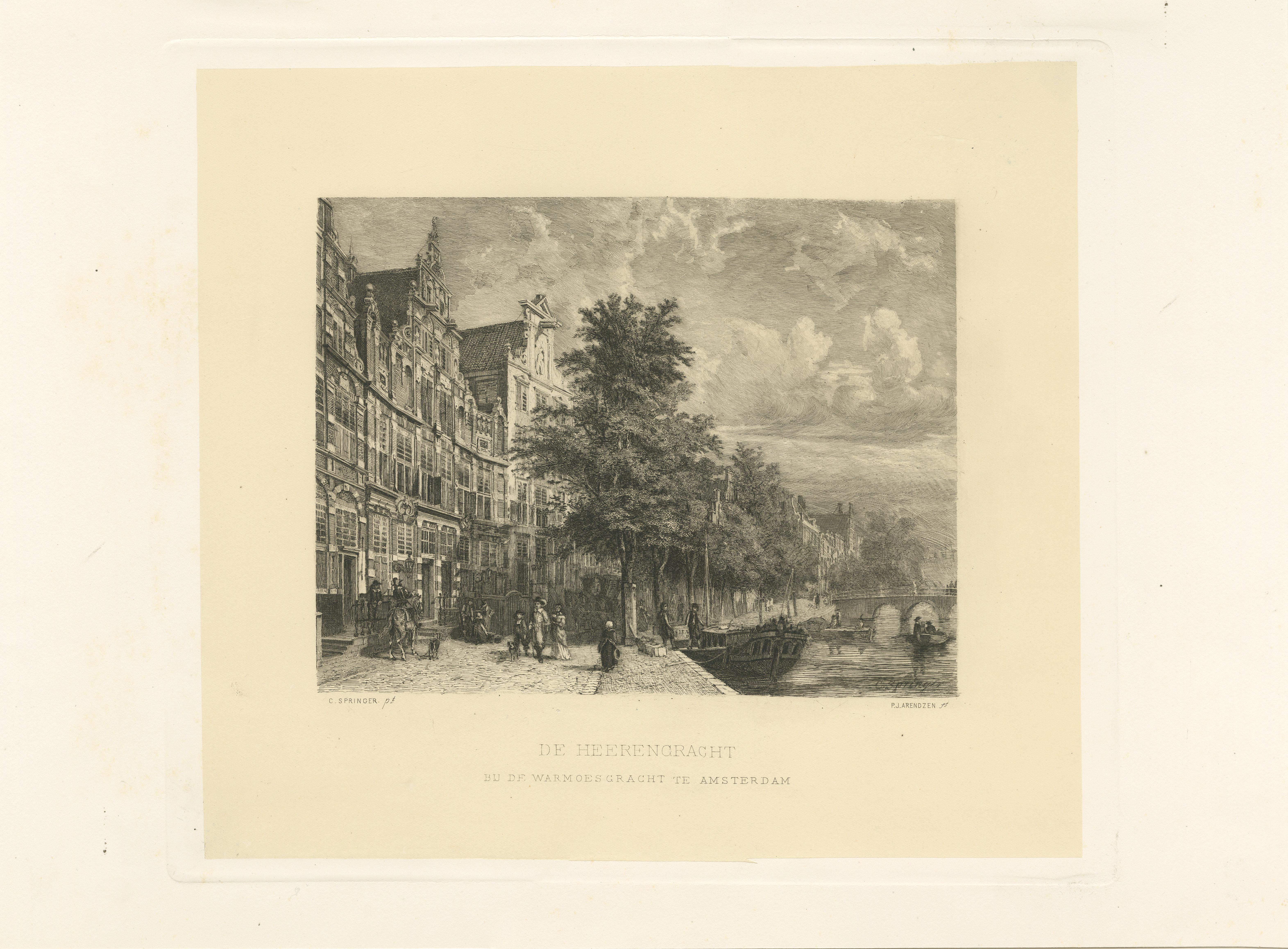
Amsterdam’s Elegant Herengracht: Historic Canal Scene, circa 1870
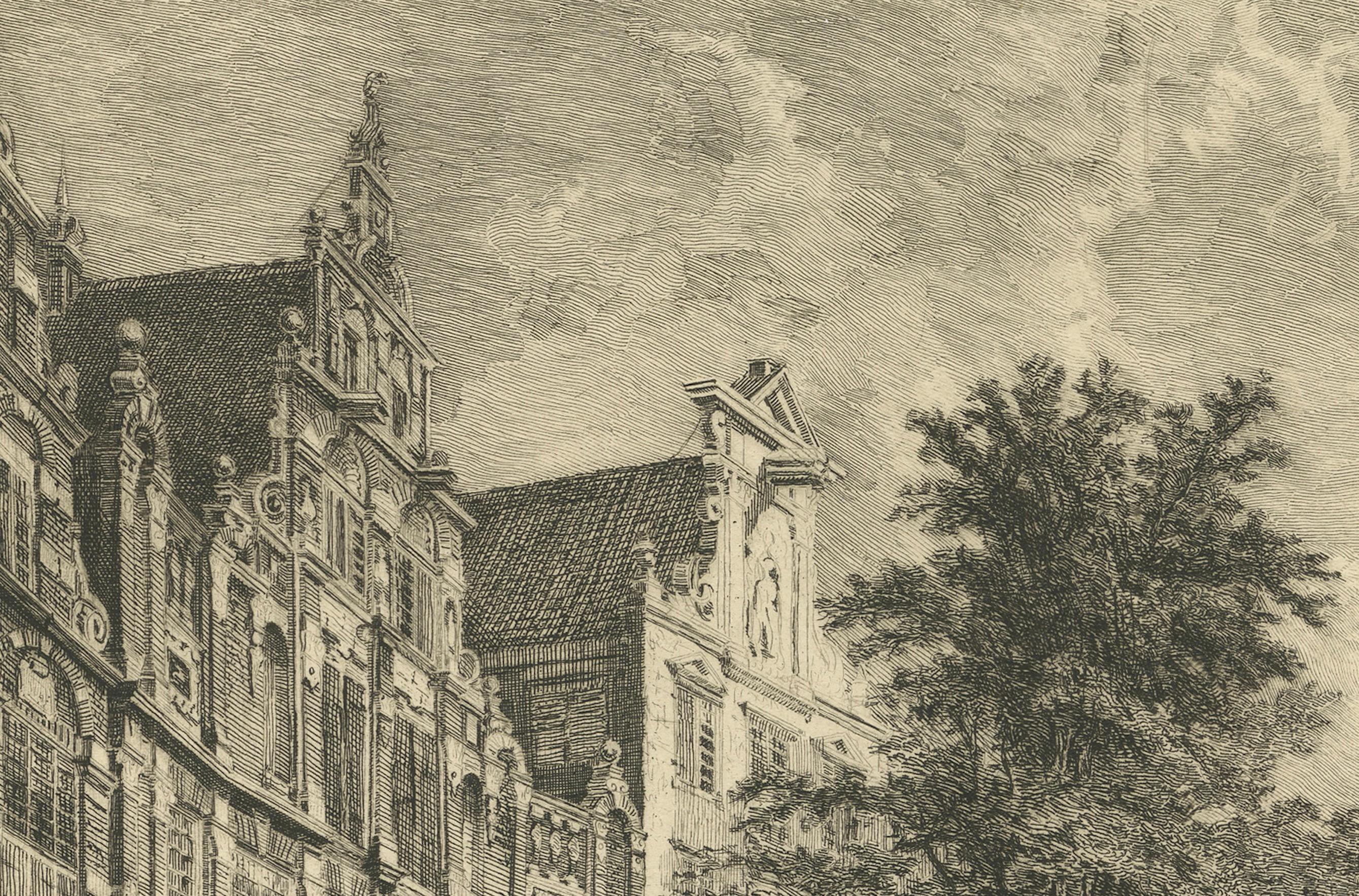
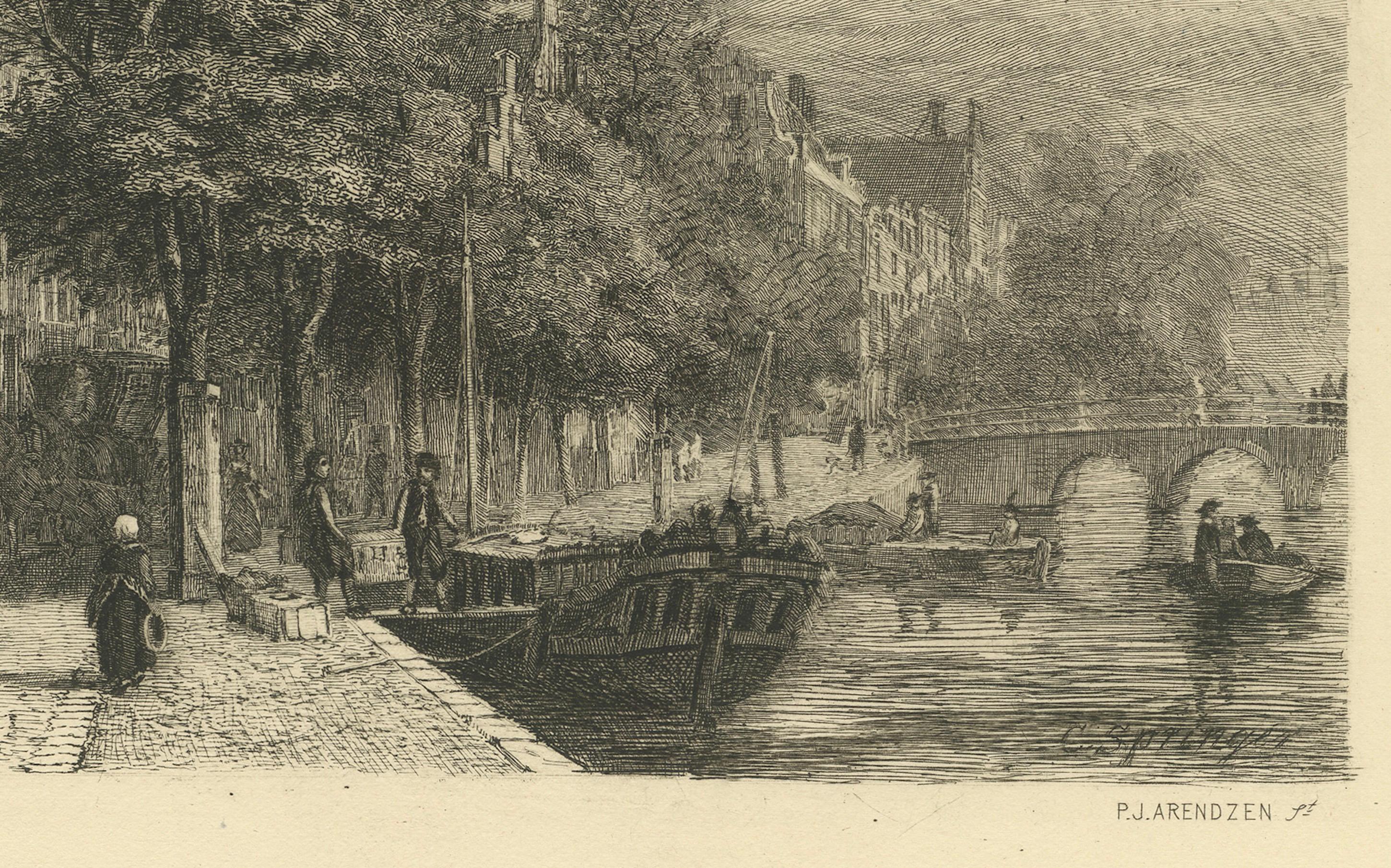
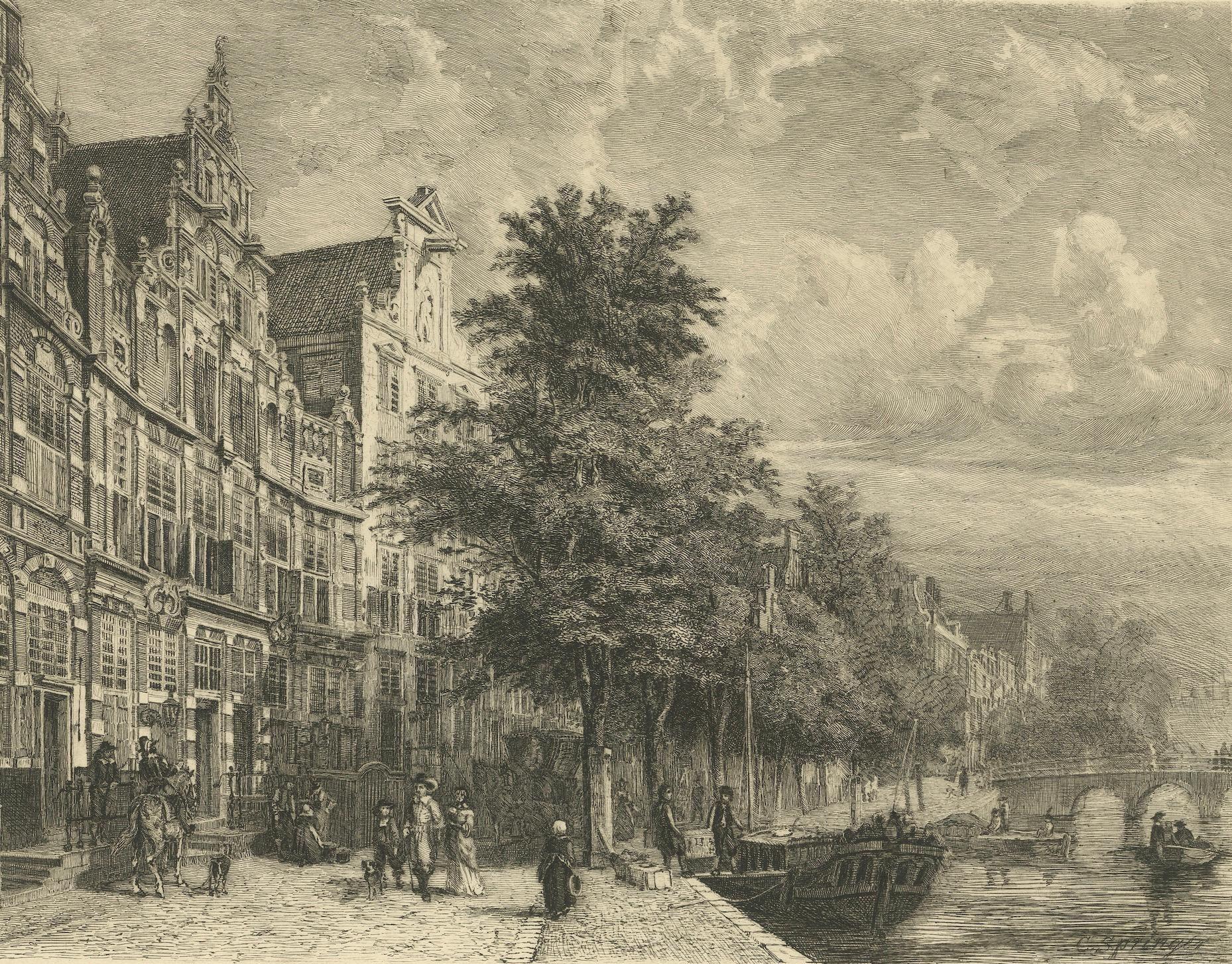
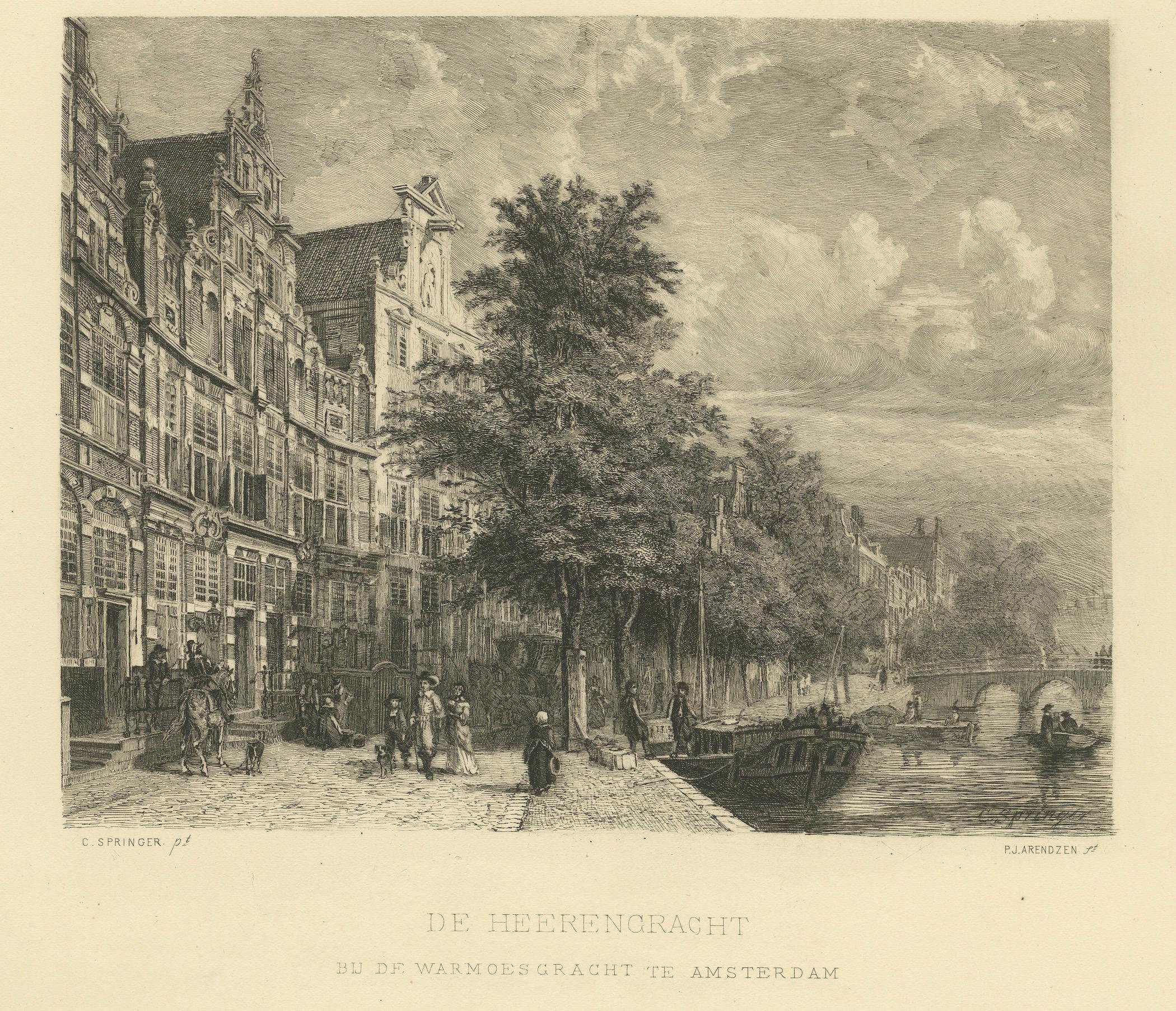
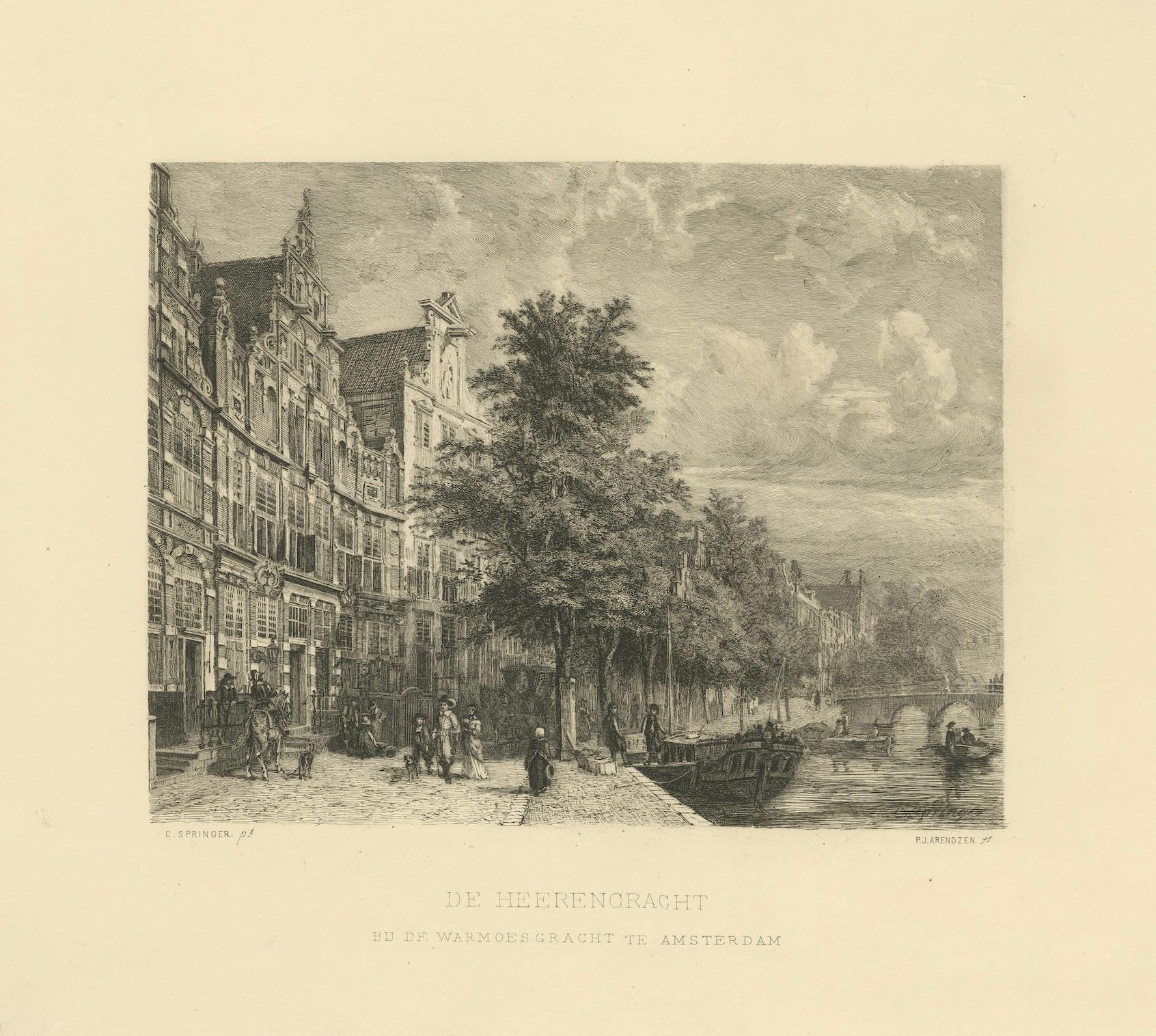
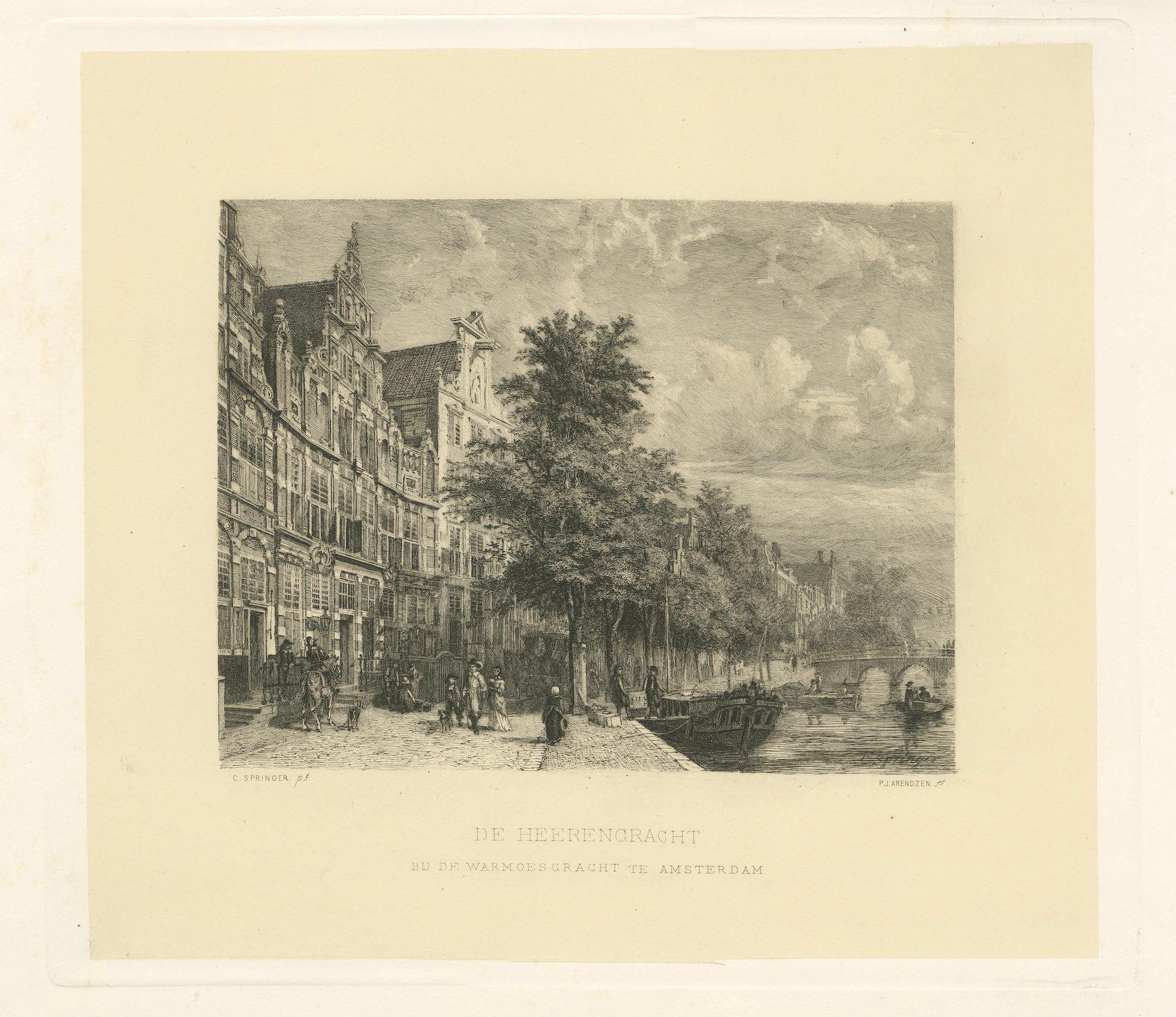
This enchanting 19th-century etching portrays the timeless elegance of Amsterdam's Herengracht canal near the Warmoesgracht. Crafted with meticulous detail, it transports the viewer back to the mid-1800s, capturing the city’s serene yet lively ambiance. Lined with tall canal houses in classic Dutch architectural style, the scene is filled with bustling figures and boats gliding across the shimmering water. Trees line the water’s edge, adding an organic rhythm to the stately, picturesque street view.
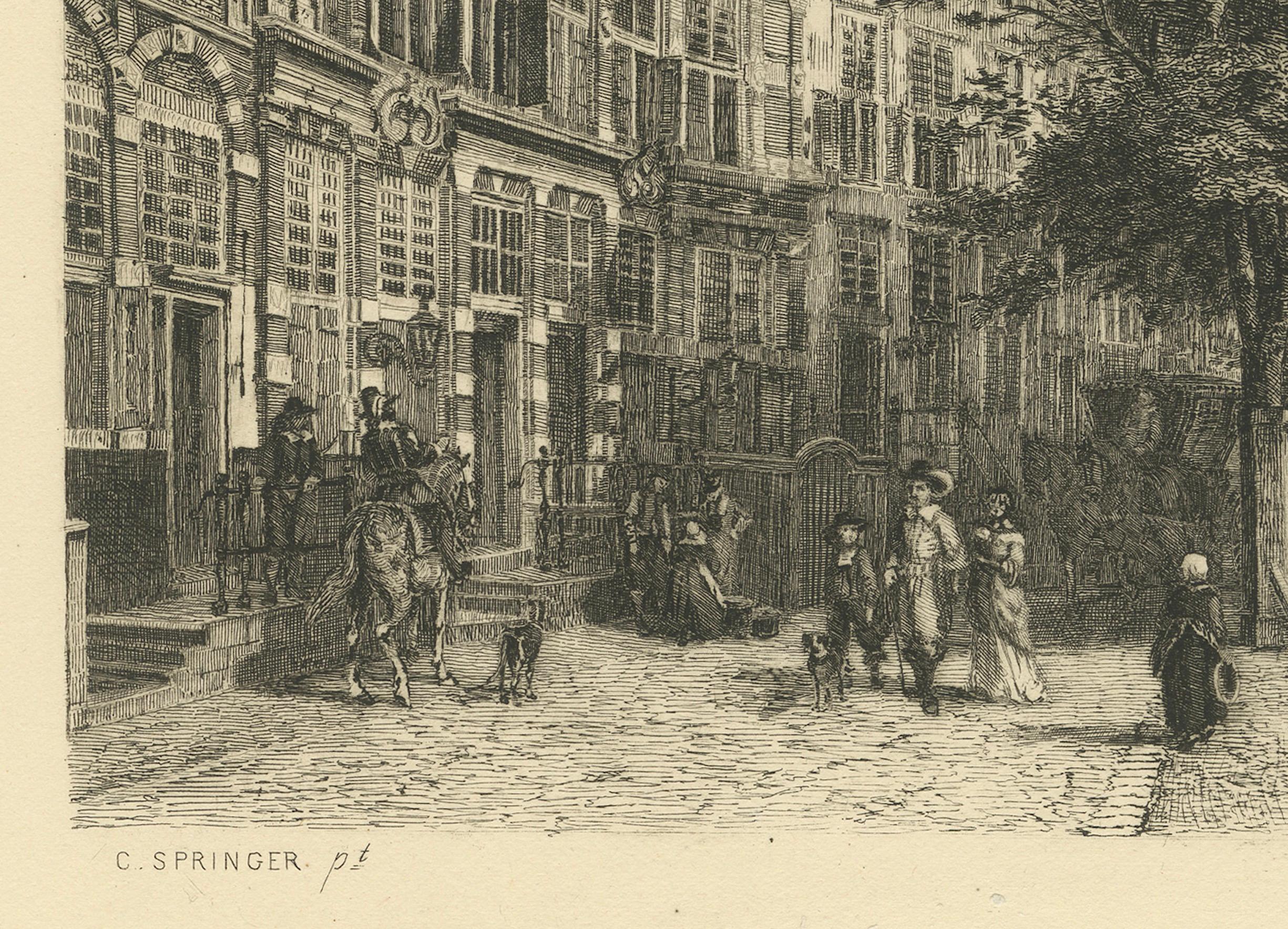
This etching is more than a mere representation; it is a window into Amsterdam’s Golden Age spirit, reflecting how city life, trade, and artistic flair coexisted harmoniously. The image brims with tiny vignettes: men chatting by the canal, women in period dresses, and elegant boats bobbing in the current. Its creation in the 1870s coincided with a renewed interest in preserving and celebrating Dutch urban landscapes.
An ideal piece for collectors of European prints, Amsterdam city scenes, or historical etchings, it offers both decorative beauty and a touch of nostalgia. The rich architectural details and masterful perspective draw the eye into the winding canal, inviting a deeper appreciation of Amsterdam’s enduring charm.
Condition Report: The etching is in good condition, with only slight age-toning and scattered foxing in the margins, which do not detract from the image itself. The paper remains robust, and the etching is crisp and clear.
Framing Tips: To enhance this historic cityscape, frame it in a classic, understated style—consider a slim, black or dark wood frame with an off-white mat. This will highlight the detailed etching and lend an air of refined elegance, perfect for a library, office, or living space steeped in history.
The technique used to create this beautiful scene is **etching**. Etching is an intaglio printmaking process that involves incising a design onto a metal plate (usually copper, steel, or zinc) by using a combination of acid and a stylus or needle. In this process, the artist first coats the plate with a protective ground, then scratches through this ground to expose the metal. The plate is then submerged in an acid bath, which bites into the exposed metal lines. Once the etching is complete, the plate is cleaned, inked, and carefully wiped so that only the etched lines hold the ink. A damp sheet of paper is placed on the plate and pressed with a heavy roller or printing press to transfer the image from the plate to the paper.
This particular etching beautifully captures the intricate details of Amsterdam’s Herengracht canal houses, boats, and figures with a rich texture that brings depth and life to the city scene. The technique’s fine lines and subtle gradations of tone make it especially suitable for architectural and urban views, as it allows for precise and expressive rendering of light, shadow, and texture.