About this sheet
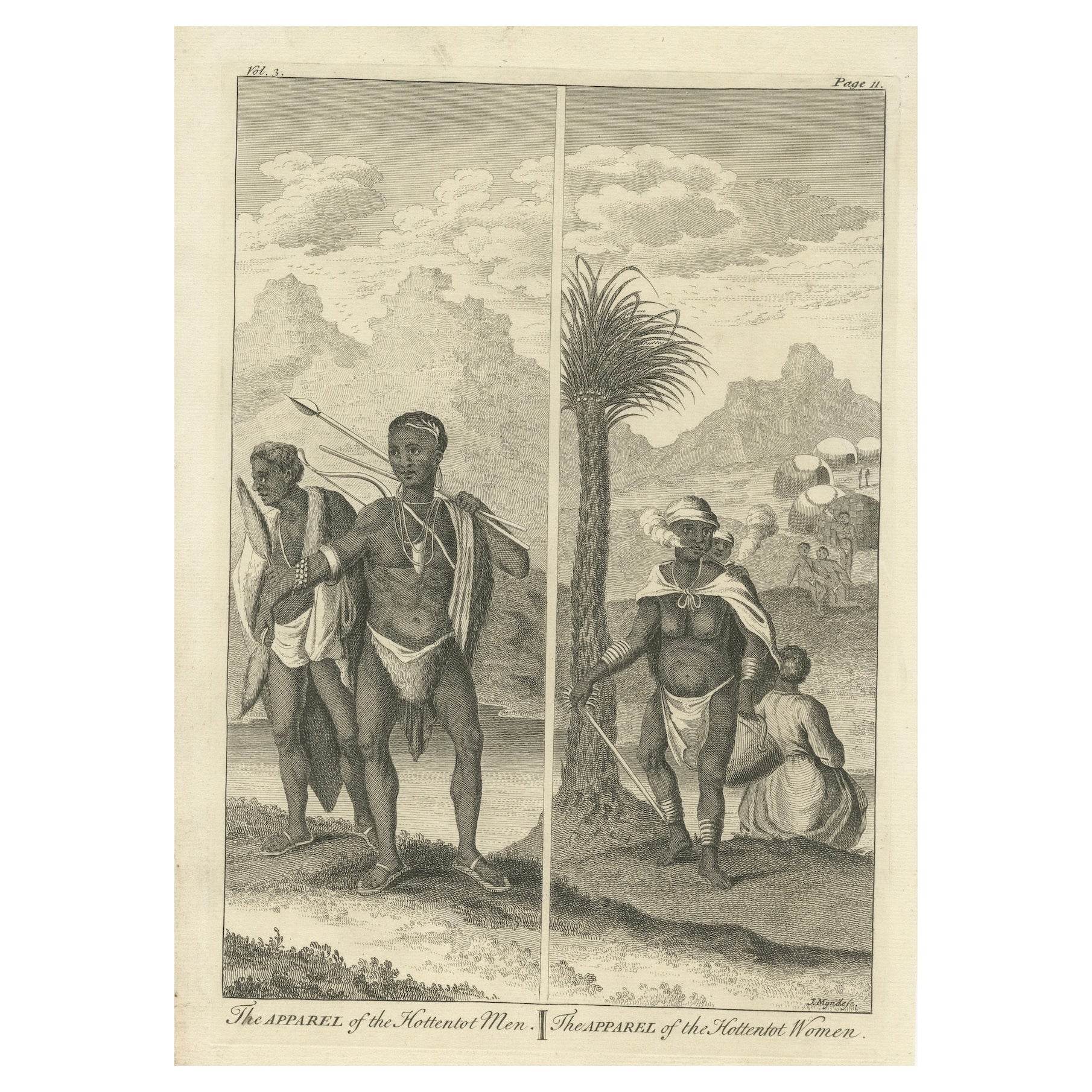
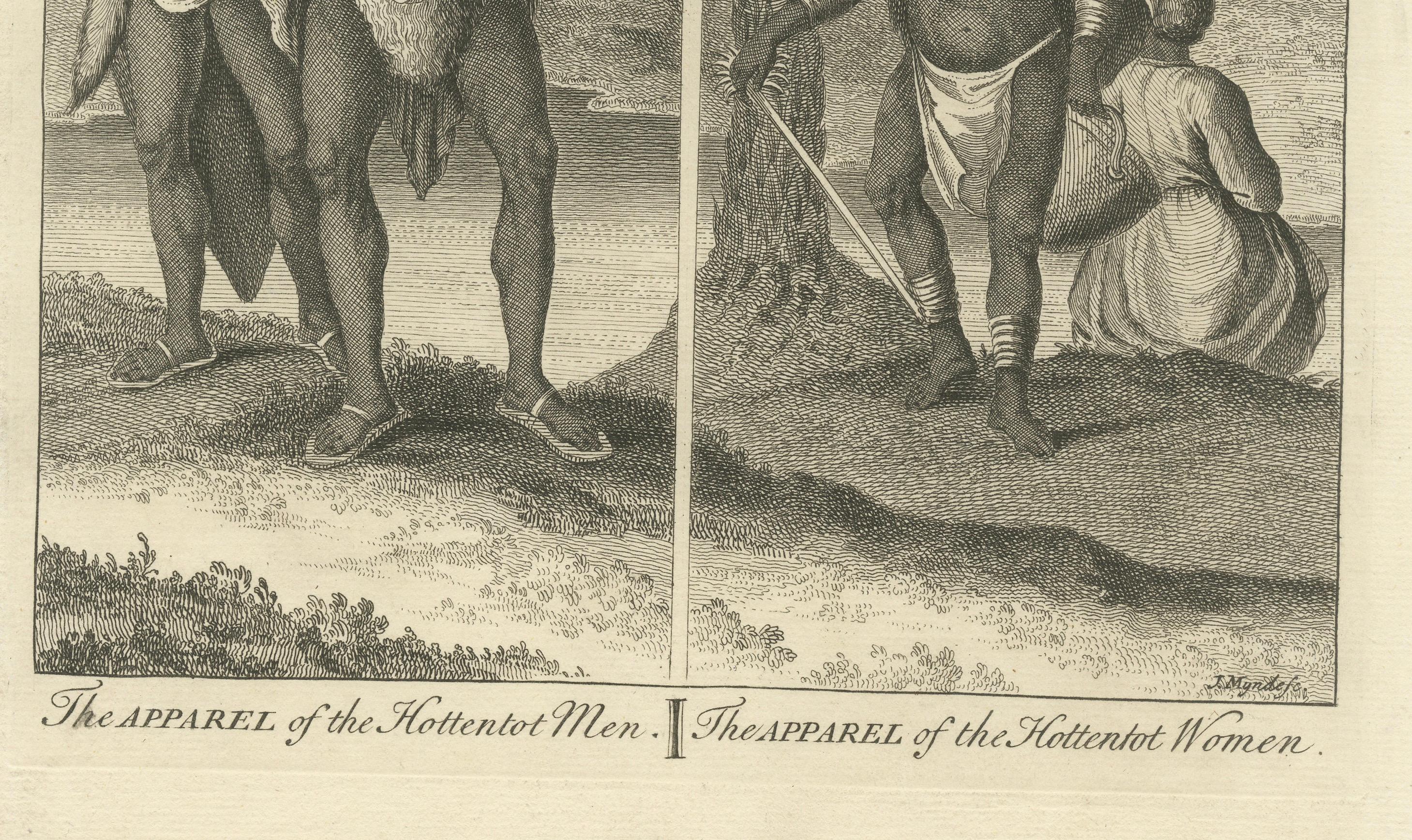
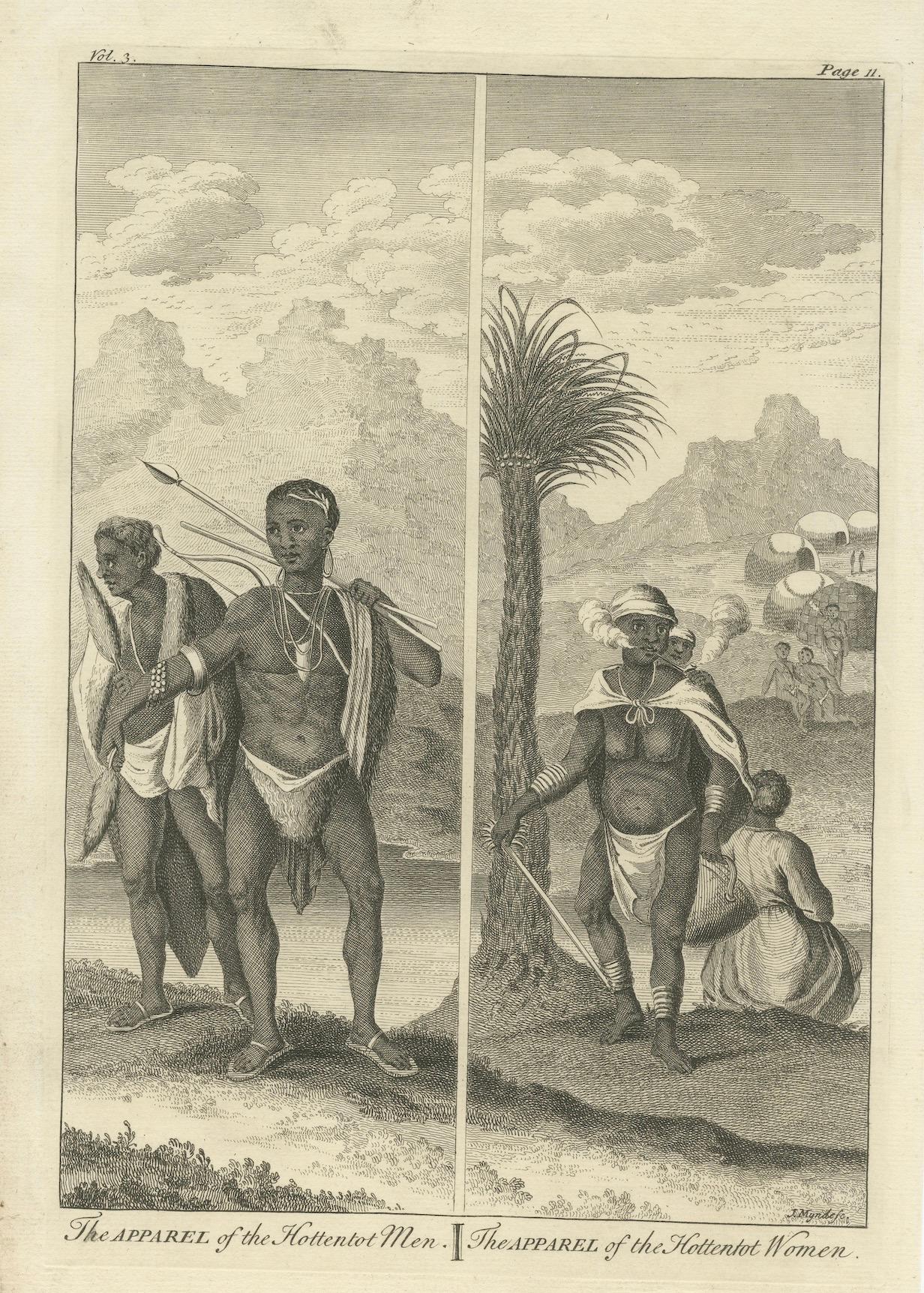
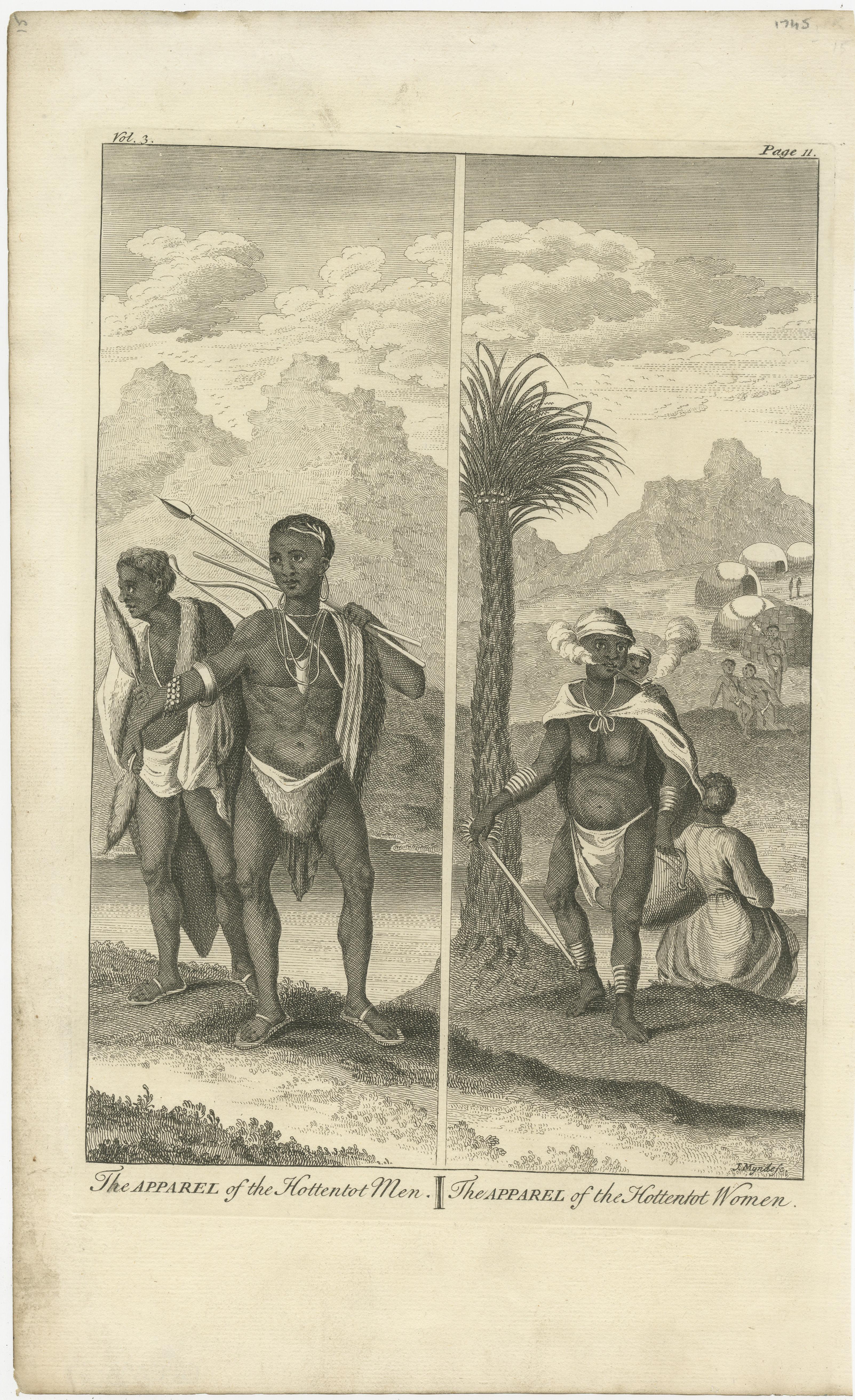
This double-engraved page featuring the titles "The Apparel of the Hottentot Men" and "The Apparel of the Hottentot Women" are from the 18th-century book "The Present State of the Cape of Good Hope" published in 1731 by W. Innys in London. The style of the engravings, along with the subject matter, aligns well with the content of the book, which aimed to provide European audiences with detailed descriptions and illustrations of the indigenous peoples of the Cape of Good Hope, particularly the Khoikhoi (historically referred to as Hottentots by Europeans).
The year 1745 marked on the engraving could suggest a later edition or reprinting of the book, as it was common during that period for books to undergo multiple editions or updates. The engraver J. Mijnde is noted as having created several works around this time, making it possible that this particular plate was used in a later printing of the book or another similar publication.
In summary, this engraved page could either be from the 1731 edition or a subsequent edition issued in 1745, given the alignment of the content, style, and subject matter with the descriptions from the book "The Present State of the Cape of Good Hope."
The term Hottentot was historically used by European settlers and explorers to describe the Khoikhoi, an indigenous people of southwestern Africa, primarily in the region now known as Namibia and South Africa. The name "Hottentot" is considered offensive today, as it was a derogatory term given by the Dutch colonists, mocking the sound of the Khoikhoi's language, which uses distinct click sounds.
Origins and Culture:
The Khoikhoi were traditionally pastoralists, herding cattle, sheep, and goats. They had a deeply interconnected social structure based on clans and were known for their mobility, moving to different grazing lands with their livestock. Prior to European colonization, the Khoikhoi lived a relatively peaceful life, thriving in the Cape region.
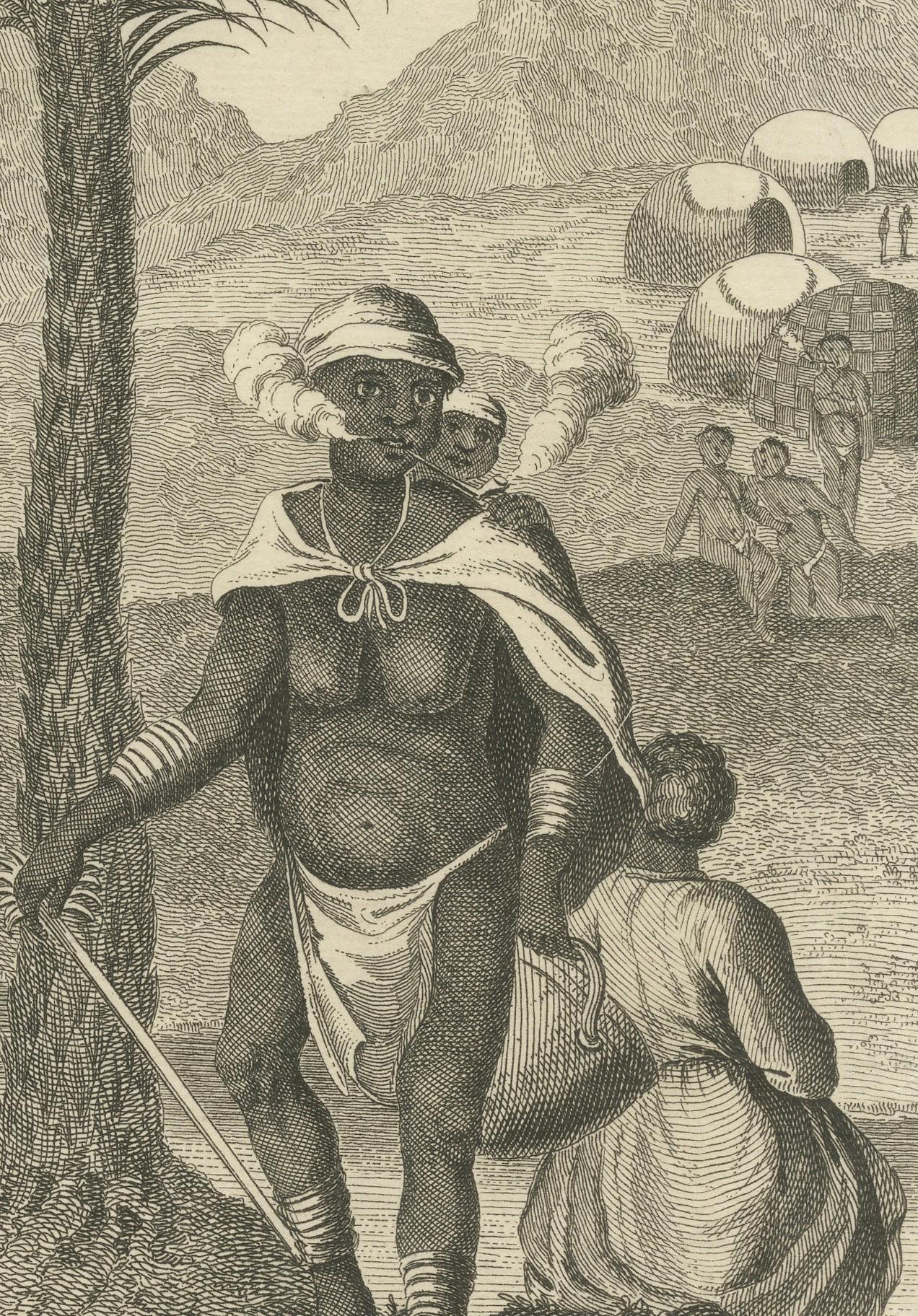
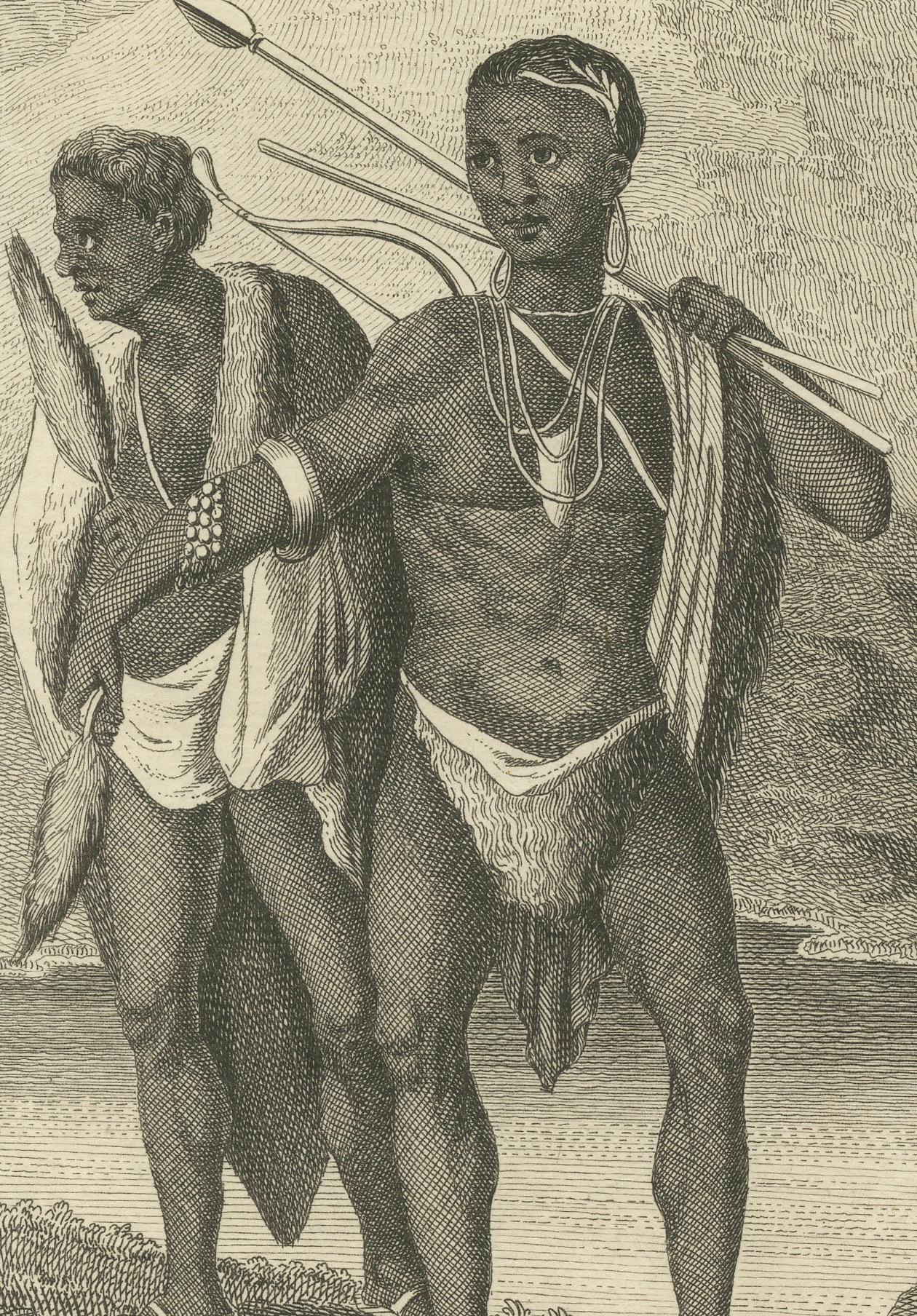
The Khoikhoi's clothing, as depicted in engravings like the one you shared, was typically made from animal hides, and they often adorned themselves with beads and ornaments made from natural materials. Men carried spears for hunting and defense, while women dressed in skins and often carried water or provisions in hide bags.
European Encounters:
The Khoikhoi were among the first African groups to come into contact with European settlers in the 17th century, particularly the Dutch. Initially, interactions were peaceful and based on trade, particularly cattle. However, as European colonization expanded, tensions rose due to competition for land and resources, leading to violent confrontations.
Dutch colonization and subsequent European settlement led to a decline in the Khoikhoi population, due to disease, land dispossession, and integration into European-controlled societies as laborers. By the 18th century, the Khoikhoi had been greatly diminished as a distinct people, and many were absorbed into settler communities or displaced.
Representation in European Works:
European travel literature, such as "The Present State of the Cape of Good Hope", often described the Khoikhoi through a Eurocentric lens. These descriptions tended to portray the Khoikhoi as exotic and "primitive," reflecting European attitudes of superiority and colonial justification. Engravings like the one you shared were part of this broader trend of "ethnographic" documentation, which was often less about accurate representation and more about reinforcing colonial perspectives.
Modern Perspective:
Today, the Khoikhoi identity has seen a resurgence among descendants, and efforts are being made to reclaim their history and culture. The term "Hottentot" has been discarded in favor of Khoikhoi or Khoisan (the latter being an umbrella term that includes both the Khoikhoi and the San peoples, who were hunter-gatherers).
The history of the Khoikhoi is a testament to their resilience in the face of colonization and cultural erasure, and their contributions to the region's history remain significant in South African heritage.