About this sheet
Renaissance Panel Ornament – Intricate Arabesque and Grotesque Motifs, Plate LXVIII
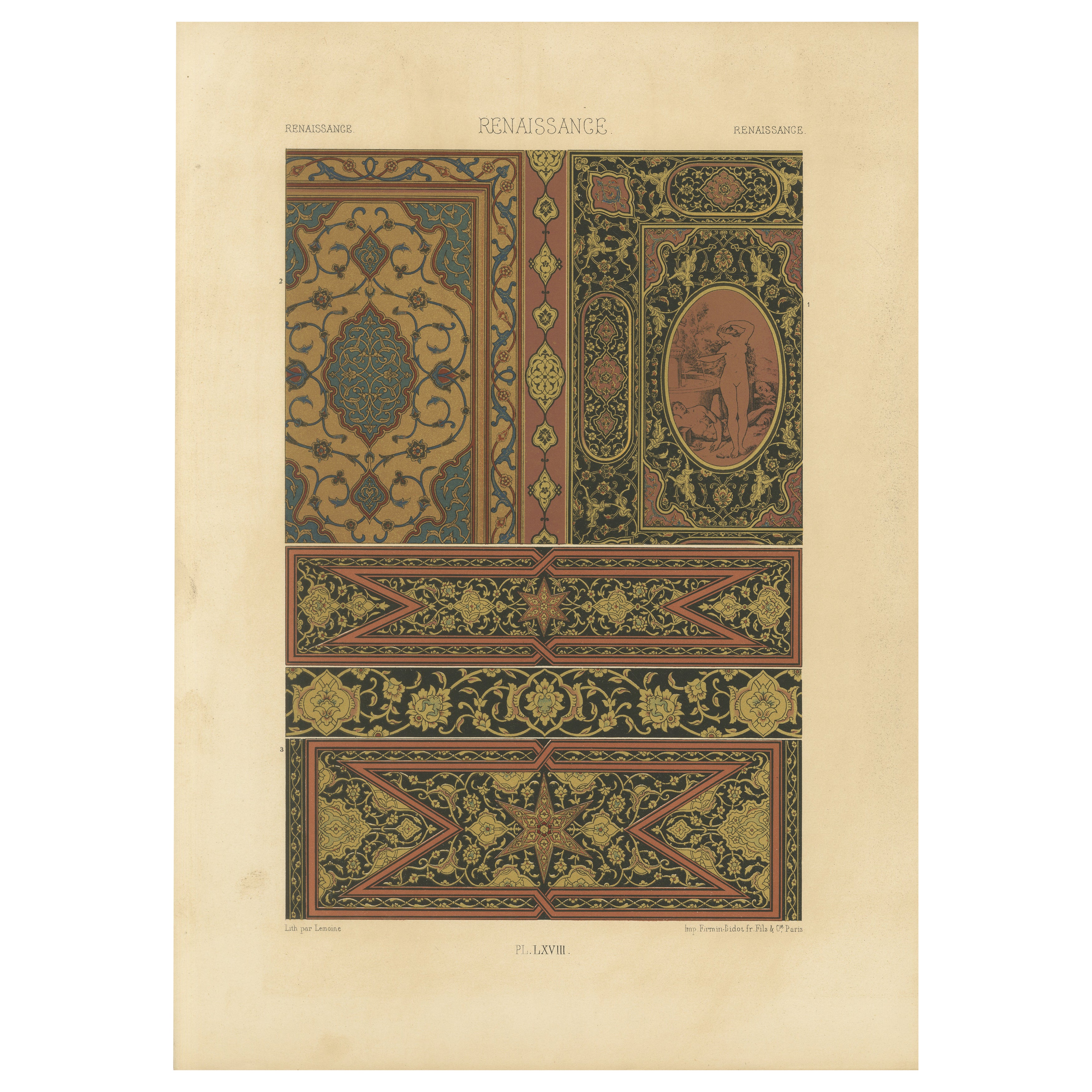
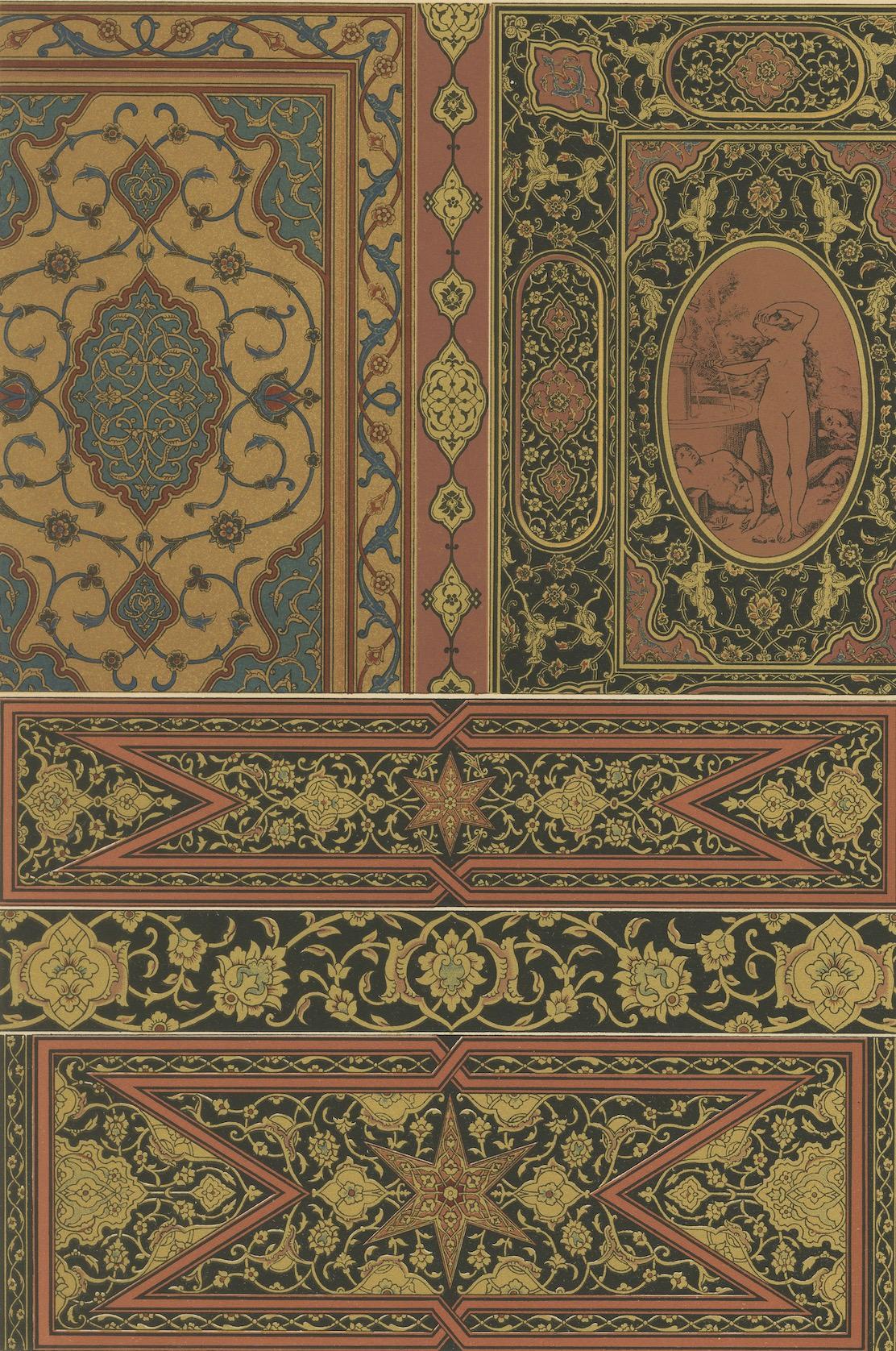
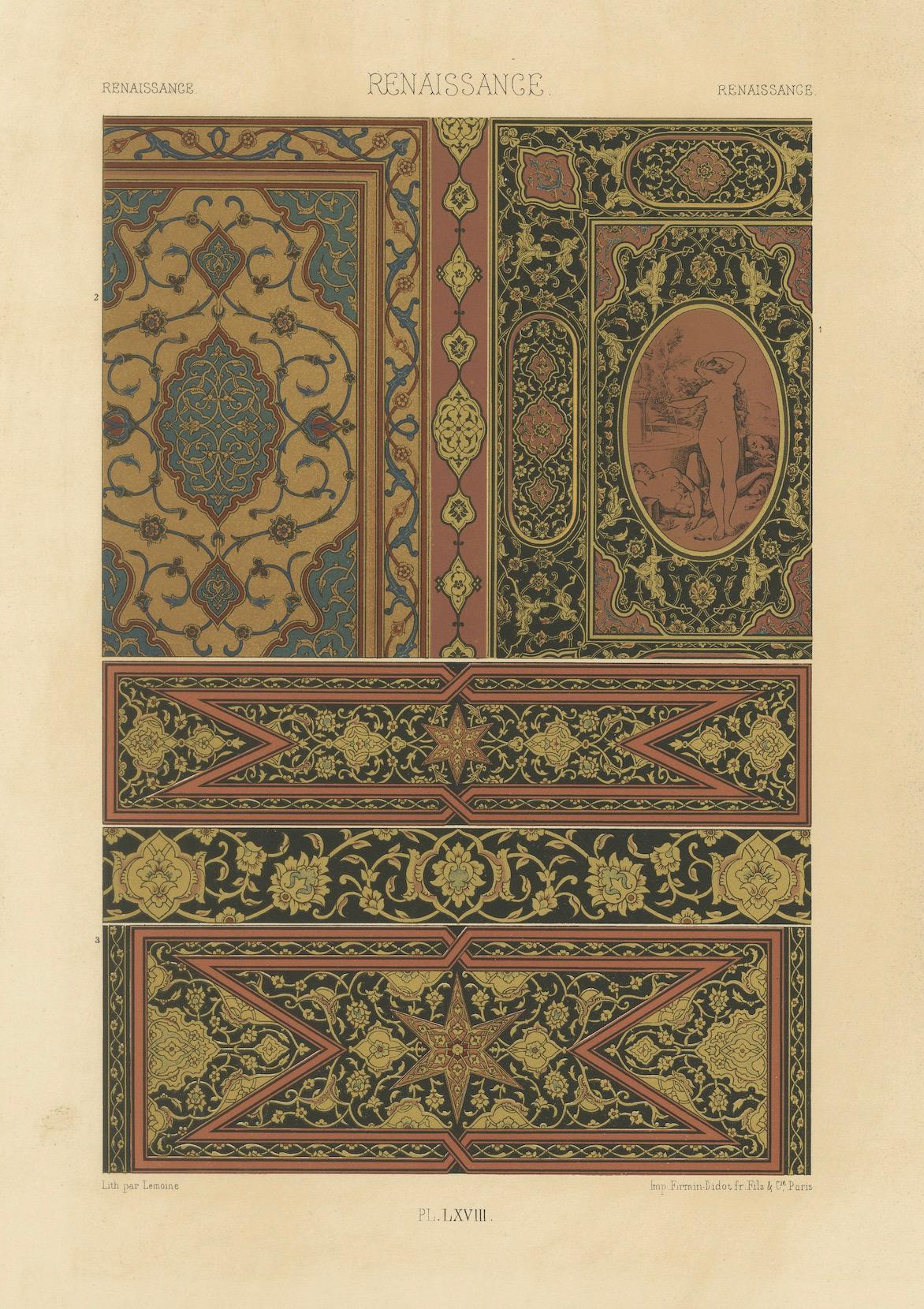
This richly detailed chromolithograph, Plate LXVIII from *L'Ornement Polychrome*, showcases a series of exquisite Renaissance wall or panel decorations that blend Islamic-inspired arabesques with classical grotesque elements. Lithographed by Lemoine and printed by Firmin-Didot Frères in Paris, the designs evoke the opulent aesthetic traditions found in Renaissance palaces and chapels, particularly those influenced by Moorish and Italian styles.
The composition is divided into several sections:
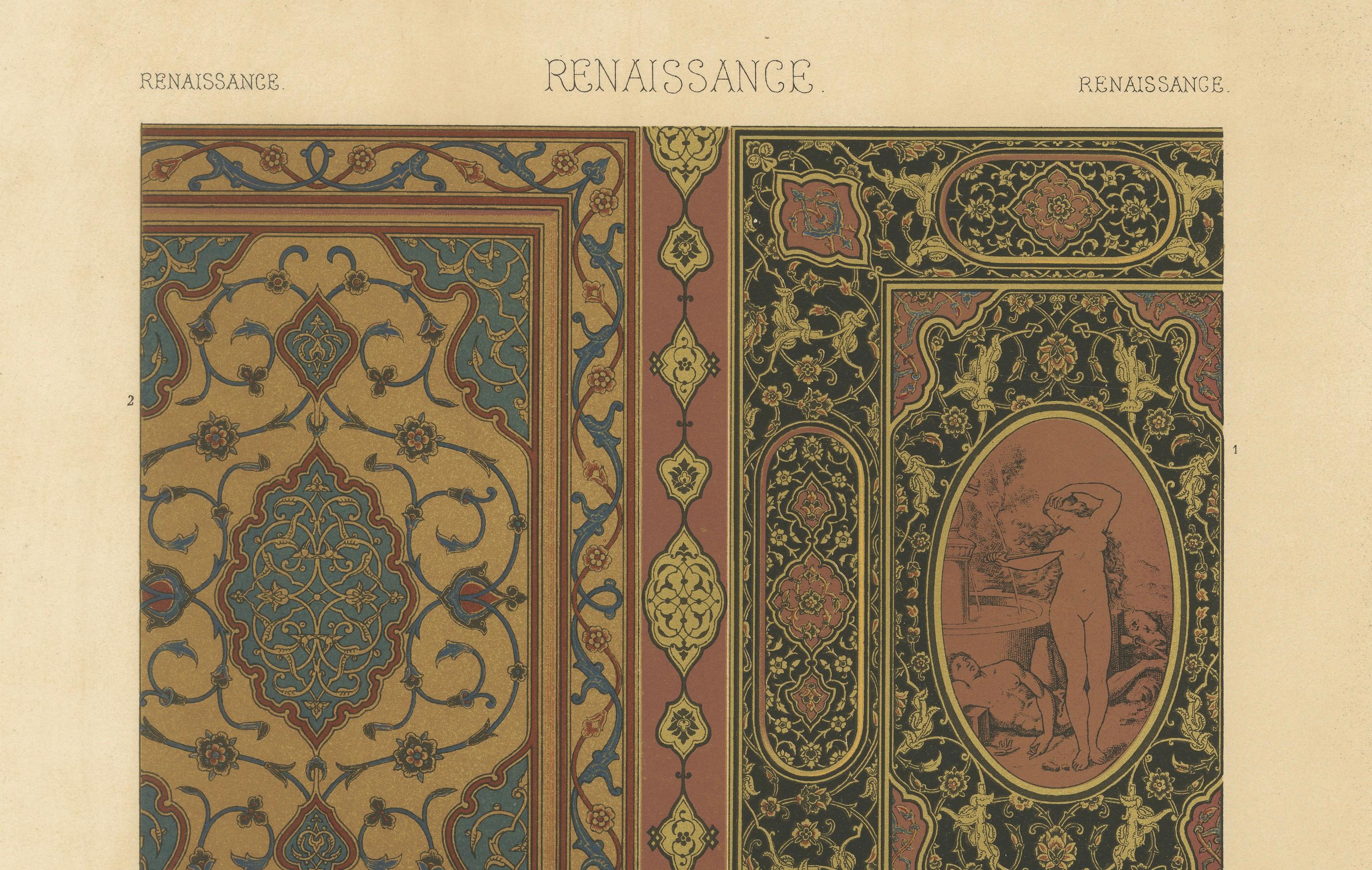
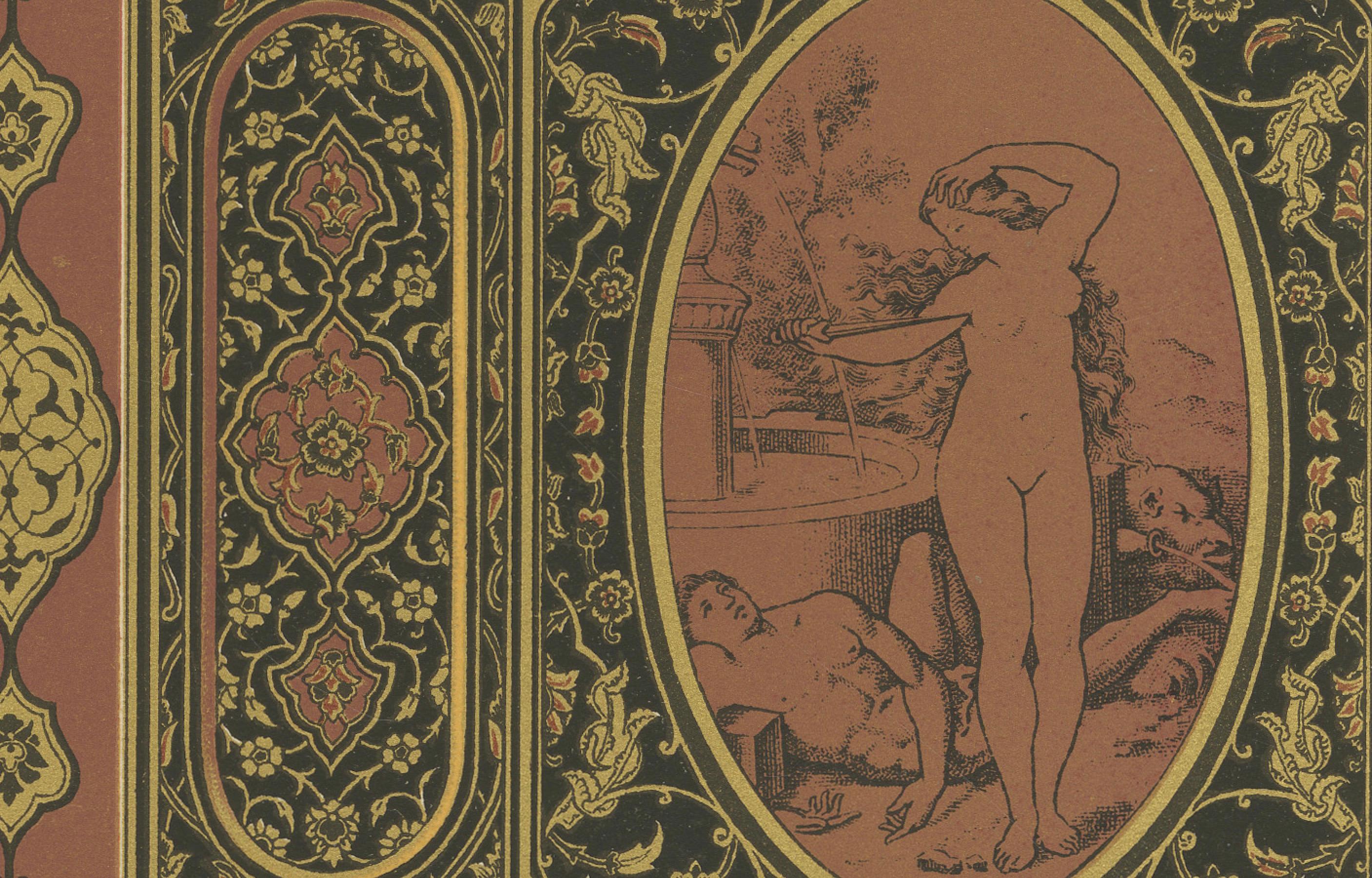
– The top right features an ornate black and gold panel adorned with vegetal scrollwork and an oval medallion containing a sepia-toned pastoral scene of a nude figure beside a fountain, framed by classical architecture and trees.
– The central vertical column is filled with repeating ornamental rosettes, floral motifs, and symmetrical patterns in gold, red, and ochre tones.
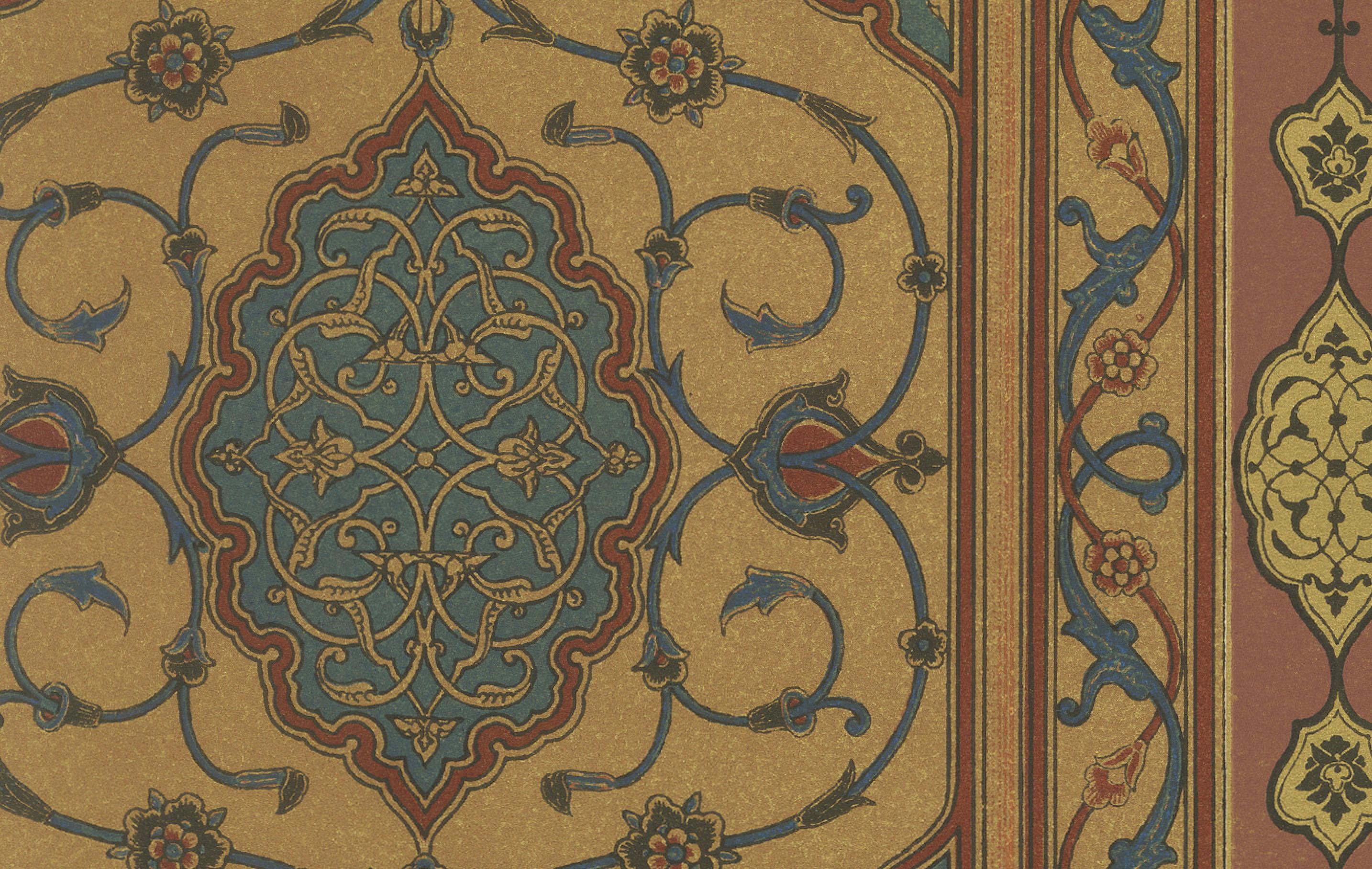
– On the left, a blue and gold panel presents stylized Islamic arabesques framed in red and brown, forming an elegant tiling design suggestive of textiles or domed ceilings.
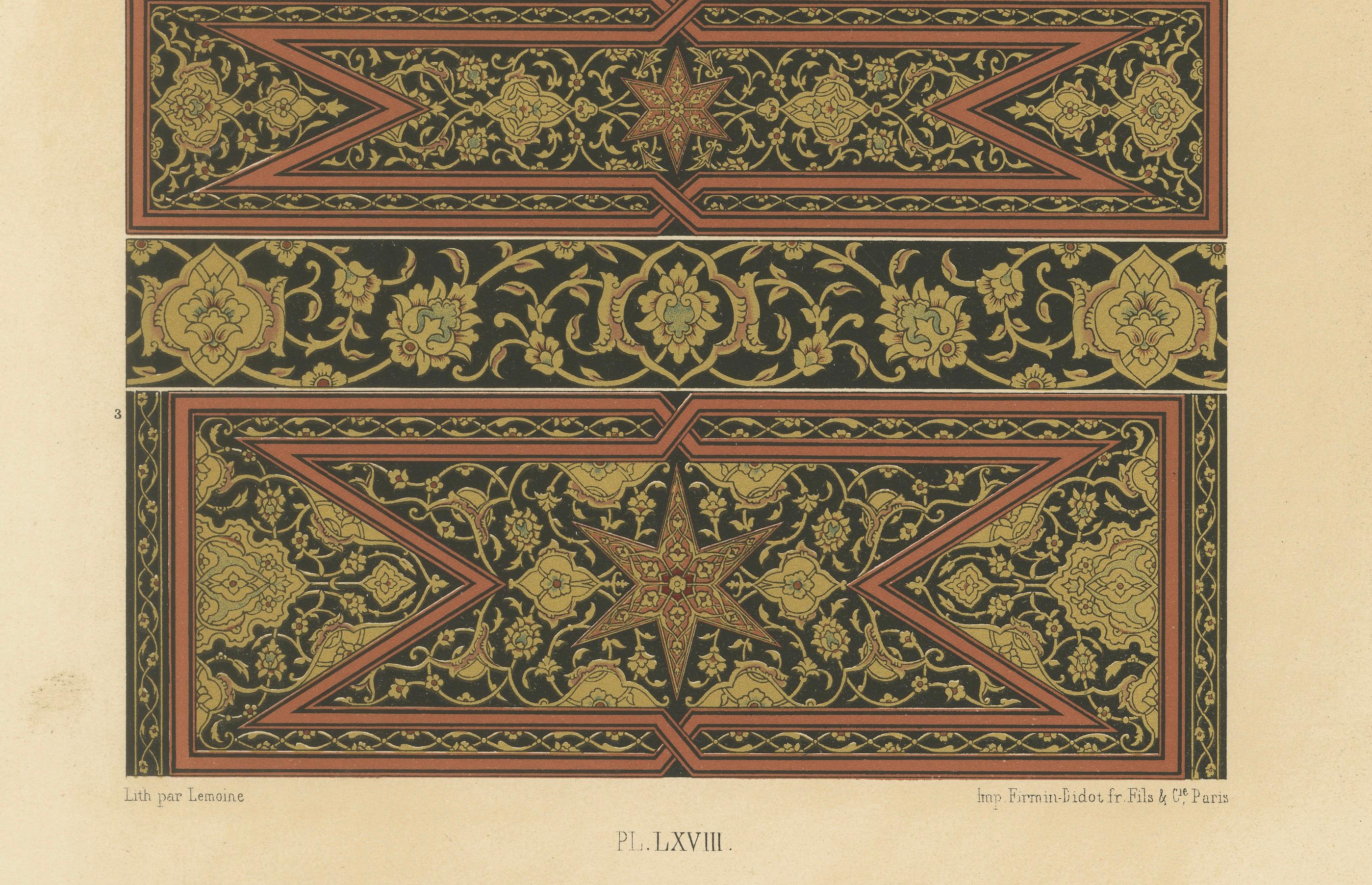
– The two bottom registers are particularly striking, composed of horizontal panels featuring star motifs, stylized flowers, and scrolling foliage. These designs would have been ideal for wooden paneling, coffered ceilings, or even leather wall coverings (cuir de Cordoue).
The decorative vocabulary reflects the Renaissance fascination with symmetry, luxurious ornamentation, and the revival of antique and Near Eastern aesthetics. The meticulous detail and vibrant chromatic contrast of black, gold, red, and blue make this an excellent reference for interior designers, restorers, and collectors of architectural prints.
Condition: Excellent condition with strong color retention. Slight age toning confined to margins; image area remains clean and crisp.
Framing tips: A dark wood or black lacquered frame will complement the deep palette. A narrow gold inner edge or filet can emphasize the richness of the design. Ideal for display in study, library, or gallery spaces focused on historic interiors.
Technique: Chromolithograph
Maker: Lemoine (lith.), Firmin-Didot Frères, Paris, c.1869