About this sheet
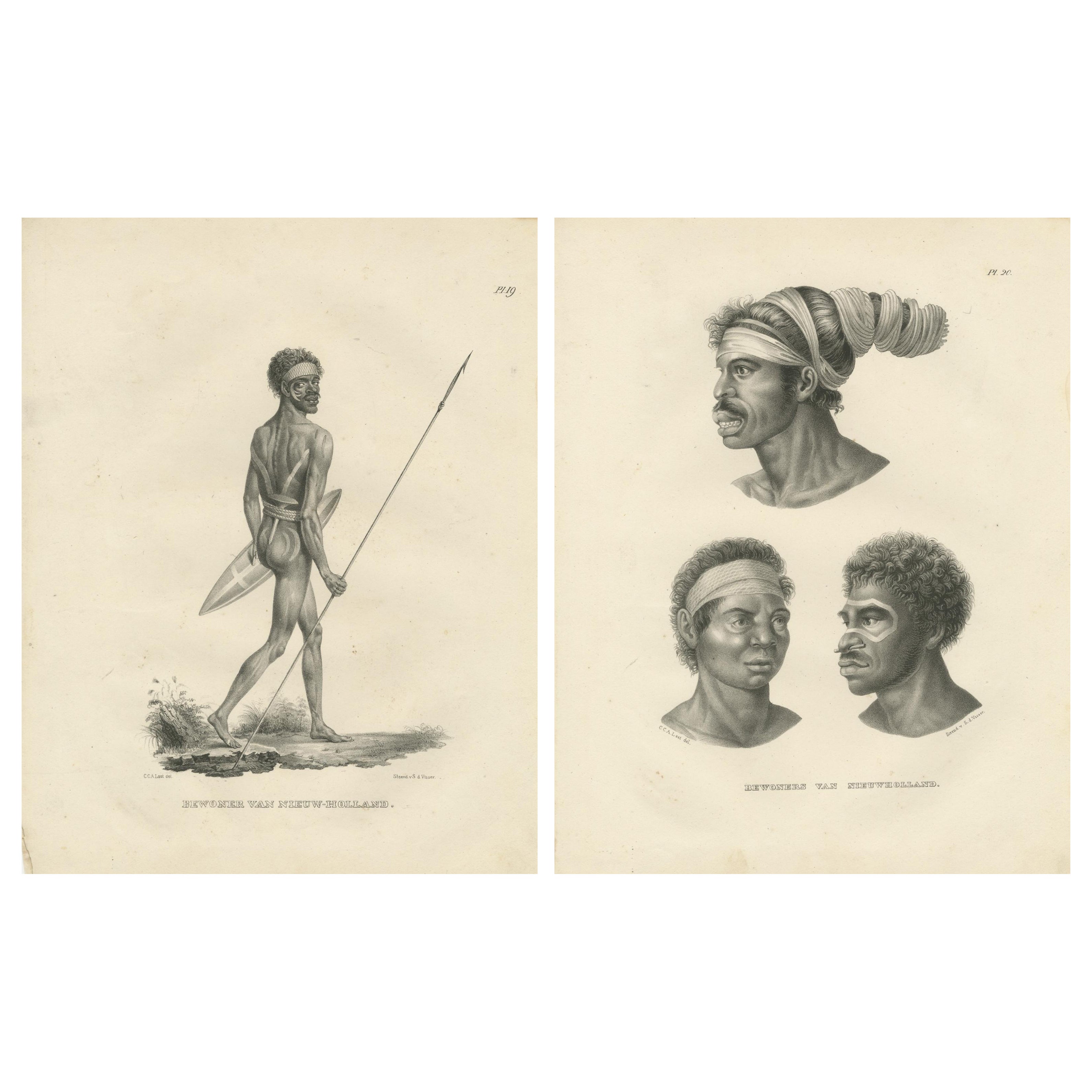
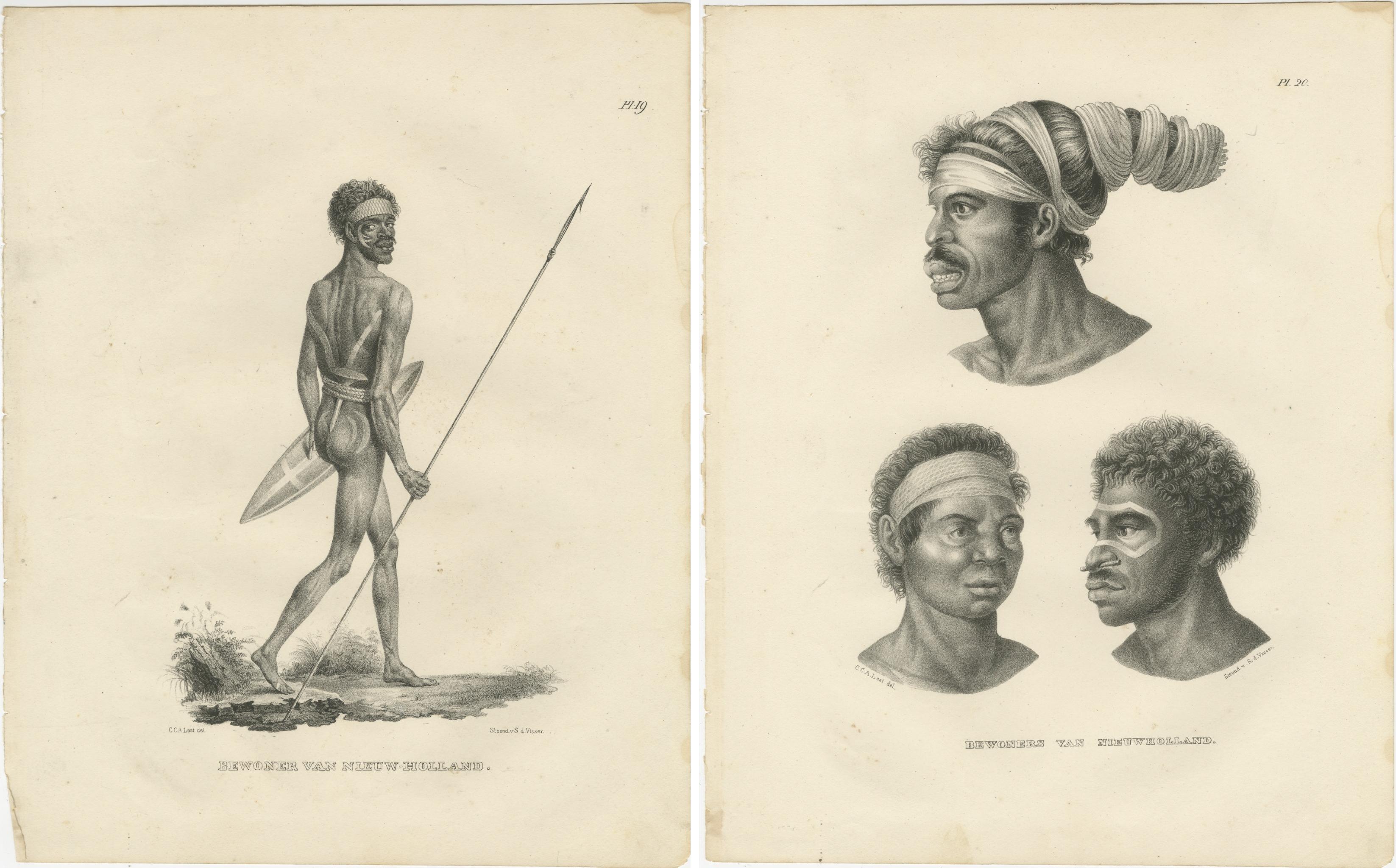
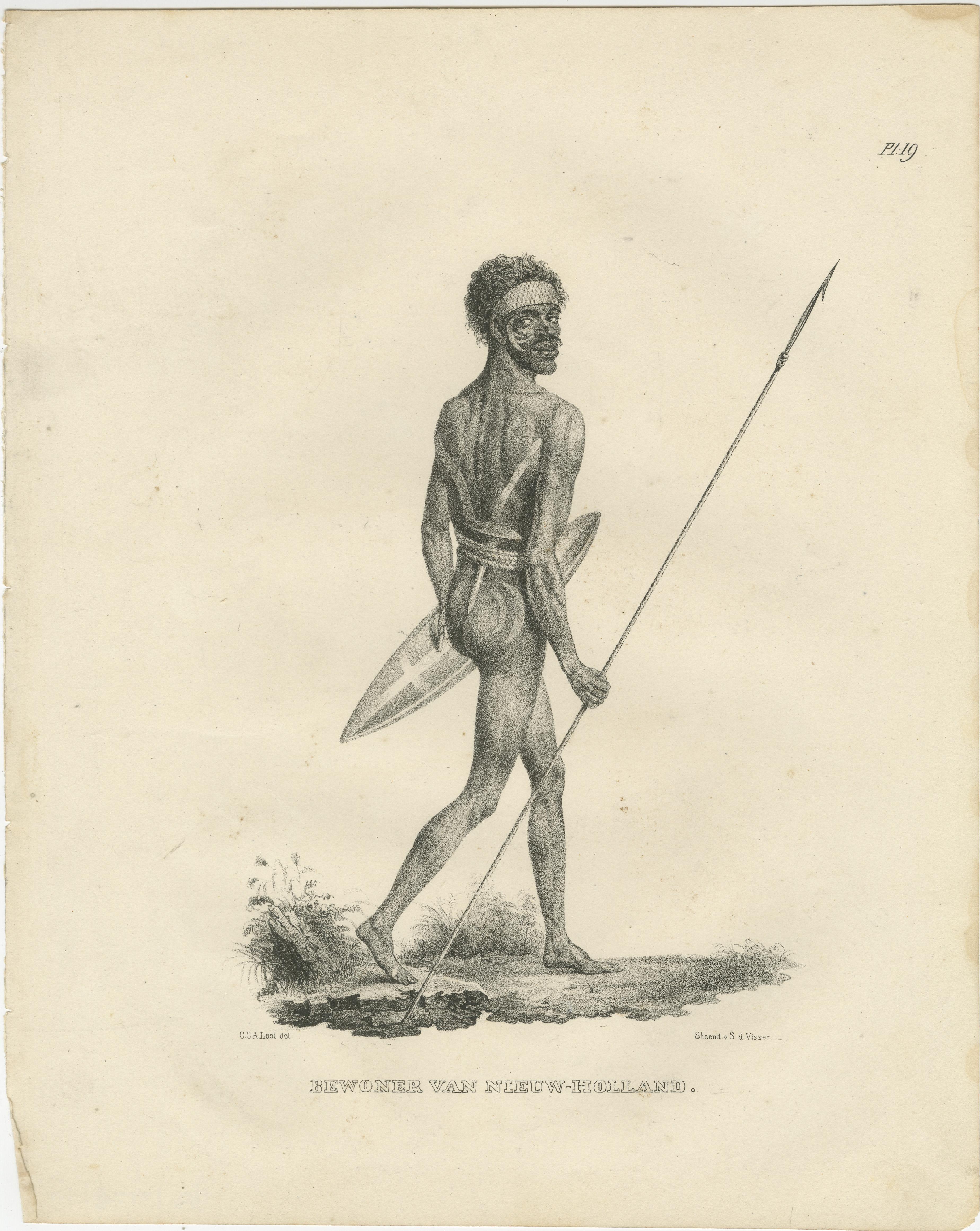
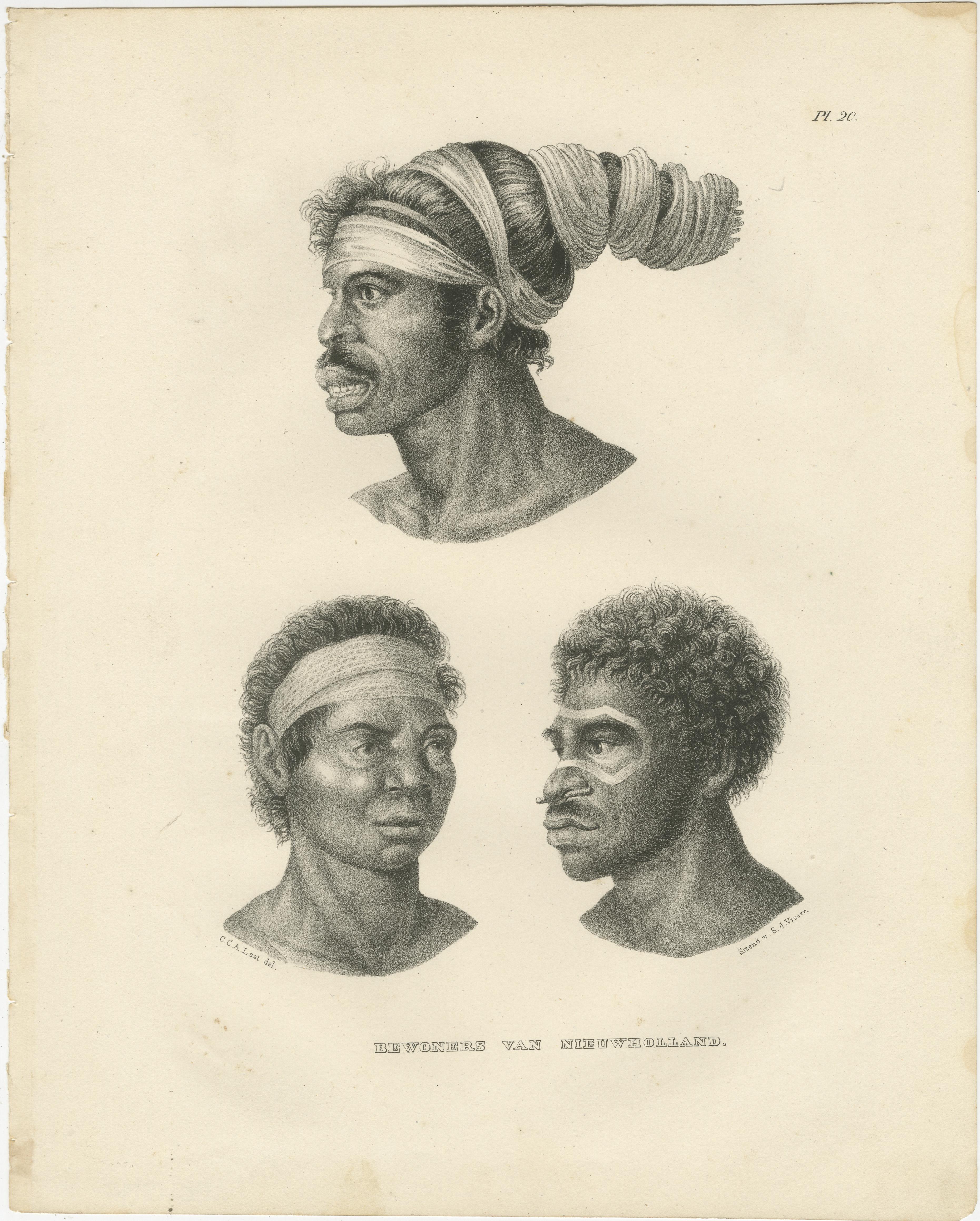
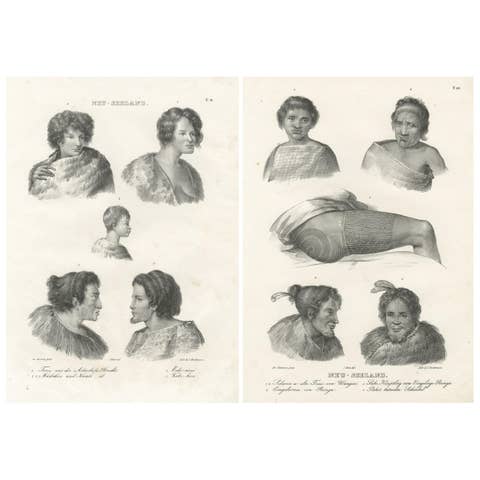
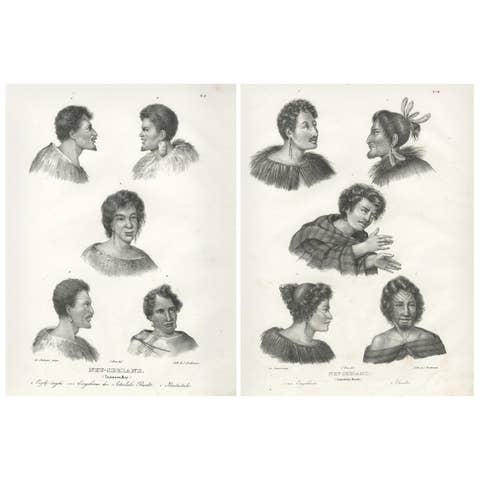
These two lithographs are part of a series depicting Aboriginal people from Australia, originally drawn by the artist Nicolas-Martin Petit during the expeditions of French explorer Nicolas Baudin, and later adapted by Carel Christiaan Antony Last for publication in the natural history book *Volledige Natuurlijke Historie der Zoogdieren*, written by Heinrich Rudolf Schinz.
The book was published in 1836 by the Dutch publishing house S. de Visser en Zoon in The Hague. These particular prints showcase detailed ethnographic representations of the native peoples of Australia, referred to at the time as Nieuw-Holland, or New Holland.
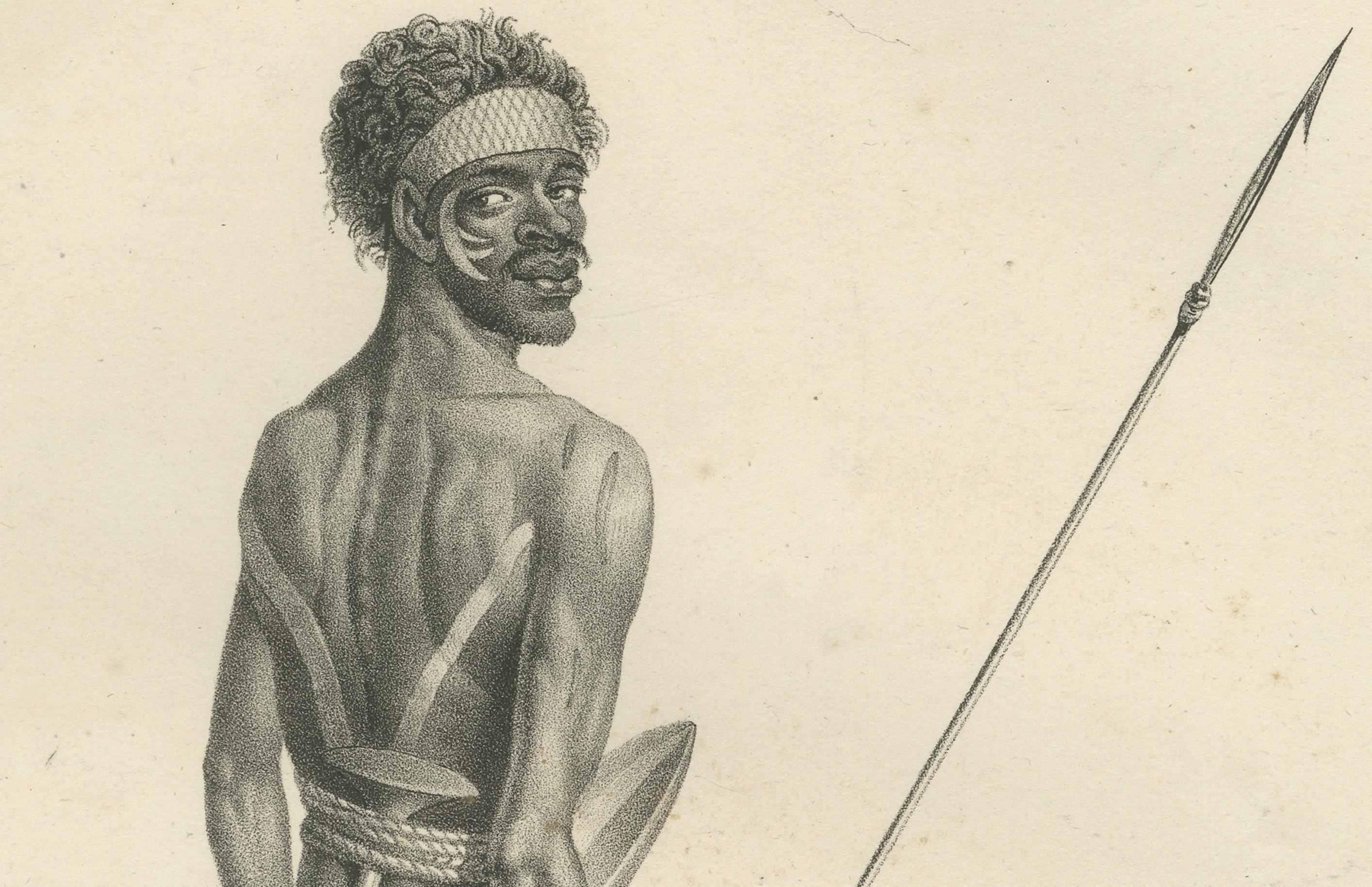
The first image depicts Noru Gal Derri, an Aboriginal warrior carrying a spear and shield. His stance and expression convey strength and readiness, characteristic of the ethnographic studies of the time, which often emphasized the physicality and cultural elements of the subjects. The intricate details, from his body markings to the carefully rendered traditional weapons, illustrate the effort to capture not only the physical appearance but also elements of Aboriginal cultural practices.
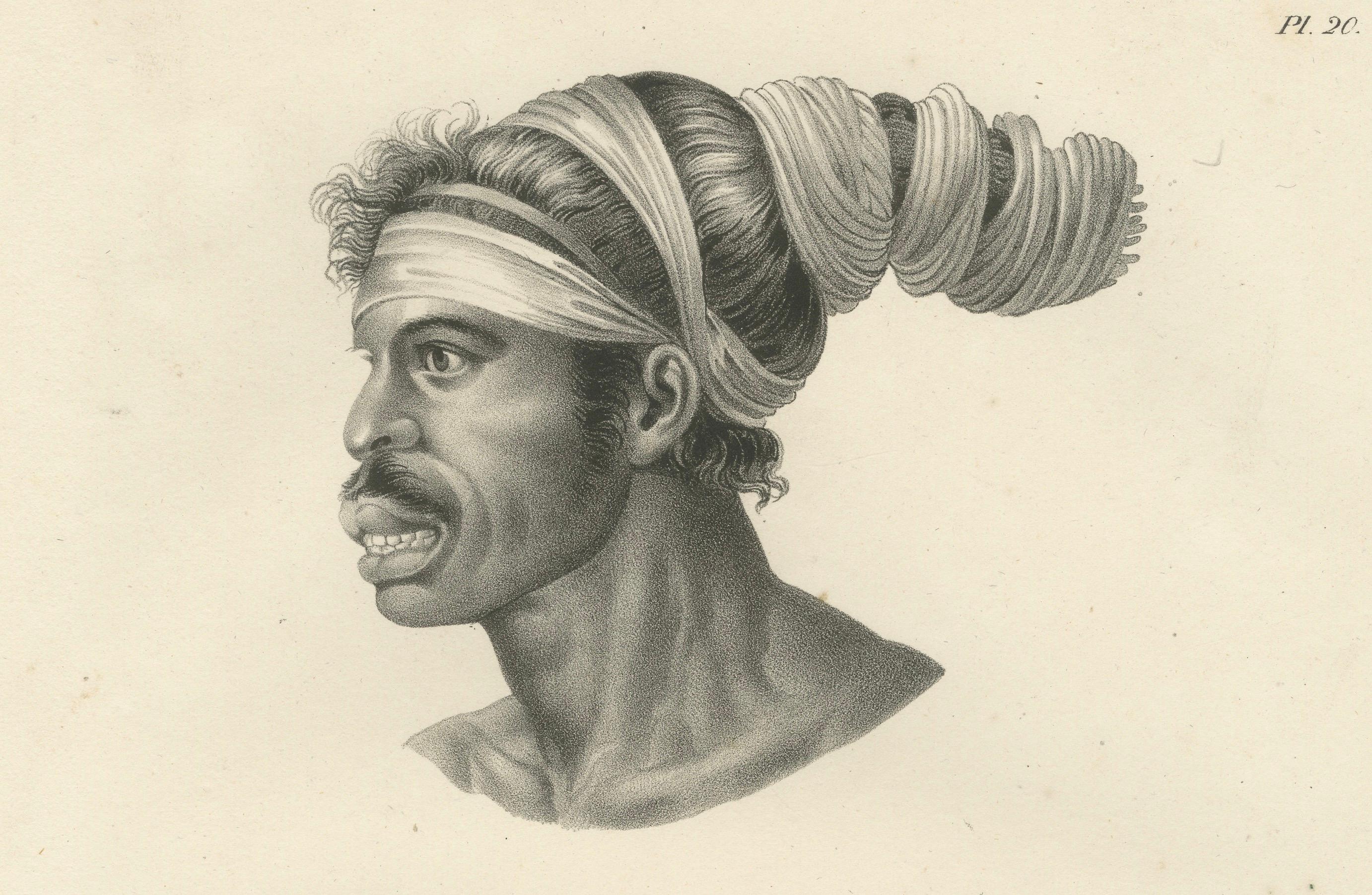
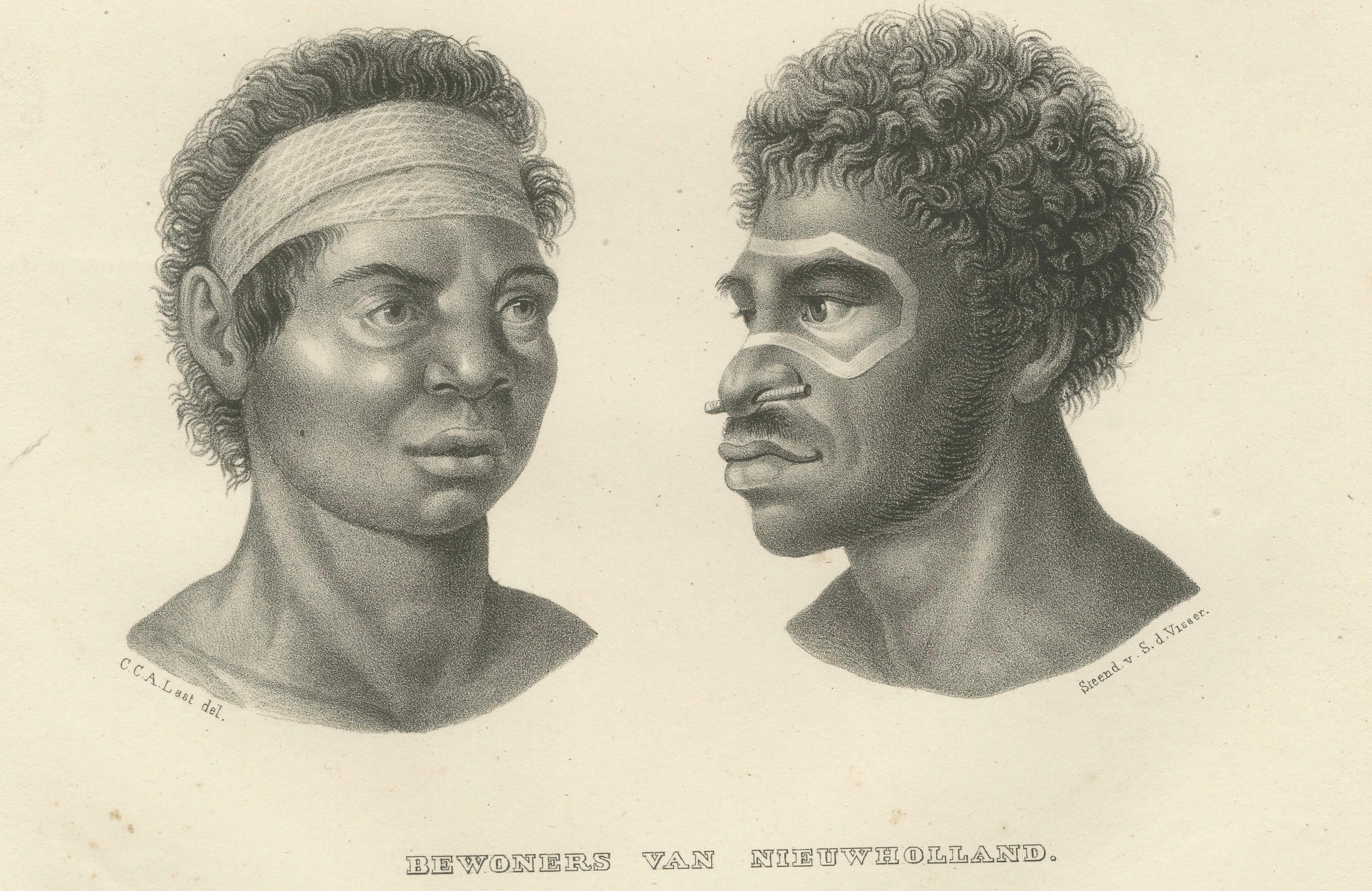
The second image shows portraits of three figures, labeled as Australian Aborigines of the Malay race. Mour-Re-Mour-Ga, a man wearing a turban, is featured at the top. Below him are Y-Erran-Gou-La-Ga, a man with distinctive face painting, and Ou-Re-Kine, a woman wearing a bandana. These portraits offer a focused study of their facial features and adornments, which were essential in conveying ethnographic information. The detailed rendering of headgear and facial expressions highlights the artistic skill of Carel Christiaan Antony Last, who adapted the original drawings into lithographs for publication.
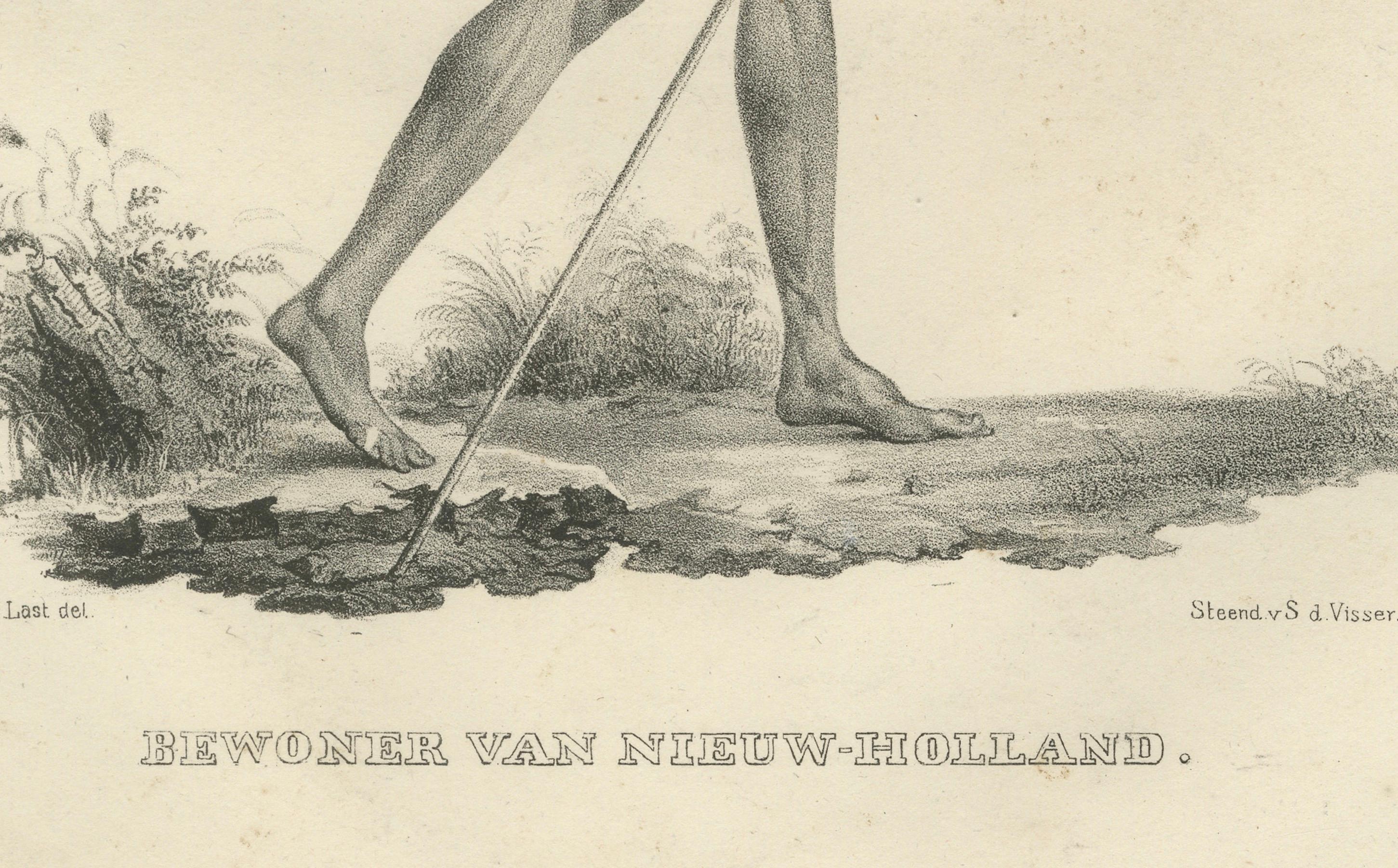
The title on the prints, *Bewoner van Nieuw-Holland*, translates to *Inhabitant of New Holland*, reflecting the European name for Australia in the 18th and early 19th centuries. The name Nieuw-Holland was first used by Dutch explorer Abel Tasman in the 1640s when he mapped parts of the Australian coast. This term was widely adopted by European explorers and cartographers, including the Dutch and British, until the early 19th century, when the British formally claimed sovereignty over the continent. The name Australia, from the Latin *terra australis* meaning "southern land," gradually replaced Nieuw-Holland after Matthew Flinders circumnavigated the continent and used the term in his writings. By the early 1820s, Australia became the officially recognized name.
The lithographs produced for Schinz's publication reflect the blending of scientific inquiry and artistic tradition typical of the period. The detailed visual documentation was aimed at European audiences eager to learn about distant cultures and peoples, contributing to the growing body of knowledge about the world’s natural history and human diversity.