About this sheet
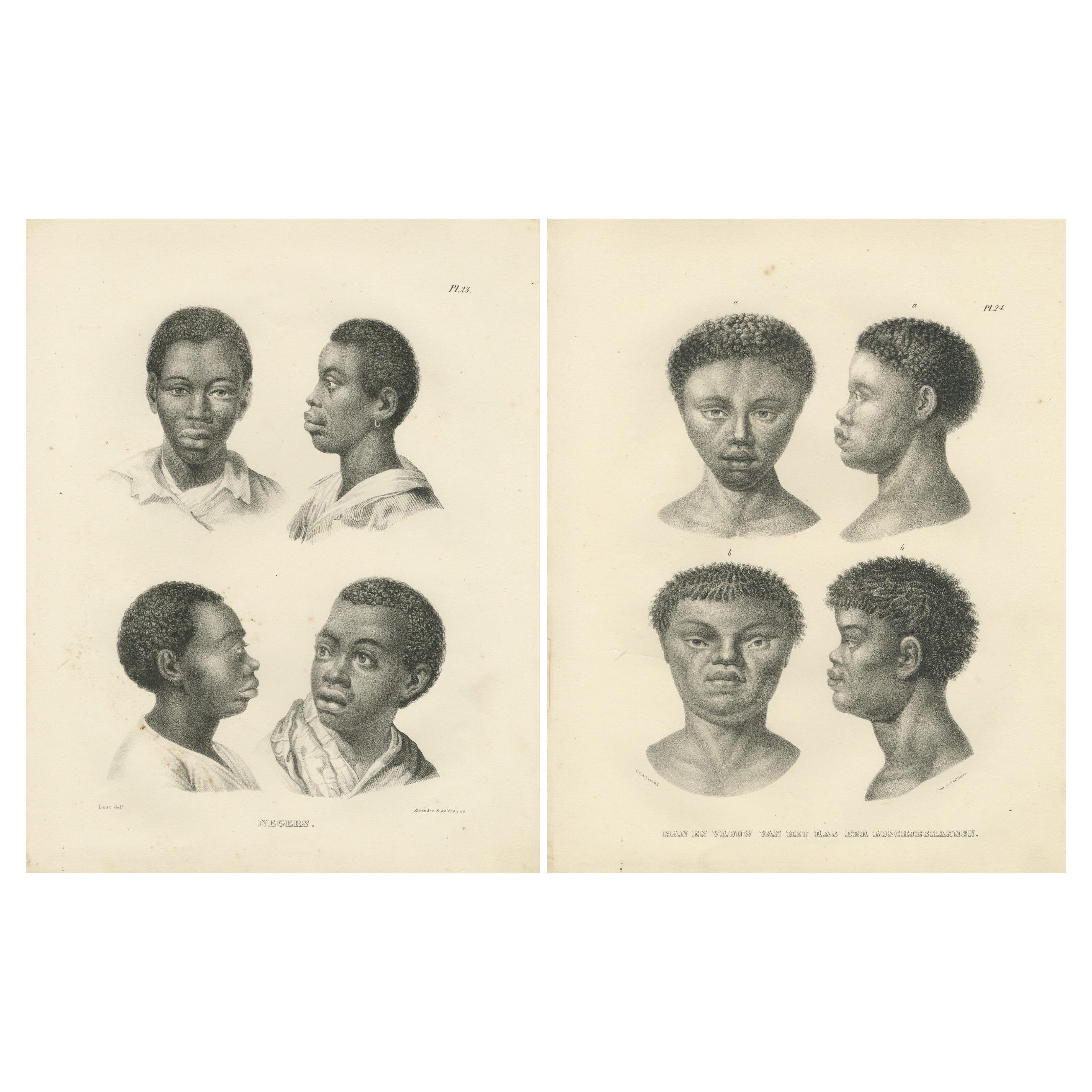
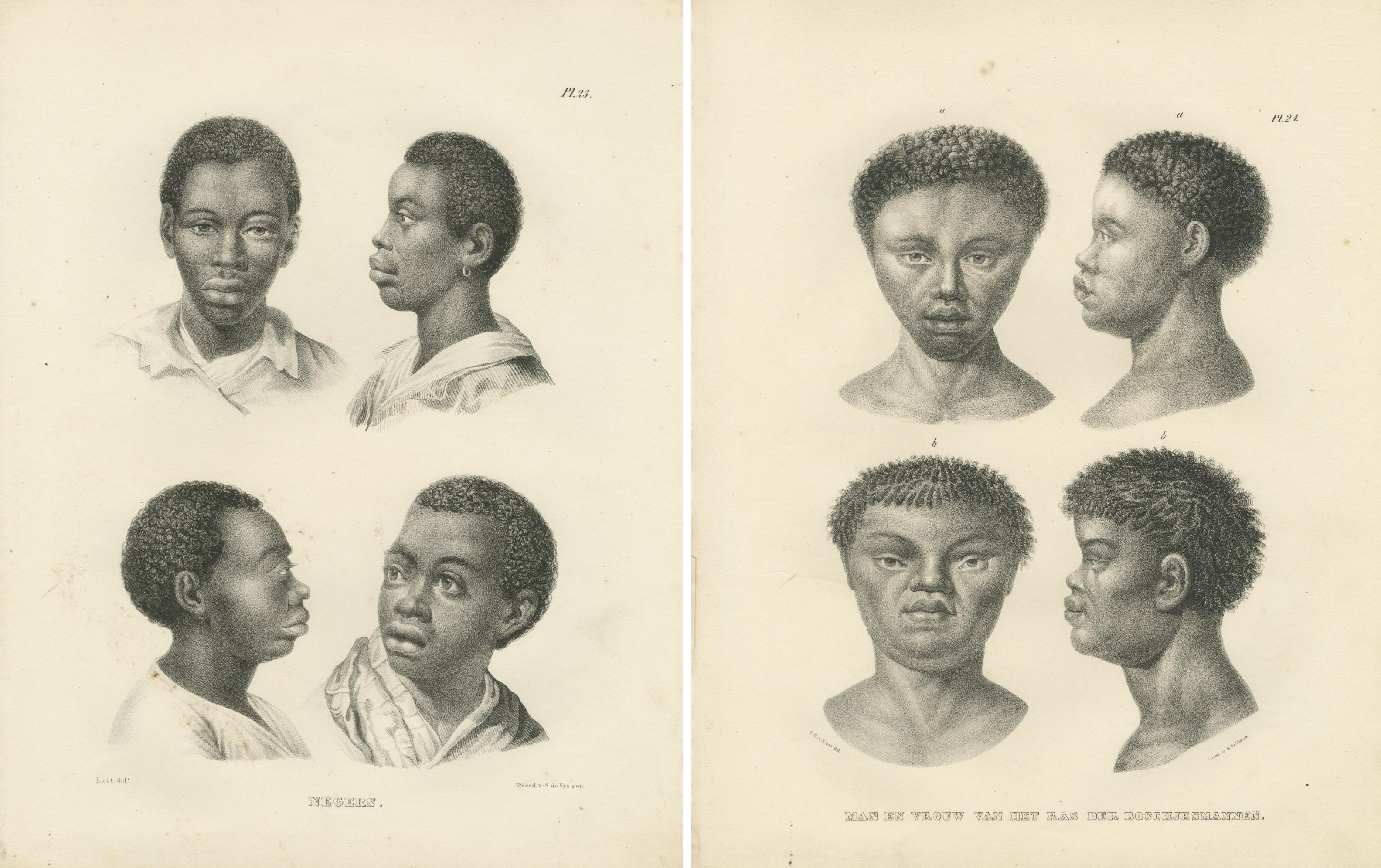
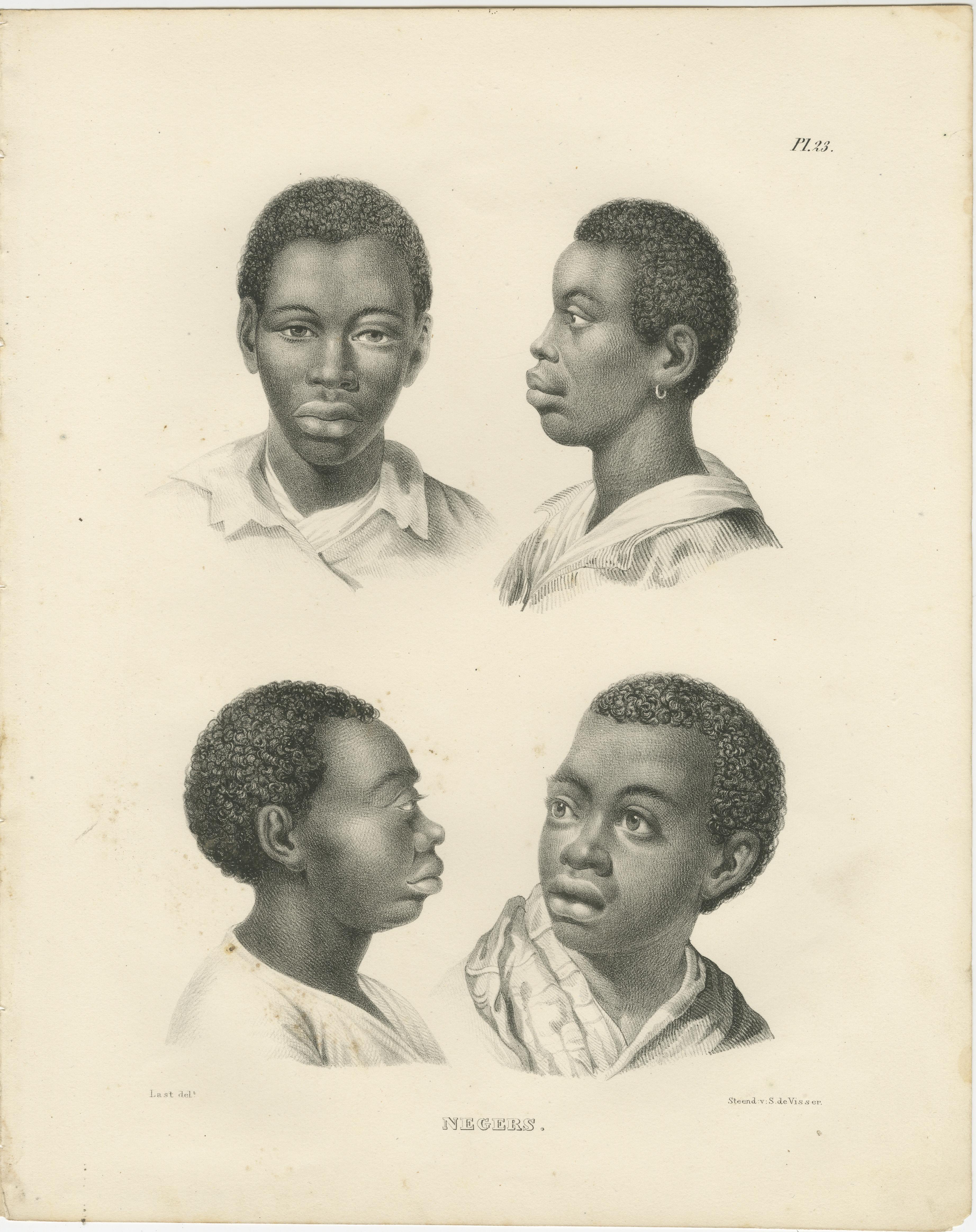
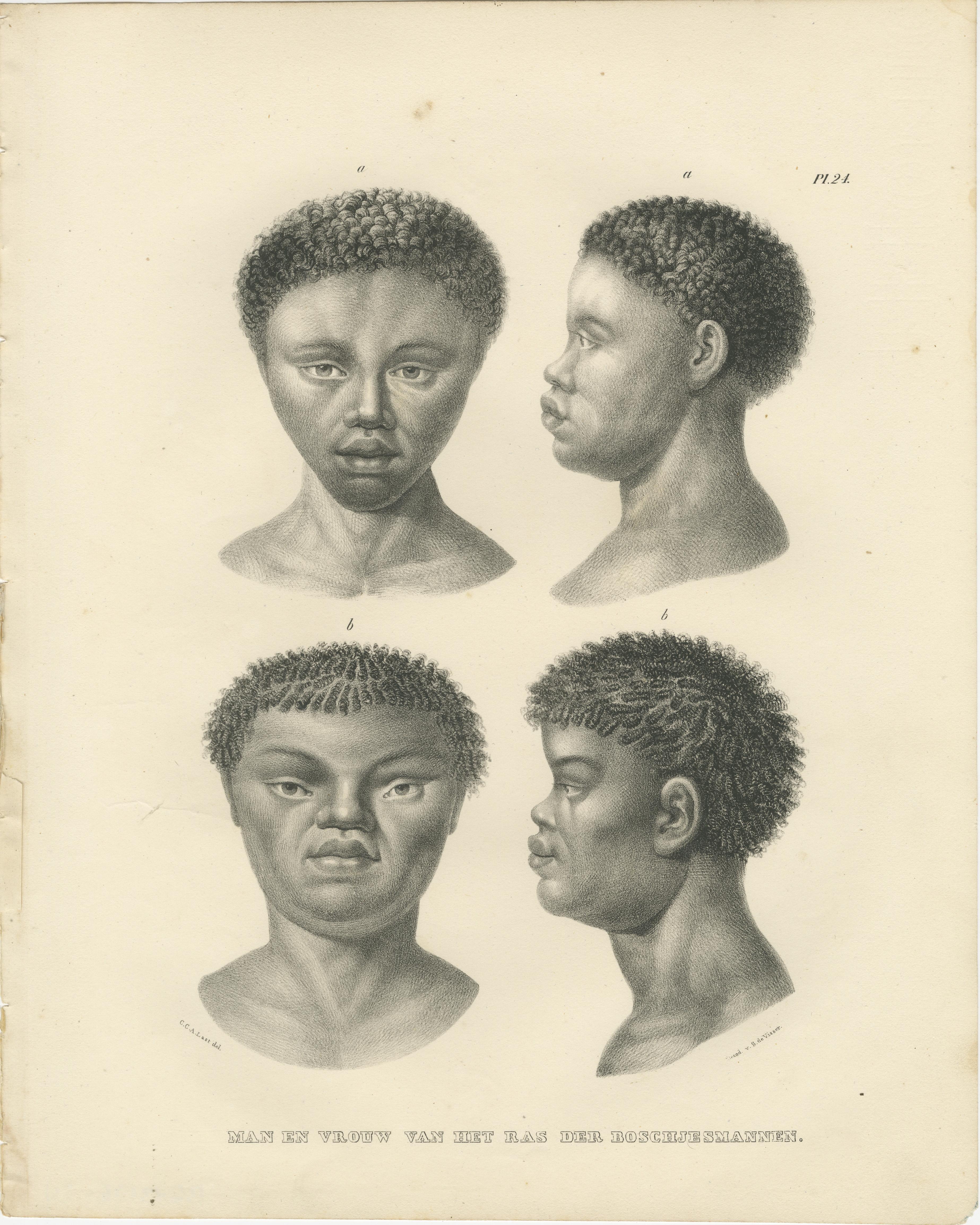
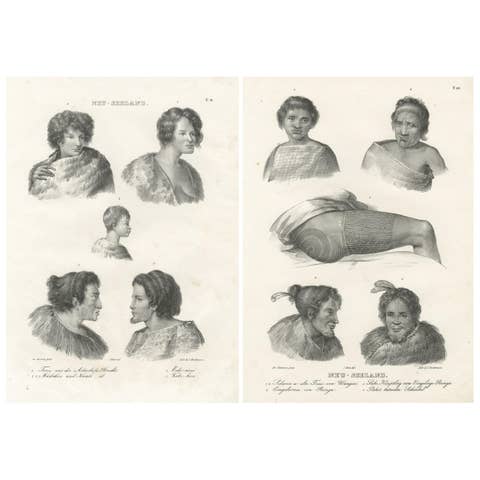
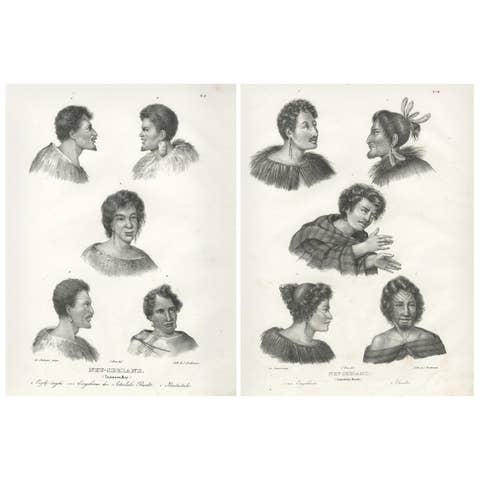
These two lithographs depict individuals of African descent, specifically focusing on the physical characteristics of people of the *Negro* race and the *Bosjesmannen* (Bushmen), as labeled in the prints. Created by the Dutch artist Carel Christiaan Antony Last and published in the 1836 natural history volume *Volledige Natuurlijke Historie der Zoogdieren*, written by Heinrich Rudolf Schinz, these illustrations offer a European perspective on African peoples, filtered through the lens of scientific observation and ethnographic curiosity prevalent in the 19th century. Like the other prints in this series, these lithographs were produced by the printing house of S. de Visser en Zoon in The Hague and are examples of how scientific books of the time included ethnographic studies alongside natural history.
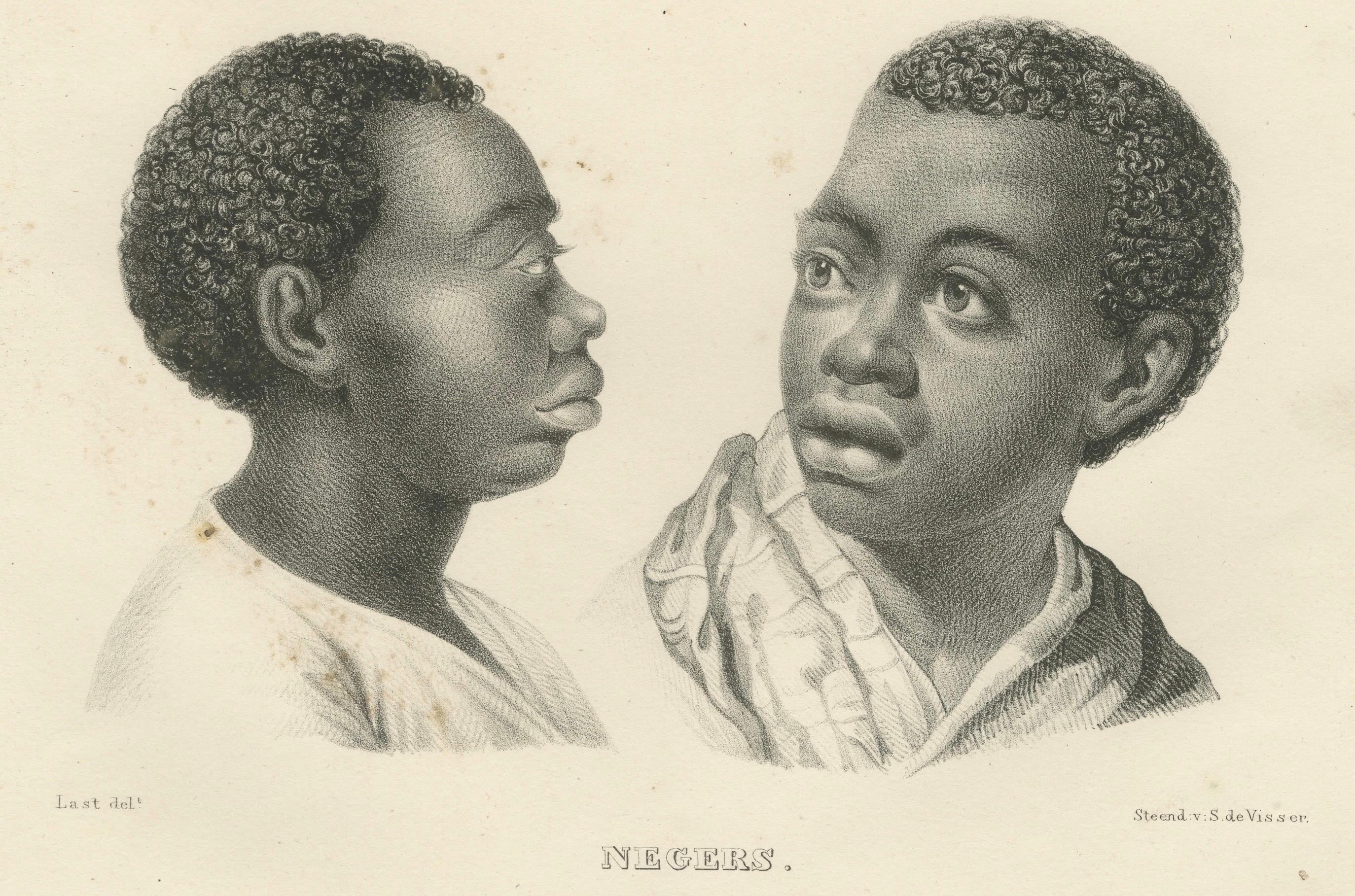
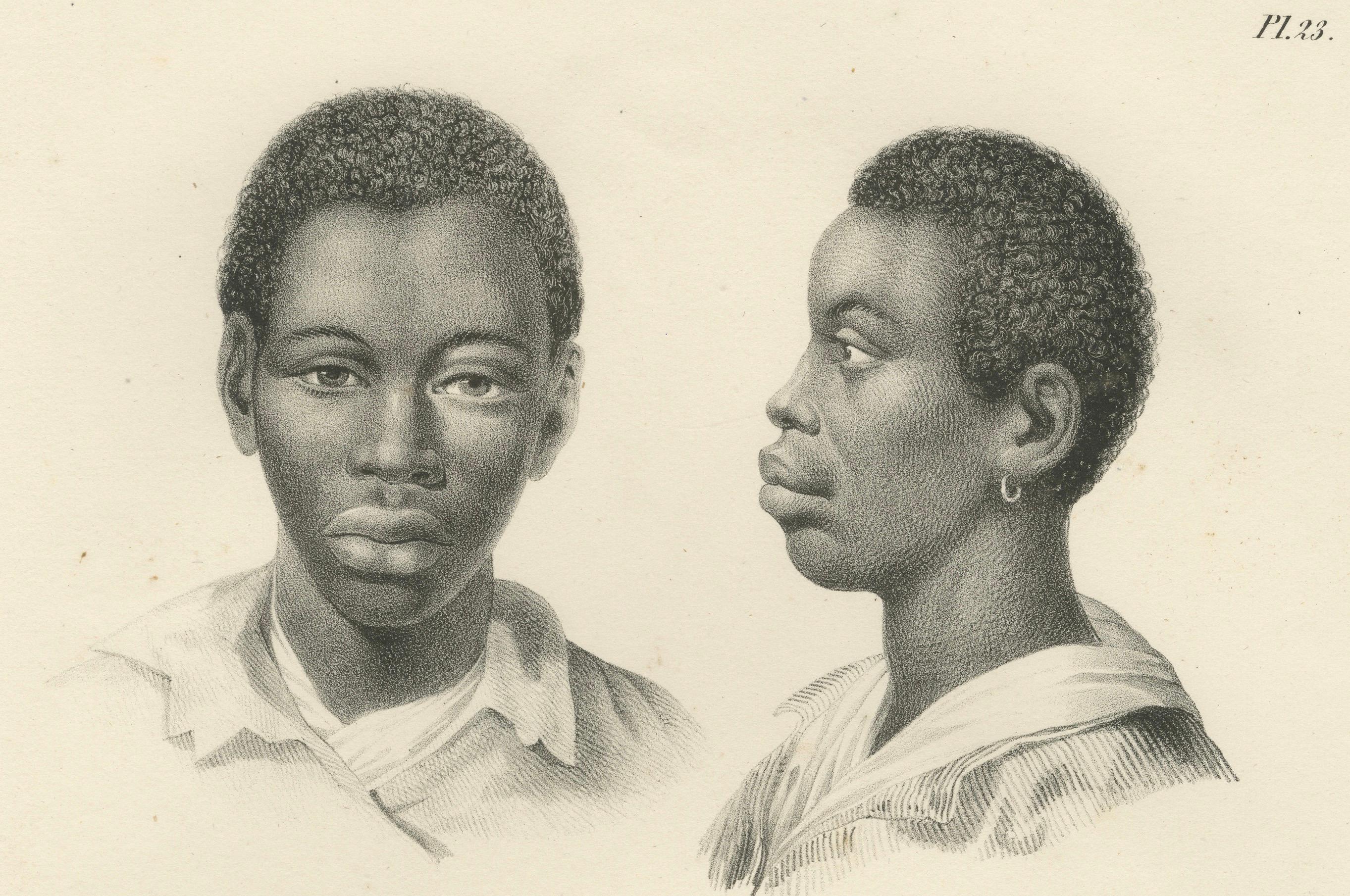
The first lithograph, titled *Negers*, presents two pairs of portraits. The figures are shown in profile and frontal view, highlighting different facial features that European scientists at the time considered typical of African people. The upper set of portraits shows a young man and a woman, while the lower set depicts two younger individuals, a boy and a girl. The careful rendering of their facial expressions and attire offers a glimpse into the European fascination with race and appearance, as the text and visual details would have aimed to illustrate perceived racial differences.
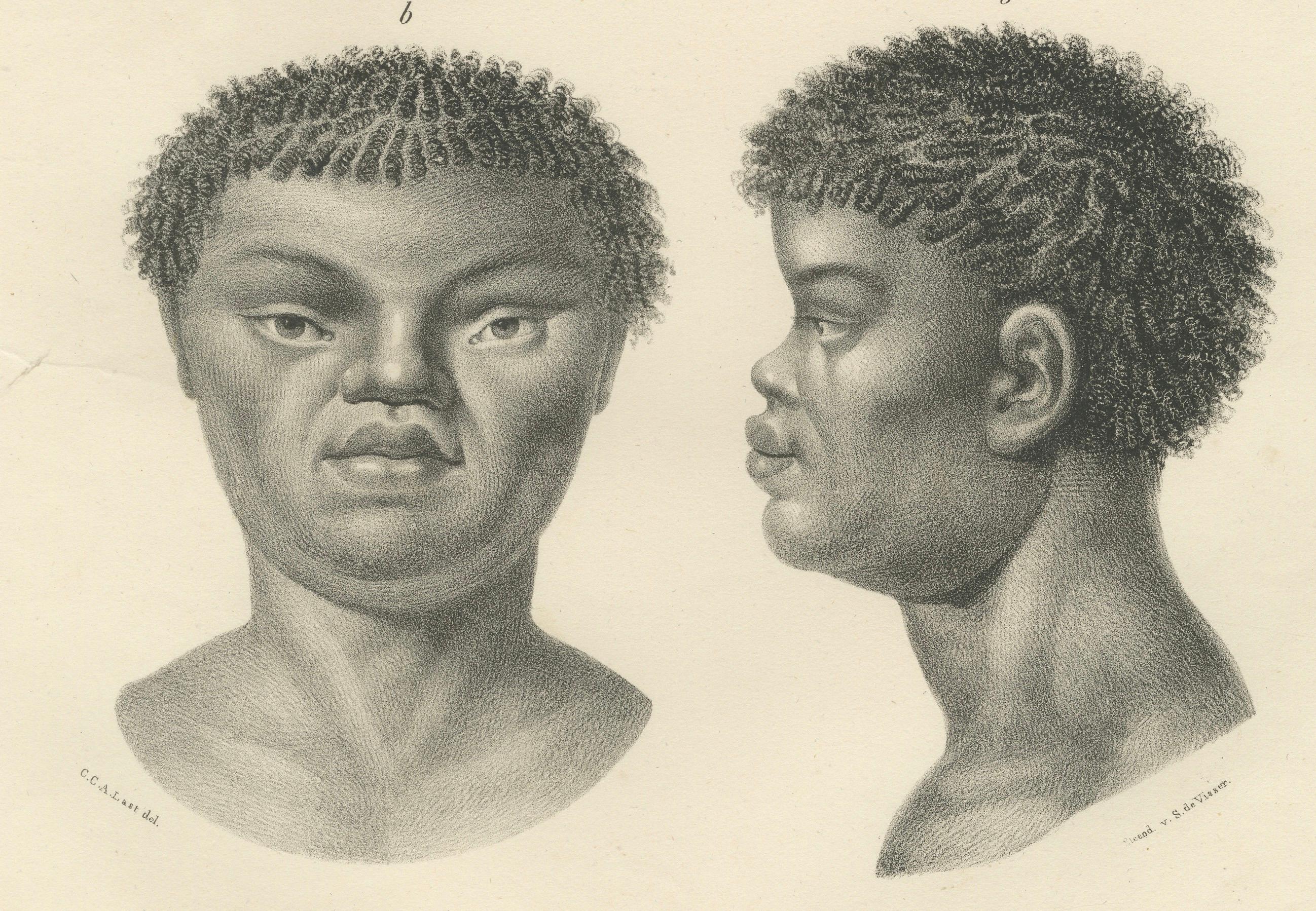
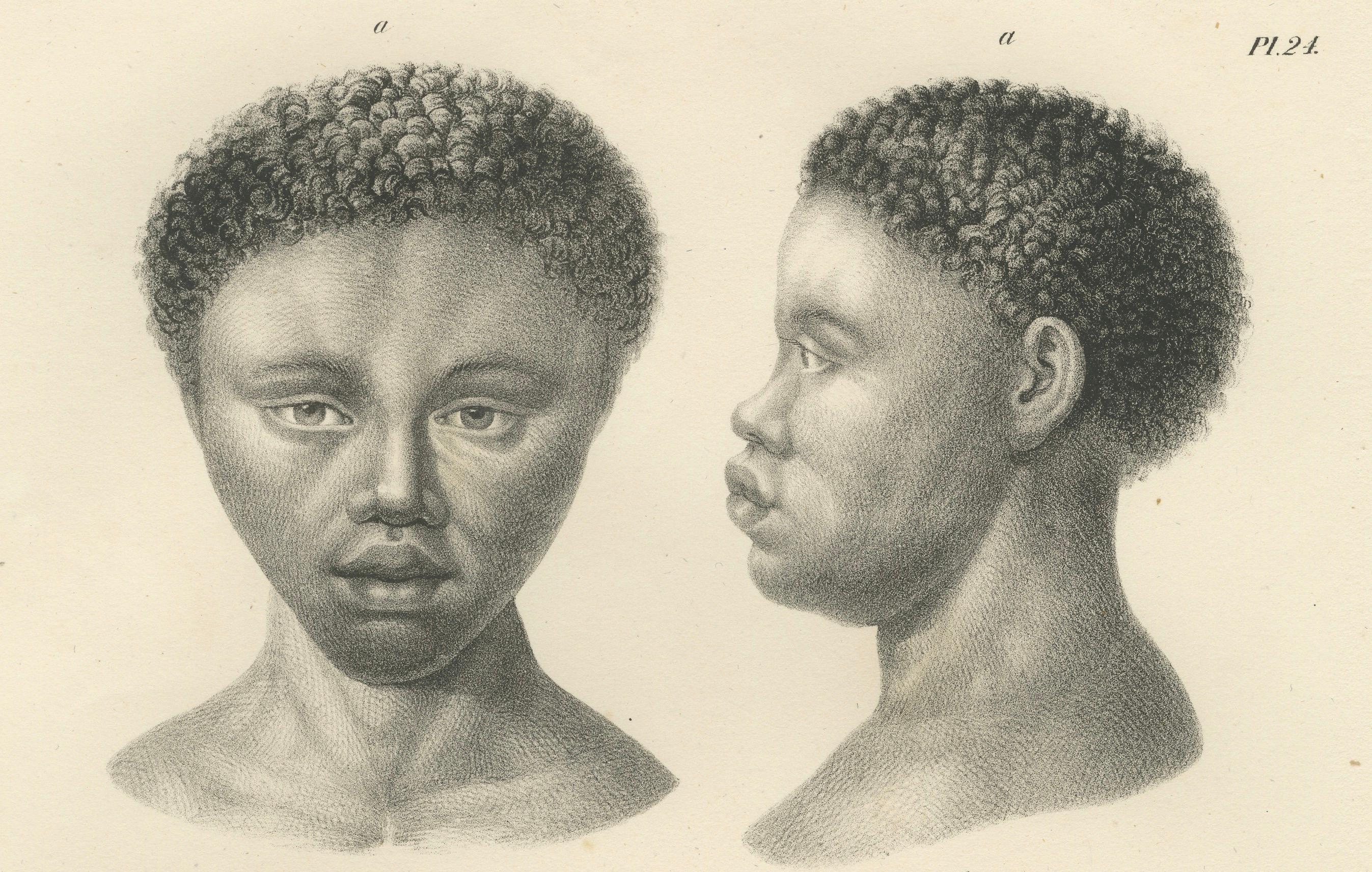
The second lithograph features two figures labeled as a "man and woman of the Bushmen race," a term historically used to describe the indigenous peoples of Southern Africa, specifically the San people. The lithograph presents each figure in both frontal and profile view, emphasizing their facial structure. The careful attention to their textured hair, facial features, and expressions is typical of ethnographic art from this period, which often sought to classify and document racial differences as part of European scientific endeavors. The accompanying title, *Man en Vrouw van het Ras der Bosjesmannen* (Man and Woman of the Bushmen Race), reflects the European classification systems of the time, which often marginalized and stereotyped non-European peoples.
The title *Negers* was a common term used in 19th-century Europe to refer to African people, though it carries negative connotations today. Similarly, the term *Bosjesmannen* or *Bushmen* reflects the colonial terminology applied to the indigenous peoples of southern Africa. These depictions reflect the European scientific tradition of studying and classifying human races based on physical traits, a practice that was often steeped in racial bias and colonial attitudes.
Like other prints in the series, these images were part of a broader effort to document and categorize the diversity of the world’s peoples, presenting them to European audiences through an artistic and scientific lens. This effort combined artistic skill with the prevailing scientific ideas of the time, although many of the ideas about race and human classification that these images represent have since been discredited. Nevertheless, the lithographs remain valuable artifacts of 19th-century scientific and ethnographic documentation, offering insight into the ways that Europeans viewed and interacted with the wider world during the age of colonial expansion and exploration.
The lithographs produced by C.C. Last and printed by S. de Visser en Zoon are part of a larger corpus of work that blends natural history, ethnography, and art, documenting both the natural world and the diverse human populations encountered by European explorers.