About this sheet
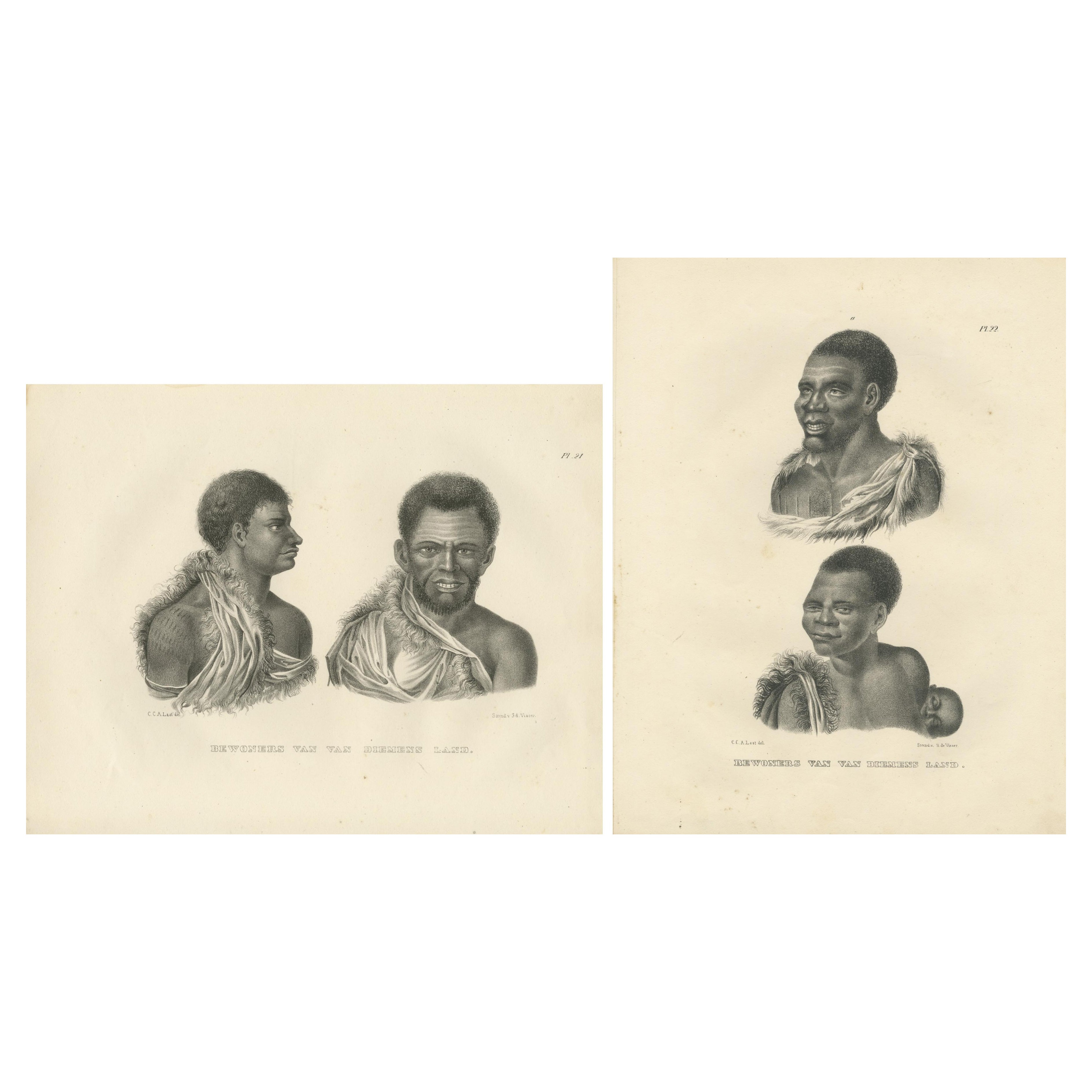
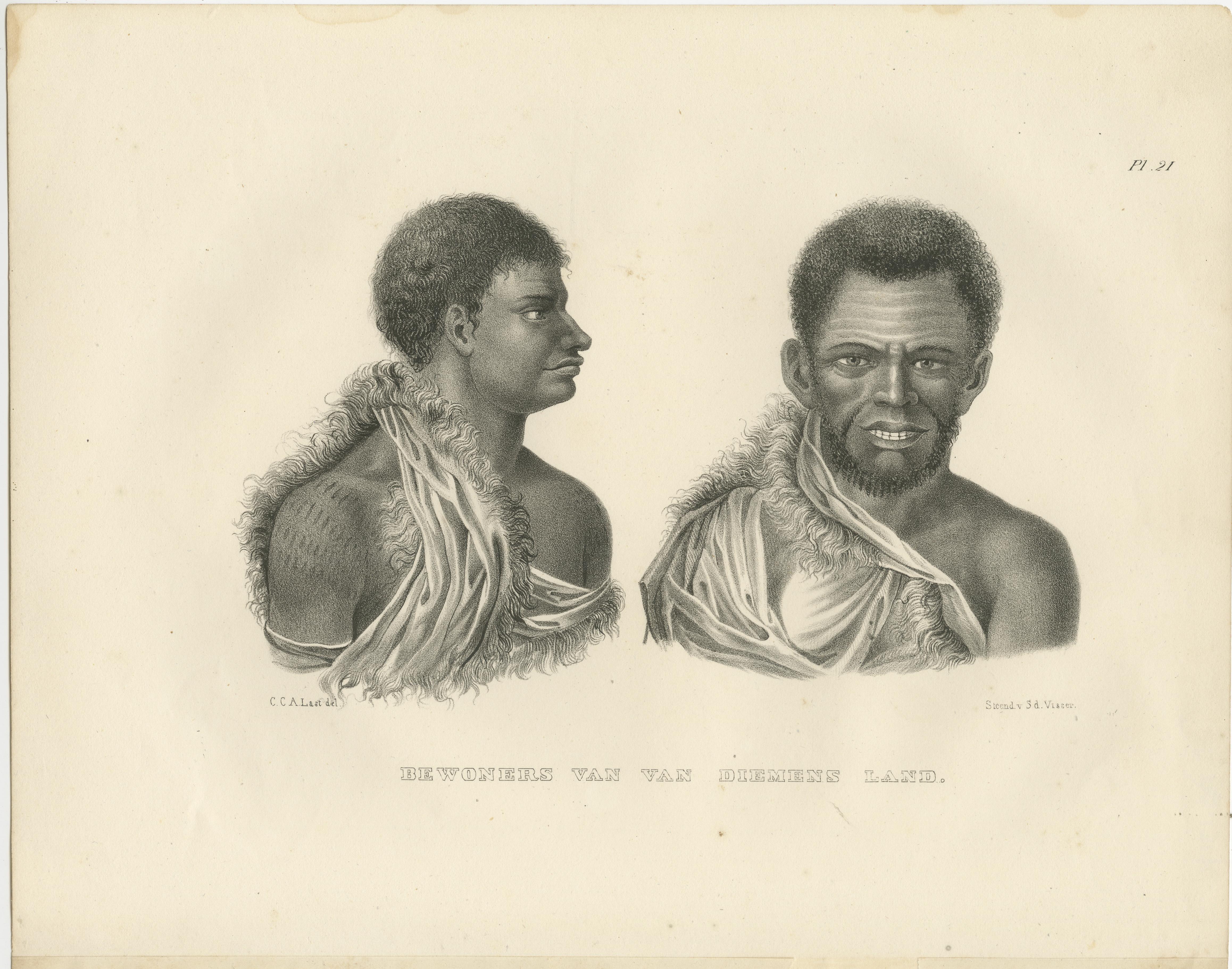
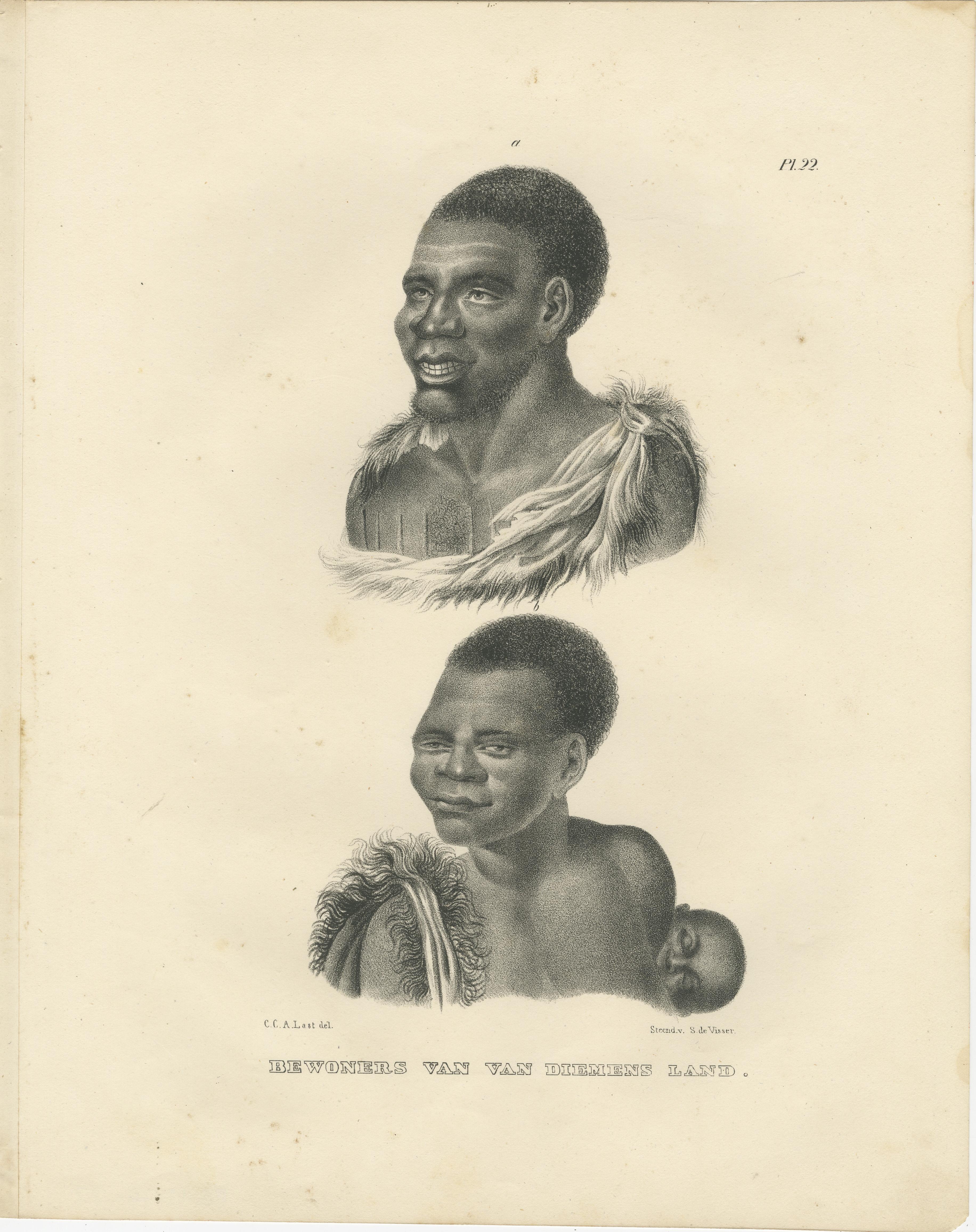
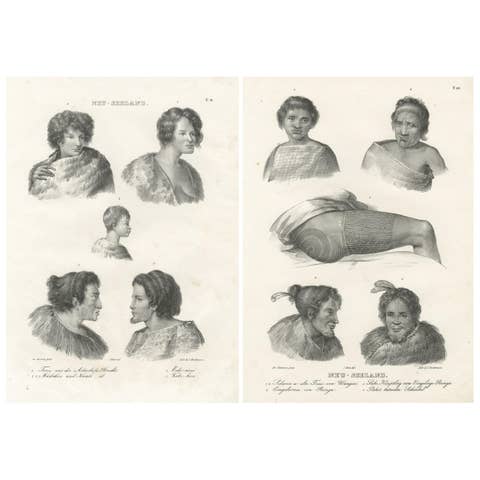
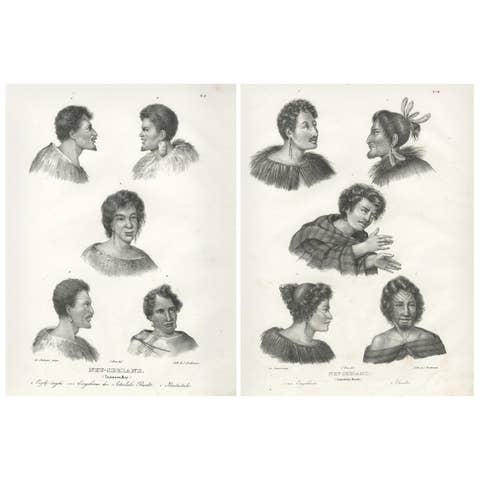
These two lithographs are part of the series depicting the native peoples of Van Diemen’s Land, now known as Tasmania, drawn by Carel Christiaan Antony Last for the natural history book *Volledige Natuurlijke Historie der Zoogdieren*, written by Heinrich Rudolf Schinz. Published in 1836 by S. de Visser en Zoon in The Hague, these illustrations offer an ethnographic glimpse into the Indigenous populations of Tasmania during the early 19th century. Like the previous depictions of Aboriginal peoples, these works draw heavily on earlier studies conducted during European expeditions, including those by Nicolas-Martin Petit.
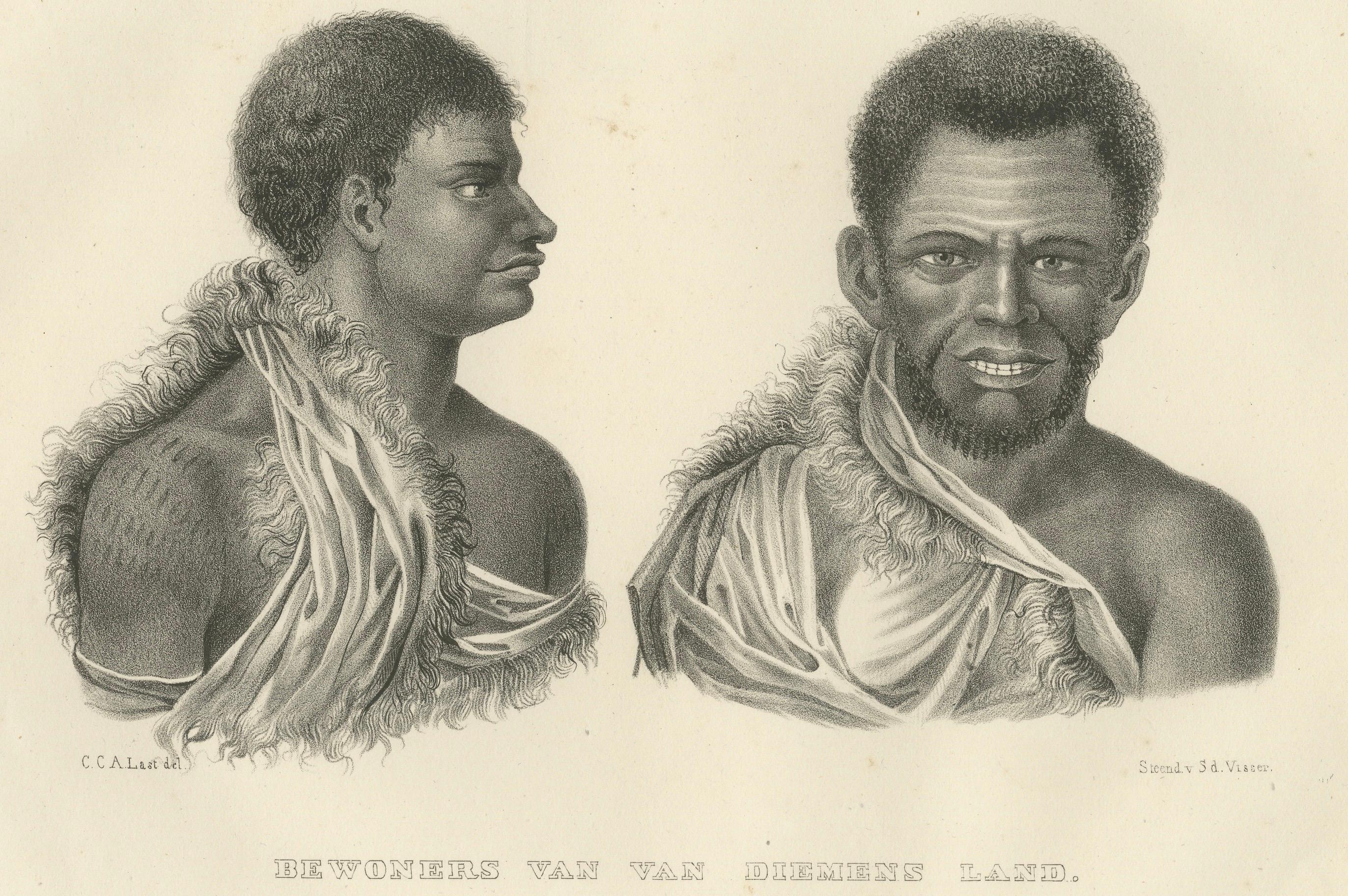
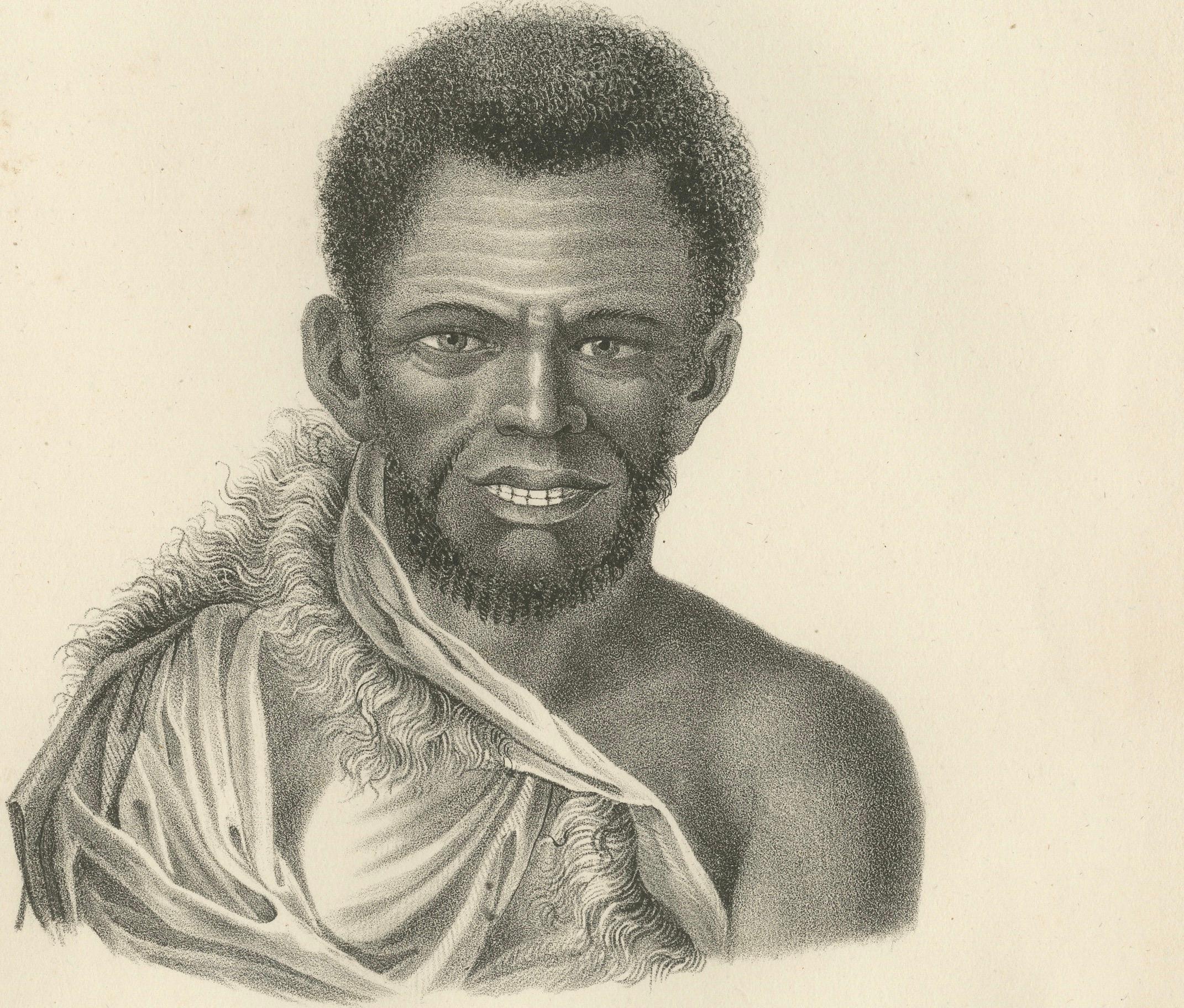
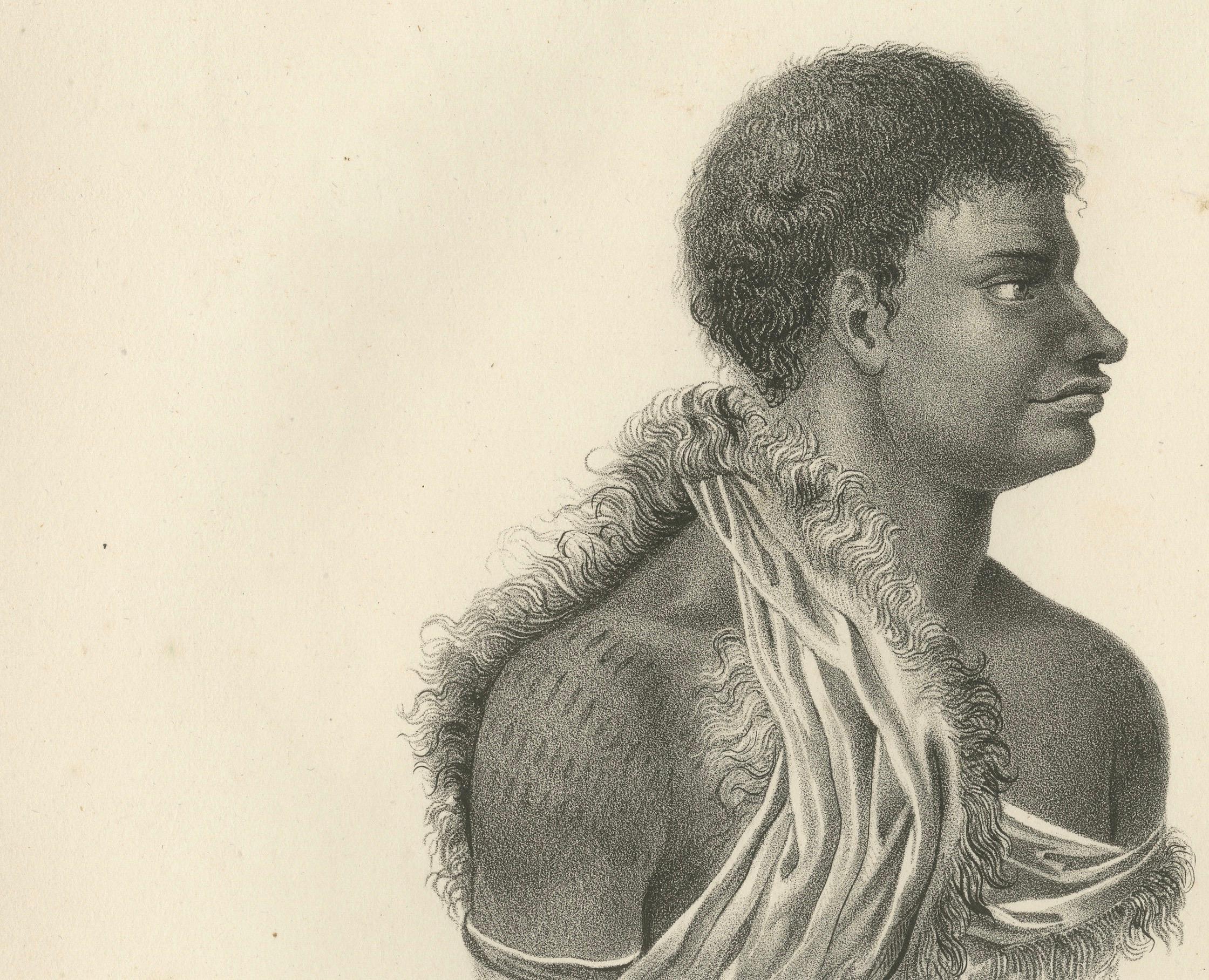
The first lithograph shows two male figures in profile and full view. The intricate depiction of the men’s facial features and the fur draped over their shoulders reveals the careful attention to detail that characterized Last’s work. These figures, labeled as inhabitants of Van Diemen’s Land, reflect the European fascination with Indigenous cultures during the age of exploration. Their expressions are captured with sensitivity, and the fur cloak suggests an attempt to portray the attire of the local people.
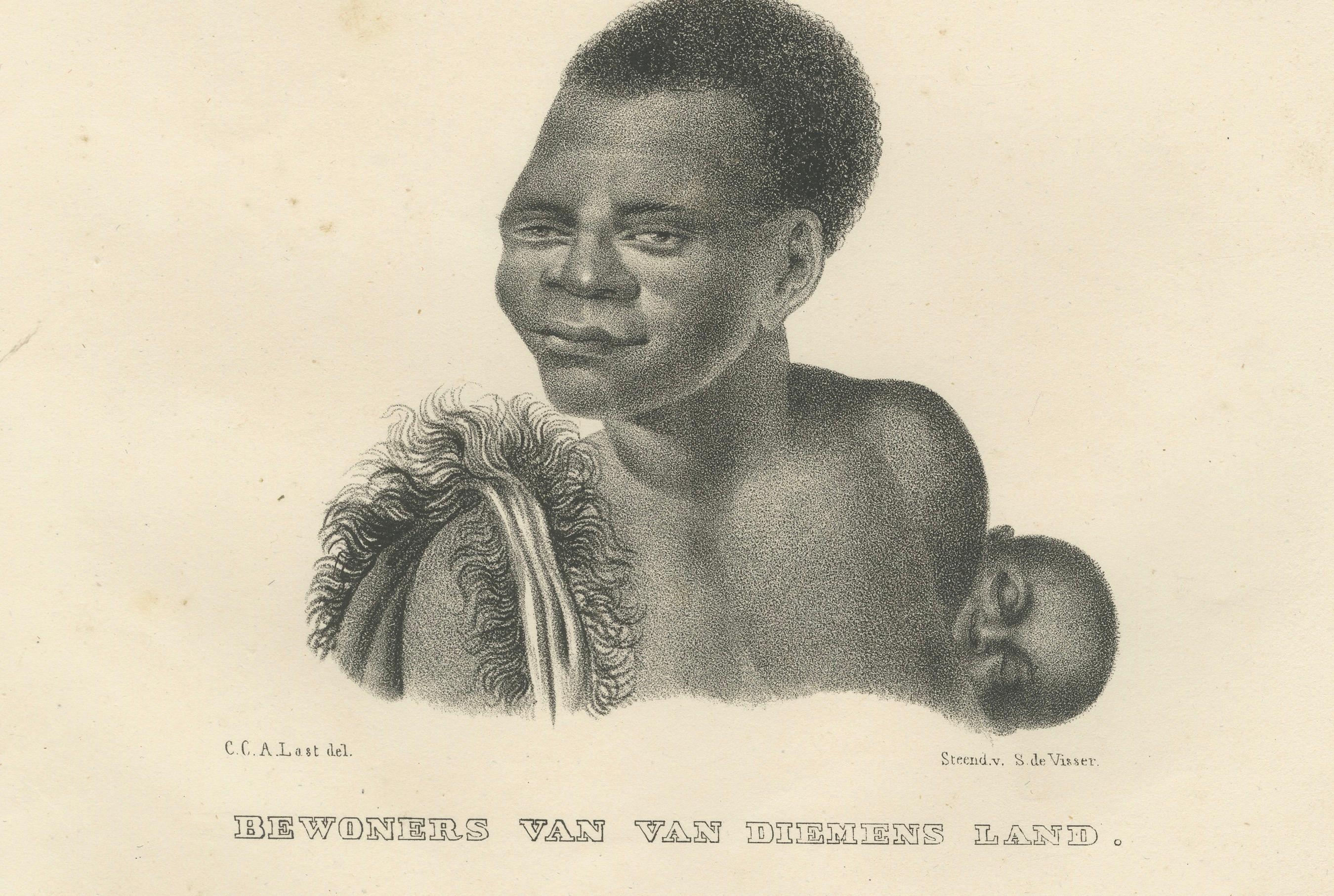
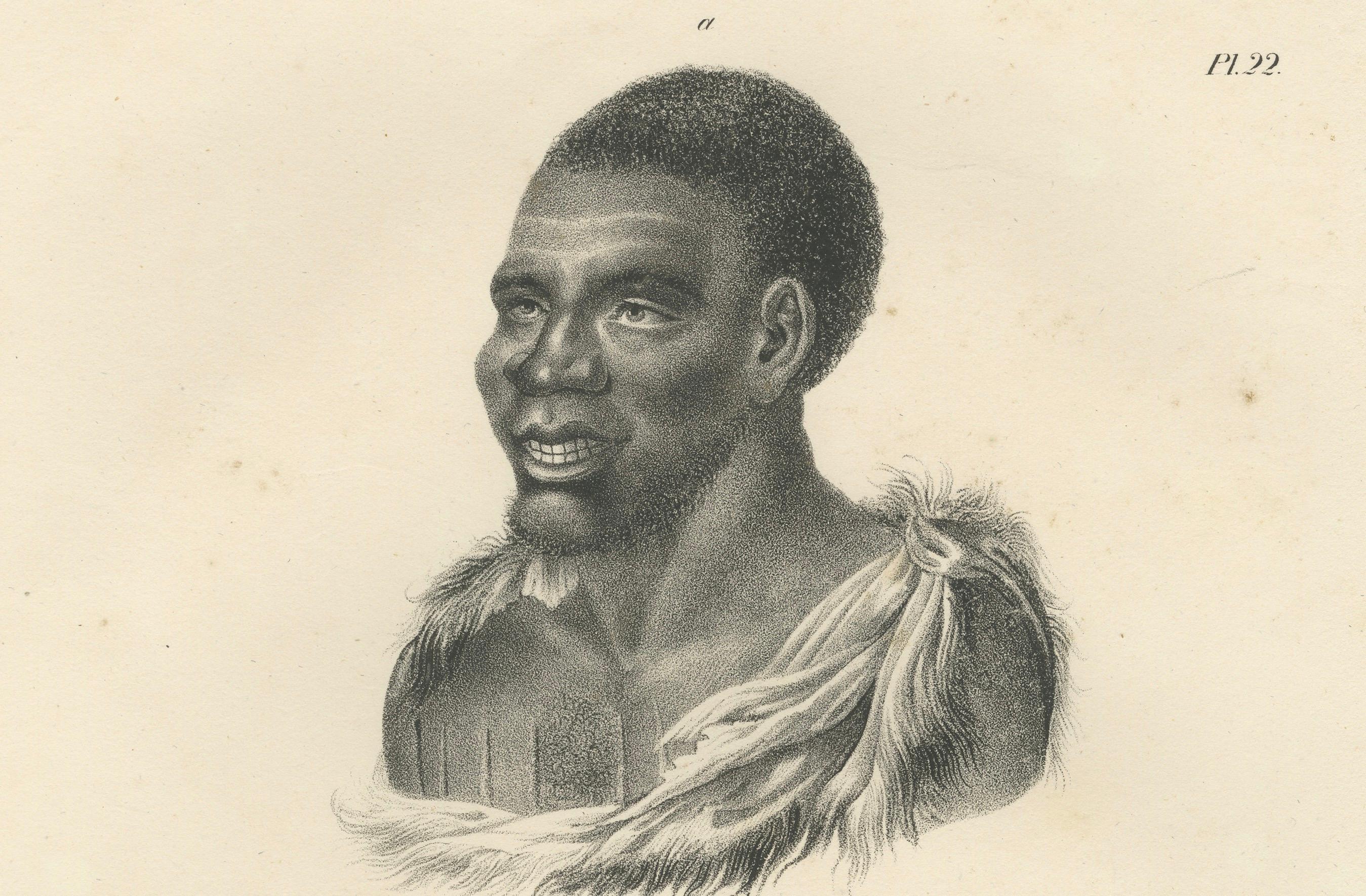
The second lithograph portrays two more figures, also labeled as inhabitants of Van Diemen’s Land. The man at the top wears a similar fur drape, while the woman at the bottom is depicted with a child on her back, a scene that gives insight into daily life and family structures among the Indigenous Tasmanians. These portraits emphasize both the humanity and the "exotic" nature of the people being depicted, a characteristic of ethnographic illustrations from this period.
The title on these prints, *Bewoners van Van Diemens Land*, refers to the island of Tasmania, which was named Van Diemen's Land by Dutch explorer Abel Tasman in 1642 after the governor-general of the Dutch East Indies, Anthony van Diemen. This name was used by European settlers and explorers until 1856 when it was officially renamed Tasmania, in honor of Tasman. The name change was part of an effort to distance the island's identity from its history as a British penal colony.
These lithographs, part of a larger series produced for Schinz's comprehensive natural history work, represent an important intersection of art, science, and exploration. The collaboration between Carel Christiaan Antony Last, a skilled Dutch artist, and Heinrich Rudolf Schinz, a natural historian, allowed European audiences to visualize and learn about distant lands and peoples, many of whom were previously unknown to them. As with the rest of the illustrations in this collection, these images were not only scientific documents but also works of art, intended to captivate and educate the public.
The combination of natural history and ethnography in works like this reflects the broader European colonial desire to map, classify, and understand the natural world and the people who lived in these far-off lands. This fascination often came with a sense of superiority and a need to "civilize" Indigenous populations, which had significant consequences for the peoples depicted in these works.