About this sheet
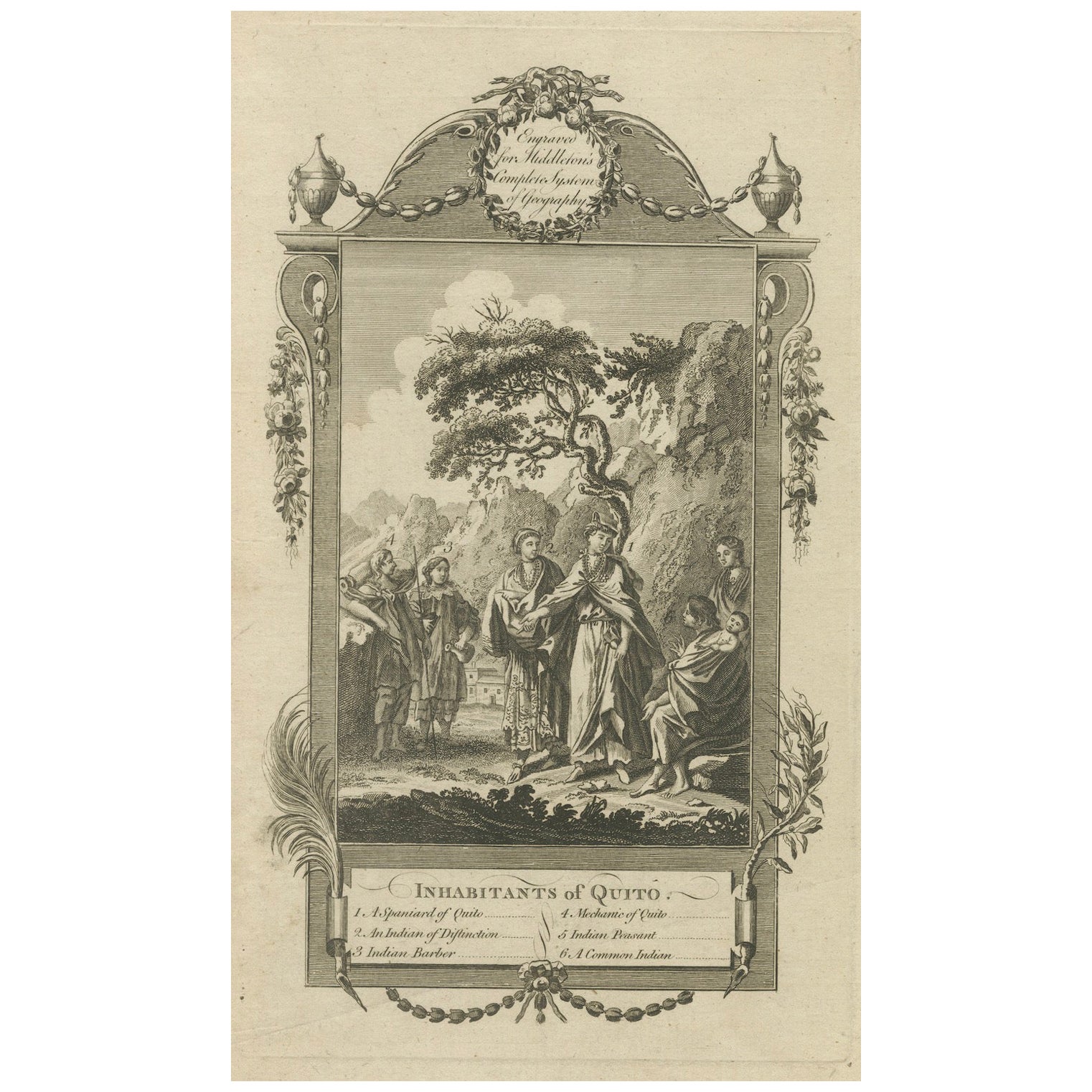
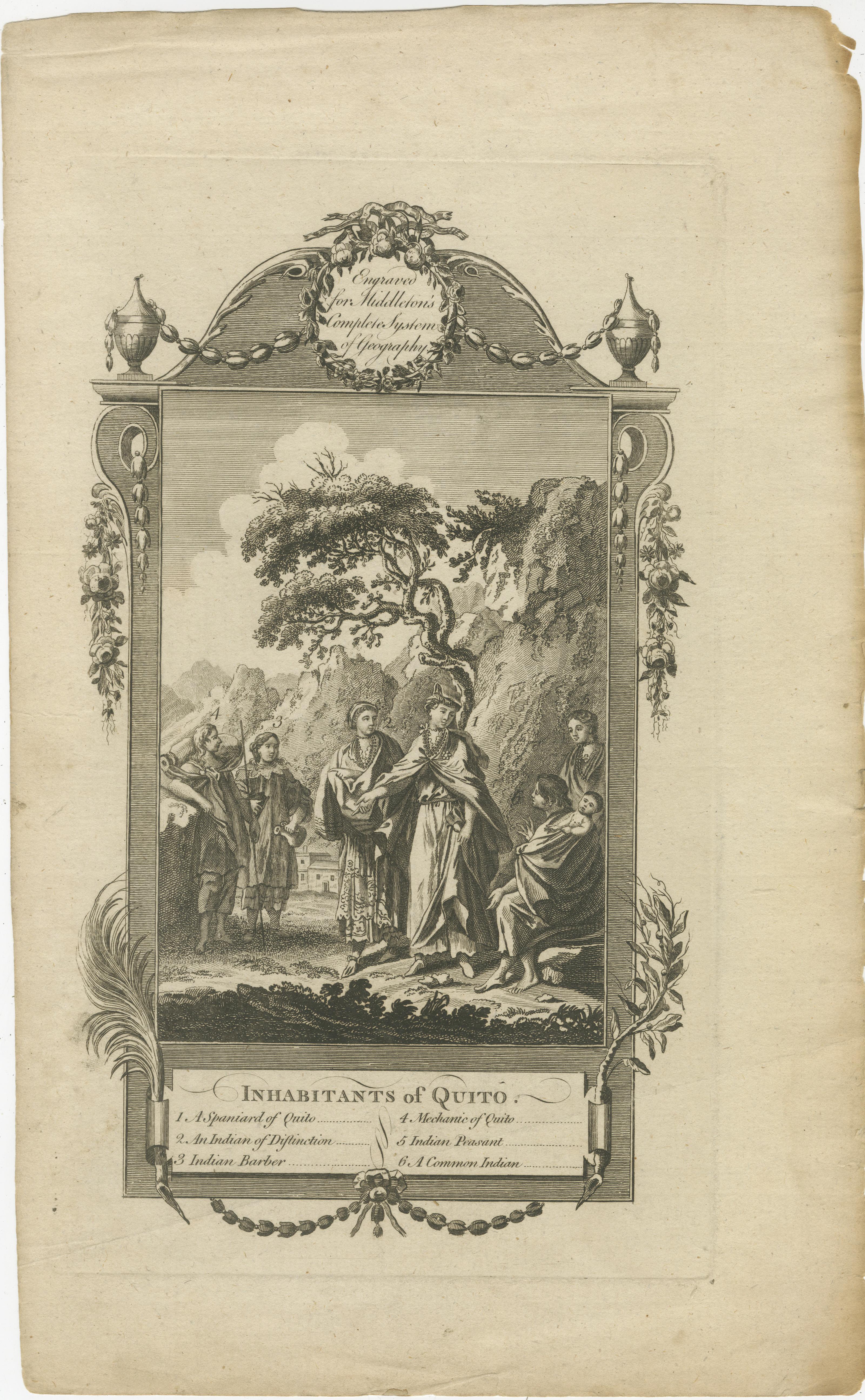
Inhabitants of Quito, South America, from Middleton's Geography, 1777
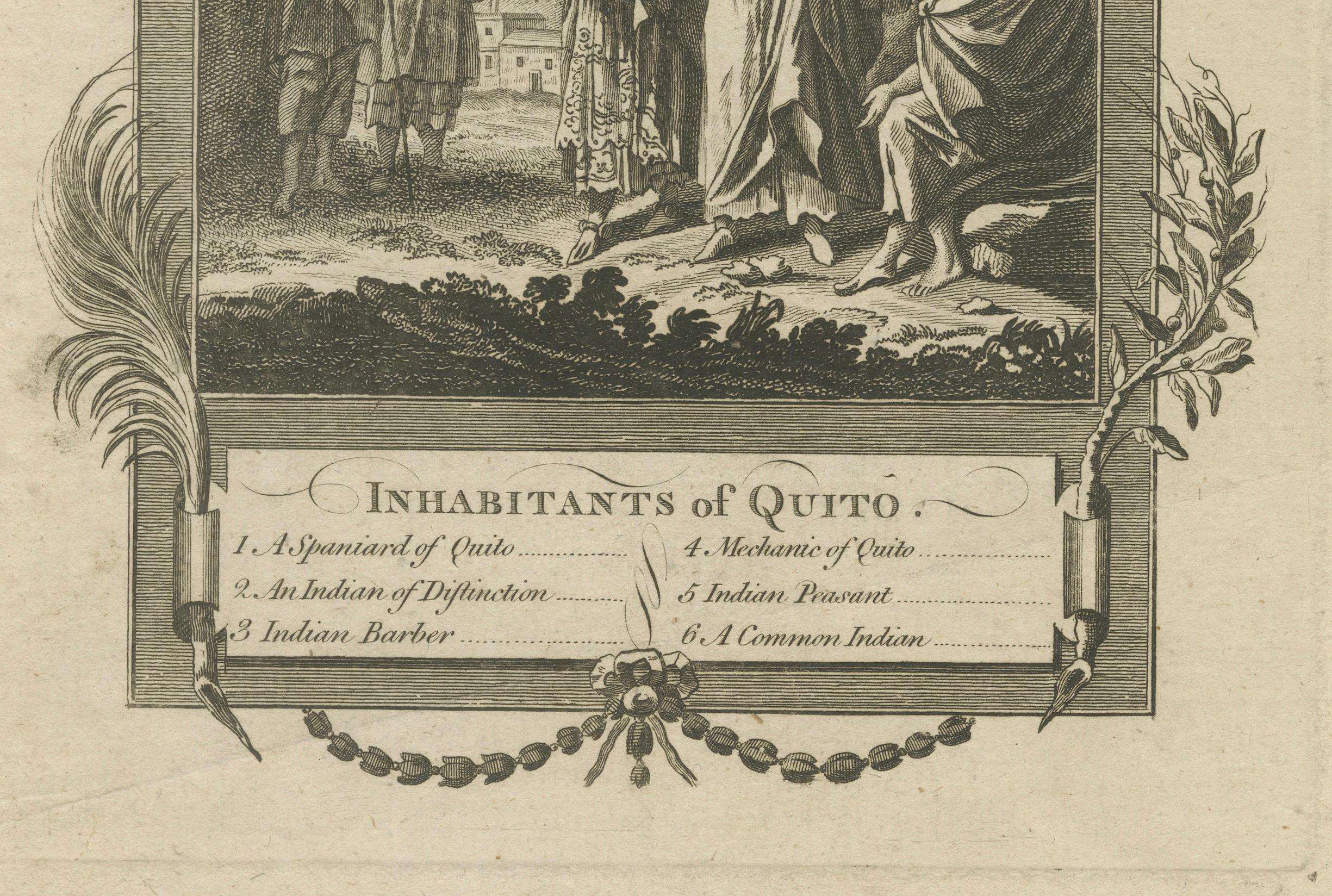
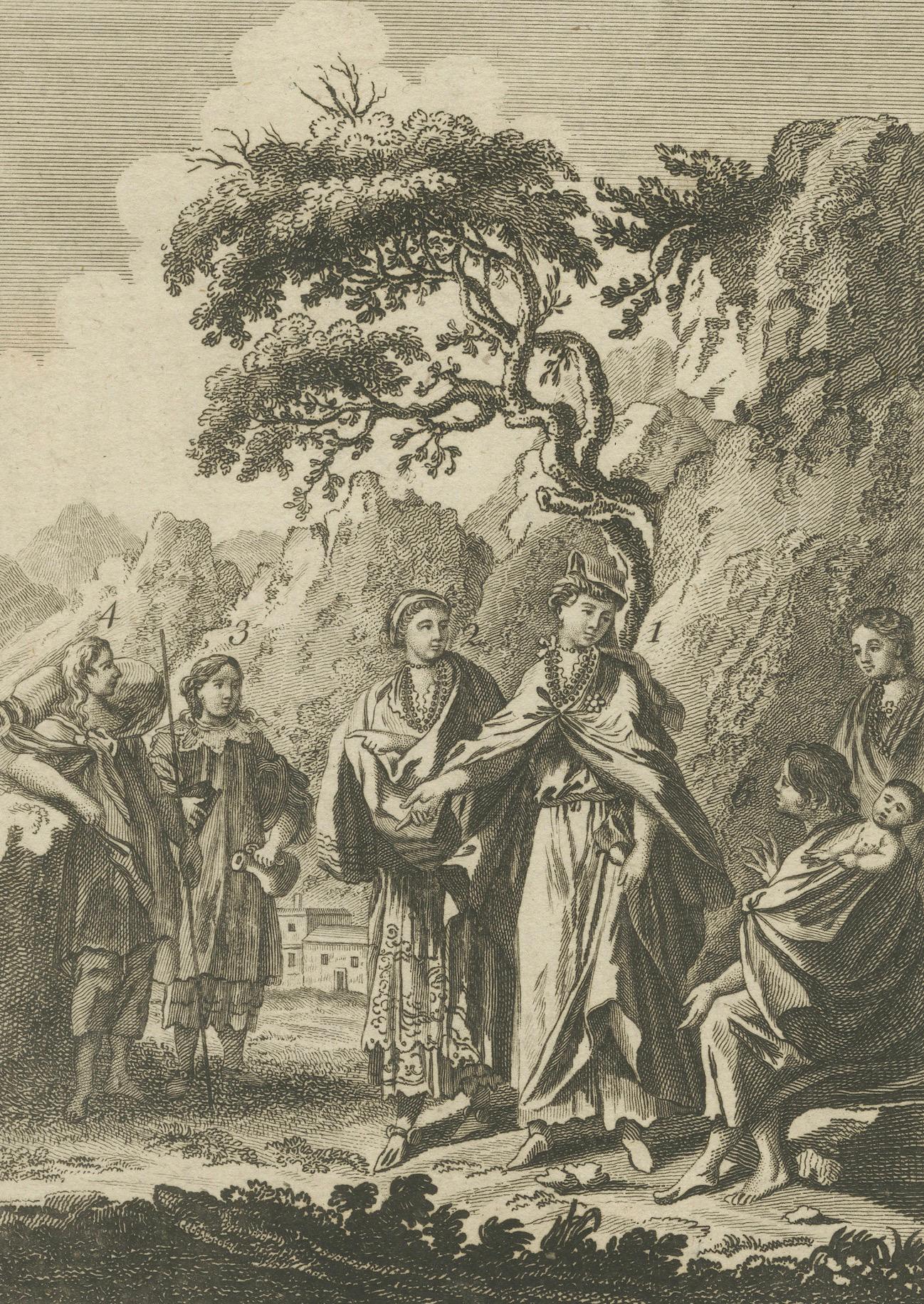
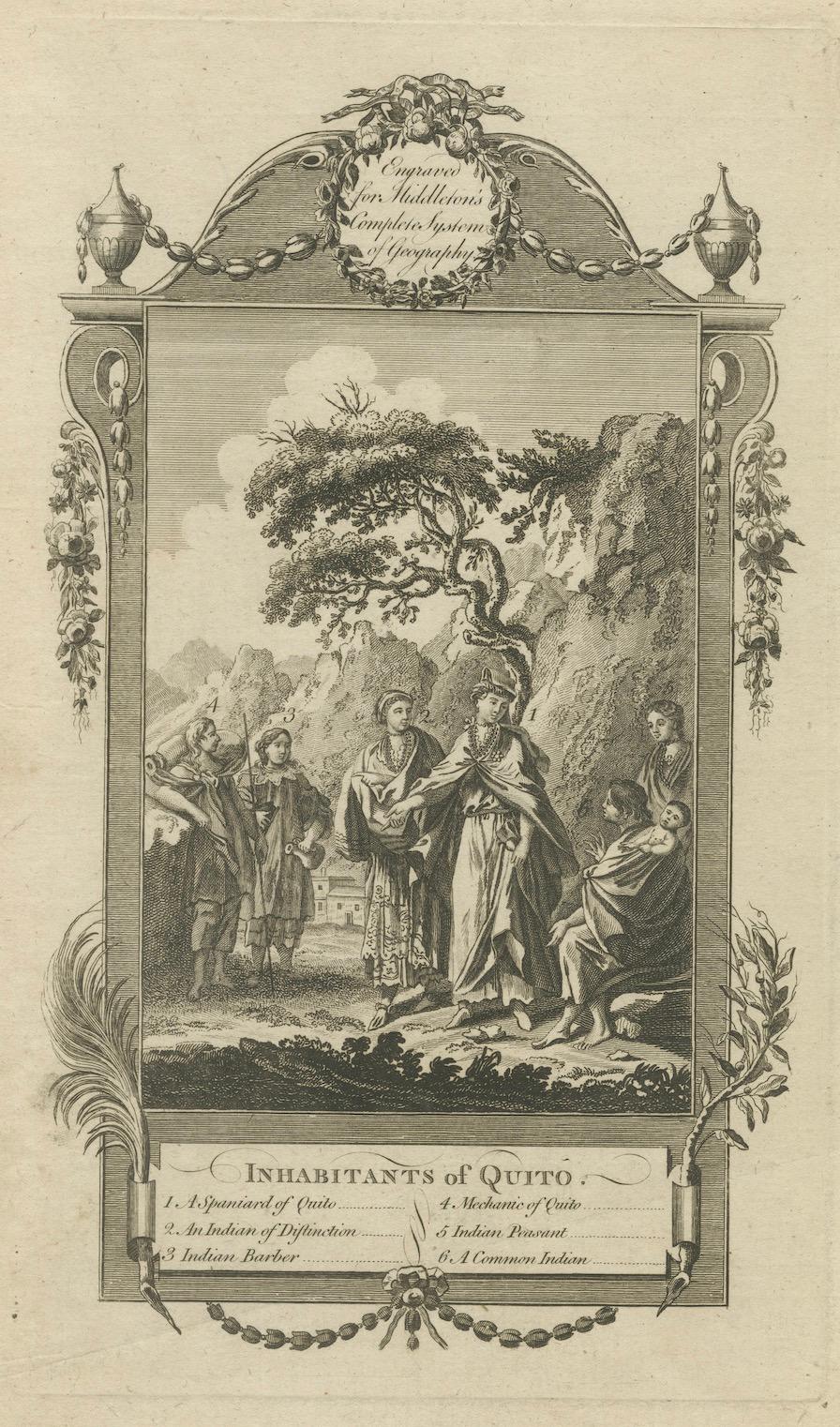
This antique engraving, titled 'Inhabitants of Quito', was produced for Charles Theodore Middleton's 'A Complete System of Geography' (London, 1777). It is a beautifully detailed copperplate engraving, framed in an elaborate decorative cartouche that exemplifies the 18th-century fascination with ethnographic representation and neoclassical aesthetics. The print depicts six figures, each carefully labeled in the legend below:
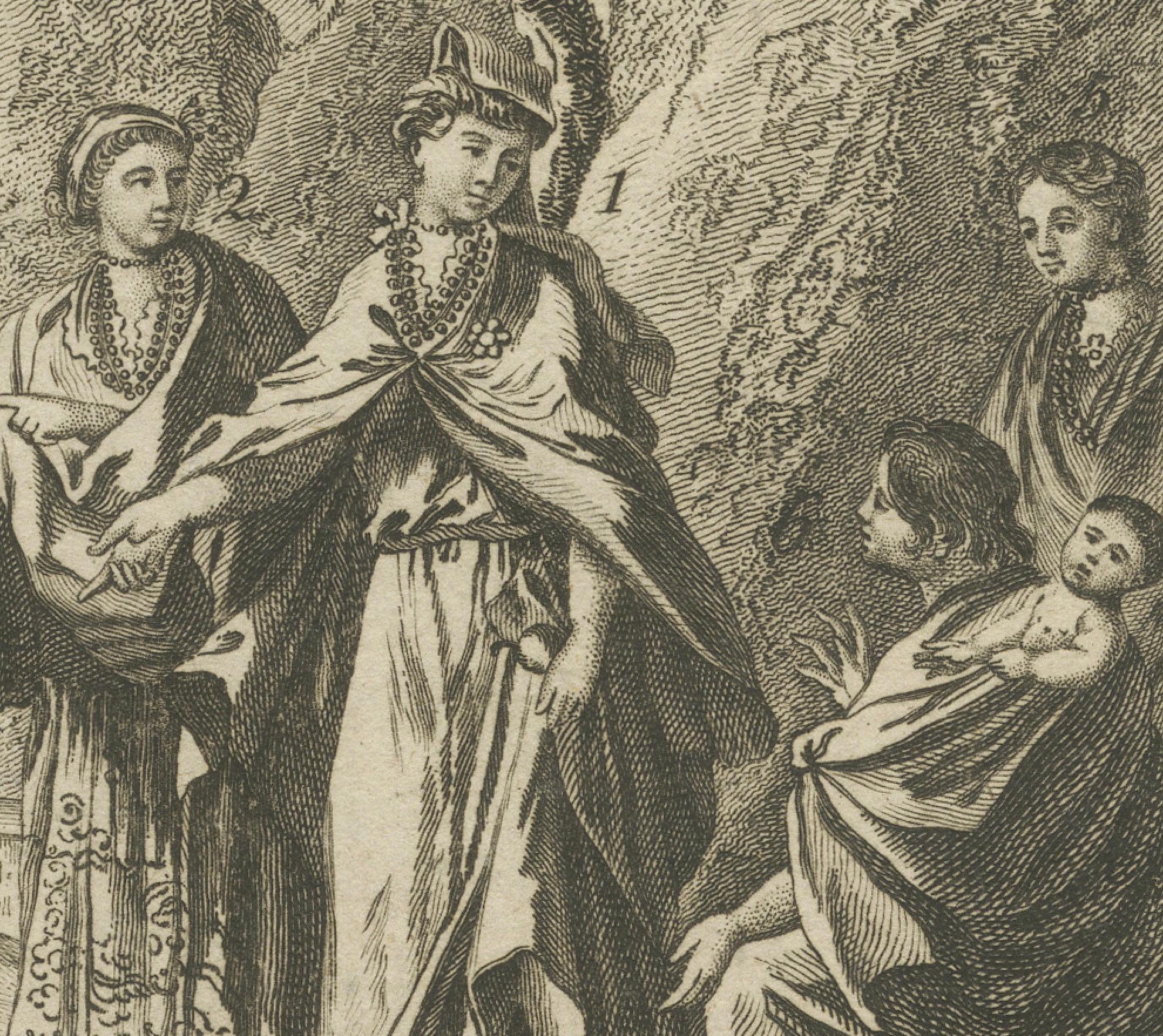
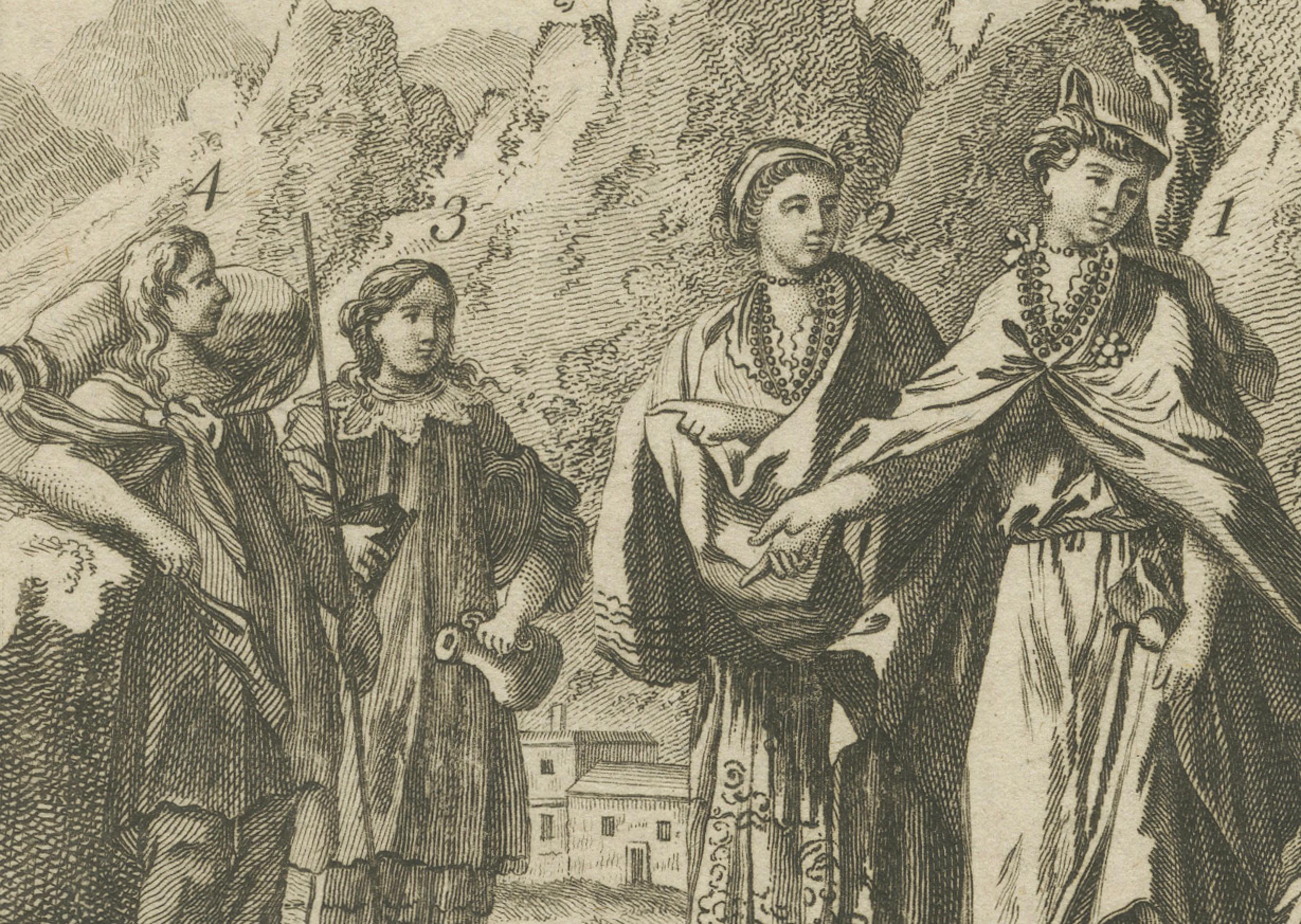
1. A Spaniard of Quito
2. An Indian of Distinction
3. Indian Barber
4. Mechanic of Quito
5. Indian Peasant
6. A Common Indian
Set against a mountainous landscape evocative of the Andean highlands, the figures are dressed in a variety of regional costumes. The Spaniard appears in fine European garb, reflecting colonial authority and social rank, while the indigenous figures are shown in a range of traditional and working-class clothing. The Indian of Distinction wears more elaborate attire, possibly referencing Inca or noble heritage, whereas the commoner and peasant are dressed more simply. The presence of a barber among the group suggests the inclusion of various societal roles and professions. A seated woman with a child reinforces the domestic and familial aspects of indigenous life.
This print belongs to a long tradition of European publications that attempted to document the diversity of human cultures around the world, often through a Eurocentric lens. As such, it offers a fascinating, if stylized, insight into how the people of colonial Quito (now the capital of Ecuador) were perceived by European audiences in the late 18th century.
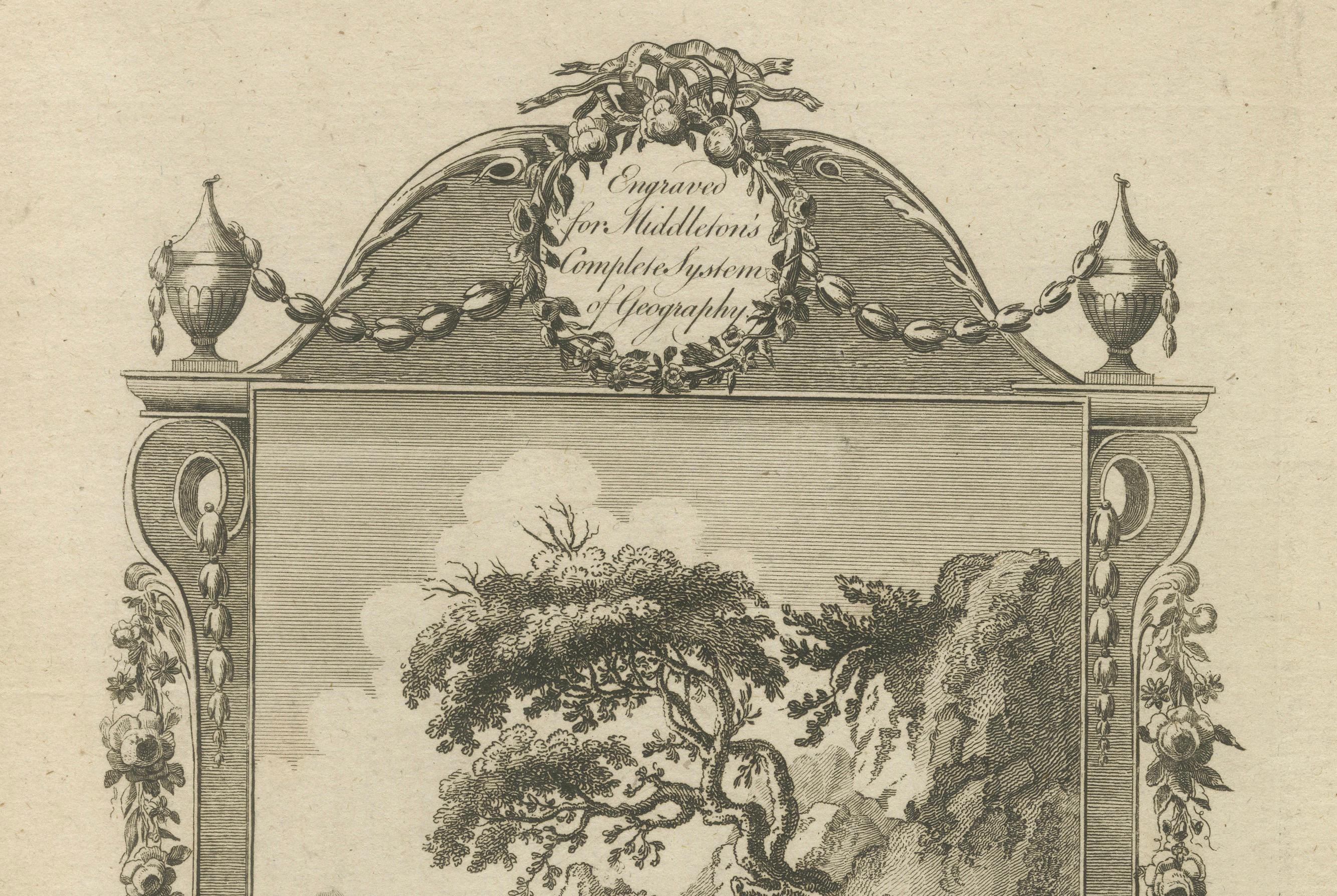
The engraving is titled in an ornate rococo-style frame and includes the note “Engraved for Middleton’s Complete System of Geography.” These volumes were widely circulated during the Age of Enlightenment and aimed to educate British readers about global cultures, geography, and colonial expansion.
Condition report:
Fair to good condition for its age. Slight toning and minor edge wear consistent with age. Plate impression remains strong. Wide margins. Some light folds but no tears or repairs.
Framing tips:
We recommend a museum-grade mat in off-white or light cream to highlight the fine engraving lines, paired with a neoclassical or antique gold frame to complement the decorative cartouche. UV-protective glass is advised to preserve the paper quality and detail. This piece is well-suited for a study, library, or gallery wall where historical and ethnographic prints are displayed.