About this sheet
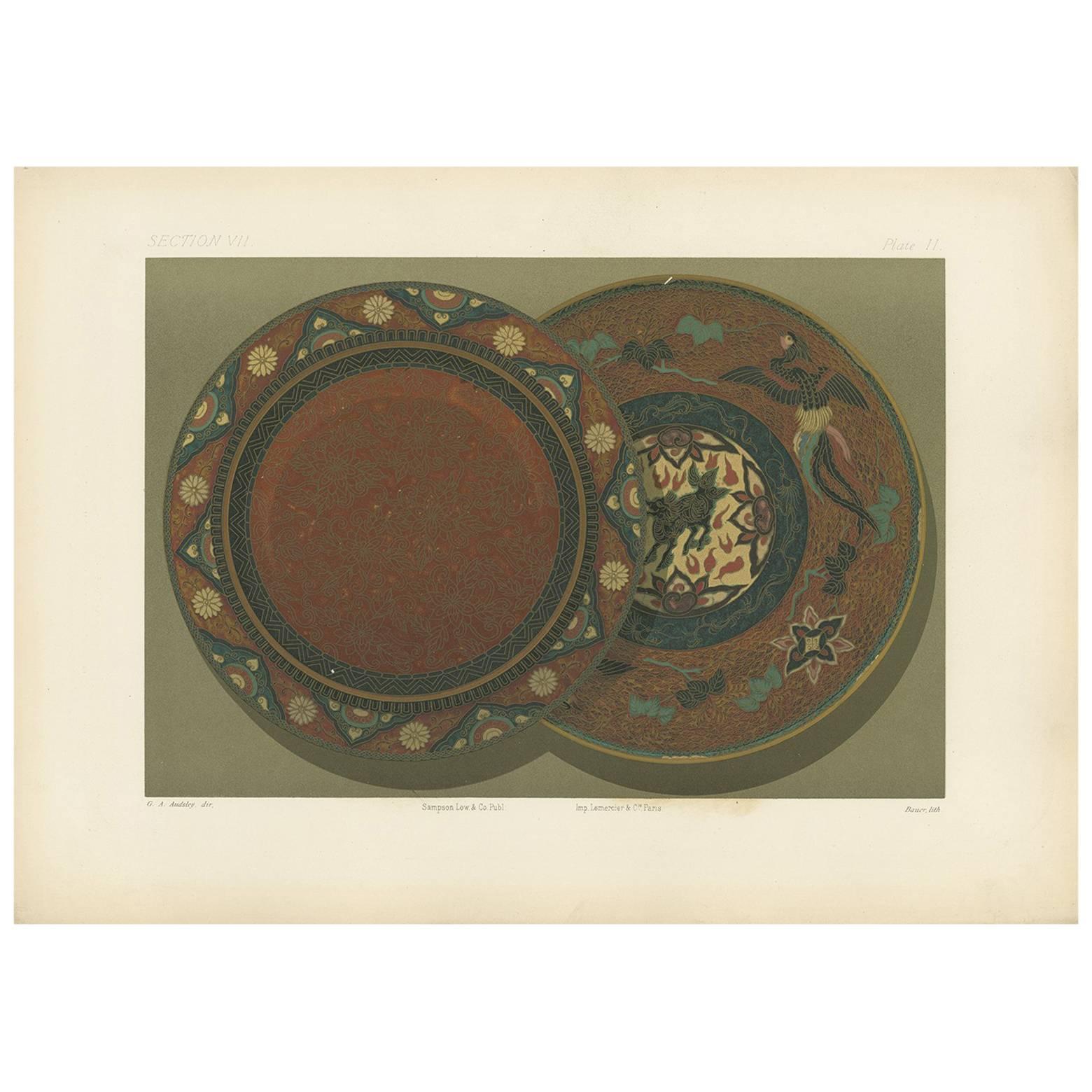
Japanese ornamental dish, chromolithograph by Audsley, 1882
This richly colored chromolithograph presents two intricately decorated Japanese lacquer dishes, with one design showing clear influence from Chinese art. The overlapping placement of the dishes allows a comparison of patterns and motifs: one with bold floral borders and a deep red center, the other with dynamic phoenix birds, bats, and stylized blossoms rendered in fine detail.
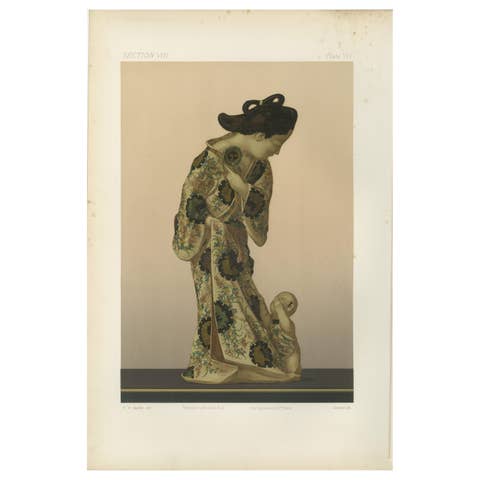
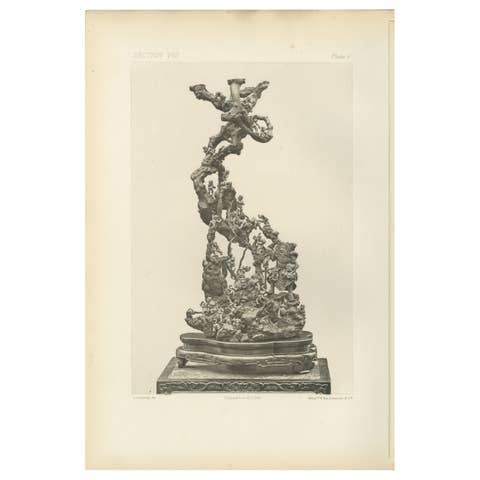
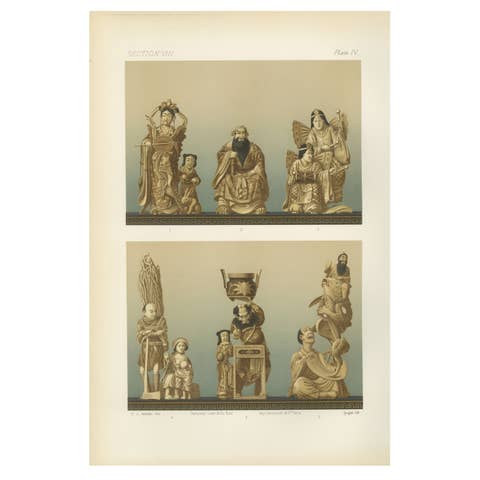
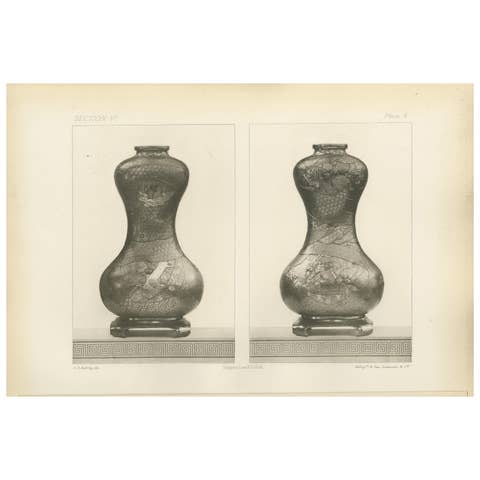
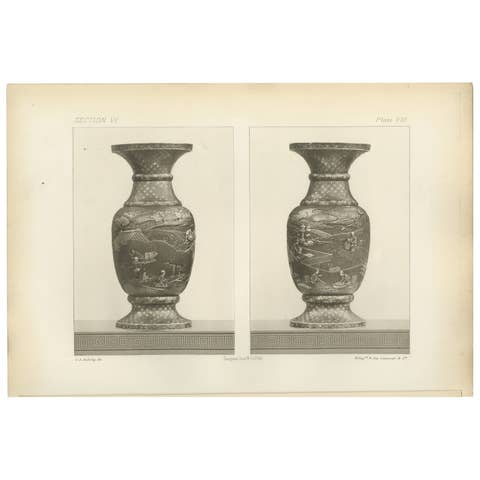
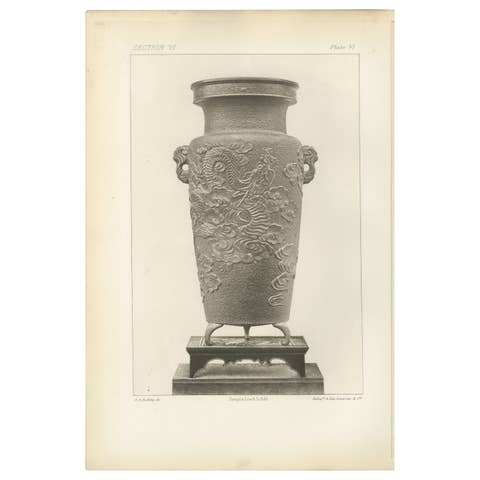
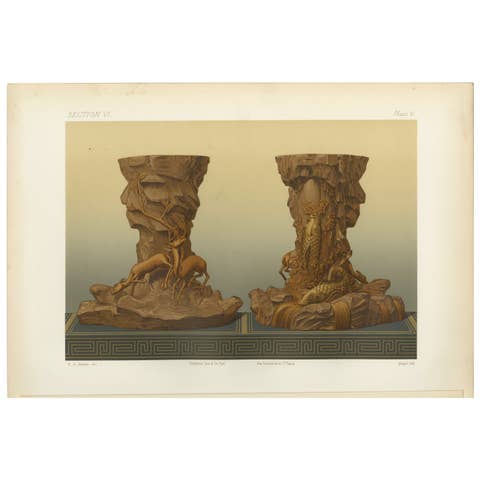
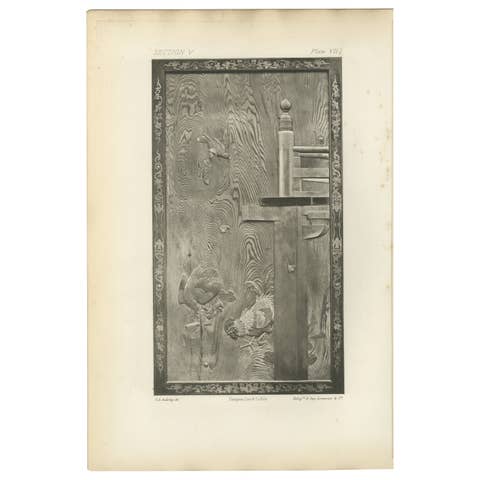
The print comes from the second volume of The Ornamental Arts of Japan by George Ashdown Audsley (1838–1925), architect, designer, and noted authority on Japanese decorative arts. Published in London by Sampson Low & Co. in the early 1880s and printed by Lemercier & Cie., Paris, this monumental work remains one of the most beautiful art books of the late 19th century. Its lavish chromolithographs showcased to European audiences the extraordinary craftsmanship of Japanese artisans at a time when Japonisme profoundly influenced Western design, from Art Nouveau to Arts & Crafts interiors.
Each section of Audsley’s work was dedicated to a particular medium—painting, textiles, lacquer, cloisonné, metalwork, carving, and more. The present plate comes from Section VII, devoted to lacquer, and demonstrates the fusion of Japanese artistry with imported Chinese motifs, a theme that became highly prized among collectors. The plate stands as both a document of historical decorative art and a work of art in its own right, with Lemercier’s chromolithographic printing capturing the richness of lacquer’s colors and textures.
This sheet is highly desirable for collectors of Japonisme, decorative arts, and 19th-century chromolithography. It also offers excellent display potential, either as a standalone piece or grouped with other plates from Audsley’s monumental set.
Condition report: Very good condition with rich, unfaded colors. Minor toning to margins consistent with age. Plate mark visible.
Framing tips: A wide ivory or cream mat will set off the strong coloration of the lacquer designs. A simple gilt or dark wood frame complements the richness of the subject, while grouping with other lacquer plates creates a museum-quality decorative ensemble.
Technique: Chromolithograph
Maker: George Ashdown Audsley, published by Sampson Low & Co., printed by Lemercier & Cie., Paris, c. 1882