About this sheet
Antique Japanese Actor Portraits: Four Kabuki Figures in Edo-Period Style
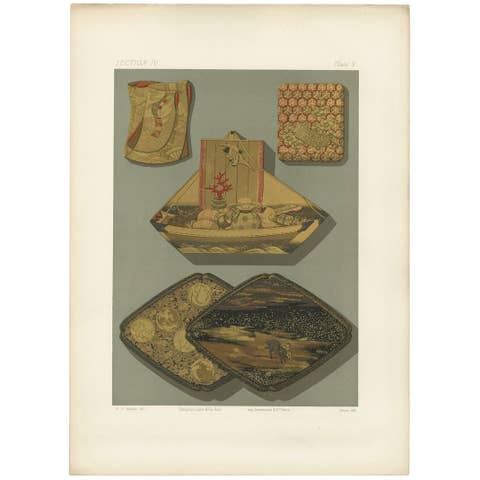
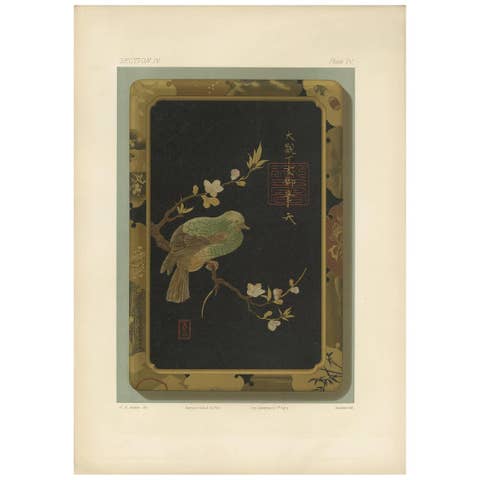
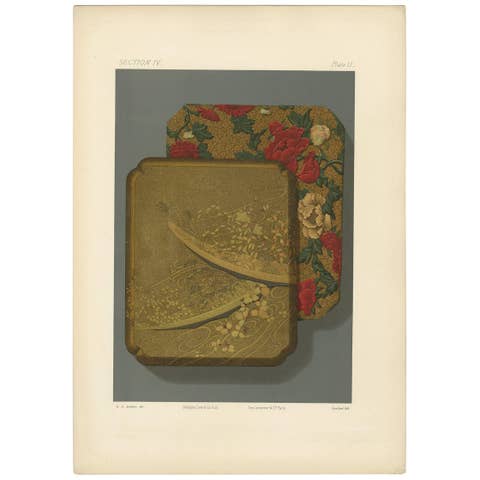
This 19th-century Japanese print features four dignified male figures, each dressed in elaborate Edo-period attire and rendered with striking clarity and grace. Published by Sampson Low & Co. and lithographed in Paris by Imp. Lemercier & Cie, the work was directed by G. A. Audsley, a noted champion of Japanese art in the West. These men are likely kabuki actors depicted in various roles, reflecting the rich tradition of theater in Edo-period Japan.
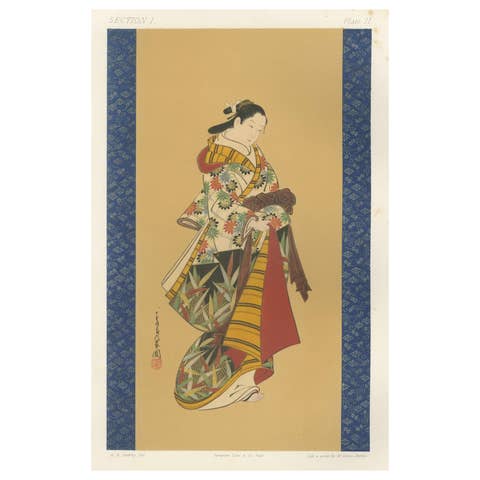
The prints capture the elegance and power of kabuki performance, where actors wore sumptuously patterned kimono that conveyed status and character. Each figure is carefully posed against a minimalist background, which allows the subtle details of their costumes to shine: geometric motifs, floral patterns, and luxurious fabrics that symbolize refinement and cultural sophistication. These garments not only highlight the wealth and social standing of the figures but also communicate layers of meaning through pattern and color.
The restrained palette of muted greens, golds, and deep blacks lends a timeless quality to the prints, while the distinctive hairstyles and facial expressions suggest the theatrical intensity of kabuki drama. Whether wielding a staff, holding a container, or standing in quiet contemplation, these figures offer a glimpse into the world of Edo-period performance, where art and life seamlessly intertwined.
Collectors of Japanese art or those interested in the history of kabuki theater will find this print a striking addition to their collection, offering a window into the rich tapestry of Edo cultural life.
Kabuki, an iconic form of Japanese theater that emerged in the early 17th century, is renowned for its stylized performances, elaborate costumes, and powerful storytelling. It played a key role in Edo-period entertainment, and its themes—ranging from historical epics to romantic tales and supernatural legends—reflected the values, anxieties, and dreams of the time.
Actors in kabuki performances were often depicted in woodblock prints known as yakusha-e (actor pictures). These prints, like this one, allowed fans and collectors to bring home the larger-than-life presence of their favorite performers. The images captured not only the appearance of the actors but also the essence of the roles they played, immortalizing moments of intense drama and elegant beauty.
The clothing of these figures carries significant symbolic weight. The bold geometric patterns and luxurious fabrics, seen in the prints, were part of the elaborate stage presence that set kabuki apart from other theatrical forms. Specific patterns, such as tortoiseshell, cranes, or pine trees, signified longevity, strength, and auspicious fortune—qualities highly prized in Edo society. Even the manner in which a kimono was worn or tied could indicate the character’s social class, age, or moral standing.
These four dignified figures also illustrate the subtle artistry of the kabuki actor—conveying complex emotions through controlled posture, refined gesture, and expressive facial features. In the prints, their calm intensity and careful staging mirror the poise and ritual of kabuki performances, blending the ephemeral nature of theater with the enduring artistry of printmaking.
Condition Report:
This print is in very good condition, with only minor foxing and slight toning at the margins. The colors remain rich and the linework crisp, preserving the refined artistry of this piece.
Framing Tips:
A simple dark wood or black lacquer frame with a white or cream mat will complement the elegant color scheme and focus attention on the intricate patterns of the kimono and the dignified bearing of these figures.