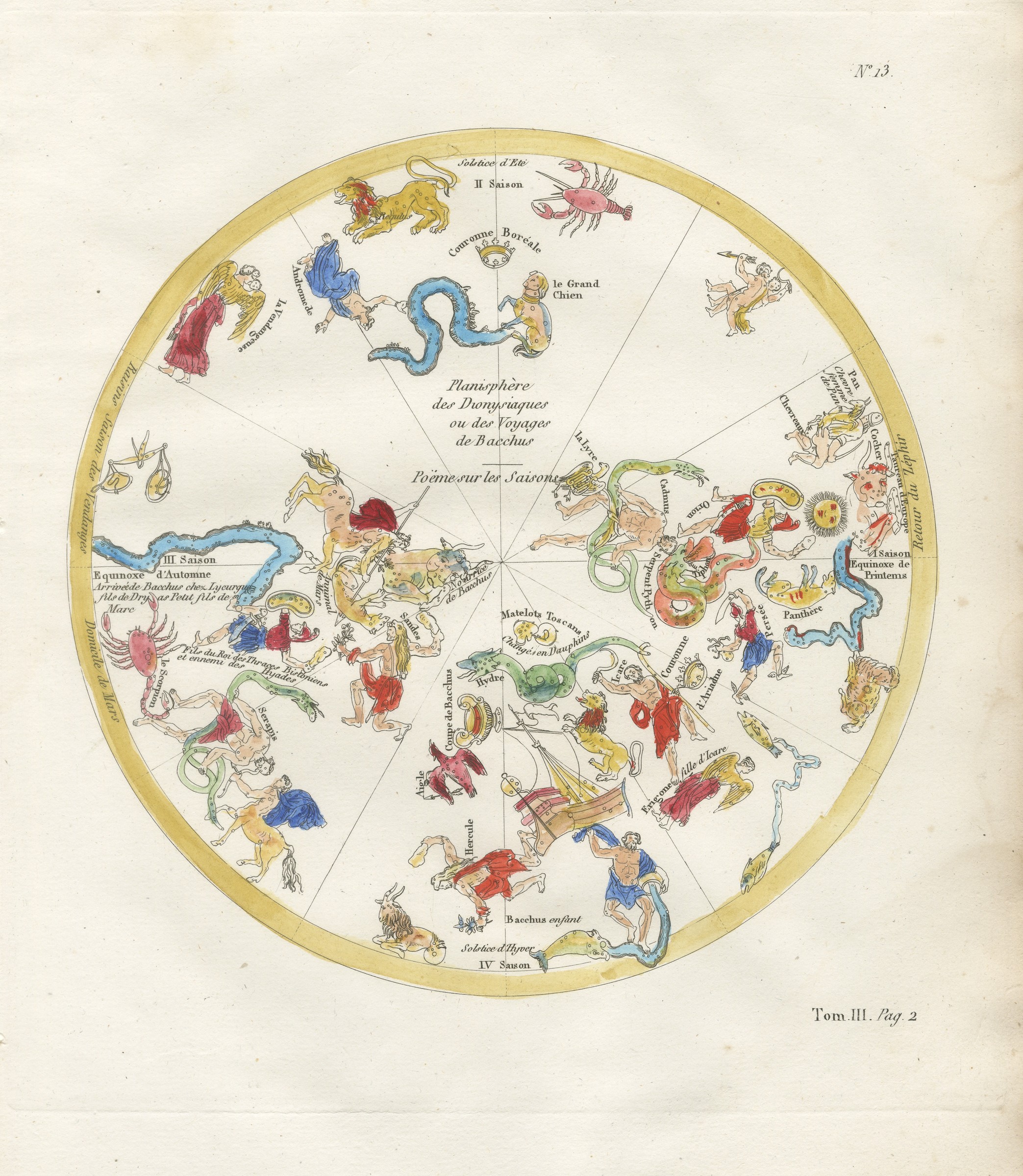
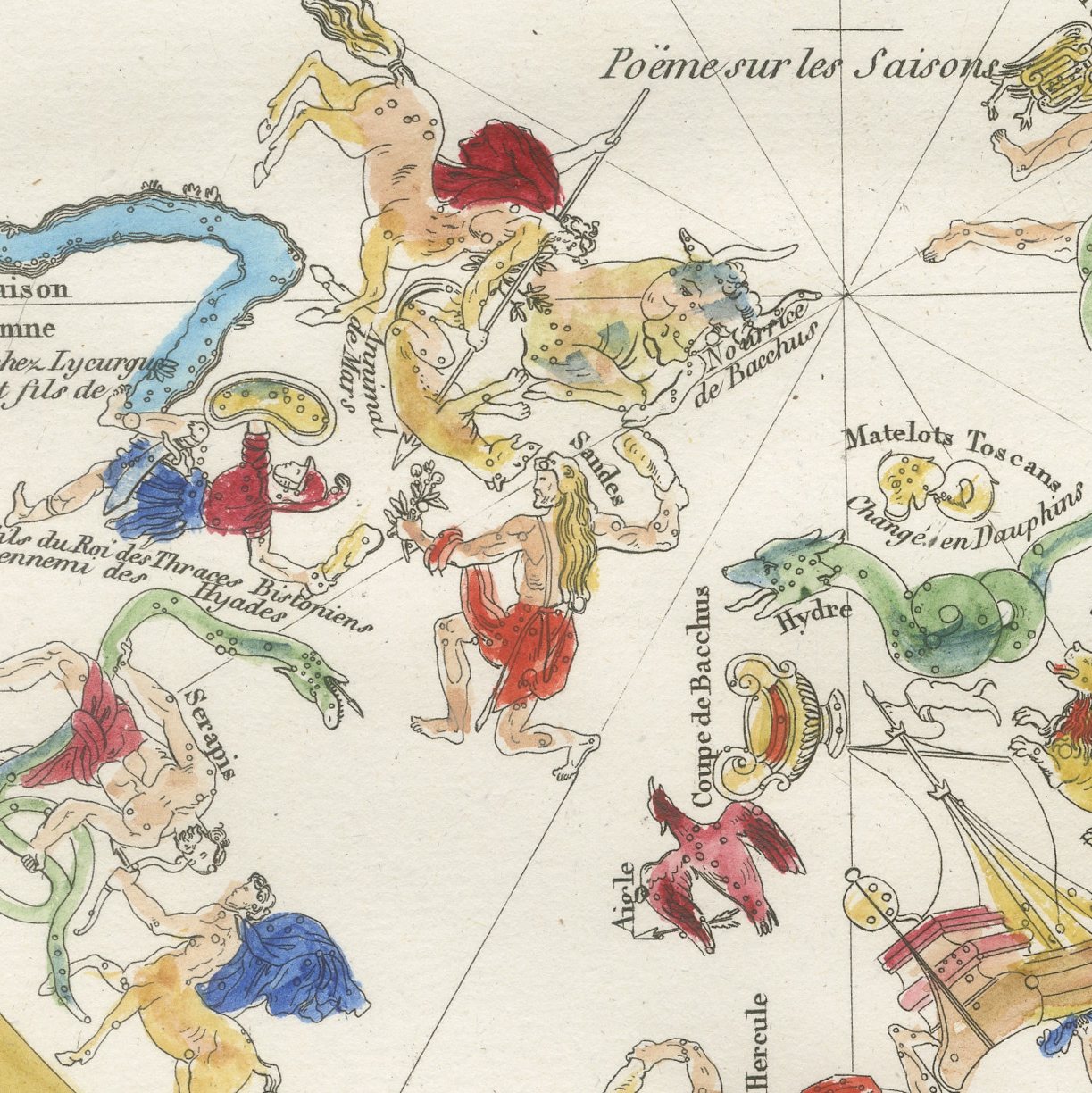
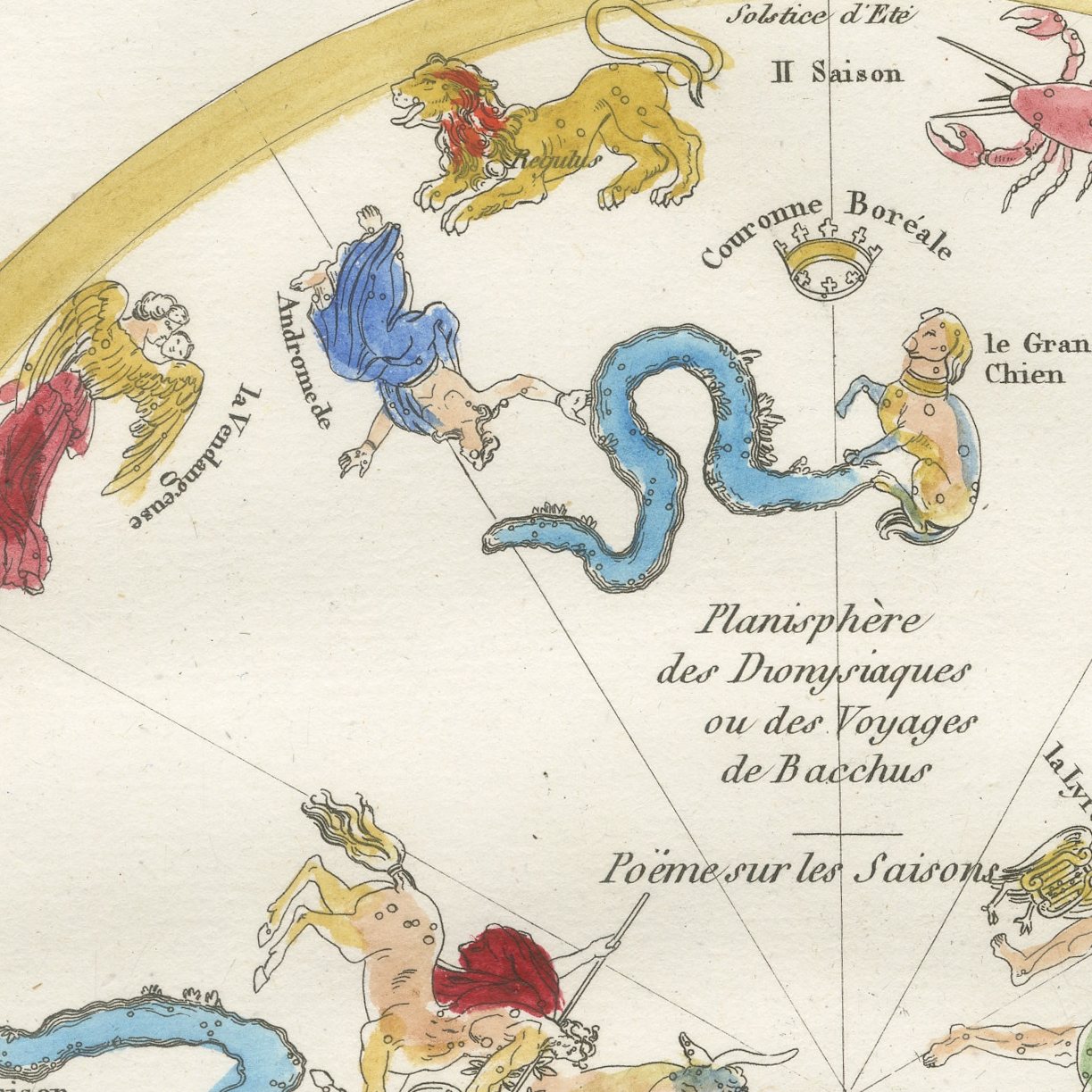
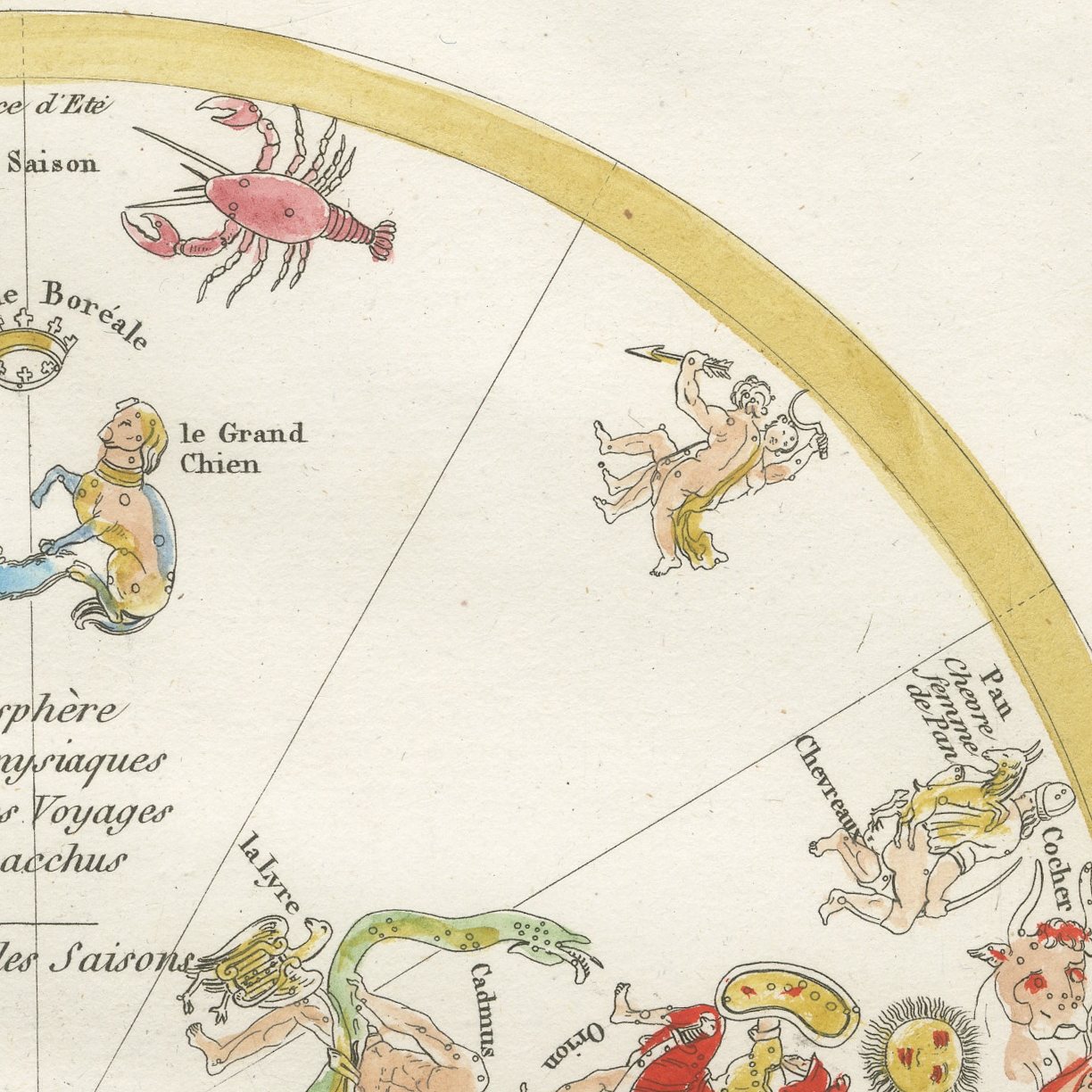
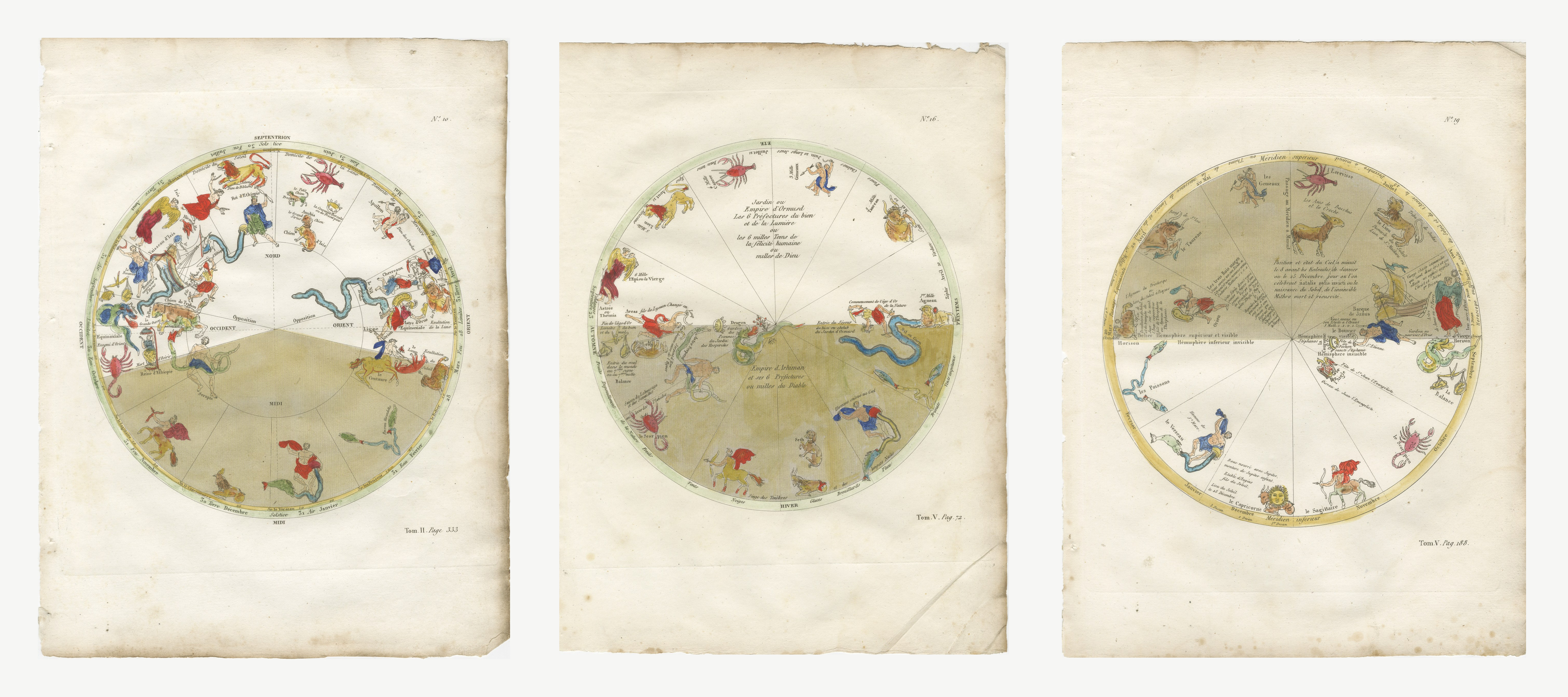
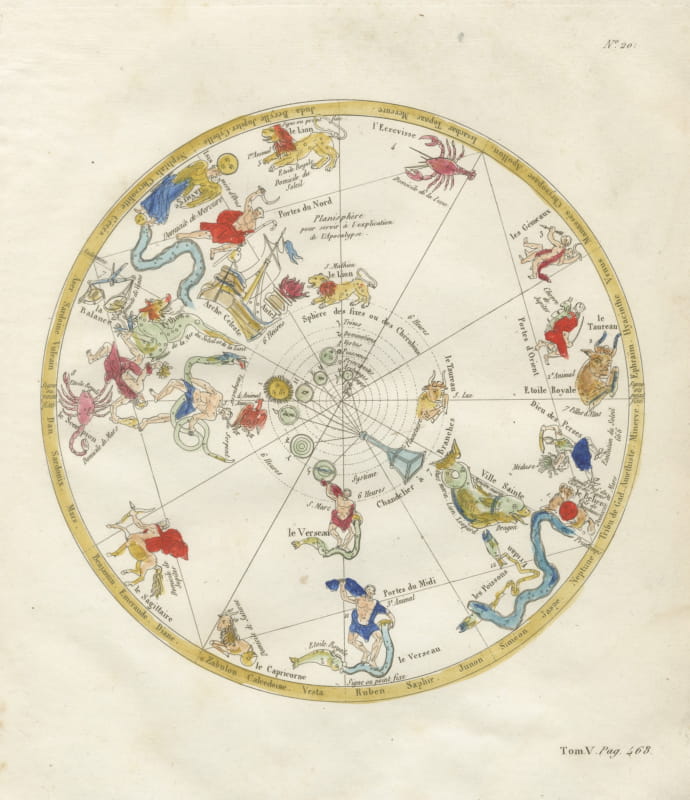
Planisphere of the Voyages of Bacchus, Antique Zodiac Print, 1822
US$378
Original antique · The actual sheet photographed · Certificate of authenticity on request · Sold unframed · Worldwide shipping from € 15 (rates)
Date
1822
Mapmaker / artist
Not named on the sheet
Publisher
Not named on the sheet
Technique
Copper Engraving
Coloring
Hand colored
Sheet size
31 × 23 cm (12.2 × 9.1 in)
Condition
Good
Reference
BG-14398-12
What the condition grades mean
Excellent
Bright and clean, with no faults worth mentioning.
Very good
Only light signs of age, such as faint toning.
Good
Normal signs of age for a sheet of this period: toning, some foxing, small marks or neat old repairs.
Fair
Clear faults such as staining, tears or repairs, priced to match.
Every fault we see is written in the condition note, and the whole sheet is shown uncropped in the photos.
Condition
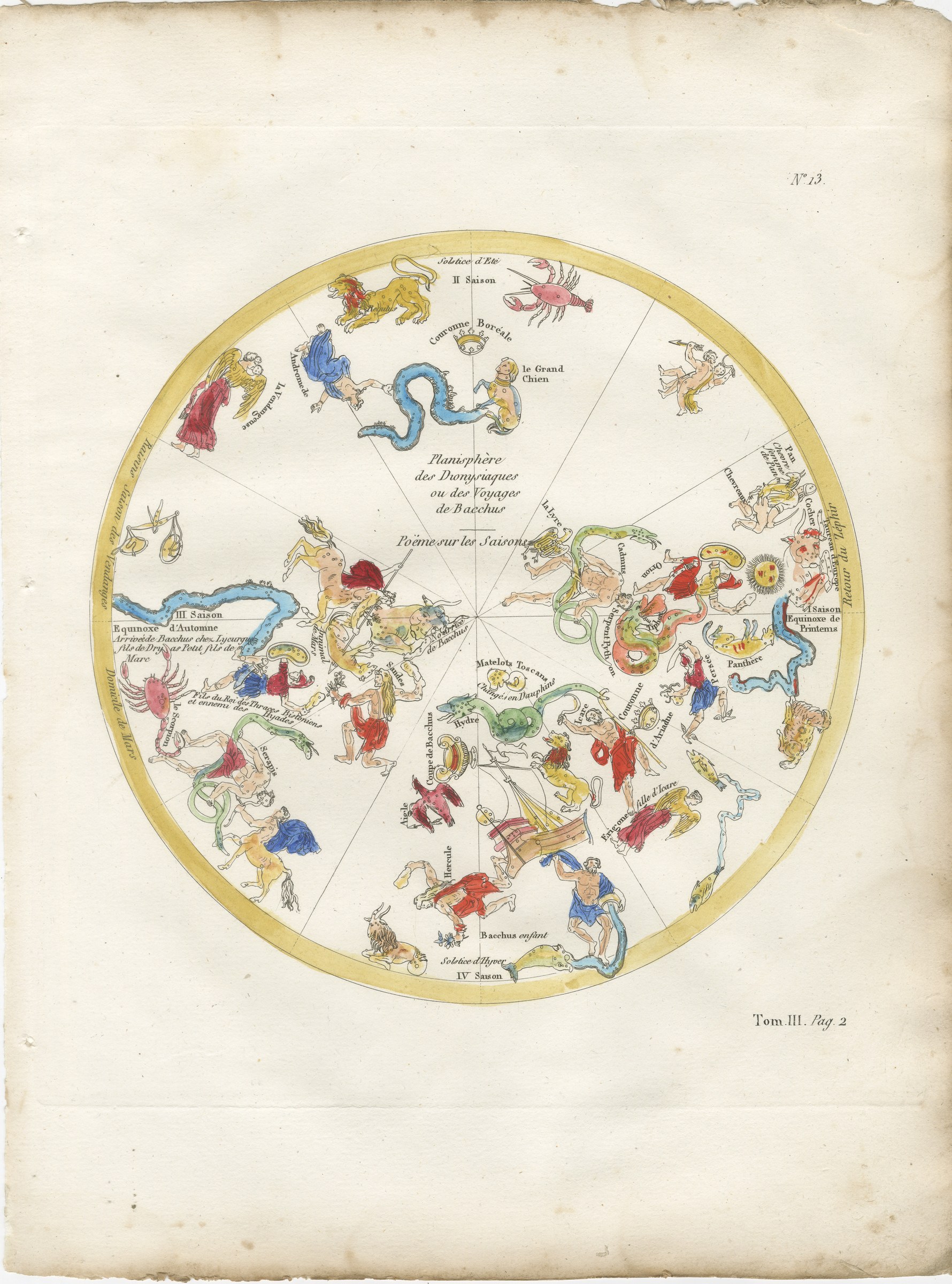
Light overall age toning, the paper a pale cream, with the sheet untrimmed and the deckle edges of its handmade paper soft and uneven and gray handling soiling along the bottom and top edges. The printed image itself is clean.
About this sheet
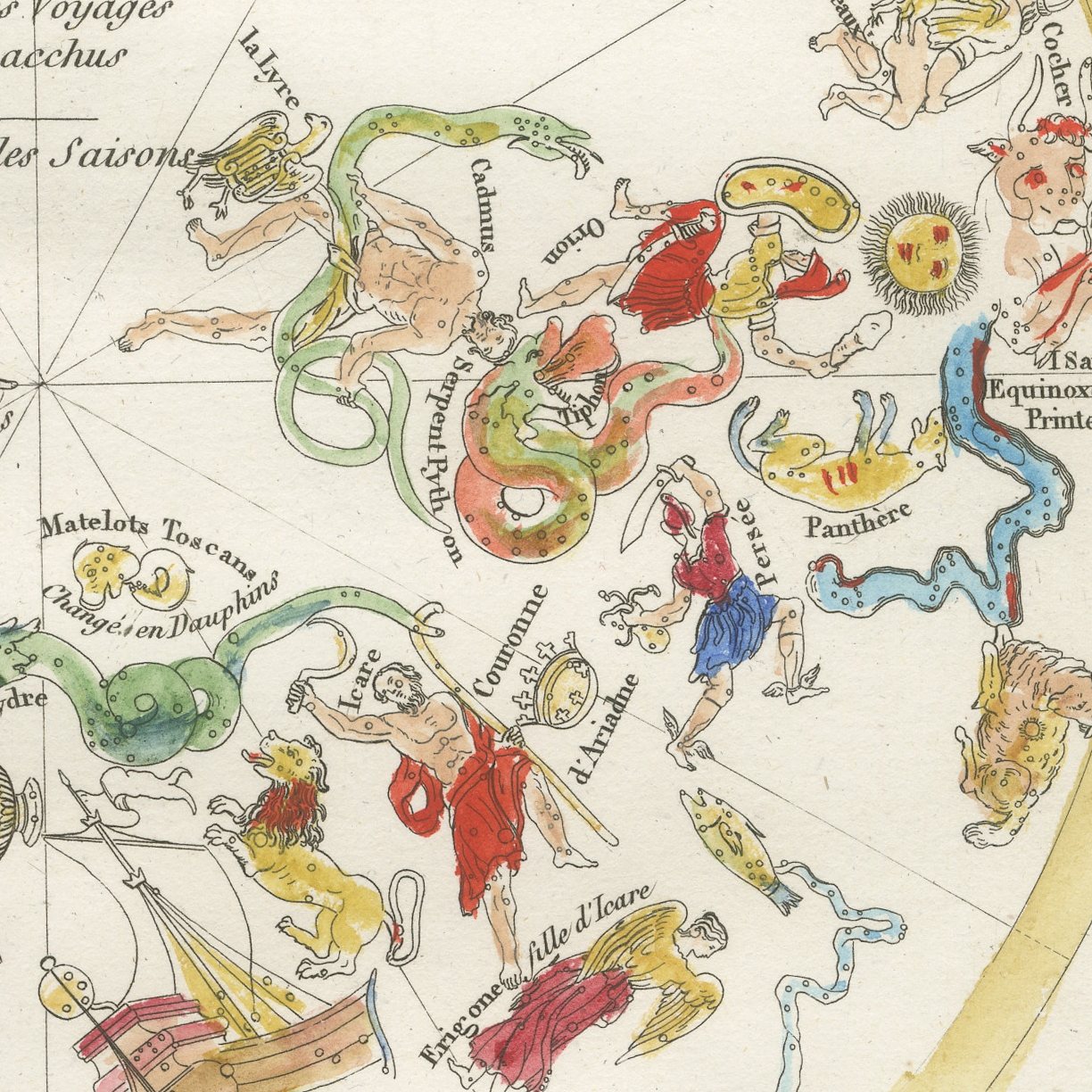
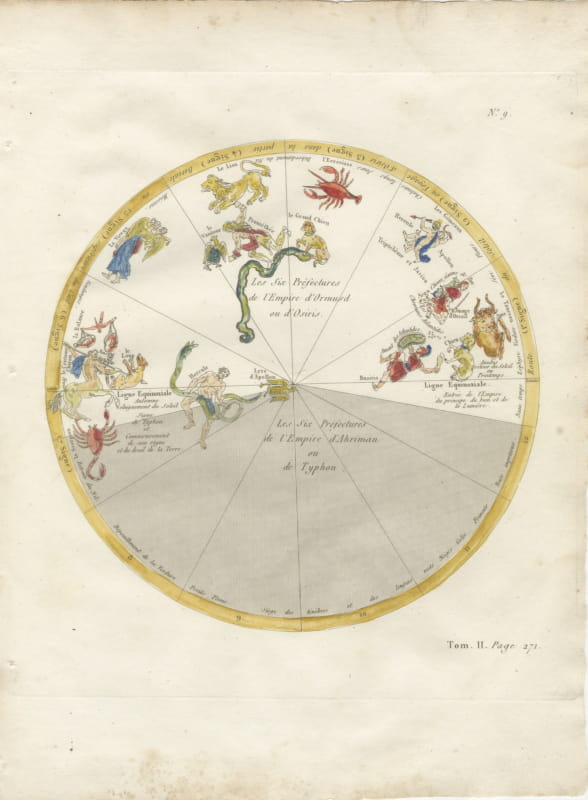
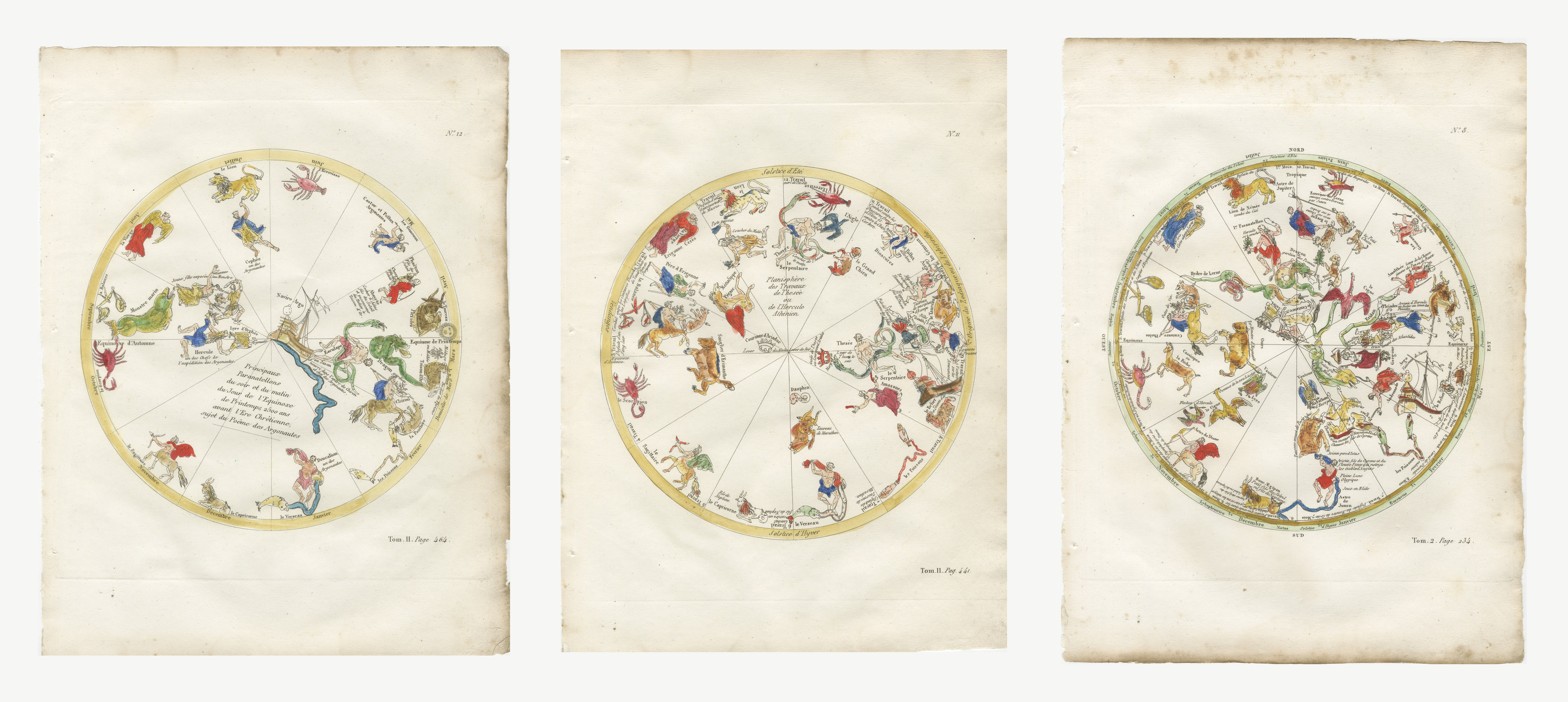
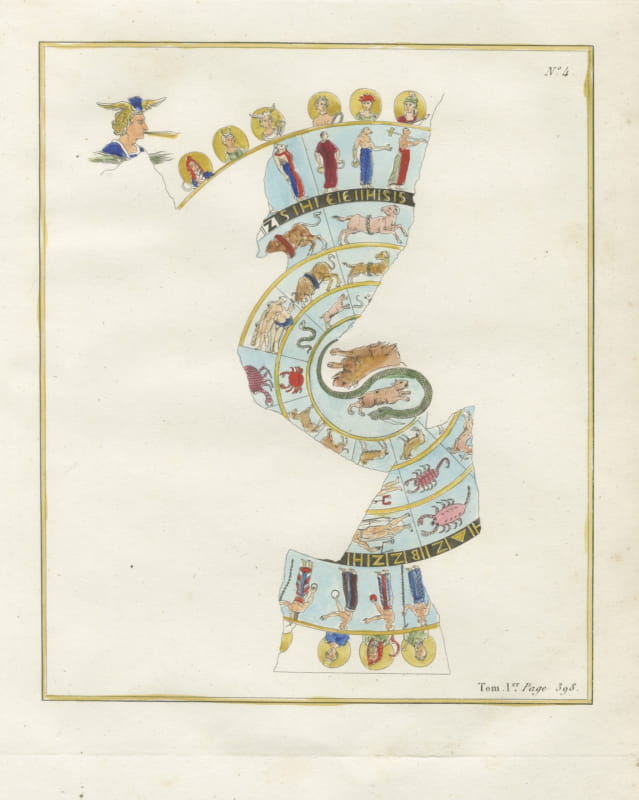
An original antique hand colored copper engraving of a planisphere of the Dionysiaca, the voyages of Bacchus, plate 13 from the atlas to Charles Francois Dupuis, Origine de Tous les Cultes, ou Religion Universelle, Paris, 1822. A circle of constellations carries the figures of the Dionysiac poem, a centaur, a lyre, a serpent holder and a crowd of named star groups ranged around a yellow rim.
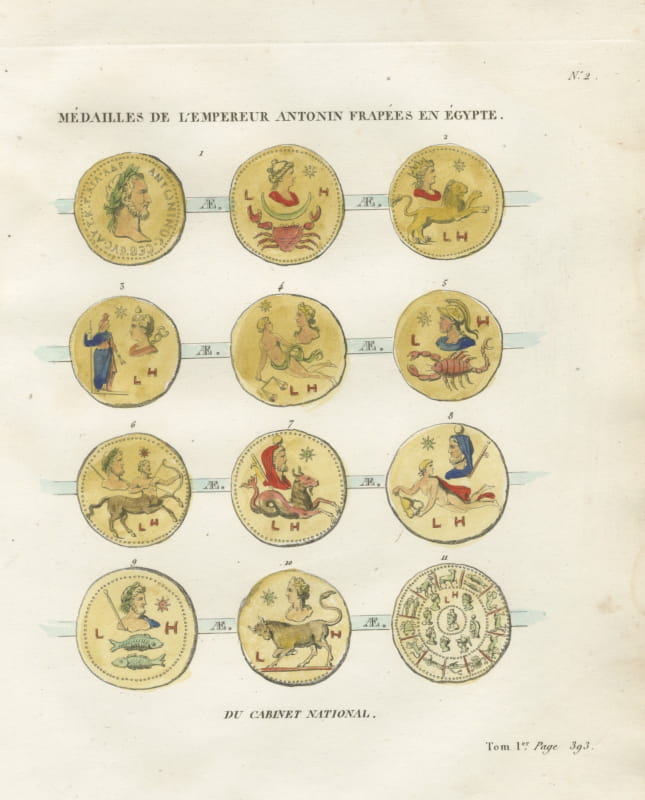
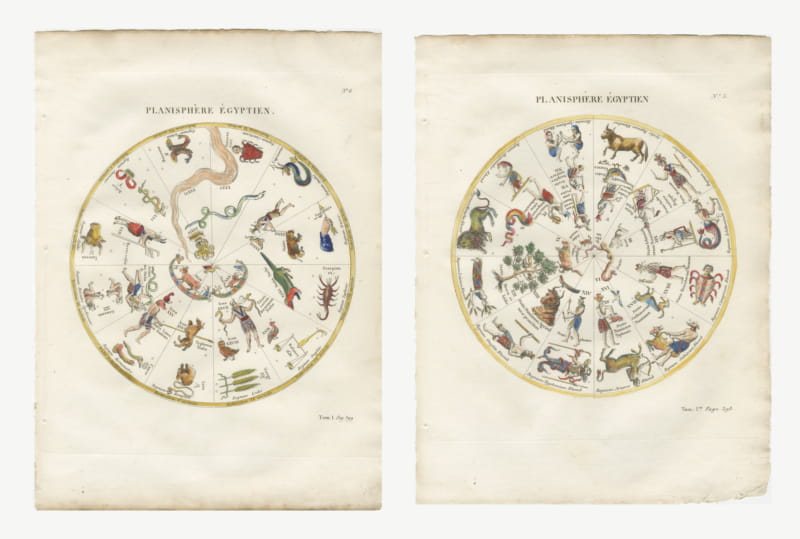
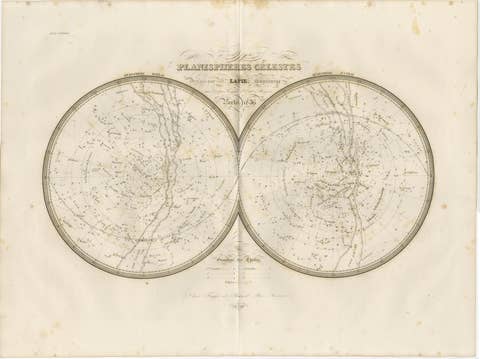
The source is the atlas to Origine de Tous les Cultes, ou Religion Universelle by Charles Francois Dupuis (1742 to 1809), in the new edition published at Paris by Emile Babeuf in 1822, revised and corrected, with a notice on the life and writings of Dupuis by Pierre Rene Auguis. The work first appeared in Paris in 1795, in three volumes of text with a volume of plates. Dupuis argued that the gods and heroes of the ancient religions, and the Christian story with them, were accounts of the sun and the stars, and the atlas sets out the constellations, zodiacs and coins on which he built that argument. The title page of the 1822 edition announces a new astronomical atlas of twenty four plates.
The plate is engraved on copper and colored by hand: the engraving carries the lettering, the star positions and the outline of every figure, and the color was added afterwards by hand in watercolor. The coloring appears to be old, but it was not necessarily added when the sheet was printed.
The Dionysiaca of Nonnus of Panopolis, written in the fifth century AD, tells the life of Dionysus, the Roman Bacchus, and his expedition to India in forty eight books, the longest poem to survive from antiquity.
Light overall age toning, the paper a pale cream, with the sheet untrimmed and the deckle edges of its handmade paper soft and uneven and gray handling soiling along the bottom and top edges. The printed image itself is clean.
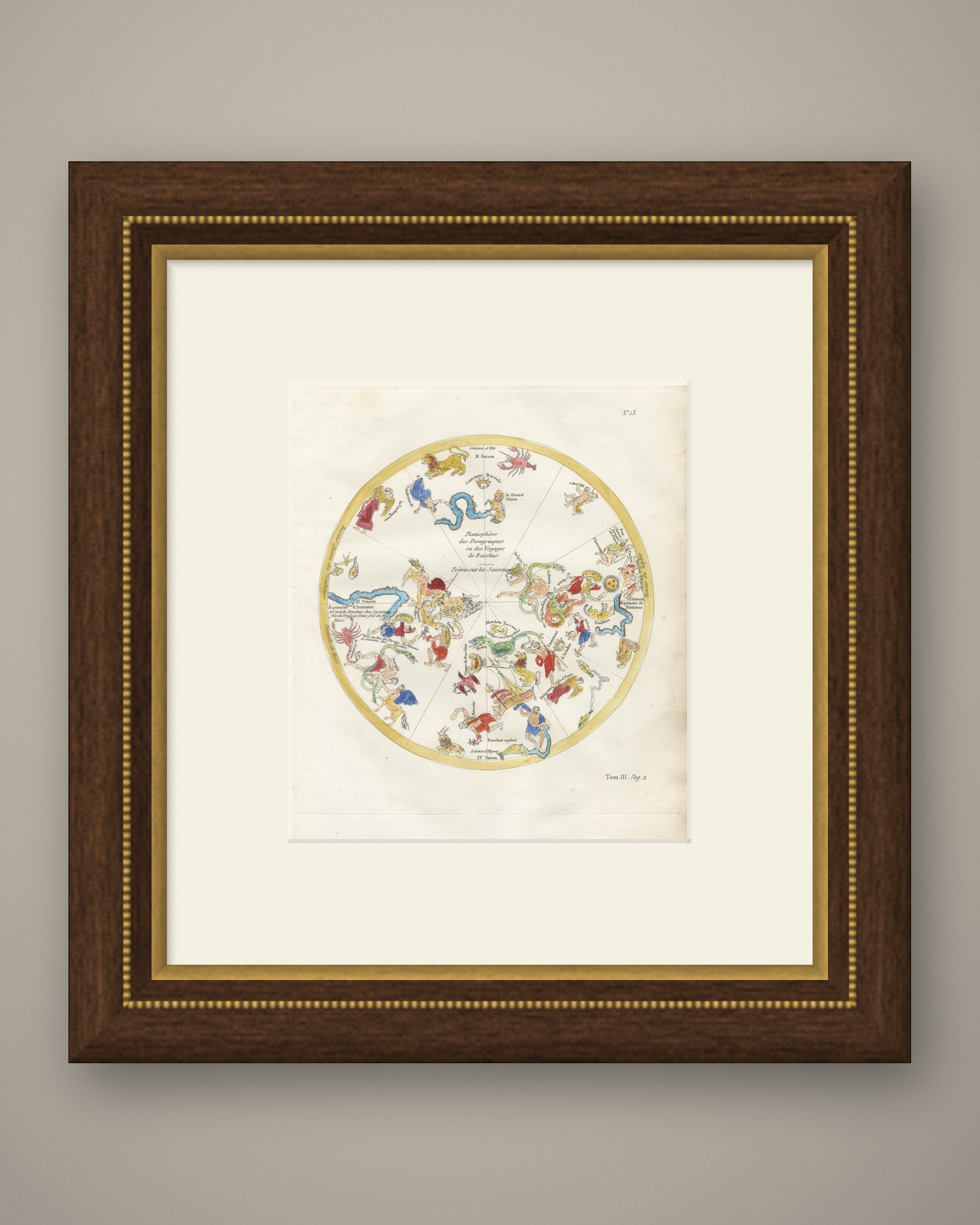
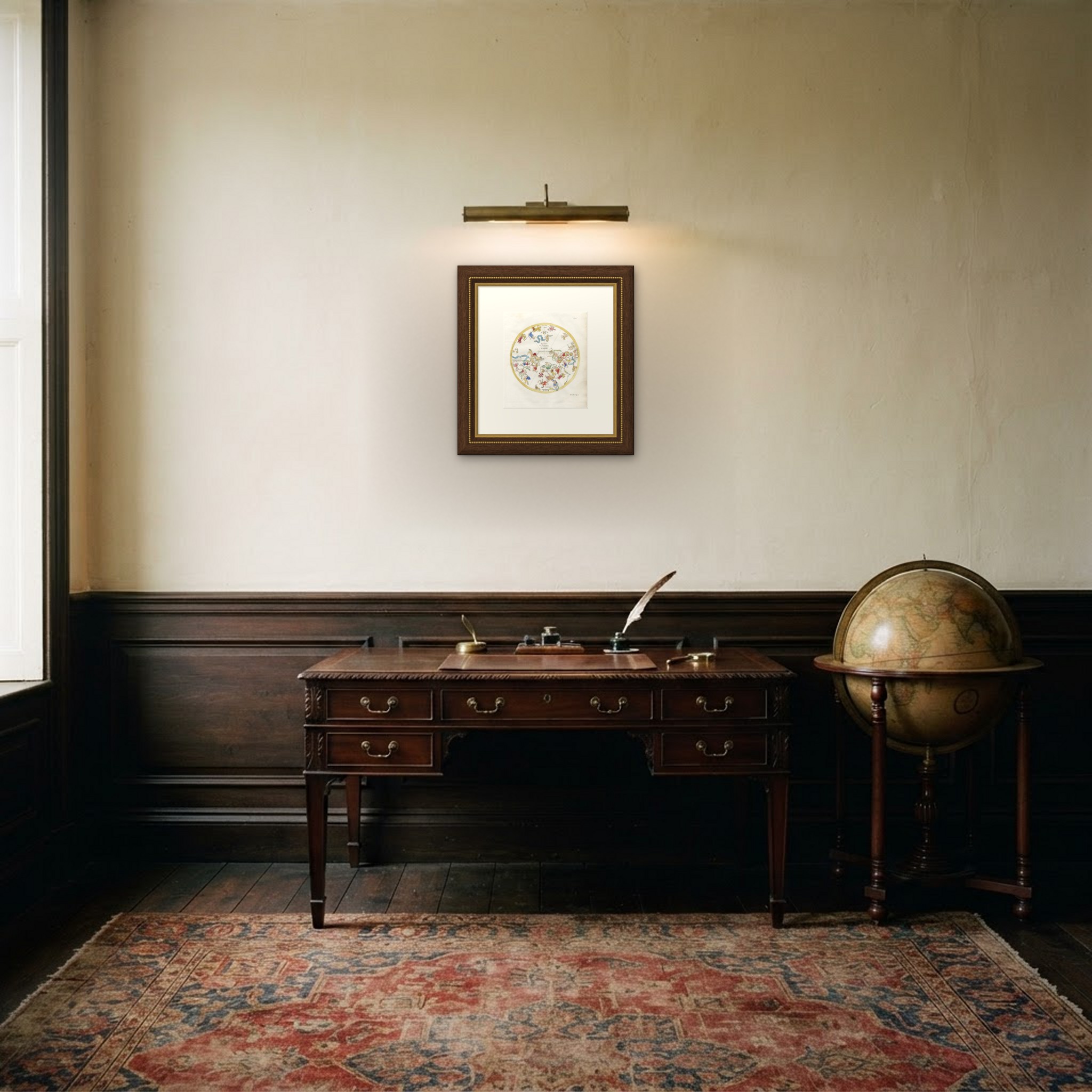
This is an original antique print, not a modern reproduction. This item is sold unframed. Any framed or interior images are shown for presentation and inspiration only, unless the listing explicitly states that the item is sold framed.